Discover the Indigenous identity of the Coffs Coast

hero media
The revival of Gumbaynggirr language has been central to the strong cultural identity evident in the local Indigenous community on the Coffs Coast/Gumbaynggirr Country.
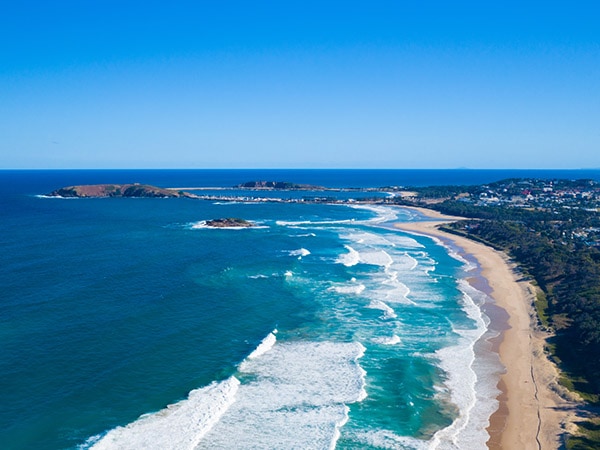
Overlooking Coffs Coast
See the Coffs Coast through an Indigenous lens.

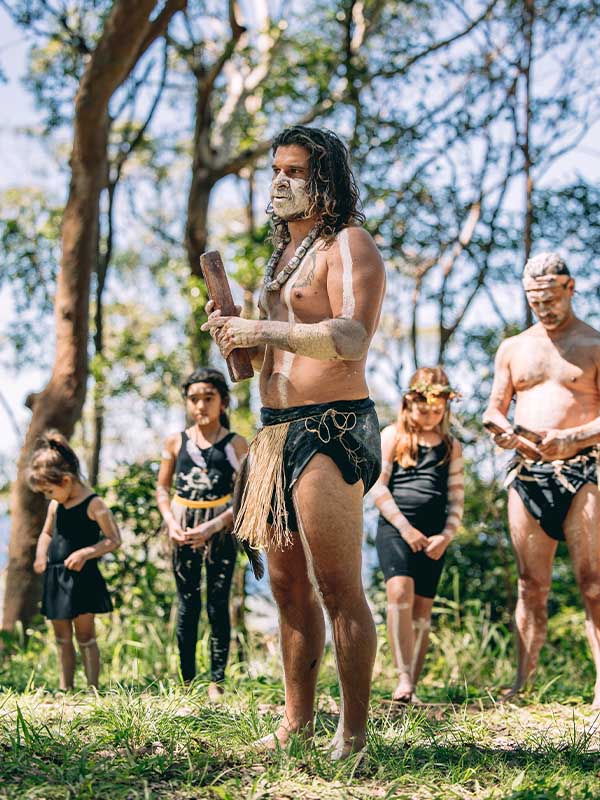
No gaze could be more gentle than that of Uncle Barry Hoskins as he stands in the grassy clearing near Niigi Niigi/Sealy Lookout overlooking the Coffs Coast in Gumbaynggirr Country on the NSW Mid North Coast. The 69-year-old is a proud Gumbaygnirr man, who grew up on a nearby mission and whose mum was a member of the Stolen Generations.
Nathan Brennan and the Wajaar Ngaarlu Dancers
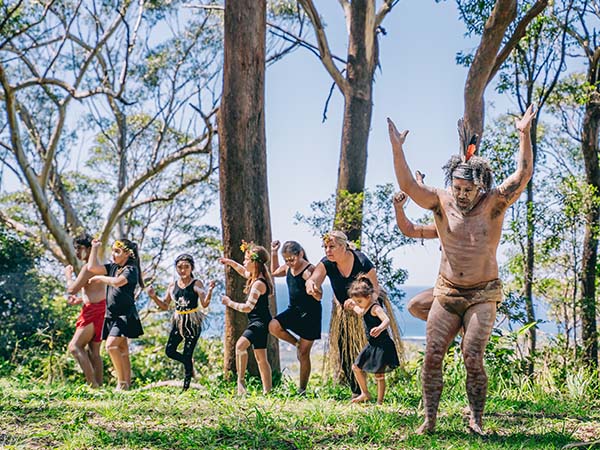
Nathan Brennan leads the Wajaar Ngaarlu Dancers.

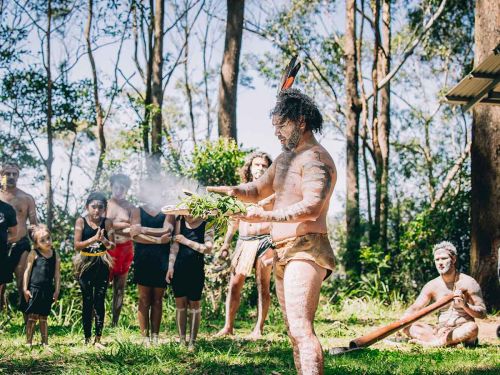
“Giinagay ngiinda? How are yas? Yaam ngaya ngulungginyay. I am a Gumbaynggirr Elder. Yaam nganyundi wajaarr. This is my Country." Standing behind Uncle Barry is Nathan Brennan, one of the 20-strong members of the Wajaar Ngaarlu Dancers, who sets a pile of fragrant lemon myrtle leaves alight and invites visitors to “scoop the smoke" from the smouldering coolamon (wooden vessel) to “clear the mind, body and spirit".
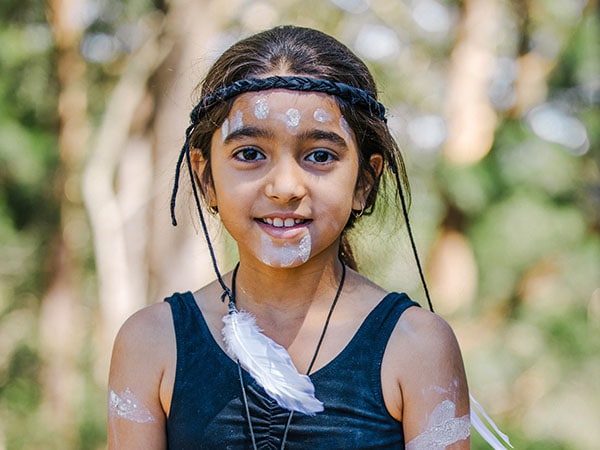
Jayalaani Webb, one of the youngest of the Wajaar Ngaarlu Dancers
Eight-year-old Jayalaani Webb is one of the youngest of the Wajaar Ngaarlu Dancers.

Clark Webb, CEO of Bularri Muurlay Nyanggan Aboriginal Corporation (BMNAC), invites Uncle Barry to deliver the ‘Welcome to Country’ as both a mark of respect and a way to provide the local elder with the opportunity to practise culture, a right he and so many of his fellow Indigenous Australians had been denied for decades. Bularri Muurlay Nyanggan translates to ‘two-path strong’, which nods to Webb’s goal when he established the not-for-profit corporation in 2010 to be “strong in culture, strong in education".
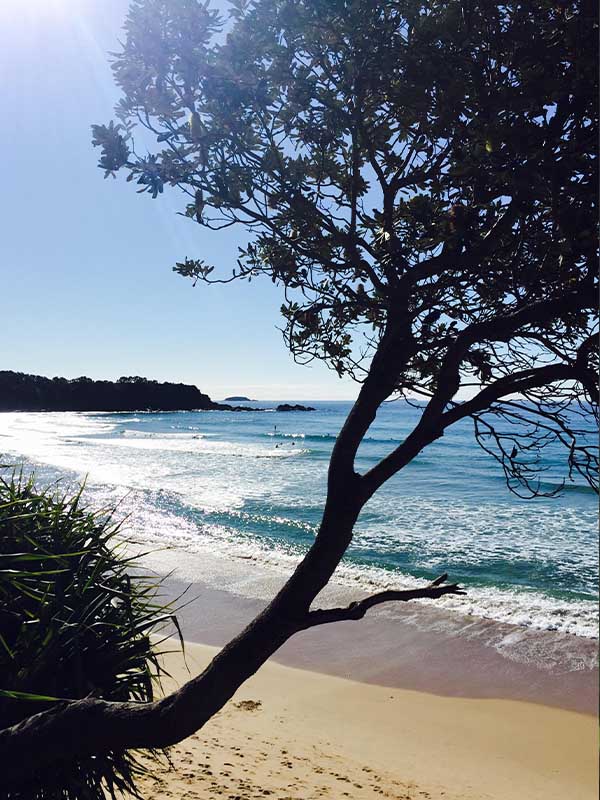
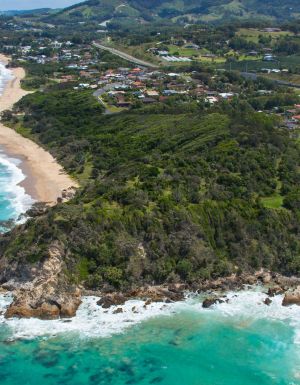
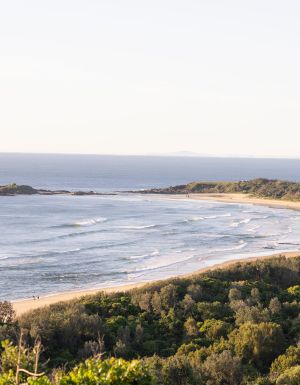
Beach view at Gumbaynggirr Country
Find your rhythm and flow on Gumbaynggirr Country

After performing the ‘Welcome to Country’ for the 30-odd visitors gathered around the grass clearing in Orara East State Forest to enjoy the Giingan Gumbaynggirr Cultural Experience, Uncle Barry closes his eyes as if peering back into his past.


“As a young fella growing up on the mish [mission] here, we didn’t have access to culture. There was no culture. No tool making. No dancing. No singing. No language. But thanks to the efforts of the young Indigenous people here today we are bringing back our culture, while also sharing insights into the real history of Australia," Uncle Barry says.


“I learned more about culture from these young fellas than I did when I was a kid as it simply wasn’t allowed," he explains.

Rebuilding a lost language

Uncle Barry says the way of life for the Gumbaynggirr people of the Coffs Coast region had been all but destroyed when they were forbidden to speak their local dialect, conduct ceremonies or use traditional medicines. In fact, hundreds of words and stories may have been lost forever if it weren’t for the discovery, in 2002, of notes made by American linguist Gerhardt Laves, which have become integral to the partial rebuilding of the Gumbaynggirr language.
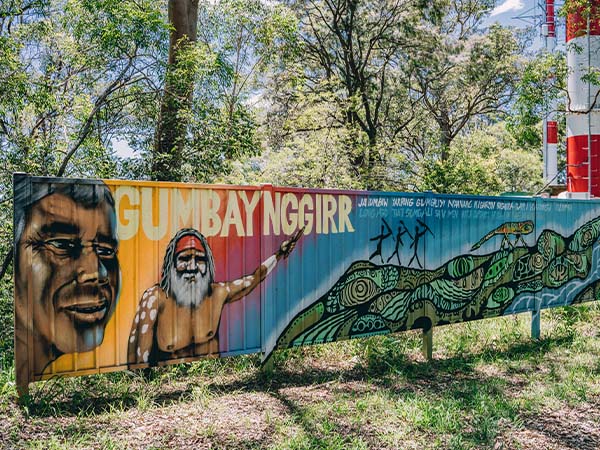
Interpretative mural along Gumgali Track
An interpretative mural along the Gumgali Track

The University of Chicago postgraduate student visited the Coffs Harbour region to analyse and study Australian Indigenous languages between about 1929 and 1931. Laves’ linguistic notes and stories, some of which were waterlogged, and damaged by mould, were digitised and donated to the Australian Institute of Aboriginal and Torres Strait Islander Studies (AIATSIS) library.
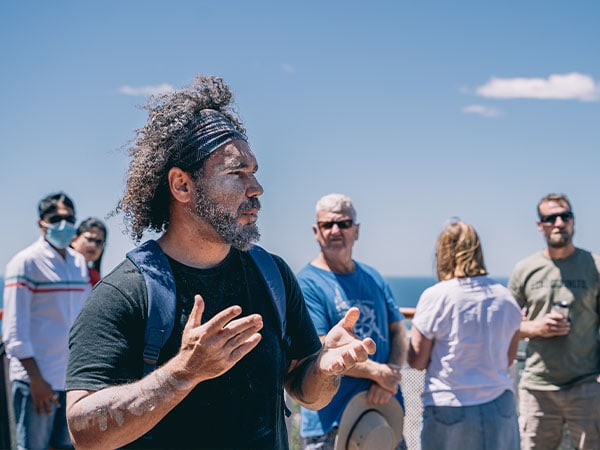
Nathan Brennan sharing a story
Nathan Brennan shares a Dreaming story at Niigi Niigi/Sealy Lookout.

It’s not without controversy that the Papers of Gerhardt Laves include annotations about mourning customs and sacred sites as well as the detailed language cards. But Webb says the Papers also contain stories of ‘the first canoe’, a ‘sea story’, a ‘grass story’ and a ‘moon story’ – all songlines being revitalised during the monthly cultural tours, which include performances by the Wajaar Ngaarlu Dancers.


Webb says while the wounds of the past often surface during his tours, they also provide a way to connect with the broader community and preserve his people’s stories and songlines.
Clark Webb, CEO of Bularri Muurlay Nyanggan Aboriginal Corporation
CEO of Bularri Muurlay Nyanggan Aboriginal Corporation, Clark Webb is making a positive impact in the local Aboriginal community through language and learning centres.

“These songlines exist in the landscape where we walked and travelled and met and told stories on," says the 37-year-old, who is set to open NSW’s first bilingual Aboriginal language school in February 2022 and to expand on not-for-profit BMNAC’s offerings with the construction of an eco-resort with 30 glamping sites.


“I want to ensure our Aboriginal youth are strong in their identity and achieve educational success through our learning centres and cultural camps. The vision is for the eco-resort to provide another dedicated space for cultural experiences on the Coffs Coast [NSW’s first ECO Destination] and to create a long-term sustainable financial income stream," he says.

Rituals Bond Community

As Webb bends down to tend the fire, Brennan starts to hiss through his teeth, while the troupe of dancers turn and twist behind him, telling the story of the first train that ever arrived in Armidale on 2 February 1883.


The dancers set the scene and we listen, in awe, to the stories surging up from their ancestors. As well as dancing on Country, this unforgettable and immersive cultural experience includes a guided talk down the Gumgali Track and a visit to Indigenous- run Nyanggan Gapi cafe located at Niigi Niigi/Sealy Lookout in the eco-tourism certified precinct of Bruxner Park Flora Reserve, near to where the planned eco-resort will be built.


After a smoking ceremony amid the gums, which stand their ground around the space, Brennan and Webb – who share a common ancestor – are followed around by a procession of sisters, brothers, aunties and children who are all adorned with clay-white body paint. Brennan – who, at 38, is the CEO of the Coffs Harbour and District Aboriginal Land Council – then takes a few steps forward and back, and smiles at the children who strive to keep pace and emulate his moves. As the soft light pours through the trees, Brennan then gathers the young children by his side as he addresses the audience.


“After 60,000 years of knowledge I simply refuse to be the broken link," he says. “I want my legacy to be one of learning and to leave the next generation feeling hopeful."
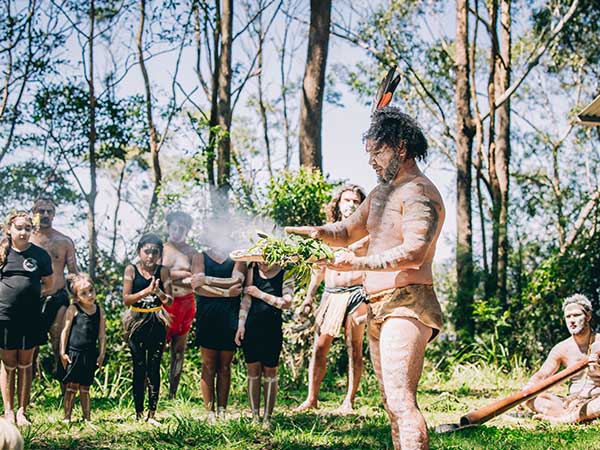
Smoking ceremony at Niigi Niigi
A smoking ceremony at Niigi Niigi/Sealy Lookout.

Multi-generational Voices

Brennan says the Gumbaynggirr people were traditionally known as ‘the sharing people’ because their Country was a place of plenty and that generosity is evident today as they share language, songs, stories, dances and ceremonies that are central to their identity. As the dancing continues, the crowd laughs as the most diminutive member of the troupe is swallowed up in a tangle of limbs as the children kangaroo hop toward the crowd, to the rhythm of the clapsticks.


All around there are children in summer hats, TAFE students with pen and paper, taking notes, tourists sitting on camp chairs and local families spread out on blankets. As if on cue, a gaagum (kookaburra) flies to a branch above the makeshift stage and laughs as Uncle Barry smiles and says, “That is one of our ancestors".


After hearing Dreaming stories of how the gaagal (ocean), juluum (mountain) and bindarray (river) were formed on Gumbaynggirr Country, we follow Brennan on an interpretative walk to Korora Lookout to hear Creation stories of how the land was made and how the yugiirr (dolphins) worked with the local Indigenous people to herd the fish to shore.


As the bush brims with birdsong, Webb stops and, with all the drama and timing of a poet, pauses and addresses the group: “Yaam darruy nginumbala gayigu (It’s good to speak with you)." And with that, the air feels charged, as these ancient words, stories, songlines start to pulse through the land once again.
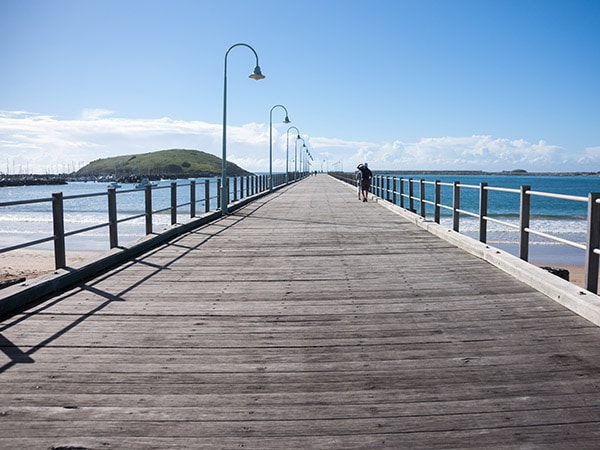
The Coffs Harbour Jetty
The Coffs Harbour Jetty is a great place to sit and fish.

A traveller’s checklist

Getting there

Virgin Australia has re-introduced services from Sydney to Coffs Harbour. Flights from Melbourne will resume late March. You can book a flight at virginaustralia.com

Playing there

To learn more about the Giingan Gumbaynggirr Cultural Experience, visit bmnac.org.au ; experience Gumbaynggirr culture on the water with a Wajaana Yaam Sup tour ; or get active with C-Change Adventure Kayaking .

Green light: NSW’s first Eco Destination

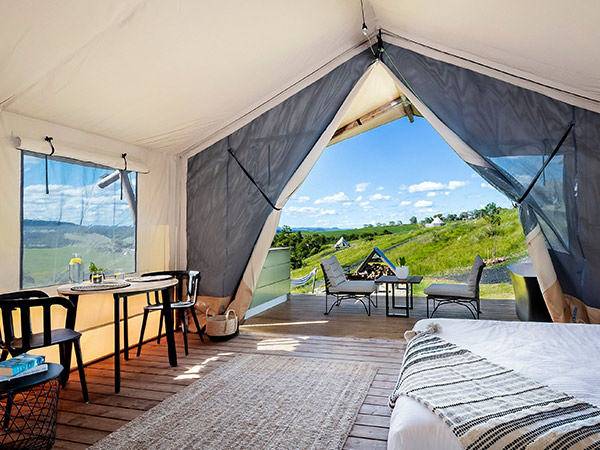
The Coffs Coast is NSW’s first accredited Eco Destination, with the Mid North Coast region recognised for its certified sustainable destination management practices. Wajaana Yaam Gumbaynggirr Adventure Tours is one of six ECO-certified operators and experiences that bolstered the Coffs Coast’s credentials to be considered a destination for conscious travel. What this means for responsible travellers is they can travel here knowing there are sustainable tourism experiences on offer and they can leave a lighter footprint.

Carla Grossetti
Carla Grossetti avoided accruing a HECS debt by accepting a cadetship with News Corp. at the age of 18. After completing her cadetship at The Cairns Post Carla moved south to accept a position at The Canberra Times before heading off on a jaunt around Canada, the US, Mexico and Central America. During her career as a journalist, Carla has successfully combined her two loves – of writing and travel – and has more than two decades experience switch-footing between digital and print media. Carla’s CV also includes stints at delicious., The Sydney Morning Herald, and The Australian, where she specialises in food and travel. Carla also based herself in the UK where she worked at Conde Nast Traveller, and The Sunday Times’ Travel section before accepting a fulltime role as part of the pioneering digital team at The Guardian UK. Carla and has been freelancing for Australian Traveller for more than a decade, where she works as both a writer and a sub editor.
See all articles
hero media

Why winter is the best time to be on the New South Wales coast

NSW’s beach towns take on a new kind of magic when the cooler months hit.

Autumn and winter cast a whole new light on the New South Wales coastline. The sun hangs lower, the shadows stretch longer and the air is crisp and fresh. The frenetic summer crowds are gone, and the rhythm slows to the pace of a leisurely winter bush walk through still, damp quiet. From wineries pouring winter reds to the annual whale migration up the ‘humpback highway’, here’s why winter on the New South Wales coast is better.

Winter on the NSW South Coast

Winter down south means misty dawns, sipping a flat white on the beach. The thrill of a whale spotting from the headlands and evenings spent slowly savouring Shoalhaven’s wines by the fire.

Start in Kiama, where waves crash into the famous Blowholes. This natural spectacle is achieved when underground pressure and swell unite, sending sea spray soaring above the basalt cliffs. This means, due to larger waves, you’re even more likely to see an explosive display in winter.

two people standing in front of kiama blowhole
See Kiama’s blowholes in full force. (Image: Destination NSW)

Inland, the Minnamurra Rainforest Walk in Budderoo National Park is all subtropical forest and trilling lyrebird song. Make sure to walk silently along the elevated boardwalks, past winter-swelled creeks and the tangled roots of fig trees. You might just hear one of the musically talented birds mimicking your footsteps.

Feeling adventurous? Book a session at Illawarra Fly Treetop Adventures for a wobbly walk through the canopy on Australia’s highest zipline.

Illawarra Fly Treetop Adventures on the new south wales south coast
Walk among the tallest trees. (Image: Destination NSW)

Next, it’s time to take the speed down a notch with a drive over to the historic village of Berry. It’s been a beloved stop for generations of Sydneysiders heading south, as has the obligatory stop at its famous doughnut van for crisped, cinnamon goodness. If you’re ready for something a little more chunky, stroll right past the boutiques (okay, go on, just one quick peek) to Milkwood Bakery . Their flaky pastries and all-day breakfasts are best enjoyed under cream-coloured fringed umbrellas.

Back in Kiama, you’ll also find modern Middle Eastern share plates at Miss Arda , and next-level burgers on The Hungry Monkey ‘s extensive menu: an ode to everything pattie-shaped.

End the day at The Sebel Kiama on the harbour. The apartment-style rooms come with full cooking facilities — a welcome addition for families looking to test out the local produce they picked up along the way. Including, but not limited to, vintages from nearby Crooked River Wines .

The Sebel Kiama exterior
Sleep by the harbour.

Winter on the Mid-North Coast

A trip up north is a gentle one at this time of year. You’ll still feel that sunshine warming your shoulders, but the lower temperatures make space for rainforest walks, vineyard lunches and long coastal hikes. All without that pesky humidity.

First stop? It has to be the town of Port Macquarie. Start by marking out a stretch of the nine-kilometre coastal walk you want to tackle (or do the whole thing), which winds from Town Beach to the lighthouse along rugged headlands and quiet beaches. Hot tip: binoculars. Don’t forget them if you want to partake in some close-up sightings of dolphin pods or whales migrating up the ‘humpback highway’.

Port Macquarie Coastal Walk, winter on the New South Wales coast
Wander the Port Macquarie Coastal Walk. (Image: Destination NSW)

Swap sea for canopy at the Sea Acres Rainforest Boardwalk , one of the last remaining pockets of coastal rainforest in the state. The accessible elevated trail passes under climbing ferns and tangled strangler figs, and is alive with scarlet robins, goannas and diamond pythons – if you’re lucky, you might see one slipping through the leaf litter.

Afterwards, lunch is sorted at Cassegrain Wines , where crisp whites and elegant reds are grown using a blend of French winemaking tradition and Australian innovation. After a tasting, saddle up for a horse ride through the estate.

port macquarie koala hospital
Meet Koala Hospital inhabitants at their temporary home. (Image: Destination NSW)

The beloved Koala Hospital is rebuilding, so meet its furry patients in their temporary bushland abode at Guulabaa – Place of Koala . Here, you can see rehabilitation up close and learn how one of Australia’s most iconic animals is being carefully rewilded and protected.

Back in town, Whalebone Wharf  serves up fine dining with serious views to go with your oysters. Prefer something breezier? Bills Fishhouse + Bar does everything from blue swimmer crab toast to zucchini noodles drizzled in basil and wattleseed pesto. Down by the waterfront, Little Shack slings ceviche, mushroom burgers and fish tacos with casual aplomb.

At the end of it all, check in to Mercure Centro Port Macquarie , right in the heart of town. From here, everything’s walkable. Just park the car, pop your keys in your pocket, and stroll down to the beach.

bed at Mercure Centro Port Macquarie
Check in to Mercure Centro Port Macquarie.

Winter on the Central Coast

On the Central Coast, expect to explore oyster farms that sit on estuaries, beaches that stretch empty for miles, and the kind of surprise sightings of whale sprays that can stop a hiker in their tracks.

The best way to settle into this slower rhythm is with the Bouddi Coastal Walk , an 8.5km trail that dips through rainforest and eroding cliffs. It’s made for unhurried walkers and long-lens photographers.

Up the coast in Terrigal, it’s prime time to spot humpbacks on the move. Join a cruise or find your own perch — Crackneck Lookout and Norah Head Lighthouse are both local favourites.

a humpback whale breaching on the central coast
Spot migrating humpback whales. (Image: Destination NSW)

Travelling with kids? It would be sacrilege not to visit the Australian Reptile Park . Here, Elvis the saltwater crocodile reigns supreme, and the venomous snake talk somehow manages to be simultaneously terrifying and fascinating.

If that isn’t enough to wear them out, zip and climb your way through Treetops Adventure Central Coast , a ropes course in the canopy of Ourimbah State Forest. Afterwards, steady your nerves with a garden tasting at Firescreek Botanical Winery , where fruit- and flower-infused wines are served under the trees.

Switch earth for sea and hop on a boat tour with Broken Bay Pearl Farm . Once you’re out on the water, you’ll learn how pearls are cultivated and have a hands-on lesson in grading and shucking.

woman holding a pearl at Broken Bay Pearl Farm
Get a hands-on pearl lesson. (Image: Destination NSW)

As the day winds down, grab a seat at Yellowtail in Terrigal , which takes seasonal native produce and presents it with Asian flair. Prefer something simple? Award-winning Mount White restaurant Saddles is a quintessential Australian dining destination. Find an impressive breakfast and lunch menu, dedicated to country-style cooking and seasonal produce.

Stay the night at Pullman Magenta Shores , between the ocean and the lake. There are plenty of ways to relax, with a massage at the day spa, a poolside beanbag and a round or two at the golf course.

restaurant at Pullman Magenta Shores central coast
Eat well at Pullman Magenta Shores’ restaurant. (Image: Destination NSW)

Winter in Wollongong

Wollongong does contrast pretty well. One moment you’re walking beneath an enormous Buddha, the next you’re ordering soju a few blocks from the surf. It’s a town where skydivers land on beaches, trails lead to paddocks and winter days stretch long and clear beneath the Illawarra cliffs.

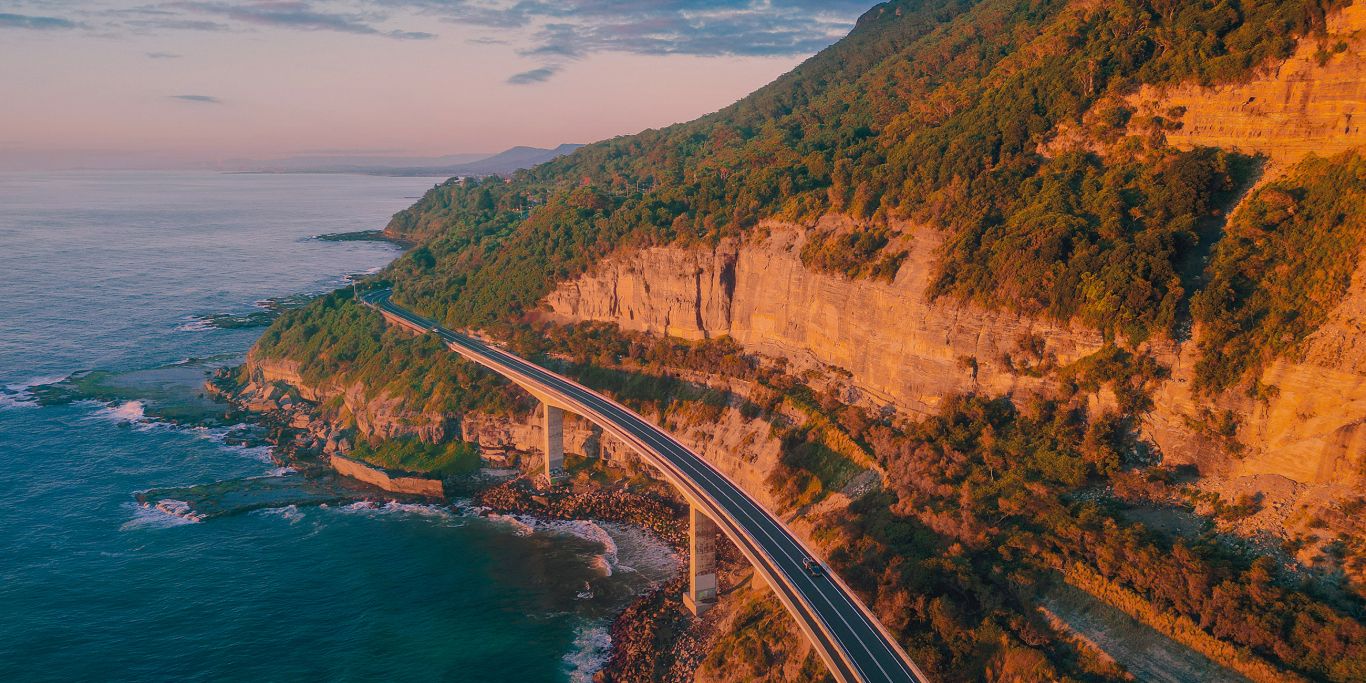
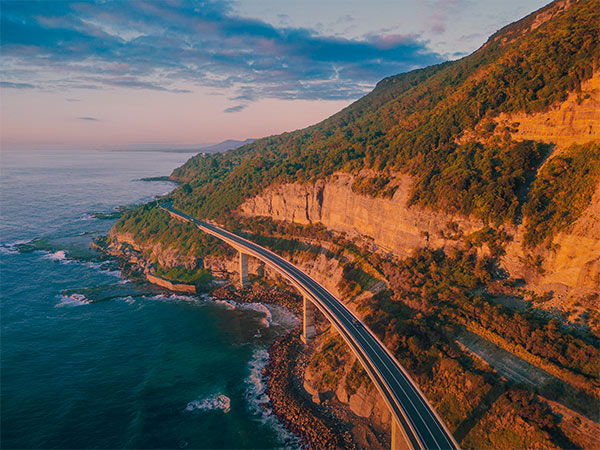
If you’re coming from the north, start by crossing over the Sea Cliff Bridge. Curving dramatically out like a jutting ‘C’ out above the water means you won’t be able to resist pulling over (safely, in designated lookouts) to gaze down at the waves crashing on the cliffs below.

Just inland is the serenity of the Nan Tien Temple , the largest Buddhist temple in the Southern Hemisphere. You can trace the prayer path, explore the temple gardens and sip delectable Kam Quat Tea in the quiet light at the Dew Drop Inn Tea House.

monk teaching tai chi at Nan Tien Temple
Learn about Buddhist practices. (Image: Destination NSW)

Next, dust off that cowboy hat. It’s time for the Darkes Forest Riding Ranch . Take a guided canter via trail rides among peppermint gums and paddocks. If you’re happier to look at animals than ride them, Symbio Wildlife Park has red pandas dozing in trees, kangaroos that hop up to you and lessons on conservation.

The brave among you shouldn’t miss Skydive Australia – Wollongong . A free fall over the coast via tandem jumps before tumbling down to the sand is a breath-stopping thrill. Prefer to keep your feet on the ground? Check out the program at Wollongong Art Gallery , which delivers contemporary and Aboriginal exhibitions in the centre of town.

monkey at Symbio Wildlife Park
Hang out with the locals at Symbio Wildlife Park.(Image: Destination NSW)

As evening settles in, nab a table at Baby Face Kitchen . It has an ever-changing set menu, with dishes like hand-picked mud crab with white asparagus and salty brown butter, to sheep’s milk and honey ice cream. For something more casual, Dagwood Bar + Kitchen brings the fun with Korean fried chicken, sake cocktails and weekly all-you-can-eat bao buns.

Check in to Novotel Wollongong Northbeach , right by the sand. With a beachfront pool and ocean views, it’s an ideal base for whatever pace you choose.

Novotel Wollongong Northbeach
Fall asleep listening to the waves.

Winter on the New South Wales coast starts with a cosy place to stay. Start planning your adventure at all.com.