The incredible story behind the tiny Broken Hill Mosque

hero media
The astonishing story of Broken Hill’s tiny cameleer mosque spans the outback, oceans and generations, as Steve Madgwick discovers.

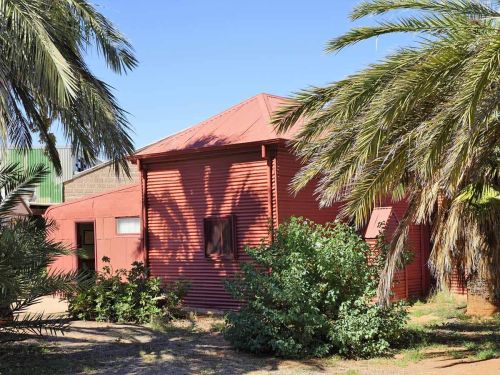
You won’t see fleets of grey nomads parked outside the curious brown corrugated shed at the end of a palm-flanked gravel driveway on the petering northern fringes of Broken Hill. Perhaps because the outback-spanning sagas that radiated from Broken Hill Mosque mostly fell outside the white-settler ‘Aussie’ narrative, lucky to receive even a cursory mention in our highschool history lessons. 

The Broken Hill Mosque Museum is located on the corner of Williams and Buck streets. To see inside the museum, you have to contact 82-year-old curator and caretaker Amanullah Shamroze. Bobby, as he’s been called for as long as he can remember, unlocks the door and, in doing so, unshackles the story of Broken Hill’s ‘Afghan’ cameleers. 
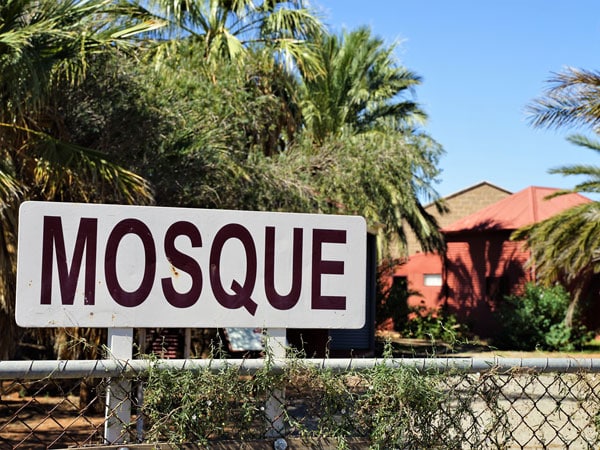
the outside signage of the Broken Hill Mosque
The mosque was built in 1891. (Image: Steve Madgwick)

The son and grandson of outback-building camel drivers, Bobby’s insight is rare and precious indeed. From the 1860s, the cameleers and their camels were shipped into Australia’s interior from India, Afghanistan and beyond. They became the backbone of the pre-railway outback transportation network, playing under-rewarded roles in building continent-traversing projects such as the Trans-Australian Railway and the Adelaide to Darwin Overland Telegraph Line.
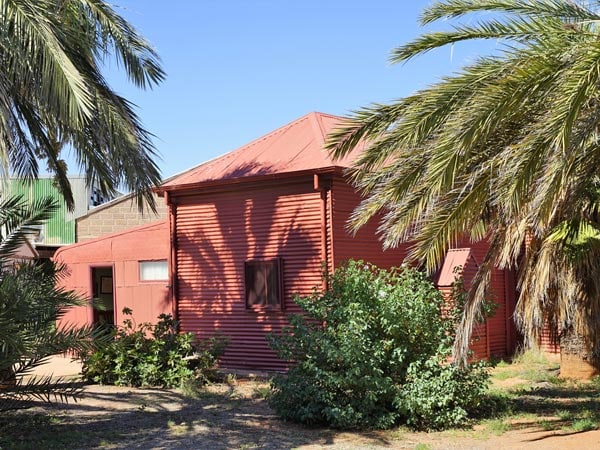
the exterior of Broken Hill Mosque
The mosque functions as a museum. (Image: Steve Madgwick)

The story behind the ‘Afghan Mosque’

The ‘Afghan Mosque’ was considered the spiritual hub of the cameleer camp that mushroomed on Broken Hill’s peripheries, just as the frontier town in far-western NSW was establishing itself as a key outpost in the crossroads of outback Australia. Because the cameleers lived on the fringes of society, however, the facts of their stories have been bent and stretched by time. 

“Some say the mosque was built in 1883, others say 1887, and I’ve also heard 1891, too," says Bobby of Australia’s oldest surviving ‘Ghan-town’ mosque. “I’m not quite sure, but it’s somewhere between those figures." 

Outside stands a vintage camel-drawn wagon, the semitrailer of its day, which may have even hauled the mosque’s corrugated iron inland from the coast. Past a small channel for ceremonial feet washing, a memorabilia-rich antechamber leads into the prayer room, with its faded mint-green pressed-metal walls, two rows of prayer mats and pair of Qurans resting on ornate wooden stands.
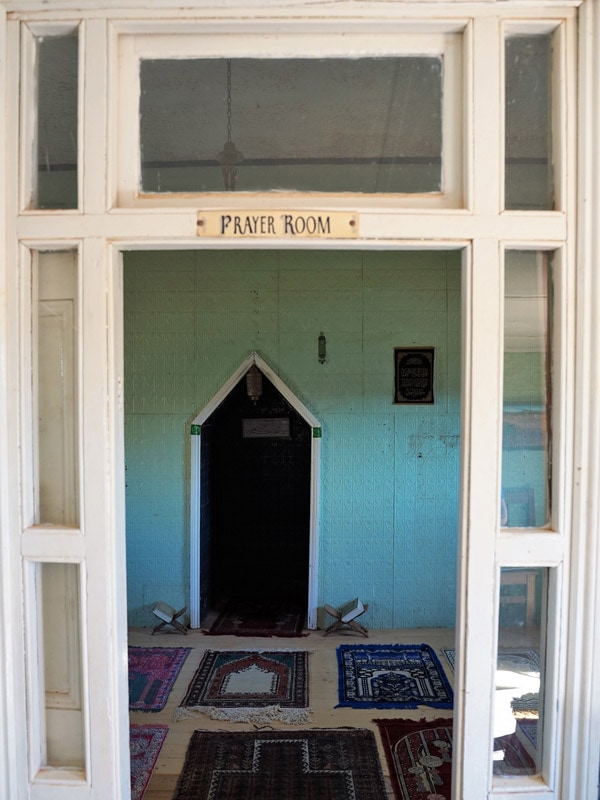
the door leading to the prayer room inside Broken Hill Mosque
The Prayer Room offers insights into Broken Hill history. (Image: Steve Madgwick)

Pioneer worshippers

Bobby’s father, Shamroze Khan, and grandfather, Fazulla Ziadulla, worshipped here. But the rest of their wayfaring lives are hard to pin down. “Strangely, Dad never ever said where he actually came from, never mentioned any family. Even my grandfather said nothing about him really." 

Bobby knows more about Grandpa’s story. Among surviving black-and-white photographs is one showing Fazulla outside his old house in the Punjab city of (then) Campbellpur, India (which became Attock, Pakistan, after the 1947 partition). He has been told that his father and grandpa came out together to Australia, but Bobby believes they arrived on different ships. 
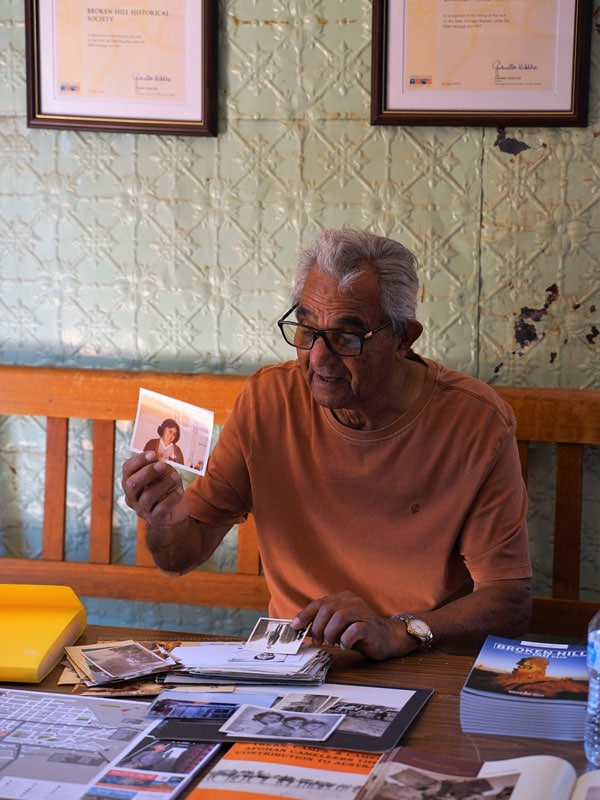
Bobby (Amanullah) Shamroze sharing the photos of his life
Bobby (Amanullah) Shamroze shares snapshots of his storied life. (Image: Steve Madgwick)

Grandpa’s boat apparently docked in Fremantle, while his father’s first stop was either Port Pirie, South Australia, or Port Albert, Victoria. “It must have been [Dad’s] first stop because he [met] his first woman down there. She was a governess, apparently, at some property. They must have got on together and took off together." 

Bobby’s father would buy camels “off the boat" in Port Augusta and then walk them 400 kilometres east to Broken Hill. “There was no other way to get them there. When they were building the railway line between Port Augusta and Marree [SA], he and a team carted all the water and shifted the camps."
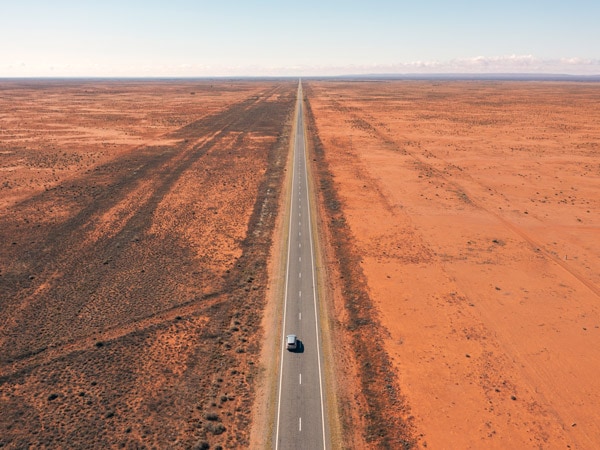
an aerial shot of a vehicle driving in the outback near Broken Hill
Broken Hill is home to some of Australia’s toughest terrain. (Image: Destination NSW)

His dad apparently stashed enough cash as a camel dealer to buy “seven or eight houses" in Broken Hill “back when you could get one for 200 pounds." But Bobby didn’t fare so well, especially after his mum left when he was just four. He blames his parents’ split on the age difference: 62 (dad) versus 24 (mum) when Bobby was born.

“It was a bit rough after Mum went. I ran away a few times. When I was seven or eight, I jumped on the train to Adelaide to look for Mum. I’d been down there with my father visiting the Adelaide Mosque. You could go for a month and no one would worry about you. Not like today. And I’d always have a couple of bob on me, to buy a pie or something."
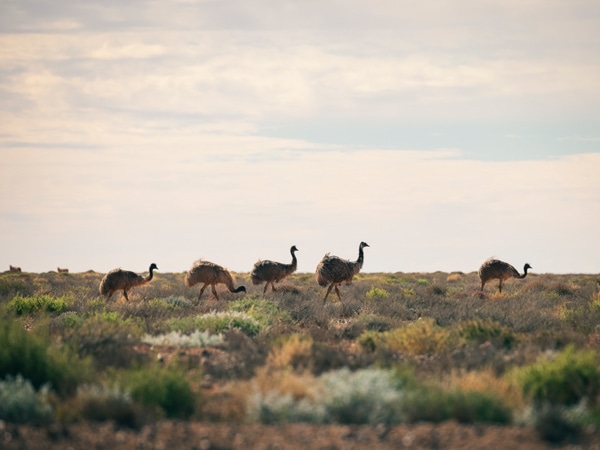
a parade of emus in Broken Hill
Emus on parade in Broken Hill. (Image: Destination NSW)

The rise of cameleers in town 

Bobby bounced around for a while, sporadically staying with his mum (who he found working in a pub) and going to school in Adelaide. When his dad died in 1950, “welfare grabbed him", before a relative eventually helped Bobby return to Broken Hill.

He lived with his grandfather briefly, before becoming a shearer and wool-presser out on a remote station, settling back into ‘the Hill’ in the mid-1960s with life partner Janet, lured by work in the mines.
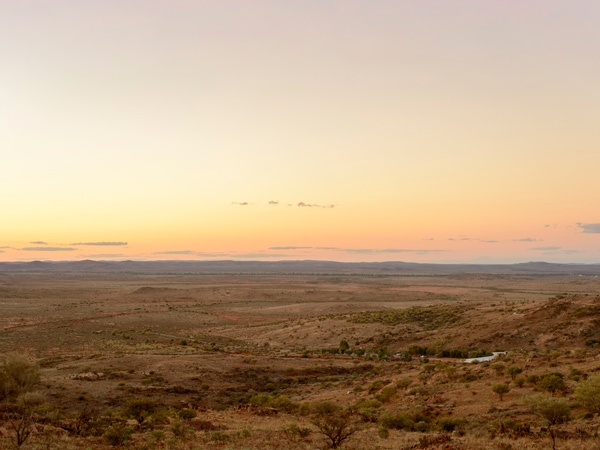
views across the outback desert, Broken Hill
There were about 400 cameleers living in Broken Hill in the early 1900s. (Image: Destination NSW)

After four decades as a place of worship, the mosque began to lose its worshippers in the late 1920s, as trains and trucks made camel transport redundant. Of the estimated 100 cameleers in town, many returned to the subcontinent, while others found work on stations, as tradesmen or in the mines (as Bobby’s dad and grandpa also did). 

After Broken Hill’s last practicing Muslim passed away, the mosque became little more than a cubbyhouse for local kids, eventually “rescued" by the Broken Hill Historical Society in and made into a museum a year later. Bobby agreed to be its custodian 12 years ago, under the condition that “they do a few things", such as putting up fences around the property.
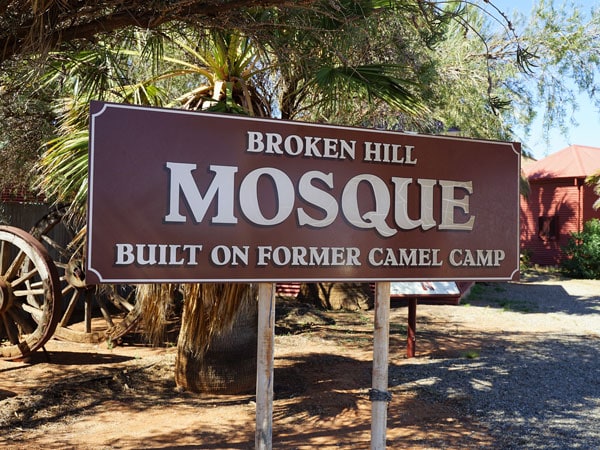
a signage saying Broken Hill Mosque was a former camel camp
The Broken Hill Mosque is built on a former camel camp. (Image: Steve Madgwick)

A familial connection with the mosque 

“There was no one left to do it, and I’d collected a lot of information. But since then, I’ve had three operations so they’re worrying about me dying." Bobby’s connection with the mosque has always been more familial than spiritual. “I’m a ‘bush Baptist’. When I was in the boys’ home, I went to a different church every week. I don’t even follow the language, but I’m here to keep the history and try to get a bit of a name for the old camel drivers who worked this country." 

Bobby’s brother and sister are gone now, and he’s “outlived" his mum’s family, too. He’s willing to pass on the mosque responsibilities to any of his three children or seven grandchildren but “only if they want to do it". 

For now, every time Bobby gets a call from a visitor or occasionally someone wanting to pray, the octogenarian travels the couple of kilometres from home to retell his stories, to the best of his recollection. He holds the photo of Grandpa close to him; a window into the indistinct past, and a tactile memory that might just help “keep the cameleer legacy alive for another generation." 

hero media

8 ways to discover a new side of Port Stephens

Aussies might think they know what Port Stephens is all about – but it’s time to take another look.

You might’ve driven through this NSW coast town. Maybe even stopped for fish and chips or a quick dip. But spend a long weekend in the new Port Stephens , and you’ll seriously regret not doing it sooner. We’re talking treks across beaches, reef dives and up-close time with rescued koalas.

All in all? It only takes a day before you see Port Stephens in a whole new light, and not much longer until it’s locked in as your favourite family destination.

1. Stockton Sand Dunes

Port Stephens incredible Stockton Sand Dunes are the largest moving sand mass in the Southern Hemisphere. They shift like an endless magic trick across the Worimi Conservation Lands , a 4200-hectare coastal co-managed by the Traditional Owners.

Tear over them in a 4WD. Rev through valleys soft as melting ice cream on a quad. Carve down 30-metre slopes on a sandboard. However you choose to cross them, you’re guaranteed a seriously wild ride.

Four rugged 4WDs kick up trails of golden dust as they charge across the sweeping desert landscape.
Chase thrills across shifting sands. (Image: Destination NSW)

2. Scale Tomaree Head Summit Walk

A short climb through bushland opens up to the coastal drama of Tomaree Head . Spot Zenith, Wreck and Box Beaches. See the Fingal Island lighthouse and offshore rookeries where Australia’s rarest seabird, the Gould’s petrel, nests.

History buffs can’t miss the WWII gun emplacements. And if you’re hiking between May and November, bring binoculars. Travelling whales might just be breaching below.

Friends enjoying a scenic walk along the Tomaree Head Summit Walk in Tomaree National Park, Port Stephens.
Climb Tomaree Head for jaw-dropping coastal views. (Image: Destination NSW)

3. Watch out for whales

You’ve seen the spouts of migrating humpbacks and southern right whales from shore. Set sail from Nelson Bay to see them up close. Cruise straight into the action, with tail-slaps, barrel rolls and all.

And they’ve got competition from the local show-offs. Port Stephens bottlenose dolphins leap and play. Some tours even spot pudgy fur seals, spending lazy days soaking up the sun on Cabbage Tree Island.

A whale’s tail on the sea’s surface.
Watch for ocean tails. (Image: Destination NSW)

4. Port Stephens Koala Sanctuary

Pop into the Port Stephens Koala Sanctuary  to learn about the rescued koalas who climb, nap, snack and heal in this natural patch of bushland. Wander the immersive Sanctuary Story Walk to discover more about their habits, then head to the SKYwalk – a treetop platform constructed for spotting these eucalyptus-loving locals. Peek into the hospital’s viewing window, where sick or injured koalas may be resting in their recovery enclosures.

Not enough time around these adorable marsupials? Stay overnight in silk-lined glamping tents.

Koala sleeping in a tree at Port Stephens Koala Sanctuary, One Mile
See koalas in their natural habitat. (Image: Destination NSW)

5. Diving Port Stephens

Port Stephens has some of NSW’s best dive spots. At Fly Point, float through sponge gardens and coral castles thick with nudibranchs (AKA sea slugs). Halifax Park has blue gropers and crimson-banded wrasse, while Shoal Bay’s seagrass meadows hide pipefish, cuttlefish and octopus.

Accessible only by boat, Broughton Island is home to a vast array of marine (and bird) life. Snorkel with blue devilfish and stingrays at sites like The Looking Glass and North Rock. More experienced divers can head out with one of the many PADI-certified operators.

At nearby Cabbage Tree Island, expect to see shaggy-faced wobbegongs cruising along.

A couple suited up and ready to dive into adventure.
Suit up and dive into Port Stephens’ vibrant marine life. (Image: Destination NSW)

6. Irukandji Shark and Ray Encounters

Not quite ready to dive in? Irukandji Shark and Ray Encounters is the perfect way to spot local marine life without getting too deep. But there’s no obnoxious glass tank tapping here. Instead, this interactive aquarium allows guests to wade into natural-style lagoons that mimic the real thing.

Gently pat Port Jackson and bamboo sharks, hand-feed rays, and feel their sandpapery skin with your fingertips. It is all under expert guidance. If you want to go deeper, pop on a wetsuit and swim alongside tawny nurse sharks, white-tipped reef sharks and zebra sharks in the lagoon.

Family enjoying an animal feeding experience at Irukandji Shark and Ray Encounters, Anna Bay.
Meet the ocean’s friendliest faces at Irukandji. (Image: Destination NSW)

7. Fish the estuaries

Fishing fanatics will fall for Port Stephens hook, line and sinker. Here, one of the largest estuary systems in the whole state sees tidal rivers and mangrove ecosystems. Waterfronts are thick with oysters, and residential fish that might include anything from bream, whiting and flathead, to blue swimmer crabs, kingfish and longtail tuna.

If you prefer to choose your own adventure and fish offshore, you can hire a boat from one of the marinas and set your own course.

three men fishing on a boat in port stephens
Join a tour or chart your own fishing trip. (Image: Destination NSW)

8. Taste new Port Stephens flavours

With plenty of activity to fill your days, refuelling on delectable cuisine becomes equally important. And Port Stephens answers the call.

Pop into Holbert’s Oyster Farm for fresh-farmed Port Stephens rock oysters and Pacific oysters, Australian king and tiger prawns, as well as a variety of tasty sauces to try them with.

Take a group to Atmos for an authentic Greek experience over large shared dishes and Greek-inspired cocktails. Or feast on sea-to-plate, modern Australian dishes at the pet-friendly Restaurant 2317.

A plate of fresh oysters.
Slurp your way through the region’s best oysters. (Image: Destination NSW)

Start planning your Port Stephens getaway at portstephens.org.au .