An insider’s guide to visiting Darwin’s Aboriginal Art Fair

hero media
It’s the liveliest time of year to visit Darwin, when the days are not too hot, not too wet, and the city comes alive with one of the biggest events on the Indigenous art calendar.

Every August the Darwin Aboriginal Art Fair attracts thousands of people to see the canvases, bark paintings, sculptures, ceramics, textiles and jewellery presented by First Nations artists from across the country.

Under the umbrella of the Darwin Festival, the art fair takes place over three days in August alongside several other major Indigenous events. Grab the calendar and squeeze in: an exquisite runway parade as part of the National Indigenous Fashion Awards; a night under the stars at the National Indigenous Music Awards; and a visit to the Museum and Art Gallery of the Northern Territory for the National Aboriginal and Torres Strait Islander Art Awards.

Here’s everything you need to know about the Darwin Aboriginal Art Fair  – or DAAF for short – before visiting Darwin.

What is the Darwin Aboriginal Art Fair?

The first DAAF was held in 2015 and it has grown to secure a reputation as one of the country’s most significant Indigenous art events.
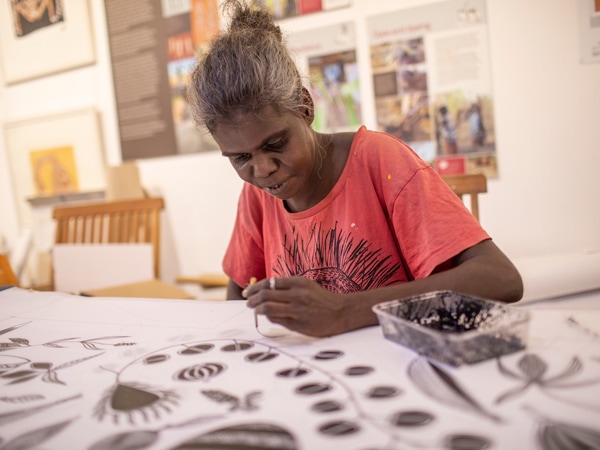
an Indigenous artist at the annual DAAF, Injalak Arts tour with Venture North
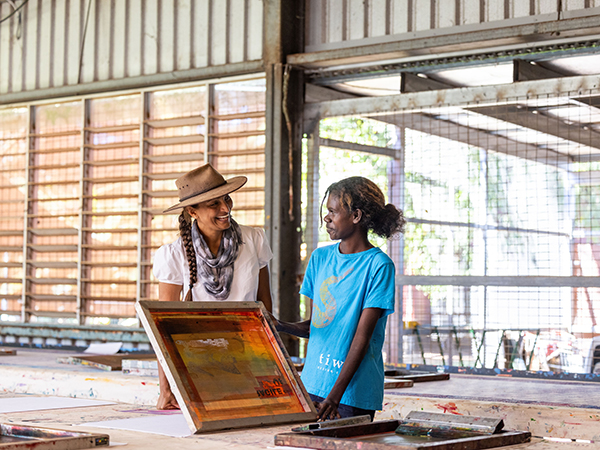
Meet Indigenous curators and artists at the Injalak Arts tour. (Image: Tourism NT/James Fisher)

Taking place annually in the huge 4000 square-metre air-conditioned exhibition hall of the Darwin Waterfront’s convention centre, the fair has become a true celebration of First Nations art and culture; a vivid, joyous coming together of artists, art admirers, performers, designers and art centres.

With a buzzing marketplace where buyers have access to artists connected to more than 70 remote Indigenous art centres (and where 100 per cent of the money from the sale of artworks goes directly to the artists and their communities) it’s all about creativity, interaction, knowledge sharing and of course, shopping.
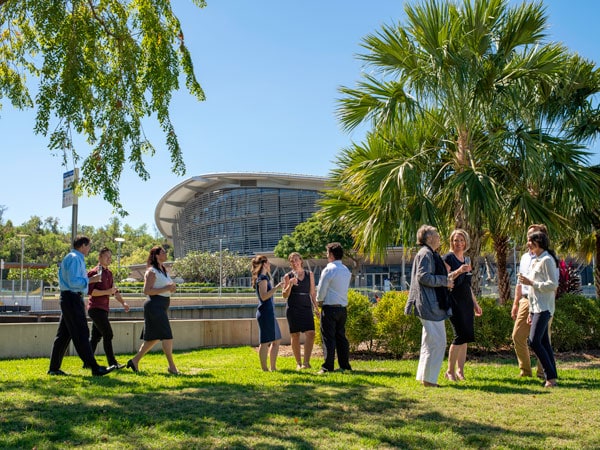
visitors at the Darwin Convention Centre during the annual DAAF
The annual DAAF is held at the Darwin Convention Centre. (Image: Tourism NT/Shaana McNaught)

When is the Darwin Aboriginal Art Fair?

For 2024, DAAF is running from 9th to 11th August.

The Darwin Festival will take place from 8th to 25th August 2024. Running alongside DAAF is Country to Couture, a high-energy runway event on 6th August 2024, presenting collections from some of Australia’s most talented First Nations fashion designers and artists working in remote Indigenous communities.
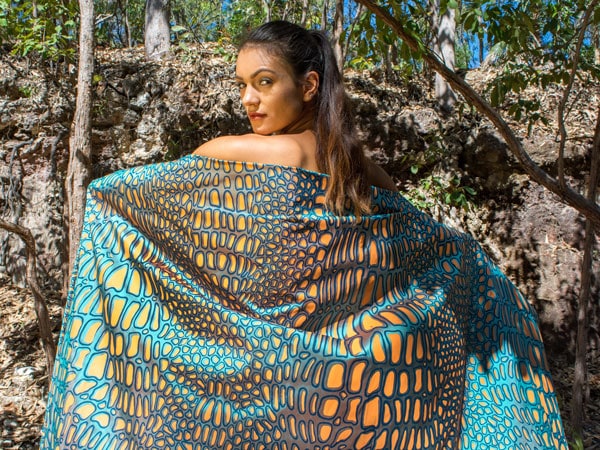
a woman flaunting an Indigenous fabric with beautiful patterns at the annual DAAF
Indigenous art takes centre stage at the annual DAAF. (Image: Tourism NT)

Highlights of the Darwin Aboriginal Art Fair

Besides the diverse artworks on display and for sale from over 1,500 artists, highlights of the fair include the (ticketed) opening ceremony, artist talks and masterclasses, as well as traditional dance and (for the young at heart) the children’s activity station.
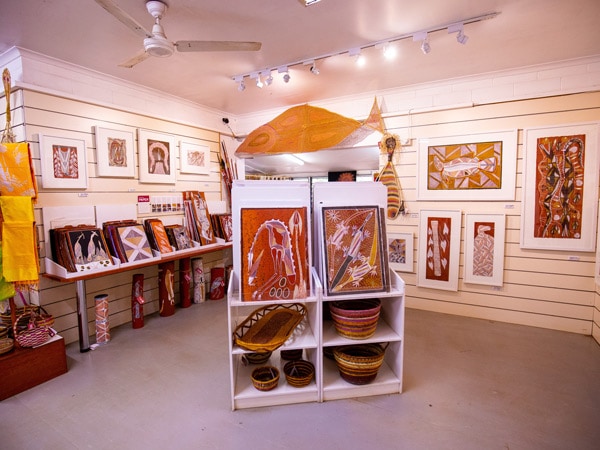
Aboriginal artwork on display at the Injalak Arts and Crafts Centre
You’ll find various Aboriginal artwork on display from Injalak Arts and Crafts Centre. (Image: Tourism NT/Felix Baker)

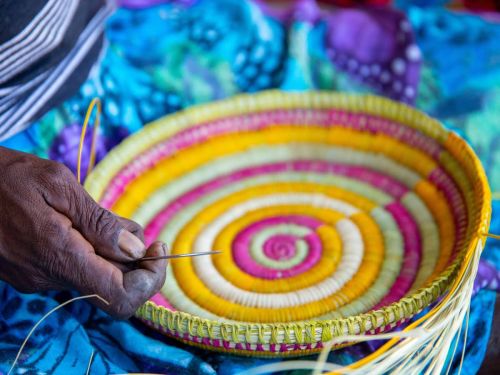
Workshops can include soft sculpture making with Yarrenyty Arltere Artists, or sitting with master weavers from Injalak Arts in Gunbalanya or the renowned Numbulwar Numburindi Arts to learn the process of weaving a basket.
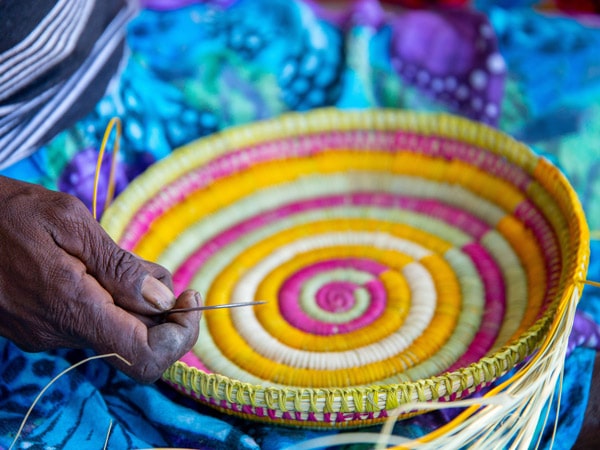
an artist weaving a basket at the Injalak Arts and Crafts Centre
Sit with master weavers to learn the process of creating intricately woven baskets. (Image: Tourism NT/Felix Baker)

Each year the fair grows in physical events so it feels different from year to year as it welcomes more visitors who come to immerse themselves in the oldest living cultures on earth.
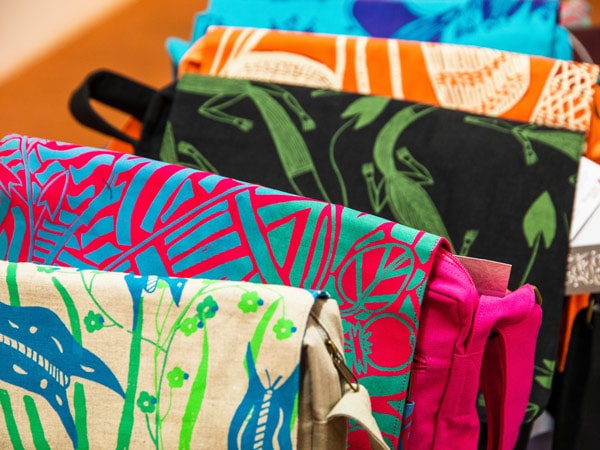
a colourful display of Gunbalaya artwork at the DAAF
See a remarkable display of artwork from Injalak Arts in Gunbalanya at the DAAF. (Image: Tourism NT/Felix Baker)

How to buy Aboriginal Art ethically

One of the motivating principles of DAAF is to educate and encourage buyers to think and act ethically when it comes to purchasing Indigenous art. Buying art in person and online during the fair comes with the reassurance that no commission is charged, with all money going to the artists or Aboriginal-owned and operated community art centres.
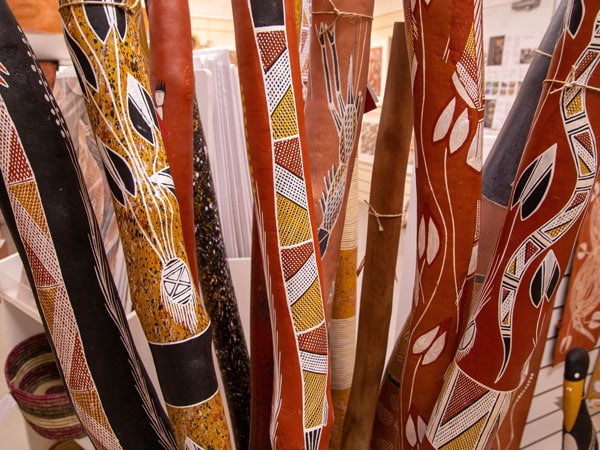
Aboriginal artwork on display at the Injalak Arts and Crafts Centre
Check out an array of Indigenous artworks at DAAF 2024. (Image: Tourism NT/Felix Baker)

While this exacting standard ensures the relationships formed at DAAF between artists and art lovers are mutually beneficial and morally responsible, it also confirms the foundation’s focus on fostering an environment in which Indigenous artists’ depth of talent and craftsmanship is celebrated and appreciated.

In fact, this is something the foundation champions 365 days a year, including by encouraging prospective buyers to be informed and guided by the Indigenous Art Code . The code is designed to ensure that artists are treated fairly, honestly and respectfully. It encourages buyers to ask the art centre, dealer or gallery three key questions: who is the artist? Where are they from? How does the artist get paid?
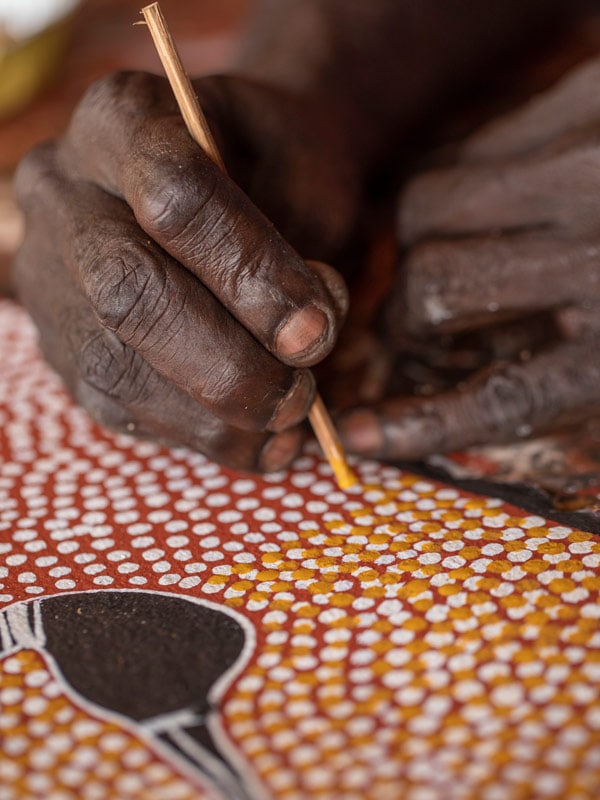
an Indigenous painter at the Injalak Arts Tour
Immerse yourself in the outstanding artistry of the works on display. (Image: Tourism NT/James Fisher)

Details for visiting

Entry costs: Free. The opening ceremony takes place on a Thursday evening and tickets can be purchased through the Darwin Festival.

Opening times: Friday 10am to 4pm; Saturday 10am to 5pm; Sunday 10am to 4pm. 

Accessibility: Darwin Convention Centre is easily accessible for parents with prams, the disabled and the elderly. 

Getting there: Darwin Convention Centre is located at the Darwin Waterfront Precinct, a popular tourist area that is a five-minute walk from the Darwin CBD.

Parking: Darwin Convention Centre has easily accessible public car parks.

Leah McLennan
Leah McLennan is a freelance writer based in Darwin. She was a journalist in Sydney for over a decade and counts her time as travel editor for Australian Associated Press as one of the highlights of her career. From exploring remote campsites in the Top End with her family, to seeking out new art galleries in faraway cities, she’ll grab an adventurous or arty travel experience within her reach.
See all articles
hero media

8 Red Centre locations to explore after seeing the new movie, Kangaroo

Spend a few days visiting the real-life Central Australian locations that inspired the new film everyone is talking about, and discover why Alice Springs is such an important part of Australian culture.

In the credits of the new Australian film Kangaroo , the first name under ‘cast’ should read ‘The Northern Territory ’. Not only is Alice Springs (and the surrounding landscape) integral to the movie itself, but the spiritual heart of Australia and its local Indigenous owners also inform the look and feel of every frame, explains Producer Trisha Morton-Thomas of Brindle Films, who also plays Charlie’s grandmother Gwennie.

“By setting Kangaroo in Alice Springs (Mparntwe), the film embraces how visible Aboriginal people are here, and the living Aboriginal culture that is woven through this community,” she explains.

still from kangarro film
See Kangaroo, then visit the real-life filming locations.

And while shooting in such a sacred part of the Northern Territory required extra planning, it was something the cast and crew were highly invested in.

“There are incredibly significant sacred sites and places of deep cultural stories in the area, that at times are very gender-specific, which we’ve kept out of the production,” she explains. “Even if overhead drone footage captures a sacred site that isn’t meant to be seen by other people outside of that clan, we’ve made sure to omit it from the film.”

If Kangaroo piqued your interest in a Central Australian holiday, we don’t blame you. Read on to discover eight places featured in the movie that you can visit in real life – and get planning. Don’t forget to pack sunscreen and a hat.

1. Alice Springs/ Mparntwe

artist at Many Hands Art Centre
Visit the galleries of Alice Springs, like Many Hands Art Centre. (Image: Tourism NT/ Helen Orr/ Many Hands Art Centre)

The red and dusty streets of the film’s fictional town of Silvergum were filmed on the outskirts of Alice Springs. And, while the art gallery featured in the film is fictional, Alice Springs is a hub of creativity. See the work of local artists at the Araluen Art Centre , Yubu Napa Art Gallery , Iltja Ntjarra (Many Hands) Art Centre and the famous Tjanpi Desert Weavers .

2. The Kangaroo Sanctuary & Kangaroo Rescue Centre

The Kangaroo Sanctuary Alice Springs, the inspiration for the Kangaroo move
Visit the movie’s inspiration at Kangaroo Sanctuary. (Image: Tourism NT/ Kangaroo Sanctuary)

Kangaroo was inspired by the journey of Chris ‘Brolga’ Barns, who founded the now world-renowned Kangaroo Sanctuary based in Alice Springs. For lead actor, Aussie Ryan Corr, the animals were central to the movie, alongside the landscapes.

“The animals in this story were a real calling point for me,” he explains. “What this story tries to tell us about the connection between humans and animals is beautiful.”

To gain a real insight into the fauna and flora of the Red Centre, you can visit the Kangaroo Sanctuary on a sunset tour, where you might even get the chance to hold a baby kangaroo.

3. Ormiston Gorge

woman walking along the edge of Ormiston Gorge near alice springs
Take a dip in Ormiston Gorge. (Image: Tourism NT/ @domandjesso)

The film captures the raw beauty of the West MacDonnell Ranges, known in the Arrernte language as Tjoritja. This national park is rich in Indigenous culture and stark geological wonders.

Only a 15-minute drive from Alice Springs, Tjoritja offers visitors the chance to camp, hike and swim among ancient landscapes (most attractions are less than a three-hour drive away).

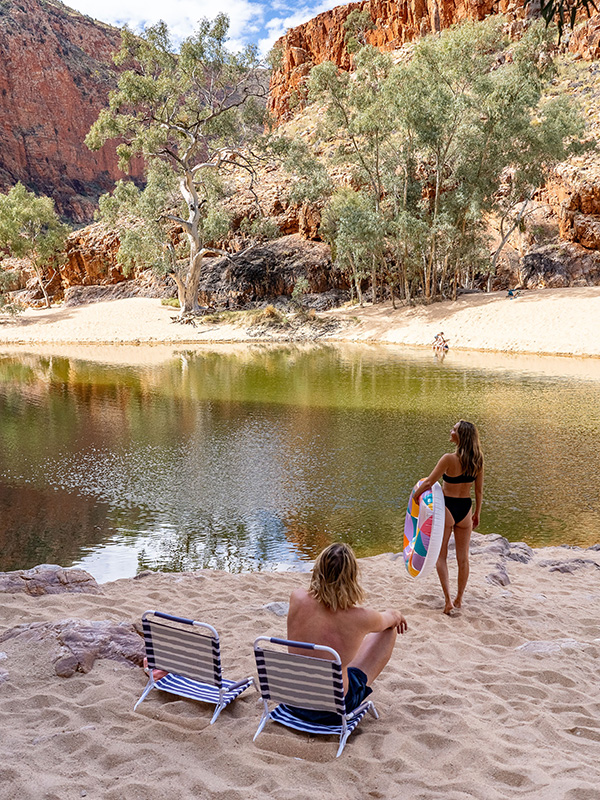
Ormiston Gorge , a cooling oasis in among the red desert sands, is one of the most popular destinations, no doubt because of the permanent swimming hole and towering red cliffs. From here, visitors can also embark on the beautiful Ormiston Pound Walk and the shorter – more accessible – Ghost Gum Walk. Bring your bathers – it’s safe for swimming.

4. Standley Chasm

woman walking through Standley Chasm near alice springs
Wander through Standley Chasm. (Image: Tourism NT)

The 1.2-kilometre walk to nearby Standley Chasm will be a highlight for any visitor as the imposing 40 metre-high chasm walls project strength and ancient wisdom.

Visit at midday to experience the path illumined by the midday sun. Not only will you fill your camera roll with vibrant red images of the gorge and its intoxicating shadows, but you can also camp nearby in a powered or unpowered site so you can watch the brilliance of the desert stars fill the night sky after dusk.

5. Simpsons Gap

three people walking on path through simpsons gap near alice springs
Walk the trails of Simpson’s Gap. (Image: Tourism NT/ Helen Orr)

Closer to Alice Springs, the photogenic Simpsons Gap is the perfect place to spot the endangered Black-footed Rock wallaby near the permanent watering hole. While swimming isn’t permitted, soaking up the sun and views certainly is.

Explore the area’s numerous walking trails, appreciate the soaring cliffs on either side of the ‘gap’ and pick out the shooting locations of Kangaroo in the area.

6. Ellery Creek Big Hole

aerial of Ellery Creek Big Hole near alice springs
Dive into Ellery Creek Big Hole. (Image: Tourism NT/ Tourism Australia)

When it comes to classic Northern Territory landscapes, you can’t go past Ellery Creek Big Hole/ Udepata : tall gum trees sidling up to a refreshing watering hole (fed by the West MacDonnell Ranges and surrounded by rugged red cliffs.

Swim in the cooling waters, hike the cliff tops, watch for birds and even stargaze as you camp here overnight. It’s locations like this that attracted the film’s director Kate Woods to the project.

“It humbles you to be in this environment: it’s so beautiful, so old and so vast,” she explains. “I was thrilled to get a chance to … shoot such a beautiful story in the incredible landscape of the Northern Territory.”

7. Larapinta Drive

aerial of Larapinta Drive into alice springs
Drive along Larapinta Drive. (Image: Tourism NT)

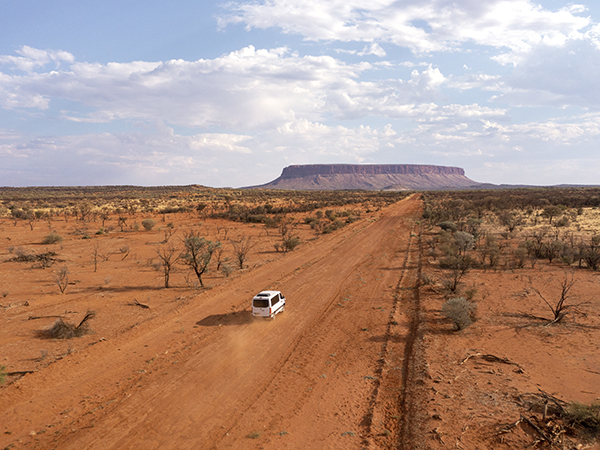
There is no better way to get a feel for how the characters arrived at the fictional Central Australian town of Silvergum than to travel along the iconic state road, Larapinta Drive.

Connecting Alice Springs to the mighty King’s Canyon in the west, via the historic community of Hermannsburg, this road takes in the West MacDonnell National Park, Alice Springs Desert Park and artist Albert Namatjira’s house, among other attractions. Take your time, bring a camera and prepare for numerous stops along the way.

8. Todd River

competitors in Henley on Todd Regatta, alice springs
Join in the fun of the quirky Henley on Todd Regatta. (Image: Tourism NT/ TImparja Creative)

Meandering through Alice Springs like a lazy Western Brown snake, the Todd River is a central part of Alice Springs culture. Known as an ‘intermittent river’, the Todd can go from a dry dusty riverbed to a flowing waterscape in less than 15 minutes after heavy rainfall.

When it’s dry, the famous Henley on Todd Regatta fills the sandy riverbed with handmade ‘boats’ carried by sailors. This is the world’s only dry river boating event, and it’s referenced in the ‘Silvergum Boat Race’ in the movie. Inspired by the real-life event, the characters built quirky “Flintstones-style boats” and competed in teams.

See Kangaroo in cinemas now, and start planning your NT getaway at northernterritory.com.