9 immersive Kakadu tours you must experience

hero media
Kakadu is not only steeped in natural beauty – it also holds 65,000 years of Indigenous history.

Choosing which tours to do in Kakadu National Park can be bamboozling, so we’ve taken the hard work out with this list of the best tours in Kakadu.

The Traditional Owners are the Bininj in the north of Kakadu and the Mungguy in the south. The landscape heaves with life, both cultural and natural, and contains a multitude of spiritual sites.

There are plenty of tours in Kakadu that offer incredible insights into the land and local culture. Where possible, it’s a great idea to seek out Indigenous-owned businesses and tour guides, as Aboriginal people hold the knowledge, stories and culture of the region and have done so for many millennia.

It’s worth noting that to enter Kakadu, you’ll need to purchase a Parks Pass , which can be organised online, or bought at one of the locations listed on Parks Australia’s website. Once you’ve got that sorted, here are the best tours in Kakadu to explore.

1. Yellow Water Cruises

Best for: Families and wildlife lovers

The Yellow Water Cruise  is one of the most iconic tours in Kakadu and operates year-round out of Cooinda Lodge (one of Kakadu’s most popular accommodation offerings). The landscape is ever-changing depending on the season, so no two cruises will be the same.
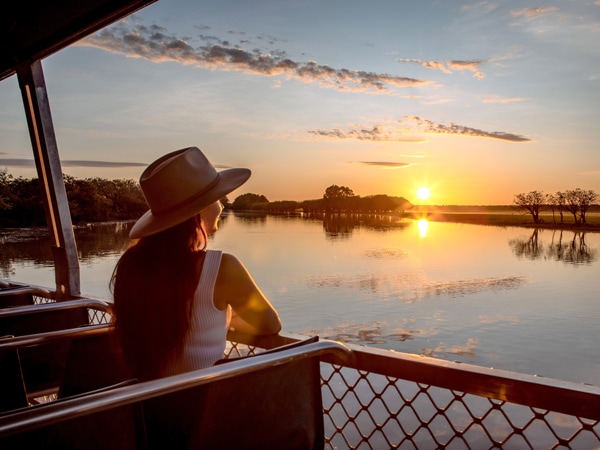
a woman admiring the sunset on a Yellow Water Cruise in Kakadu
Take the Yellow Water Cruise at sunset.

The wetlands are truly spectacular, and you’ll spot birdlife in abundance. Kakadu is home to around one-third of Australia’s bird species, and on the Yellow Water Billabong is a great place to witness jabiru, sea eagles, magpie geese and egrets. Take the tour at dawn or dusk when the wildlife is more active.
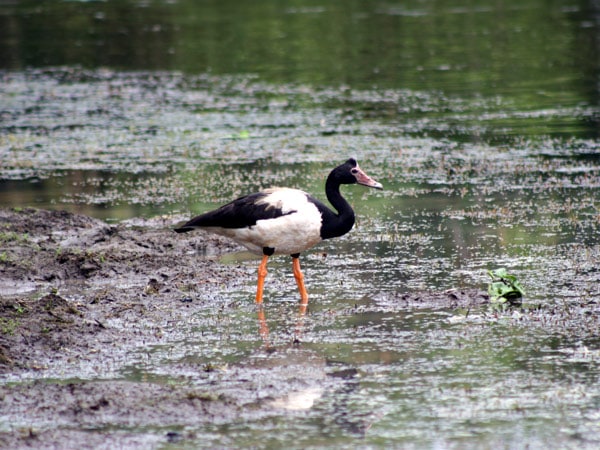
a Magpie Goose in the wetlands of Kakadu
Magpie Goose resides in the wetlands of Kakadu. (Image: Gillian McLaughlin)

Price: Starting from $105 per person for a 1.5-hour cruise

2. Guluyambi Cultural Cruise

Best for: Travellers seeking a cultural experience

From a small dock not far from Ubirr, you will venture to the Arnhem Land side of the East Alligator River on a small covered boat cruise.  This is an intimate tour where an Aboriginal guide will share local culture, stories and mythology.
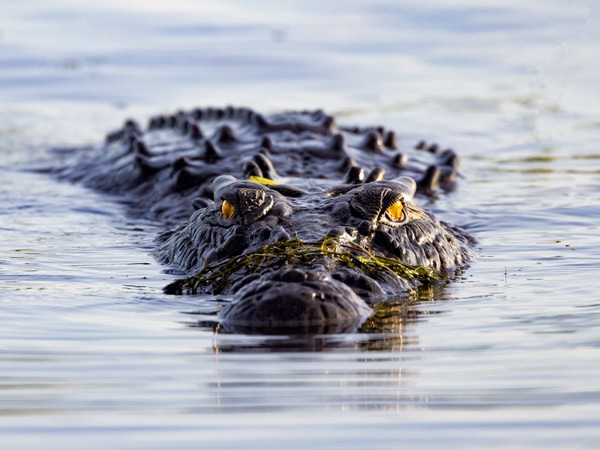
a crocodile in Kakadu
Expect to see a crocodile up close. (Image: Tourism NT/Sean Scott)

This Aboriginal reserve is otherwise inaccessible to tourists unless you have a permit. However, as guests of the Traditional Owners on this tour, you can venture where most cannot. Expect to see some impressively large crocodiles, sandy beaches and ancient rock art.

Price: $89 for a one-hour and 45-minute cruise

3. Rock art tours

Best for: Families and travellers curious about Indigenous history and spirituality.

Kakadu holds thousands of rock art sites , which are some of the oldest records of any group of people in the world. The two most famous rock art sites in Kakadu are Ubirr and Burrungkuy (Nourlangie). Here, you’ll find enigmatic depictions of animals, spirits and Indigenous Creation Ancestors.
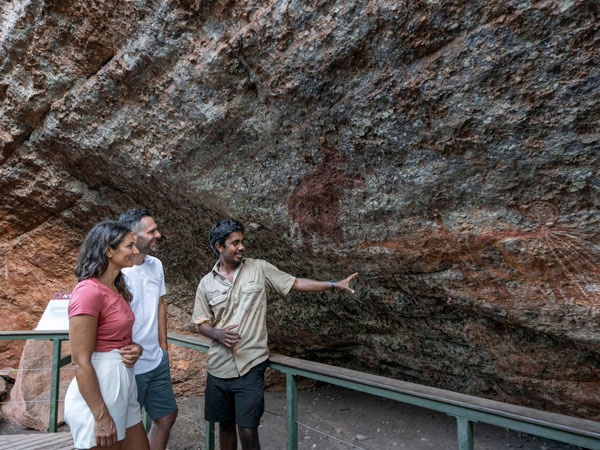
James Morgan explaining Ubirr Rock Art to visitors
Find mystic creatures illustrated on the Burrungkuy Rock Art.

If you’re interested in learning about local Indigenous culture, a taking tour of Kakadu’s rock art is one of the best things to do in the national park.

The local Bininj guides of Yibekka Rock Art Tours  lead tours to Burrungkuy, sharing the incredible stories behind the rock art as well as the Dreaming stories held within the landscape.
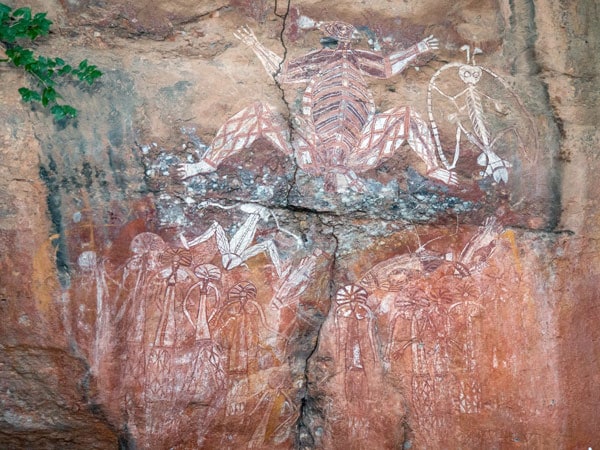
enigmatic drawings on the rock at Ubirr, Kakadu
Yibekka Rock Art Tours lead tours to Burrungkuy. (Image: Namarrkon adeshfr)

For groups looking to enrich their experience in Kakadu, take a cultural tour of Ubirr and/or Burrungkuy with Ayal Aboriginal Tours , where your knowledgeable guide will interpret the landscape and images you’re witnessing.
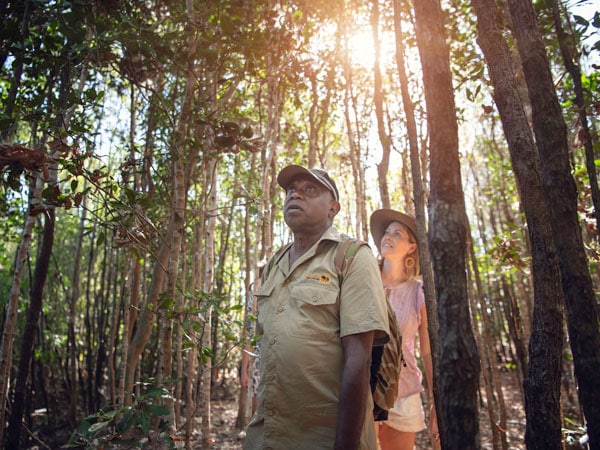
Victor Cooper accompanying tourists during Ayal Aboriginal Tours Kakadu
Tour Kakadu bushlands with Ayal Aboriginal Tours’ local guide Victor Cooper.

Price: For Yibekka Tours, enquire about pricing on their website. For Ayal Aboriginal Tours, a private guide for 90 minutes starts at $550 for groups of up to 12 people.

4. Ranger-guided walks, talks and workshops

Best for: Families and travellers curious about Indigenous history and spirituality

One of the best things about Kakadu is that its most popular walking trails are staffed by park rangers who, during the dry season, give guided tours for free. The tours are part of Kakadu’s interpretive program, which includes guided walks, slideshows in certain campgrounds, art site talks and cultural demonstrations like pandanus weaving and Indigenous painting techniques.

The program schedule changes each dry season, so stay up to date with The Parks’ schedule of ranger-guided activities . Attending is free, but you must book online. For more information, contact the Bowali Visitor Centre, which can be contacted on 08 8938 1120
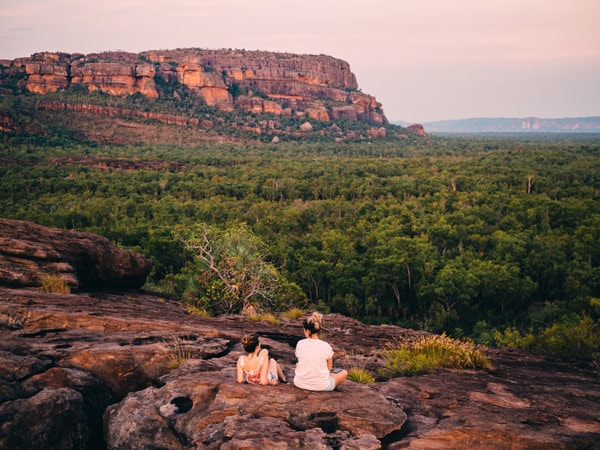
two people sitting on a rock at Nawurlandja Lookout, Kakadu
See spectacular views of Kakadu from the Nawurlandja Lookout.

Price: Free

5. Wildlife safari

Best for: Immersing yourself in Aboriginal culture

Animal Tracks  is a seven-hour wildlife safari and fascinating Aboriginal cultural tour in a 4WD bus that runs in the dry season.

You’ll hunt and forage ingredients for your dinner, then cook them to eat while watching the sunset over a billabong alive with bird life. Animal Tracks has exclusive access to some areas of wetlands and woodlands, with a maximum of 18 guests and led by an expert Aboriginal guide.
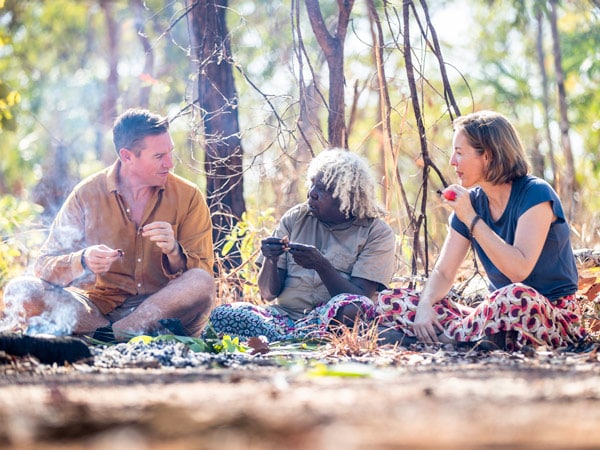
a couple at the Animal Tracks Safari in Kakadu
Hunt, forage and cook ingredients for your dinner with Animal Tracks Safari. (Image: Tourism NT/Helen Orr)

Price: From $240

6. Scenic flights

Best for: Travellers with an adventurous streak

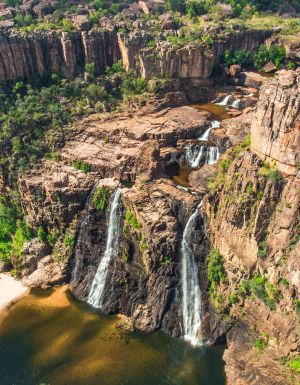
A scenic flight in Kakadu is an unforgettable experience. Get a new perspective of the floodplains and escarpments from the air, especially in the wet season. Feel like you’re in an action movie as you soar over savanna woodlands in a doorless helicopter, whizzing past magnificent waterfalls and darting through canyons.
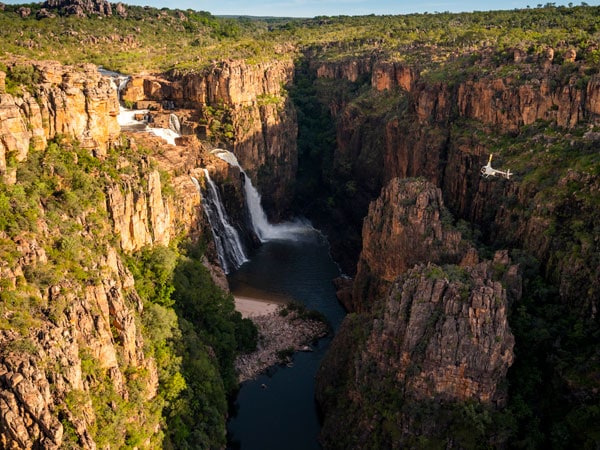
a scenic flight over Twin Falls, Kakadu National Park
Hop on a scenic flight over Twin Falls, Kakadu National Park. (Image: Tourism NT)

Kakadu Air Services offer scenic flights options (helicopter of fixed-wing aircrafts) that last between 20 minutes and an hour. Visitors can truly kick back and take in the landscape from the ultimate vantage point. If you’re short on time, Kakadu Air Services also offer a Darwin to Kakadu day trip via helicopter that takes in a few of the key attractions, as well as unparalleled vistas of the landscape. The tour returns to Darwin at 4pm on the same day.
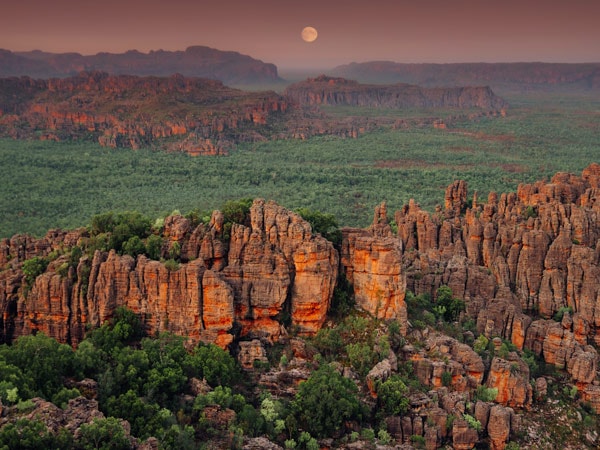
an aerial view of Kakadu National Park
Be mesmerised by the jagged rock formations up above.


Price: From $159 for a half-hour fixed-wing flight.

7. 4WD tours

Best for: Travellers looking to get off the beaten path (literally).

A four-wheel-drive tour of Kakadu allows visitors to get right into the heart of the National Park, and access areas way off the beaten track.

If you’re looking for unique cultural insights, the Traditional Owners that run Kakadu Cultural Tours  have access to exclusive sites in Northern Kakadu and Arnhem Land. Arnhemlander is an exceptional day tour into Western Arnhem Land.
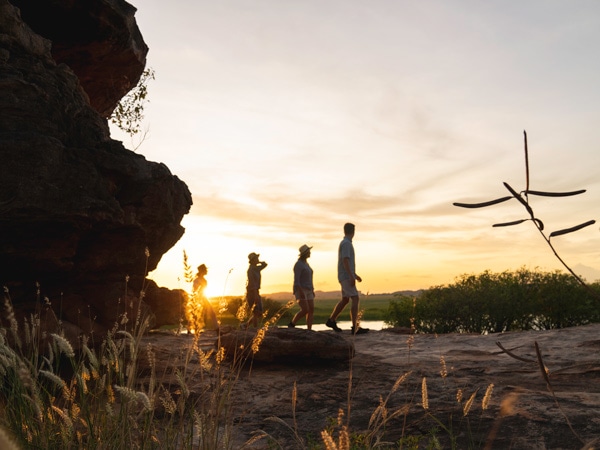
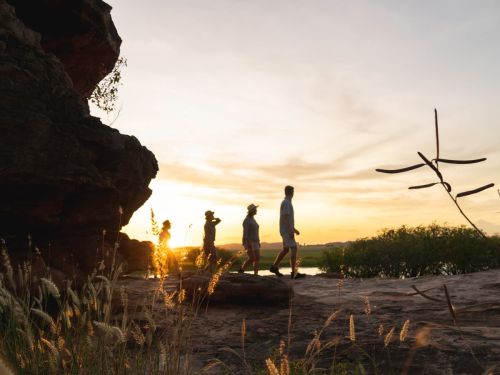
people walking at sunset during Kakadu Cultural Tours
Immerse in the wilderness with Kakadu Cultural Tours. (Image: Tourism NT/Tourism Australia)

Or perhaps you’d like to a few days with Sab Lord – a legend in the Northern Territory known as a classic outback character. Sab’s Lords Safaris take day and multi-day tours into Kakadu. His family owned and operated the last pastoral land that later became part of Kakadu National Park and Sab has maintained his connection to the land.

Price: The Arnhemlander starts from $302. Enquire here  for Lord’s Safari’s multi-day tour pricing.

8. Fishing trips

Best for: Fishing fanatics

The wet season displaces millions of litres of water, making Kakadu a fishing hotspot. After the wet season, barramundi (alongside other fish) collect in certain areas, including Yellow Water, South and East Alligator River, Sandy Billabong, and Two- and Four-Mile Holes.

Fishing in Kakadu requires a licence, but if you don’t have one (or don’t want the hassle of hiring your boat and 4WD), you can join a local fishing tour. Some operators like Kakadu Fishing Tours  run day tours from Darwin to Kakadu.

Otherwise, there are a few options if you’d like to add some fishing to your itinerary while in the park. Kakadu Fishing Tours also runs a charter service that can go anywhere you like.

Cooinda Lodge offers Yellow Water Fishing Tours  on the beautiful Yellow Water Billabong. Bamurru Lodge, a luxury property nearby Kakadu, turns exclusively into a dedicated barramundi fishing lodge during the run-off.
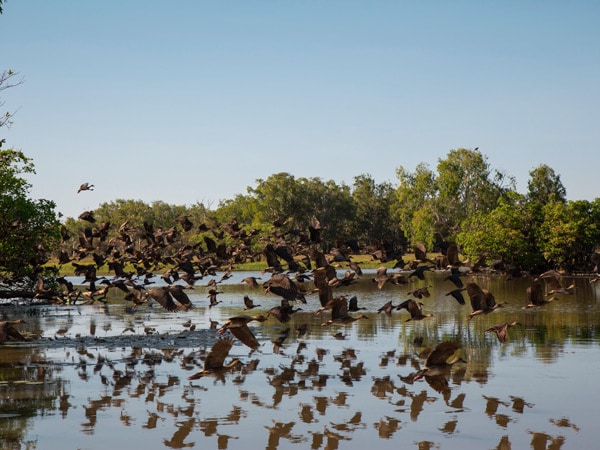
birds flying over Yellow Water Billabong, Kakadu
Watch the birds flock to Yellow Water Billabong. (Image: Tourism Australia)

Price: Yellow Water Fishing Tours are from $260 per person including all fishing gear and cold drinks.

9. Day trips from Darwin

Best for: Travellers short on time, travellers without a car, or travellers who want to kick back and let someone else take care of the planning.

Take away the stress of organising your visit to Kakadu with either a day trip or a multi-day tour from Darwin. We recommend more than one day to truly take in all the region has to offer, but if time is a luxury you don’t have, then there are a few options.

A scenic flight tour of Kakadu from Darwin  will save you the most time, stopping off at a few key attractions before returning to Darwin in the afternoon.

Or, set out bright and early for a day tour of Kakadu from Darwin via coach with AAT Kings . If you’ve got a bit more time on your hands, then Intrepid Tours offer a multi-day Darwin to Kakadu tour that takes in the very best the Top End has to offer.
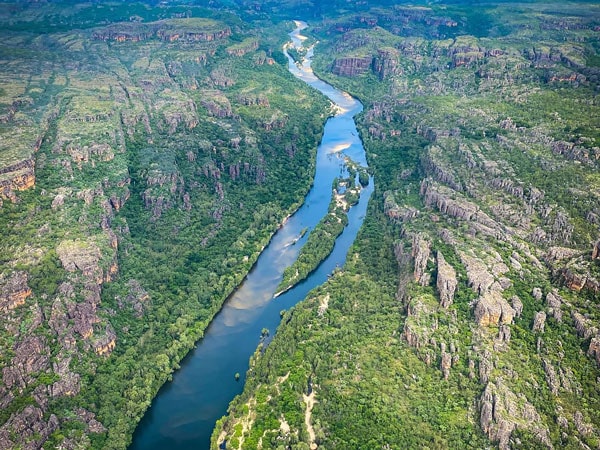
an aerial view of Kakadu National Park
There’s just more to discover in the Top End.

Price: Day tours via air start at $899 with Kakadu Air Services. A day tour via coach starts at $399 with AAT Kings. Check Intrepid for their schedule of tours and pricing .

Elizabeth Whitehead
Elizabeth Whitehead is a writer obsessed with all things culture; doesn't matter if it's pop culture or cultures of the world. She graduated with a degree in History from the University of Sydney (after dropping out from Maths). Her bylines span AFAR, Lonely Planet, ELLE, Harper's BAZAAR and Refinery 29. Her work for Australian Traveller was shortlisted for single article of the year at the Mumbrella Publishing Awards 2024. She is very lucky in thrifting, very unlucky in UNO.
See all articles
hero media

8 Red Centre locations to explore after seeing the new movie, Kangaroo

Spend a few days visiting the real-life Central Australian locations that inspired the new film everyone is talking about, and discover why Alice Springs is such an important part of Australian culture.

In the credits of the new Australian film Kangaroo , the first name under ‘cast’ should read ‘The Northern Territory ’. Not only is Alice Springs (and the surrounding landscape) integral to the movie itself, but the spiritual heart of Australia and its local Indigenous owners also inform the look and feel of every frame, explains Producer Trisha Morton-Thomas of Brindle Films, who also plays Charlie’s grandmother Gwennie.

“By setting Kangaroo in Alice Springs (Mparntwe), the film embraces how visible Aboriginal people are here, and the living Aboriginal culture that is woven through this community,” she explains.

still from kangarro film
See Kangaroo, then visit the real-life filming locations.

And while shooting in such a sacred part of the Northern Territory required extra planning, it was something the cast and crew were highly invested in.

“There are incredibly significant sacred sites and places of deep cultural stories in the area, that at times are very gender-specific, which we’ve kept out of the production,” she explains. “Even if overhead drone footage captures a sacred site that isn’t meant to be seen by other people outside of that clan, we’ve made sure to omit it from the film.”

If Kangaroo piqued your interest in a Central Australian holiday, we don’t blame you. Read on to discover eight places featured in the movie that you can visit in real life – and get planning. Don’t forget to pack sunscreen and a hat.

1. Alice Springs/ Mparntwe

artist at Many Hands Art Centre
Visit the galleries of Alice Springs, like Many Hands Art Centre. (Image: Tourism NT/ Helen Orr/ Many Hands Art Centre)

The red and dusty streets of the film’s fictional town of Silvergum were filmed on the outskirts of Alice Springs. And, while the art gallery featured in the film is fictional, Alice Springs is a hub of creativity. See the work of local artists at the Araluen Art Centre , Yubu Napa Art Gallery , Iltja Ntjarra (Many Hands) Art Centre and the famous Tjanpi Desert Weavers .

2. The Kangaroo Sanctuary & Kangaroo Rescue Centre

The Kangaroo Sanctuary Alice Springs, the inspiration for the Kangaroo move
Visit the movie’s inspiration at Kangaroo Sanctuary. (Image: Tourism NT/ Kangaroo Sanctuary)

Kangaroo was inspired by the journey of Chris ‘Brolga’ Barns, who founded the now world-renowned Kangaroo Sanctuary based in Alice Springs. For lead actor, Aussie Ryan Corr, the animals were central to the movie, alongside the landscapes.

“The animals in this story were a real calling point for me,” he explains. “What this story tries to tell us about the connection between humans and animals is beautiful.”

To gain a real insight into the fauna and flora of the Red Centre, you can visit the Kangaroo Sanctuary on a sunset tour, where you might even get the chance to hold a baby kangaroo.

3. Ormiston Gorge

woman walking along the edge of Ormiston Gorge near alice springs
Take a dip in Ormiston Gorge. (Image: Tourism NT/ @domandjesso)

The film captures the raw beauty of the West MacDonnell Ranges, known in the Arrernte language as Tjoritja. This national park is rich in Indigenous culture and stark geological wonders.

Only a 15-minute drive from Alice Springs, Tjoritja offers visitors the chance to camp, hike and swim among ancient landscapes (most attractions are less than a three-hour drive away).

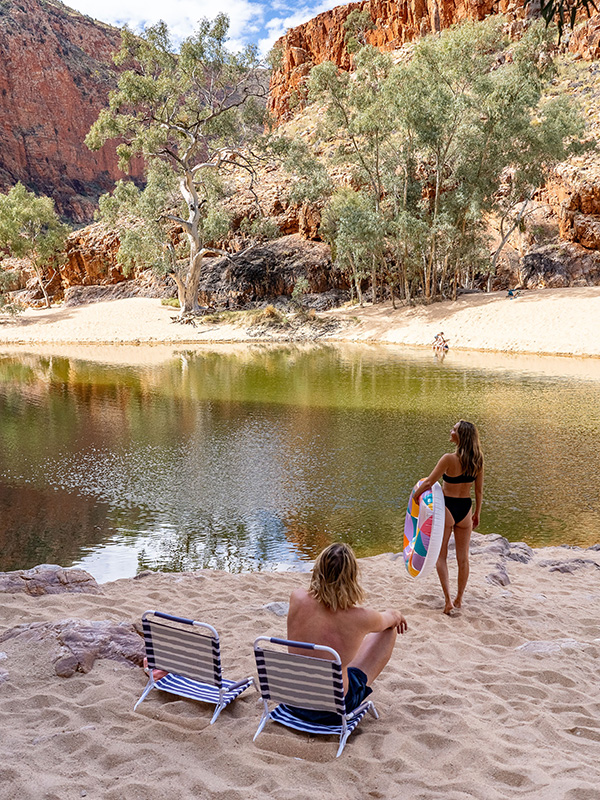
Ormiston Gorge , a cooling oasis in among the red desert sands, is one of the most popular destinations, no doubt because of the permanent swimming hole and towering red cliffs. From here, visitors can also embark on the beautiful Ormiston Pound Walk and the shorter – more accessible – Ghost Gum Walk. Bring your bathers – it’s safe for swimming.

4. Standley Chasm

woman walking through Standley Chasm near alice springs
Wander through Standley Chasm. (Image: Tourism NT)

The 1.2-kilometre walk to nearby Standley Chasm will be a highlight for any visitor as the imposing 40 metre-high chasm walls project strength and ancient wisdom.

Visit at midday to experience the path illumined by the midday sun. Not only will you fill your camera roll with vibrant red images of the gorge and its intoxicating shadows, but you can also camp nearby in a powered or unpowered site so you can watch the brilliance of the desert stars fill the night sky after dusk.

5. Simpsons Gap

three people walking on path through simpsons gap near alice springs
Walk the trails of Simpson’s Gap. (Image: Tourism NT/ Helen Orr)

Closer to Alice Springs, the photogenic Simpsons Gap is the perfect place to spot the endangered Black-footed Rock wallaby near the permanent watering hole. While swimming isn’t permitted, soaking up the sun and views certainly is.

Explore the area’s numerous walking trails, appreciate the soaring cliffs on either side of the ‘gap’ and pick out the shooting locations of Kangaroo in the area.

6. Ellery Creek Big Hole

aerial of Ellery Creek Big Hole near alice springs
Dive into Ellery Creek Big Hole. (Image: Tourism NT/ Tourism Australia)

When it comes to classic Northern Territory landscapes, you can’t go past Ellery Creek Big Hole/ Udepata : tall gum trees sidling up to a refreshing watering hole (fed by the West MacDonnell Ranges and surrounded by rugged red cliffs.

Swim in the cooling waters, hike the cliff tops, watch for birds and even stargaze as you camp here overnight. It’s locations like this that attracted the film’s director Kate Woods to the project.

“It humbles you to be in this environment: it’s so beautiful, so old and so vast,” she explains. “I was thrilled to get a chance to … shoot such a beautiful story in the incredible landscape of the Northern Territory.”

7. Larapinta Drive

aerial of Larapinta Drive into alice springs
Drive along Larapinta Drive. (Image: Tourism NT)

There is no better way to get a feel for how the characters arrived at the fictional Central Australian town of Silvergum than to travel along the iconic state road, Larapinta Drive.

Connecting Alice Springs to the mighty King’s Canyon in the west, via the historic community of Hermannsburg, this road takes in the West MacDonnell National Park, Alice Springs Desert Park and artist Albert Namatjira’s house, among other attractions. Take your time, bring a camera and prepare for numerous stops along the way.

8. Todd River

competitors in Henley on Todd Regatta, alice springs
Join in the fun of the quirky Henley on Todd Regatta. (Image: Tourism NT/ TImparja Creative)

Meandering through Alice Springs like a lazy Western Brown snake, the Todd River is a central part of Alice Springs culture. Known as an ‘intermittent river’, the Todd can go from a dry dusty riverbed to a flowing waterscape in less than 15 minutes after heavy rainfall.

When it’s dry, the famous Henley on Todd Regatta fills the sandy riverbed with handmade ‘boats’ carried by sailors. This is the world’s only dry river boating event, and it’s referenced in the ‘Silvergum Boat Race’ in the movie. Inspired by the real-life event, the characters built quirky “Flintstones-style boats” and competed in teams.

See Kangaroo in cinemas now, and start planning your NT getaway at northernterritory.com.