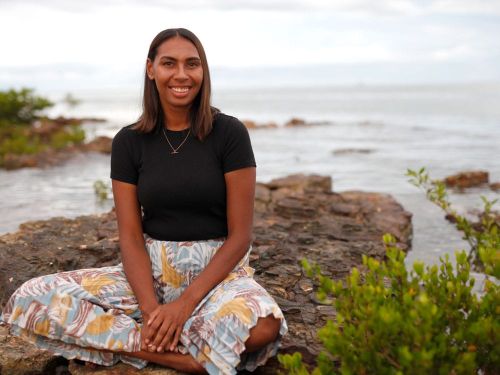
Liandra Gaykamangu on the meaning behind her swimwear designs

hero media
For a snapshot in time, we asked eight people around the country to reflect on Australia Now. Here, Liandra Gaykamangu, Creative Director & Founder of Liandra Swim in the NT, shares her thoughts on what the global pandemic has taught her.

Keep reading our Australia Now series here.

You were born in East Arnhem Land, but moved to Wollongong in 2000 with your mum. What drew you back to the Northern Territory?

Dad passed away in December 2019 when I was eight months pregnant with my third baby. When I returned home for his funeral, I found it comforting to have my wider family around me. I also wanted my kids to know their family, culture and language and thought it would be good for them to spend time in East Arnhem Land learning who they are. There was always an expectation in my family that I would achieve as much as I could and then bring that back to my community and make a positive impact. My parents always pushed me to achieve. When I left high school for university, Dad said to me: “Don’t forget who you are and where you’re from. Come home when you’re ready." After his passing, it felt right on a personal and professional level to make the move.
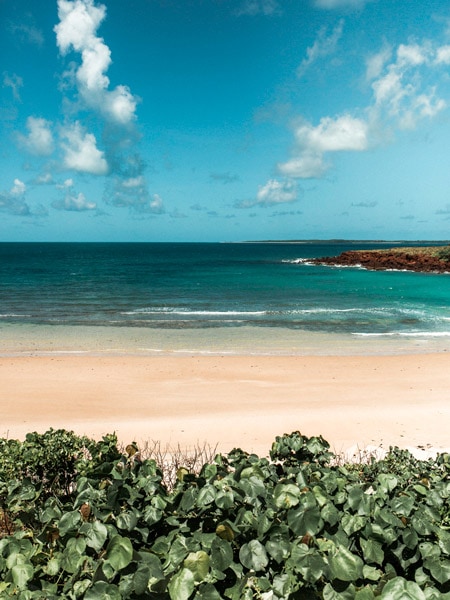
East Arnhem Land secluded beach
The remote beaches of East Arnhem Land in the NT. (Image: Tourism NT/Hayley Anderson)

You have a teaching degree. Why swimwear?

My mum remarried a surfer and we spent a lot of our family time on the beach. The ocean is a naturally comforting place for me; I am a Yolngu woman, and it is integral to our culture and livelihoods. I love swimwear and it felt like a comfortable place for me to use fashion and wrap it in education and give people an opportunity to learn about Indigenous women, our culture and stories. My swimwear is an extension of what I care deeply about. It’s who I am.

Model wears Tara Top and Tara Bottom from the Liandra Swim Community Collection
Tara Top and Tara Bottom from the Liandra Swim Community Collection. (Image: Tim Henry)

What are you most proud of with Liandra Swim?

My swimwear is wrapped up in all the things I love – it merges tradition with sustainability and education. I am really proud of my partnership with David Jones and our first runway at Afterpay Australia Fashion Week. I am also really proud of our growing Liandra Swim community and love seeing women wearing Liandra Swim.

Need tips, more detail or itinerary ideas tailored to you? Ask AT.

AI Prompt

Tell us about your new line, the Community Collection?

I wanted to put the focus on my beautiful Milingimbi Island. This collection is inspired by the landscape and my experience of being from there. My hand-drawn prints are a contemporary take on Aboriginal art and culture. I have some incredible artist family members who I look forward to working with, when the timing is right, because I want to do those songlines justice. I am not launching a collection just to make money. It has to make sense and be done correctly with appropriate conversations and family consultations.

What has launching Liandra Swim taught you about yourself?

To always believe in myself. I had people say, ‘Swimwear is an oversaturated market’. But I stayed true to my vision and now, being able to partner with David Jones and being recognised by international magazines such as Vogue in the US, Elle (Italy), Harper’s Bazaar and The Zoe Report after just a few years in the game validates that. I am glad I followed my gut and my dream.
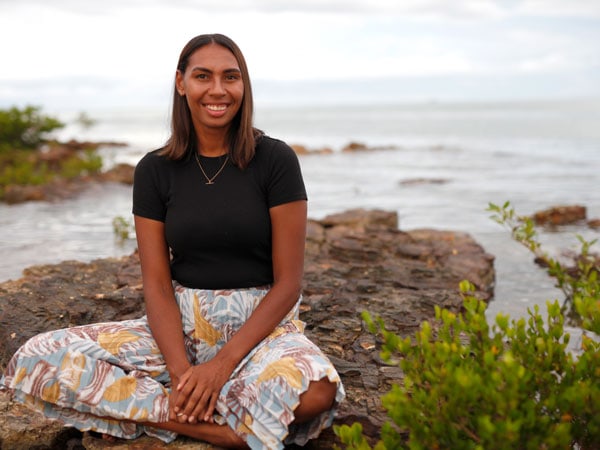
Proud Yolngu woman Liandra-Gaykamangu-in-Milingimbi in East Arnhem Land
Proud Yolngu woman, Liandra Gaykamangu returned home to Milingimbi in the Crocodile Islands in East Arnhem Land, after rthe launch of her swimwear line, Liandra Swim. (Image: Yasmin Steel)

How do you perceive Australia right now?

I am the co-CEO of an NFP, Enterprise Learning Projects, which supports Aboriginal and Torres Strait Islanders to achieve their goals in business and entrepreneurship, so I have a lot of conversations around social enterprise and I see conversations shifting, which is exciting. The batons are being passed to the next generation. And I can’t speak for all Aboriginal and Torres Strait Islander people. But I am in a position to take that baton from those in fashion, education and the social enterprise space and continue to open discussions.

Social enterprise is not a new term for Indigenous Australians, is it?

No. It’s not. For Aboriginal and Torres Strait Islander people, community impact has always been a part of how we do business. I have to make money, because that is how you grow and stay in business. But money is not how I, as an Aboriginal woman, view success or how I see our biggest impact.

How do non-Indigenous Australians find pride in our Indigenous history?

I highly recommend for non-Indigenous people to connect with their local Aboriginal or Torres Strait Islander community first before feeling the need to explore beyond that. It’s a huge sign of respect to understand the stories of the Country you live on and engage with every day. It’s really important to know that Australia is versatile in terms of culture and language so stories may be similar, but there will always be differences. It is also good to be mindful of history and how that has impacted people. Australia is a very big place with varying cultures, languages and impacts. Lean into your local community and engage with where you spend most of your time. Then go and explore all Indigenous Australia has to offer, so you can get a deeper understanding of why we have, and need, so many different voices, faces and perspectives.

Carla Grossetti
Carla Grossetti has written across print and digital for Australian Traveller and International Traveller for more than a decade and has spent more than two decades finding excuses to eat well and travel far. A prestigious News Corp cadetship launched her career at The Cairns Post, before a stint at The Canberra Times and The Sydney Morning Herald gave way to extended wanders through Canada, the US, Mexico, Central America, Asia and Europe. Carla was chief sub editor at delicious and has contributed to Good Food, Travel & Luxury, Explore Travel, Escape. While living in London, Carla was on staff at Condé Nast Traveller and The Sunday Times Travel desk and was part of the pioneering digital team at The Guardian UK.
View profile and articles
hero media

Red earth, light shows and ancient culture: discover the ultimate NT road trip

(Credit: Tourism & Events NT/ Ben Savage)

    Kassia Byrnes Kassia Byrnes
    The Northern Territory is made for road trips, and this one hits all the highlights.

    Craggy mountain ranges, inviting waterholes, ochre soil: the landscape of the Northern Territory is asking to be explored by road and foot. There are many iconic road trips to choose from here, but none so all-encompassing than the roughly 3000 kilometres of sealed road that make up Explorer’s Way.

    Spend 14 days (or more, to really make the most of it) driving this route from Adelaide, hitting the NT near the small settlement of Kulgera before later finishing in Darwin. Along the way, you’ll find nearly all the territory’s most iconic sights.

    Discover some of the top highlights that make Explorer’s Way one of Australia’s most incredible road trips.

    1. Alice Springs

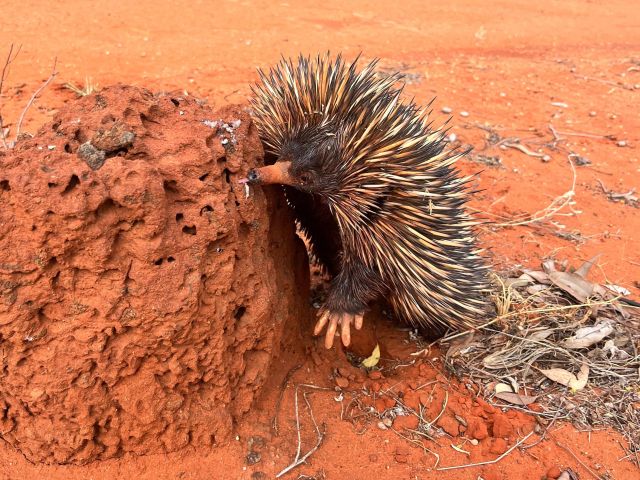
    echidna at Alice Springs Desert Park
    See the locals at Alice Springs Desert Park. (Credit: Tourism & Events NT)

    Recently hitting the big screen again with the story of The Kanagroo Sanctuary, there’s a lot to surprise you in Alice Springs.

    Three distinct desert habitats – desert rivers, sand country and woodland – are recreated over 1300 hectares at Alice Springs Desert Park. Time your visit for a presentation or a free bird show.

    Later, turn your attention to the skies above, taking a dive into local astronomy at Earth Sanctuary. You’ll find a range of experiences, from a 90-minute toe-dip into the stars through to an overnight adventure.

    Alice Springs packs a surprising punch with its tasty dining options, including pub grub and unique brews at Alice Springs Brewing Co, tapas and pizza at Epilogue Lounge and tasty cafe fare at the quirky Page 27.

    2. Tjoritja/West MacDonnell National Park

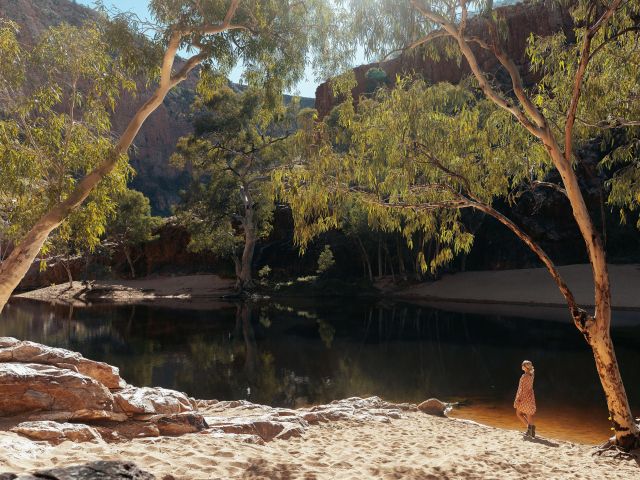
    woman standing at Ormiston Gorge
    Dive into Ormiston Gorge. (Credit: Tourism & Events NT/ Dom and Jesso)

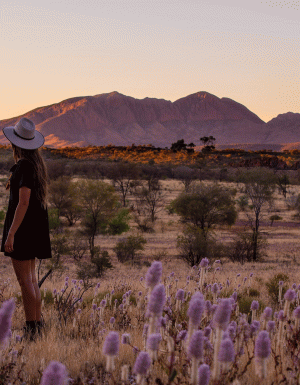
    Beginning 15 minutes from Alice Springs and stretching across 161 kilometres, Tjoritja/West MacDonnell National Park is packed with striking ancient landscapes and inviting water holes.

    Visit Standley Chasm – traditionally known as Angkerle Atwatye, meaning ‘Gap of Water’ – to take in its bold red and orange hues, and to observe the diverse bird species, lizards and wallabies that call it home.

    Cool off in one of several picturesque natural swimming holes, like Ellery Creek Big Hole and Ormiston Gorge.

    3. Uluru & Kata Tjuta

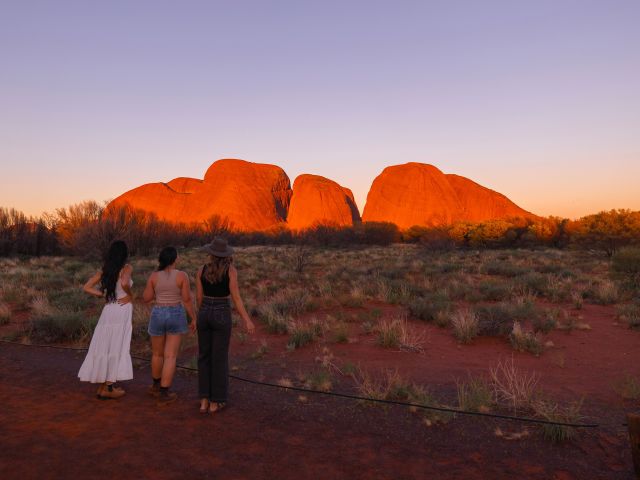
    three women looking at Kata Tjuta at sunset
    Explore Kata Tjuta. (Credit: Tourism & Events NT)

    Visiting the Cultural Heart of Australia is something everybody should experience. There are so many side trips in the Red Centre you could easily spend a week here, but to get the most out of a short time, park the car then get out on foot.

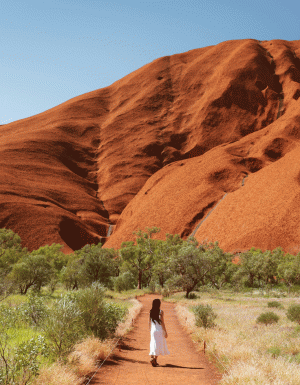
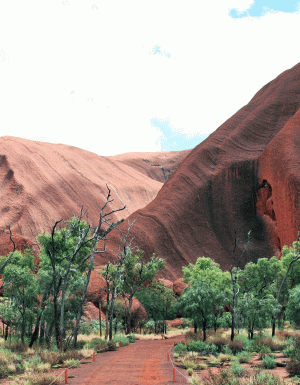
    Take the 10-kilometre Base Walk around the entirety of Uluru or join a free, ranger-guided Mala Walk along part of the base, learning about Tjukurpa (creation stories) and geology as you go.

    For a change of pace, wait until nightfall and wander through the iconic Field of Light display by celebrated artist Bruce Munro, or see the Wintjiri Wiru lightshow that shares the ancient Mala story using drones, lasers and projections.

    4. Tennant Creek

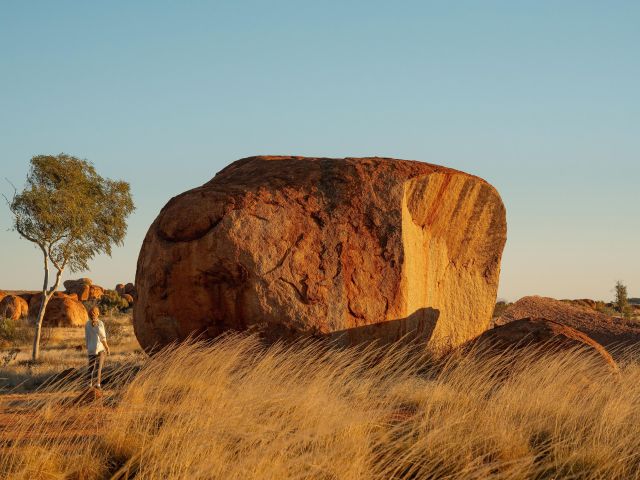
    pson looking at Karlu Karlu (Devils Marbles) northern territory
    See the ancient granite boulders of Karlu Karlu (Devils Marbles). (Credit: Tourism & Events NT/ Dom And Jesso)

    Tennant Creek was Australia’s third-largest gold mining town in the 1930s, and visitors can discover that history at Battery Hill Mining Centre – and even try their own hand at gold fossicking.

    For a completely different side of history, pop into Nyinkka Nyunyu Art & Culture Centre, which preserves and shares Warumungu culture through art, performance, a museum and more.

    Just outside town, find the ancient granite boulders of Karlu Karlu (Devils Marbles). A site integral to important stories held by the Warumungu, Kaytetye, Warlpiri and Alyawarra peoples, the boulders appear to almost have dropped out of the sky and seemingly continue to defy gravity.

    5. Mataranka

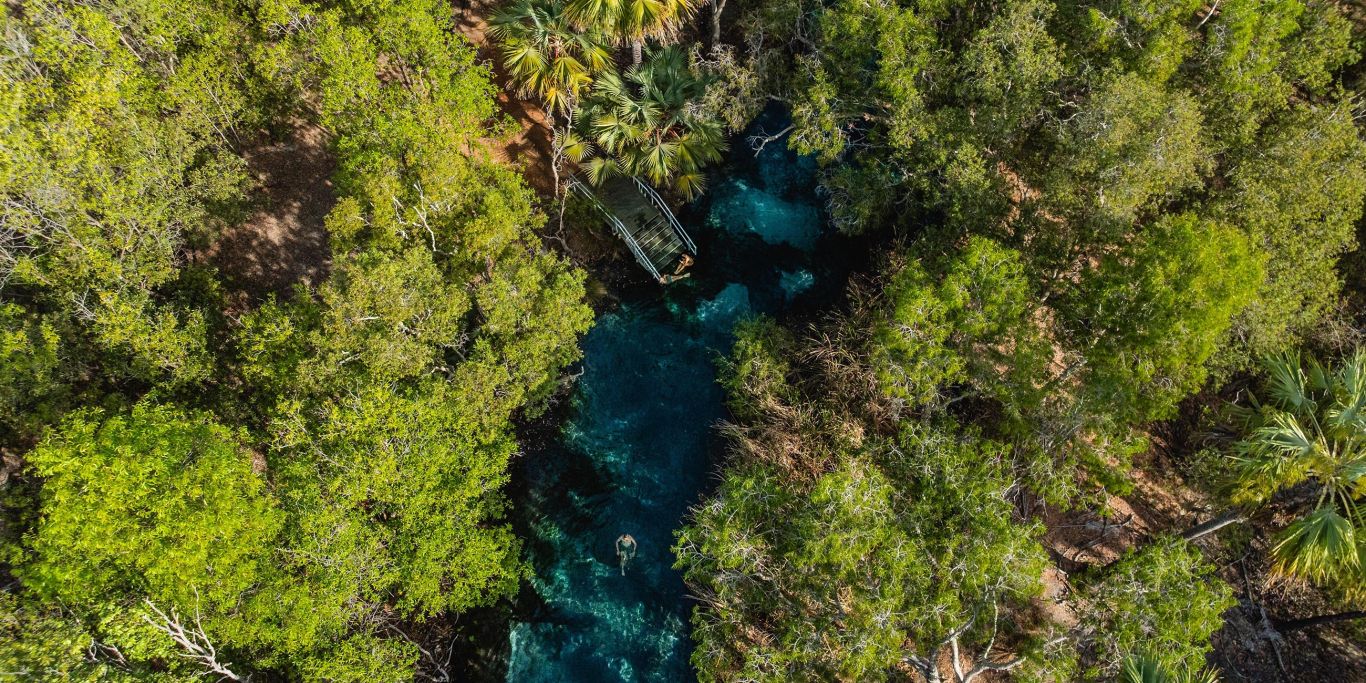
    aerial of people swimming in bitter springs northern territory
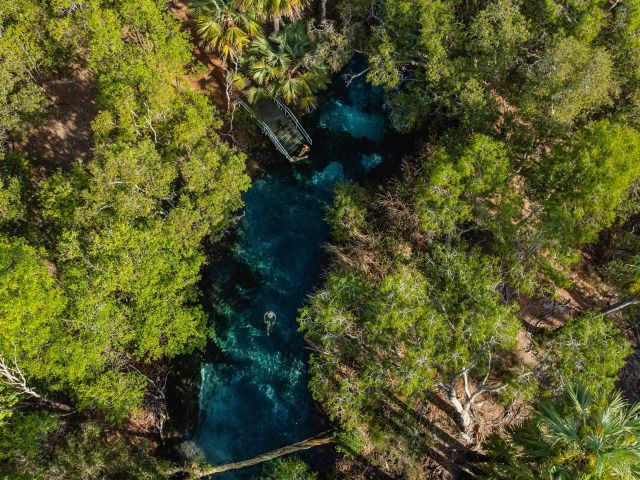
    Dive into Bitter Springs. (Credit: Tourism & Events NT/ Ben Savage)

    A town made famous by the novel We of the Never Never by Jeannie Gunn (and a movie of the same name), Mataranka is also known for its sandy-bottomed thermal pool, Bitter Springs, within Elsey National Park. Follow a 500-metre loop track around these spring-fed pools that stay a toasty 34°C year-round, before choosing your favourite spot to dive into. Enjoy the local birdlife while you relax.

    Elsewhere in the park, find historical sites, several scenic walks and Roper River, which is perfect for boating and fishing.

    6. Nitmiluk National Park

    Nabilil Dreaming Sunset Dinner Cruise
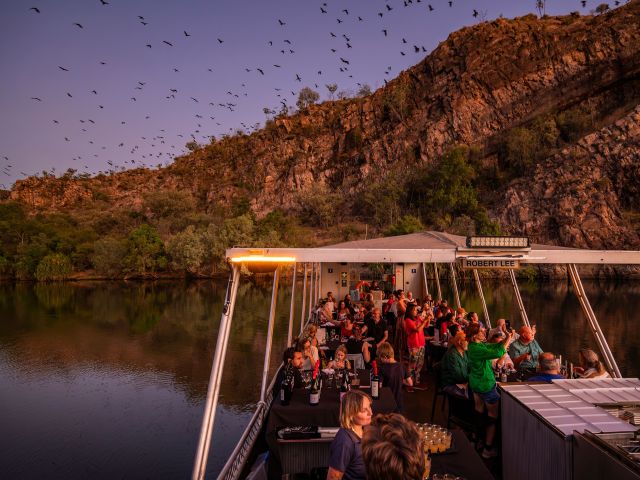
    Join a sunset cruise with Nabilil Dreaming. (Credit: Tourism & Events NT/ Lachlan Gardiner)

    Nitmiluk National Park is sandstone country, with 13 stunning gorges and plenty of waterfalls waiting to be explored.

    One of the most beautiful spots can be found along the 62-kilometre Jatbula Trail, a five-to-six day bushwalk that follows an ancient Jawoyn songline from Nitmiluk Gorge to Leliyn (Edith Falls). Numbers are restricted and book out quickly, so be sure to plan well ahead. Not up for the hike? Drive right up to the falls and enjoy a dip without the challenge.

    Elsewhere, explore Nitmiluk (Katherine) Gorge. Paddle a kayak through the river running through the canyon, or save your energy on a Nabilil Dreaming Sunset Dinner Cruise, discovering the stories and ways of the Jawoyn people while enjoying a candlelit dinner as the cliffs around you shift colour and glow with the changing daylight.

    Continue your cultural journey at local art centres like Godinymayin Yijard Rivers Art & Culture Centre or Mimi Aboriginal Art & Craft.

    7. Litchfield National Park

    cathedral termite mounds in Litchfield national park
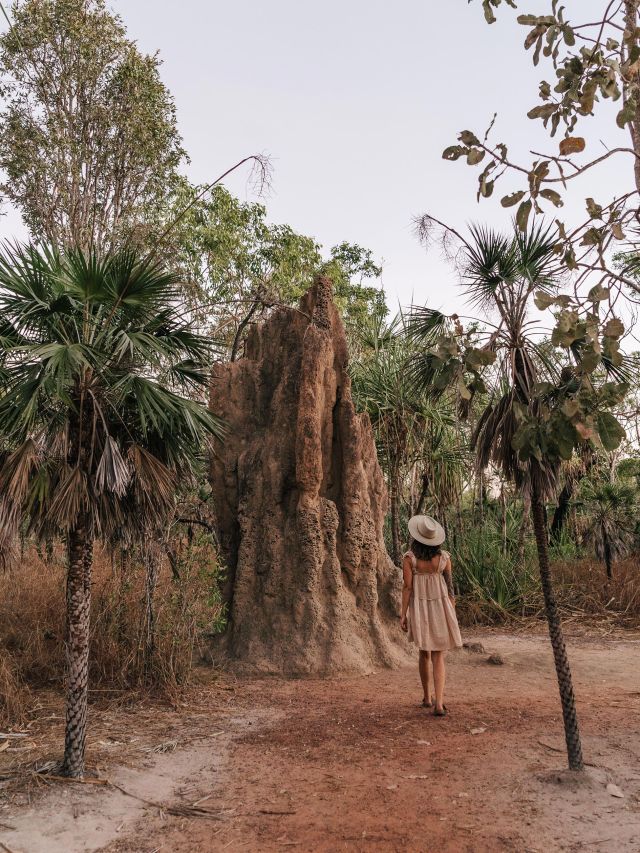
    Be awed by giant cathedral termite mounds. (Credit: Tourism & Events NT/ As We Wander)

    Just over an hour’s drive from Darwin lies the beautiful Litchfield National Park. It’s famous for stunning waterfalls and swimming holes, including Buley Rockhole, Wangi Falls, Florence Falls and Tjaynera Falls.

    Here you’ll also find hundreds of giant – and magnetic – cathedral termite mounds that are truly a sight to see. Ageing up to 100 years old, you won’t find mounds like these outside the northern parts of Australia. Stroll along the accessible boardwalk to see them up close.

    8. Darwin

    darwin street art
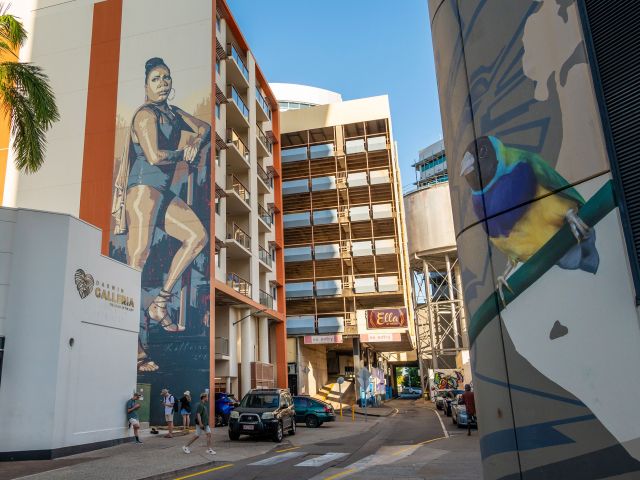
    Darwin art is streets ahead. (Credit: Tourism & Events NT/ Mark Fitzpatrick)

    This list wouldn’t be complete without the territory’s capital city: Darwin. Situate yourself upon arrival with a stroll through the main streets, admiring the many art murals by local, interstate and international artists. They’re all remnants of the annual Darwin Street Art Festival, one of Australia’s longest running street art festivals.

    Stop to recharge along Darwin’s Waterfront Precinct, an area of delectable restaurants, public swimming pools and free events. And, of course, it would be wrong to leave the city without enjoying a bowl of laksa at Mindil Beach Sunset Market as the sun goes down.

    Learn more and start planning your Explorer’s Way road trip at northernterritory.com/drive.