Strap yourself in: A local’s guide to Northern Territory road trips

hero media
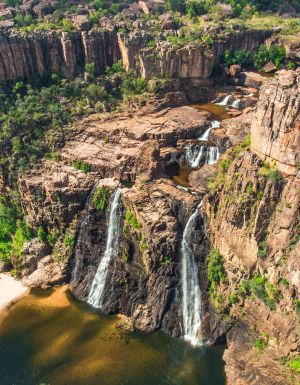
The Territory is the ultimate driving adventure. Picture this: floating in a waterhole that plunges 40 metres deep, spotting turtles gliding along crystal-clear edges, or admiring rock paintings of Thylacines at Ubirr, barista-made coffee in hand.

With windows down and your favourite playlist on, the open road beckons, leading you to mud crab feasts on white sandy beaches or a laksa enjoyed as the sun sinks below the horizon. By night, the bush comes alive with stars, the scent of roasted marshmallows and the crackling of a campfire.

Whether you’re planning a quick escape to swim at Berry Springs near Darwin or gearing up for a rugged 675km trek along the Central Arnhem Road, these Territory trips promise stories worth sharing.

Katherine to Nhulunbuy

Distance: 675km one-way trip, 4WD essential
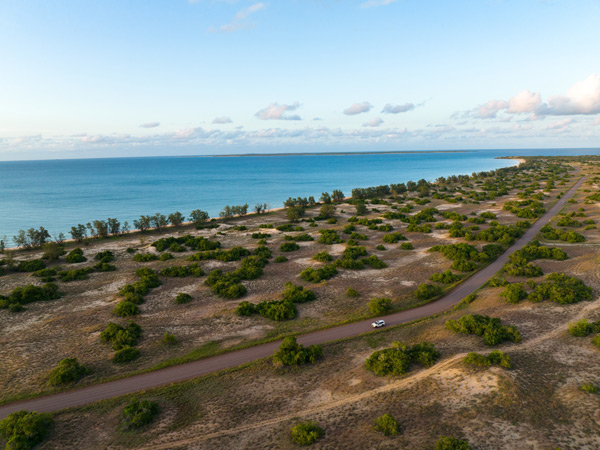
an aerial view of East Arnhem Land Coast
Drive past turquoise waters. (Image: Tourism NT/Sean Scott)

This route is for the serious adventurers who hear “endless dirt road" and say, Let’s go. The two-day drive from Katherine to Nhulunbuy on the Gove Peninsula offers Yolŋu culture, pristine beaches and turquoise waters.

Start by stocking up on fuel and snacks in Katherine, then head 50km south to the Central Arnhem Road turnoff. Your first stop is Djilpin Arts Centre in Wugularr (Beswick), where a permanent art collection and quality coffee make it a cultural gem. Stay overnight in one of Djilpin’s four elevated pavilion rooms and book a tour to the stunning Melkjulumbu (Beswick Falls) if you can.

an aerial view of the Central Arnhem Road, NT
Tackle the sunburnt Central Arnhem Road. (Image: Tourism NT/Sean Scott)

Another 50km down the track is the Jurassic Park lookout – a vast, flat valley that feels untouched by time. Further along, Mainoru Outstation Store offers fuel, wi-fi, accommodation and a lily-pad-filled swimming hole.

After Bulman (your last fuel stop) it’s 370km of pure wilderness. Pull up at Guwatjurumurru (Giddy River) for a shady lunch or overnight stay – it’s one of the area’s best campsites. From here, it’s another 50km down the track. When you arrive in Nhulunbuy you’ll be greeted by pristine beaches, glassy water and white sand, creating the perfect backdrop for relaxation.

Permits required: Central Arnhem Road Permit via Northern Land Council (NLC) and Recreation Permit for Giddy River and other areas via Dhimurru Aboriginal Corporation.

Survival kit: Satellite phone, extra fuel, food and water.

Darwin to Gunbalanya

Distance: 300km one-way trip, 4WD essential
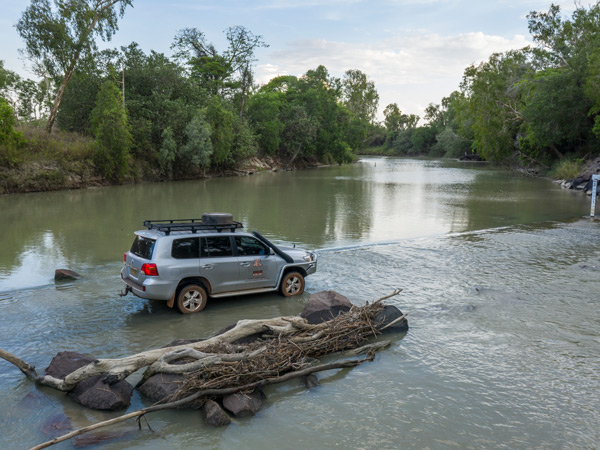
Injalak Arts tour with Venture North
Cross the iconic Cahills Crossing. (Image: Tourism NT/James Fisher)

A trip to Gunbalanya (Oenpelli) Aboriginal community takes you deep into one of the world’s oldest living cultures, crossing the iconic Cahills Crossing – a spectacle in itself – and into a lush, bird-rich landscape. Here, you’ll discover the distinctive x-ray style art and an extraordinary gallery showcasing the rich creativity of the Kunwinjku people.

Kick off from Darwin and wind through Kakadu National Park before reaching Cahills Crossing, a tidal causeway infamous for saltwater crocodiles. Fill up with fuel in Jabiru and time your crossing with low tide, and you might catch sight of crocs hunting barramundi from a safe distance.
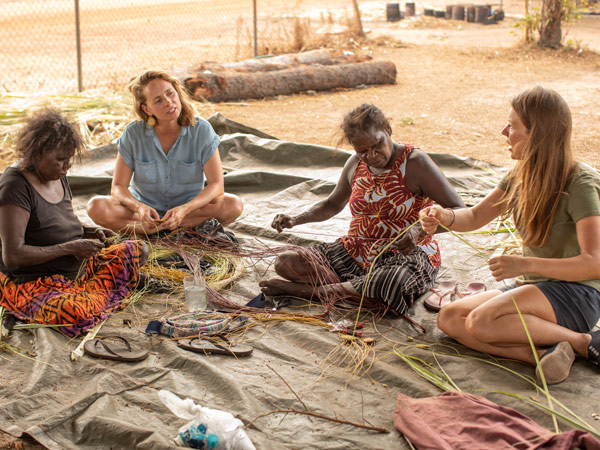
women weaving at Injalak Arts Centre, Gunbalanya
Meet the weavers at Injalak Arts Centre. (Image: Tourism NT/James Fisher)

Once across, you’re in Arnhem Land, where traditions run deep. Injalak Arts Centre is the heart of Gunbalanya, offering visitors a chance to watch local artists paint, weave and share stories through their work. If you’re lucky enough to join an Injalak Hill tour , guides will lead you to sacred rock art sites, sharing stories you won’t find in books.

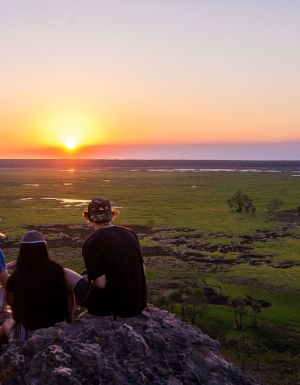
On your return, stop at Kakadu’s Ubirr rock formation for sunset, where floodplains glow gold under a clear, vast sky. An hour from here, wrap up your trip with a Yellow Water Cruise at Cooinda – drifting through wetlands alive with crocs, buffalos and dashing comb-crested jacanas (aka the Jesus bird).

Permits required: Visitor permit to access Gunbalanya community via Northern Land Council (NLC). To visit Kakadu National Park you’ll need a Kakadu Park Pass.

Survival kit: Satellite phone, extra fuel, food and water.

Darwin to Crab Claw & Dundee Beach

Distance: 200km one-way trip, 4WD needed to access Crab Claw.
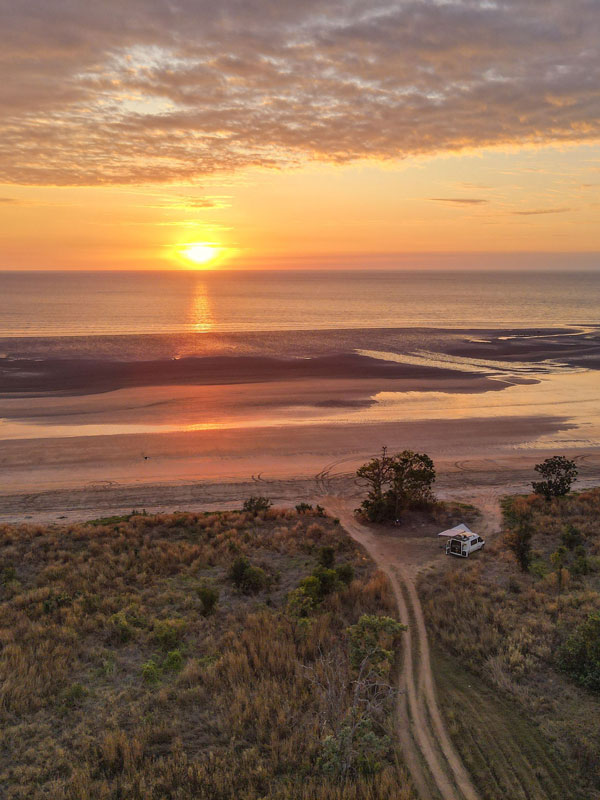
the Dundee Beach at sunset
Wild beauty meets coastal serenity at Dundee Beach. (Image: Tourism NT/@betsybiglap)

This road trip is all about tropical vibes, with fresh seafood feasts, prime fishing spots, a refreshing dip in the pool and endless beachcombing along remote shores.

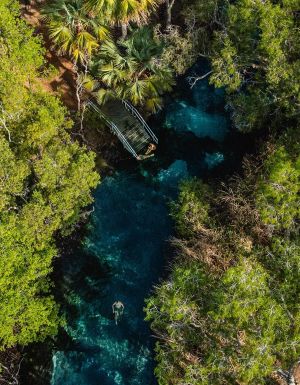
Head south from Darwin along Cox Peninsula Road to Berry Springs Nature Park, 50km from the city. The water here stays 28°C year-round – making it perfect for floating for hours with a pool noodle. When you finally hop out, don’t forget to grab a local mango ice cream from the kiosk.
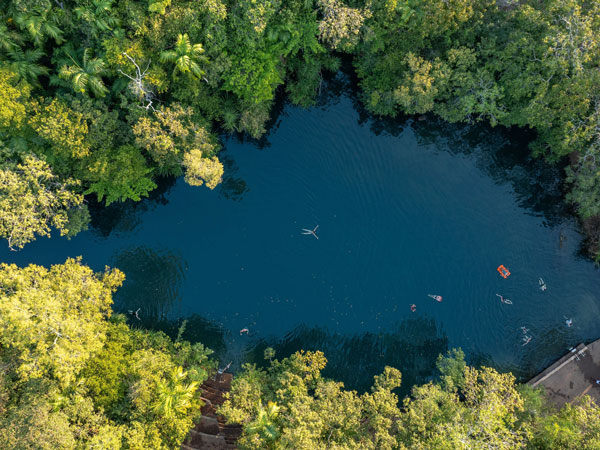
aerial view of swimming at Berry Springs Nature Park
Stop by Berry Springs Nature Park for a dip. (Image: Tourism NT/Nic Morley)

Next, continue to Crab Claw Island Resort, a bush-and-beach hideaway perched over Bynoe Harbour. Pop in for a seafood lunch, swim in the pool, or book a villa for the night. Fishing enthusiasts can hire a boat and chase barramundi, Mangrove Jack and jewfish.

From Crab Claw you’ll need to backtrack a while before continuing on to Dundee Beach, where time really slows down. Cast a line or settle in at the boat ramp with a cold drink and a cheese platter to watch the sunset. The local tavern’s barramundi and chips are a fitting end to the day.

Darwin to Robin Falls

Distance: 270km round trip, 2WD
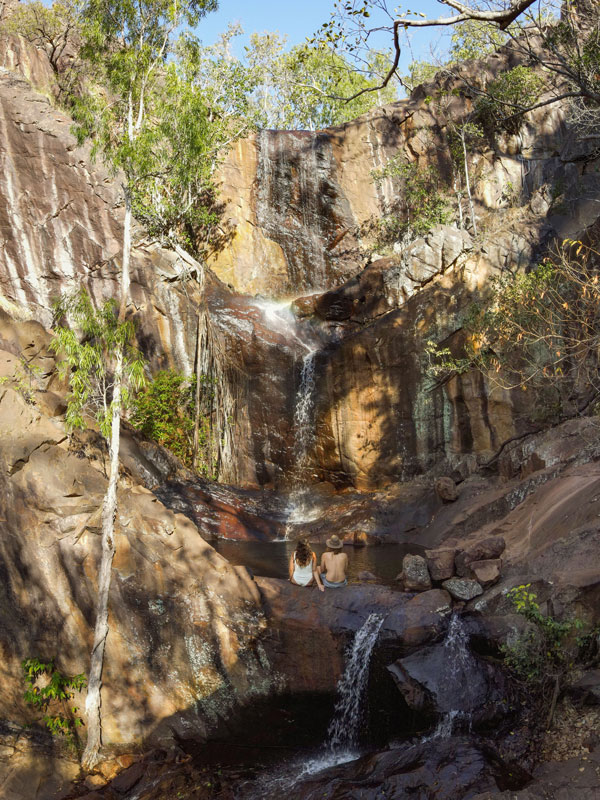
the Robin Falls near Adelaide River
Cool off at Robin Falls. (Image: Tourism NT/@betsybiglap)

For a laid-back adventure filled with swimming holes, war history and butterflies, a round trip from Darwin to Robin Falls is a must. Clock up your first 100km and roll into Adelaide River, where a stop at the local shop for a homemade pie is a must – the perfect fuel for the journey ahead.

Continue to Batchelor, where the utterly unique Butterfly & Animal Farm offers an up-close experience with butterflies and farm animals. Another 30 minutes brings you to Robin Falls, a hidden, three-tiered waterfall reached by a short hike. Pack snacks, a pool noodle and let the sound of the waterfall soothe you.

On your way back, stop at the Adelaide River Inn for a photo with Charlie the Water Buffalo (made famous by the Crocodile Dundee film) – because no NT road trip is complete without a photo with a celebrity beast’s taxidermy remains.

Alice Springs to Uluṟu

Distance: 1,100km one-way trip, 2WD or 4WD if you intend to explore offroad.
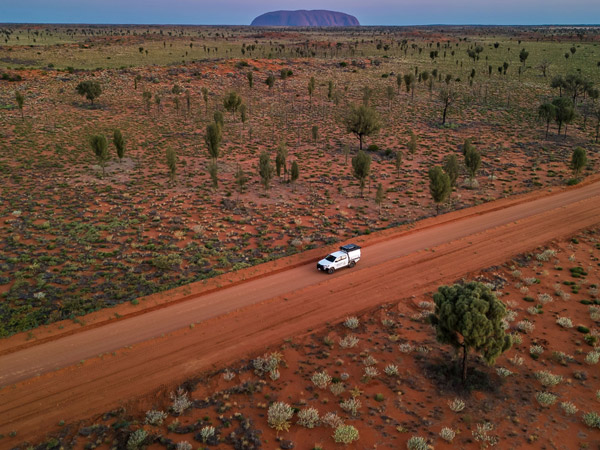
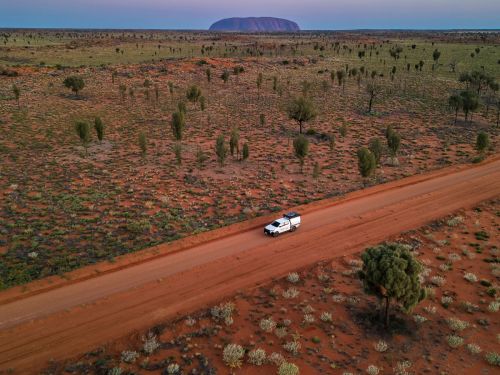
driving through Uluru-Kata Tjuta National Park
Navigate the red landscape across Uluru-Kata Tjuta National Park. (Image: Tourism NT)

The drive from Alice Springs to Uluṟu is an unforgettable journey through Australia’s dramatic heart, where you’ll pass by shimmering salt flats, rugged ranges and sweeping plains dotted with colourful desert wildflowers.

While the sealed route via the Stuart and Lasseter Highways takes 5.5 hours, this trip is best savoured slowly. Start with the East MacDonnell Ranges, known for their rich cultural sites and ochre-streaked cliffs. Then head west to the gorges of the West MacDonnell National Park, where campsites at Ormiston Gorge, Ellery Creek Big Hole and Redbank Gorge make for dreamy overnight stops.

driving through the West MacDonnell Ranges
Admire crimson cliffs and ancient landscapes. (Image: Tourism NT/Jordan Hammond)

After exploring the awe-inspiring Kings Canyon in Watarrka National Park, embark on the final 300km journey to Uluṟu. Along the way, you’ll pass by Mount Conner, often mistaken for Uluṟu, as the vast desert landscape unfolds around you.

With each passing kilometre, anticipation builds until you finally arrive at the monolith’s rugged base, where its grandeur leaves you breathless. For a hidden gem, head to the Talinguru Nyakunytjaku viewing area just before dawn – most visitors stick to the main spots, but from here, you’ll have a panoramic view of Uluṟu and Kata Tjuta with almost no crowds.

Permits required: Park passes apply to most national parks and reserves in the Northern Territory. To visit Uluru-Kata Tjuta National Park you’ll need to purchase an Uluru-Kata Tjuta park visitor pass.

Survival kit: Satellite phone, extra fuel, food and water.

Timber Creek to Tennant Creek (via Binns Track)

Distance: 830km one-way trip, 4WD essential
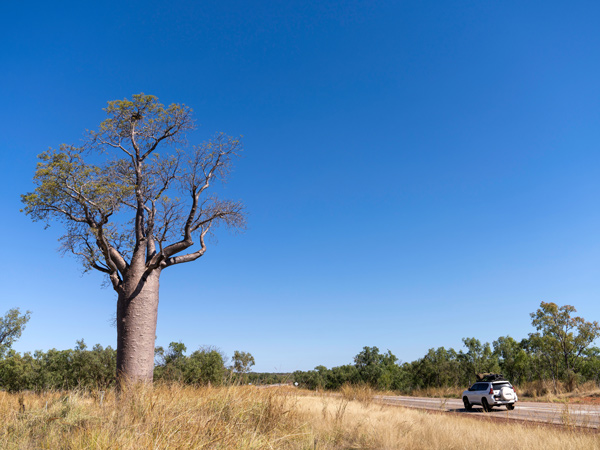
a Boab tree along the Victoria Highway
Spot ancient Boab trees along the Victoria Highway. (Image: Tourism NT/Shaana McNaught)

Big lizards, ancient boab trees, hot days and not another soul to be seen for kilometres – welcome to Binns Track. Begin your adventure at Timber Creek with a visit to the local lookout for panoramic views of the Victoria River, where you’ll spot towering pandanus, paperbarks and clusters of boabs. Along the riverbanks, keep an eye out for freshwater crocs basking on the shores, while red-tailed black cockatoos and whistling kites soar overhead.

Just 15km away, Judbarra/Gregory National Park beckons, where cycads and ghost gums thrive beneath sandstone cliffs, creating a stunning gateway into the outback’s rugged beauty.

For 4WD enthusiasts, the 62km Humbert River Track promises thrilling river crossings and rocky trails. Stop at Bullita Homestead, a fascinating relic of the pastoral era, before heading south into the vast cattle station country. Here, Iytwellepenty/Davenport Ranges National Park offers camping at the serene Old Police Station Waterhole, a great place for a dip.

From here, it’s another 200km to Tennant Creek, a town shaped by its gold-mining past and strong Aboriginal heritage. Immerse yourself in Warumungu culture at the Nyinkka Nyunyu Art & Culture Centre (check if open before visiting) where local artwork brings the stories of the land and its people to life. Next, unwind at nearby Lake Mary Ann, a peaceful spot for a swim.

Permits required: You need a permit to access Aboriginal land, including Binns Track. Apply via the Northern Land Council

Survival kit: Satellite phone, extra fuel, food and water.

Leah McLennan
Leah McLennan is a freelance writer based in Darwin. She was a journalist in Sydney for over a decade and counts her time as travel editor for Australian Associated Press as one of the highlights of her career. From exploring remote campsites in the Top End with her family, to seeking out new art galleries in faraway cities, she’ll grab an adventurous or arty travel experience within her reach.
See all articles
hero media

8 Red Centre locations to explore after seeing the new movie, Kangaroo

Spend a few days visiting the real-life Central Australian locations that inspired the new film everyone is talking about, and discover why Alice Springs is such an important part of Australian culture.

In the credits of the new Australian film Kangaroo , the first name under ‘cast’ should read ‘The Northern Territory ’. Not only is Alice Springs (and the surrounding landscape) integral to the movie itself, but the spiritual heart of Australia and its local Indigenous owners also inform the look and feel of every frame, explains Producer Trisha Morton-Thomas of Brindle Films, who also plays Charlie’s grandmother Gwennie.

“By setting Kangaroo in Alice Springs (Mparntwe), the film embraces how visible Aboriginal people are here, and the living Aboriginal culture that is woven through this community,” she explains.

still from kangarro film
See Kangaroo, then visit the real-life filming locations.

And while shooting in such a sacred part of the Northern Territory required extra planning, it was something the cast and crew were highly invested in.

“There are incredibly significant sacred sites and places of deep cultural stories in the area, that at times are very gender-specific, which we’ve kept out of the production,” she explains. “Even if overhead drone footage captures a sacred site that isn’t meant to be seen by other people outside of that clan, we’ve made sure to omit it from the film.”

If Kangaroo piqued your interest in a Central Australian holiday, we don’t blame you. Read on to discover eight places featured in the movie that you can visit in real life – and get planning. Don’t forget to pack sunscreen and a hat.

1. Alice Springs/ Mparntwe

artist at Many Hands Art Centre
Visit the galleries of Alice Springs, like Many Hands Art Centre. (Image: Tourism NT/ Helen Orr/ Many Hands Art Centre)

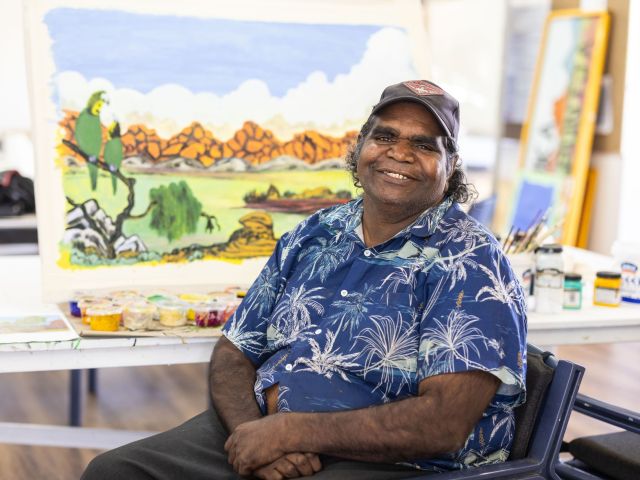
The red and dusty streets of the film’s fictional town of Silvergum were filmed on the outskirts of Alice Springs. And, while the art gallery featured in the film is fictional, Alice Springs is a hub of creativity. See the work of local artists at the Araluen Art Centre , Yubu Napa Art Gallery , Iltja Ntjarra (Many Hands) Art Centre and the famous Tjanpi Desert Weavers .

2. The Kangaroo Sanctuary & Kangaroo Rescue Centre

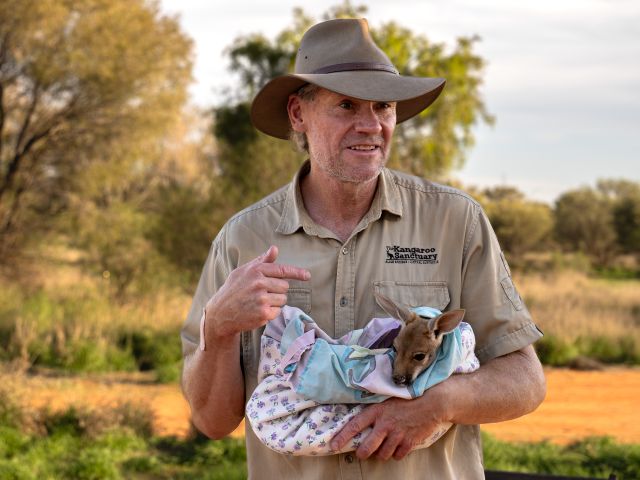
The Kangaroo Sanctuary Alice Springs, the inspiration for the Kangaroo move
Visit the movie’s inspiration at Kangaroo Sanctuary. (Image: Tourism NT/ Kangaroo Sanctuary)

Kangaroo was inspired by the journey of Chris ‘Brolga’ Barns, who founded the now world-renowned Kangaroo Sanctuary based in Alice Springs. For lead actor, Aussie Ryan Corr, the animals were central to the movie, alongside the landscapes.

“The animals in this story were a real calling point for me,” he explains. “What this story tries to tell us about the connection between humans and animals is beautiful.”

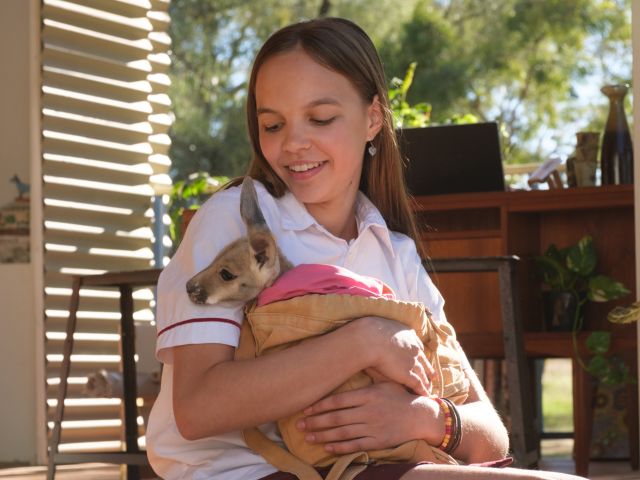
To gain a real insight into the fauna and flora of the Red Centre, you can visit the Kangaroo Sanctuary on a sunset tour, where you might even get the chance to hold a baby kangaroo.

3. Ormiston Gorge

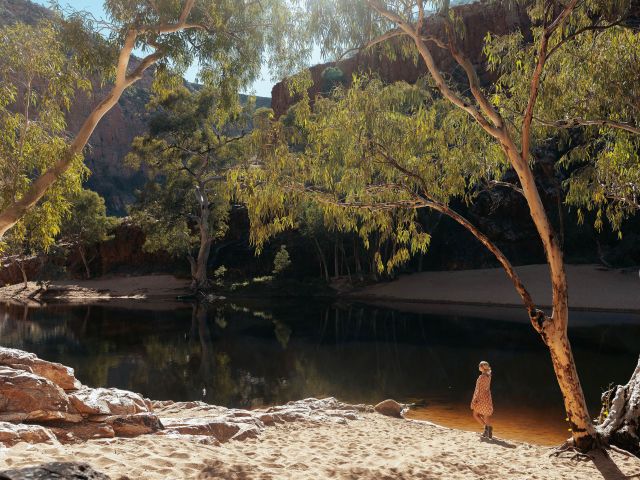
woman walking along the edge of Ormiston Gorge near alice springs
Take a dip in Ormiston Gorge. (Image: Tourism NT/ @domandjesso)

The film captures the raw beauty of the West MacDonnell Ranges, known in the Arrernte language as Tjoritja. This national park is rich in Indigenous culture and stark geological wonders.

Only a 15-minute drive from Alice Springs, Tjoritja offers visitors the chance to camp, hike and swim among ancient landscapes (most attractions are less than a three-hour drive away).

Ormiston Gorge , a cooling oasis in among the red desert sands, is one of the most popular destinations, no doubt because of the permanent swimming hole and towering red cliffs. From here, visitors can also embark on the beautiful Ormiston Pound Walk and the shorter – more accessible – Ghost Gum Walk. Bring your bathers – it’s safe for swimming.

4. Standley Chasm

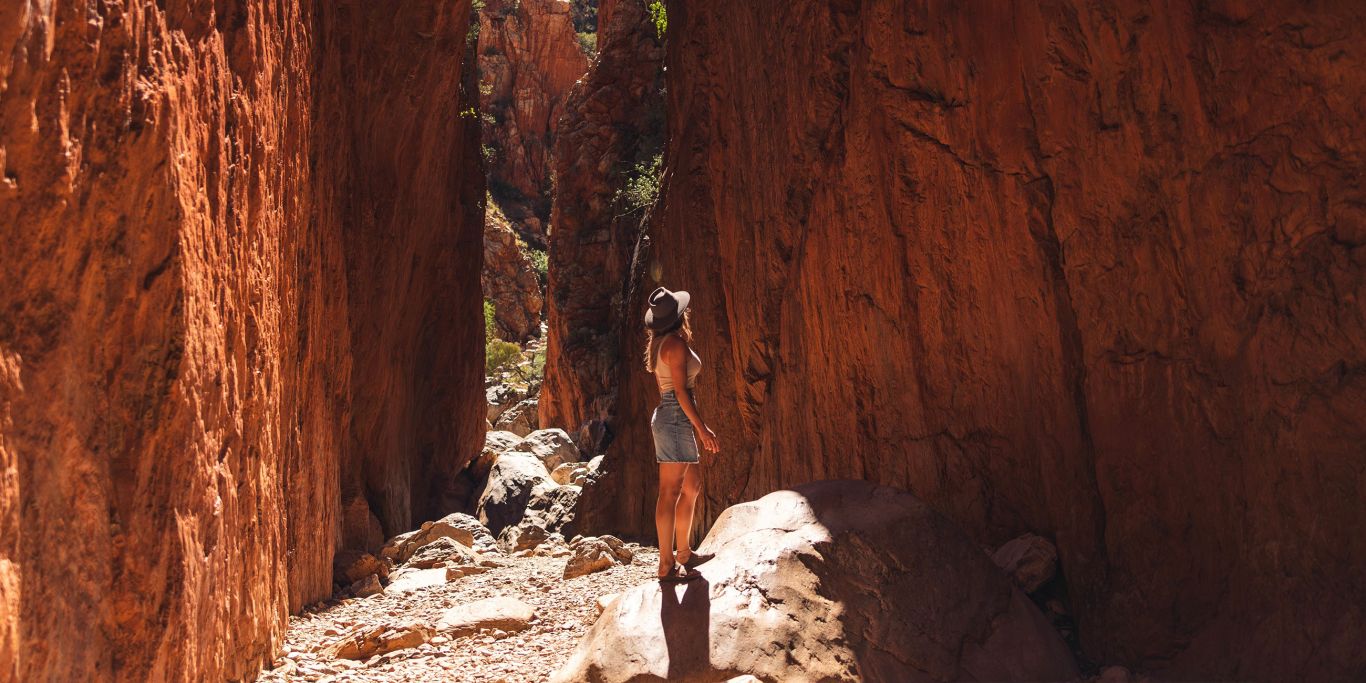
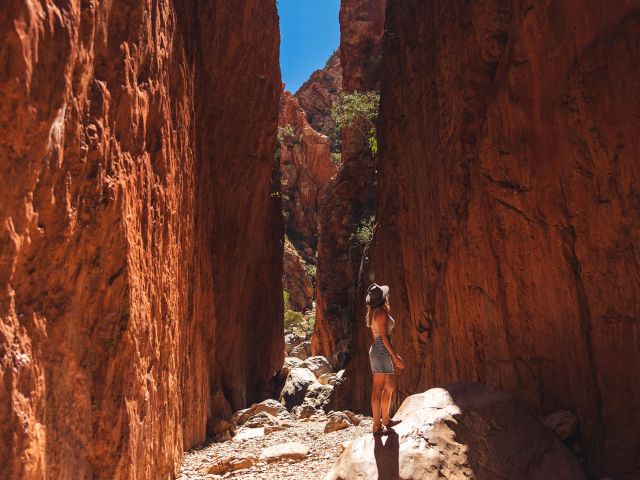
woman walking through Standley Chasm near alice springs
Wander through Standley Chasm. (Image: Tourism NT)

The 1.2-kilometre walk to nearby Standley Chasm will be a highlight for any visitor as the imposing 40 metre-high chasm walls project strength and ancient wisdom.

Visit at midday to experience the path illumined by the midday sun. Not only will you fill your camera roll with vibrant red images of the gorge and its intoxicating shadows, but you can also camp nearby in a powered or unpowered site so you can watch the brilliance of the desert stars fill the night sky after dusk.

5. Simpsons Gap

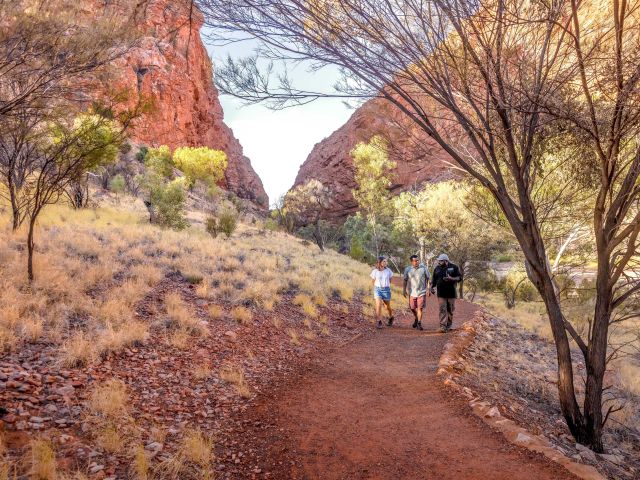
three people walking on path through simpsons gap near alice springs
Walk the trails of Simpson’s Gap. (Image: Tourism NT/ Helen Orr)

Closer to Alice Springs, the photogenic Simpsons Gap is the perfect place to spot the endangered Black-footed Rock wallaby near the permanent watering hole. While swimming isn’t permitted, soaking up the sun and views certainly is.

Explore the area’s numerous walking trails, appreciate the soaring cliffs on either side of the ‘gap’ and pick out the shooting locations of Kangaroo in the area.

6. Ellery Creek Big Hole

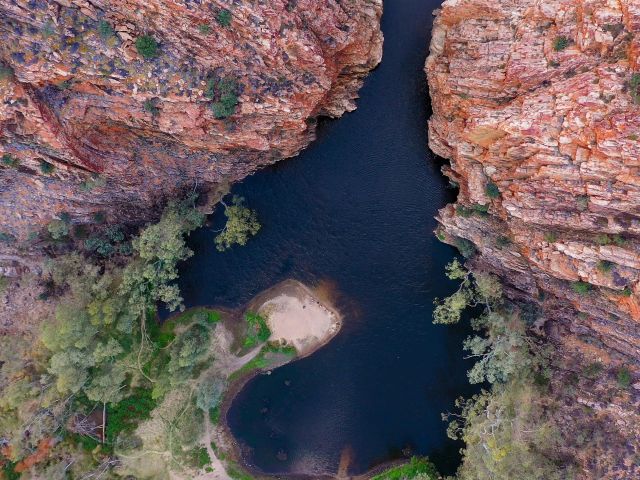
aerial of Ellery Creek Big Hole near alice springs
Dive into Ellery Creek Big Hole. (Image: Tourism NT/ Tourism Australia)

When it comes to classic Northern Territory landscapes, you can’t go past Ellery Creek Big Hole/ Udepata : tall gum trees sidling up to a refreshing watering hole (fed by the West MacDonnell Ranges and surrounded by rugged red cliffs.

Swim in the cooling waters, hike the cliff tops, watch for birds and even stargaze as you camp here overnight. It’s locations like this that attracted the film’s director Kate Woods to the project.

“It humbles you to be in this environment: it’s so beautiful, so old and so vast,” she explains. “I was thrilled to get a chance to … shoot such a beautiful story in the incredible landscape of the Northern Territory.”

7. Larapinta Drive

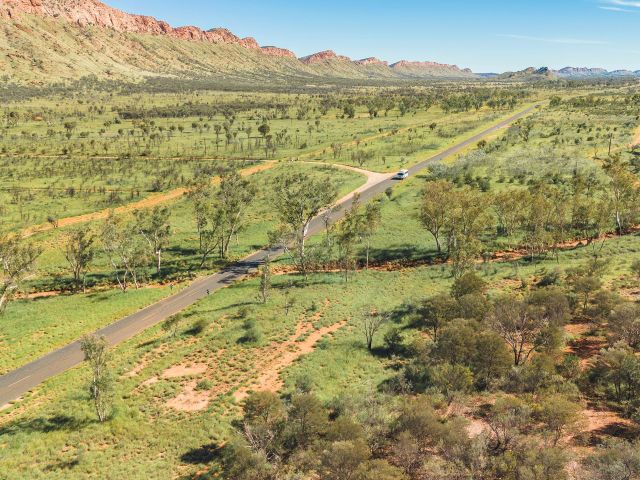
aerial of Larapinta Drive into alice springs
Drive along Larapinta Drive. (Image: Tourism NT)

There is no better way to get a feel for how the characters arrived at the fictional Central Australian town of Silvergum than to travel along the iconic state road, Larapinta Drive.

Connecting Alice Springs to the mighty King’s Canyon in the west, via the historic community of Hermannsburg, this road takes in the West MacDonnell National Park, Alice Springs Desert Park and artist Albert Namatjira’s house, among other attractions. Take your time, bring a camera and prepare for numerous stops along the way.

8. Todd River

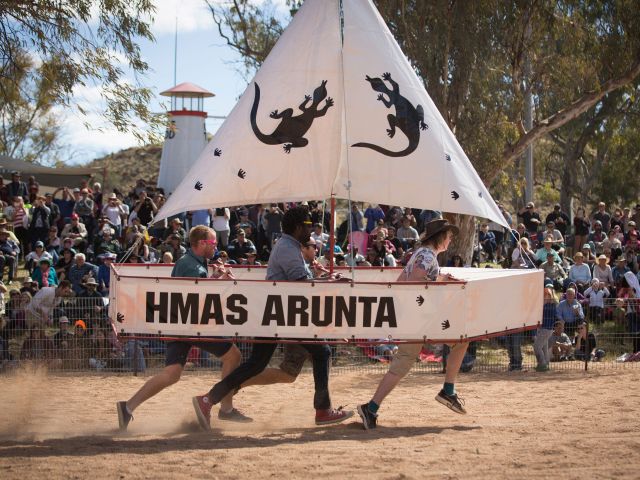
competitors in Henley on Todd Regatta, alice springs
Join in the fun of the quirky Henley on Todd Regatta. (Image: Tourism NT/ TImparja Creative)

Meandering through Alice Springs like a lazy Western Brown snake, the Todd River is a central part of Alice Springs culture. Known as an ‘intermittent river’, the Todd can go from a dry dusty riverbed to a flowing waterscape in less than 15 minutes after heavy rainfall.

When it’s dry, the famous Henley on Todd Regatta fills the sandy riverbed with handmade ‘boats’ carried by sailors. This is the world’s only dry river boating event, and it’s referenced in the ‘Silvergum Boat Race’ in the movie. Inspired by the real-life event, the characters built quirky “Flintstones-style boats” and competed in teams.

See Kangaroo in cinemas now, and start planning your NT getaway at northernterritory.com.