The ultimate guide to exploring the West MacDonnell Ranges

hero media
The immense Tjoritja/West MacDonnell National Park boasts some of Central Australia’s most spectacular scenery.

Stretching for 160 kilometres west from Alice Springs, its concentration of pristine waterholes, cliffs of colourful ochre and biodiversity is hard to match. Best explored on foot, it’s home to the epic 223-kilometre Larapinta Trail, one of Australia’s most challenging multi-day walks. But you don’t have to commit to the entire length of this iconic line to experience the valleys, plains, and canyons of the West Macs. Here’s your ultimate guide to exploring the West MacDonnell Ranges.

How to get to West MacDonnell National Park

The West Macs begin just outside Alice Springs, with the major attractions ranging from 15 minutes to 2 hours’ drive away. Jump on an organised tour or hire your own car to access the sites.
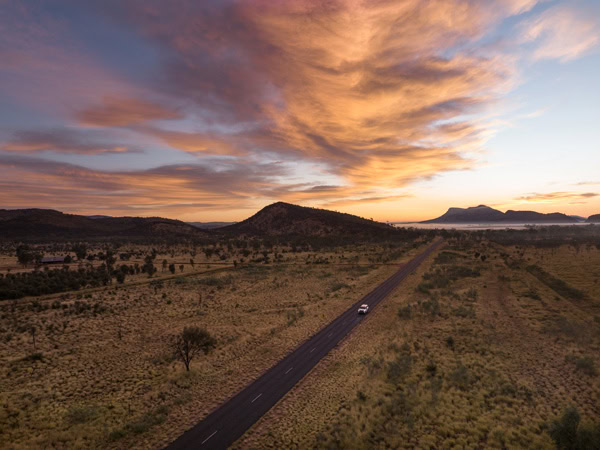
driving along West MacDonnell Ranges
Embark on a road trip to the West MacDonnell Ranges. (Image: Tourism NT/Sean Scott)

While a regular car will get you to many of the major sites, a 4WD will allow you to do side trips. Another way to experience the West Macs is to hike a section of the Larapinta Trail .
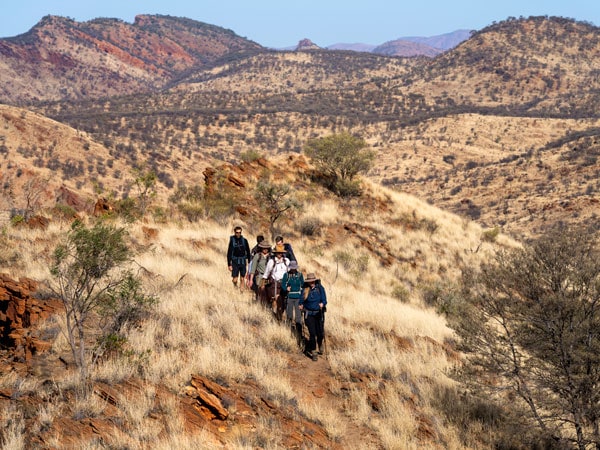
a group of hikers traversing the Larapinta Trail
Hike past rocky outcrops along the Larapinta Trail. (Image: Tourism NT/Tourism Australia)

What to see in West MacDonnell National Park

Must-see spots include Simpsons Gap with its towering red cliffs and black-footed rock wallabies, Ellery Creek with its refreshingly cool (bordering on icy) swimming hole, and Standley Chasm with its glowing red rock walls at midday. The historical Ochre Pits are well worth a visit, as is the natural oasis that is Ormiston Gorge and Glen Helen with its huge cliff face and inviting cool water.
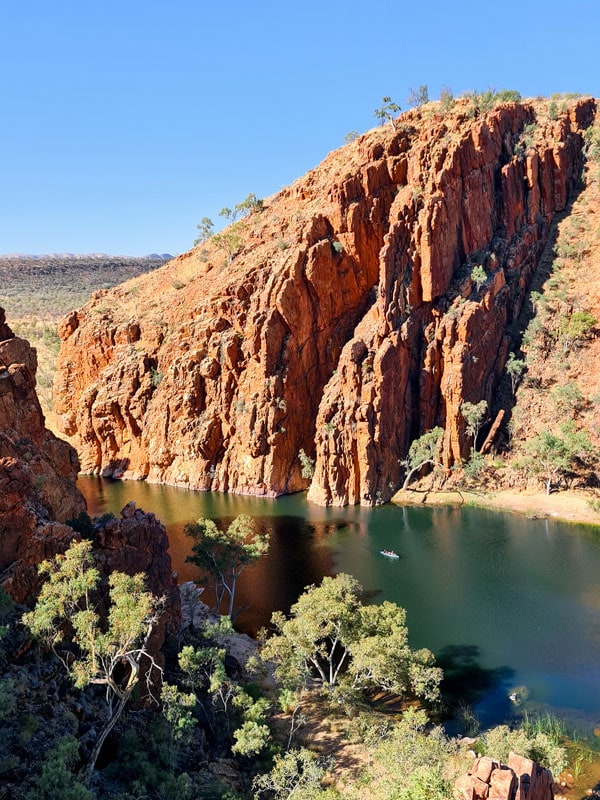
an aerial view of people swimming in Glen Helen
Take a cool dip at Glen Helen. (Image: Tourism NT/All About Adventure)

Simpsons Gap

Only a short drive from Alice Springs, the towering red cliffs of Simpsons Gap are unmissable. If you’re here at sunrise or sunset, keep your eyes peeled for rock wallabies near the walking paths. The area is also a nature lover’s dream, dotted with ghost gums, mulga trees and over 40 kinds of rare plants.
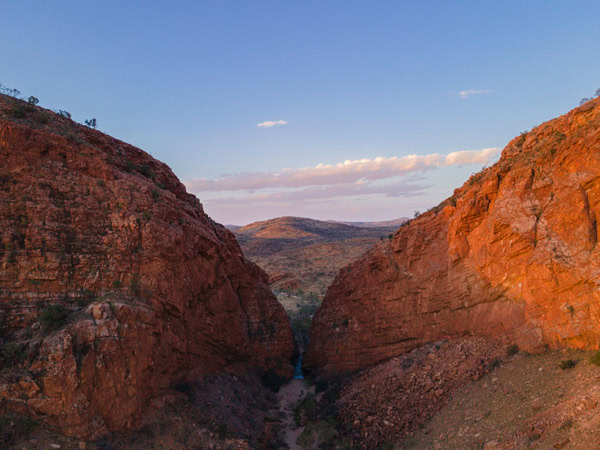
the red cliffs at Simpsons Gap
See the towering red cliffs at Simpsons Gap. (Image: Tourism NT/Backyard Bandits)

For the walkers, there are several easy trails to pick from that wind through native plants with some pretty sweet views of the ranges thrown in. If biking is your thing, there’s a 17 kilometres path from just outside Alice Springs straight to the Gap. Outback Cycling  rents out bikes. Make sure you pack plenty of cold drinks as it’s the only refreshment permitted here. No swimming is allowed.
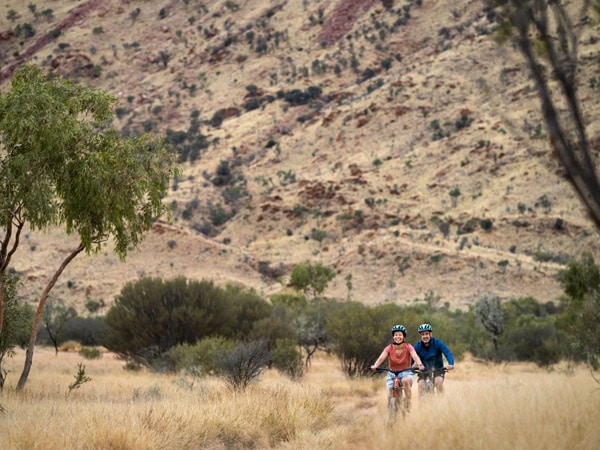
two people biking at Simpsons Gap
Pedal your way around Simpsons Gap. (Image: Tourism NT/Shaana McNaught

Standley Chasm

Owned by the Western Arrernte people, Standley Chasm is an incredibly narrow, soaring passage through the towering, rust-stained rocks, just a 40-minute drive west of Alice Springs.
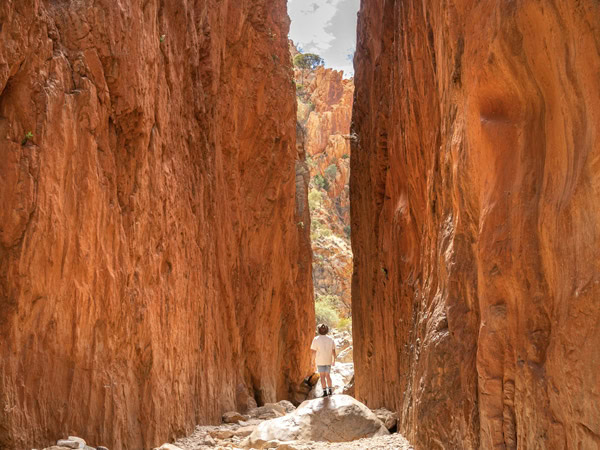
a man standing between the towering red cliffs at Standley Chasm
Make your way through the narrow passage of Standley Chasm. (Image: Tourism NT/Mark Fitzpatrick)

To access this 80-metre high, three-metre-wide canyon you will need to purchase a $12 ticket to enter this flora and fauna reserve. From the kiosk, it’s an easy 1.2-kilometre walk along a well-maintained path to the gorge. For a more in-depth experience, jump on a half-day cultural experience, which includes a guided walk, dot painting workshop and lunch.
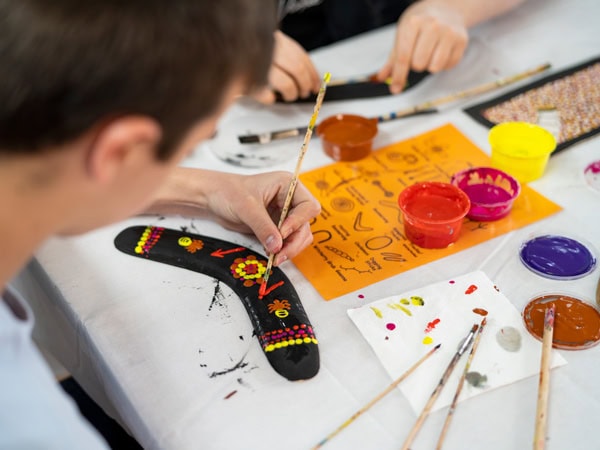
a painting workshop at Standley Chasm
Join a half-day cultural experience. (Image: Tourism NT/Shaana McNaught)

Ellery Creek Big Hole

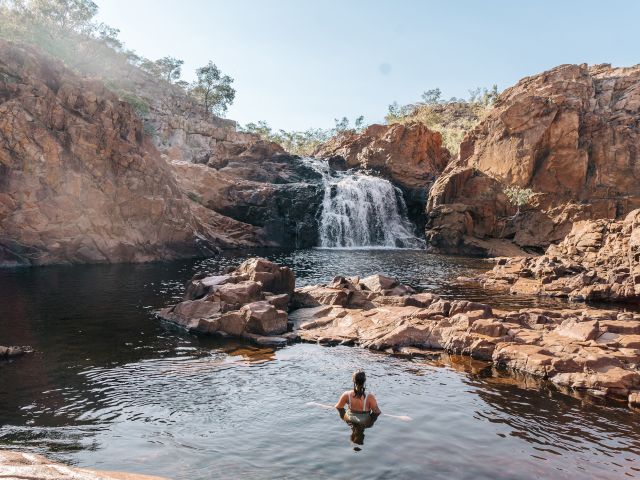
You’ll find this secluded swimming spot 88 kilometres west of Alice Springs. With easy access via a sealed road, this permanent, deep waterhole surrounded by towering red cliffs is perfect for a dip on a hot day. If you’re lucky you might spot a dingo taking a drink, and keep an eye out for honeyeaters, white-winged fairywrens, and little buttonquails. Hikers can set off on the Dolomite Walk, a three-kilometre loop walk through the surrounding spinifex country with good views en route.
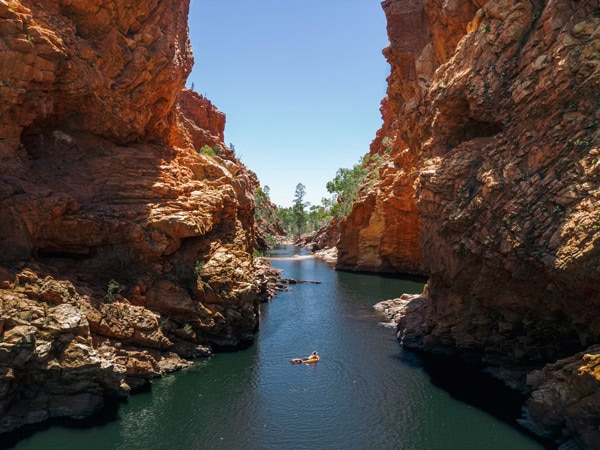
swimming in the waterhole at Ellery Creek
Ellery Creek is perfect for a cool dip on a hot day. (Image: Tourism NT/The Salty Travellers)

Serpentine Gorge

The narrow, ochre-red Serpentine Gorge sits 100 kilometres west of Alice Springs, with the entrance to the gorge down a three-kilometre dirt track. It has a little waterhole, a dwarf compared to surrounding waterholes, but its lookout adds to its appeal. Climb up the steep track for about 15 minutes to the top of a towering cliff and (once you catch your breath back) you will be stunned by the 360-degree view from the top.

Ochre Pits

About 110 kilometres west of Alice Springs, don’t miss stopping by the spectacular Ochre Pits, a rockface with colourful bands of clay. The Ochre Pits are easily accessible via a 300-metre sealed path from the car park, which is an attractive picnic spot. The Western Aranda people have used this site for thousands of years to gather ochre for painting, body decoration, medicine, and to cover wooden weapons to protect them from termites.
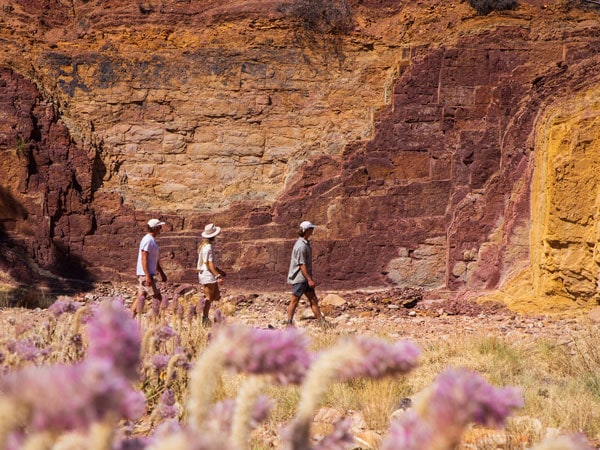
a group of hikers exploring Ochre Pits
Journey through a colourful ochre outcrop. (Image: Tourism NT/The Salty Travellers)

Glen Helen Gorge

Glen Helen is your go-to spot for soaking in the majesty of the West Macs, enjoying a swim, and hanging out with the local fauna.
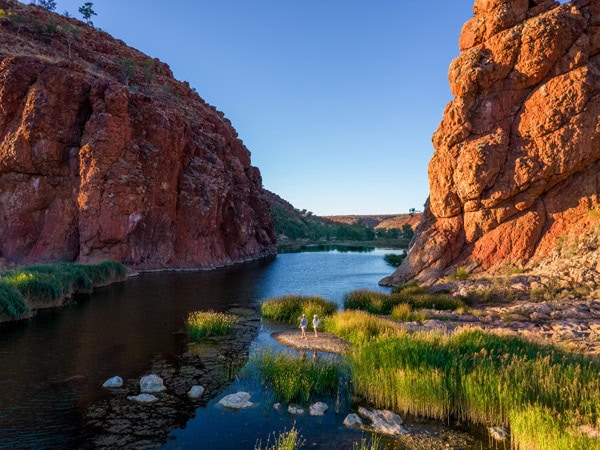
the spectacular view of Glen Helen Gorge
Glen Helen Gorge is rich in diverse flora and fauna. (Image: Tourism NT/The Salty Travellers)

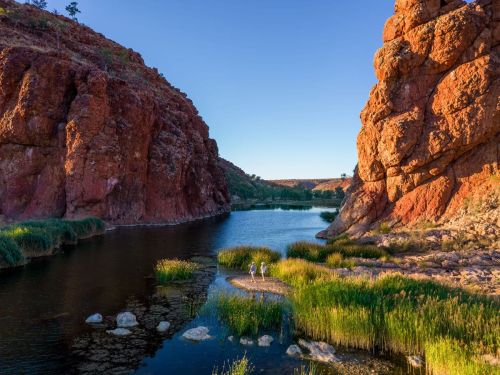
Sitting 132 kilometres west of Alice Springs, the first thing you see as you drive into Glen Helen is a towering sandstone cliff. A short stroll from the car park, you will find a serene hideaway with shaded banks and a huge body of water that is home to several fish species.
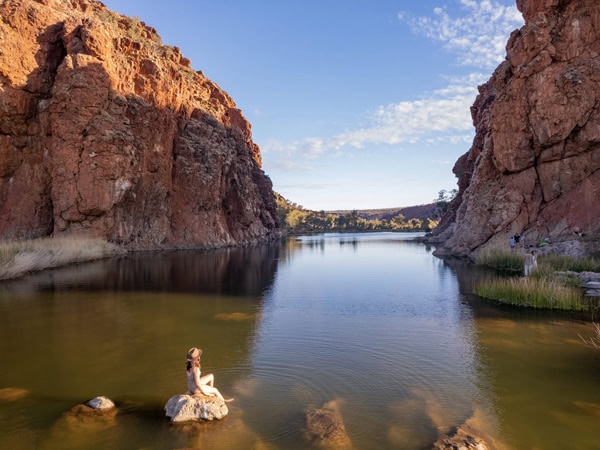
a woman sitting on a rock at Glen Helen Gorge
Take advantage of the shaded banks of the gorge. (Image: Tourism NT/Mark Fitzpatrick)

Ormiston Gorge

A huge inviting pool surrounded by sandy verges, Ormiston Gorge is another unmissable spot, famously swimmable year-round.
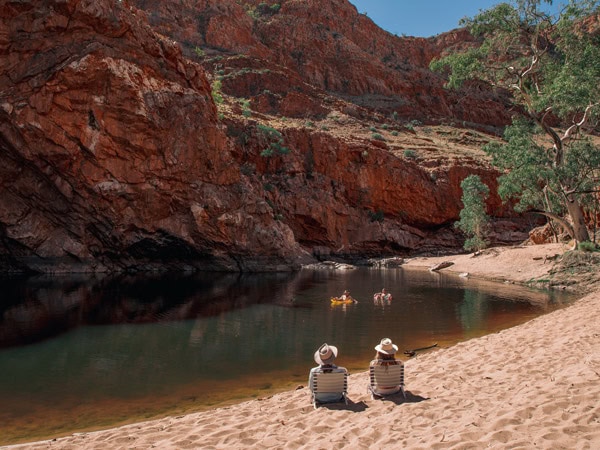
relaxing at Ormiston Gorge
Ormiston Gorge is an ideal spot to swim. (Image: Tourism NT/The Salty Travellers)

To earn your refreshing swim you should attempt the 8.5-kilometre Ormiston Pound Walk (a loop hike from the car park). It takes you to a ridge-top lookout over Ormiston Pound, a circle of peaks amid the otherwise unbending lines of the West MacDonnell Ranges.
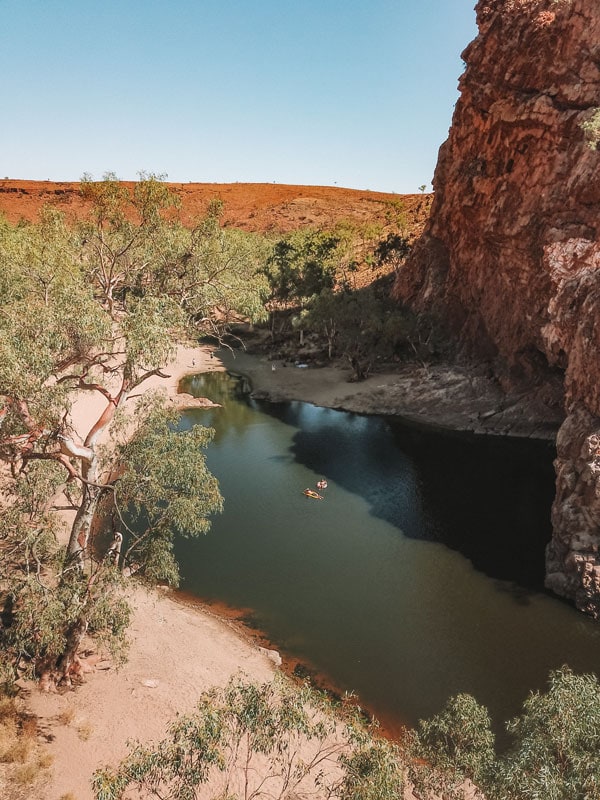
an aerial view of the Ormiston Gorge
You don’t want to miss the spectacular views in Ormiston Gorge. (Image: Tourism NT/Salty Aura)

Redbank Gorge

Nestled at the base of Mt Sonder, Redbank Gorge is a slot canyon with a near-permanent waterhole that is a bird-watching paradise. Tip: bring a flotation device to swim through the gorge.
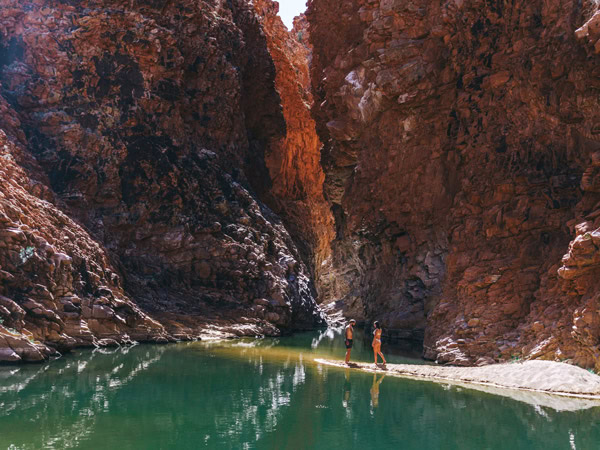
a couple walking along Redbank Gorge
Spend time by the secluded Redbank Gorge. (Tourism NT/Jess Caldwell & Luke Riddle)

There are plenty of hiking options at Redbank Gorge, 156km west of Alice Springs. Hikers can tick off Larapinta Trail’s section 12 from the car park, a 5km return walk that takes you to the Mount Sonder Lookout.
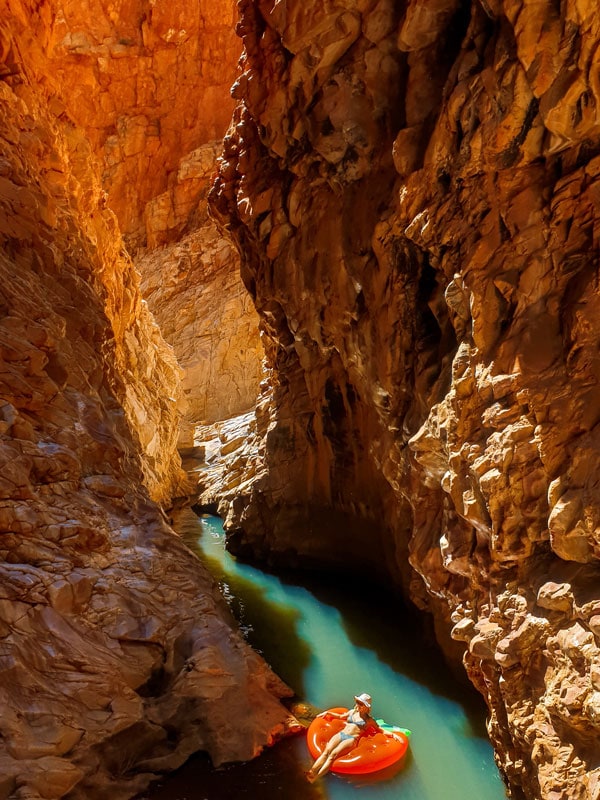
a woman floating on Redbank Gorge
Float along the emerald waters. (Image: Tourism NT/All About Adventure)

West MacDonnell Ranges Accommodation

Camping spots are plentiful in the West Macs and are managed by NT Parks, except for Standley Chasm. Make sure you book at NT Parks before you arrive and plan several months in advance as sites book out during the peak winter months.
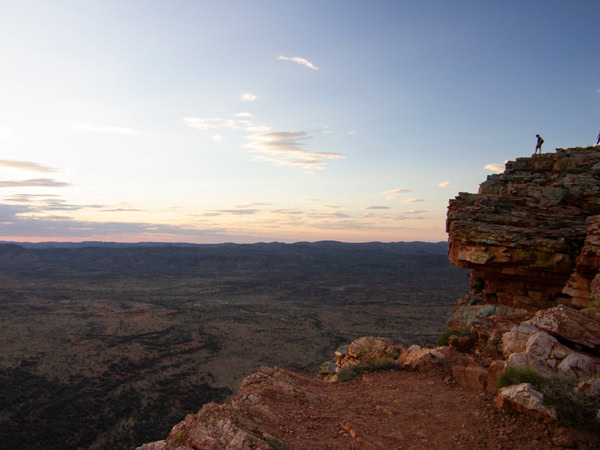
Alice Springs surrounds from above
See Alice Springs in the distance from above. (Image: Tourism Australia/Allan Dixon)

Standley Chasm

At the Aboriginal-owned and operated Standley Chasm campers and caravaners can choose from powered and non-powered sites on the grassy lawn.
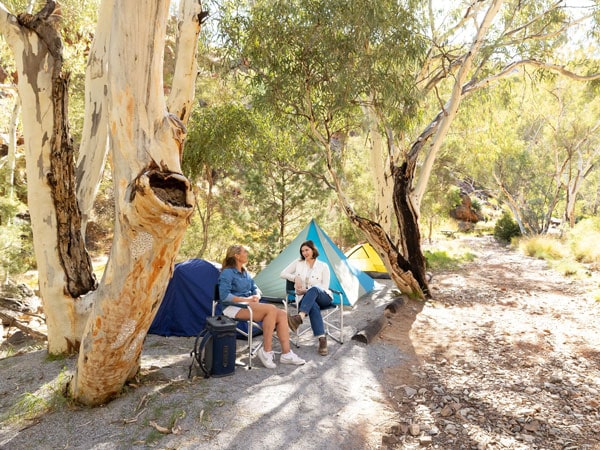
two women sitting outside their tents at Standley Chasm
Support the Aboriginal-owned and operated campsite at Standley Chasm. (Image: Tourism NT/Charlie Bliss)

Facilities include toilets, hot showers, a washing machine, a camp kitchen, and barbecues. There’s also a kiosk cafe and gift shop.
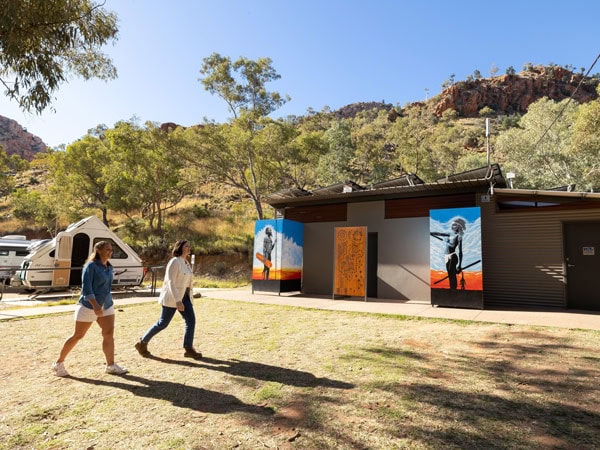
two people walking along the camp facilities at Standley Chasm
Choose from powered and non-powered sites. (Image: Tourism NT/Charlie Bliss)

Ellery Creek Campground

At the popular Ellery Creek Big Hole, you’ll no doubt be sharing this beautiful swimming spot with others. Tents, trailers and caravans are welcome at the campground and facilities include barbecues, wood firepits and toilets.
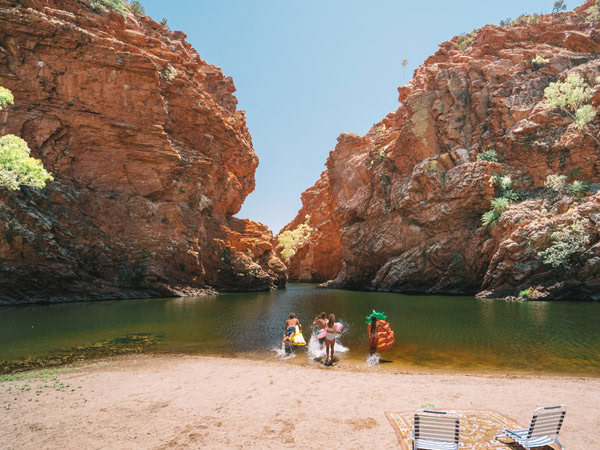
friends swimming at Ellery Creek
Set up camp on Ellery Creek. (Image: Tourism NT/Salty Aura)

Ormiston Gorge Campground

Pleasant camping facilities are available at Ormiston Gorge, 135 kilometres west of Alice Springs. Facilities include gas barbecues, toilets, and showers.
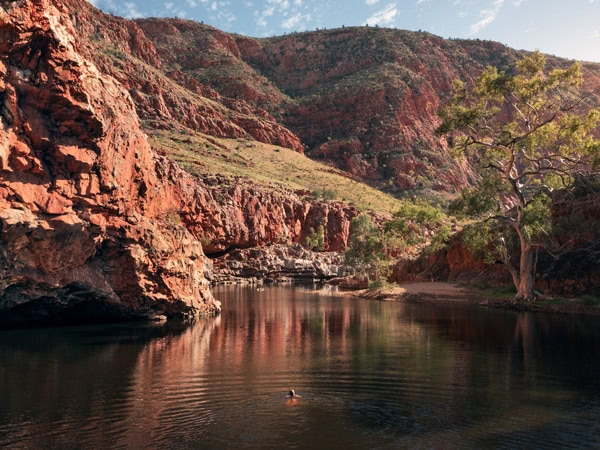
the waterhole at Ormiston Gorge
Orminston Gorge has a permanent waterhole. (Image: Tourism NT/Daniel Tran)

Birthday Waterhole Campground

Accessible by 4WD only, Birthday Waterhole is about an hour’s drive from Alice Springs. There are no facilities so make sure you have drinking water and all your camping requirements with you.

Finke River Two Mile Campground

Accessible by 4WD only, Finke Two Mile campground sits beside the Finke River, around 130 kilometres west of Alice Springs. Campers need to be self-sufficient as there are no facilities here.
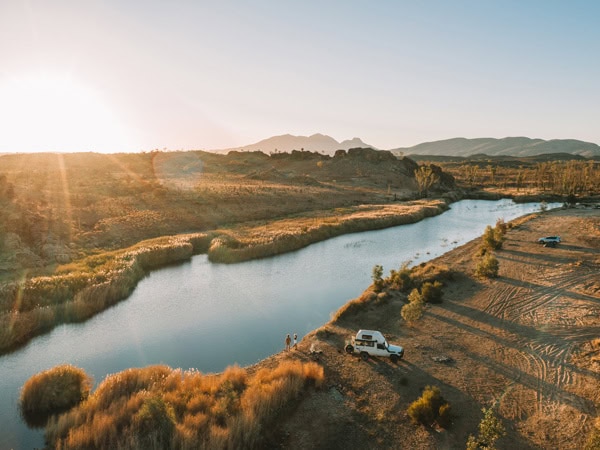
an aerial view of Finke River Two Mile campground
Finke River Two Mile Campground can only be accessed by a 4WD. (Image: Tourism NT/Jess Caldwell & Luke Riddle)

Redbank Gorge (Ridgetop) Campground

The tranquil Redbank Gorge (Ridgetop) campsite has basic facilities including toilets, firepits, and picnic tables. A 4WD is recommended to access this gorge, which is 156km from Alice Springs and 5km along a dirt road.
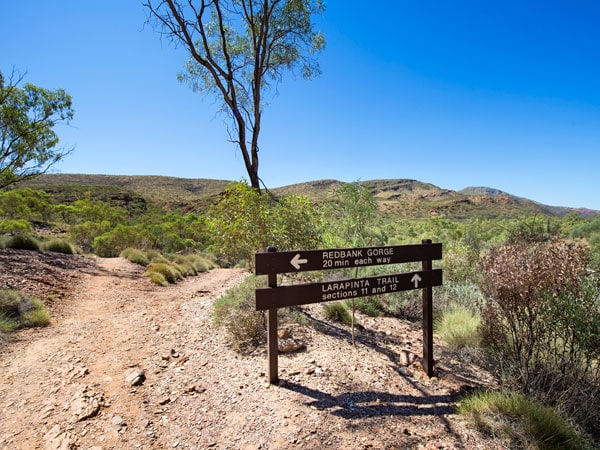
the Redbank Gorge walking sign
Take the two-kilometre walk from the car park to Redbank Gorge. (Image: Tourism NT/Shaana McNaught)
Leah McLennan
Leah McLennan is a freelance writer based in Darwin. She was a journalist in Sydney for over a decade and counts her time as travel editor for Australian Associated Press as one of the highlights of her career. From exploring remote campsites in the Top End with her family, to seeking out new art galleries in faraway cities, she’ll grab an adventurous or arty travel experience within her reach.
See all articles
hero media

8 Red Centre locations to explore after seeing the new movie, Kangaroo

Spend a few days visiting the real-life Central Australian locations that inspired the new film everyone is talking about, and discover why Alice Springs is such an important part of Australian culture.

In the credits of the new Australian film Kangaroo , the first name under ‘cast’ should read ‘The Northern Territory ’. Not only is Alice Springs (and the surrounding landscape) integral to the movie itself, but the spiritual heart of Australia and its local Indigenous owners also inform the look and feel of every frame, explains Producer Trisha Morton-Thomas of Brindle Films, who also plays Charlie’s grandmother Gwennie.

“By setting Kangaroo in Alice Springs (Mparntwe), the film embraces how visible Aboriginal people are here, and the living Aboriginal culture that is woven through this community,” she explains.

still from kangarro film
See Kangaroo, then visit the real-life filming locations.

And while shooting in such a sacred part of the Northern Territory required extra planning, it was something the cast and crew were highly invested in.

“There are incredibly significant sacred sites and places of deep cultural stories in the area, that at times are very gender-specific, which we’ve kept out of the production,” she explains. “Even if overhead drone footage captures a sacred site that isn’t meant to be seen by other people outside of that clan, we’ve made sure to omit it from the film.”

If Kangaroo piqued your interest in a Central Australian holiday, we don’t blame you. Read on to discover eight places featured in the movie that you can visit in real life – and get planning. Don’t forget to pack sunscreen and a hat.

1. Alice Springs/ Mparntwe

artist at Many Hands Art Centre
Visit the galleries of Alice Springs, like Many Hands Art Centre. (Image: Tourism NT/ Helen Orr/ Many Hands Art Centre)

The red and dusty streets of the film’s fictional town of Silvergum were filmed on the outskirts of Alice Springs. And, while the art gallery featured in the film is fictional, Alice Springs is a hub of creativity. See the work of local artists at the Araluen Art Centre , Yubu Napa Art Gallery , Iltja Ntjarra (Many Hands) Art Centre and the famous Tjanpi Desert Weavers .

2. The Kangaroo Sanctuary & Kangaroo Rescue Centre

The Kangaroo Sanctuary Alice Springs, the inspiration for the Kangaroo move
Visit the movie’s inspiration at Kangaroo Sanctuary. (Image: Tourism NT/ Kangaroo Sanctuary)

Kangaroo was inspired by the journey of Chris ‘Brolga’ Barns, who founded the now world-renowned Kangaroo Sanctuary based in Alice Springs. For lead actor, Aussie Ryan Corr, the animals were central to the movie, alongside the landscapes.

“The animals in this story were a real calling point for me,” he explains. “What this story tries to tell us about the connection between humans and animals is beautiful.”

To gain a real insight into the fauna and flora of the Red Centre, you can visit the Kangaroo Sanctuary on a sunset tour, where you might even get the chance to hold a baby kangaroo.

3. Ormiston Gorge

woman walking along the edge of Ormiston Gorge near alice springs
Take a dip in Ormiston Gorge. (Image: Tourism NT/ @domandjesso)

The film captures the raw beauty of the West MacDonnell Ranges, known in the Arrernte language as Tjoritja. This national park is rich in Indigenous culture and stark geological wonders.

Only a 15-minute drive from Alice Springs, Tjoritja offers visitors the chance to camp, hike and swim among ancient landscapes (most attractions are less than a three-hour drive away).

Ormiston Gorge , a cooling oasis in among the red desert sands, is one of the most popular destinations, no doubt because of the permanent swimming hole and towering red cliffs. From here, visitors can also embark on the beautiful Ormiston Pound Walk and the shorter – more accessible – Ghost Gum Walk. Bring your bathers – it’s safe for swimming.

4. Standley Chasm

woman walking through Standley Chasm near alice springs
Wander through Standley Chasm. (Image: Tourism NT)

The 1.2-kilometre walk to nearby Standley Chasm will be a highlight for any visitor as the imposing 40 metre-high chasm walls project strength and ancient wisdom.

Visit at midday to experience the path illumined by the midday sun. Not only will you fill your camera roll with vibrant red images of the gorge and its intoxicating shadows, but you can also camp nearby in a powered or unpowered site so you can watch the brilliance of the desert stars fill the night sky after dusk.

5. Simpsons Gap

three people walking on path through simpsons gap near alice springs
Walk the trails of Simpson’s Gap. (Image: Tourism NT/ Helen Orr)

Closer to Alice Springs, the photogenic Simpsons Gap is the perfect place to spot the endangered Black-footed Rock wallaby near the permanent watering hole. While swimming isn’t permitted, soaking up the sun and views certainly is.

Explore the area’s numerous walking trails, appreciate the soaring cliffs on either side of the ‘gap’ and pick out the shooting locations of Kangaroo in the area.

6. Ellery Creek Big Hole

aerial of Ellery Creek Big Hole near alice springs
Dive into Ellery Creek Big Hole. (Image: Tourism NT/ Tourism Australia)

When it comes to classic Northern Territory landscapes, you can’t go past Ellery Creek Big Hole/ Udepata : tall gum trees sidling up to a refreshing watering hole (fed by the West MacDonnell Ranges and surrounded by rugged red cliffs.

Swim in the cooling waters, hike the cliff tops, watch for birds and even stargaze as you camp here overnight. It’s locations like this that attracted the film’s director Kate Woods to the project.

“It humbles you to be in this environment: it’s so beautiful, so old and so vast,” she explains. “I was thrilled to get a chance to … shoot such a beautiful story in the incredible landscape of the Northern Territory.”

7. Larapinta Drive

aerial of Larapinta Drive into alice springs
Drive along Larapinta Drive. (Image: Tourism NT)

There is no better way to get a feel for how the characters arrived at the fictional Central Australian town of Silvergum than to travel along the iconic state road, Larapinta Drive.

Connecting Alice Springs to the mighty King’s Canyon in the west, via the historic community of Hermannsburg, this road takes in the West MacDonnell National Park, Alice Springs Desert Park and artist Albert Namatjira’s house, among other attractions. Take your time, bring a camera and prepare for numerous stops along the way.

8. Todd River

competitors in Henley on Todd Regatta, alice springs
Join in the fun of the quirky Henley on Todd Regatta. (Image: Tourism NT/ TImparja Creative)

Meandering through Alice Springs like a lazy Western Brown snake, the Todd River is a central part of Alice Springs culture. Known as an ‘intermittent river’, the Todd can go from a dry dusty riverbed to a flowing waterscape in less than 15 minutes after heavy rainfall.

When it’s dry, the famous Henley on Todd Regatta fills the sandy riverbed with handmade ‘boats’ carried by sailors. This is the world’s only dry river boating event, and it’s referenced in the ‘Silvergum Boat Race’ in the movie. Inspired by the real-life event, the characters built quirky “Flintstones-style boats” and competed in teams.

See Kangaroo in cinemas now, and start planning your NT getaway at northernterritory.com.