Palm Valley and Finke Riverthe Red Centre’s hidden gems

hero media
The Red Cente’s Finke Gorge National Park tempts adventurers with its tall wavering palms, historic police camp ruins, and spectacular landscapes that inspired the renowned watercolourist Albert Namatjira.

If you’re an avid hiker, a nature enthusiast in search of the rare cabbage palm, or keen on some serious four-wheel-driving, you will adore Finke Gorge National Park. Covering an impressive 46,000 hectares in Alice Springs, it is home to ancient landscapes, Aboriginal cultural sites, Palm Valley, and the Finke River; one of the oldest water courses in the world. Here is the ultimate guide to exploring Finke Gorge National Park and Palm Valley.

How to get to Finke Gorge National Park

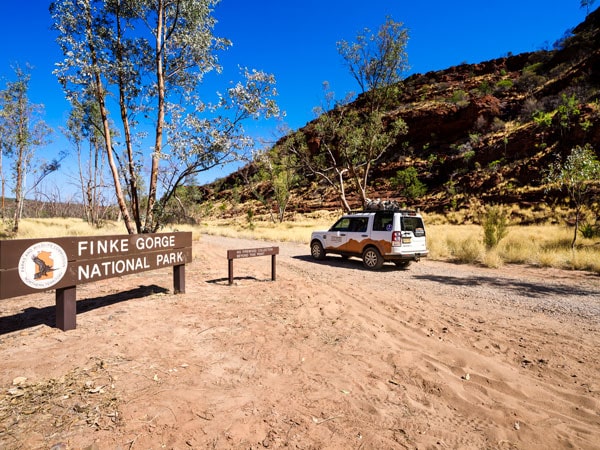
It takes about two hours to drive between Alice Springs and Finke Gorge National Park, 138 kilometres west of Alice Springs. Turn south off Larapinta Drive just west of historic Hermannsburg (Ntaria), the birthplace of artist Albert Namatjira.

You will need a high clearance 4WD to access the last 16 kilometres of track, which follows the sandy bed of the Finke River. Allow plenty of time to cover the distance as the road is rough. Entry requires an NT Parks Pass .

a 4WD entering Finke Gorge National Park
A high clearance 4WD is required to access Finke Gorge National Park. (Image: Tourism Australia/Shaana McNaught)

Palm Valley

Within Finke Gorge National Park, the utterly unique Palm Valley is home to about 12,000 red cabbage palms (Livistona mariae). It is a botanical haven, starkly contrasting the desert scenery that characterises much of the Red Centre.
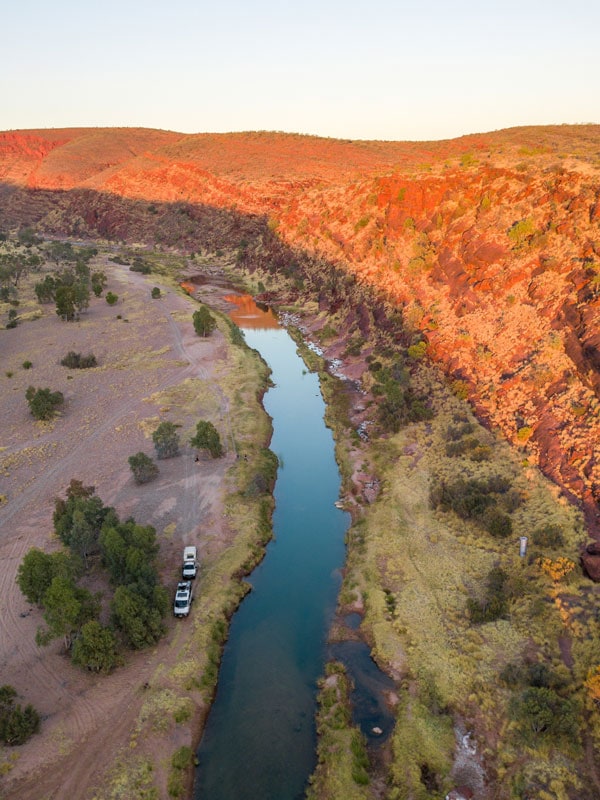
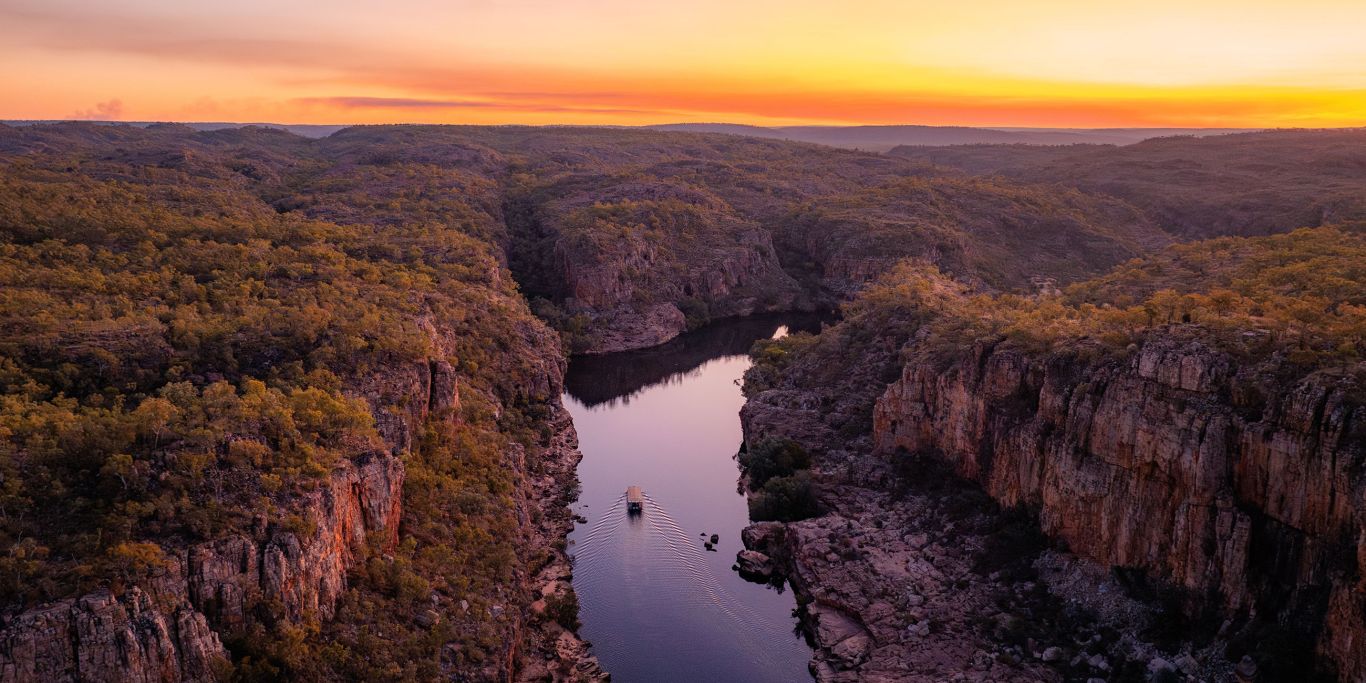
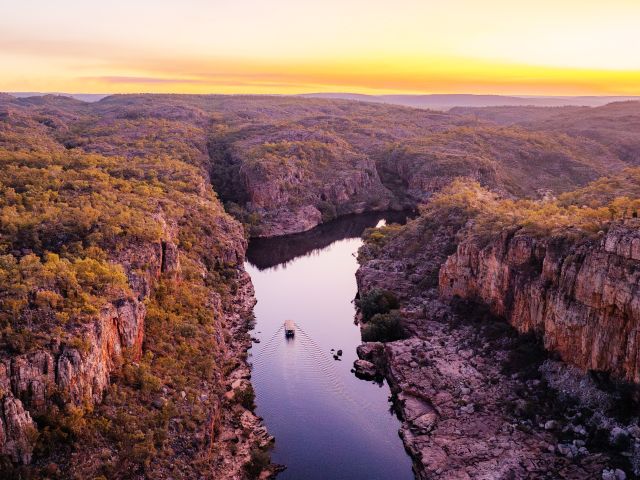
an aerial view of the Finke River
The many colours of Finke Gorge National Park on full display. (Image: Tourism NT/All About Adventure)

Need tips, more detail or itinerary ideas tailored to you? Ask AT.

AI Prompt

What to see and do in Palm Valley

If you are visiting Finke Gorge National Park, you’ll need your hiking shoes. Palm Valley is a walker’s paradise, with trails winding through the gorge, revealing rock pools, ancient plant species and panoramic views of the surrounding cliffs.

From the Palm Valley car park, you have the choice of two walks: the two-hour Mpulungkinya Walk, which takes in an oasis of palms and returns to the car park across the plateau, or a shorter one-hour trek, the Arankaia Walk, which is a loop walk that meanders through an area of lush palms.
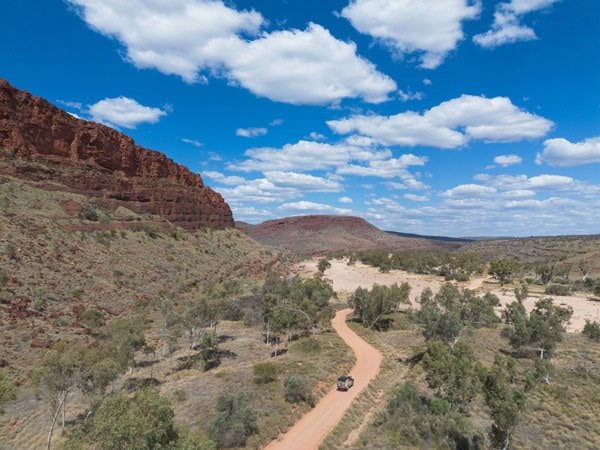
a vehicle driving across Finke Gorge National Park
Palm Valley is a walker’s paradise. (Image: Tourism NT/SeanScott)

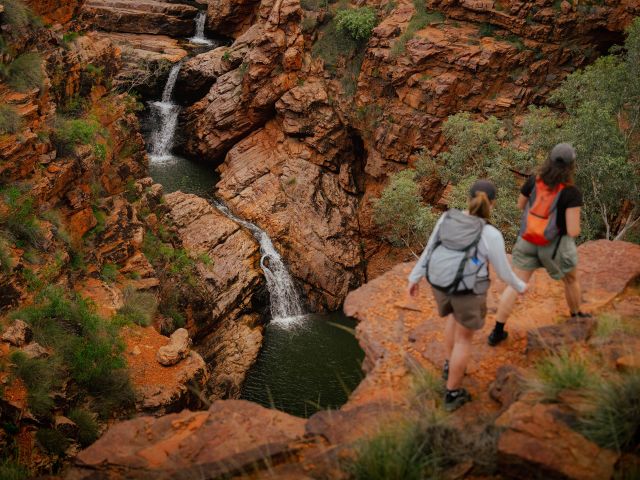
Nearby, at the Kalarranga car park, there are also two walking options: the family-friendly 45-minute Kalarranga Walk to the lookout and the two-hour Mpaara Walk, which meanders alongside the palm-fringed river before leading up the valley and over a saddle. The views from the top of the saddle are incredible: red rock formations for as far as the eye can see.
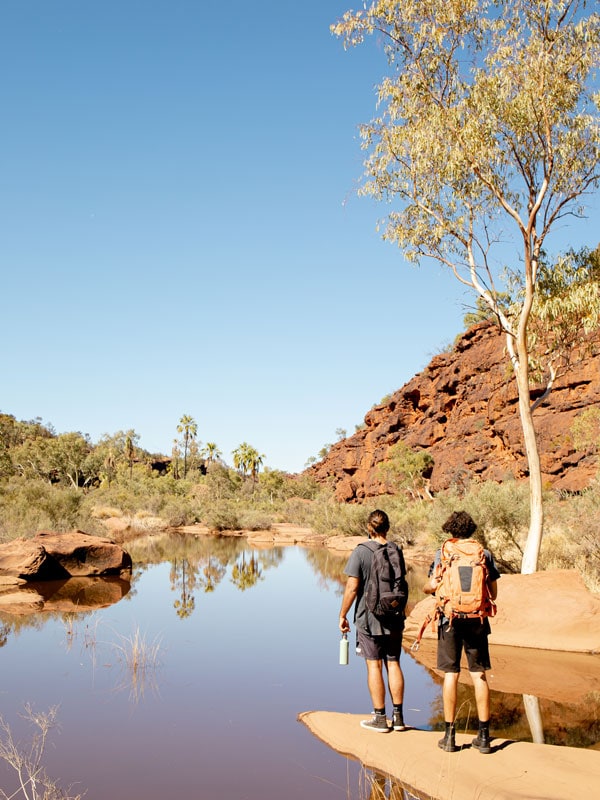
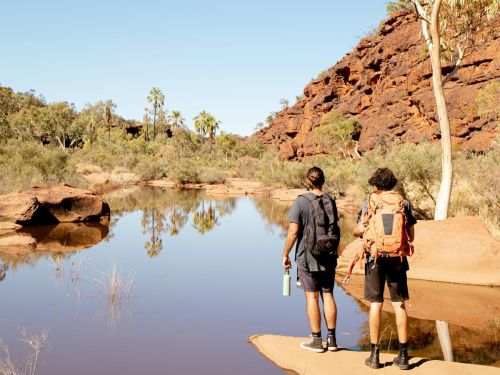
two people exploring Finke Gorge National Park
Hike the palm-fringed river of Finke Gorge National Park. (Image: Tourism NT/Bronte Stephens)

Day tours to Palm Valley

From Alice Springs, both AAT Kings and Emu Run offer day tours to Palm Valley. This includes a visit to the Aboriginal community of Hermannsburg, in the traditional lands of the Western Arrarnta people.
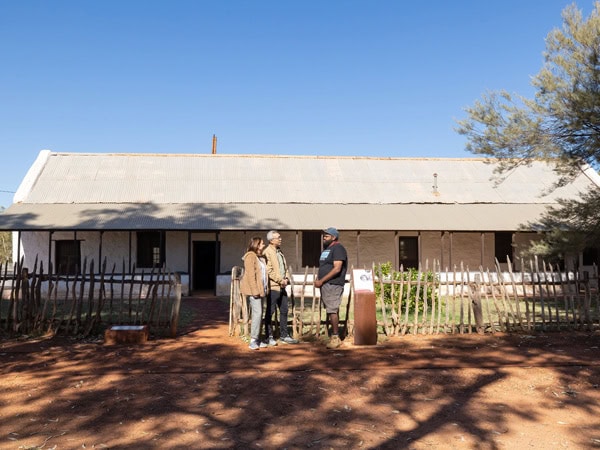
A couple on a tour with Finke River Cultural Tour
Visit the traditional lands of the Western Arrarnta people and join a Finke River Cultural Tour. (Image: Tourism NT / Charlie Bliss)

Weekly travel news, experiences
insider tips, offers, and more.

Where to stay in Finke Gorge National Park

For those looking to camp in the park, you have two options: Palm Valley Campground and Boggy Hole Campground. Make sure you book with NT Parks before you arrive.
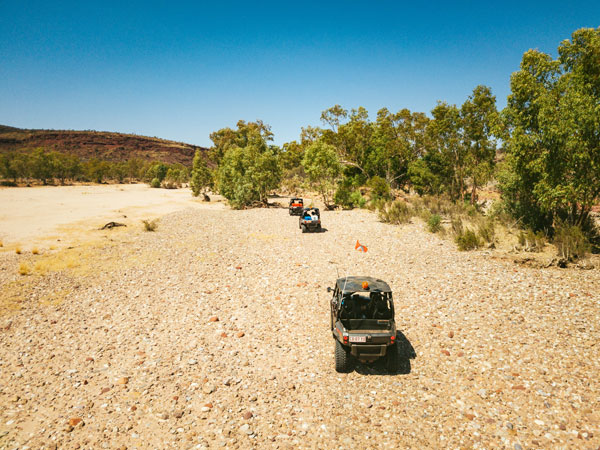
an ATV navigating the dirt road towards Finke Gorge National Park
Go off-grid at Finke Gorge National Park. (Image: Tourism NT/Flow Mountain Bike)

The large Palm Valley Campground has plenty of shady sites for tents, camper trailers, and off-road caravans. Amenities are impressive for such a remote site: solar-powered hot showers, toilets, gas barbeques and designated firepits (remember to collect firewood before entering the park). Volunteer campground hosts are on site over the peak season (May to September).

You won’t find any facilities at the utterly remote campsite at Boggy Hole, a deep waterhole fed by a natural spring, which is a great spot for a cool dip. The track to Boggy Hole starts at the park’s main entrance and is about 20km long. It takes you through rocky gorges and red dunes, serving up stunning views of the landscape. Once you’ve arrived at the bush camp, a flat area next to the river, you can set up camp and kick back while watching the resident osprey fly above. Don’t forget to check out the nearby police station ruins – it’s off the beaten track but worth the effort.

Opening Hours

Finke Gorge National Park is open year-round, except when the Finke River is in flood. The cooler months (April to September) are the most pleasant time of the year to visit.
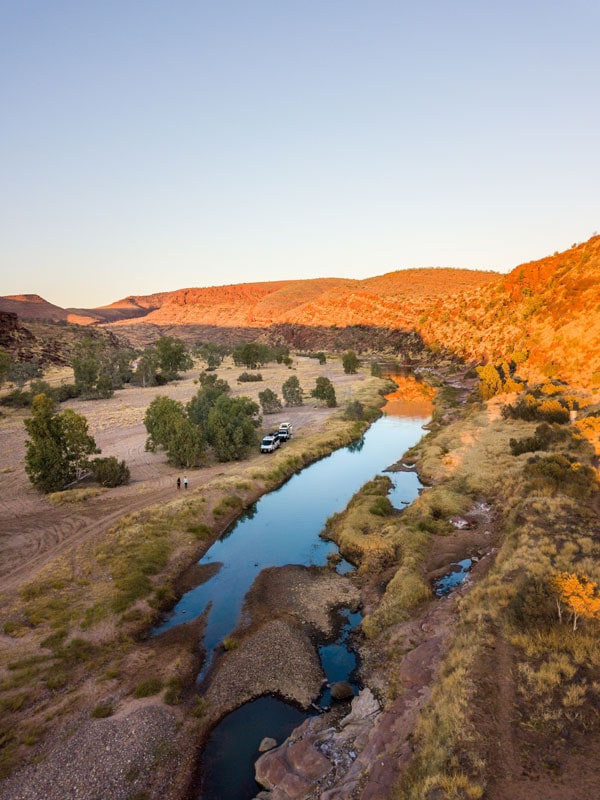
an aerial view of the Finke River
The best time to visit the Finke River is from April to September. (Image: Tourism NT/All About Adventure River)
Leah McLennan
Leah McLennan is a freelance writer based in Darwin. She was a journalist in Sydney for over a decade and counts her time as travel editor for Australian Associated Press as one of the highlights of her career. From exploring remote campsites in the Top End with her family, to seeking out new art galleries in faraway cities, she’ll grab an adventurous or arty travel experience within her reach.
View profile and articles
hero media

Discovering East Arnhem: Australia’s most unique and rewarding corner

    Joanne Millares Joanne Millares

    Hard to reach and harder to forget, East Arnhem offers something rare in modern travel: the chance to slow down and experience Country on its own terms.

    The sky feels bigger in East Arnhem . It stretches wide and uninterrupted above rouged earth, stringybark woodland and beaches so empty they seem to belong to another era. The coastline curves for kilometres without a footprint and the horizon runs on forever.

    For comedian Lou Wall, the scale of the place was the first thing that hit them.

    “The sheer openness,” they say. “The sky feels infinite and the land stretches out endlessly. It’s pretty breathtaking visually.”

    But the physical landscape is only part of the story. The real reward isn’t only the scenery but the shift in perspective the journey brings. Visitors stop trying to tick off the destination and a real engagement takes over.

    “It made me never want to travel again,” Wall jokes. “In that I never wanted to leave East Arnhem.”

    Getting there

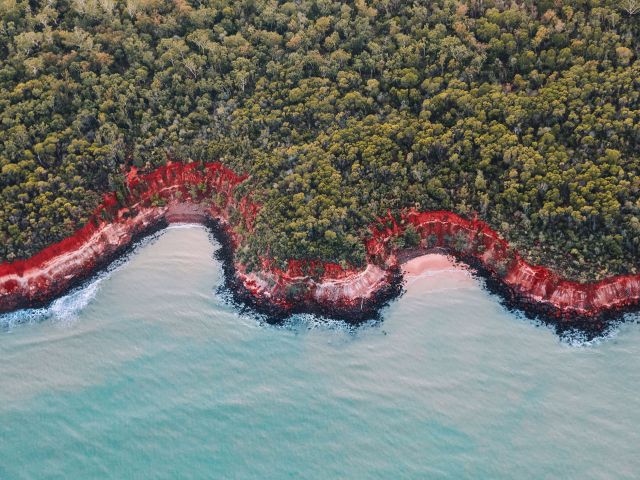
    Aerial shot of East Arnhem’s coastline as cars trace the curve of the shore.
    Sail along the remote coastline on an expedition cruise.

    Reaching East Arnhem is part of the adventure. Travellers typically fly into Gove Airport near Nhulunbuy via Darwin or Cairns, or arrive by expedition cruise along the remote coastline. Others make the journey overland along rutted dirt roads that cut through East Arnhem’s small pockets of monsoon forest.

    However you arrive, there’s a distinct feeling of crossing into somewhere different. Permits are required to visit the region, reflecting the fact that this is Yolŋu land where communities and traditional owners maintain deep cultural connections to Country.

    The extra planning becomes part of the experience. By the time visitors arrive, they understand they’re entering a place not just of respect, but also patience and curiosity.

    At one with nature

    East Arnhem’s  landscapes leave a strong imprint. For Wall, one place in particular still lingers in their memory: Ngalarrkpuy , also known as Lonely Beach, near Bawaka Homeland.

    “I genuinely felt like I was living inside an Instagram filter,” they say. “One of the most stunning feats of nature I’ve ever seen. The water was so clear I swear I could see even the fish smiling.”

    Across the region, natural experiences unfold at a slower pace. Fishing, beachcombing and island hopping reveal the rhythm of the coastline. The tides shape daily life and the vastness of the landscape makes even simple moments feel downright cinematic.

    For visitors with limited time, Wall says the Bawaka Homeland experience is unmissable.

    “I just left and I’m already planning when I can get back there.”

    The sense of remoteness is part of the appeal. In a country where many beaches are crowded and well-trodden, East Arnhem’s coastline still feels wonderfully wild.

    Immersing in local culture

    A visitor spends a meaningful moment alongside Yolŋu guides, gaining insight into their deep cultural knowledge and connection to the land.
    Experience authentic moments with the locals.

    Culture is woven through every experience in East Arnhem. Visitors have the opportunity to spend time on Country with Yolŋu guides and knowledge holders who share stories and traditions that have been passed down for generations.

    For Wall, one of the most powerful moments came during a conversation with a Yolŋu elder.

    “I got to meet a traditional elder, Mayalil, in Nhulunbuy,” they say. “Listening to her talk about her home made the land feel alive in ways I couldn’t have imagined.”

    The region is also home to internationally recognised Aboriginal art centres where artists shape works deeply connected to land and family knowledge.

    Music carries the same cultural energy. East Arnhem has produced globally recognised artists such as King Stingray and Baker Boy, blending Yolŋu language, storytelling and contemporary sound.

    Wall experienced this musical spirit first-hand.

    “A jam session around the fire was it for me,” they say. “Letting the deep joy and history of their music wash over me…  and meeting a few of the King Stingray musicians was unreal.”

    These moments of human connection often become the most memorable part of a visit.

    Spotting local wildlife

    An aerial view of the beach shows tiny figures lined up across the white sand, moving as if in a rhythmic dance.
    Step into a world where nature reigns.

    The wildlife of East Arnhem adds another layer to the experience. The region is home to an extraordinary range of animals, from waterbirds and turtles to dugongs, dolphins and the formidable saltwater crocodile.

    Wall admits they didn’t actually spot a croc during their visit.

    “Devastatingly, I didn’t see one,” they laugh. “But with all the stories from the locals I definitely gained a healthy respect for caution.”

    Some of the most memorable wildlife encounters can be surprisingly small., At Banubanu Beach Retreat on Bremer Island, Wall remembers walking along the beach one morning and watching it come alive.

    “As you walk through the sand you see hundreds of crabs scurrying into their holes as you pass by,” they say. “Such a small thing, but it was completely magical.”

    Moments like this reveal the quieter rhythms of East Arnhem, where even the smallest creatures seem to play a part in the landscape.

    Visitors who make the journey soon learn the most important travel tip of all.

    “Go in open-minded with a sense of curiosity,” Wall says. “Be prepared to ditch your plans. The land and the locals will guide you on an adventure no spreadsheets could ever compete with.”

    And most importantly, they add, don’t rush.

    “The land and people deserve your time and attention. You’ll be all the better for slowing down.”

    For more information on visiting East Arnhem, head to eastarnhem.com.au .