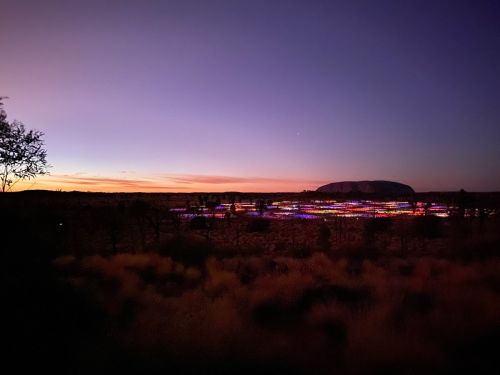
Does the Field of Light outshine Uluṟu?

hero media
Field of Light, one of the largest art installations in Australia’s history, sits in the shadows of Uluru’s ancient wonder. Does Bruce Munro’s creation shine brighter than the Red Centre, asks Steve Madgwick?

Bruce Munro has every right to be “bloody petrified". Sure, the logistical riddle of amassing 50,000 lights in the Central Australian desert is reputation-threateningly perplexing. But add to this the multicultural complexity of placing one of this continent’s largest ever art installations smack bang near Uluru, the sacred heart of a culture that has been there “since the first sunset".

This self-effacing “Pom" is fully aware that his choice of canvas is a sensitive one, with a well-documented history of white men trampling willy-nilly over its sacred sites.

“I couldn’t just be a Westerner coming here to impose ideas on this landscape – this is the Anangu’s [the traditional owners’] landscape," says Munro.

Munro describes his negotiations with Anangu elders as a “gentle, four-year discourse", where he tried to convey the spirit and scope of the project. But try explaining to anyone why you want to dump four football fields’ worth (49,000 square metres) of changing-hued frosted lights in the outback.

“It’s hard to visualize and abstract – you really have to see it to understand," he says.

Bruce Munro
Bruce Munro, the man of light: Creator and artist behind Field of Light, Uluru (photo: Mark Pickthall).

The Anangu community seem to have embraced the installation, helping to clear the land using traditional fire-stick farming techniques, and translating the name into their language, Pitjantjatjara. Tellingly, elders also asked Munro if they could do their own interpretation of the lights down the track.

As of its opening night back in April 2016, the Field of Light is the largest iteration of Munro’s immersive light displays that have graced various landscapes including a field behind his house in southwest England and various sites in the US. He insists, however, that Uluru is something of a homecoming for him as an artist. Back in 1992, on his farewell trip after living in Australia for eight years, Munro and his partner finally made it to the Red Centre (only just) in a “banger" of an old Toyota Corona.

He couldn’t have predicted as he sketched the idea into his notebook, while camping in Uluru, the unprecedented demand his ‘swan song’ would create.

“It sounds like a cliché, but seeing Uluru actually changed my life," he says. “That inspiration gave me a chance to work full-time as an artist.

“And I think that the Anangu understand that I have no ulterior motive – I just want to express how this place has changed my life."
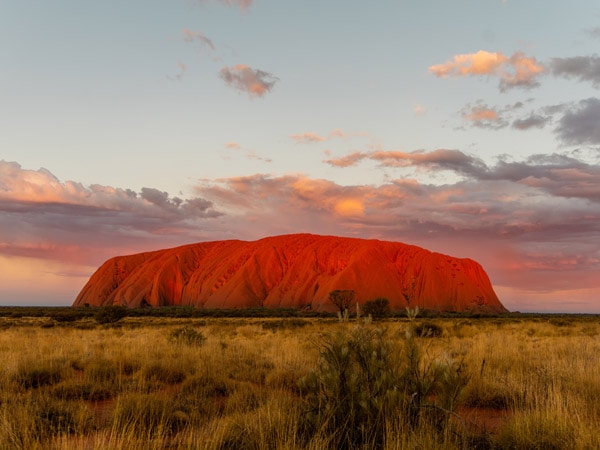
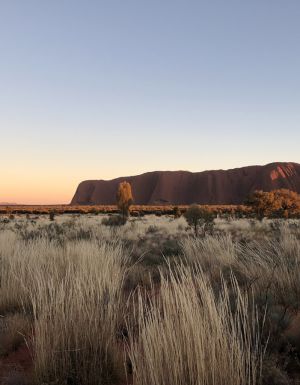
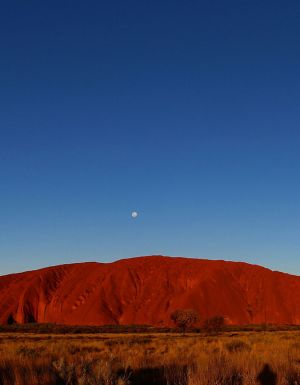
Uluru at sunset
The impact of seeing Uluru inspired Bruce Munro’s Field of Light. (Image: Tourism-NT/ Bronte Stephens)

Seeing the Field of Light at sunrise or sunset

To appreciate art that defines itself only in relation to darkness, you’ll have to prepare to become one of the nocturnal desert mammals; immerse yourself in the desert before the sun kisses the outback horizon and wander through it well after sunset.

From the dune-top viewing area in daylight, the Field of Light merely resembles an incongruous, glistening patch of wild dandelions among the spinifex-rich deep red earth. Stubborn desert oaks spectate in wonder.
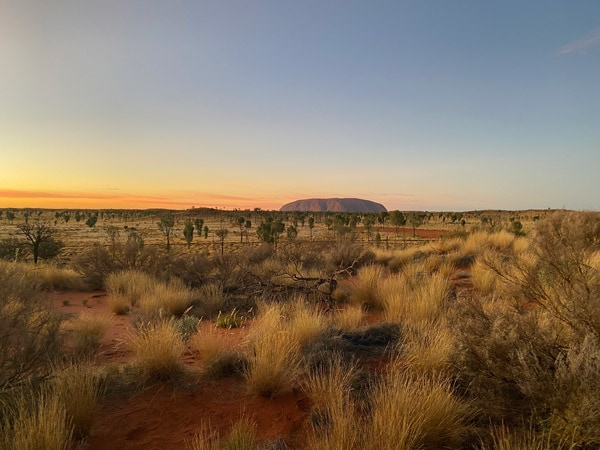
The Field of Light in daylight
The Field of Light disappears in daylight. (Image: Katie Carlin)

At dusk, glass of Champagne in hand, the installation barely draws your eye from The Rock’s awesome presence (it’s located just outside the national park, a respectable distance from Uluru).

Then at twilight, the splendour of the outback stars are intent on pilfering the show. For the Field of Light, it must be like coming on stage after The Beatles have warmed up the crowd for you.

Immersed at eye level is where you want to be after dark. Wander out of the blackness into the impromptu avenues that dissect rhythmic waves of mutable hues, to a chorus of chirping crickets, and accompanied by a tender desert breeze.

It feels like you’ve landed in a psychedelic Netherlands bulb field – subtle violets, soft electric blues and limes, gentle ochres, spectral whites.
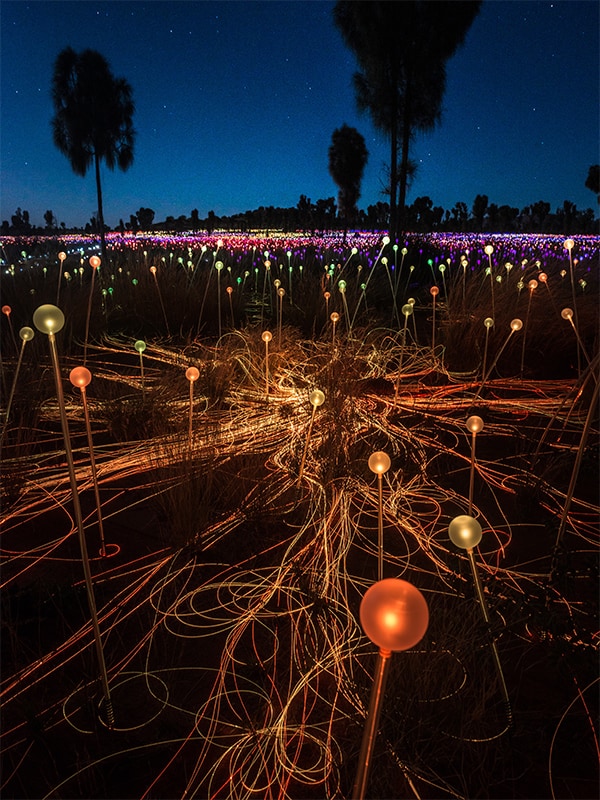
Field of light
The Field of Light has become one of the most popular Uluru attractions.

Field of Light vs Uluṟu

Local artist-in-residence Heather Dunn underlines the futility of comparing the lights with the “natural atmospherics" of the desert.

“The Field of Light is only a complement to a grand space; to the transitory things that happen to Uluru, the colour and change," she says.

“It’s only when Uluru goes to sleep, that this thing takes over on the ground while the stars do above. At first, you think, ‘oh, yeah, there it is; it’s not doing much’, but it starts to build, like an orchestra. Then you get among it!"
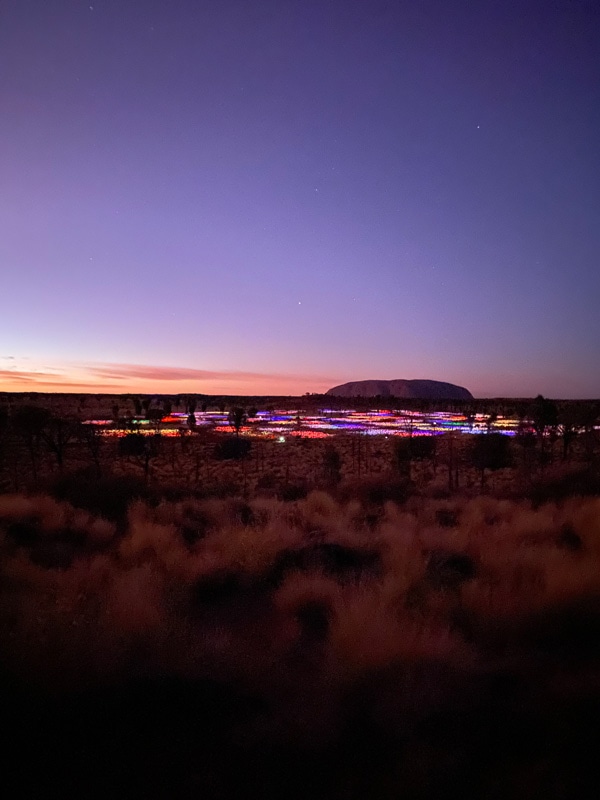
Field of Lights at sunrise at Uluru
It is futile to compare the Field of Light with the wonder of Uluru. (Image: Katie Carlin)

The concept behind the Field of Lights

Around 380 kilometres of crisscrossed fibre-optic cables creep along the ground; tendrils of silvery light, a confusion of trippy snail trails.

Munro chose a colour palette sympathetic to the desert, omitting deep greens because he saw none way back in 1992. Instead, the spindly stems breathe and sway through a sympathetic desert spectrum of ochre, deep violet, blue and white.

Not only is this his first solar-powered work (well, there are not many power outlets in the desert), but it’s also “a lot less designed" and geometric than its forerunners; a concession to the untamable desert scape.
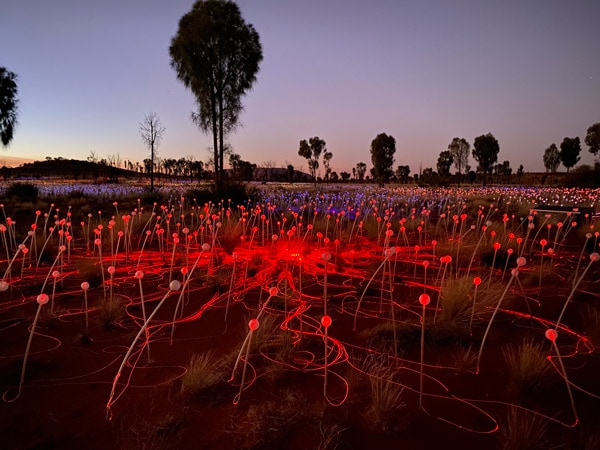
Close up of Field of Lights at Uluru
The Field of Light is coloured a desert spectrum of ochre, deep violet, blue and white. (Image: Katie Carlin)

Aṉangu art and culture

But back in daylight, with some truly local knowledge, you realise that this most modern of art installations is not just sitting alone on a barren desert, but actually on the cusp of a monumental outdoor gallery.

Literally, hundreds of Aṉangu rock paintings and etchings perch among the crags and nooks of Uluru and nearby Kata Tjuta (the Olgas), embedded physically and metaphysically into the landscape and lore.

Each on its own seems sparse and simple, surely no match for the lights, but collectively they weave an immensely bigger picture.
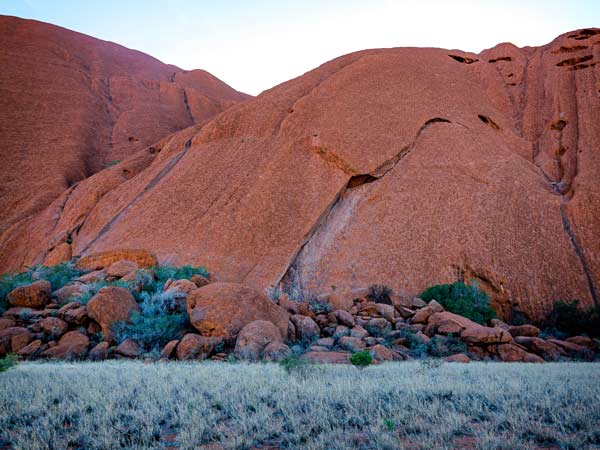
Close up of Uluru
For Anangu art is about survival in the desert landscape. (Tourism NT/ Kate Flowers)

“Art is about survival out here," says Anangu man Leroy Lester, from Wintjiri Arts & Museum. “In places like Kakadu, they’ve got plenty of food so they had lots of time to paint things like big barramundis with all the organs. We had no time for that.

“Out here, especially when it’s dry, you’d rather drink the water than mix ochre with it. The main art was body paint and ceremonies – but even ceremonies were cancelled in times of drought."

According to Leroy, art out here acts like a billboard spruiking Tjukurpa (creation stories). The Rock is a physical embodiment of it and the Anangu read them both like a scripture and as a daily life roadmap.

“The paintings might show a big lizard, so everyone who’s looking for a big lizard to eat can find one. Or so you can find a waterhole."

The Field of Light is a grain of sand in Uluru’s grand narrative

While Uluṟu is primarily just a powerful muse for Munro, he does relate to one principle of Anangu art and culture; a sense that the past informs the present.

“It intrigues me that the Anangu have an interwoven concept of time that reflects mine: of time past, when I first saw Uluru; of time present, the exhibition now; and time future, how once this has been swept away, the living memory that goes into people’s hearts and minds."

The living memory is enough to sate Munro, aware that the Field of Light is barely a grain of sand in Uluru’s grand narrative. “I actually like the fact it’s ephemeral – you can flick it on and off."

He’s not the kind of artist to scribble his name on a tree trunk or cast a bronze statue (and much of the installation will be recycled, too). “Ultimately, I think we’re all just pushing ideas through time."
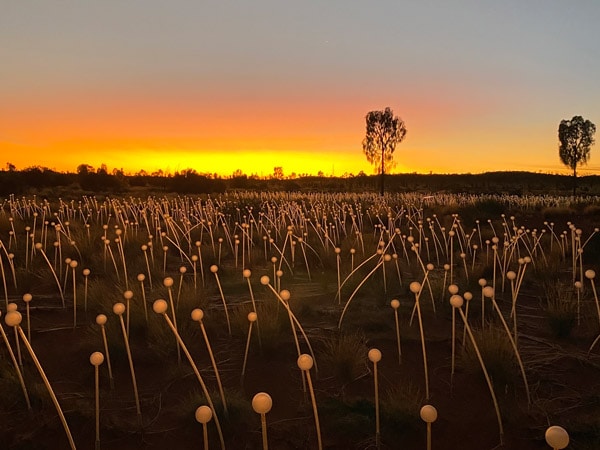
Field of Light in sun
The last glow of the Field of Light before it disappears with the sun. (Image: Katie Carlin)

Field of Light, Uluru details

Playing there

The Field of Light (also named Tili Wiru Tjuta Nyakutjaku or ‘looking at lots of beautiful lights’ in the local language) is now showing indefinitely.

It is currently open for tours with a Field of Light pass ($45). The four-and-a-half-hour, three-course A Night at Field of Light Dinner inspired by bush tucker costs $280 per person (with Australian wines and beers as well). Other options include a Field of Light Star Pass with viewings of the work and outback canapes with sparkling wine or beer.

Staying there

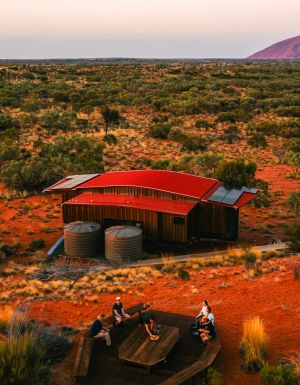
Ayers Rock Resort offers an array of family-friendly accommodation options including the five-star Sails in the Desert. Book ahead to go glamping at Longitude 131.
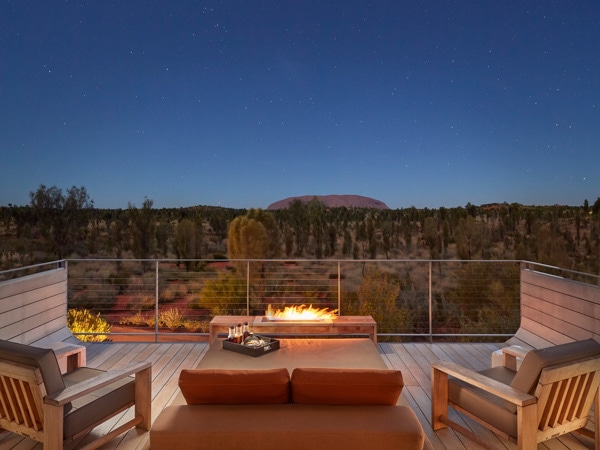
Longitude 131's collection of pavilions provide jaw-dropping views of Uluru and Kata Tjuta. (Image: Tourism NT and George Apostolidis)
Longitude 131’s collection of pavilions provides jaw-dropping views of Uluru and Kata Tjuta. (Image: Tourism NT and George Apostolidis)

Getting there

Jetstar, Qantas and Virgin fly regularly to Ayers Rock Airport, Uluru.

hero media

Red earth, light shows and ancient culture: discover the ultimate NT road trip

(Credit: Tourism & Events NT/ Ben Savage)

    Kassia ByrnesBy Kassia Byrnes
    The Northern Territory is made for road trips, and this one hits all the highlights.

    Craggy mountain ranges, inviting waterholes, ochre soil: the landscape of the Northern Territory is asking to be explored by road and foot. There are many iconic road trips to choose from here, but none so all-encompassing than the roughly 3000 kilometres of sealed road that make up Explorer’s Way.

    Spend 14 days (or more, to really make the most of it) driving this route from Adelaide, hitting the NT near the small settlement of Kulgera before later finishing in Darwin. Along the way, you’ll find nearly all the territory’s most iconic sights.

    Discover some of the top highlights that make Explorer’s Way one of Australia’s most incredible road trips.

    1. Alice Springs

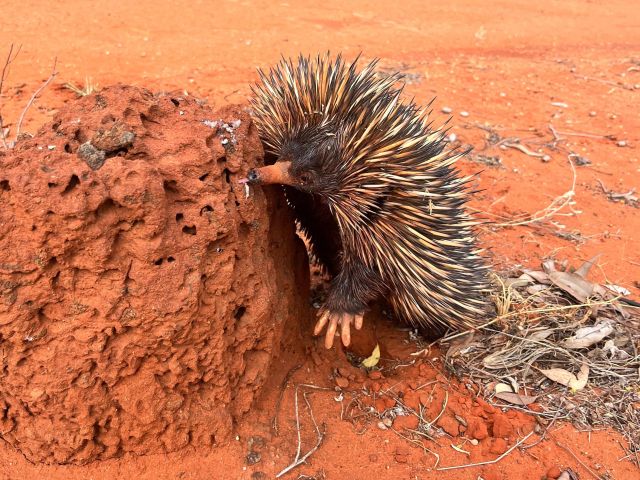
    echidna at Alice Springs Desert Park
    See the locals at Alice Springs Desert Park. (Credit: Tourism & Events NT)

    Recently hitting the big screen again with the story of The Kanagroo Sanctuary , there’s a lot to surprise you in Alice Springs.

    Three distinct desert habitats – desert rivers, sand country and woodland – are recreated over 1300 hectares at Alice Springs Desert Park . Time your visit for a presentation or a free bird show.

    Later, turn your attention to the skies above, taking a dive into local astronomy at Earth Sanctuary . You’ll find a range of experiences, from a 90-minute toe-dip into the stars through to an overnight adventure.

    Alice Springs packs a surprising punch with its tasty dining options, including pub grub and unique brews at Alice Springs Brewing Co , tapas and pizza at Epilogue Lounge and tasty cafe fare at the quirky Page 27 .

    2. Tjoritja/West MacDonnell National Park

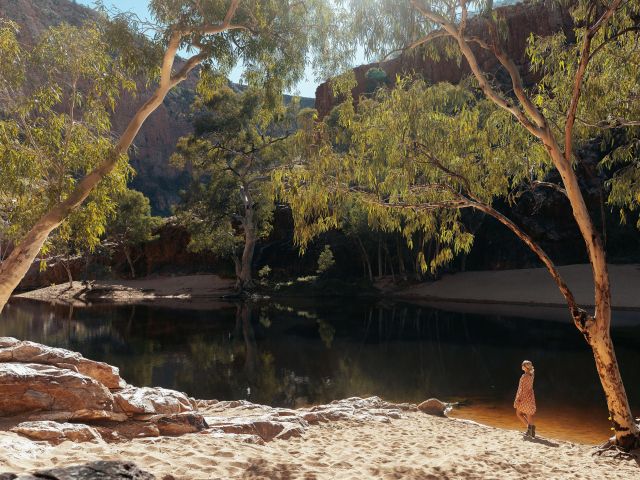
    woman standing at Ormiston Gorge
    Dive into Ormiston Gorge. (Credit: Tourism & Events NT/ Dom and Jesso)

    Beginning 15 minutes from Alice Springs and stretching across 161 kilometres, Tjoritja/West MacDonnell National Park is packed with striking ancient landscapes and inviting water holes.

    Visit Standley Chasm – traditionally known as Angkerle Atwatye, meaning ‘Gap of Water’ – to take in its bold red and orange hues, and to observe the diverse bird species, lizards and wallabies that call it home.

    Cool off in one of several picturesque natural swimming holes, like Ellery Creek Big Hole and Ormiston Gorge.

    3. Uluru & Kata Tjuta

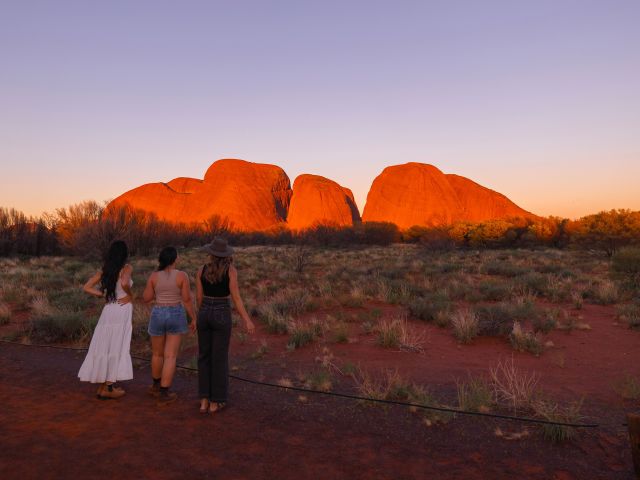
    three women looking at Kata Tjuta at sunset
    Explore Kata Tjuta. (Credit: Tourism & Events NT)

    Visiting the Cultural Heart of Australia is something everybody should experience. There are so many side trips in the Red Centre you could easily spend a week here, but to get the most out of a short time, park the car then get out on foot.

    Take the 10-kilometre Base Walk around the entirety of Uluru or join a free, ranger-guided Mala Walk along part of the base, learning about Tjukurpa (creation stories) and geology as you go.

    For a change of pace, wait until nightfall and wander through the iconic Field of Light display by celebrated artist Bruce Munro, or see the Wintjiri Wiru lightshow that shares the ancient Mala story using drones, lasers and projections.

    4. Tennant Creek

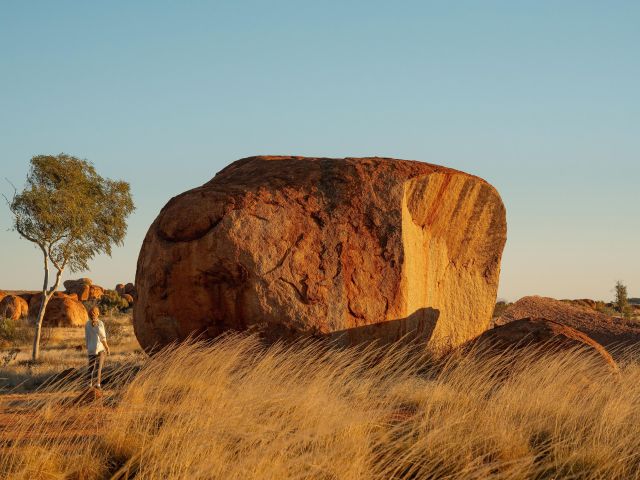
    pson looking at Karlu Karlu (Devils Marbles) northern territory
    See the ancient granite boulders of Karlu Karlu (Devils Marbles). (Credit: Tourism & Events NT/ Dom And Jesso)

    Tennant Creek was Australia’s third-largest gold mining town in the 1930s, and visitors can discover that history at Battery Hill Mining Centre – and even try their own hand at gold fossicking.

    For a completely different side of history, pop into Nyinkka Nyunyu Art & Culture Centre , which preserves and shares Warumungu culture through art, performance, a museum and more.

    Just outside town, find the ancient granite boulders of Karlu Karlu (Devils Marbles). A site integral to important stories held by the Warumungu, Kaytetye, Warlpiri and Alyawarra peoples, the boulders appear to almost have dropped out of the sky and seemingly continue to defy gravity.

    5. Mataranka

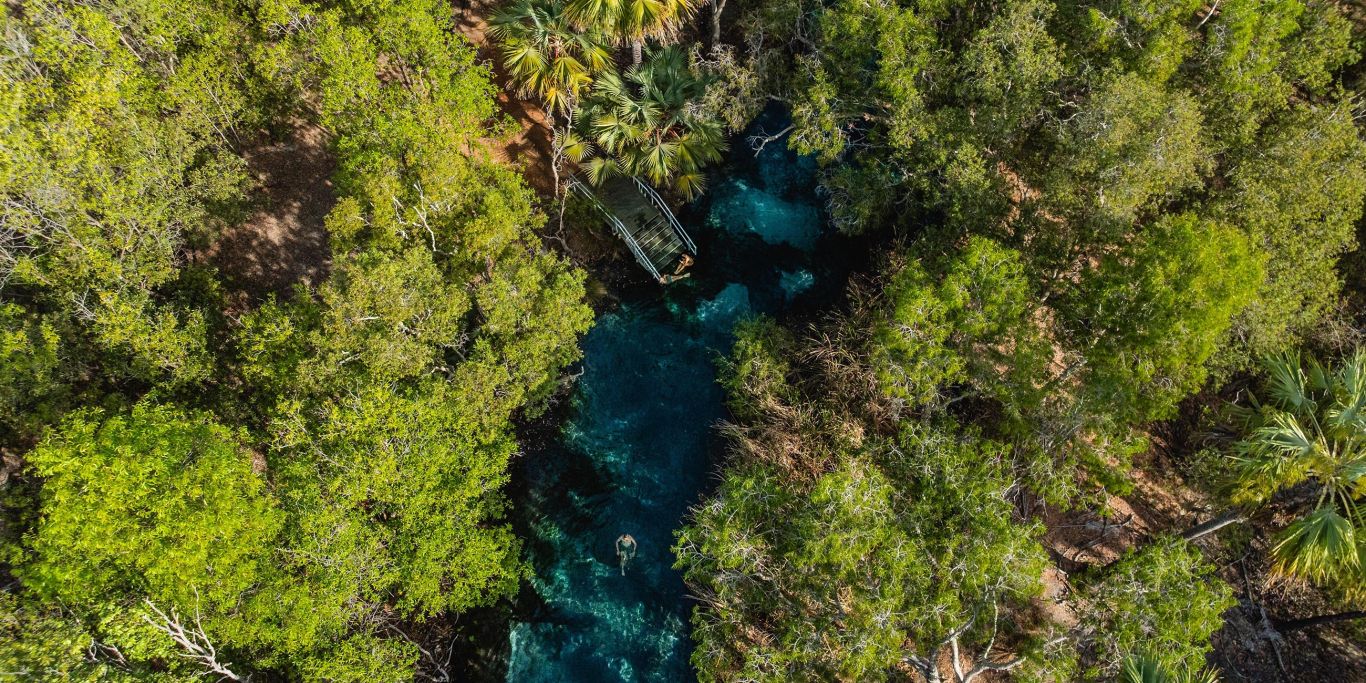
    aerial of people swimming in bitter springs northern territory
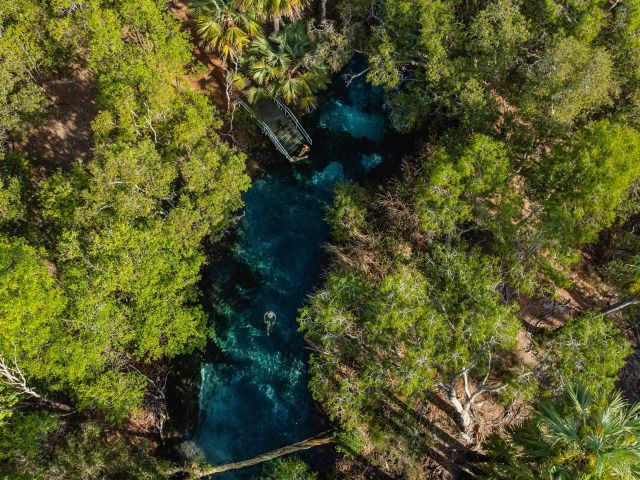
    Dive into Bitter Springs. (Credit: Tourism & Events NT/ Ben Savage)

    A town made famous by the novel We of the Never Never by Jeannie Gunn (and a movie of the same name), Mataranka is also known for its sandy-bottomed thermal pool, Bitter Springs , within Elsey National Park. Follow a 500-metre loop track around these spring-fed pools that stay a toasty 34°C year-round, before choosing your favourite spot to dive into. Enjoy the local birdlife while you relax.

    Elsewhere in the park, find historical sites, several scenic walks and Roper River, which is perfect for boating and fishing.

    6. Nitmiluk National Park

    Nabilil Dreaming Sunset Dinner Cruise
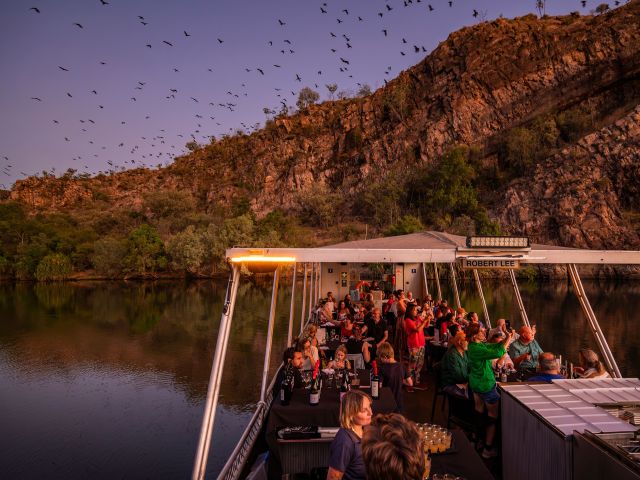
    Join a sunset cruise with Nabilil Dreaming. (Credit: Tourism & Events NT/ Lachlan Gardiner)

    Nitmiluk National Park is sandstone country, with 13 stunning gorges and plenty of waterfalls waiting to be explored.

    One of the most beautiful spots can be found along the 62-kilometre Jatbula Trail, a five-to-six day bushwalk that follows an ancient Jawoyn songline from Nitmiluk Gorge to Leliyn (Edith Falls). Numbers are restricted and book out quickly, so be sure to plan well ahead. Not up for the hike? Drive right up to the falls and enjoy a dip without the challenge.

    Elsewhere, explore Nitmiluk (Katherine) Gorge. Paddle a kayak through the river running through the canyon, or save your energy on a Nabilil Dreaming Sunset Dinner Cruise , discovering the stories and ways of the Jawoyn people while enjoying a candlelit dinner as the cliffs around you shift colour and glow with the changing daylight.

    Continue your cultural journey at local art centres like Godinymayin Yijard Rivers Art & Culture Centre or Mimi Aboriginal Art & Craft .

    7. Litchfield National Park

    cathedral termite mounds in Litchfield national park
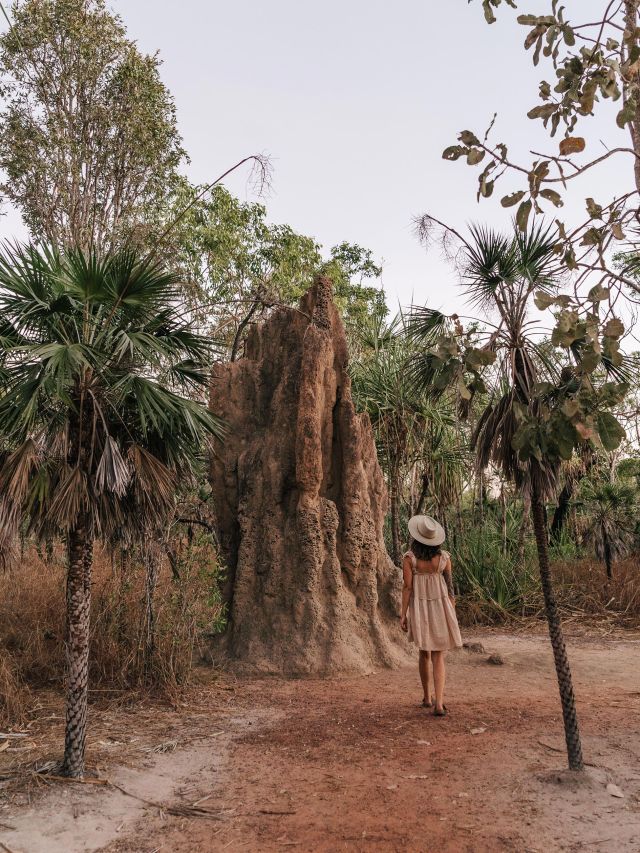
    Be awed by giant cathedral termite mounds. (Credit: Tourism & Events NT/ As We Wander)

    Just over an hour’s drive from Darwin lies the beautiful Litchfield National Park. It’s famous for stunning waterfalls and swimming holes, including Buley Rockhole, Wangi Falls, Florence Falls and Tjaynera Falls.

    Here you’ll also find hundreds of giant – and magnetic – cathedral termite mounds that are truly a sight to see. Ageing up to 100 years old, you won’t find mounds like these outside the northern parts of Australia. Stroll along the accessible boardwalk to see them up close.

    8. Darwin

    darwin street art
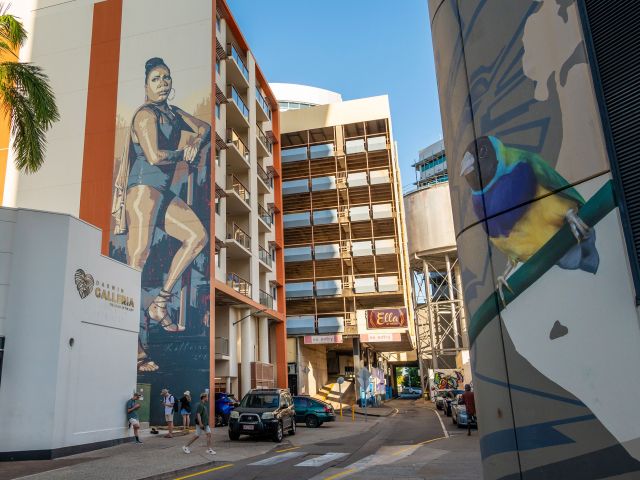
    Darwin art is streets ahead. (Credit: Tourism & Events NT/ Mark Fitzpatrick)

    This list wouldn’t be complete without the territory’s capital city: Darwin. Situate yourself upon arrival with a stroll through the main streets, admiring the many art murals by local, interstate and international artists. They’re all remnants of the annual Darwin Street Art Festival , one of Australia’s longest running street art festivals.

    Stop to recharge along Darwin’s Waterfront Precinct , an area of delectable restaurants, public swimming pools and free events. And, of course, it would be wrong to leave the city without enjoying a bowl of laksa at Mindil Beach Sunset Market as the sun goes down.

    Learn more and start planning your Explorer’s Way road trip at northernterritory.com/drive.