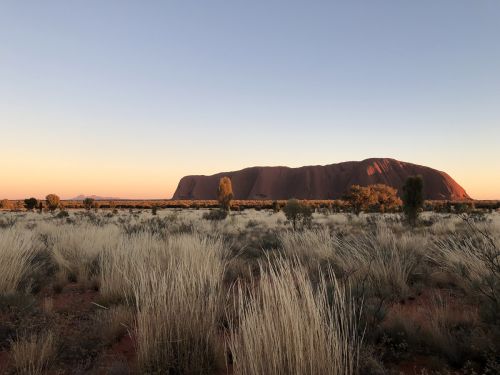
Why these Aussie couples have visited Uluṟu so much they’ve lost count

hero media
For two couples, Uluṟu has been more than a destination – it’s been a spiritual touchstone across decades of changing landscapes, culture and understanding. 

Few places on Earth possess the power to transform a visitor with a single glance. Uluṟu is one of them. Towering out of the red heart of Australia, it has drawn people from every corner of the world – and left them forever changed.

Among those who have felt its pull time and again are Brian and Lynda Ralph, and June and Geoff Tidey, two couples whose journeys to Uluṟu span decades. 

First encounters with the magic of Uluṟu 
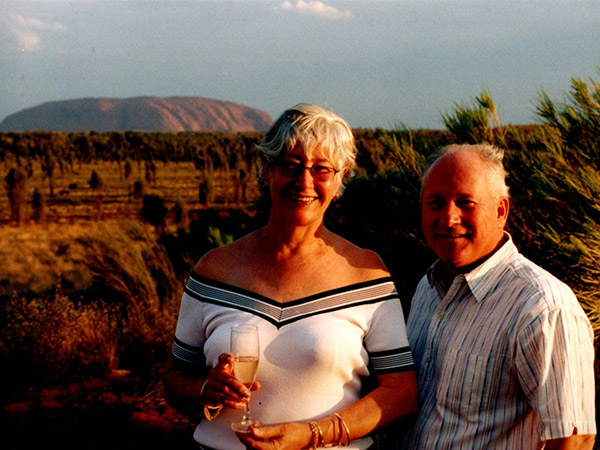
Lynda and Brian at Sounds of Silence Dinner
Lynda and Brian at the Sounds of Silence Dinner in 2004. (Image: Brian and Lynda Ralph)

When geography teachers Brian and Lynda Ralph first approached Uluṟu in the early 1970s, it was a raw, untamed experience.  

“We drove in, and it was late evening, and we thought, ‘Okay, this is huge,'" Brian recalls. But by the next morning, heavy rain had transformed the landscape.  

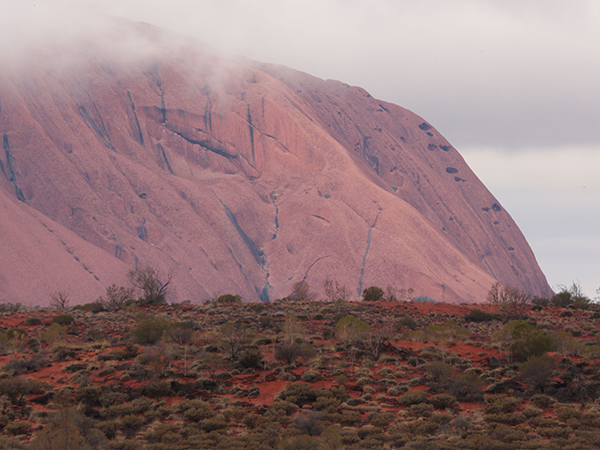
“We woke up, it was pouring rain, and the Rock was silver, just the way the light was in the early morning with waterfalls cascading down its sides. Unbelievable," Brian says. 

A family connection 
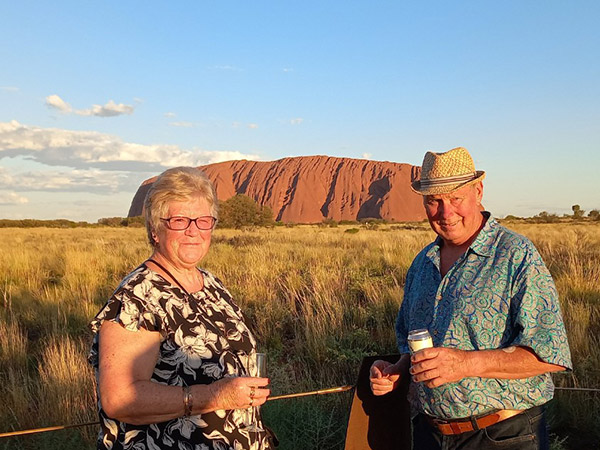
June and Geoff Tidey's Uluru journey
June and Geoff’s Uluru journey was inspired by their daughter. (Image: June and Geoff Tidey)

For June and Geoff Tidey, originally from Buckinghamshire in the UK, their journey to Uluṟu began much later, in 2008, sparked by their daughter, who has worked and lived in the region for the majority of the last 20 years. 

“We visited because of her," June says, “but we fell in love with the place ourselves." Over more than 10 visits, June and Geoff found Uluṟu to be both a family touchstone and a personal retreat. 

“It’s a very spiritual place, very calming," she reflects. “And it’s not what you expect. People imagine a barren desert – but it’s green, it’s full of life." 

Watching change unfold 
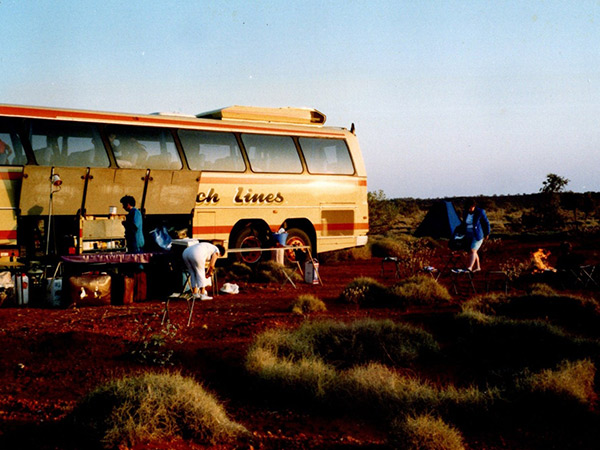
campsite in 1991
Camping in 1991. (Image: Brian and Lynda Ralph)

Both couples have witnessed – and welcomed – the sweeping changes that have transformed how visitors engage with Uluṟu. For Brian and Lynda, the evolution has been profound over their seven or eight visits (they can’t quite remember how many times they’ve been). 

“In the 70s, people would just hop out of the bus and, often without a second thought, they’d climb the Rock," Brian says. 

“But now, there’s a deep respect. And the Aṉangu culture has been openly recognised and embraced, and visitors are far more conscious of the cultural importance of the site." 

“We didn’t know enough," Brian admits. “But there wasn’t much information available then. Looking back, I just regret we didn’t understand the cultural significance." 
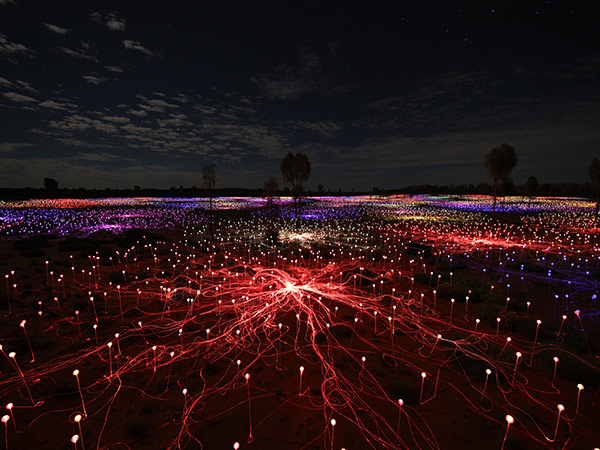
Uluṟu Field of Light
The mesmerising Uluṟu Field of Light installation by Bruce Munro. (Image: Voyages Indigenous Tourism Australia)

Brian points to the Uluṟu-Kata Tjuṯa’s Traditional Owners, the respectful interpretive signs, and the re-routing of roads to protect sacred sites. “It’s heartwarming," he says. “You feel like you’re being invited to experience something truly special, but with the understanding that you are a guest." 

Brian and Lynda also point out the difference in accommodation options over the years. 

“[In the early days] we were in two-man tents on red dirt and that was it, there was nothing else," Brian says. 

“Now, with Ayers Rock Resort, for people considering going there, there’s a really wide range of accommodation and pricing. There are a variety of options. We usually stay at the Outback Hotel." 

June and Geoff have visited Uluṟu more than 10 times, but the exact number is difficult to recall. They, too, have a favourite accommodation – Emu Walk Apartments – and have discovered a favourite room as well.

“We always stay in the same room – 209," June laughs. “The room is a one-bedroom apartment, it’s so good, so centrally located, we just loved it, so we’ve asked for it ever since!" 

Memories made across generations 
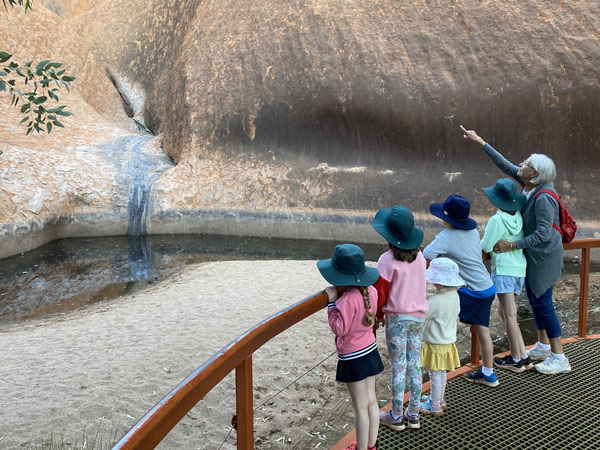
Brian and Lynda Ralph grandkids at Mutitjulu Waterhole
The Ralphs visited with their grandchildren in 2022. (Image: Brian and Lynda Ralph)

For the Ralphs, Uluṟu has become a part of their family’s story. They’ve returned with their children, and later their grandchildren, weaving memories of sunrise walks, Indigenous tours and quiet moments of awe into the fabric of their lives. 

“Every time we visit, we discover something new," Lynda says. “Taking our grandchildren to see the Aboriginal rock art and watch their faces light up – it’s unforgettable." 

“As teachers, we started teaching very differently as we became more and more aware of the cultural importance [of Uluṟu] to the local people and being sensitive to that," Brian tells Australian Traveller. 

The Tideys, too, have found fresh experiences on each return trip. From laidback stays at their beloved Emu Walk Apartments to memorable moments with their daughter’s family, their connection has deepened beyond sightseeing. 

“It’s not just about seeing Uluṟu anymore," June says. “It’s about feeling it. Listening, learning, respecting." 

“For the next trip, we want to do the Wintjiri Wiṟu dinner and drone show. That’s the only one we haven’t done." 

Why Uluṟu still calls them back
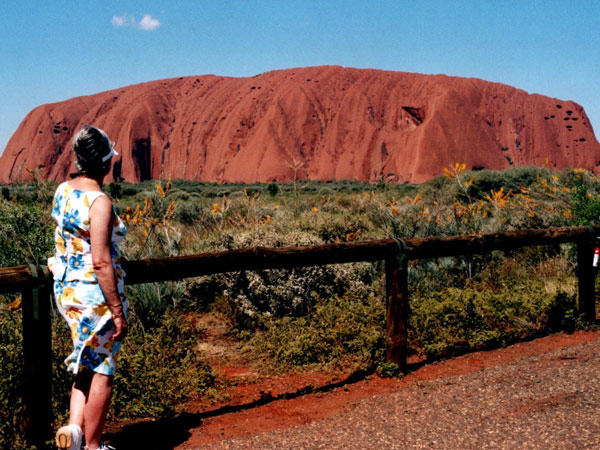
Woman reflects on the significance of Uluru in 2004
“Seek to understand, not just to see." – Brian Ralph (Image: Brian and Lynda Ralph)

If they could go back to their first visits, Brian and Lynda know exactly what advice they’d give their younger selves. “Learn more," Brian says simply. “Seek to understand, not just to see." 

June, meanwhile, would advise newcomers to slow down. “Spend at least five days if you can. Have fun and join all the experiences that you can." 

Despite the years, both couples feel the magnetic pull of Uluṟu as strongly as ever. “It’s become a very special place to us," Brian says. “It always feels like coming home." 

As for future visits? “Absolutely," Lynda says. “We’ll go back again and again." 

Because some places don’t just mark the map. They mark the soul. 

Emily Murphy
Emily Murphy is Australian Traveller's Email & Social Editor, and in her time at the company she has been instrumental in shaping its social media and email presence, and crafting compelling narratives that inspire others to explore Australia's vast landscapes. Her previous role was a journalist at Prime Creative Media and before that she was freelancing in publishing, content creation and digital marketing. When she's not creating scroll-stopping travel content, Em is a devoted 'bun mum' and enjoys spending her spare time by the sea, reading, binge-watching a good TV show and exploring Sydney's vibrant dining scene. Next on her Aussie travel wish list? Tasmania and The Kimberley.
See all articles
hero media

8 Red Centre locations to explore after seeing the new movie, Kangaroo

Spend a few days visiting the real-life Central Australian locations that inspired the new film everyone is talking about, and discover why Alice Springs is such an important part of Australian culture.

In the credits of the new Australian film Kangaroo , the first name under ‘cast’ should read ‘The Northern Territory ’. Not only is Alice Springs (and the surrounding landscape) integral to the movie itself, but the spiritual heart of Australia and its local Indigenous owners also inform the look and feel of every frame, explains Producer Trisha Morton-Thomas of Brindle Films, who also plays Charlie’s grandmother Gwennie.

“By setting Kangaroo in Alice Springs (Mparntwe), the film embraces how visible Aboriginal people are here, and the living Aboriginal culture that is woven through this community,” she explains.

still from kangarro film
See Kangaroo, then visit the real-life filming locations.

And while shooting in such a sacred part of the Northern Territory required extra planning, it was something the cast and crew were highly invested in.

“There are incredibly significant sacred sites and places of deep cultural stories in the area, that at times are very gender-specific, which we’ve kept out of the production,” she explains. “Even if overhead drone footage captures a sacred site that isn’t meant to be seen by other people outside of that clan, we’ve made sure to omit it from the film.”

If Kangaroo piqued your interest in a Central Australian holiday, we don’t blame you. Read on to discover eight places featured in the movie that you can visit in real life – and get planning. Don’t forget to pack sunscreen and a hat.

1. Alice Springs/ Mparntwe

artist at Many Hands Art Centre
Visit the galleries of Alice Springs, like Many Hands Art Centre. (Image: Tourism NT/ Helen Orr/ Many Hands Art Centre)

The red and dusty streets of the film’s fictional town of Silvergum were filmed on the outskirts of Alice Springs. And, while the art gallery featured in the film is fictional, Alice Springs is a hub of creativity. See the work of local artists at the Araluen Art Centre , Yubu Napa Art Gallery , Iltja Ntjarra (Many Hands) Art Centre and the famous Tjanpi Desert Weavers .

2. The Kangaroo Sanctuary & Kangaroo Rescue Centre

The Kangaroo Sanctuary Alice Springs, the inspiration for the Kangaroo move
Visit the movie’s inspiration at Kangaroo Sanctuary. (Image: Tourism NT/ Kangaroo Sanctuary)

Kangaroo was inspired by the journey of Chris ‘Brolga’ Barns, who founded the now world-renowned Kangaroo Sanctuary based in Alice Springs. For lead actor, Aussie Ryan Corr, the animals were central to the movie, alongside the landscapes.

“The animals in this story were a real calling point for me,” he explains. “What this story tries to tell us about the connection between humans and animals is beautiful.”

To gain a real insight into the fauna and flora of the Red Centre, you can visit the Kangaroo Sanctuary on a sunset tour, where you might even get the chance to hold a baby kangaroo.

3. Ormiston Gorge

woman walking along the edge of Ormiston Gorge near alice springs
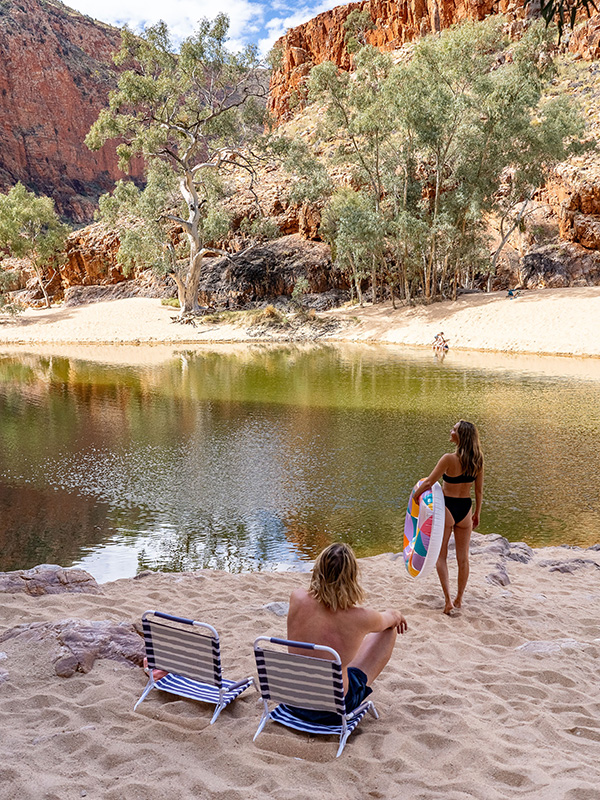
Take a dip in Ormiston Gorge. (Image: Tourism NT/ @domandjesso)

The film captures the raw beauty of the West MacDonnell Ranges, known in the Arrernte language as Tjoritja. This national park is rich in Indigenous culture and stark geological wonders.

Only a 15-minute drive from Alice Springs, Tjoritja offers visitors the chance to camp, hike and swim among ancient landscapes (most attractions are less than a three-hour drive away).

Ormiston Gorge , a cooling oasis in among the red desert sands, is one of the most popular destinations, no doubt because of the permanent swimming hole and towering red cliffs. From here, visitors can also embark on the beautiful Ormiston Pound Walk and the shorter – more accessible – Ghost Gum Walk. Bring your bathers – it’s safe for swimming.

4. Standley Chasm

woman walking through Standley Chasm near alice springs
Wander through Standley Chasm. (Image: Tourism NT)

The 1.2-kilometre walk to nearby Standley Chasm will be a highlight for any visitor as the imposing 40 metre-high chasm walls project strength and ancient wisdom.

Visit at midday to experience the path illumined by the midday sun. Not only will you fill your camera roll with vibrant red images of the gorge and its intoxicating shadows, but you can also camp nearby in a powered or unpowered site so you can watch the brilliance of the desert stars fill the night sky after dusk.

5. Simpsons Gap

three people walking on path through simpsons gap near alice springs
Walk the trails of Simpson’s Gap. (Image: Tourism NT/ Helen Orr)

Closer to Alice Springs, the photogenic Simpsons Gap is the perfect place to spot the endangered Black-footed Rock wallaby near the permanent watering hole. While swimming isn’t permitted, soaking up the sun and views certainly is.

Explore the area’s numerous walking trails, appreciate the soaring cliffs on either side of the ‘gap’ and pick out the shooting locations of Kangaroo in the area.

6. Ellery Creek Big Hole

aerial of Ellery Creek Big Hole near alice springs
Dive into Ellery Creek Big Hole. (Image: Tourism NT/ Tourism Australia)

When it comes to classic Northern Territory landscapes, you can’t go past Ellery Creek Big Hole/ Udepata : tall gum trees sidling up to a refreshing watering hole (fed by the West MacDonnell Ranges and surrounded by rugged red cliffs.

Swim in the cooling waters, hike the cliff tops, watch for birds and even stargaze as you camp here overnight. It’s locations like this that attracted the film’s director Kate Woods to the project.

“It humbles you to be in this environment: it’s so beautiful, so old and so vast,” she explains. “I was thrilled to get a chance to … shoot such a beautiful story in the incredible landscape of the Northern Territory.”

7. Larapinta Drive

aerial of Larapinta Drive into alice springs
Drive along Larapinta Drive. (Image: Tourism NT)

There is no better way to get a feel for how the characters arrived at the fictional Central Australian town of Silvergum than to travel along the iconic state road, Larapinta Drive.

Connecting Alice Springs to the mighty King’s Canyon in the west, via the historic community of Hermannsburg, this road takes in the West MacDonnell National Park, Alice Springs Desert Park and artist Albert Namatjira’s house, among other attractions. Take your time, bring a camera and prepare for numerous stops along the way.

8. Todd River

competitors in Henley on Todd Regatta, alice springs
Join in the fun of the quirky Henley on Todd Regatta. (Image: Tourism NT/ TImparja Creative)

Meandering through Alice Springs like a lazy Western Brown snake, the Todd River is a central part of Alice Springs culture. Known as an ‘intermittent river’, the Todd can go from a dry dusty riverbed to a flowing waterscape in less than 15 minutes after heavy rainfall.

When it’s dry, the famous Henley on Todd Regatta fills the sandy riverbed with handmade ‘boats’ carried by sailors. This is the world’s only dry river boating event, and it’s referenced in the ‘Silvergum Boat Race’ in the movie. Inspired by the real-life event, the characters built quirky “Flintstones-style boats” and competed in teams.

See Kangaroo in cinemas now, and start planning your NT getaway at northernterritory.com.