After-dark magic on the Savannah Way (no night driving needed)

hero media
The beauty of the desert at night lies in its simplicity, a road trip along the Northern Territory section of the Savannah Way uncovers.

The Savannah Way is a relatively under-the-radar touring route connecting Cairns in Queensland to Broome in Western Australia. It spans about 3700 rutted-road kilometres over unspoilt national parks and barely-there burghs.

We’ve decided to travel along the Northern Territory section of the road trip in a bid to leverage quality over quantity. Long story short, we get it; we witness rivers filled with lurking crocodiles, visit a pub with bras hanging from its ceiling and cruise in boats where barramundi are reeled in.

Why is the Savannah Way better at night?
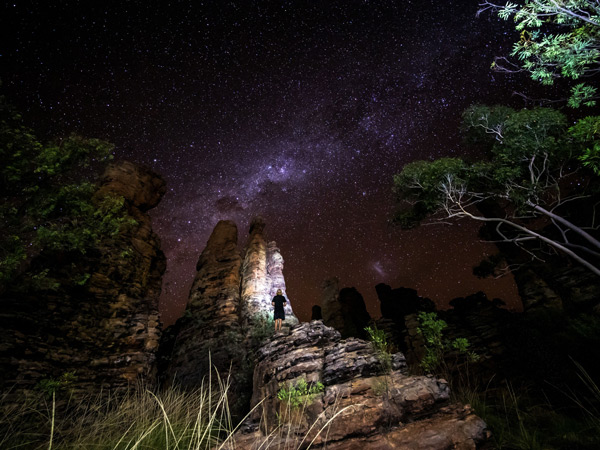
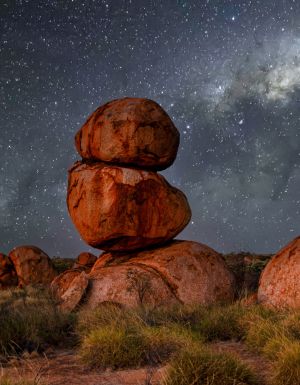
stargazing at Lost City, Savannah Way
Gaze up at a velvety sky confetti’d with stars in the rugged landscape of the Lost City. (Image: Tourism NT/Sean Scott)

One aspect of this adventure that caught us off guard, not just once but again and again, was the brilliance of the night. When the  sun sets and takes its infernally scorching heat with it, it’s a physical relief you register all the way to your bones.

The atmosphere feels softer and thinner; the sounds and smells are changed. Far from unsettling, the murk highlights a droll peacefulness that suggests darkness is just misunderstood, even as a hidden world bursts to life with a gusto rivalling the one that I left behind in Sydney’s thrumming city centre.

Kicking off from Darwin we collect our campervan and load up with supplies, filling our Lilliputian fridge like we’re headed into the apocalypse but with more snacks and fewer survival instincts. We add some comfort items to our stash, too – extra-plush cushions since we’ll be sleeping mainly in the van, DEFCON-level bug spray, boxes of water, head torches, a pack of UNO cards and citronella candles. And a care package from the bottle-o, because sundowners aren’t just for safari.
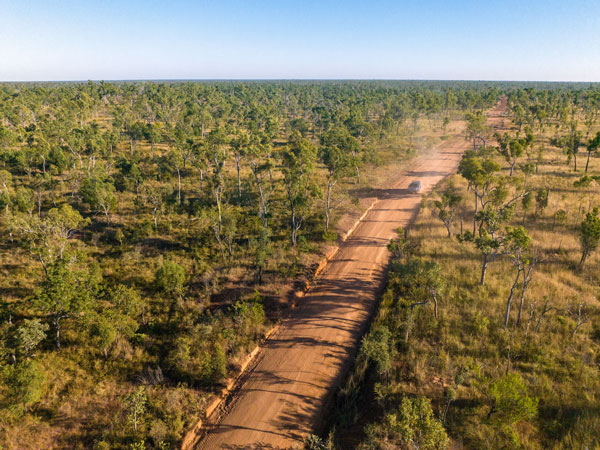
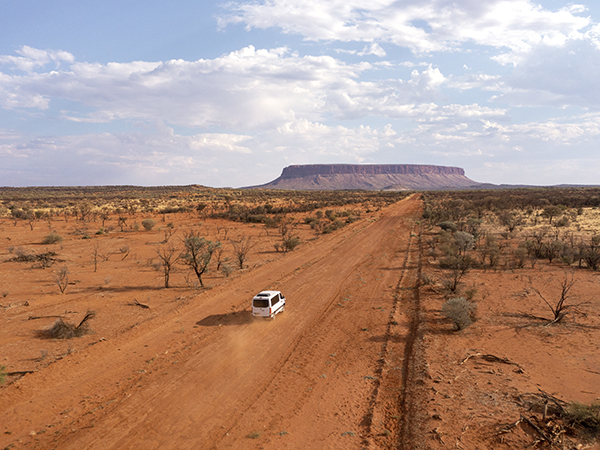
driving the Savannah Way, NT
Tackle the Northern Territory section of the 3700-kilometre Savannah Way. (Image: Tourism NT/Shaana McNaught/Seven Emu Station)

Need tips, more detail or itinerary ideas tailored to you? Ask AT.

AI Prompt

Where to stop during the day
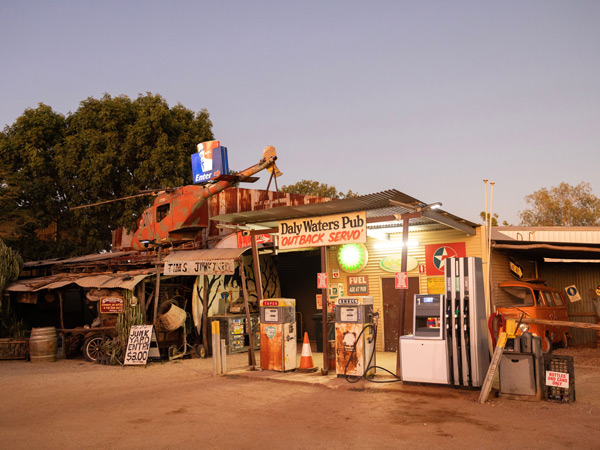
the exterior of Daly Waters Pub, Savannah Way
Detour to the iconic Daly Waters Pub. (Image: Tourism NT/Sean Scott)

The best roads are the back roads in this desert oasis. Our route is meticulously mapped out but leaves spur-of-the-moment opportunity for detours because, sometimes, planning is overrated; it takes us south-west via Highway 1. From Darwin, we follow the Stuart Highway to Daly Waters and then the Carpentaria Highway to Borroloola and Calvert.

One way, it’s about 1200 kilometres, which includes the shuddering, water crossing-laden, coffee-spilling ‘road’ to our most off-grid campsite at working cattle station meets wildlife refuge, Seven Emu Station. Garawa man Frank Shadforth and his family own and operate it and, if my life depended on choosing one place on this trip that floors me with its this-damn-sure-is-the-lucky-country natural grandeur, it’s this one.
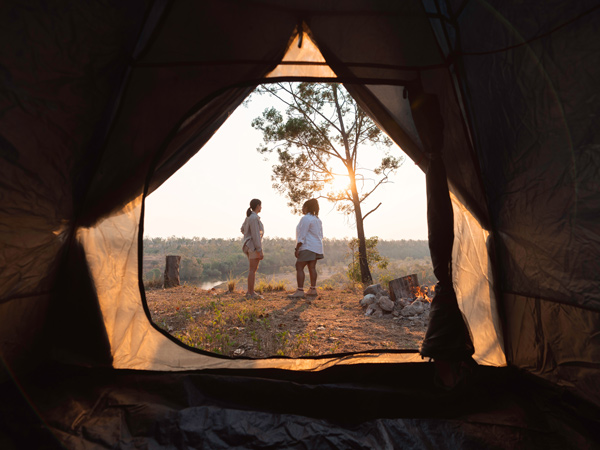
two women standing outside their tent at Seven Emu Station
Stay in the stockmen’s campsites at Seven Emu Station. (Image: Tourism NT/Shaana McNaught/Seven Emu Station)

I’m not sure I’ve ever been somewhere so remote; we may as well have been on another planet. And really, we kind of are. We’ve driven as far as possible before the track surrenders to the Gulf of Carpentaria.

There’s nothing to do here… but there’s everything to do here. We sit clifftop under the rough-hewn bough shed with our backs to the van and the bull shark-infested water of the serpentine Robinson River gleaming like mercury below us. It’s a primordial soup, that water.

Soon, we notice the unmistakably balletic and sinuous swimming style of other river sentinels; crocodiles glide with their slow and deliberate insouciance, and it’s impossible to look away. I’m not sure if seeing them is more terrifying than not seeing them. Either way, it’s revelatory… since we’re so far up the cliff, that is.

In several areas, that fundamental expectation we all have today – internet connectivity – is simply unavailable, and we find ourselves grateful for that because there’s something to relish at each of our modest camping spots.
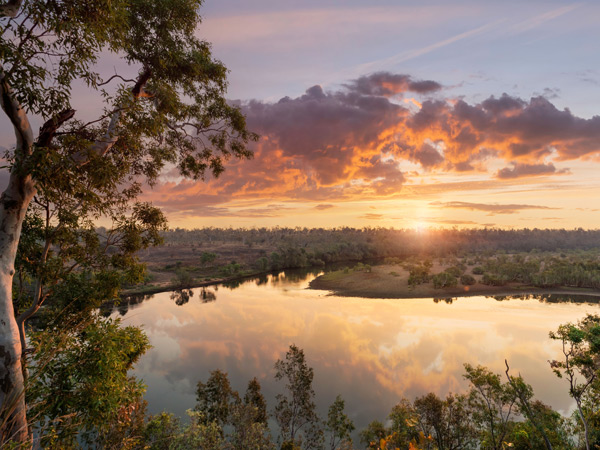
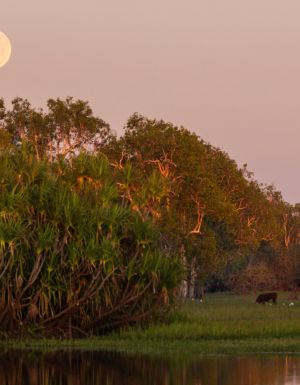
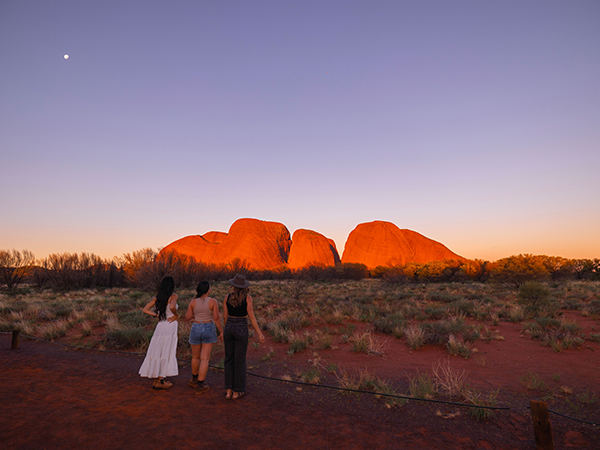
Limmen National Park at sunset
Pass woodlands and billabongs in Limmen National Park. (Image: Tourism NT/Sean Scott)

We’re forced to keep our faces out of our phones and turn them towards one another. The twilight is so lovely that I feel I could drink it. We listen to the cows lowing their evening songs and frogs barking on the billabongs so loudly and in harmony with one another they perfectly mimic a roller coaster climbing its tracks. We may lack a signal, but connectivity? We have that in spades.

Weekly travel news, experiences
insider tips, offers, and more.

How the darkness reveals the NT’s light
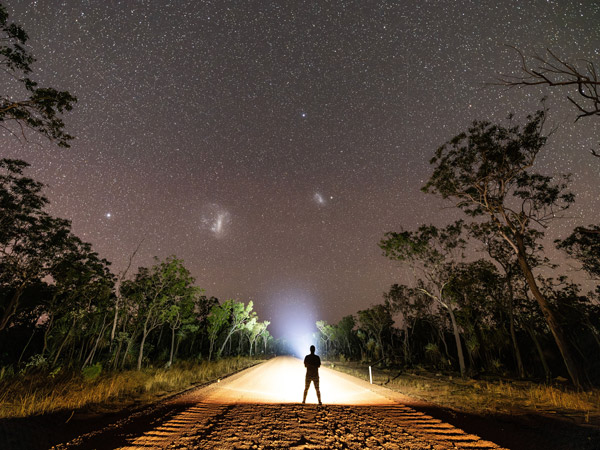
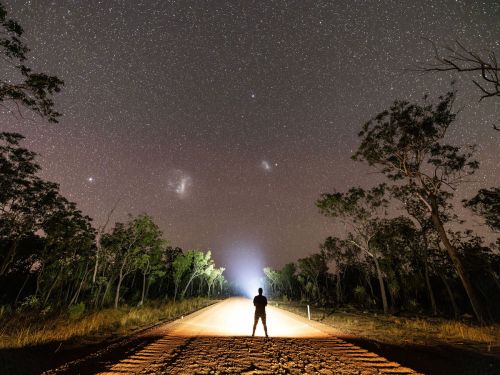
a person standing on the Savannah Way under the stars
Starry night in the NT. (Image: Tourism NT/Sean Scott)

We wear our head torches when the sun goes down. The vast black hole of the Northern Territory desert night is so all-encompassing that it’s hard to even imagine the dawn that’s sure to come. One evening, I’m perched in my chair as usual, listening; my sense of hearing is so strong now, since I can’t see much in the inky black.

I hear the pigs come out. The bats and bandicoots and bilbies. The ground in front of me literally shimmers as though someone has dropped a bag of diamonds from an open fist. Moving closer, I see spiders, a clutter of them to use the collective noun.

They’re translucent and tiny, ducking and weaving and going about their business without much thought to me. Precious gemstones in the dirt, all around us, if we take the time to look. We rush through life, heads down, blind to the wonders beneath our feet.

But if you pause, just for a moment, you’ll see it, too – the beauty in the overlooked, the magic in the mundane, a reminder that the extraordinary is always within reach, waiting for the curious eye to discover it.

Important note: Wildlife is especially active in this region around dusk, dawn and after dark. For your safety and to protect native animals, we strongly recommend avoiding driving at these times. Instead, plan your route so you’re settled at camp before sunset and can enjoy the Savannah Way’s breathtaking night skies from the comfort and safety of your site.

Want to see more stories from Australian Traveller in your Google search results?

  1. Click here to set Australian Traveller as a preferred source.
  2. Tick the box next to "Australian Traveller". That's it.
hero media

Discovering East Arnhem: Australia’s most unique and rewarding corner

    Joanne Millares Joanne Millares

    Hard to reach and harder to forget, East Arnhem offers something rare in modern travel: the chance to slow down and experience Country on its own terms.

    The sky feels bigger in East Arnhem. It stretches wide and uninterrupted above rouged earth, stringybark woodland and beaches so empty they seem to belong to another era. The coastline curves for kilometres without a footprint and the horizon runs on forever.

    For comedian Lou Wall, the scale of the place was the first thing that hit them.

    “The sheer openness,” they say. “The sky feels infinite and the land stretches out endlessly. It’s pretty breathtaking visually.”

    But the physical landscape is only part of the story. The real reward isn’t only the scenery but the shift in perspective the journey brings. Visitors stop trying to tick off the destination and a real engagement takes over.

    “It made me never want to travel again,” Wall jokes. “In that I never wanted to leave East Arnhem.”

    Getting there

    Aerial shot of East Arnhem’s coastline as cars trace the curve of the shore.
    Sail along the remote coastline on an expedition cruise.

    Reaching East Arnhem is part of the adventure. Travellers typically fly into Gove Airport near Nhulunbuy via Darwin or Cairns, or arrive by expedition cruise along the remote coastline. Others make the journey overland along rutted dirt roads that cut through East Arnhem’s small pockets of monsoon forest.

    However you arrive, there’s a distinct feeling of crossing into somewhere different. Permits are required to visit the region, reflecting the fact that this is Yolŋu land where communities and traditional owners maintain deep cultural connections to Country.

    The extra planning becomes part of the experience. By the time visitors arrive, they understand they’re entering a place not just of respect, but also patience and curiosity.

    At one with nature

    East Arnhem’s  landscapes leave a strong imprint. For Wall, one place in particular still lingers in their memory: Ngalarrkpuy, also known as Lonely Beach, near Bawaka Homeland.

    “I genuinely felt like I was living inside an Instagram filter,” they say. “One of the most stunning feats of nature I’ve ever seen. The water was so clear I swear I could see even the fish smiling.”

    Across the region, natural experiences unfold at a slower pace. Fishing, beachcombing and island hopping reveal the rhythm of the coastline. The tides shape daily life and the vastness of the landscape makes even simple moments feel downright cinematic.

    For visitors with limited time, Wall says the Bawaka Homeland experience is unmissable.

    “I just left and I’m already planning when I can get back there.”

    The sense of remoteness is part of the appeal. In a country where many beaches are crowded and well-trodden, East Arnhem’s coastline still feels wonderfully wild.

    Immersing in local culture

    A visitor spends a meaningful moment alongside Yolŋu guides, gaining insight into their deep cultural knowledge and connection to the land.
    Experience authentic moments with the locals.

    Culture is woven through every experience in East Arnhem. Visitors have the opportunity to spend time on Country with Yolŋu guides and knowledge holders who share stories and traditions that have been passed down for generations.

    For Wall, one of the most powerful moments came during a conversation with a Yolŋu elder.

    “I got to meet a traditional elder, Mayalil, in Nhulunbuy,” they say. “Listening to her talk about her home made the land feel alive in ways I couldn’t have imagined.”

    The region is also home to internationally recognised Aboriginal art centres where artists shape works deeply connected to land and family knowledge.

    Music carries the same cultural energy. East Arnhem has produced globally recognised artists such as King Stingray and Baker Boy, blending Yolŋu language, storytelling and contemporary sound.

    Wall experienced this musical spirit first-hand.

    “A jam session around the fire was it for me,” they say. “Letting the deep joy and history of their music wash over me…  and meeting a few of the King Stingray musicians was unreal.”

    These moments of human connection often become the most memorable part of a visit.

    Spotting local wildlife

    An aerial view of the beach shows tiny figures lined up across the white sand, moving as if in a rhythmic dance.
    Step into a world where nature reigns.

    The wildlife of East Arnhem adds another layer to the experience. The region is home to an extraordinary range of animals, from waterbirds and turtles to dugongs, dolphins and the formidable saltwater crocodile.

    Wall admits they didn’t actually spot a croc during their visit.

    “Devastatingly, I didn’t see one,” they laugh. “But with all the stories from the locals I definitely gained a healthy respect for caution.”

    Some of the most memorable wildlife encounters can be surprisingly small., At Banubanu Beach Retreat on Bremer Island, Wall remembers walking along the beach one morning and watching it come alive.

    “As you walk through the sand you see hundreds of crabs scurrying into their holes as you pass by,” they say. “Such a small thing, but it was completely magical.”

    Moments like this reveal the quieter rhythms of East Arnhem, where even the smallest creatures seem to play a part in the landscape.

    Visitors who make the journey soon learn the most important travel tip of all.

    “Go in open-minded with a sense of curiosity,” Wall says. “Be prepared to ditch your plans. The land and the locals will guide you on an adventure no spreadsheets could ever compete with.”

    And most importantly, they add, don’t rush.

    “The land and people deserve your time and attention. You’ll be all the better for slowing down.”

    For more information on visiting East Arnhem, head to eastarnhem.com.au.