Catching the hatching: Mon Repos’s ‘turtle dance of life’

hero media
Bundaberg’s Mon Repos Beach is home to half the South Pacific’s nesting loggerhead turtles – and one of nature’s most ancient rituals of life.

How like a celebrity to keep you waiting? Herded together on the moonlit sand out of turtle sight, we watch Mon Repos’s rangers mill about like a diva’s PR team, phoning in updates.


“No, she’s not ready," ranger Cathy Gatley tells her walkie-talkie. “She’s still body-pitting." We’re here for the stars of a 100 million-year-old show. Every November to March, some 360 female turtles heave themselves ashore at 1.6-kilometre Mon Repos beach – the biggest turtle rookery on Australia’s east coast – to lay and bury their eggs, repeating a cycle of nature dating back to dinosaur days.


Body-pitting (flippering a shallow depression) is the prelude to egg-chambering (digging a laying hole with back flippers). Watching is verboten as turtles spook easily and often return to the sea before laying. When she’s finished we’re ushered into her moonlit presence – no lights allowed until the eggs are about to drop, and then sparingly.

Loggerhead turtle central

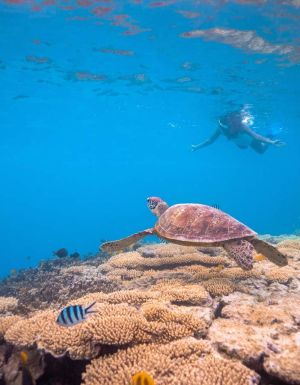
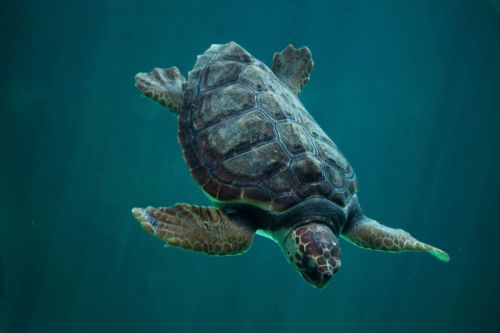
Like 95 per cent of local nesters, she’s a loggerhead, a huge-headed beast with a barnacled browny-yellow shell. A quick check of her tagged flipper – she swings her beak sideways in passing irritation – confirms she was first tagged in 1998, making her at least 50 years old (they first nest at about 30).


This is her second clutch (of four, on average) this season but it’s in serious trouble: she’s laid below high-tide and saltwater dunkings are lethal. “They’re creatures of instinct," explains Cathy. “Their behaviour isn’t learned and sometimes they just get it wrong."


On prehistoric automatic pilot, the turtle’s indifference to us is astounding. Bereft of fight or flight instinct, she starts to lay, and we each have a close-up view of the wet, white eggs slipping from leathery hindquarters into the sand-pit. A below-tide nest would be doomed on another beach, but already rangers and trained volunteers are egg-chambering up in the tussocked dunes, scooping out a safe house beyond the waves.


Finished, the turtle covers up and, puffing and flailing, readies to aim seaward. The rangers waste no time digging up the 101 eggs. There’s a literal deadline – after two hours, handling will tear newly formed embryonic membranes, with fatal consequences.

Helping to move the eggs

“Who wants to help relocate the eggs?" Cathy asks. Uh, that’d be everyone. We’re handed two eggs each, soft leather ping-pong balls, which we reverently carry to the alternative nest, then follow Mama Turtle rowing herself down the beach. When she hits the waves, everyone breaks into spontaneous, heartfelt applause.


It’s 9.30pm and most people are satisfied, but the show goes on for rangers, scientists and diehard sightseers. Later, walking along the sand with ranger Shane O’Connor, we spy a noticeably different turtle track.


“Looks like we’ve got a flatback," he says, tracing it to a dark-coloured turtle with a shell less domed than the loggerhead’s, and with an upturned rim. Largely tropical in range, flatback turtles are very rare arrivals here.


Shane gets on the radio to turtle expert Dr Col Limpus, somewhere along the beach. “He won’t wanna miss this."

Mon Repos turtles guy

Indeed, Col doesn’t miss anything on Mon Repos. He hasn’t missed a season since 1956 and began scientific research here in 1968. He’s behind many a famous turtle fact, such as the discovery that they return to their birthplace (or nearby) to nest.


He’s also worked tirelessly to save Mon Repos’s turtles from offshore shrimp trawling, feral foxes and even more feral property developers. Suddenly looming from the dark, portable ultrasound in hand, Col is delighted to find this isn’t just any flatback. It’s K10534.


“One of my superstars," he says; a source of much data. “She’s got one more clutch," he says, after examining the egg follicles. With laying done, 10 eggs are borrowed for weighing and measuring.


For all Mon Repos’s conservation triumphs, its loggerheads are at high risk of becoming fishing bycatch in South American waters, where they spend years before returning to nest. “Recruitment of youngsters is dropping off," Col points out. First-time nesters are rarely seen – most arrive already tagged – which suggests the species’ future remains precarious.


Meanwhile, 70 centimetres below the sand, 101 embryonic loggerheads are alive and well – thanks to us, which feels damn good. In a couple of months, they’ll pop up to scurry desperately seawards.


And maybe – just maybe – one will be that one-in-a-thousand survivor that hauls herself from Mon Repos’s gentle breakers three decades from now, drawn irresistibly across the Pacific to her birthplace to continue the prehistoric turtle dance of life.

Details: Mon Repos turtles, Bundaberg

Getting there: Mon Repos is a 15-minute drive east of Bundaberg, Queensland, or 10 minutes from the coastal town of Bargara.


Playing there: Turtle viewing at Mon Repos Regional Park runs between November and March each year during the hours of 7pm and 1am, by ranger-led, pre-booked tour. Hatching starts January.


Staying there: Offering one, two and three bedroom apartments, the luxury 4.5-star resort Manta Bargara is one of several beach-side bliss-out options along the Esplanade at Bargara.

hero media

The ultimate 8-day Brisbane to Port Douglas road trip itinerary

Explore some of Australia’s most stunning coastlines on this epic route.

This scenic, 1800-kilometre Brisbane to Port Douglas road trip takes in some of Australia’s most beautiful landscapes, from the wildlife on Bribie Island to the rainforests of Far North Queensland. Our advice? Slow it down, take your time and really get to know this part of Australia.

Day 1: Brisbane to Noosa

Wake up in the luxurious Sofitel Brisbane Central , enjoy a hot buffet breakfast and a swim in the outdoor pool before hitting the road to travel north. Take the exit to Bribie Island to view the abundant wildlife.

aerial view of bribie island
Enjoy the beauty and animals of Bribie Island. (Image: TEQ)

In the afternoon, check into Peppers Noosa Resort & Villas hidden near Noosa National Park and spend the afternoon relaxing at the luxury Aqua Day Spa. Daredevils can book a seat on an Ocean View Helicopters tour and experience the adrenaline of exploring the Glasshouse Mountains from the air.

Before dinner, head to the Original Eumundi Markets just 25 minutes away or explore the nearby trails in the national park. For dinner, book a table at Park & Cove located just near your hotel and feast on a locally-sourced menu that changes with the seasons.

table spread at Park & Cove Novotel Sunshine Coast
Refuel at Park & Cove.

Day 2: Noosa to Bundaberg

Wake up to sounds of the rainforest outside your window and take the opportunity for a quick swim before you dive into a freshly cooked buffet breakfast at Park & Cove. After breakfast and an expertly brewed coffee, stroll down the hill and spend the morning shopping along Hastings Street in the various boutiques, or hire a kayak or surfboard and conquer the waves.

After lunch, head north for the three-hour drive to historic Bundaberg . If you feel like feeding a kangaroo or wallaby, visit the Fraser Coast Wildlife Sanctuary . Once in Bundy, head to Spitter’s Farm just outside of town. This 160-acre property offers a unique experience in their deluxe glamping safari tents, where you can listen to the cows mooing as the sun sets.

baby kangaroo at australian wildlife Sanctuary
Say hello to the adorable creatures of Fraser Coast Wildlife Sanctuary. (Image: Jewels Lynch)

Day 3: Bundaberg to Rockhampton

Before getting back on the road, take time to visit the many museums, and, of course, the famous Bundaberg Rum Distillery for a tour. Then head to the Beef Capital of Australia, Rockhampton.

Although, ‘Rocky’ is surrounded by beef cattle farms, your first stop should be to the impressive Rockhampton Museum of Art , which features an art collection valued at over $16 million. Rest your head at the centrally-located Mercure Rockhampton overlooking the mighty Fitzroy River. Grab a quick swim in their outdoor pool before enjoying a steak at their in-house restaurant.

Rockhampton Museum of Art
Take it all in at Rockhampton Museum of Art. (Image: TEQ)

Day 4: Rockhampton to Mackay

Grab a strong coffee at your hotel and drive the short distance to the nearby Capricorn Caves for a morning tour of these natural limestone beauties. Then hit the road for the four-hour drive to Mackay.

Reward yourself with a swim in the large, resort-style pool at the Mantra Mackay . Overlooking the marina, it’s the perfect location from which to explore the city, before enjoying a sundowner and dinner at the popular Latitude 21 on the hotel terrace.

woman exploring the Capricorn Caves in queensland
Explore the Capricorn Caves. (Image: TEQ)

Day 6: Mackay to Townsville

Grab your breakfast to go, then head just out of town to Finch Hatton Gorge. Here, spend the morning ziplining 25 metres above the rainforest floor with Forest Flying . Head to Airlie Beach for lunch and a swim in the famous Airlie Beach Lagoon , before heading north to Townsville.

Hop on a 20-minute ferry – they leave regularly – and check into the stunning Peppers Blue on Blue Resort . Spend the evening swimming in their two pools with views across the private marina to Mount Cook National Park, before feasting on fresh seafood at their on-site restaurant, Boardwalk Restaurant and Bar.

aerial view of beach at Airlie Beach queensland
Dive into the crystal clear waters around Airlie Beach. (Image: TEQ)

Day 7: Townsville to Cairns

After a morning swim on one of Magnetic Island’s beautiful beaches, hop back on the ferry and travel north to the sleepy Mission Beach for lunch. You’ll be sandwiched by rainforest on one side, and the beach on the other.

Continue on to Cairns and check in at the centrally-located Novotel Cairns Oasis, where the lagoon-style pool and swim-up bar alone is worth the visit. Or continue north for 25 minutes to the coastal village of Palm Cove.

Once there it’s a tough choice between the luxurious, five-star Pullman Palm Cove Sea Temple, or the beautifully designed Peppers Beach Club and Spa Palm Cove , where the pool has its very own beach.

two people in deck chairs by Novotel Cairns Oasis' lagoon-style pool
Relax by Novotel Cairns Oasis’ lagoon-style pool.

Day 8: To Port Douglas

No matter where you spent the night, your journey to Port Douglas will be one of the most scenic road trips you’ll ever experience. Following the coastline, travel past champagne-coloured beaches, offshore islands and submerged reefs, before rolling into town at Port Douglas.

Although you’ll be spoilt for choice with hotels, two of the best are Peppers Beach Club Port Douglas, which is closer to town (think stunning pool and walking distance to Macrossan Street) and the famous, five-star Pullman Port Douglas Sea Temple Resort & Spa , located a little further down the beach. If the 3000-metre-squared lagoon-style pool isn’t enough at this hotel, you’ll also find the exclusive Vie Spa and popular restaurant, Aluco Restaurant & Bar , widely known as being one of the finest restaurants in Port Douglas.

aerial view of pool at Pullman Port Douglas Sea Temple
Revive from road-tripping in one of the best pools in Port Douglas.

 Start planning your Queensland adventure at all.com.