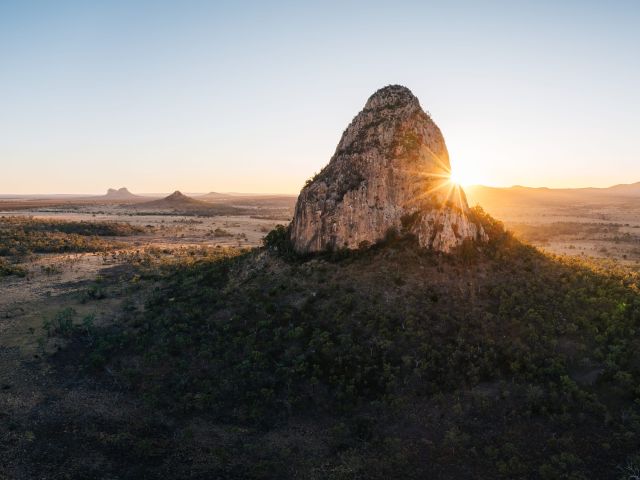
A once-in-a-generation transformation is unfolding across the Simpson Desert – but it won’t last long.
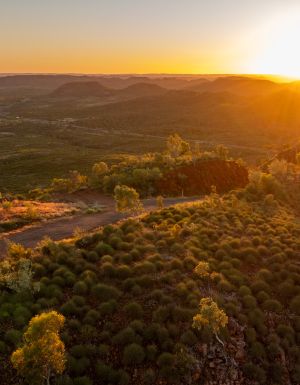
Following months of flood-related closures, Munga-Thirri Simpson Desert National Park has officially reopened to visitors. After unprecedented rainfall swept through the region in mid-February, the desert has undergone a rare transformation.
Wildflowers are blooming, waterways are flowing and wildlife is thriving, giving travellers a rare chance to experience one of the country’s most iconic outback landscapes in a way few ever will.
The road to recovery
Between February and March of 2026, a stalled tropical low dumped roughly 600 millimetres of rain on Central Australia, delivering more than twice the amount of rain it would typically receive in an entire year.
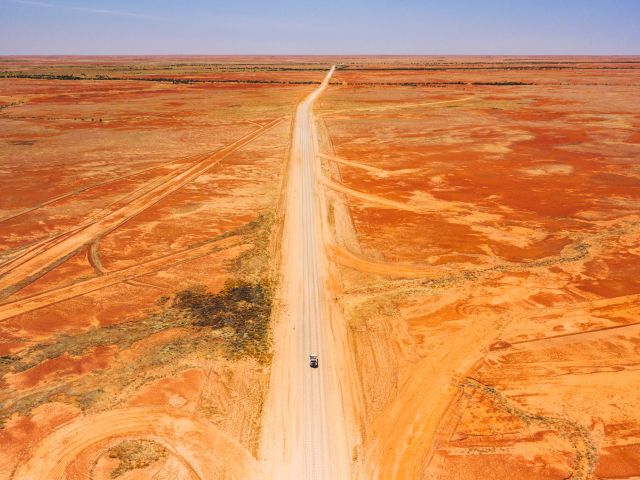
The low-pressure system sat directly above the Simpson Desert, barely moving for close to 72 hours and lingering for over a week. It caused widespread flooding across multiple states, hitting Queensland’s Diamantina region particularly hard.
Extensive road closures saw local communities trapped, accessible only by plane, and major events such as the Big Red Bash cancelled. But now, almost five months on, the region is in recovery mode – and the outback landscape is unrecognisable.
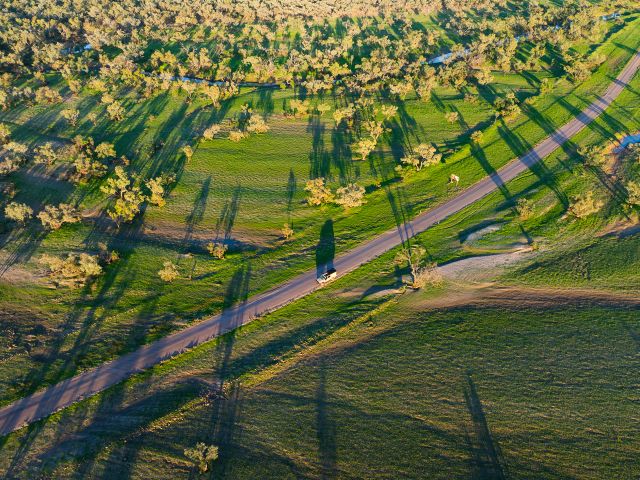
Usually cloaked in a red-rust dirt that finds its way into every crease, the Simpson Desert is now awash in a rainbow of greens and blues. Roads have reopened and remote towns like Betoota, Bedourie and Birdsville, home to one of Australia’s best outback pubs, are welcoming visitors once again.
Need tips, more detail or itinerary ideas tailored to you? Ask AT.
AI Prompt
A welcome return
It has been an extraordinary few months for the Diamantina region and the local communities that call it home. But like most great Australian stories, its next chapter is gearing up to be twice as incredible.
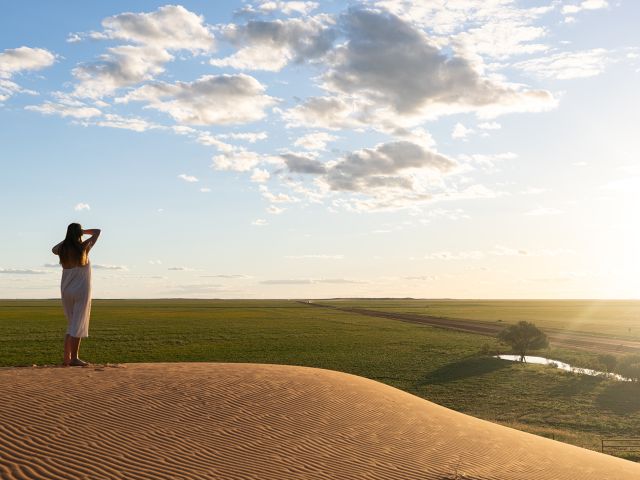
In its wake, the exceptional rainfall has triggered one of nature’s rarest transformations. Wildflowers are emerging from the red sand, waterways are flowing, and birdlife has returned in remarkable numbers. For locals, it’s a phenomenon often spoken about but rarely seen – and they’re encouraging travellers to experience it while they can.
“There’s no better season to visit the region," says local Ben Fullagar, general manager of Birdsville Hotel. “Channel Country has certainly turned on a remarkable show for 2026 and we are genuinely excited to showcase the region, it’s the best its looked in decades."
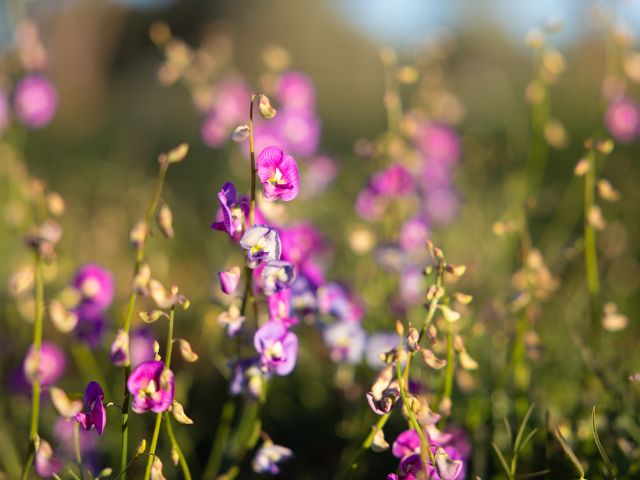
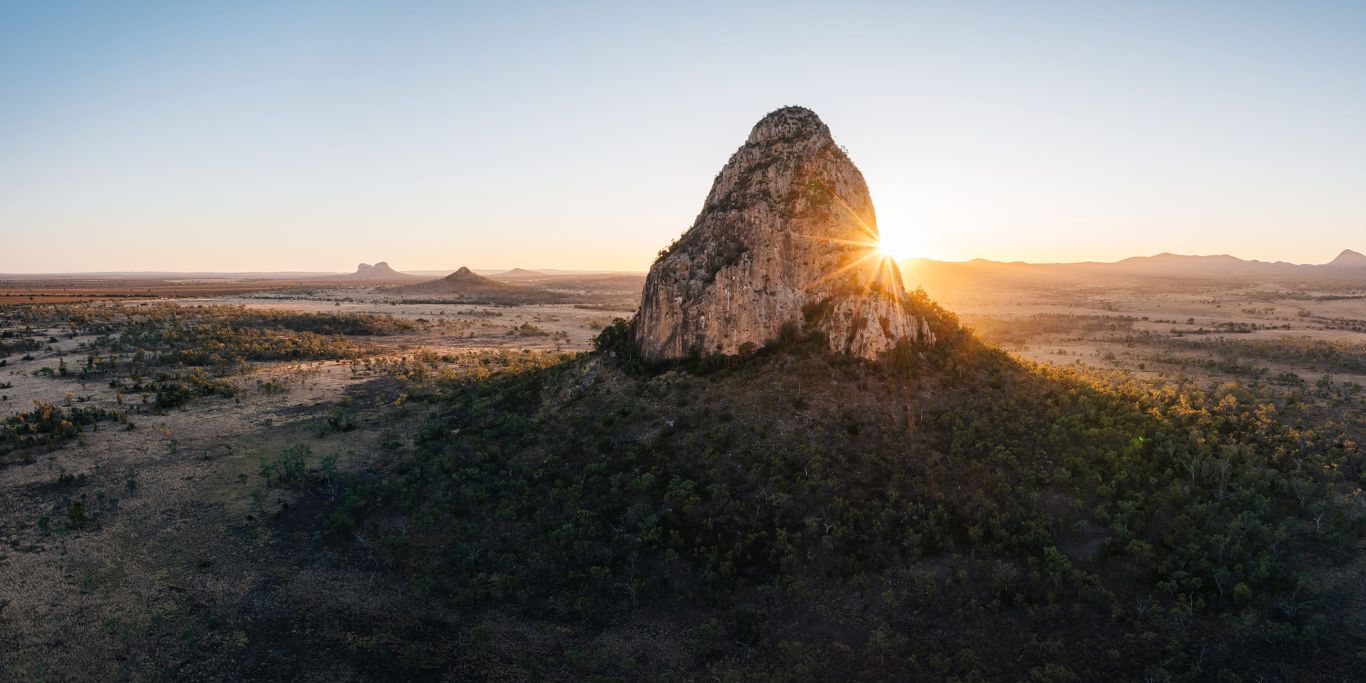
The best place to witness the natural spectacle is Munga-Thirri Simpson Desert National Park, which reopened to the public earlier this week. Despite being the largest national park in the country, visitors can expect to uncover one of Australia’s hidden natural wonders.
Wildflowers are already bursting to life across the landscape in a kaleidoscope of crimson, white, yellow, pink and purple. Outback species like everlastings, bluebells and Sturt’s desert peas will soon blanket sand dunes and line waterways, attracting pollinators including bees and butterflies.
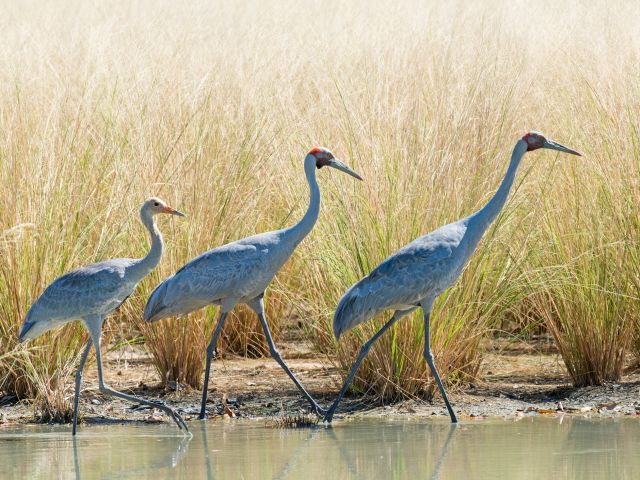
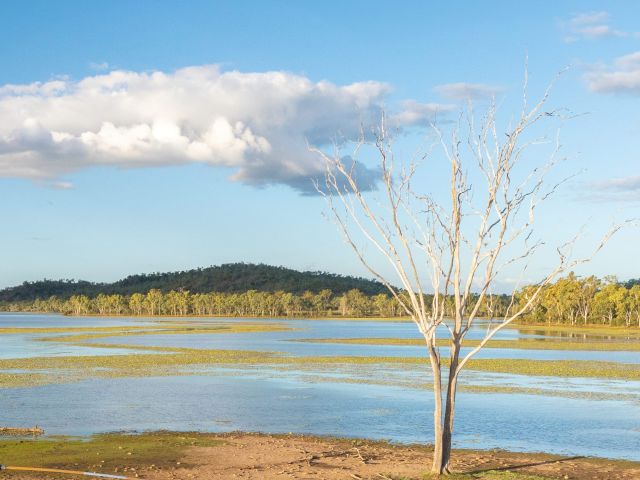
Due to fresh vegetation growth, birdlife is back in droves. You’ll spot herons and brolgas wading along the water’s edge; black swans bobbing on freshly filled waterholes; corellas and galahs flitting in the surrounding brush. Pelicans have even turned inland as water spills across what is usually the driest region of the Australian continent.
It may be hard to believe, but the best is yet to come. As Ben Fullagar puts it, “All that water has one final destination, and that’s the legendary Kati Thanda–Lake Eyre."
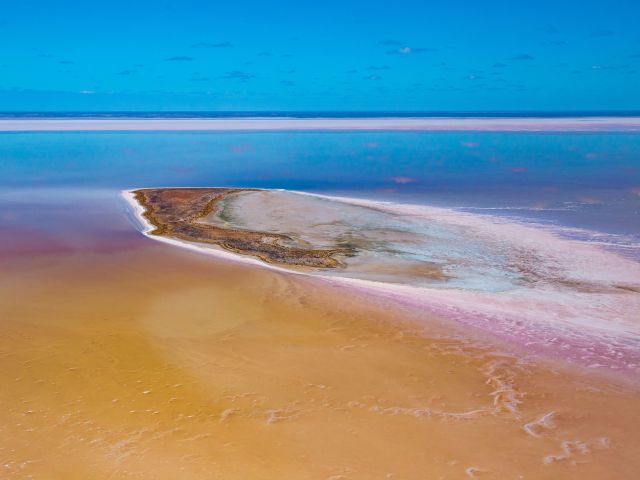
According to Ben, Kati Thanda–Lake Eyre is currently experiencing its best fill since 1974. The largest salt lake in the country, its water levels have been steadily rising since the floods began, transforming the normally bone-dry landscape into a shimmering inland oasis.
Weekly travel news, experiences
insider tips, offers, and more.
An outback checklist
While the promise of witnessing this rare natural spectacle may have you eager to hit the road, there’s a few important things to know before you set off. Firstly, it’s critical to follow all road rules and signage, as some routes remain closed.
At the time of writing, Parks SA states that Munga-Thirri Simpson Desert National Park is only accessible by car from South Australia and the Northern Territory, with park passes required.
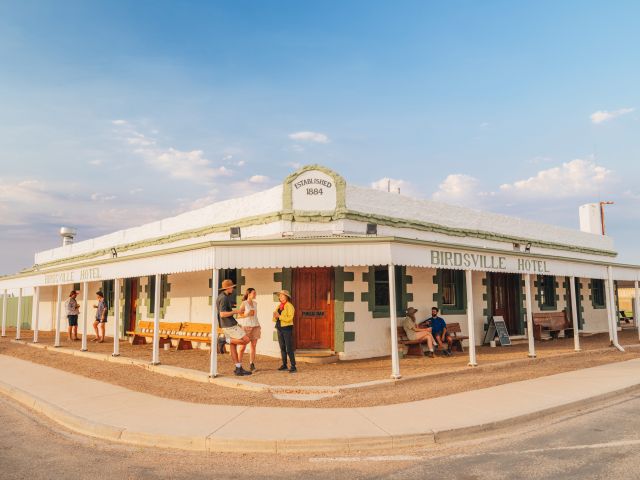
However, visitors can reach the park by air from Birdsville in Queensland’s Diamantina region. The outback town sits roughly 1500 kilometres west of Brisbane, or 17 hours by car. Once there, the Birdsville Hotel is welcoming guests back with ice-cold beers and room rates from just $140 per night.
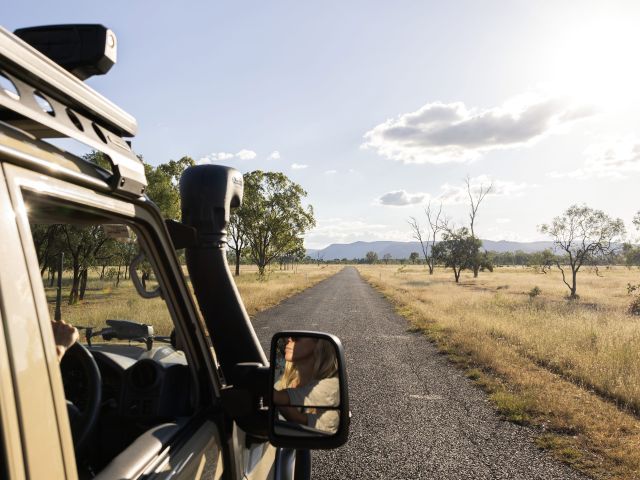
Before hitting the road, travellers should pack plenty of water, check road conditions ahead of departure and ensure they’re properly equipped for remote travel. Many outback roads are unsealed and require a 4WD to navigate.
Want to see more stories from Australian Traveller in your Google search results?
- Click here to set Australian Traveller as a preferred source.
- Tick the box next to "Australian Traveller". That's it.