13 of the best things to do in Adelaide for every budget

hero media
Blessed with an abundance of natural beauty, world-class cultural attractions and gastronomic delights, South Australia’s easy to navigate capital is fun, friendly and full of unforgettable adventures to suit every taste.

Ringed by sandy beaches and world-class wine regions, the South Australian capital is easy to fall in love with. But you don’t need to leave the city to enjoy the best that Adelaide has to offer. You can visit one of the world’s great food markets, learn about the region’s Indigenous history and see an Australian icon being made – all in a single day. And if you visit during one of the many annual festivals, the party continues well into the night.

Here’s everything you need to know about the best things to do in Adelaide.

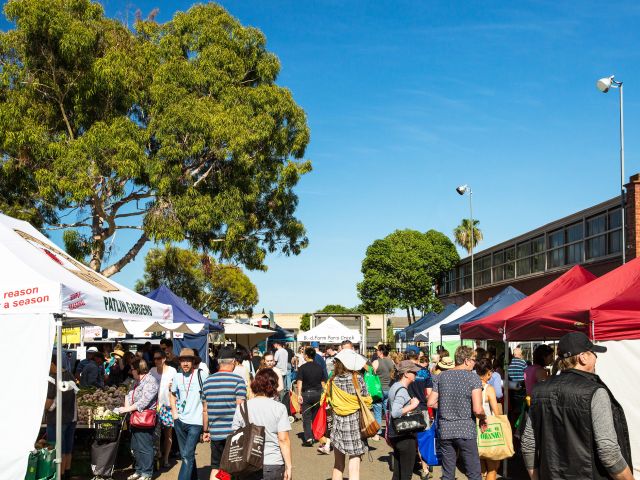
1. Taste the world at the Adelaide Central Market

For more than 150 years, home cooks, chefs and tourists alike have flocked to the Adelaide Central Market, where more than 70 traders hawk fresh produce and cook up tasty treats from across the globe.

the fresh produce section at the Adelaide Central Market
Shop your way through the fresh produce section. (Image: Lewis Potter)

Whether you’re searching for Middle Eastern spices or Italian smallgoods, fresh Coffin Bay oysters or perfectly spiced empanadas, you’ll find what you’re looking for here.

a colourful mural at a dining spot in the Adelaide Central Market
Adelaide Central Market is popular for its vibrant food and art scene. (Image: South Australian Tourism Commission)

Download a free audio tour narrated by local food personalities Adam Liaw and Katie Spain to learn more about the colourful characters who have helped shape this gourmand’s paradise, or simply follow your nose and see where it leads you.

a stack of cheese at The Smelly Cheese Co., Adelaide Central Market
Pop by The Smelly Cheese Co. for artisanal cheeses. (Image: South Australian Tourism Commission)

2. Catch a festival

Visit during February or March and it’s easy to see why Adelaideans call this the “festival season". The City’s East End transforms as temporary outdoor hubs spring up in the parklands and the world’s second largest fringe festival turns the entire city into a roving carnival with hundreds of performances every night.

coloured powder being thrown at the crowd during the WOMADelaide festival
Enjoy the vibrancy of the WOMADelaide festival. (Image: Grant Hancock)

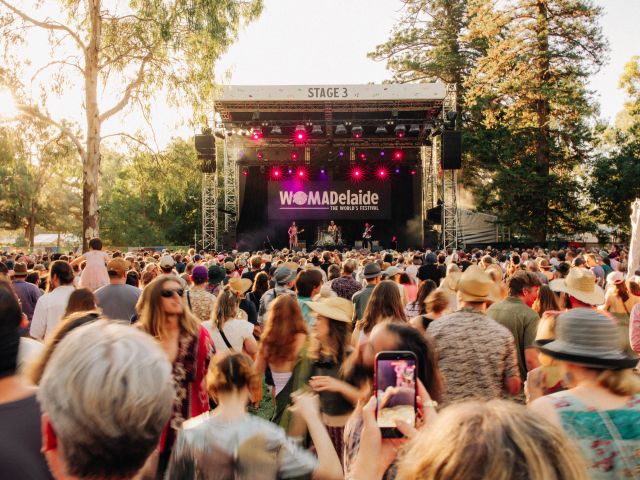
At the same time, the city’s larger theatres (and sometimes the beaches and quarries) host acclaimed opera, theatre and dance works brought over by the Adelaide Festival, while Botanic Park rings out with a dizzying mix of samba, Ethio-jazz and throat singing during the joyful WOMADelaide festival.

crowds of people watching a concert at the WOMADelaide festival
Catch musical performances at the WOMADelaide festival. (Image: Jack Fenby)

But even outside of this time, a packed calendar ensures you’ll always find something happening in the Festival City, from the dazzling winter lights of Illuminate Adelaide to the cross-cultural collaborations of OzAsia and glammed-up burlesque performances in the Cabaret Festival. All you need to do is bring an adventurous spirit and join the party.

a light display at Illuminate Adelaide
Illuminate Adelaide is festooned with lights. (Image: Tourism Australia / South Australian Tourism Commission)

3. See Adelaide through Kaurna eyes

Long before the arrival of Europeans, the land on which Adelaide (Tarntanya) now sits was the home of the Kaurna people. Many of their most sacred sites have been built over, but the traditions associated with these places have been kept alive and Kaurna-owned-and-operated Southern Cultural Immersion invites visitors into this rich world.

a group walking along the beach during the Southern Cultural Immersion tour in Adelaide
Join a Southern Cultural Immersion tour. (Image: South Australian Tourism Commission)

Guests can explore the significance of native plants and learn traditional weaving techniques, or join the one-hour Adelaide City Cultural Tour that examines the history of Kaurna yerta (Kaurna country) from pre-invasion times through to the present day, delving into the significance of some of the most important sites and inviting visitors to see the city through a Kaurna lens.

the Southern Cultural Immersion cultural tour
Immerse yourself in the rich culture of the Kaurna people through a Southern Cultural Immersion tour. (Image: South Australian Tourism Commission)

4. Take a tour of a chocolate factory

If you grew up dreaming of following Willy Wonka around his candy-coloured wonderland, there’s good news and bad news. Sadly those rivers of chocolate and everlasting gobstoppers remain firmly in the world of fiction. But on a more positive note, you can enjoy a free tour of the Haigh’s Chocolates factory in Adelaide’s inner south every day from Monday to Saturday.

chocolate flowing at Haigh’s Chocolates, Adelaide
Get your sweet tooth fix at the Haigh’s Chocolate factory. (Image: Haigh’s Chocolates)

Now onto its fourth generation, Australia’s most venerable family-owned chocolate maker still specialises in artisanal handcrafted treats and each twenty-minute tour explains how they transform ethically sourced cocoa beans into more than 250 mouthwatering products.

chocolates being offered at Haigh’s Chocolates, Adelaide
Get your hands on sweet treats. (Image: Tourism Australia / South Australia Tourism Commission)

Then it’s onto the production line where visitors can watch chocolates being made before indulging in a tasting and searching for bargain price seconds at the expansive onsite store.

the chocolate-making process at Haigh’s Chocolates, Adelaide
Learn about the chocolate-making process. (Image: Tourism Australia / South Australia Tourism Commission)

Need tips, more detail or itinerary ideas tailored to you? Ask AT.

AI Prompt

5. Lose yourself in a park where nature meets art and fine dining

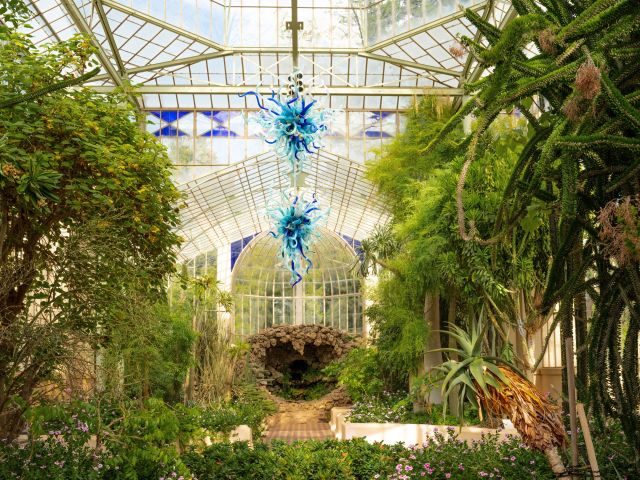
Visitors to Adelaide are never far from a green space thanks to the Adelaide Park Lands that encircle the city. But if you want to really lose yourself in the trees, head to the Adelaide Botanic Garden on the northeastern edge of the CBD. Along with towering Moreton Bay Figs, pungent corpse flowers and ancient Wollemi pines, you’ll find greenhouses nurturing palms, cacti and giant Amazonian water lilies. If you get hungry, the 51-hectare grounds include one of Australia’s most acclaimed dining spots in Restaurant Botanic (along with some more casual options), while arty types will love the large-scale exhibitions like the showcase of famed glass artist Dale Chihuly’s eye-popping glass sculptures.

two women walking under a lavender tunnel at Adelaide Botanic Garden
Lose yourself along the purple tunnel at the Adelaide Botanic Garden. (Image: South Australian Tourism Commission)

6. Go on a wine tour with a difference

Boasting three acclaimed wine regions within an hour of the CBD, it’s no wonder that Adelaide is one of only 12 Great Wine Capitals in the world. But you can embark on a glorious vinous journey without ever leaving the CBD thanks to the incredible collection at the National Wine Centre.

the National Wine Centre in Adelaide
Visit the National Wine Centre for a serious wine education. (Image: National Wine Centre of Australia)

All 65 of Australia’s wine regions are represented in the vast open cellar, and sommelier-led masterclasses allow you to explore the collection by varietal or region. Or you can learn about the people, places and grapes that have shaped our wine industry on a self-guided tour, then conduct some hands-on research at the Wined Bar’s array of Enomatic machines that allow you to taste 120 different wines.

visitors touring around the National Wine Centre
Explore the Australian wine collection by varietal or region at the National Wine Centre. (Image: Tourism Australia / South Australian Tourism Commission)

7. Indulge in a little pampering

Self-care can take many forms, and just about every one of them is covered at Davaar House. An oasis of calm on the southeastern fringes of the city, this beautifully restored three-story mansion has been transformed into a wellness centre offering everything from stress-relieving massages to an infrared Pilates capsule and a hyperbaric chamber.

a woman undergoing a massage treatment at Davaar House, Adelaide
Spare some pamper time for yourself at Davaar House.

Book one of the sensory deprivation float tanks and you’ll feel the weight slipping from your shoulders as time drifts away, while the yoga and meditation sessions have a maximum of 8 participants to preserve the intimate atmosphere. If you can’t decide, you can even combine a range of treatments on the indulgent 5-hour retreat day. And when you’re done, the ground-floor coffee shop is the perfect spot to grab a berry smoothie or avo toast before venturing back out into the city. 

a couple standing in robes at Davaar House, Adelaide
You deserve a little pampering.

8. Walk away with the ultimate souvenir

A factory tour might seem like an unusual inclusion on a list of fun things to do in Adelaide, but the R.M. Williams site in Adelaide’s north is no ordinary production facility. The iconic Australian brand’s signature Craftsman boots are still assembled in largely the same way they were when Reginald Murray first learned to make them in 1932.

visitors browsing through the boots on display at R.M. Williams
Browse through the boots on display at R.M. Williams. (Image: South Australian Tourism Commission)

Every single boot goes through more than 80 separate processes as it is transformed from a single piece of leather into a wearable work of art, and you can follow that entire journey if you visit on a half-day tour. Then it’s time to grab some morning tea and learn about the brand’s rich history before visiting Reginald Murray’s original Percy Street workshop where you’ll be fitted with the ultimate souvenir – your own pair of R.M.s to keep.

a look inside the R.M. Williams site in Adelaide
The R.M. Williams site in Adelaide’s north is no ordinary production facility. (Image: South Australian Tourism Commission)

9. Get your culture fix at one of Adelaide’s museums and galleries

It would take weeks to visit all of Adelaide’s incredible museums and galleries, but a short stroll along the cultural boulevard of North Terrace is enough to take in some of the city’s artistic highlights. In fact, in the space of just a few hundred metres you can travel all around the globe (and beyond).

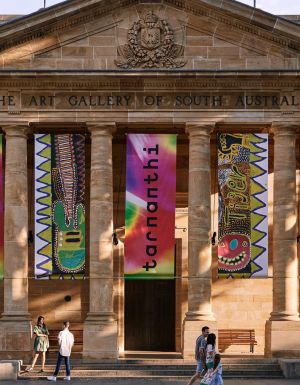
the front facade of the Art Gallery of South Australia
Step into the contemporary Art Gallery of South Australia. (Image: South Australian Tourism Commission)

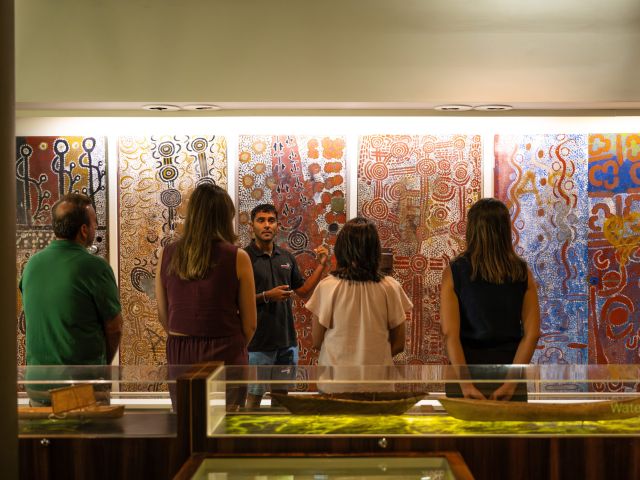
First, fall under the spell of the pharaohs in the Ancient Egypt gallery at the South Australian Museum, then marvel at the Art Gallery of South Australia’s unrivalled collection of traditional and contemporary Indigenous art before venturing to the surface of Mars at the Australian Space Discovery Centre.

a look inside the Art Gallery of South Australia
Wander through the various exhibitions. (Image: South Australian Tourism Commission)

10. Say cheers to a local icon

Through depressions and world wars, heat waves and floods, there has been one constant for Adelaideans. After 162 years and six generations, you can still find Coopers on tap at the corner pub. The recent explosion of craft beers has only increased the brand’s popularity, and Australia’s largest independent brewery is now inviting visitors to peek behind the scenes at the brand new $70-million-dollar visitor centre in Regency Park.

a look inside Coopers brewery in Adelaide
Find Coopers on tap at the corner pub. (Image: Studio Nine Architects)

Budding home brewers can take a deep dive into every aspect of the production process or sample the finished product in the tasting room, while the onsite microbrewery is busy making a range of exclusive experimental brews.

the Coopers brewery in Regency Park, Adelaide
Peek behind the scenes at the brand new visitor centre in Regency Park.

If you want to make a day out of it, the adjacent restaurant specialises in South American and Mediterranean flavours specially designed to match the Coopers range (and sometimes incorporates the beers into the dishes).

the restaurant adjacent to Coopers brewery in Adelaide
Dine at the adjacent restaurant.

Weekly travel news, experiences
insider tips, offers, and more.

 11. Shop and dine at Rundle Mall

In 1976, when the opening ribbon was cut at Rundle Mall, the then Premier Don Dunstan (who initially green-lit the project) arrived on horse and cart. Ten thousand people lined the streets, toasting champagne to a new era in Adelaide retail.

people strolling along the streets of Rundle Mall, Adelaide
Head to Rundle Mall for all things retail. (Image: South Australian Tourism Commission)

Over 40 years later, Rundle Mall remains the home of shopping, dining and entertainment in Adelaide, with over 24 million people a year visiting the car-free shopping strip.

the Haigh's Chocolates original retail store at Rundle Mall
Haigh’s original retail store is located at the corner of Rundle Mall and King William Street. (Image: South Australian Tourism Commission)

It hosts over 700 retailers and 300 services, combining leading retail brands, a huge selection of things to eat and drink with rich history, prominent landmarks and a steady stream of vibrant buskers.

people buying French delicacies at Les Deux Coqs in Rundle Mall
Indulge in French delicacies at Les Deux Coqs in Rundle Mall. (Image: South Australian Tourism Commission)

12. Visit one of the beautiful beaches

Adelaide has so much food, culture, art and wine to offer, that many forget it’s also home to some A+ beaches.

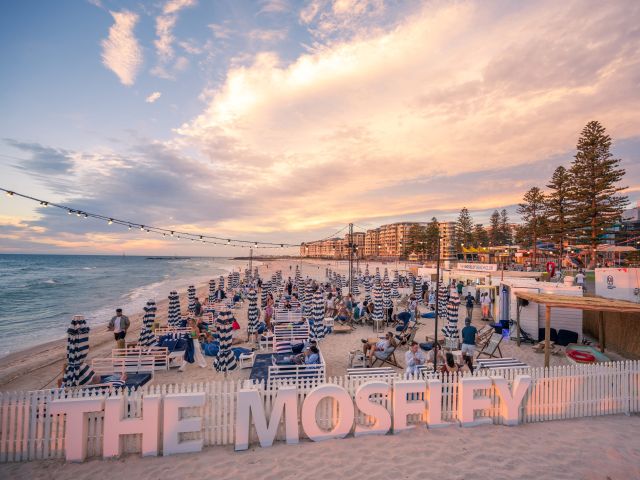
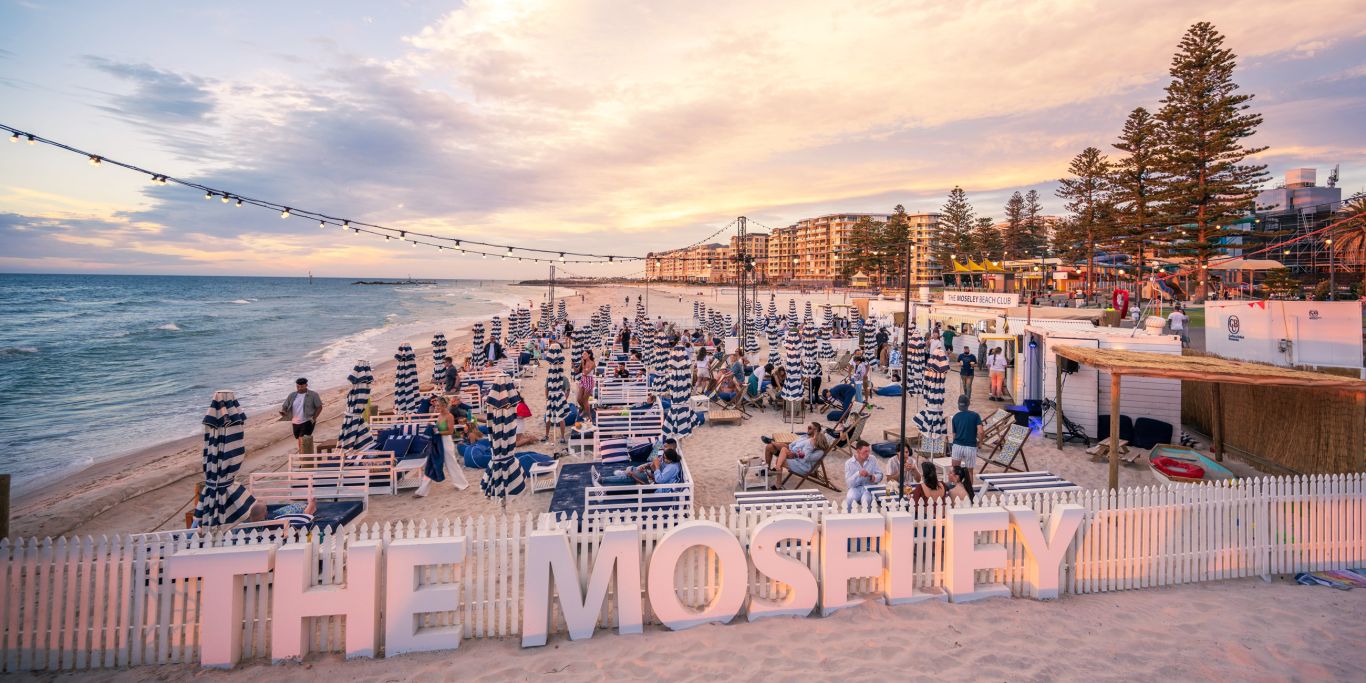
sunset at The Moseley Beach Club, Glenelg Beach
Have a sundowner at the Moseley Beach Club on Glenelg Beach. (Image: South Australian Tourism Commission)

Family-friendly Glenelg Beach is one of the most popular and is accessible via tram from the city to Moseley Square. Henley Beach is a high-end option, with the surrounding restaurants, cafes and shops catering to the luxury traveller.

a dog running on Glenelg Beach
Go frolicking with your dog at Glenelg Beach. (Image: Josh Geelen Photographer)

For history buffs, Semaphore Beach is surrounded by Art Deco architecture. Be sure to check out the iconic 1920s Palais bathing pavilion while you’re there.

Adelaide beaches
Sunsets at Semaphore Beach are breathtaking. (Image:

13. Explore Morialta Conservation Park

You’ll find Morialta Conservation Park just 10 km north-east of Adelaide city centre.

a cave hole at the Morialta Conservation Park
Morialta Conservation Park is home to stunning rock formations. (Image: Joel Durbridge)

The park is home to three striking waterfalls, all linked by three hiking trails ready to be explored at your leisure. If you’d like to tick off all three, the 7.5km hike will take about four hours.

a kid standing in front of a waterfall at Morialta Conservation Park
See one of the striking waterfalls at Morialta Conservation Park. (Image: Megan Crabb)

Kids will love the brand new Mukanthi nature play space, or the chance to climb the Birds Nest, discover an Aboriginal fire pit at Frog Island, find the secret tunnel at Great Snake, and reach the peak at Eagles Perch.

a woman standing at a cave entrance in Morialta Conservation Park
Outdoor lovers will enjoy exploring the natural gorges around Morialta Conservation Park. (Image: Megan Crabb)

Morialta is also one of the state’s most popular spots for rock climbing, with options that vary in difficulty for both beginners and experts.

a woman rock climbing at Morialta Conservation Park
Conquer the rock climb and abseil tour with Earth Adventure. (Image: Tourism Australia / South Australian Tourism Commission)

Need somewhere to stay? Check out our accommodation guide.

Alexis Buxton-Collins
Alexis Buxton-Collins spent his twenties working as a music journalist and beer taster before somehow landing an even dreamier job as a freelance travel writer. Now he travels the world from his base in Adelaide and contributes to publications including Qantas, Escape, The Guardian and Lonely Planet. Alexis has never seen a hill he didn't want to climb and specialises in outdoor adventures (he won the 2022 ASTW award for best nature/wildlife story for a feature on Kangaroo Island). When he's not scouring South Australia for the newest wineries and hikes, he's looking for excuses to get back to spots like Karijini and Ningaloo.
View profile and articles
hero media

Inside Geelong’s glow-up from factory town to creative capital

    Chloe Cann Chloe Cann
    Abandoned mills and forgotten paper plants are finding second lives – and helping redefine a city long underestimated. 

    Just 15 years ago, Federal Mills was a very different place. Once among the most significant industrial sites in Victoria, the historic woollen mill was one of a dozen that operated in Geelong at the industry’s peak in the mid-20th century, helping the city earn its title as ‘wool centre of the world’. But by the 1960s global competition and the rise of synthetic fabrics led to the slow decline of the industry, and Federal Mills finally shuttered its doors in 2001. Within a few years, the abandoned North Geelong grounds had become makeshift pastoral land, with cows and goats grazing among the overgrown grass between the empty red-brick warehouses. It was a forgotten pocket of the city, all but two klicks from the bustle of the CBD.  

    Geelong cellar door wine bar
    Geelong has shed its industrial identity to become an innovative urban hub with reimagined heritage spaces. (Image: Ash Hughes)

    Federal Mills: from forgotten factory to creative precinct 

    Today, the century-old complex stands reborn. The distinctive sawtooth-roof buildings have been sensitively restored. An old silo is splashed with a bright floral mural, landscapers have transformed the grounds, and the precinct is once again alive with activity. More than 1000 people work across 50-plus businesses here. It’s so busy, in fact, that on a sunny Thursday morning in the thick of winter, it’s hard to find a car park. The high ceilings, open-plan design, and large multi-paned windows – revolutionary features for factories of their time – have again become a drawcard.  

    Paddock Bakery andPatisserie
    Paddock Bakery and Patisserie is housed within the historic wool factory. (Image: Gallant Lee)

    At Paddock, one of the precinct’s newer tenants, weaving looms and dye vats have been replaced by a wood-fired brick oven and heavy-duty mixers. Open since April 2024, the bakery looks right at home here; the building’s industrial shell is softened by ivy climbing its steel frames, and sunlight streams through the tall windows. Outside, among the white cedar trees, families at picnic benches linger over dippy eggs and bagels, while white-collar workers pass in and out, single-origin coffee and crème brûlée doughnuts in hand. 

    Geelong: Australia’s only UNESCO City of Design 

    Paddock Bakery
    Paddock Bakery can be found at Federal Mills. (Image: Gallant Lee)

    “A lot of people are now seeing the merit of investing in Geelong,” says Paul Traynor, the head of Hamilton Hospitality Group, which redeveloped Federal Mills. A city once shunned as Sleepy Hollow, and spurned for its industrial, working-class roots and ‘rust belt’ image, Geelong has long since reclaimed its ‘Pivot City’ title, having reinvented itself as an affordable, lifestyle-driven satellite city, and a post-COVID migration hotspot.  

    And the numbers stand testament to the change. In March 2025, and for the first time in its history, Greater Geelong became Australia’s most popular regional town for internal migration, overtaking Queensland’s Sunshine Coast. Current forecasts suggest Geelong will continue to outpace many other Australian cities and towns, with jobs growing at double the rate of the population.

    Tourism is booming, too. The 2023-24 financial year was Geelong and The Bellarine region’s busiest on record, with 6.4 million visitors making it one of the fastest-growing destinations in the country. It’s not hard to see why: beyond the city’s prime positioning at the doorstep of the Great Ocean Road, Geelong’s tenacity and cultural ambition stands out.  

    As Australia’s only UNESCO City of Design, Geelong is swiftly shaking off its industrial past to become a model for urban renewal, innovation, sustainability and creative communities. The signs are everywhere, from the revitalisation of the city’s waterfront, and the landmark design of the Geelong Library and Heritage Centre and Geelong Arts Centre, to the growing network of local designers, architects and artists, and the burgeoning roster of festivals and events. That’s not even mentioning the adaptive reuse of storied old industrial buildings – from Federal Mills, to Little Creatures’ brewery ‘village’ housed within a 1920s textile mill – or the city’s flourishing food and wine scene.  

    The rise of a food and wine destination  

    boiler house
    Restaurant 1915 is housed within a restored former boiler house. (Image: Harry Pope/Two Palms)

    Traynor credits now-closed local restaurant Igni, which opened in 2016, as the turning point for Geelong’s hospo industry. “[Aaron Turner, Igni’s chef-patron] was probably the first guy, with all due respect, to raise the bar food-wise for Geelong,” he says. “People now treat it really seriously, and there’s clearly a market for it.” While Igni is gone, Turner now helms a string of other notable Geelong venues, including The Hot Chicken Project and Tacos y Liquor, all within the buzzy, street art-speckled laneways of the CBD’s Little Malop Street Precinct. Many others have also popped up in Igni’s wake, including Federal Mills’ own restaurant, 1915Housed within the cavernous boiler house, 1915’s interior is dramatic: soaring, vaulted ceilings with timber beams, exposed brick, a huge arched window. The share plates echo the space’s bold character, playing with contrast and texture, with dishes such as a compressed watermelon tataki, the sweet, juicy squares tempered by salty strands of fried leeks, and charred, smoky snow peas dusted with saganaki on a nutty bed of romesco. 

    Woolstore
    The Woolstore is a new restaurant and bar housed within a century-old warehouse. (Image: Amy Carlon)

     The Woolstore, one of The Hamilton Group’s most recent hospo projects, opened in February. It occupies a century-old riverside warehouse and exudes a more sultry, fine dining ambience. Much like Federal Mills, the blueprint was to preserve the original brickwork, tallowwood flooring and nods to the building’s former life. That same careful consideration extends to the well-versed, affable waitstaff as well as the kitchen. Head chef Eli Grubb is turning out an eclectic mix of ambitious and indulgent mod Oz dishes that deliver: strikingly tender skewers of chicken tsukune, infused with hints of smoke from the parrilla grill, and glazed with a moreish, sweet gochujang ‘jam’; nduja arancini fragrant with hints of aniseed and the earthy lick of sunny saffron aioli; and golden squares of potato pavé, adorned with tiny turrets of crème fraîche, crisp-fried saltbush leaves, and Avruga caviar, to name but a few stand-out dishes.  

    Woolstore menu
    Woolstore’s menu is designed for sharing.

    Breathing new life into historic spaces  

    On the city’s fringe, hidden down a winding side road with little fanfare, lies a long-dormant site that’s being gently revived. Built from locally quarried bluestone and brick, and dating back to the 1870s, the complex of original tin-roofed mill buildings is lush with greenery and backs onto the Barwon River and Buckley Falls; the audible rush of water provides a soothing soundtrack. Fyansford Paper Mill is one of few complexes of its time to survive intact. It feels steeped in history and spellbindingly rustic.  

    “We were looking for an old industrial place that had some charm and romance to it,” explains Sam Vogel, the owner, director and winemaker at Provenance Wines which moved here in 2018. When he first viewed the building with his former co-owner, it was in such a state of disrepair that the tradie tenant occupying the space had built a shed within it to escape the leaking roof and freezing winter temperatures. “To say it was run down would be an understatement,” he notes. “There was ivy growing through the place; the windows were all smashed. It was a classic Grand Designs project.” 

    Provenance Wines
    Provenance Wines moved to Fyansford Paper Mill in 2018. (Image: Cameron Murray Photography)

    The team has since invested more than a million dollars into their new home. Where paper processing machinery once sat, wine barrels are now stacked. Vaulted cathedral ceilings are strung with festoon lights, and hidden in plain sight lies a shadowy mural by local street artist de rigueur Rone – one of only three permanent works by the artist.

    While the award-winning, cool-climate pinot noir, riesling and chardonnay naturally remain a key draw at Provenance, the winery’s restaurant is a destination in itself. Impressed already by whipsmart service, I devour one of the most cleverly curated and faultlessly executed degustations I’ve had in some time. It’s all prepared in a kitchen that is proudly zero-waste, and committed to providing seasonal, ethical and locally sourced meat and produce under head chef Nate McIver. Think free-range venison served rare with a syrupy red wine jus and a half-moon of neon-orange kosho, shokupan with a deeply savoury duck fat jus (a modern Japanese take on bread and drippings), and a golden potato cake adorned with a colourful confetti of dehydrated nasturtiums and tomato powder, and planted atop a sea urchin emulsion.  

    handcrafted pieces
    Bell’s handcrafted functional pieces on display.

    The complex is home to a coterie of independent businesses, including a gallery, a jeweller, and its latest tenant, ceramicist Elizabeth Bell, drawn here by the building’s “soul”. “There’s so much potential for these buildings to have new life breathed into them,” says Bell, whose studio is housed within the old pump room. “Even people in Geelong don’t know we’re here,” she says. “It’s definitely a destination, but I like that. It has a really calming atmosphere.”  

    A Melbourne transplant, Bell now feels at home in Geelong, which offers something Melbourne didn’t. “If this business was in Melbourne I don’t think it would’ve been as successful,” she notes. “It’s very collaborative in Geelong, and I don’t think you get that as much in Melbourne; you’re a bit more in it for yourself. Here it’s about community over competition.”  

    Elizabeth Bell
    Ceramicist Elizabeth Bell has a store in Fyansford Paper Mill.