13 things you didn’t know about Kangaroo Island

hero media
If you haven’t heard much about this little slice of South Australian paradise by now, check out these fun facts.

It’s only 150 kilometres long, yet Kangaroo Island is home to arguably the densest and most varied menagerie of wildlife in Australia. Its landscape is so diverse you won’t believe that all of this can be crammed onto one island. And it’s also crammed full of some weird and wonderful facts.

1. Kangaroo Island is bigger than some countries

KI is seven times the size of Singapore at 4400km2. At its narrowest point, it’s just 900m wide.
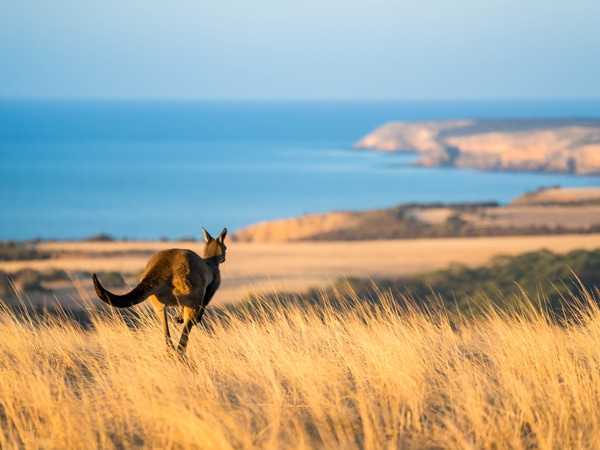
Kangaroo hopping at Middle River on Kangaroo Island.
Kangaroo Island is bigger than Singapore. (Image: Ben Goode)

2. One of its parks was founded to combat “brain fag"

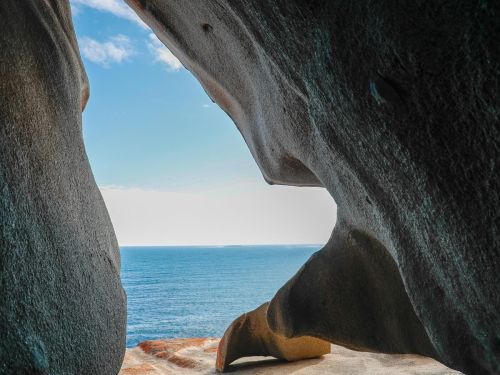
Flinders Chase National Park was established in 1919, “as a bit of a sanctuary for those suffering from ‘brain fag’", according to the park’s founding father Samuel Dixon. Brain fag is a type of mental fatigue, in case you were wondering.
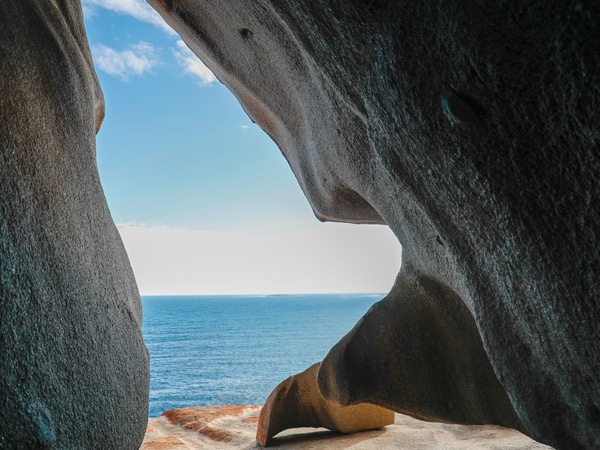
Looking out at the ocean through Remarkable Rocks.
Remarkable Rocks are in Flinders Chase National Park. (Image: Elliot Grafton)

3. Kangaroo Island roos aren’t quite the same

The kangaroos on KI are slightly different from the mainland ones. They have longer fur and are darker in colour, having been separated from their mainland family for approximately 10,000 years.
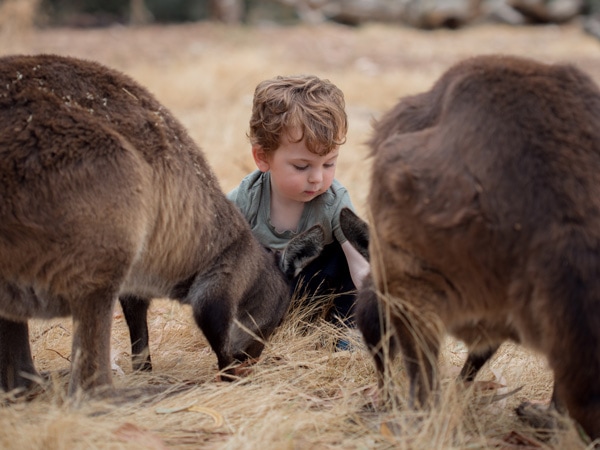
Child pats Kangaroo Island kangaroos.
The kangaroos here have longer, darker fur. (Image: Alana Jayne Elgazzar)

4. Descriptions here are remarkably to the point

The Remarkable Rocks sit on Kirkpatrick Point, named after an 1899 shipwreck survivor. The term is from an original chart that described some “remarkable rocks". Today we know that they are around 500 million years old and shaped by rain, wind and waves.
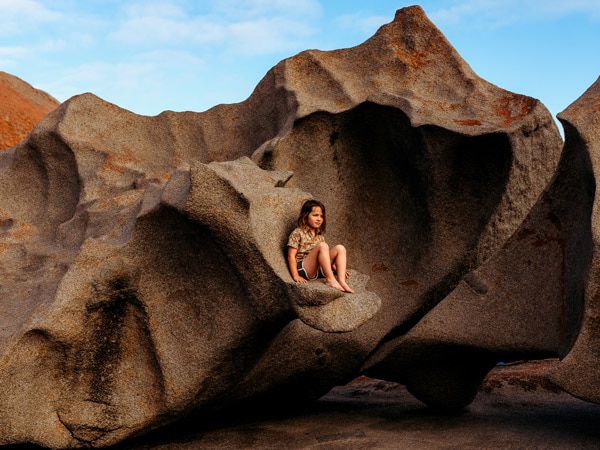
Child sits on Remarkable Rocks on Kangaroo Island
Remarkable Rocks are around 500 million years old. (Image: Kristy Billing @gypsyandherwild)

Need tips, more detail or itinerary ideas tailored to you? Ask AT.

AI Prompt

5. It’s seen plenty of shipwrecks

There have been more than 80 shipwrecks off KI since records began in 1847. The last of its three lighthouses (Cape Borda, Cape du Couedic and Cape Willoughby) was built in 1909 but at least 19 ships have been wrecked since, the latest in 2008.
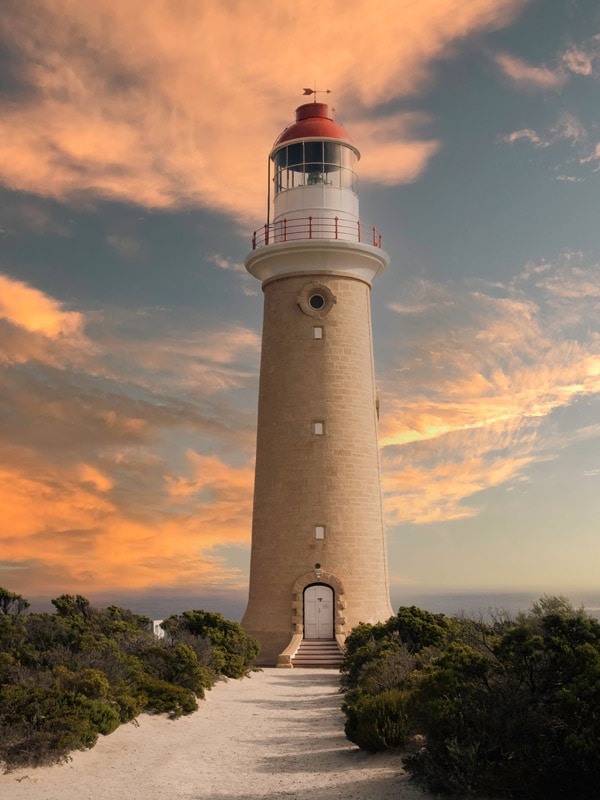
Sunset at Cape du Couedic Lighthouse
Cape du Couedic has seen a number of shipwrecks. (Image: Sana Thakore)

6. Plants here have an explosive good time

Tate’s grass trees, known as yaccas in SA, grow 0.5 to 2.5mm a year. Until 1997 their red resin was harvested to make a gum that is used in fireworks, explosives and munitions.
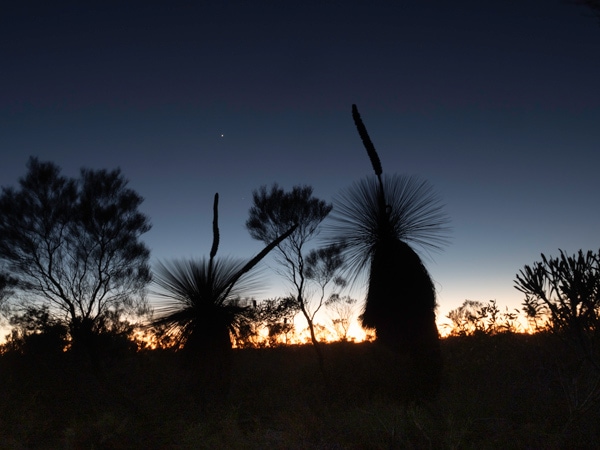
Sunrise silhouette of grass trees in Kalbarri National Park
Yaccas’ red resin was harvested to make explosives.

7. There is an abundance of produce created here

Whether it’s because of the homegrown wineries or the restaurants with kitchens stacked with Kangaroo Island goods, trust us when we say that eating well on KI is not going to be a problem.
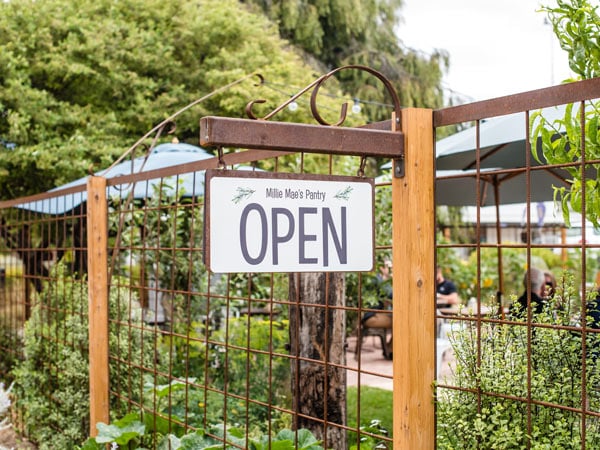
The open sigh at Millie Mae's Pantry in Kangaroo Island.
Kangaroo Island is full of fresh produce. (Image: Meaghan Coles)

8. The stalactites might not be what they seem

What looks like stalactites at Admirals Arch are in fact fossilised roots.
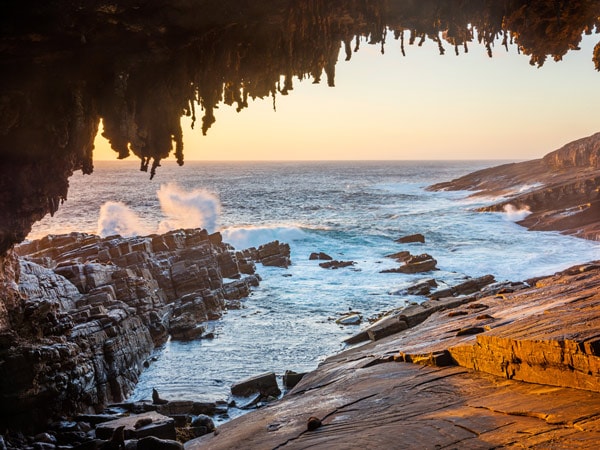
Admirals Arch
Admirals Arch stalactites are fossilised roots. (Image: Lauren Bath Services)

9. Seals have been here for thousands of years

The third-largest seal lion colony in the country has been here for a long time, and spotting the Australian sea lions is one of the best things to do on the island.
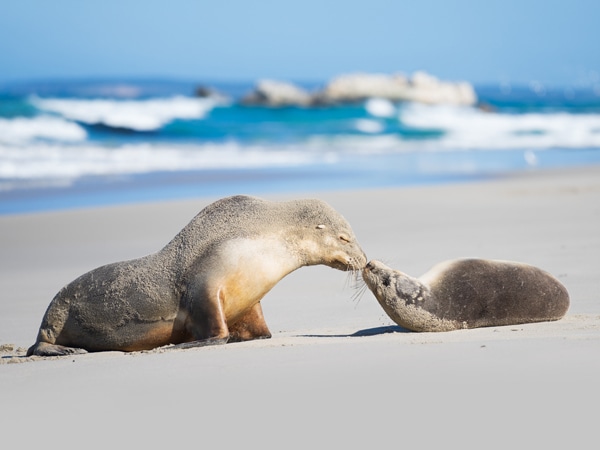
Two seals kissing at Seal Bay.
Seal Bay is a must-see. (Image: Ben Goode)

Weekly travel news, experiences
insider tips, offers, and more.

10. The bees here are unlike none other on earth

The Ligurian bees on KI are the world’s last pure population. KI was the world’s first bee sanctuary, established in 1885.
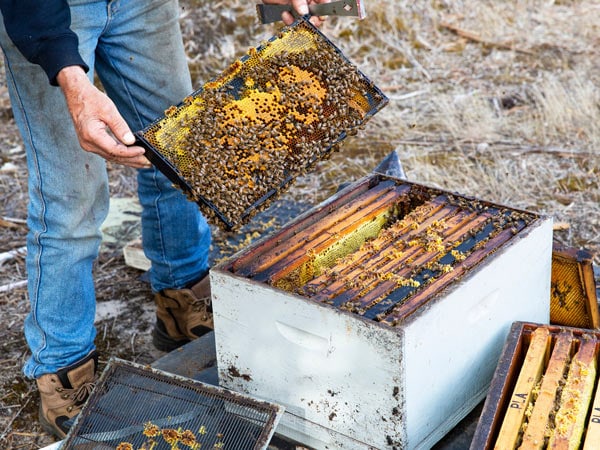
Bees at Clifford's Honey Farm.
KI bees are the world’s last pure population. (Image: Josie Withers)

11. It’s a camper’s dream

If you’ve ever fantasised about waking up at dawn to watch the sunrise over a picture-perfect Australian beach, you really can’t do better than at one of Kangaroo Island’s campsites.
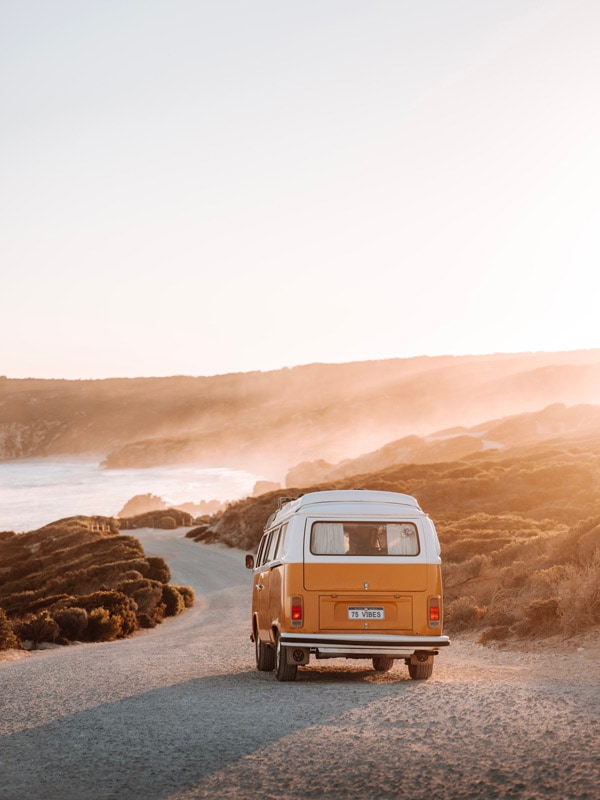
Kombi Van is parked at Pennington Bay on Kangaroo Island.
Camping out on Kangaroo Island is dreamy. (Image: Jordan McArthur Mattea Carson)

12. KI also has a French name

KI could also be known as I’Île Decrès, as French explorer Boudin published the first map of the island in 1811 – three years before Flinders. For the mainland Indigenous residents, Kangaroo Island is known as Karta Pintingga – or island of the dead.
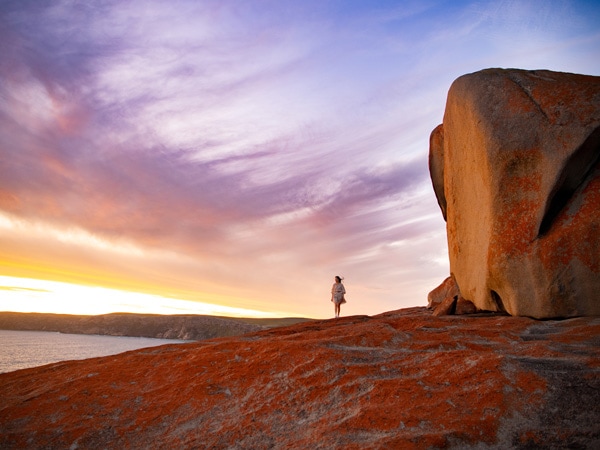
Woman at Remarkable Rocks on Kangaroo Island Odysseys tour.
I’Île Decrès is Kangaroo Island’s French name. (Image: Tourism Australia)

13. Names here can be a tad confusing

American River is on a bay, not a river. And quite clearly, not American.
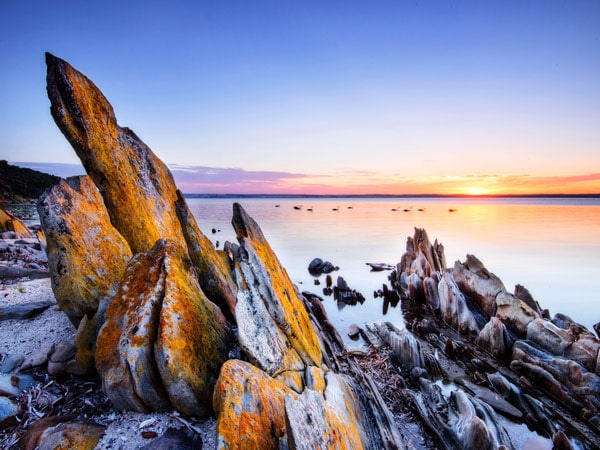
Looking over American River on Kangaroo Island.
American River is not a river. (Image: Julie Fletcher)
Start planning your trip to Kangaroo Island with our travel guide now.
Kate Bettes
Kate Bettes is a freelance travel writer. Whether having a picnic in Vietnamese jungle with new friends, or partying in the back of a limousine in Hollywood, Kate’s experiences have left her with the sneaking suspicion that the best travel memories happen when you least expect. It’s this feeling - and how to get it - that she loves to write about.
View profile and articles
hero media

Film lovers need to add these Victorian theatres to their bucket list

    Ricky French Ricky French
    Theatres have always been a cornerstone of regional Victoria, reflecting the character and history of their local communities.

    From grand, gold rush-era masterpieces to Art Deco wonders to repurposed prisons, we’ve rounded up four of Victoria’s best regional theatres to catch a show at next time you’re travelling through.

    Her Majesty’s Theatre, Ballarat

    Her Majesty’s Theatre, Ballarat 
    Her Majesty’s Theatre in Ballarat has been standing for 150 years. (Image: Michael Pham)

    A monument to the immense gold rush wealth flooding through Ballarat in the second half of the 19th century, Her Majesty’s Theatre (‘Her Maj’ to locals) celebrates its 150th anniversary as the city’s premier performing arts venue this year.

    Built in a classical style and immaculately preserved (thanks largely to a recent $16-million restoration), this Lydiard Street landmark is the oldest continuously operating theatre in mainland Australia, notable for its double balcony and a stage that slopes towards the front, making it one of the most audience-friendly venues in the country to see a show.

    The Capital, Bendigo

    The Capital Theatre, Bendigo
    The Capital in Bendigo was built in 1873 as a Masonic Hall. (Image: Michael Pham)

    Denoted by its distinctive Corinthian columns, more reminiscent of ancient Greece than regional Victoria, The Capital theatre in Bendigo has been through several iterations since the first stone was laid in 1873.

    Originally a Masonic hall, the renaissance revival-style building became a theatre in the 1890s, falling into disrepair for a time during the 1970s, before being restored and reopened (as the Bendigo Regional Arts Centre) in 1991. Today, the 480-seat venue hosts everything from comedy to cabaret to traditional theatre, dance, opera and live music.

     Ulumbarra Theatre, Bendigo

    a look insideBendigo’s Ulumbarra Theatre
    Inside Bendigo’s Ulumbarra Theatre, a former prison. (Image: Michael Pham)

    Bendigo has busted out as a regional performing arts hotspot, so it’s fitting that one of its newest venues is housed within a former prison. Meaning ‘meeting place’ or ‘gather together’ in the language of the local Dja Dja Wurrung people, the $26-million, 950-seat auditorium rose from within the red brick walls of the historic Sandhurst Gaol in 2015.

    It’s an eerie feeling as you approach the imposing granite facade, pass beneath the old gallows and pick up your ticket from the box office occupying a repurposed cell block. With the building playing a main character in the show, this is performative architecture at its finest.

    Rex Theatre, Charlton

    the Rex Theatre in Charlton
    The 1938-built Rex Theatre in Charlton is an Art Deco gem. (Image: Jenny Pollard)

    Regional theatres don’t come more romantic than this Art Deco gem in the river town of Charlton, in north-central Victoria. Built in 1938, the 350-seat community-owned theatre provides an essential entertainment outlet for residents in the Wimmera Mallee region, as well as visitors making the trip up the Calder Highway from Melbourne.

    The volunteer-run venue is the last remaining purpose-built cinema in regional Victoria, and hosts the Charlton Film Festival every February, plus three weekly film screenings (Tuesday, Saturday and Sunday).