hero media

Film lovers need to add these Victorian theatres to their bucket list

Theatres have always been a cornerstone of regional Victoria, reflecting the character and history of their local communities.

From grand, gold rush-era masterpieces to Art Deco wonders to repurposed prisons, we’ve rounded up four of Victoria’s best regional theatres to catch a show at next time you’re travelling through.

Her Majesty’s Theatre, Ballarat
Her Majesty’s Theatre, Ballarat 
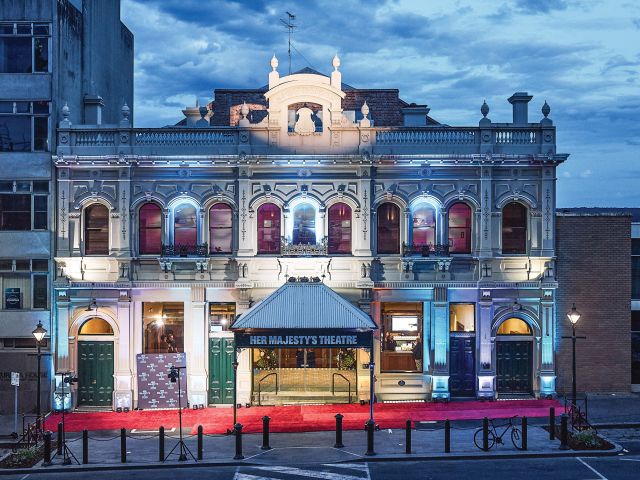
Her Majesty’s Theatre in Ballarat has been standing for 150 years. (Image: Michael Pham)

A monument to the immense gold rush wealth flooding through Ballarat in the second half of the 19th century, Her Majesty’s Theatre (‘Her Maj’ to locals) celebrates its 150th anniversary as the city’s premier performing arts venue this year.

Built in a classical style and immaculately preserved (thanks largely to a recent $16-million restoration), this Lydiard Street landmark is the oldest continuously operating theatre in mainland Australia, notable for its double balcony and a stage that slopes towards the front, making it one of the most audience-friendly venues in the country to see a show.

The Capital, Bendigo
The Capital Theatre, Bendigo
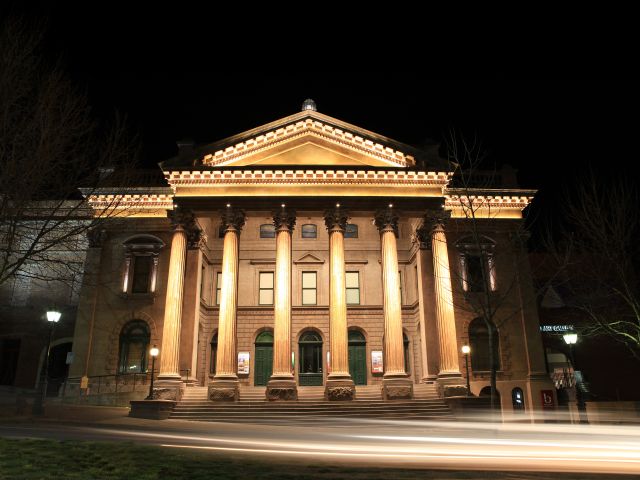
The Capital in Bendigo was built in 1873 as a Masonic Hall. (Image: Michael Pham)

Denoted by its distinctive Corinthian columns, more reminiscent of ancient Greece than regional Victoria, The Capital theatre in Bendigo has been through several iterations since the first stone was laid in 1873.

Originally a Masonic hall, the renaissance revival-style building became a theatre in the 1890s, falling into disrepair for a time during the 1970s, before being restored and reopened (as the Bendigo Regional Arts Centre) in 1991. Today, the 480-seat venue hosts everything from comedy to cabaret to traditional theatre, dance, opera and live music.

 Ulumbarra Theatre, Bendigo

a look insideBendigo’s Ulumbarra Theatre
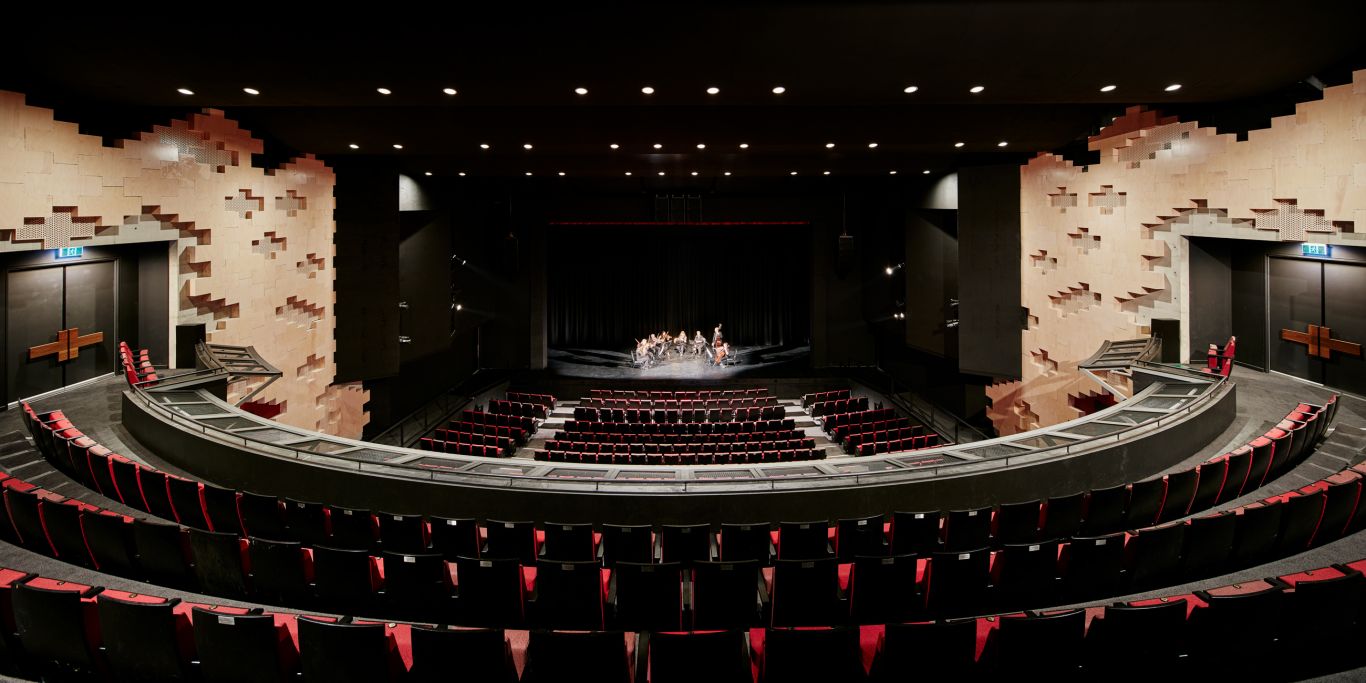
Inside Bendigo’s Ulumbarra Theatre, a former prison. (Image: Michael Pham)

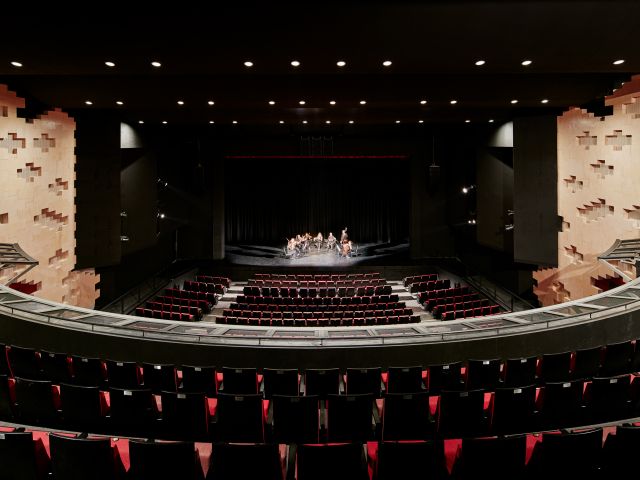
Bendigo has busted out as a regional performing arts hotspot, so it’s fitting that one of its newest venues is housed within a former prison. Meaning ‘meeting place’ or ‘gather together’ in the language of the local Dja Dja Wurrung people, the $26-million, 950-seat auditorium rose from within the red brick walls of the historic Sandhurst Gaol in 2015.

It’s an eerie feeling as you approach the imposing granite facade, pass beneath the old gallows and pick up your ticket from the box office occupying a repurposed cell block. With the building playing a main character in the show, this is performative architecture at its finest.

Rex Theatre, Charlton
the Rex Theatre in Charlton
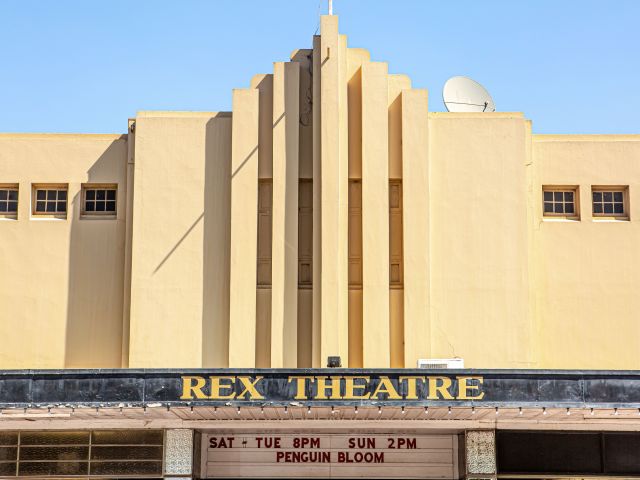
The 1938-built Rex Theatre in Charlton is an Art Deco gem. (Image: Jenny Pollard)

Regional theatres don’t come more romantic than this Art Deco gem in the river town of Charlton, in north-central Victoria. Built in 1938, the 350-seat community-owned theatre provides an essential entertainment outlet for residents in the Wimmera Mallee region, as well as visitors making the trip up the Calder Highway from Melbourne.

The volunteer-run venue is the last remaining purpose-built cinema in regional Victoria, and hosts the Charlton Film Festival every February, plus three weekly film screenings (Tuesday, Saturday and Sunday).

Ricky French
Ricky French is a journalist and photographer who began as a freelance feature writer for the Weekend Australian Magazine, and is a former senior writer for Bauer Media and contributing editor to Wilderness magazine. A hunger for discovery saw Ricky morph into travel writing, and he loves bringing home stories and images that unlock the heart of a destination. Adventure travel – especially skiing, hiking or kayaking – are his passions, and his ultimate trip would be to retrace Shackleton's footsteps crossing South Georgia Island.
See all articles
hero media

This little-known heritage rail journey takes you past charming towns, artworks on silos and lakes

Board the heritage Grainlander and step back in time for a rail journey discovering silo art, Lake Tyrrell and Victoria’s Mallee region.

One of the best ways to experience Australia is on board a train, and the heritage Grainlader showcases both the beauty of the sprawling Victorian plains and the towering artworks along the Mallee Silo Art Trail.

Below, I take you on a journey to discover what it’s like to spend two nights aboard this iconic locomotive.

What is the Grainlander?

Exterior of Overland Sleeper carriage on The Grainlander
The vintage sleeper train takes patrons on a journey through regional Victoria. (Image: Joanne Karcz)

The Grainlander is a heritage overnight sleeper train in Victoria operated by Slow Rail Journeys, the public tour arm of Seven-O-Seven Operations. It travels through the state’s regional areas, highlights include the Mallee Silo Art Trail (guided off-train tours of the large-scale murals are part of the journey).

Vice President of the volunteer-run not-for-profit organisation, Matt Lucas, says their mission is to “share and restore rail heritage and to promote and increase touring in regional Victoria.”

The journey

The Grainlander departs Melbourne from Southern Cross Station
The Grainlander departs Melbourne. (Image: Joanne Karcz)

Travelling from Melbourne to Sea Lake, we rumble through Melbourne’s western suburbs and Bacchus Marsh to Ballarat. We pass through towns I’ve never heard of: Wycheproof, Nullawil and Buckrabanyule.

The quick stops are not conducive to alighting from the train, but there’s time for that on the return journey when I alight at Wycheproof for a brisk walk down the main road to see the tracks tracing parallel lines through the town centre. In Maryborough, I stretch my legs and explore the imposing red brick station.

From Ballarat, we trace a path via Geelong to Melbourne along a line that carried miners and freight to the goldfields in the 1800s, thus providing train enthusiasts with a unique experience.

The guest who is on a mission to ride every railway track in Victoria, is thrilled.

Life on board

There’s plenty of giggling as guests in the 1962 Southern Aurora Car inspect our cosy single cabins. I open latches, turn a little handle to wind up the venetian blinds and delight at the art deco bed lamp. The drop-down toilet is sealed. That’s fine by me. I’d rather use the facility at the end of the carriage.

Melbourne’s city lights flash past my window. Although it’s after 10pm, I’m not ready to curl into my tightly made-up bed – which folds up during the day.

Wobbling along the narrow passage to the Club Lounge, I steady myself with my hands. The woman ahead of me says she “feels like a pinball ricocheting off the walls.”

A group of women have settled in, their wine glasses resting on the marbled green coffee table, its boomerang shape echoing that of the curved brown faux leather couches. They invite me to join them. Already my nerves as a solo traveller have evaporated.

Waking early, I sit in bed sipping tea and watch the passing parade of silhouetted trees as the sky lightens.

Gradually the scene comes to life. Early sunlight brightens a field of yellow canola. Sheep gather under a tree, squawking black crows take off and kangaroos bound across green fields. In Wycheproof, a family standing outside their white picket fence wave, their arms forming big arcs.

Some guests remain in their cabins, reading or perhaps reminiscing about travelling in these very carriages as children. The 1923 heritage wooden sleeper is like stepping back in time with leadlight features, carved detail in the wooden panelling and even a “SMOKING” sign. As in the premium twin cabins, the seats fold into bunk beds at night.

Being a social animal, I prefer to chat with other guests in the club or seating lounge.

We eat well. Hearty breakfasts and Sunday lunch are served in the dining car. In keeping with the organisation’s mission to support local businesses, a bakery in Wycheproof prepares Saturday’s picnic lunch and dinner is in the Royal Hotel Sea Lake, run by a co-operative of local farmers and investors.

Exploring the Mallee and the Silo Art Trail

Patchewollock Silo Art by Fintan Magee
Patchewollock Silo Art by Fintan Magee. (Image: Joanne Karcz)

Stepping off the train at Nulliwal, we view our first silo art. Jimmy, a black and tan kelpie, looks down from the silo wall. As a special treat, we meet Jimmy himself. Retired from farmwork, he revels in our attention.

The train pulls into Sea Lake where a colourful mural depicts a young girl on a swing watching the sky change colour as the sun sets. It’s Saturday. Few shops are open, but I still manage to buy a box of Lake Tyrrell Salt. A fellow traveller discovers a Mother Goose teapot for her collector daughter.

Hotel in Patchewollock
Patchewollock is one of many charming towns to explore on the journey. (Image: Joanne Karcz)

We travel by bus to see silo art in the small communities of Lascelles, Roseberry and Patchewollock. The towering works depict local people and represent the resilience, strength and tenacity of those living in the Mallee.

As the sun sets, the sky at Lake Tyrrell, Victoria’s largest salt lake, itself becomes an artwork. Pastel blues and pinks change to orange and grey as a golden beam spreads across the lake.

Sunset at Lake Tyrrell
Stop for sunset at Lake Tyrrell. (Image: Joanne Karcz)

Details

From $1,045 per person, fares include all meals and tours. The two-night Slow Rail Journey operates most months except in the hot summer months.

Guests include rail enthusiasts, couples, solo travellers and mother/daughter duos. The Grainlander is not accessible for wheelchair users. People with mobility issues may have difficulty stepping on board and walking through the train.