The Kangaroo Island Wilderness Trail, which winds through Flinders Chase National Park, was razed by the Black Summer bushfires. Two years later, it is reopen for a unique experience that encourages walkers to help in its recovery and see for themselves the resilience of nature and resolute beauty of this special part of South Australia.
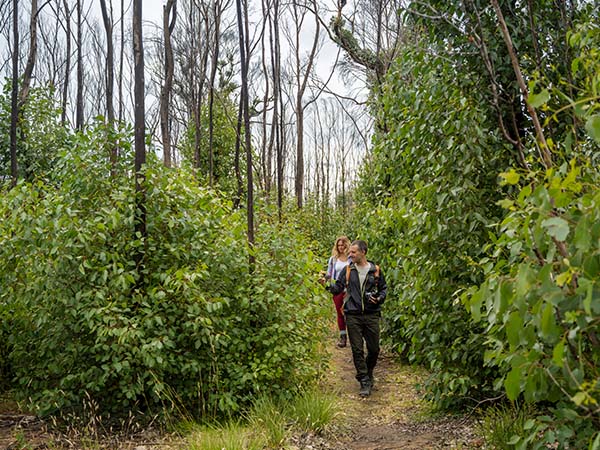
High above me, the ghostly white limbs of sugar gums stand out starkly against a pale blue sky. Each one is attached to a slender trunk shrouded in tufts of greenery that threaten to hide it completely while at ground level spiky acacia, bracken and vivid pink bottlebrush close in around me so densely that I sometimes need to push them aside to find the path ahead. Some walking trails deviate to avoid fallen trees, but as I forge ahead I find myself regularly detouring around trees that are growing too quickly. It would appear the reports of Kangaroo Island’s demise have been greatly exaggerated.
Where the sunlight breaks through this thick growth, delicate orchids have sprouted up and in places the path is flanked by a mosaic of white, yellow and purple wildflowers. Slender rosellas flash past in a blur of crimson and royal blue, pigeons burst from the undergrowth with a panicked flurry of wings and, when I enter a clearing, a chestnut-black pardalote that looks as if it’s had white paint spilled on its back watches me carefully from a branch before fluttering off. Echidnas pay no heed to the trail and scratch for food and shelter wherever they please, leaving me with the distinct impression that humans are very much an afterthought.
Landscape regeneration
Even when the vegetation opens up a bit, the path twists and turns so regularly that I can never see more than 20 metres ahead. The locals are equally oblivious to their surroundings and when I round a corner to see a large goanna sunning itself in the middle of the path, it seems shocked that I’ve intruded upon its world. I admire its handsome yellow-and- black-banded tail and pixelated calico throat for a few seconds before it comes to its senses and scrambles frantically into the bush.
I’m walking the Kangaroo Island Wilderness Trail’s Fire Recovery Experience and, everywhere I look, new growth is reclaiming this landscape. Even when evidence of the devastating fires of January 2020 appears, it simply serves to highlight the region’s natural resilience. Leafless mallee trunks point skyward like worshippers frozen in place mid-prayer, but a profusion of new growth sprouts from the base of each plant, providing vital shelter for smaller animals and food for larger ones.
So intense is the regrowth that in places it threatens to overwhelm the path completely; rangers have to maintain it regularly and my very presence here is aiding their cause. Alison Buck is the manager of the Kangaroo Island Wilderness Trail (KIWT) and when I meet up with her she tells me that simply by walking the trail, which reopened in March 2021, I’m helping to stop new shoots from growing on the path and making sure it can be followed by future walkers.
Buck has spent the past two decades working in Flinders Chase, the national park that dominates Kangaroo Island’s western end and through which the trail largely passes, and knows it as well as anybody. So I’m surprised when she tells me that she’s seen a host of new plants sprout up in the last two years. “You can see the path changing on a weekly basis at the moment," she says before pausing to casually point out a grey fantail that’s stalking us through the trees. “Last year, there were masses of snake orchids here, whereas the spider orchids have emerged in big patches this year," she continues, adding that some fire-adapted plants have flowered for the first time in living memory and, at the moment, the trail passes “all kinds of things that you wouldn’t normally see."
The hike
The five-day hike can only be tackled in one direction and, with 12 permits issued a day, there’s little chance of being trapped in a crowd. In fact, I don’t see another walker the entire time I’m on the trail and, despite never being more than a few kilometres from a road, it feels as if I’ve left civilisation behind for long stretches.
Because much of the park’s infrastructure burned in the fires, camping on the trail isn’t permitted at the moment and the nearest place to stay is Western KI Caravan Park and Wildlife Reserve. Fortunately it’s located just minutes from the park entrance and provides transfers to and from each trailhead. That means a cold drink and a hot shower beckon after each day out on the trail and it’s easy to spot fellow walkers enjoying the same simple pleasures.
It’s here that I meet laid-back Kiwi couple Ian and Jenna, who have relished the trail’s sense of isolation. “It’s just so peaceful, you feel like you have the whole place to yourself," Jenna says from the back of the campervan that’s been their home for the last five months. “And the strange thing is, it doesn’t really feel like a fire walk – some of the trees are burned but wherever I see that there are three new trees growing in their place."
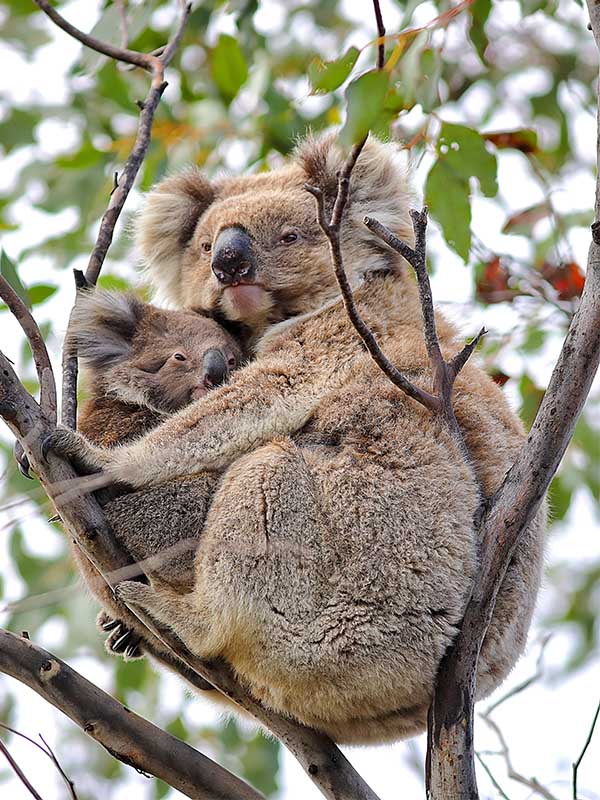
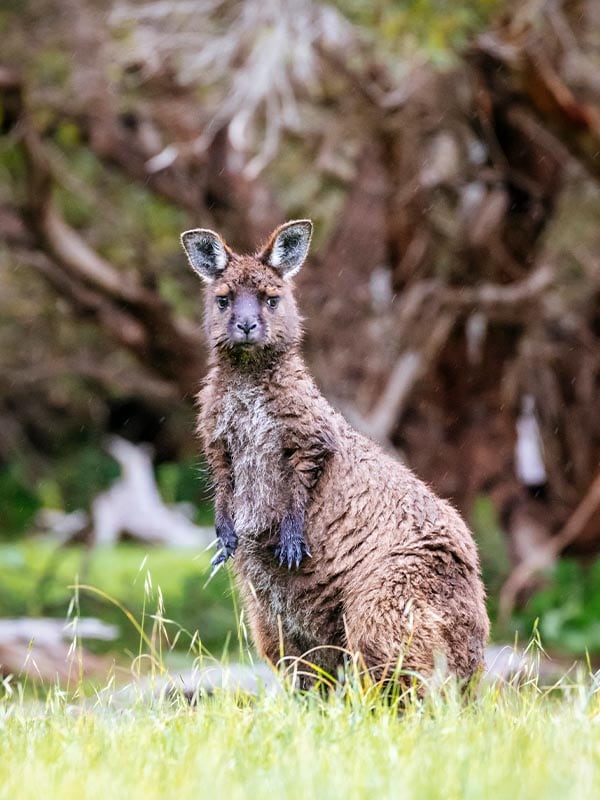
Owner Mark Jago jokes that the incredibly thick regrowth at the caravan park, set on 17 hectares of bush and grassland, means that “people see more wildlife here than in the national park". As if to prove his point, I walk past a couple staring upwards a few metres from the campervan and follow their gaze to see a plump koala holding its baby in the crook of a branch. Even after the fires there are twice as many koalas as humans here and the island’s namesake marsupials are more numerous again. Minutes later, I spot one with a joey that stares at me for an instant before plunging headlong through a dense wall of fresh green shoots that closes behind it like a curtain.
I first walked the KIWT not long after it opened in 2016, and one of the things that struck me was the sheer variety of ecosystems it passed through over five days. That’s something the team of rangers has worked hard to preserve and, despite a few detours, the Fire Recovery Trail is the same length (63 kilometres) and follows largely the same route as the original walk.
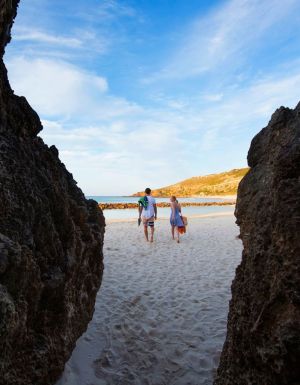
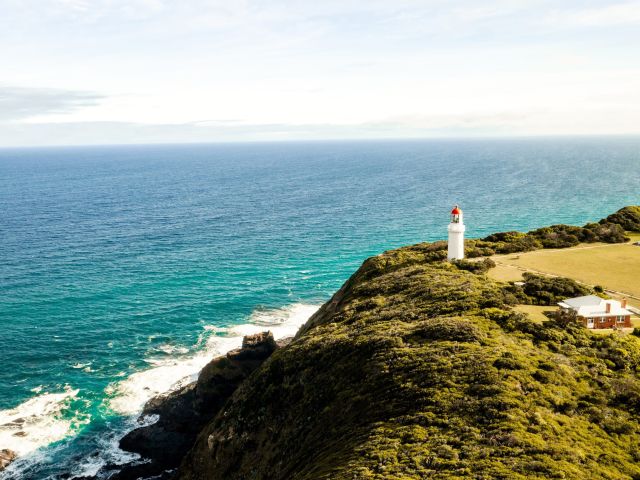
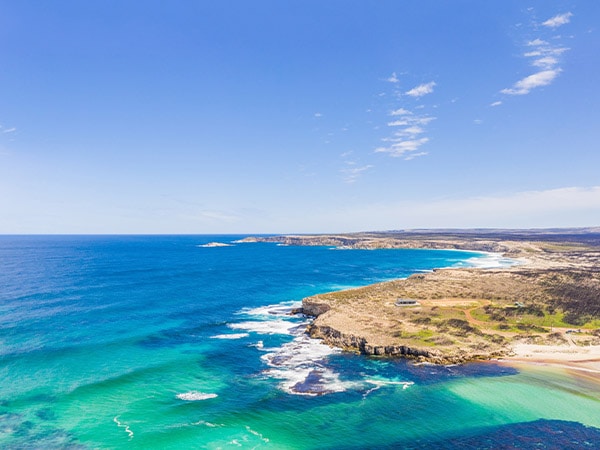
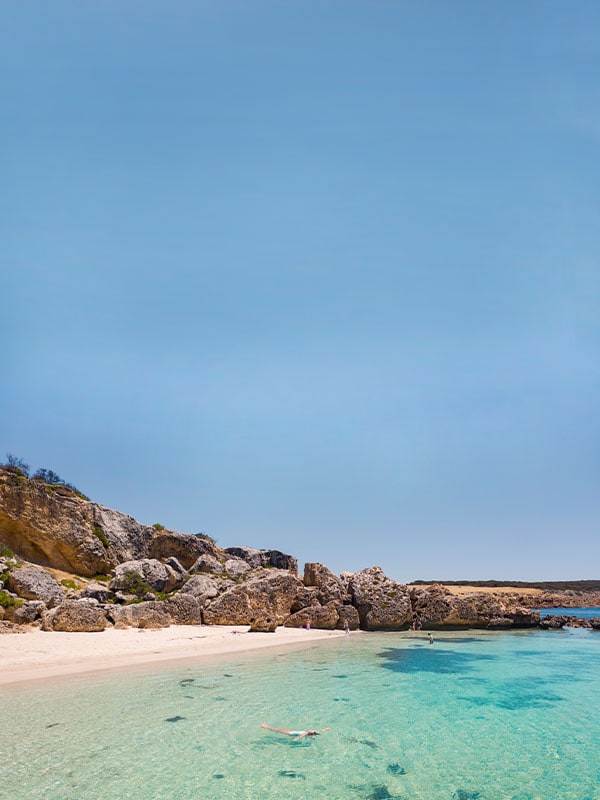
The first day passes through thick forest and open scrub, up ancient dunes and along a tannin-stained creek where dragonflies buzz above bubbling cascades. There are stretches where the vegetation is so dense I can’t see more than a few metres, but by day two I feel as if I’m walking on the edge of the world. This section traverses weather-beaten limestone cliffs that stand sentinel above the endless expanse of the Southern Ocean before descending to a long beach that begs walkers to plant the first set of footsteps in its sand.
Off-the-beaten-track
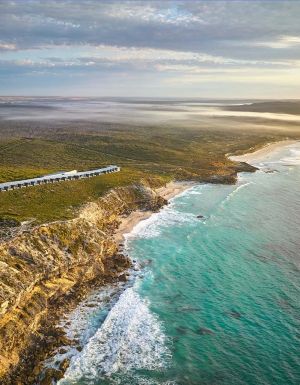
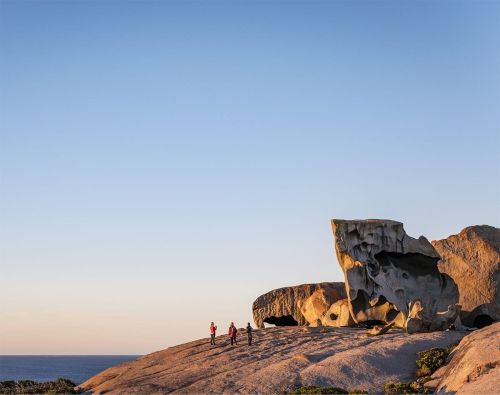
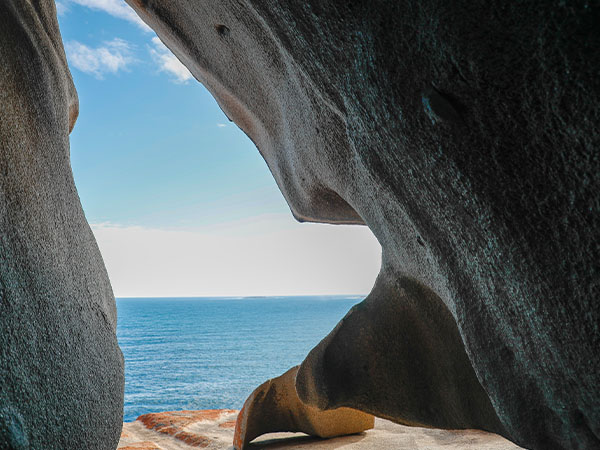
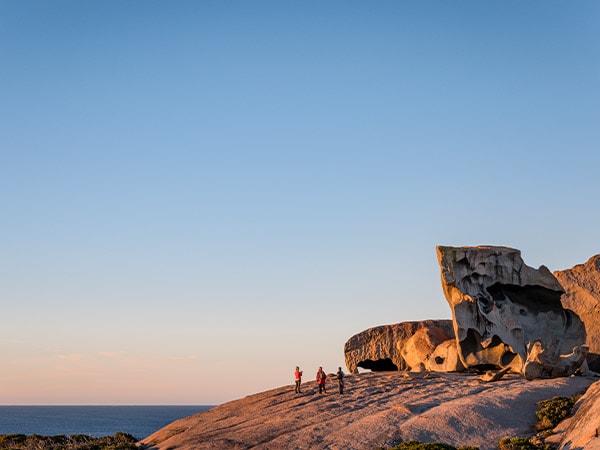
Day three adds the wind-eroded formations of Remarkable Rocks to the mix, the red-tinged natural sculptures looking more like a surrealist exhibition than ever as they take on new forms when viewed from different angles. This is the same stretch of coastline that was home to the Southern Ocean Lodge, and it’s every bit as dramatic as its promotional material suggests. Almost two years after the island’s most iconic accommodation was destroyed, the jaw-droppingly beautiful clifftop location has been cleared and hundreds of trees planted in preparation for the rebuild of this ultra-luxurious getaway.
Closer at hand, I’m struggling to keep my eyes on the rocky limestone path because, just metres away, sheer slopes plunge down to jumbles of lichen-covered boulders in inaccessible coves that turn from moody blue to dazzling turquoise when the sun flashes on them. In the distance, jagged peninsulas jut into the ocean and whitewater foams around offshore rocks as a salt-laden sea breeze whips my hair in every direction.
Then the trail turns inland and everything changes abruptly. Within minutes I’ve sunk into a swale between sand dunes and the atmosphere is eerily still. As I continue, the surrounding vegetation slowly grows from stunted bushes to gangly trees and it feels as if I’m walking in a tunnel when they close together overhead. Suddenly, kangaroos are crashing through the bush on all sides and it’s a slight shock to emerge into a clearing where a car is waiting for me.
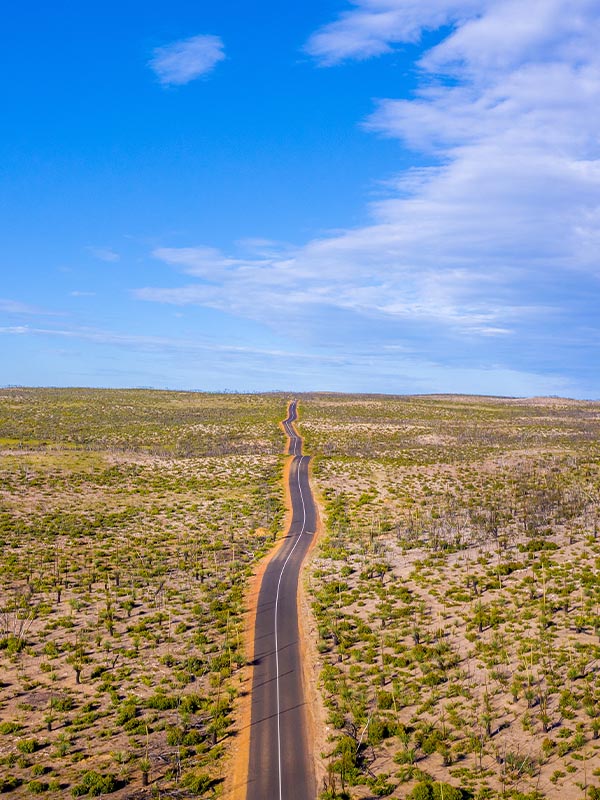
Along with the promise of a comfortable bed at the end of each day, one advantage of experiencing the trail as a series of day walks is the chance to see sections of the park that the hike doesn’t cover and I watch from the front seat as the winding ribbons of tarmac fringed with brightly coloured wildflowers unspool invitingly ahead, each gentle slope providing a new reveal. But speeding through the park in silence also reminds me of what I’m missing; the tinkling call of rosellas, the ceaseless roar of the ocean and the deep, twanging call of banjo frogs hiding in the reeds. It makes me impatient for the next day, to see what other revelations await on this trail that continuously defies expectations.
A traveller’s checklist
Getting there
Qantas and Rex both fly into Kingscote, Kangaroo Island’s largest town, which is 100 kilometres from Flinders Chase National Park. SeaLink also operates car and passenger ferries from Cape Jervis (100 kilometres south of Adelaide) to Penneshaw on the island’s eastern tip. These get busy at peak times so it’s worth booking in advance, especially during school holidays.
Playing there
The Kangaroo Island Wilderness Trail Fire Recovery Experience covers 63 kilometres over five days and requires a moderate level of fitness. Campsites on the trail are expected to open in spring 2022. Until then Western KI Caravan Park & Wildlife Reserve is the closest accommodation and provides transfers to and from each trailhead as part of its Wilderness Trail packages. A number of operators also offer guided tours – more information can be found here.