With a thriving colony of friendly yellow-footed rock wallabies, jaw-dropping lookout points and some of the clearest night skies on earth, this unique property stands alone even in the wild and ancient landscape of the Flinders Ranges.
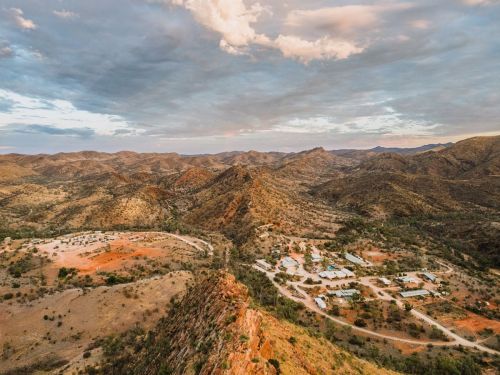
From the gently sloping hills around Mount Remarkable, the Flinders Ranges grow progressively more rugged and remote as you head north. By the time you arrive at Vulkathunha-Gammon Ranges National Park some 600 kilometres north of Adelaide, it feels like you’re on another planet. Only a few rugged 4WD tracks created by mineral prospectors traverse this forbidding Martian landscape and the absence of settlements in the area means you can expect gloriously clear night skies. In 2023 Arkaroola Wilderness Sanctuary became Australia’s second certified Dark Sky Sanctuary and a range of tours and accommodation options make it the obvious base from which to explore the region.
The backstory
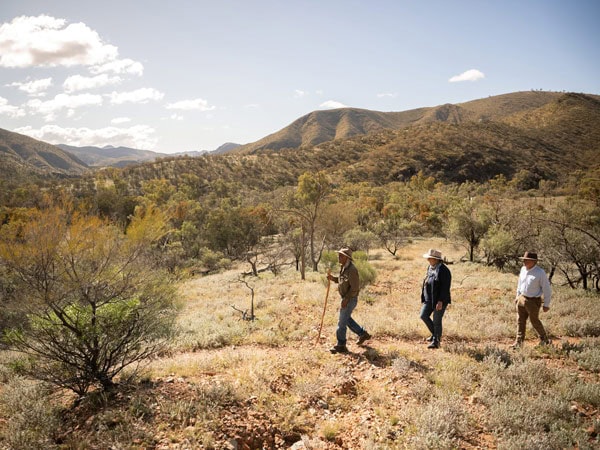
Arkaroola Wilderness Sanctuary and Vulkathunha-Gammon Ranges National Park lie on the traditional lands of the Adnyamathanha people, who called this region home for tens of thousands of years before the first European explorers arrived in the 1840s. They were quickly followed by prospectors searching for gold, copper and precious stones before the quest for uranium brought several prominent geologists to the region. Among them was Antarctic explorer Sir Douglas Mawson, who declared the region “the gem of the Flinders Ranges" and “a geologist’s paradise".
A densely packed collection of hulking pyramids and razor-sharp peaks, the Gammon Ranges were created by volcanic activity up to 1.6 billion years ago and the landscape is older, wilder and more colourful than the main body of the Flinders Ranges. Mawson considered this open-air museum so important that he lobbied the state government to grant it special protected status, as did his student Reg Sprigg (later Dr Reginald Sprigg AO). When the government declined, he purchased the Arkaroola property in 1967.
Arid conditions and rugged terrain meant that it was never prime pastoral land and over the following years, he destocked the 60,000-hectare property and began removing invasive species to rehabilitate the land. The construction of Arkaroola Village and the Arkaroola Observatory brought tourism to the property, which is still managed by Reg Sprigg’s son Doug. An onsite statue of Douglas Mawson is flanked by rocks from his two favourite places on earth – Arkaroola and Mt Erebus in Antarctica.
Arkaroola accommodation
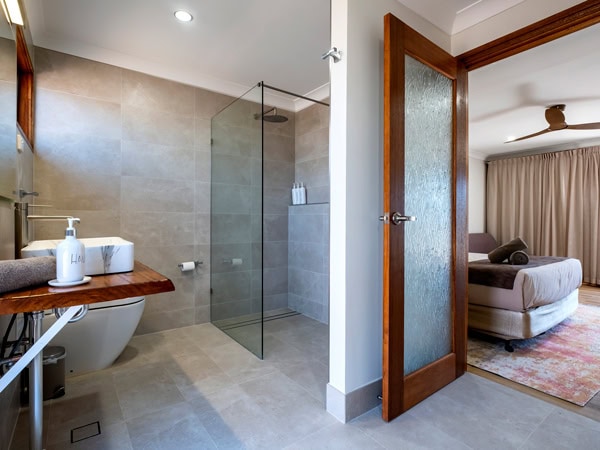
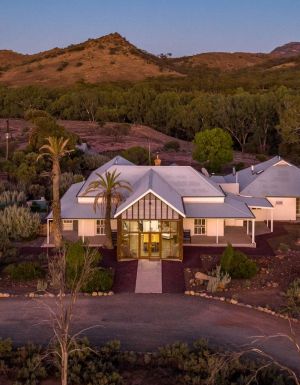
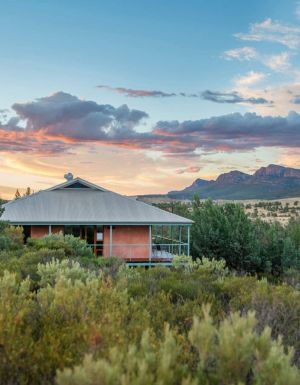
Despite the property’s isolation, Reg Sprigg’s vision made him a pioneer of tourism in the region and the Arkaroola accommodation options are surprisingly varied for such a remote location. The modern and well-kept guest rooms come in several sizes: the comfortable Callitris suites have a queen bed, while the roomier Mawson suites can sleep up to four with the addition of a single and trundle bed. With 19 basic rooms built around an enormous common area, the budget-friendly Greenwood Lodge is ideal for larger groups, as are the four standalone cottages.
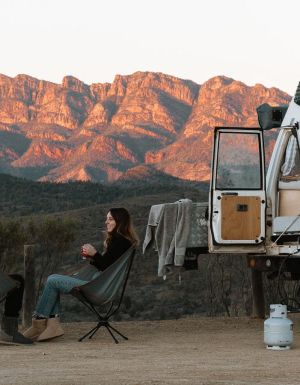
If you’re towing a caravan, the Arkaroola caravan park has 50 large powered sites and a sprawling 300-hectare campground with plenty of sites arrayed along the banks of a dry creekbed. Guests have access to a camp kitchen, ablution block and laundry as well as the swimming pool and all facilities in Arkaroola Village.
Arkaroola Village and facilities
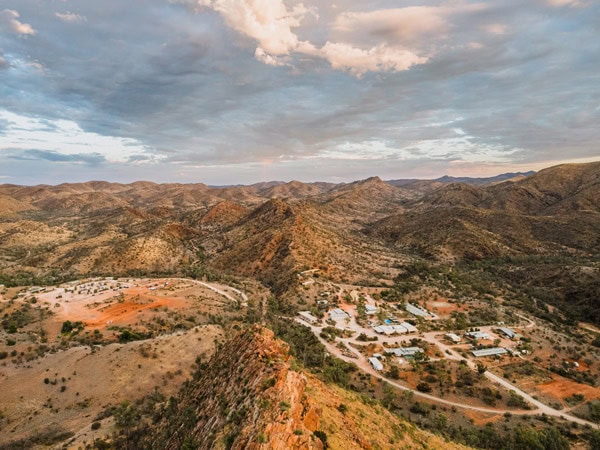
Nestled between several outcrops of deep red rock, Arkaroola Village is a sight for sore eyes after the long, dusty drive in.
A small shop, fuel bowsers (plus an EV charging station), and repair workshop take care of the essentials, while the timber-lined Pick & Shovel bar is the first stop for many visitors and kids will love the in-ground pool out back. The adjoining Native Pine restaurant is filled with artefacts from the property’s rich history and offers a traditional Sunday roast in addition to a range of pub classics. And be sure to visit the small room in the rear to see a collection of rare glow-in-the-dark minerals.
The rest of the village was clearly designed by someone who loves geology – there’s a gem cave, rock gardens and rock walls displaying the many types of local stone and how they were formed. A free museum is packed with astronomical and geological information, but most visitors are more interested in the viewing area out back. Every evening, yellow-footed rock wallabies from a nearby colony hop down to enjoy a free feed, presenting a rare opportunity to see these shy but beautiful mammals up close.
Arkaroola Ridgetop Tour
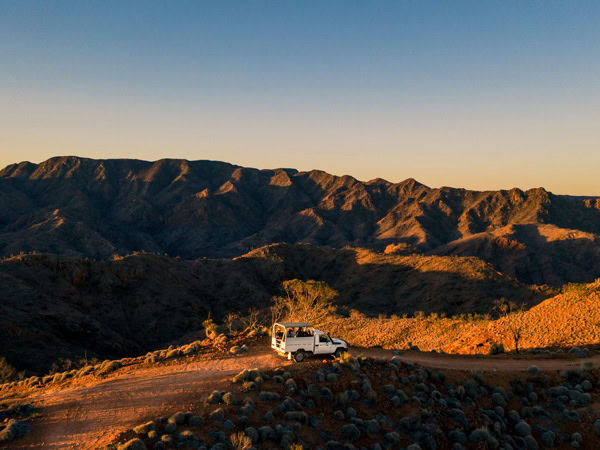
While the main body of the Flinders Ranges is defined by gorges snaking through a narrow line of sedimentary mountains, the passage of untold millennia has transformed the Gammon Ranges into a complex labyrinth of peaks and troughs. The rough-as-guts 4WD tracks here require tremendous skill to navigate, and the best way to get a feel for the region is from the seat of an open-top Landcruiser on the four-and-a-half-hour Arkaroola Ridgetop Tour.
While experienced guides wrestle their vehicles up the near-vertical trails forged by enterprising uranium hunters, you’ll be free to look out the sides and admire the wilderness of ancient mud volcanoes and jagged pyramids with silvery green foliage spilling down the sides.
Many of the creeks and ponds are carved so deep into the earth that they feel completely enclosed from the outside world, but as you climb upwards, you’ll start to catch glimpses of glittering salt lakes between the brick-red peaks. You might want to find something to cling to when the driver tackles a terrifyingly steep path up an exposed ridge to reach Sillers Lookout, but once up top, you can stretch your legs and enjoy some lamingtons and tea while marvelling at the incredible views created by the sheer 150-metre drop below.
Arkaroola Observatory
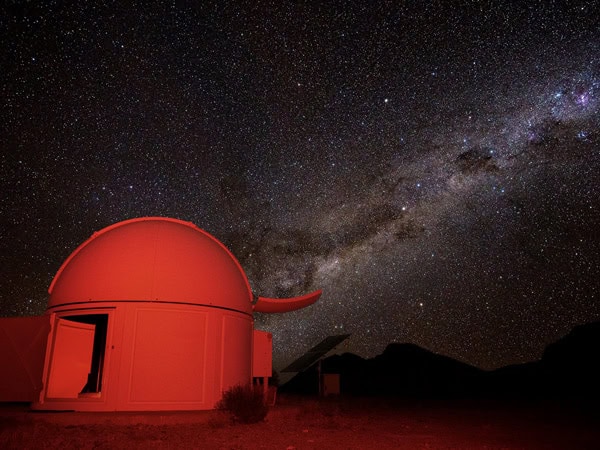
Tucked far away from the bright lights of any city (or even town), Arkaroola Wilderness Sanctuary offers plenty to do long after the sun has set, especially if you’ve timed your visit to coincide with the new moon. The lack of light pollution, arid climate and elevation make for some of the best night skies in the world, and NASA scientists access information from the Arkaroola Observatory daily. Fortunately, you don’t need to be a rocket scientist to enjoy this spectacular light show.
If you’re still finding your way around the cosmos, the 90-minute Under The Stars Stargazing experience includes comfortable reclining chairs and speciality astronomy binoculars so you can gaze at the heavens in comfort as you get your bearings. Or step things up on the Observatory Tour, which uses a high-powered telescope that can see far into the night sky and brings you up close to stars, planets and other celestial bodies. And if you prefer to stay inside, the Digital Astro Experience lets you enjoy a real-time digital representation of the night skies from the comfort of the Ningana Imaging Observatory.
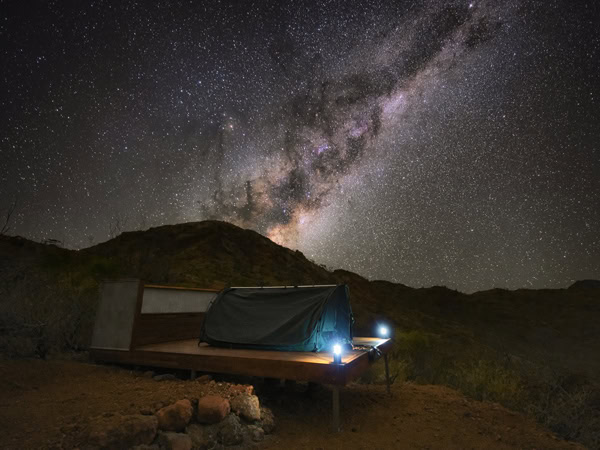
If you’re after a more exclusive experience, the Arkaroola Ridgetop Tour Sleepout takes you on a 4WD journey to a remote campsite where you can watch the landscape fill with colour over sunset drinks and sit down to a gourmet dinner around the campfire. Then you can spend the evening watching the night skies through a telescope before falling asleep on an open-air swag deck and waking up to sunrise from Sillers Lookout.
Getting to Arkaroola Wilderness Sanctuary
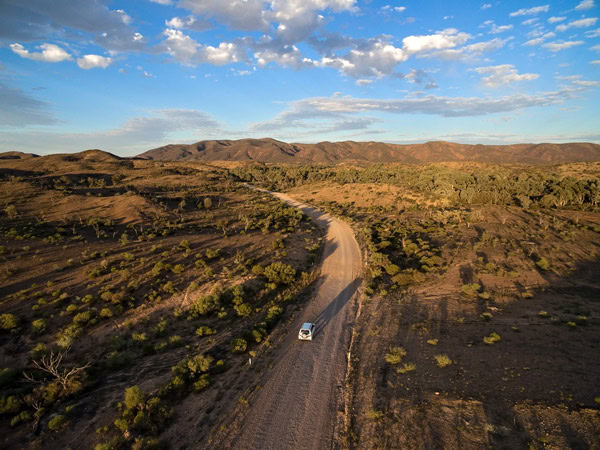
The 630-kilometre drive from Adelaide to Arkaroola Wilderness Sanctuary takes eight hours, so most visitors break up the journey with a stop in the Clare Valley or southern Flinders Ranges. The final section of the road is unpaved, and travellers have two main options. A 150-kilometre dirt track from Blinman passes through beautiful gorges and stark flatlands bordered by salt pans that provide a taste of outback adventure, while the 130-kilometre unsealed road from Copley is graded more frequently and passes the community of Nepabunna.
Either route can be driven with a 2WD, but a raised vehicle with 4WD will make the drive significantly more comfortable, especially as there is no phone reception if you run into trouble. A small shop at Arkaroola Village carries some basic supplies, but it’s a three-hour round trip to the nearest supermarket, so it’s vital to stock up on supplies ahead of time.
For more inspiration and itinerary tips, read our travel guide to the Flinders Ranges.