7 outdoor adventures to have in Tasmania

hero media
Where to go and what to do in Tasmania when you want to get really wild.

Outdoor adventure lovers have long flocked to Tasmania for its rugged landscapes, wild food, adrenaline-filled hikes and out-of-the-box festivals.


But for those who are yet to hit our great southern state, and are keen to unleash their thrill-seeker, here’s your ultimate guide to all things adventure.

1. Dark Mofo festival

Hobart’s mid-winter Dark Mofo festival is a culmination of all the wildest spirits from Australia and around the world, packed with visual and aural delights.


This year, outdoor adventurers flocked to the Dark Path, which became THE place for exploring the artistic installations and curiosities that surround the festival.


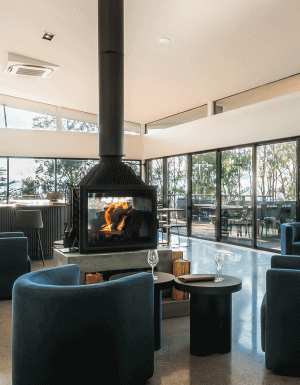
Highlights included the Talisker Wilderness Bar, where you could indulge in a warming seaside experience, taking the opportunity to cosy up in front of the fire with a warming hot toddy in hand.


And if you attended the festival’s last weekend, we hope you finished it the way God (and the organisers) intended: naked. Yep, held on Long Beach on the Derwent River, the annual Nude Solstice Swim is the most memorable way to cap off your Dark Mofo experience.

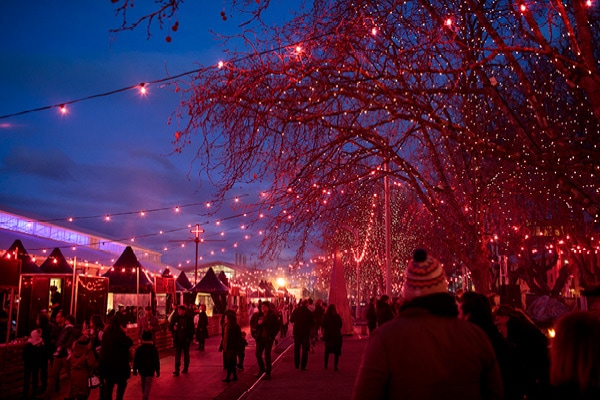
All Dark MOFO experiences are memorable
Watch as Hobart becomes one surreal sensory experience

2. Satellite Island

Ever dreamt on staying on your very own private oasis? If your answer is yes, now is the time to head to Tasmania’s delightfully isolated and luxurious Satellite Island.


Once a home to a reclusive poet and writer, it is now on offer as a dreamy coastal-luxe waterside retreat that sleeps up to eight guests.


Adventure seekers can take on the 1.5-hour walk along Satellite Island’s ancient Rock Shelf, immersing themselves in the location’s rugged landscape. Then, light a fire on the pebble beach, enjoy the sunset with a dram of whisky and watch the wild seals play.
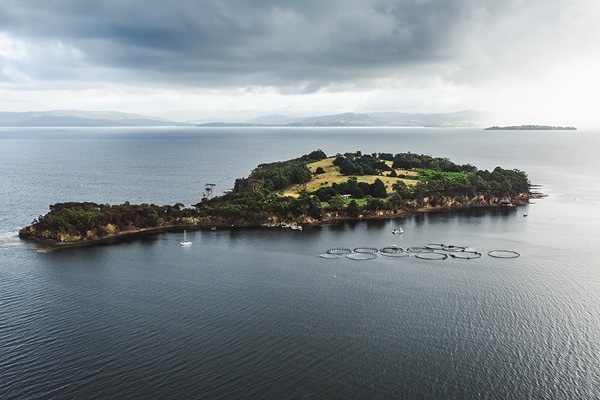
The alluring gloom of Satellite Island

3. Pennicott Wilderness Journeys

A trip aboard a Pennicott Wilderness Journeys boat is a must-do not only for adventure lovers but for just about anyone.


The Tasmanian Seafood Seduction tour voyages down the Derwent River. Along the journey, your guides will gift you with knowledge of its wildlife, scenery and deserted beaches. However, it’s when you dock that things get really memorable.


Not only will you be treated to some of the most incredible seafood in the world, but it will be prepared before your very eyes. Part of the experience will see your guide literally jump in the ocean and snorkel to catch your meal. Talk about farm to table.
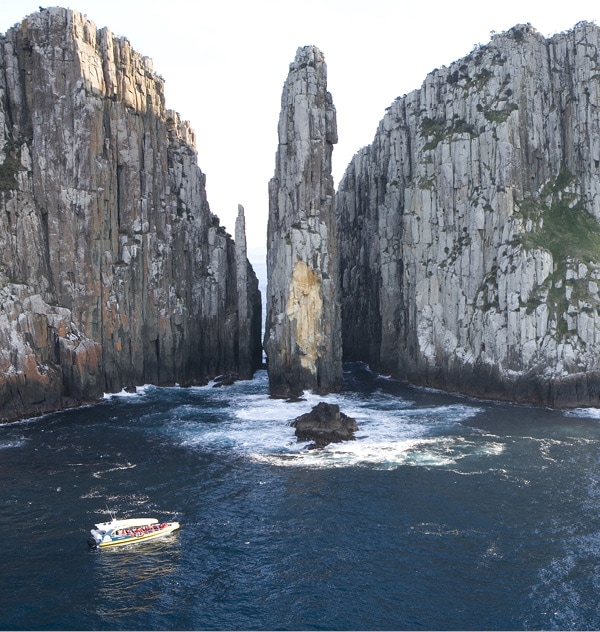
A Pennicott Wilderness Journey is as famous as Hobart itself

4. Get Shucked on Bruny Island

When Joe Bennett took a punt on an oyster farm on Tasmania’s Bruny Island (40 kilometres south of Hobart) he couldn’t have predicted how his pristine product would take off. Cultivating Pacific oysters, Get Shucked has been a real Bruny success story and a trip to Tasmania isn’t complete without a taste of its famous morsel.


Those in the know recommend engaging in the Talisker oyster ritual, which involves taking a sip of whisky, eating the oyster, then pouring a little whisky into the vacant oyster shell. The whisky gathers up the last of the briny seawater, creating an all-important cocktail of flavours. Thank us later.
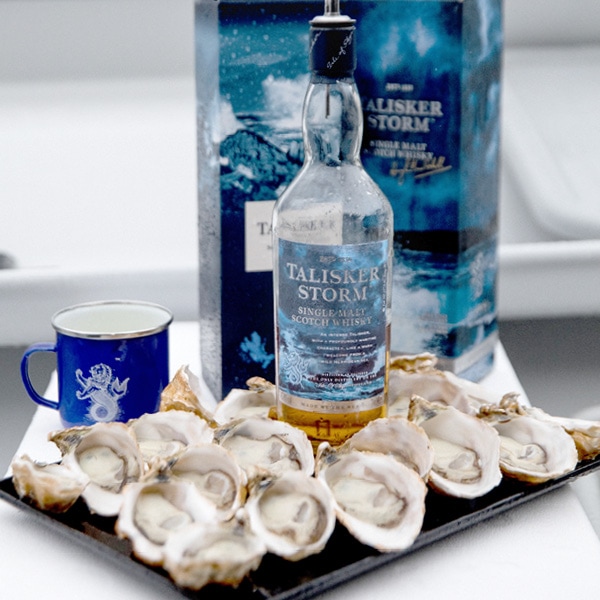
Indulge in a Talisker oyster ritual

5. Aurora Australis on Seven Mile Beach

The Northern Lights get all the love when it comes to natural light phenomena but did you know Australia has its own light show – the Aurora Australis?


Wanderers seeking a glimpse of the ‘Southern Light’ phenomenon should head to the South Arm Peninsula, 40 kilometres south-east of Hobart.


The area is surrounded by beaches with still, wide shallow bays: perfect conditions for capturing reflection shots with waves crashing in the foreground.

6. Walk the Overland Track

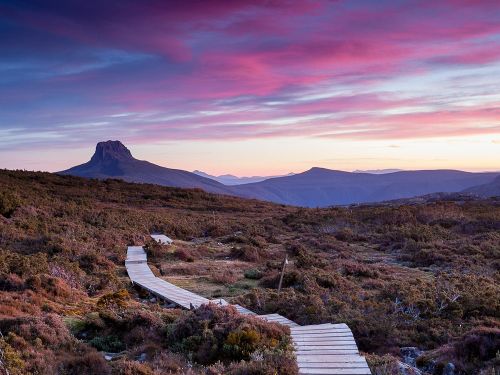
With a route of 65 kilometres tackled over six days, the Overland Track is the country’s superstar trek.


The trail is strictly managed on account of its popularity, so visitors will have to book in advance and pay a track fee to Tasmania Parks and Wildlife Service.


In the walking season from October to May, make your way from the base of Cradle Mountain to Lake St Clair passing through ancient rainforests, glacial valleys, meadows and a dramatic skyline of peaks.


This World Heritage area is stunning and encompasses many of the highest peaks in Tasmania. No one returns unchanged.
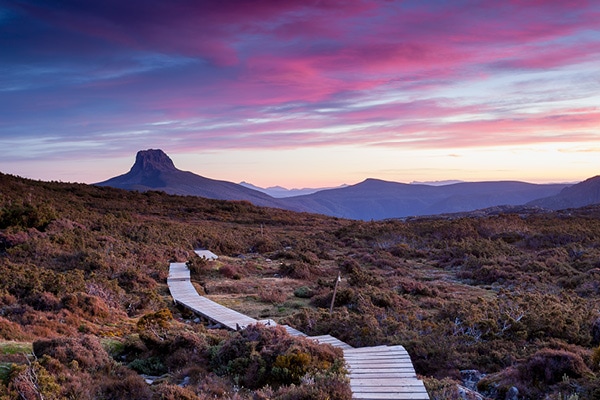
Walk the overland track

7. Kayak through Coles Bay

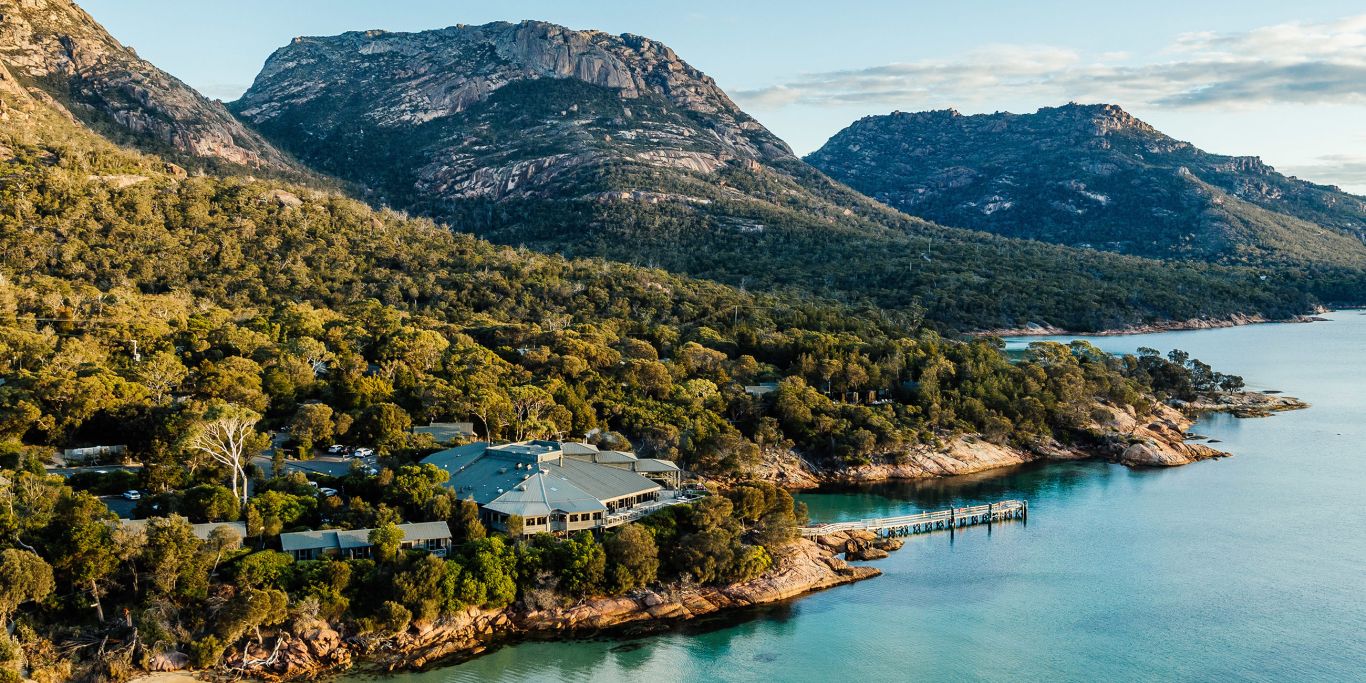
With a permanent population of just a few hundred, you’re sure to find enough room to explore Coles Bay at your own pace.


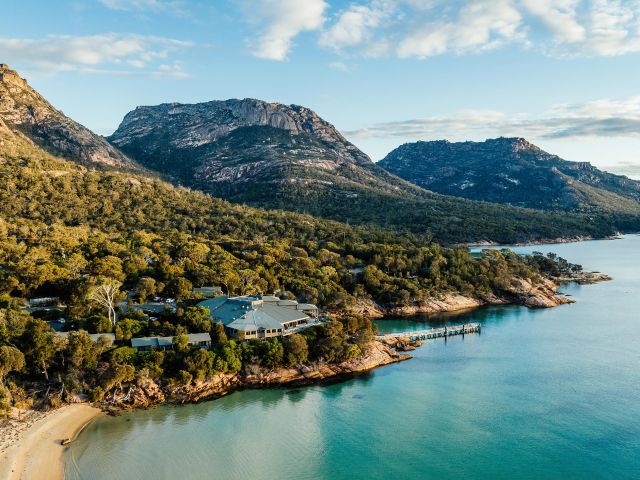
Pink granite mountains and dense bushland surround the bay, which makes the view from the water amazing, and sea kayaking is one of the best (and most adventurous) activities on offer here.


Watch out for a welcoming pod of dolphins while on the water, or the whales that pass by here on their migration north from Antarctica.
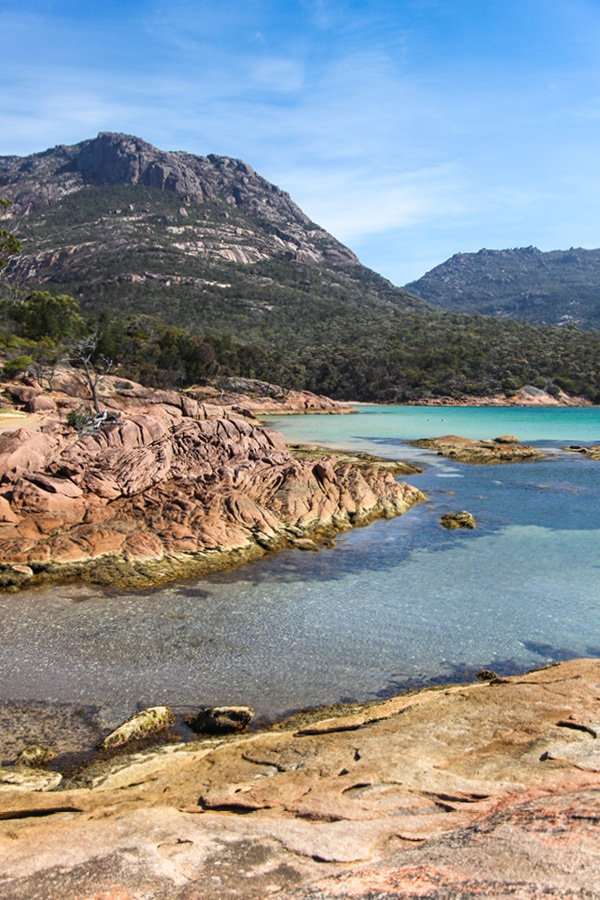
Explore Coles Bay at your own pace
Want to explore more of Tasmania? Here is our ultimate travel guide on the best stays, eats and experiences you can have in Tasmania.
hero media

New Norfolk is fast becoming the Apple Isle’s most charming small town

One of Tasmania’s oldest riverside towns is marking itself on the map with award-winning dining and creative spirit without forgetting its past.

On the banks of the Derwent, New Norfolk wears its history proudly: Georgian cottages, historic precincts and a trove of antiques hint at its early days. But this riverside town – just 30 minutes from the mad arty world of Hobart’s Mona in one direction and the bountiful nature of Mount Field National Park in the other – isn’t content with nostalgia.

With destination dining, a new wave of distillers and brewers, and creative energy reshaping its heritage buildings, New Norfolk is emerging as one of Tasmania’s most compelling small-town stories.

A quick history lesson

the Derwent River from Pulpit Rock Lookout
Views of the Derwent River and town from Pulpit Rock Lookout. (Image: Mauricio E. Mozo)

The town was established in 1807 on Leenowwenne Lands when military leaders and settlers abandoned the far-flung penal colony at Norfolk Island for then-called Van Dieman’s Land. Along with hops, salmon and timber, the town’s history is closely bound to the Willow Court Asylum, a convict hospital established in 1827 that grew into the nation’s oldest continuously operating mental health facility, closing only in 2000. The site’s vast footprint still dominates the town – a place layered with a difficult history but also with stories of healing.

the Willow Court, New Norfolk
The 1827-built Willow Court Asylum is a former mental health facility that you can tour. (Image: Tourism Tasmania/Rob Burnett)

Local guide Sharmaine Mansfield, who runs Willow Court Asylum Tours , is determined to keep that history alive. Her tours – historical by day, ghostly by night – approach the site with deep respect. “My number one priority is to be respectful of this former mental health institution and to those who lived and worked here. At night, we hold a minute’s silence to think of them.” It’s often then that guests report hearing and feeling things in the stillness of the evening.

A delicious new chapter

The Agrarian Kitchen from above
The Agrarian Kitchen is one of the country’s most lauded restaurants and cooking schools. (Image: Luke Burgess)

Within the Willow Court precinct, The Agrarian Kitchen continues to write a new chapter of history. One of Australia’s most celebrated restaurants has transformed a former hospital ward into a temple to Tasmanian produce. Since opening in 2017, the restaurant and its renowned cooking school have become a pilgrimage for food lovers, sealing the town’s place on Australia’s culinary map.

a close-up of a dish at The Agrarian Kitchen, New Norfolk
The produce from the garden is used in the dishes and for cooking classes. (Image: Stu Gibson)

Just outside, a walled garden is abundant with herbs, vegetables and fruit trees and is open for guided tours; its produce heads straight to the restaurant or neighbouring kiosk.

The Agrarian Kitchen detail, New Norfolk
The Agrarian Kitchen is a pilgrimage for food lovers. (Image: @PuddleHub)

A stay steeped in history

The Woodbridge, New Norfolk
The Woodbridge is one of the country’s grandest stays. (Image: Christine Aldred)

For a night dripping with history, The Woodbridge – one of the country’s oldest grand homes which this year celebrated its 200th birthday – offers a rare experience. Built by convicts in 1825 as the residence of the colony’s first constable, it now operates as a luxe heritage-listed hotel.

inside a suite at The Woodbridge, New Norfolk
The building was restored to become a hotel.

It feels like a gracious country estate. Behind an iron gate, a crunching gravel driveway on one side and sweeping lawns rolling to the river on the other. From my room’s terrace, I can peer beyond the tiered gardens across the Derwent to the original toll gate for passing merchant vessels or settle into inviting lounge and library spaces with a book or glass of muscat.

the river at Woodbridge, New Norfolk
Seek serenity by the river. (Image: Christine Aldred)

It’s happenstance this Tasmanian grande dame is still here at all, saved by its dedicated owners who spotted it on a holiday visit. The Woodbridge was teetering on the brink of destruction when Laurelle and John Grimley bought it in 2003. After an exacting, multi-year restoration, it’s been coaxed back to life.

a telescope at The Woodbridge, New Norfolk
Peer beyond the tiered gardens. (Image: Christine Aldred)

Today, modern comforts – elegant rooms, contemporary furnishings and new bathrooms – sit easily with the original blackwood floors, stone walls and Georgian-paned windows, complementing and respecting its rich history. Laurelle is well proud that the building’s future is now assured. “If we didn’t save it, who would? I feel this is my legacy,” she says.

Sourcing antique charms

inside the Flywheel boutique stationery store, New Norfolk
Flywheel is a boutique stationery store in town. (Image: Tourism Tasmania/Nick Osborne)

Known as the antiques capital of Tasmania, New Norfolk hums with history. Visitors can forage for hours at the sprawling Willow Court Antique Centre or the beautifully curated and styled Drill Hall Emporium in town.

inside the Flywheel letterpress studio in New Norfolk
Visit the letterpress studio in New Norfolk. (Image: Christine Aldred)

Books and coffee pair perfectly at Black Swan Bookshop on a sunny corner while The Quilted Teapot mixes lattes and lunches with quilting supplies. Don’t miss Flywheel , a stunning boutique stationery shop and working letterpress studio in an old bakery.

a bartender holding a glass of rum at New Norfolk Distillery
Sample rum at New Norfolk Distillery. (Image: Jess Curtis)

Thirsty travellers can taste-test award-winning rum at New Norfolk Distillery in a quirky industrial space with weekend snacks and sci-fi vibes, or sip craft brews at Welcome Swallow Brewery – an inviting microbrewery brimming with warmth and a veritable jungle of plants. History buffs shouldn’t miss the 1825-licensed Bush Inn, said to be the state’s oldest continually licensed pub. It’s also where the very first long-distance telephone call was made in Australia in 1888.

More reasons to visit

a group having a picnic during the Tasmanian Autumn Festival, New Norfolk
The Tasmanian Autumn Festival includes events and experiences across the region. (Image: Stu Gibson)

Each April, the Tasmanian Autumn Festival brings the region to life in a month-long celebration, with food and tipple trails, blacksmithing workshops or the chance to meet a highland cow or alpaca. Platypus spotting, pottery classes, glamping on a truffle farm, kayaking and vineyard visits are other Derwent Valley temptations, all close enough to make New Norfolk a natural hub.

And there’s more change afoot. The newly opened Bridgewater Bridge means easier road and river access. And within the Willow Court complex, the Nurses Quarters and Ladies Cottage are being meticulously restored to create an evocative event space with commercial kitchen, and boutique accommodation to follow. In this town, heritage is a living asset: respected but ever evolving into something new and inviting.