hero media

The ultimate guide to driving from Hobart to Launceston

Credit: Tourism Australia

Discover this scenic drive peppered with convict-built bridges, villages of honey-coloured sandstone and bakeries.

The road north from Hobart climbs through farmland, past stone cottages and paddocks dotted with sheep. It could be a quick drive – barely two and a half hours if you stick to the Midland Highway and keep moving. But anyone who’s spent time in Tasmania knows that rushing a drive like this would miss the point entirely.

Convict-built bridges, villages of honey-coloured sandstone, bakeries with scallop pies still warm from the oven. The Midland Highway, also known as the Heritage Highway, rewards the unhurried.

We left Hobart early – if you’re departing on a Saturday, Salamanca Market makes a fine send-off, 300 stalls of pastries, cheese and coffee ideal for stocking the car – takeaway coffees in the cup holders and a loose plan to stop whenever something interesting appeared. Rather than heading straight north, we crossed the Tasman Bridge and looped east through Cambridge and Richmond before rejoining the Midland Highway. It added time to the drive. It was absolutely worth it.

Cambridge
Coal River Farm, Hobart to Launceston
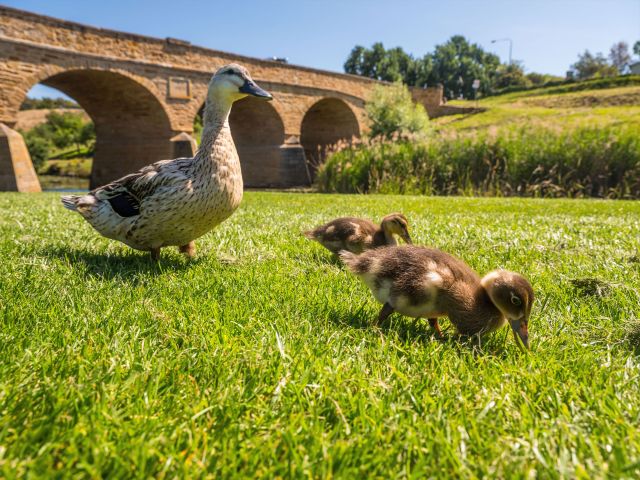
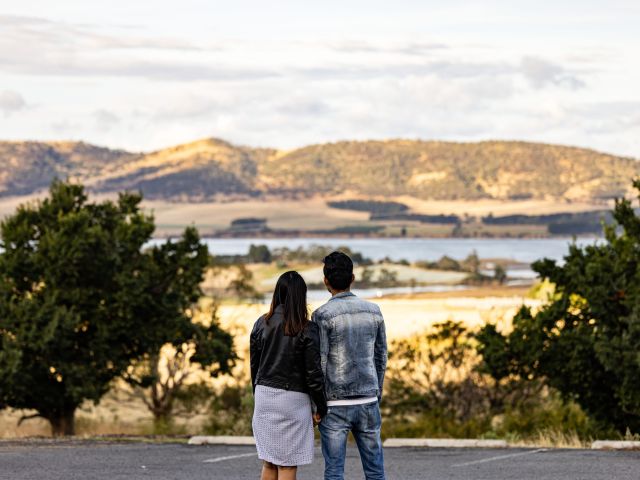
Admire the breathtaking view of Coal River past grassy, duckling-dotted knolls. (Credit: Tourism Australia)

Halfway between Hobart and Richmond sits Coal River Farm. It might be early, but when there’s a chocolate and cheese farm on the roadside, stopping is non-negotiable. Save room for the whole baked camembert drizzled with leatherwood honey and served with toasted sourdough and then wander the grounds while it settles.

Richmond
Richmond Bridge, Hobart to Launceston
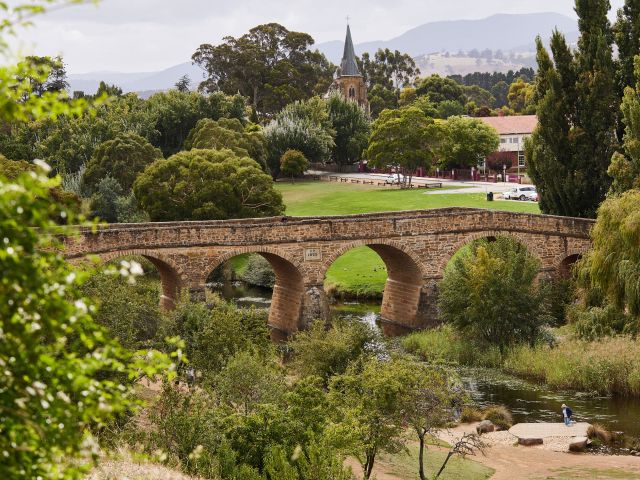
Stop by Australia’s oldest stone arch bridge. (Credit: Tourism Australia)

Just north of Cambridge the road rolls into Richmond, where honey-coloured sandstone buildings cluster around the Coal River and the smell of fresh pastry drifts from the bakery.

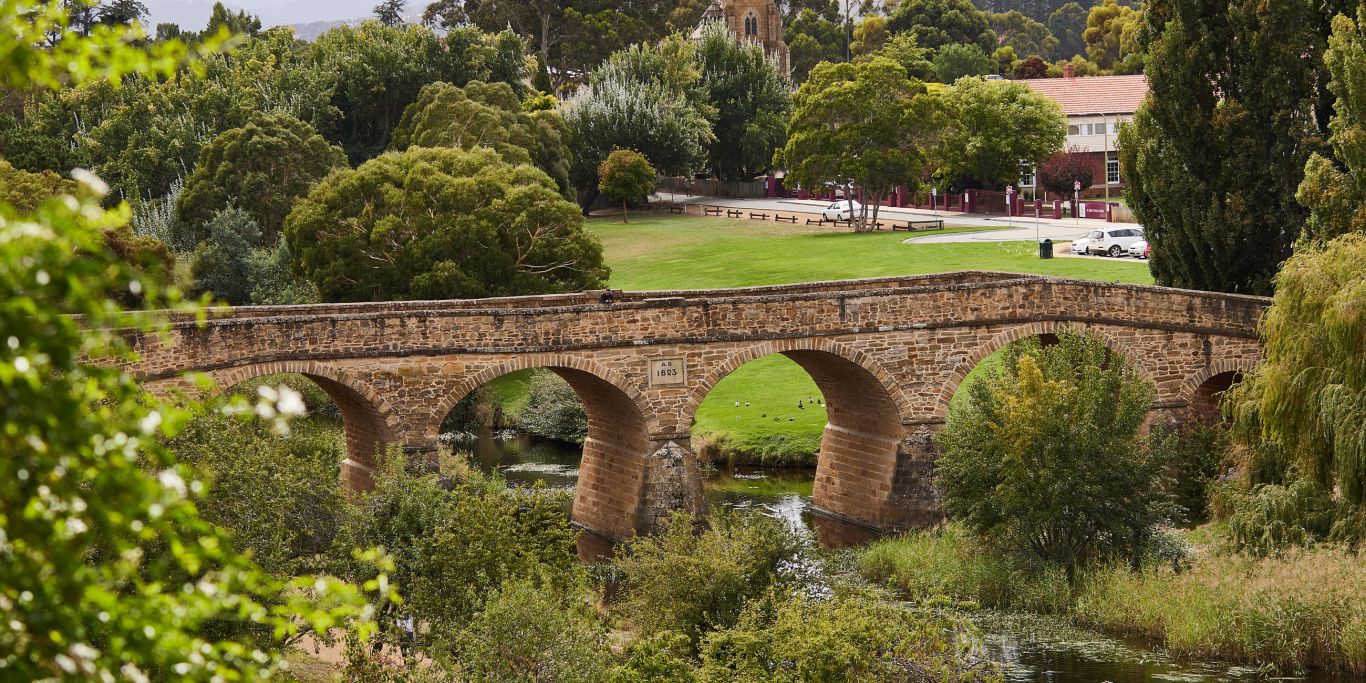
Start with Richmond Bridge, built by convicts in the 1820s and still the oldest bridge in Australia in use today. The graceful sandstone arches curve across the Coal River, where ducks glide beneath the bridge and locals linger on the grassy banks with coffee.

Then follow the scent of pastry to Richmond Bakery. The scallop pies here have achieved near-legendary status across Tasmania, and one bite explains why. Beneath the flaky golden pastry is a creamy filling of scallops in mild curry sauce.

Once you’ve eaten, wander through the village streets. Pop into Old Hobart Town, a meticulously detailed model village that recreates what Hobart looked like in the 1820s, complete with tiny ships in the harbour and miniature sandstone buildings.
Richmond Gaol, Hobart to Launceston
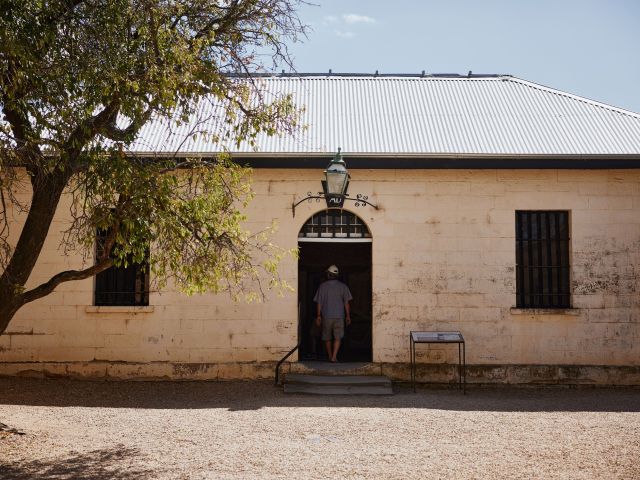
Richmond Gaol brings to life the compelling stories of 19th-century convicts. (Credit: Samuel Shelley)

For a glimpse into the harsher side of colonial life, step inside Richmond Gaol. Built more than 200 years ago, it’s one of Australia’s oldest surviving prisons. The thick sandstone walls, narrow corridors and solitary confinement cells make it easy to imagine how brutal life could be for the convicts once held here.

If you’re travelling with kids – or simply enjoy something a little offbeat – make time for the Pooseum. Yes, it’s a museum dedicated entirely to animal droppings. It sounds ridiculous, but it’s surprisingly fascinating. Owner Karin Koch happily explains the science behind it all, and the bathroom alone is worth visiting.

Kempton
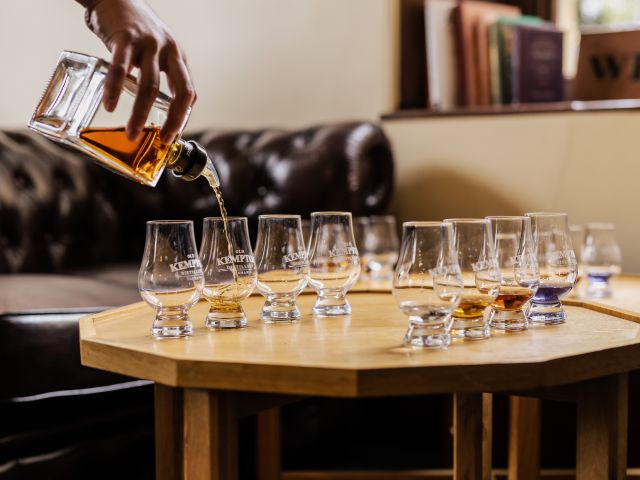
Old Kempton Distillery, Hobart to Launceston
Pop in for a whisky tasting at Old Kempton Distillery. (Credit: Tourism Australia)

Just north of Richmond, the route joins the Heritage Highway and rolls past Kempton – easy to miss, but hard to leave, especially if whisky is your thing.

The Old Kempton Distillery operates from a beautifully restored 1840s coaching inn, where small-batch whisky is distilled and aged on site using traditional methods. Stop in for a tasting flight, linger over the details of the old stone building, then browse the cellar door providor – it stocks local treasures like Olde Spikey Bridge peanut butter and Range Tasmania shortbread.
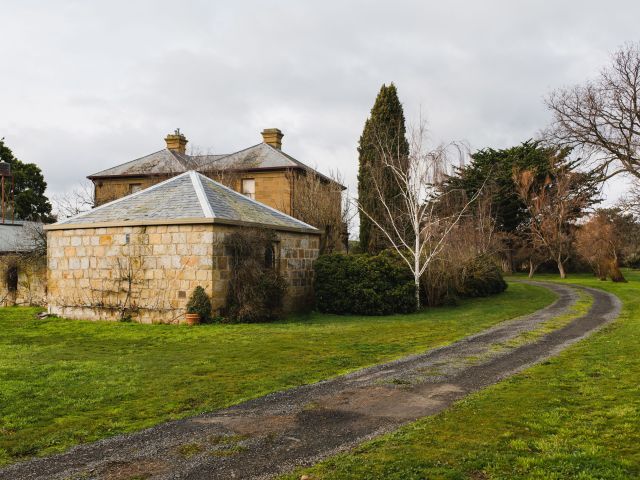
Belgrove Distillery, Hobart to Launceston
The first rye distillery in Australia is located within a working farm in Kempton. (Credit: Lusy Productions)

Just north of town, on the left side of the highway, Belgrove Distillery is doing things entirely on its own terms. Founder Peter Bignell grows his own barley and powers much of the operation on biofuels made from farm waste.

Need tips, more detail or itinerary ideas tailored to you? Ask AT.

AI Prompt

Oatlands
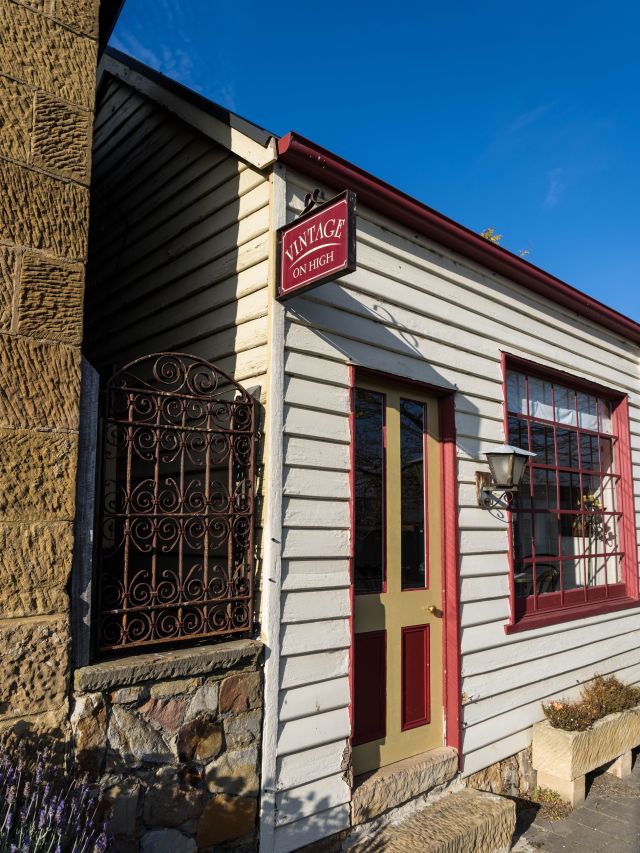
Vintage on High, Hobart to Launceston
Step into the charming Vintage on High cafe for homemade sausage rolls. (Credit: Alastair Bett)

Pull over and just look. More than 150 sandstone buildings dating to the early 1800s line the streets of Oatlands – making it one of Australia’s most intact colonial towns, and the kind of place where the streetscape alone justifies the stop.

Before exploring, duck into Vintage on High, a charming cafe furnished with antiques, where homemade sausage rolls and generous slices of cake have earned a loyal following.
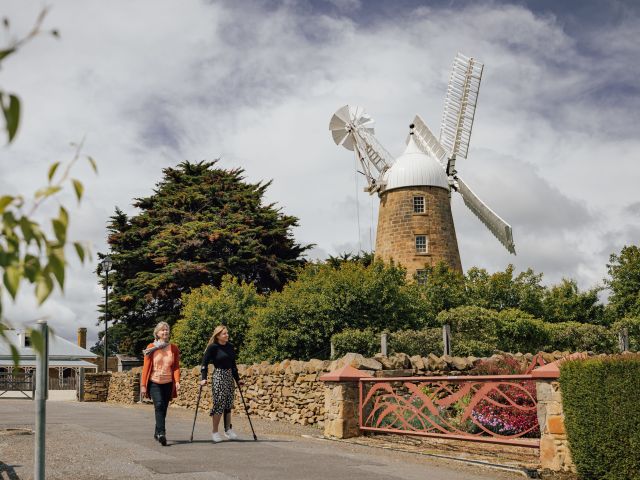
Callington Mill Distillery, Hobart to Launceston
Explore Australia’s third-oldest windmill. (Credit: Dearna Bond)

Rising above it all is Callington Mill, a commanding windmill built in 1837 and the only working mill of its kind in the Southern Hemisphere. Beside it, Callington Mill Distillery transforms locally grown grain into excellent Tasmanian whisky – stop in for a tasting or settle in for lunch with the mill as your backdrop.

Before leaving town, take a loop around Lake Dulverton. Along the water’s edge a series of sculptural cows peeking above the lake’s surface – a surreal scene that catches most visitors off guard.

Ross
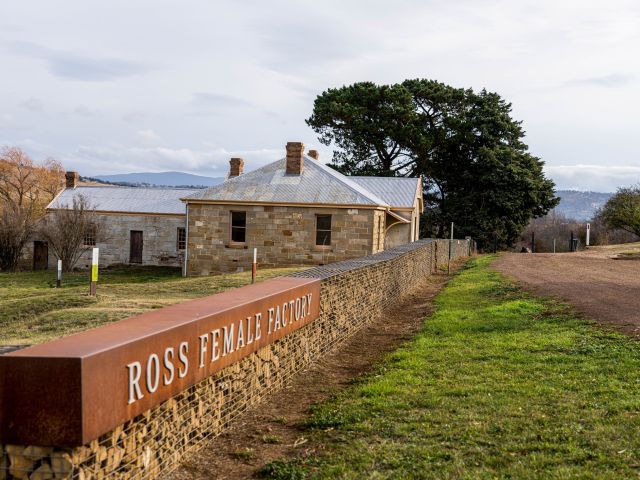
Ross Female Factory, Hobart to Launceston
The female-built factory used to house convict chain gangs employed on the Ross Bridge. (Credit: Alastair Bett)

Of all the stops on this drive, Ross is the one most likely to make you consider moving to Tasmania permanently. Elm-lined streets, honey-coloured Georgian buildings, a bridge covered in convict carvings, it feels barely touched since the 19th century.

The town’s most celebrated landmark is Ross Bridge, built in 1836 and covered in extraordinarily detailed sandstone carvings, 186 of them, depicting animals, Celtic motifs, local personalities and even the convict stonemason who made them, Daniel Herbert, whose skilled work reportedly earned him a pardon.

Just beyond the bridge, Ross Female Factory stands as one of Australia’s best-preserved convict sites. Walking through its stone ruins offers a powerful glimpse into the lives of the women transported here during the colonial era.

At the centre of town, the Four Corners of Ross intersection once mapped out a colonist’s moral universe: salvation at the church, damnation at the gaol, recreation at the town hall, temptation at the pub. If temptation wins – and it might – the Ross Hotel serves a Ross Burger that justifies the detour entirely.
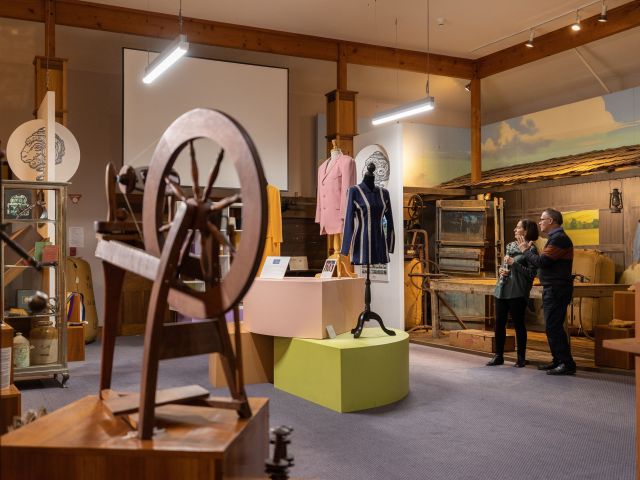
Tasmanian Wool Centre, Hobart to Launceston
Tasmanian Wool Centre is a world-renowned institution that fuels the region’s pastoral heritage. (Credit: Tourism Australia)

Wool lovers should save time for the Tasmanian Wool Centre, where the story of the region’s pastoral heritage is told alongside racks of merino knitwear so soft it feels almost unreasonable.

Weekly travel news, experiences
insider tips, offers, and more.

Campbell Town
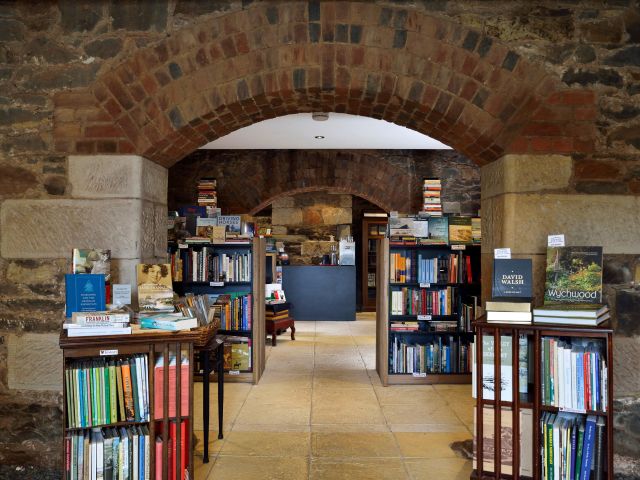
The Book Cellar, Hobart to Launceston
Score a good read paired with coffee at The Book Cellar. (Credit: Chris Crerar)

History runs deep in Campbell Town, and the best place to feel it is at Red Bridge, an imposing structure built in 1838 from more than 1.5 million locally fired bricks, designed by convict engineer James Blackburn.

After exploring the bridge, duck into The Book Cellar for coffee and a browse – a genuinely lovely bookshop tucked into the sandstone cellars of a former coaching inn dating back to the 1830s, where it’s very easy to lose an hour without noticing.

Longford

the magnificent gardens at Woolmers Estate
Wander the magnificent gardens at Woolmers Estate. (Credit: Tourism Australia)

A detour west rewards with two of Tasmania’s most significant historic estates. Woolmers Estate and Brickendon Estate – both UNESCO World Heritage-listed – preserve some of Australia’s most significant convict-era history, with beautifully intact homesteads, farm buildings, and gardens that feel untouched by the intervening centuries.

Perth
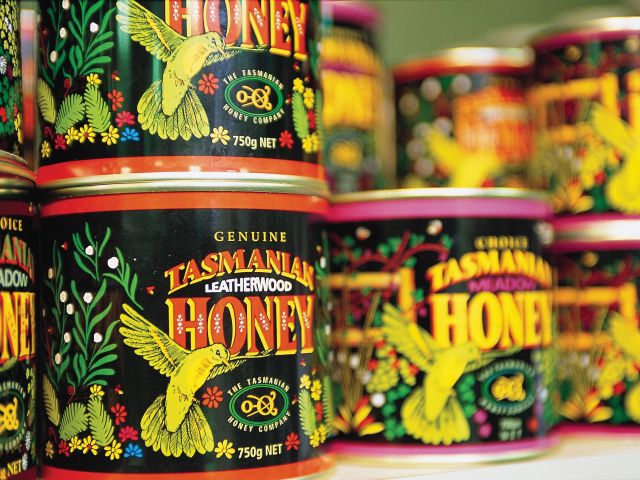
leatherwood honey at Tasmanian Honey Company
Sample the divine leatherwood honey at Tasmanian Honey Company. (Credit: Tourism Tasmania & Nick Osborne)

Blink and you’ll miss it. Just south of Launceston, the small village of Perth is easily overlooked and shouldn’t be. More than 30 heritage buildings line the streets – old inns, churches and elegant sandstone homes – making it one of Tasmania’s most intact Georgian streetscapes.

Stop at the Tasmanian Honey Company to taste leatherwood honey, one of Tasmania’s most distinctive flavours. Nearby Southern Sky Cheese turns out handcrafted cheeses and a truffled butter so good it borders on indulgent.

Launceston
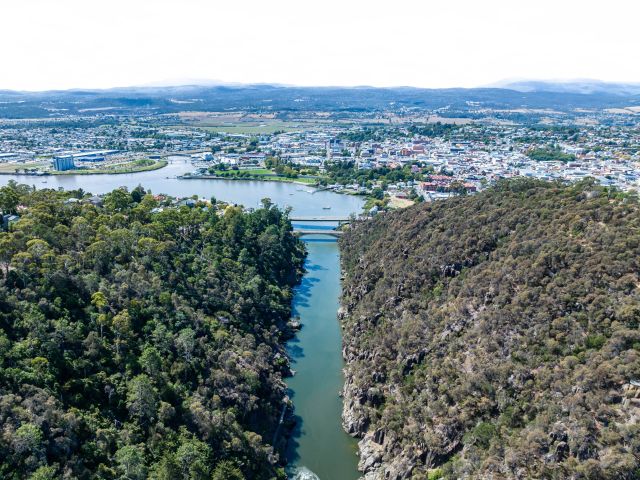
Cataract Gorge from above
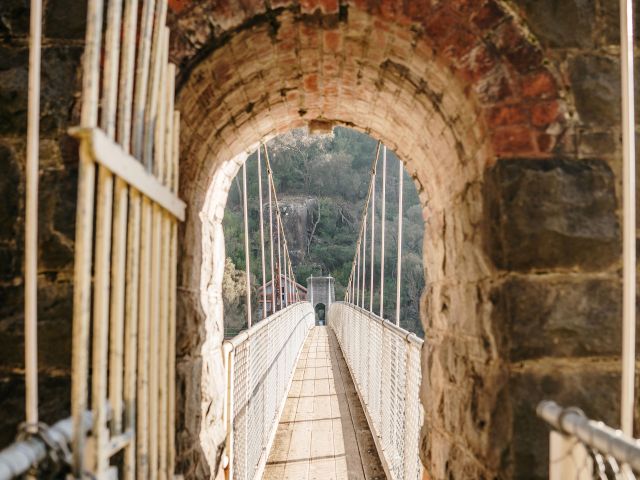
Cataract Gorge is surrounded by towering gum trees. (Credit: Krista Eppelstun)

And then, after a day of unhurried stops and discoveries, the Heritage Highway delivers Launceston. Check in, exhale and let the city take over. Evenings here tend to revolve around exceptional food and drink – the local produce culture is serious and the pubs have a warmth that makes a nightcap or two feel entirely justified.

Heading the other way? Discover what it’s like to travel from Launceston to Hobart by coach

Leah McLennan
Leah McLennan is a freelance writer based in Darwin. She was a journalist in Sydney for over a decade and counts her time as travel editor for Australian Associated Press as one of the highlights of her career. From exploring remote campsites in the Top End with her family, to seeking out new art galleries in faraway cities, she’ll grab an adventurous or arty travel experience within her reach.
View profile and articles
hero media

5 of the best day trips from Hobart

    Rachel Lay Rachel Lay
    Hobart has quietly become our coolest capital, but the real wonder lies just beyond the city limits.

    In the cool shade of Kunyani/ Mt Wellington, Hobart has earned a reputation. Home to culture-defining Dark MOFO, the city blends rugged, raw wilderness and rule-breaking galleries. But, step beyond the thrumming capital’s border and you’ll find a new perspective: historic towns, Jurassic-era cliffs and a UNESCO City of Gastronomy. With ALL Accor as your home away from home, fill your days with epicurean odysseys and wild scenery on the best day trips from Hobart.

    Where to stay

    Behind every good road trip is the perfect home base. Somewhere central to review your camera roll, make the most of Hobart’s dining scene and relax before setting off again.

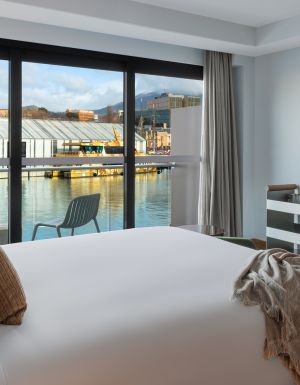
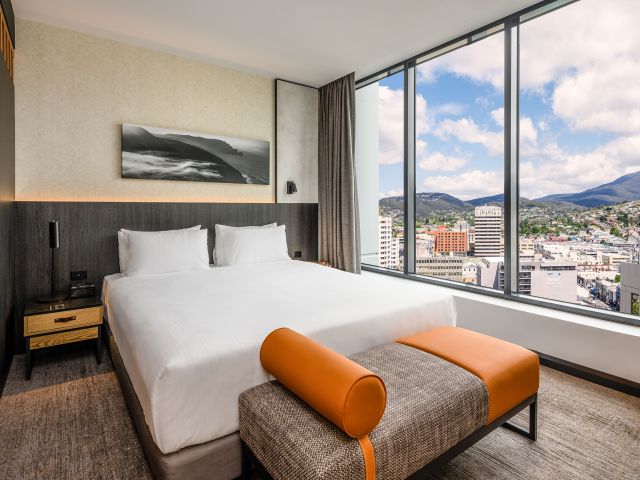
    For modern, Tasmanian-inspired design, book a stay at the Movenpick Hotel Hobart. Standing at the Salamanca Markets, look to the Hobart skyline and the award-winning hotel will catch your eye. As the third-tallest building in the CBD, the views across the harbour toward Antarctica are totally unique to your room. Here, end each day at the daily free chocolate hour (plus a free Movenpick ice cream for the little ones).

    For a more budget-conscious option, head to the picture book, sandstone buildings of Macquarie Street. Nestled along the buzzing, historic streetscape, you’ll find Tasmania’s biggest hotel: the Ibis Styles. Return home each day to defrost in one of the hotel’s two saunas. Make use of the proximity to MONA, or take an easy stroll to the candy-coloured cottages of Battery Point between your adventures.

    A stylish, Tasmanian-inspired bedroom at Mövenpick Hotel Hobart, your perfect base for relaxing after the best day trips from Hobart.
    Elevate your Hobart stay with sleek style at Mövenpick.

    1. Bruny Island

    Craggy cliffs and tropical-hued, white sand beaches signal your arrival to Bruny Island/ Lunawanna-Alonnah.

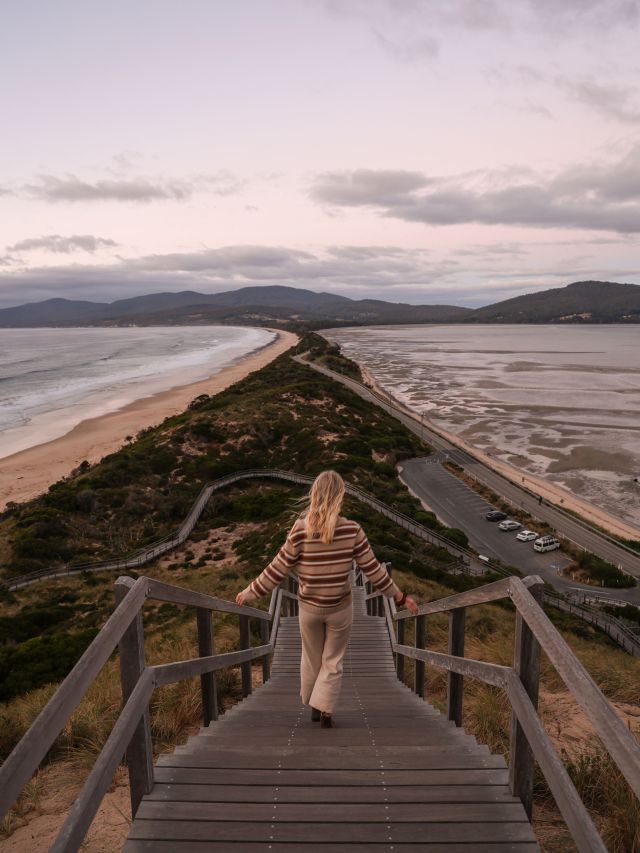
    Start your day trip at the island’s most iconic spot, the Neck Game Reserve. Scale the Trunganini steps to gaze out over the teensy stretch of land that juts through the sea connecting the two ends of the island.

    Catch a rare glimpse of the white furred wallabies that call Bruny Island home at Adventure Bay. Then, for ocean-fresh oysters, pull into the drive-thru window at Get Shucked. Sample Bruny Island cheese at the cellar door before catching the ferry home with an esky full of local produce.

    Bruny Island Neck is an isthmus of land connecting north and south Bruny Island.
    Begin your adventure with a climb and a view. (Image: Elise Weaver)

    2. Mount Wellington

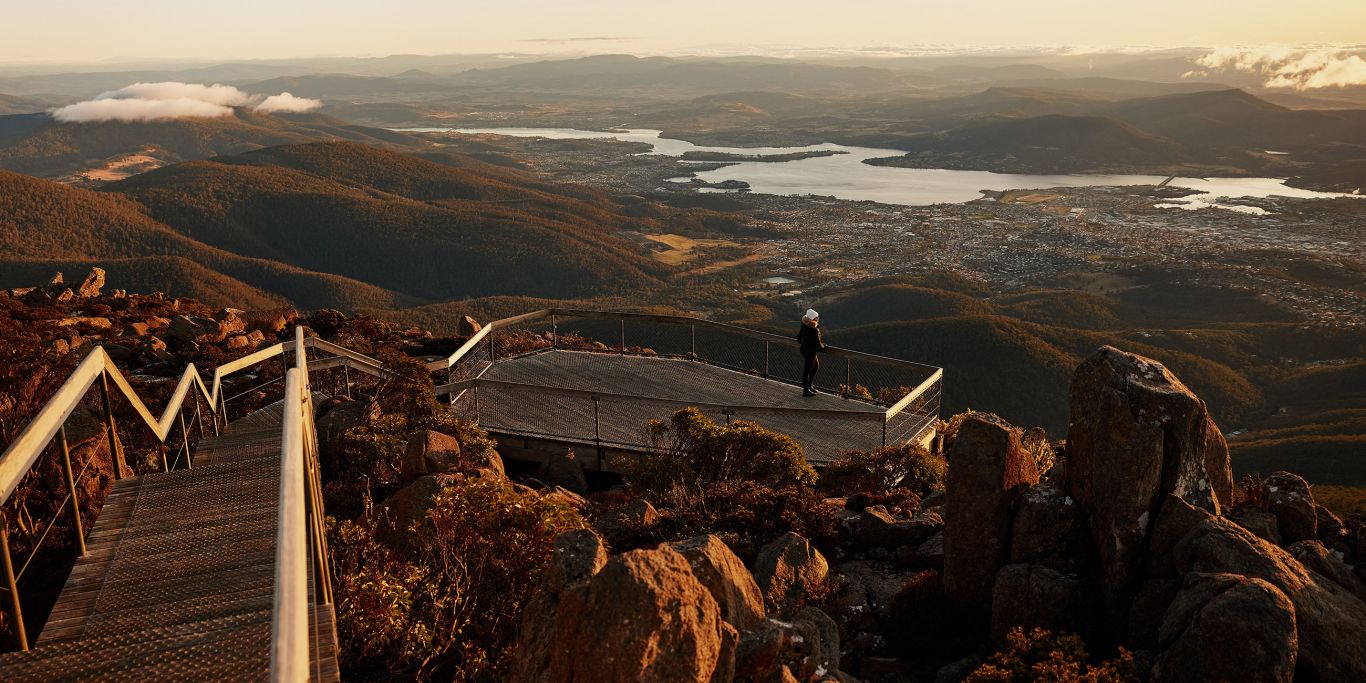
    At 1271 metres, Mount Wellington watches protectively over Hobart. Follow the winding road to climb through alpine forest and tufts of snow to reach the summit. Gaze down over Hobart and out to sea, or over your shoulder to the southwestern wilderness.

    Reset your adrenaline with a mountain bike ride back down. Or, make like the locals and head into the mountain on foot. Try the hike to the Jurassic-period Organ Pipes which slips under the mountain’s magnificent dolerite cliffs (perfect for families thanks to the trail’s minimal incline).

    For a view of Mount Wellington itself, hike nearby Cathedral Rock.

    No matter where you are in Hobart you are never far away from the City's beloved mountain, Kunanyi / Mount Wellington
    Climb through alpine forest to the summit. (Image: Paul Flemming)

    2. Port Arthur

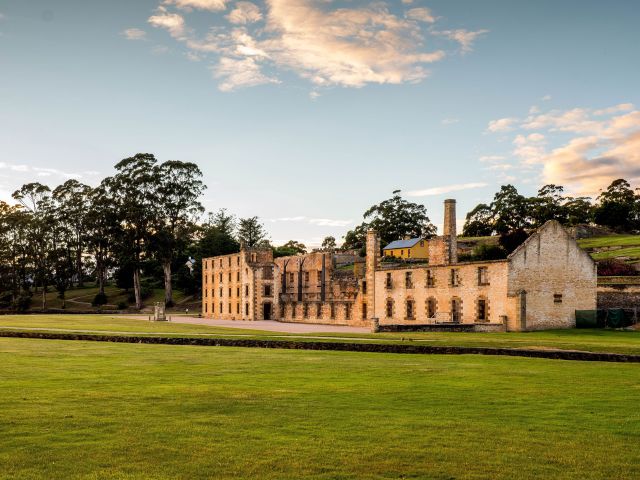
    Constructed entirely by convicts, the manicured gardens and penal buildings of Port Arthur offer a day trip that practically hums with history.

    The rugged, seagirt location was chosen for its difficult escape conditions. Now, you can cruise the coast below the towering, jagged cliffs of the Tasman National Park or wander the sloping fields of fragrant lavender.

    Tickets to Port Arthur include a walking tour and harbour cruise. See the Isle of the Dead where 1000 men are buried in marked and unmarked graves. And Point Puer, Britain’s first prison for children.

    The Port Arthur Historic Site is one of Australia's most important heritage sites and tourist destinations. Located on the scenic Turrakana / Tasman Peninsula in the south east of Tasmania, it offers a unique and essential experience for all visitors to the area.
    Wander convict-built grounds and gardens. (Image: Dearna Bond)

    3. Launceston

    You’ll find Launceston at the confluence of three rivers after an easy 2.5-hour drive from Hobart. Launceston is a patchwork of old and new. Here, heritage streetscapes meet modern architecture.

    Visit Cataract Gorge, the green, sun-dappled heart of the town and sacred meeting point for Tasmania’s indigenous communities. Pull up at roadside produce stalls that dot the Tamar Valley, or dine out. Launceston is, after all, a UNESCO City of Gastronomy.

    Should the local wine scene persuade you, simply extend your time in Launceston at Peppers Silo (but definitely at least stop by the onsite restaurant, Grain of the Silo, for a farm fresh menu) or Mercure Launceston before heading back to Hobart.

    Walk the sunlit paths of Cataract Gorge. (Image: Nick H Visuals)

    4. Bonorong Wildlife Sanctuary

    Take a 35-minute drive from your hotel and you’ll find Bonorong Wildlife Sanctuary. This social enterprise is run by a team of extremely passionate Tasmanians with a mission to look after critically endangered species who have found sanctuary here after facing extinction on the mainland.

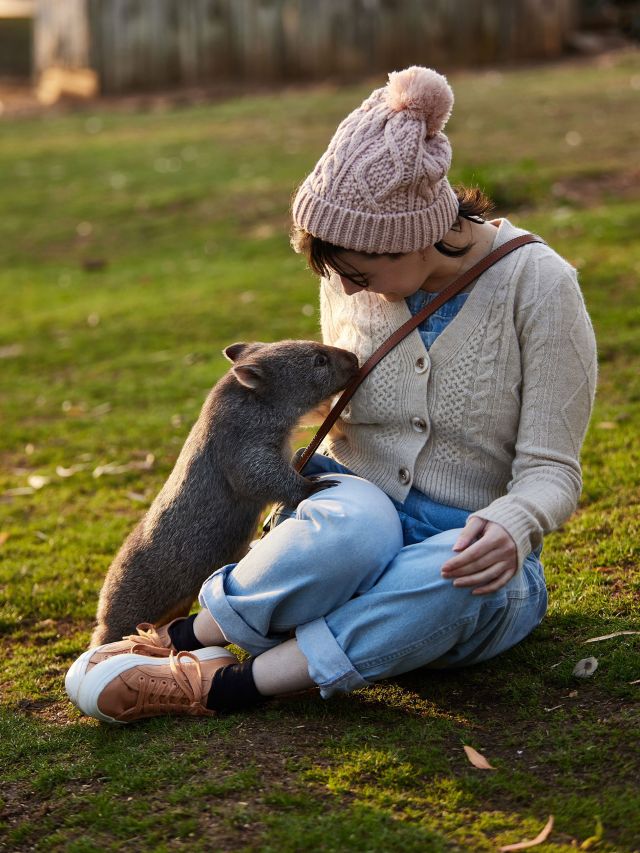
    Choose to wander the sanctuary at your own pace or join a guided tour (free with your ticket) to come face to face with Tassie’s most iconic species. Tasmanian Devils, wombats and echidnas are part of the free tour. You can book up close encounters with your favourite animals, too.

    Bonorong is a Sanctuary for wildlife run by a passionate team of like-minded people. We're a social enterprise: a little business with a big heart.
    Snap a cuddle-worthy encounter. (Image: Tourism Australia)

    5. Richmond Village & Coal River Valley

    Richmond is a town that belongs in a snow globe. Fifty colonial-era, Georgian buildings have been painstakingly restored and turned into cafes, cosy restaurants and galleries. Visit Richmond Gaol, said to be the home of a prisoner so vile he inspired Charles Dickens to pen Oliver Twist’s Fagin.

    Then, follow the Coal River as it flows past grassy, duckling-dotted knolls and under the iconic Richmond Bridge, the oldest bridge in Australia. From the crest of the bridge, see the oldest Catholic Church in Australia. The river crawls past many cellar doors, perfect for a day of wine tasting.

    Richmond is a picture-perfect town in the Coal River Valley wine region, offering a glimpse into early colonial life, one of the best day trips from Hobart.
    Trace the river through history and wine country. (Image: Fin Matson)

    Plan your trip to Hobart and beyond with ALL Accor at All.com.