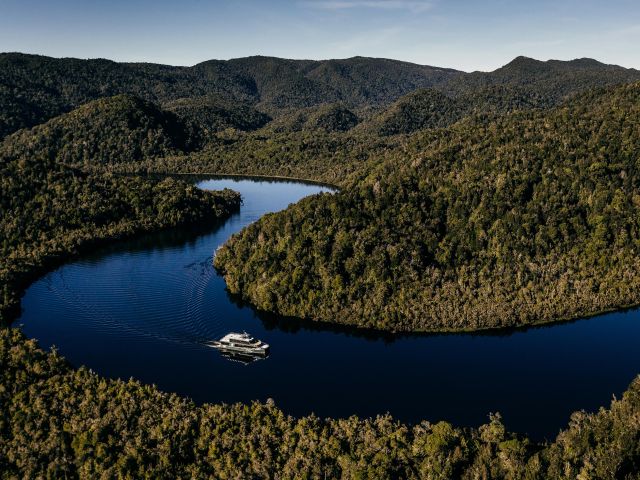

Between untamed rainforests and quiet coastal towns, this north-west corner of Tasmania is where wild beauty and gentle warmth intertwine.
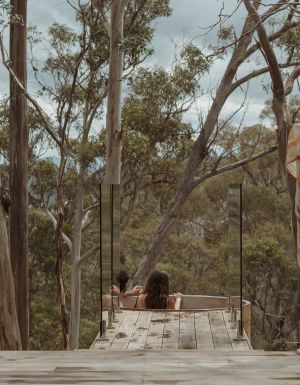
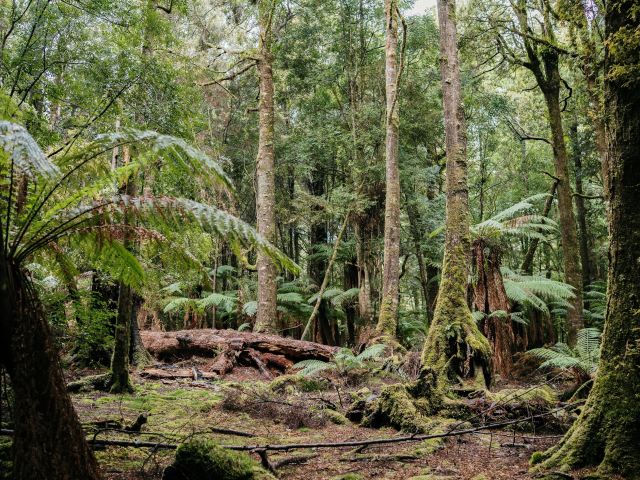
In the largest cool-temperate rainforest in Australia, the term ‘blink and you’ll miss it’ doesn’t seem fitting. But that’s exactly what happens to me as I trudge along a damp, leaf-littered track in the heart of the Tarkine/Takayna. Lost in my own rhythm, it takes me a few moments to notice the sudden absence of footsteps behind me. I turn to find the rest of my group frozen in place, their gazes fixed on the ground. Our guide, Rob Saltmarsh of Tall Timbers Adventure Tours, is kneeling down beside them, pointing at the slick bark of a fallen branch.
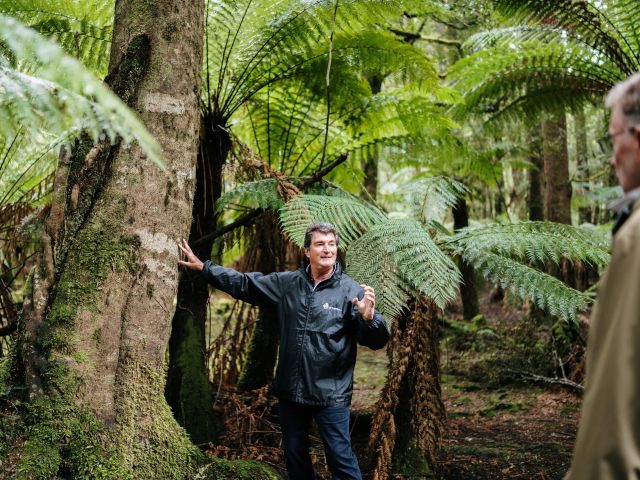
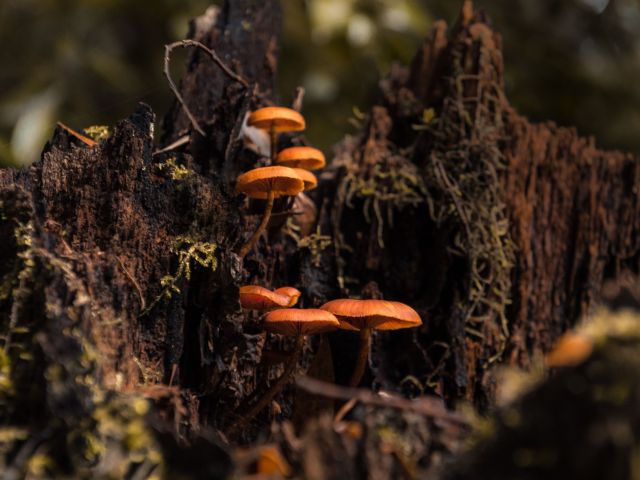
“This is a hygrocybe firma," he says, gesturing to a tiny, cherry-red button sprouting from the splintered log. “A very common mushroom in these parts, but she’s rarely ever seen." He flashes a cheeky grin in my direction. The domed waxcap glistens like a waterdrop against the dark wood, impossibly small in a place that seems designed to overwhelm. It’s the kind of thing you could easily walk past – especially if you’re a never-sit-still Type A from Sydney who measures life by the minute hand. The miniature mushroom is a quiet reminder to slow down, that small joys are missed not when we blink, but when we fail to look.
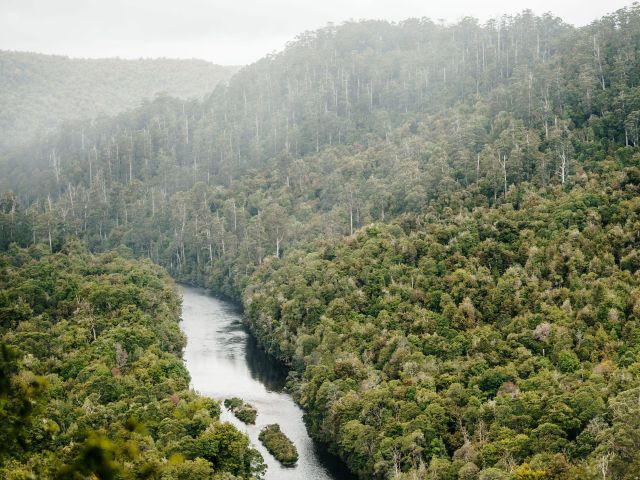
Deep in Takayna, something ancient seems to swallow you whole. The stillness hums with an energy that makes you lower your voice without knowing why. Every sound feels amplified, as if the forest itself is listening. Even my breath feels too loud, too modern for somewhere this old.

Beauty often lies in details: the sound of a single droplet hitting a lower leaf; the scent of freshly fallen rain clinging heavy to the air; the soft give of moss under a delicate touch. But, as I kneel on the sodden earth next to Rob, damp seeping through the fabric of my tights, I know the forest’s wild spirit extends far beyond the trees around us. It runs through every vein of Tasmania’s north-west corner – along its wind-battered coastlines, through its salt-licked towns and in the eclectic collection of people who call it home.
The tiny fishing village home to Australia’s best seafood
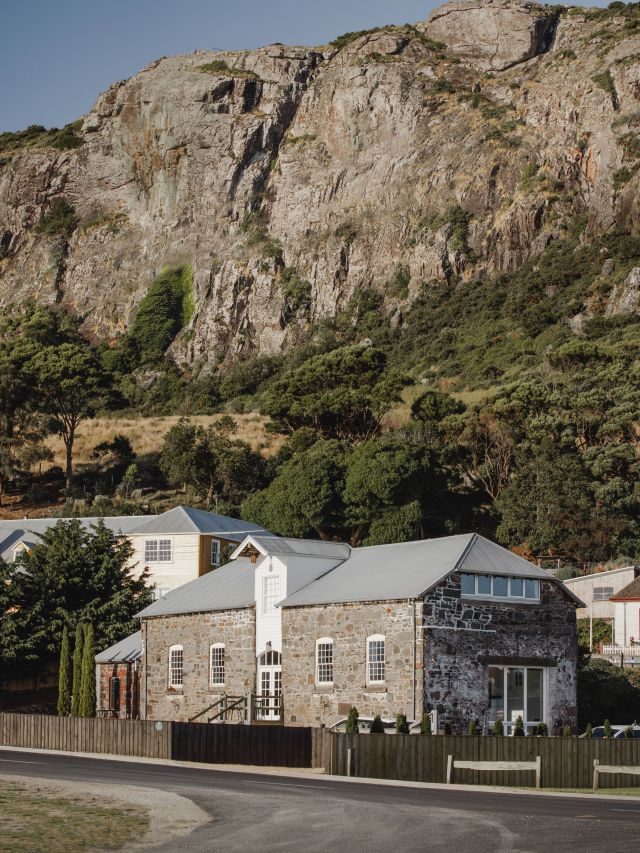
Few places blur the line between coast and country quite like Stanley. The secluded fishing village sits on a tiny peninsula jutting into the Bass Strait, where the steady pulse of the sea and quiet rhythm of farm life exist in gentle harmony. Trawlers share space with tractors. The sound of crashing waves lull Cape Grim cows to sleep. I arrive on an overcast afternoon in April, the mid-autumn chill biting harder this far south.
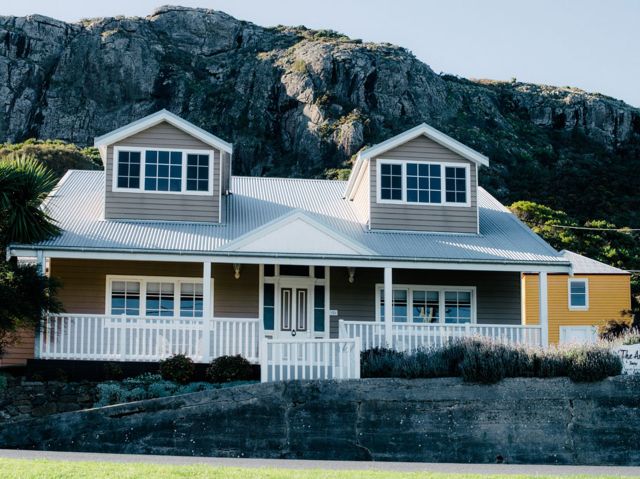
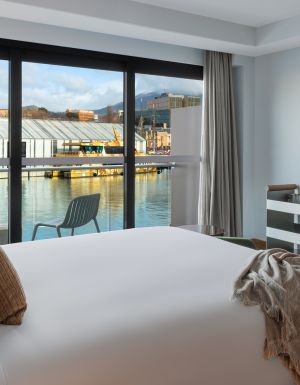
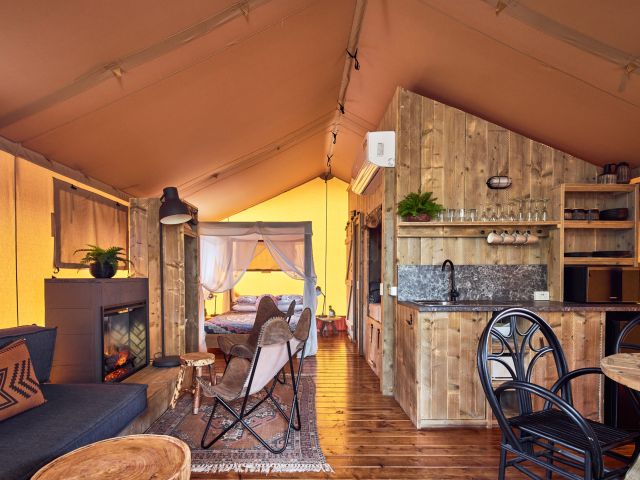
But warmth finds me once I spot Christer and Rhonda Sundell waving from the porch of The Ark, my home for the next three nights. Like so many who find themselves here, the pair fell for Stanley while on holiday over 17 years ago. After spotting a house for sale, the couple bought it on a whim and spent the next three years restoring it before welcoming their first guests in 2011. Fourteen years on, they greet me with the same open-hearted sincerity. Although the restored residence has five private rooms, I have the entire bed and breakfast to myself. Rhonda shows me to the Admiral Suite upstairs, complete with queen bed, retro furnishings and Swedish decor from Christer’s homeland.
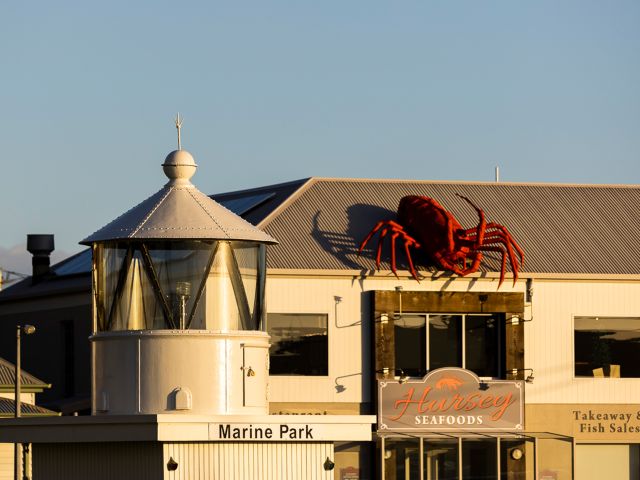
I spend a quiet hour on my balcony overlooking Tatlow’s Beach, a cup of tea and book in hand, before rugging up for the short walk to Hursey Seafoods – our dinner spot for the evening. The family-run restaurant has been fishing in Tassie’s north-west waters for three generations, hauling its daily catch in via the bright red trawlers moored just outside.

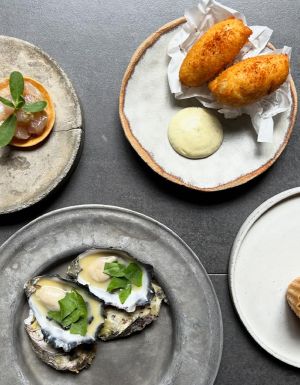
Named Australia’s best seafood restaurant at the 2024 Seafood Industry Awards, Hursey’s champions a tide-to-table philosophy that even those averse to the ocean’s flavours like myself can appreciate. We order for the table, where my fork finds its way back to the stripey trumpeter time and again. Impossibly fresh, the flaky fish needs nothing more than a squeeze of lemon and spoonful of tartar sauce. Buoyed by confidence, I brave the grilled scallops with saltbush butter and even sample the abalone – a small gesture of surrender to the slow but certain sway of Stanley.
Need tips, more detail or itinerary ideas tailored to you? Ask AT.
AI Prompt
Exploring the Tarkine in a day
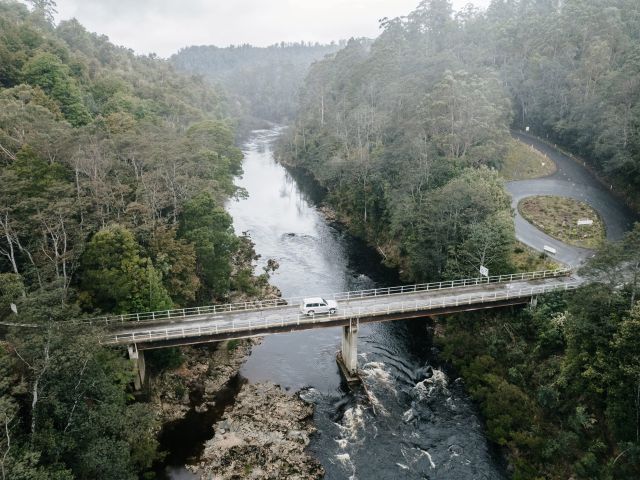
From the depths of the rainforest, the Tarkine unfolds dramatically to the Southern Ocean. Trees turn into dunes, moss into sand, and the damp smell of soil is replaced with the sharp tang of salt. West Point drips with isolation and the wind drives hard off the sea, cold and relentless, pressing into my back through the coastal scrub. Sea spray gathers on my face and whips through my hair, so loud we can hardly hear each other over the wind and roar of the waves. After snapping a quick photo to prove we made it to Tasmania’s westernmost tip, we jump back into the van, cheeks stinging.
By the time we reach Sundown Point, the weather has turned and the atmosphere shifts under the weight of looming storm clouds. Rain threatens, then retreats, and a rainbow cuts across the horizon. The unpredictability only adds to the region’s wild disposition, felt from the sky to the land, and we blindly follow Rob as he shouts over the distant rumble of thunder.
When our fearless leader halts – a habit I’m fast discovering he’s quite partial to – we gather around him once again. Rob points down to a faint yet unmistakable spiral pattern on a sea-eroded rock. They are petroglyphs, he explains, estimated by archaeologist Josephine Flood to be anywhere from 3000 to 30,000 years old – one of the oldest known expressions of Palawa culture.
But this intricate beauty is shadowed by darkness. Tasmania has a devastating history of colonial violence dating back to 1642, when Dutch explorer Abel Tasman first sighted the land on a voyage commissioned by colonial administrator, Anthony van Diemen. His arrival marked the beginning of a ruthless dominion, and this haunting history – as well as the brutal reign of the Van Diemen bloodline – is laid bare at Highfield Historic Site, just five minutes from Stanley.
From heights to hospitality: a day out in Stanley
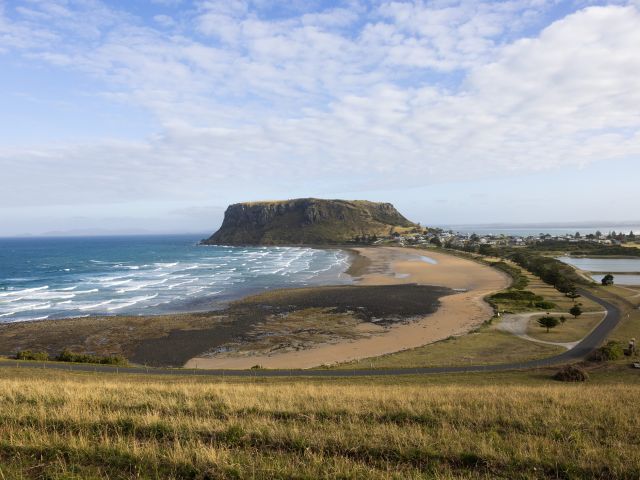
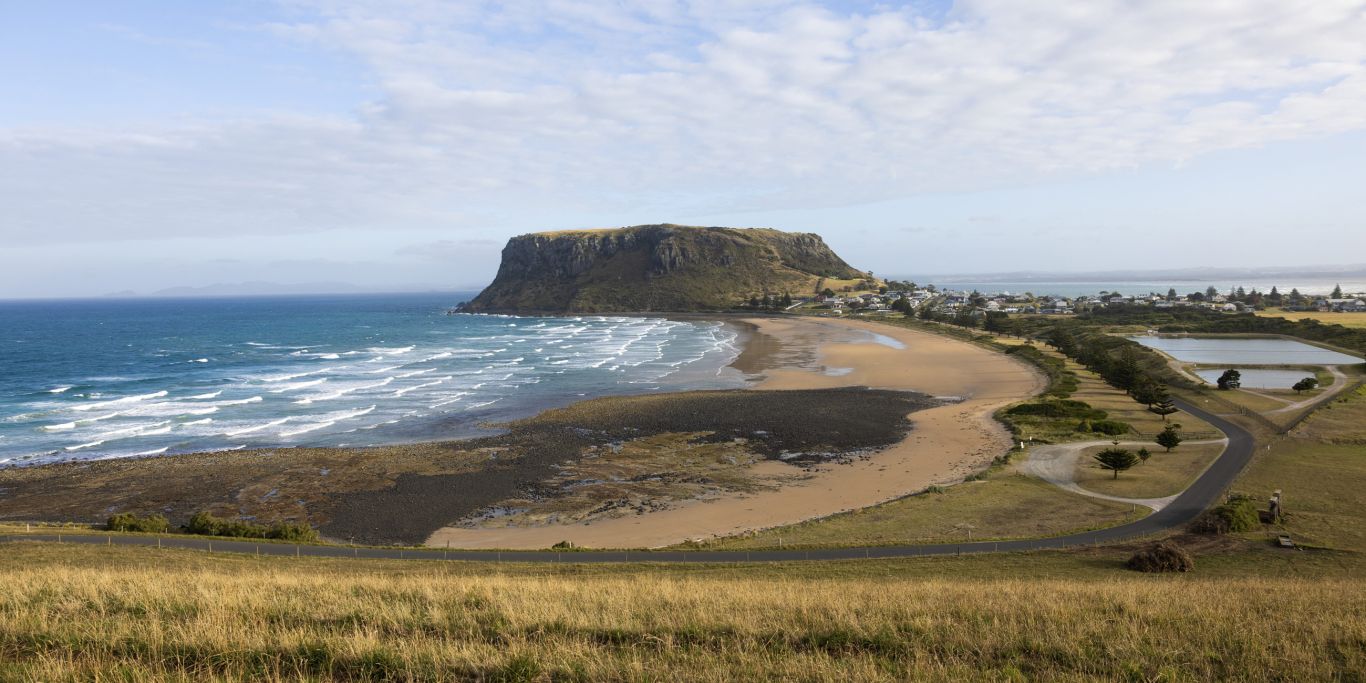
I can see the sombre site from where I stand atop The Nut/Munatrik the following morning, an ancient volcanic plug that looms over Stanley like a watchful guardian. The colossal rocky bluff, now classified as a State Geological Monument by the Geological Society of Australia, holds deep cultural significance among local Palawa, who once hunted moonbirds (muttonbirds) here – a practice that is still honoured today. Our group had woken early to hike the breathtaking circuit around the plateau, reached only after conquering a gruelling 140-metre incline up its steep side. Along the 4.6-kilometre loop, we spot pademelons nibbling on eucalyptus leaves and ancient middens that speak quietly to the lives lived long before us, stopping often to drink in the slow, deep shift of the Bass Strait’s blue expanse.
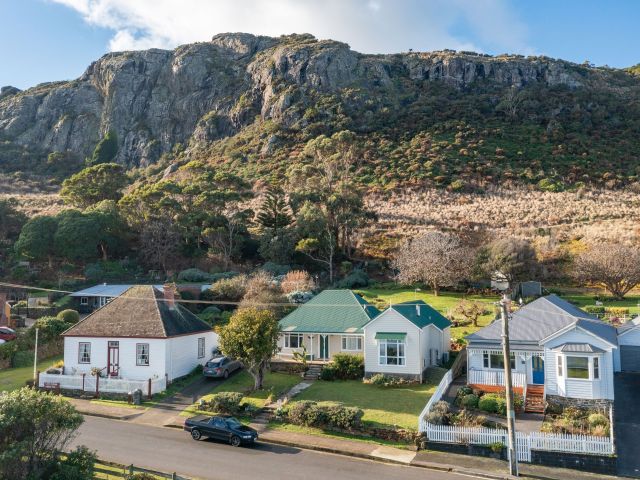
After working up an appetite, we stop in at Sticks & Stones, Shells & Bones, a unique store full of handmade wares that’s also home to Marleys – a name shared with the bubbly two-year-old marching proudly across the cafe floor when we arrive. She takes our order, aided by whispered instructions from her mum, who quickly jots our requests down behind her. I watch as Marley and her wild curls deliver a scribbled docket to her dad in the kitchen, who gives the child a practised wink and nod before cooking us up an impressive breakfast spread featuring seasonal produce.

The same gracious service greets me that evening courtesy of Michael Pine, who owns Stanley Wine Bar with his partner, Shelley Jackson. The space is a sensory feast, where deep browns and velvet textures meet wooden furnishings and antique accents, every surface adorned with vintage trinkets: a bronze figurine here, a cuckoo clock there. Mannequins stand in corners, dressed to the nines in top hats and feather boas.
We sprawl across bar stools and leather couches, sampling everything from east coast pinot grigio to locally distilled gin as Michael entertains with his quick wit, mock pipe-smoking and dramatic moustache twirls. Later that night, I leave full and content, my quiet walk back to The Ark lending itself to reflection. For all its rugged edges and untamed beauty, Tasmania’s north-west holds a weathered and gentle warmth – the kind that stays with you long after you’ve left.
Weekly travel news, experiences
insider tips, offers, and more.
A traveller’s checklist
Getting there
Qantas, Virgin and Jetstar all operate regular flights to Launceston from major Australian cities. From there, it’s a three-hour drive to Stanley.
Staying there
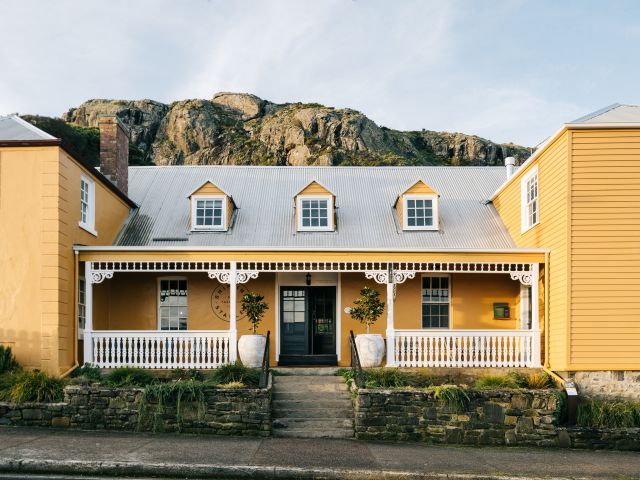
Settle in at The Ark or the Ship Inn, both brimming with character. Road-trippers and families will love BIG4 Tassie Getaway Parks Stanley, while The Inlet offers a more secluded stay just outside of town.
Eating there
Feast on fresh fare at Hursey Seafoods Restaurant, linger over brunch at Marleys at Sticks & Stones, Shells & Bones or enjoy classic pub grub at the Stanley Hotel.
Playing there
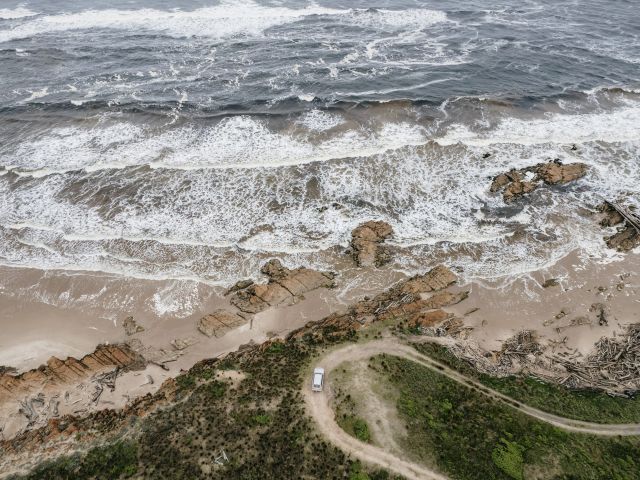
Climb The Nut/Munatrik for sweeping coastal views, sip a tipple or two at Stanley Wine Bar and step back in time at Highfield historic site. Join a full-day tour of the Tarkine/Takayna with Tall Timbers adventure tours, including an experienced guide, luxury 4WD travel, morning tea, lunch and local beverages.
Want to see more stories from Australian Traveller in your Google search results?
- Click here to set Australian Traveller as a preferred source.
- Tick the box next to "Australian Traveller". That's it.