The best snorkelling and diving sites around Christmas Island

hero media
Proclaimed an Australian Marine Park in 2022, there’s no better time to plan a snorkelling or diving adventure to the pristine waters off Christmas Island.

Christmas Island first appeared about 60 million years ago when the peak of a basalt volcanic seamount (submarine volcano) rose steeply some 5000 metres from the ocean floor. Located in the Indian Ocean, which wraps around the bays and beaches like a piece of glittering tin, Christmas Island is a magnet for ocean lovers, divers and snorkellers who are drawn to the unique marine environment that is oft-described as Australia’s Galapagos. Christmas Island has now been declared a marine park – here is our guide to the best snorkelling and diving sites dotted around Christmas Island, where the average water temperatures range from a balmy 27 to 29°C.

Best beaches and coves for snorkelling on Christmas Island

Flying Fish Cove

Snorkellers are advised to wear reef shoes to protect their feet from sharp coral and stonefish as they enter the warm clear waters of the Indian Ocean from Flying Fish Cove. The cove is popular with families due to the fact it’s a relatively protected swimming area and has BBQ facilities to boot; it’s also a top spot to surf when there’s a swell running. According to Diveplanit.com, 90 per cent of all the species that are found on Christmas Island can be found in Flying Fish Cove, including the freckled hawkish, octopus, hawksbill turtles, lionfish and blue-lined surgeonfish. The beach faces west, so arrive to see the setting sun colour the horizon, cold drink in hand. Join Christmas Island Freedive instructor David Mulheron in the clear, calm waters off Flying Fish Cove, which is an 80-metre swim from the jetty. The champion freediver believes Christmas Island to be one of the best freediving locations in the world and will guide you to some amazing coral gardens. Flying Fish Cove is also a popular surfing spot.


Best for: Families and freediving enthusiasts
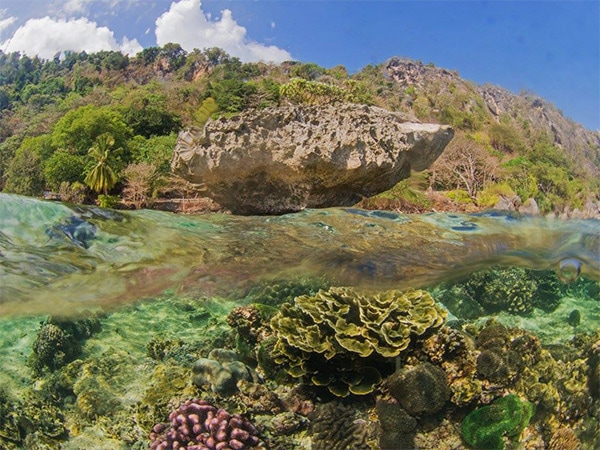
Underneath Flying Fish Cove.

Ethel Beach

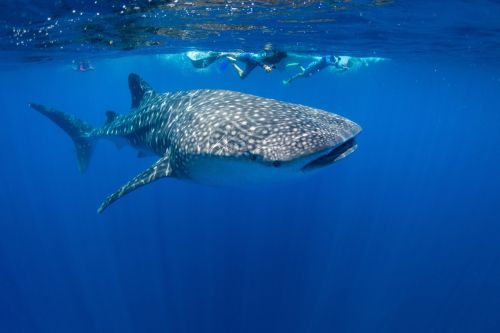
The waters off Ethel Beach are a great option for snorkelling and swimming if the seas off Flying Fish Cove are too rough. As with all of the beaches on CI, you will need to consider the prevailing conditions on the day before you make a decision to enter the water. The colourful reefs that fringe Ethel Beach are teeming with marine life and this northern section of the Christmas Island coastline has some of the most pristine examples of unspoiled coral in the world just offshore. Look out from shore for giant frigate birds and the flick of a whale shark tail during the season and keep your eyes peeled for pelagic fish such as wahoo while in the water. Again, reef shoes should be worn on the beach to protect your feet. Those who suffer from seasickness will be pleased to know it’s just a short boat ride away to encounter whale sharks and manta rays.


Best for: Keen snorkellers
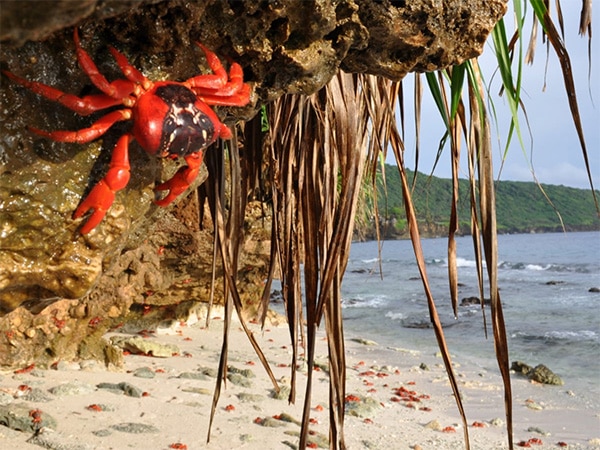
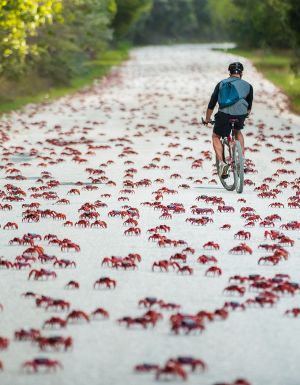
Christmas Island crabs at Ethel Beach
Ethel Beach is teeming with marine life in and out of the water.

West White Beach

West White Beach is located on the island’s north coast and features a tall forest of trees that seem to dance and sway in unison, like a chorus line. The trek to get to the beach is quite challenging and, after a moderately difficult hike through the beautiful rainforest, access to the beach is gained via a rope designed to facilitate the descent down a small but steep section of the cliff. Make sure you wear sturdy walking shoes and bring a backpack so you can fill it with water bottles and snorkel gear. A pair of polarised sunglasses are also required to cut down on the glare bouncing off the gleaming white-sand beach and better appreciate those spectacular views. Snorkelling is a must-do while on Christmas Island due to the dazzling array of fish and the fact you might find yourself swimming alongside turtles or dolphins.


Best for: Fitness freaks
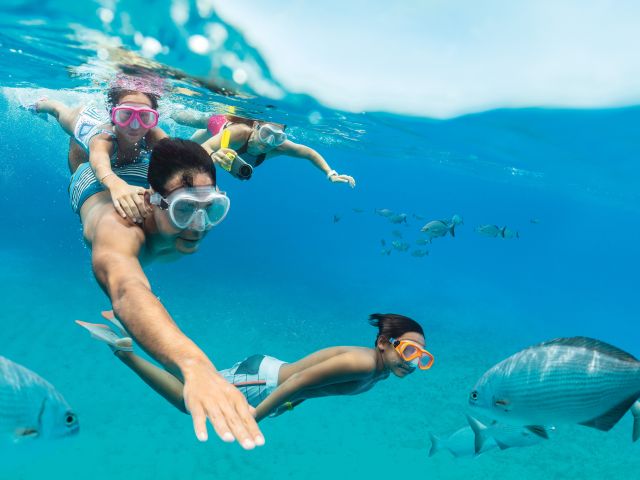
Swim alongside tropical fish.

Dolly Beach

The trees act as a windbreak on Dolly Beach, which is a pretty, quiet pocket just 30 minutes from town and accessible by a boardwalk that meanders through the rainforest. Understand why the tag Australia’s Galapagos has merit when you dance barefoot along this secluded beach which is a nesting place for marine turtles;  visitors to the beach will often come across the tracks of adults and hatchlings who have waddled across the sand. Dolly Beach is fringed by palms, which appeals to the resident coconut crabs. The giant crabs, also known as robber crabs, are the world’s biggest land crustaceans and seeing them lurching along the sand is surreal.


Best for: Wildlife lovers
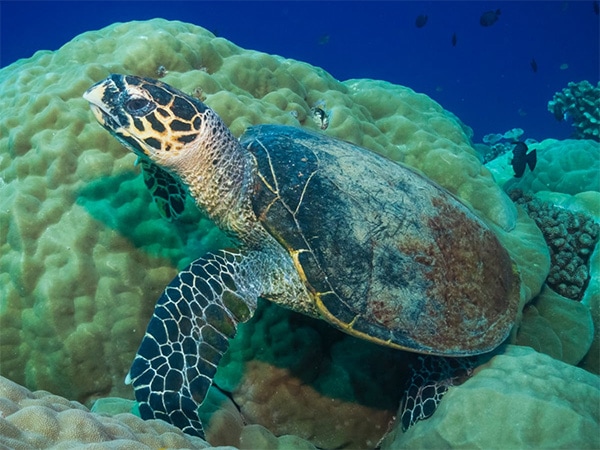
Marine turtles Dolly Beach
Marine turtles nest on and around Dolly Beach.

Winifred Beach

This pretty little beach can only be accessed by 4WD at low tide, which means you will often have it to yourself. After bouncing along a rough section of the pot-holed track, which runs like a frayed ribbon through the rainforest, you will arrive at Winifred Beach car park, and it’s totally worth it. You must then descend via a steep cliff-face staircase to the beach. After a few hours snorkelling, explore the rockpools where the water eddies around your ankles, write your name in a flowery script in the sand and look out for spinner dolphins frolicking offshore. Check with the Visitor Centre for daily tide times and talk to the team at Extra Divers to arrange a guided snorkelling session or take a deeper dive from their boat on a half-day dive trip. Time your visit to the island between November to April to see giant whale sharks cruising around Christmas Island.


Best for: Intrepid types
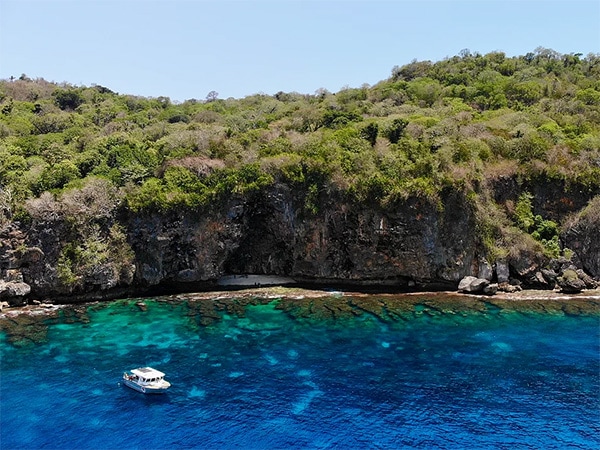
Extra Divers Christmas Island
Go diving with the team at Extra Divers.

Best sites for diving on Christmas Island

West White Beach Cave

Enter the West White Beach Cave adjacent to White Beach via one of two large entrances separated by a large limestone column, with the walls of the chamber painted a rainbow of colours and shelved with whips, fans and electric clams. Novice snorkellers will be buoyed by the fact the cave is only 12 metres deep, so it is not claustrophobic. Venture outside the mouth of the cave to brave the 12-metre to 18-metre drop-off into the big blue, which is a comfortable descent for those new to diving.


Best for: Diving newbies will appreciate this gentle introduction to cave diving, as they don’t need to venture too deep to see the colourful reef.


Highlight for visitors: Getting a few shots for your Instagram silhouetted against the blue backdrop.
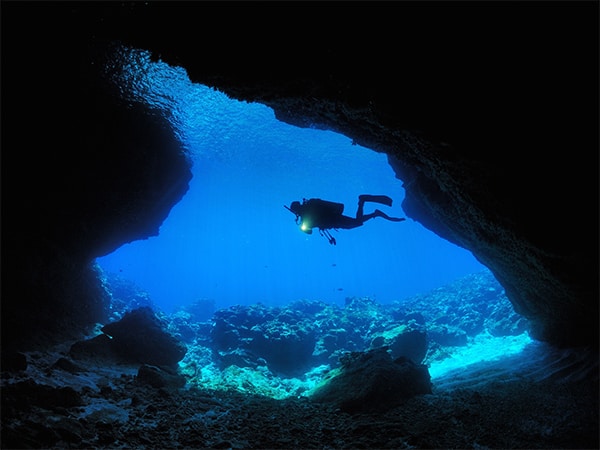
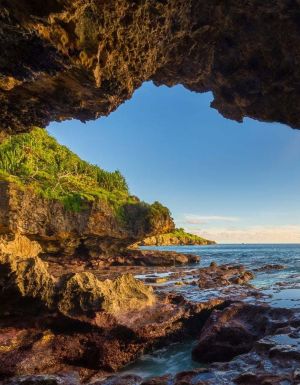
West White Beach Cave
Enter the West White Beach Cave.

Perpendicular Wall

Christmas Island emerges from the Java Trench, which is about 3000 metres deep, and is lapped by seas that change from aquamarine to cobalt blue and minty green. The dive to Perpendicular Wall starts off in a shallow cave, where the seafloor is decorated with red fan coral, like beautiful branching bouquets. Swim out to a wall that reveals schools of triggerfish and pyramid butterflyfish feeding on algae, which spills over sections of the reef like a fuzzy neon-green fringe.


Best for: Divers who like to go to great depths to tick off rare and unusual fish species.


Highlight for visitors: The high probability of seeing manta rays, whale sharks and other large pelagic fish.

Flying Fish Cove

Head to the western edge of Flying Fish Cove and follow the boat ramp to the drop-off point, which is about 18 metres deep, where a huge wall of water suddenly turns translucent blue. Ranked by Diveplanit.com as ‘one of the best shore dives on the planet’, Flying Fish Cove is home to a whopping 90 per cent of all the species found around Christmas Island. To be guided by an expert, CI Fishing and Adventure offer intimate snorkelling charters for small groups, or if it’s just you and your diving buddy, be sure to flipper over the edge of the drop-off; it’s like falling in slow-motion through melting glass.


Best for: Those new to diving who are looking for an easy, accessible experience.


Highlight for visitors: According to locals, you will see more fish and coral species in one dive here than you’ll see across the island.
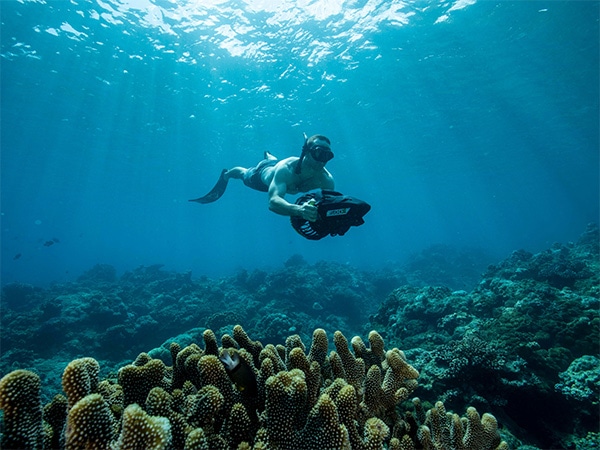
Flying Fish
Flying Fish offers an easy, accessible experience.

Thundercliff Cave

The entrance to Thundercliff Cave is submerged, so to access it, you must first descend six metres to a corrugated sandy bottom and then swim into the inky gloom through an almost Gothic archway. You can surface once inside Thundercliff Cave as there is a large air pocket. The large limestone cavern features a spectacular collection of stalactites, like Gaudi-esque chandeliers dripping down from the ceiling. This almost make-believe landscape also includes a smaller tunnel then opens out into a second large chamber where you can also surface for a breather.


Best for: Beginner-level divers with cave certification.


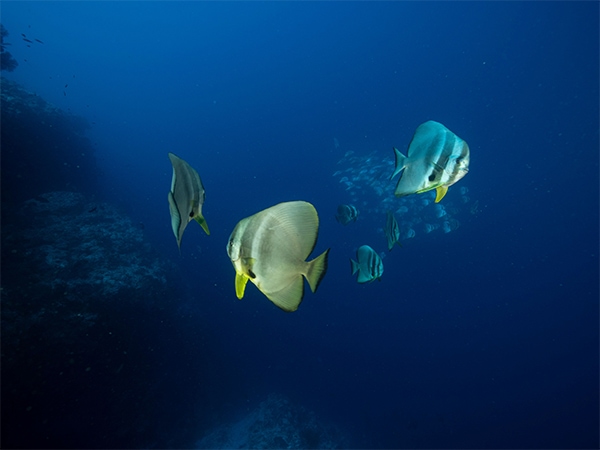
Highlight for visitors: The beautiful beds of coral resemble flower gardens and attract huge flocks of resident batfish.

Million Dollar Bommie

Underwater photographers from around the world have the Million Dollar Bommie on their bucket list. It’s considered one of the best diving spots on Christmas Island and is certainly up there as one of the best diving spots in the world. The bommie is about seven metres high, growing up from a base of about 26 metres, and wearing a pretty pettiskirt made out of delicate sea fans. Find pigfish, mimic surgeonfish and red fire gobi peeking out between the sea fans and coral overhangs, which offer spectacular backdrops for photography. You might also spot Meyer’s butterflyfish, coral trout, damsel fish, fusiliers, triggerfish, and rock cod.


Best for: Advanced, experienced divers


Highlight for visitors: The Million Dollar Bommie is a huge draw for divers because of the variety of fish living in a single, concentrated area. The light on the top of the bommie is cinematic, and the candy-coloured coral makes it a great place to photograph fish. Keep your eye out for a majestic manta ray, which can often be found flying through the water.

Rhoda Wall

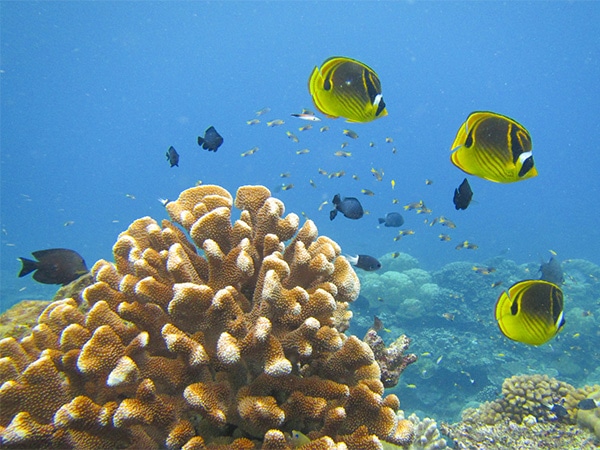
Rhoda Wall is a magic place for pelagic lovers and, on a clear day, the visibility is so good it’s like looking through a pane of glass. Peer down into the pale blue from the comfort of your dive boat and you may be able to see grey reef sharks gliding through the water 30 metres below. There is no shortage of great diving sites around Christmas Island, but this coral-lined wall off the northwest coast of the island is full of wonders, sloping down gently in graded shades of blue before falling into a vertical wall at the 20-metre mark. Find great examples of fractal coral and hydrocorals here and colourful tropical reef fish swirling about. Beyond the slope there are some beautiful coral stacks, like packs of colourful cards, and large plate corals, too. Be one of just six divers on an intimate tour with Christmas Island Wet n Dry Adventures , who have been operating on the island since 1996. Japanese-born operator Teruki Hamanaka says while most divers are happy with a full-length 3mm wetsuit, those who feel the cold can also request a 5 mm steamer or a neoprene hood.


Best for: Advanced divers


Highlight for visitors: There are some beautiful royal blue hydrocorals attached to the wall like artworks and yellow and pink fusiliers that dart up and down the wall. Look out for megafauna: during the season (November to March), you are likely to see massive whale sharks swimming by.
Christmas Island Wet n Dry Adventures
Be one of just six divers on an intimate tour with Christmas Island Wet n Dry Adventures.


Read our guide to Christmas Island for more about this unique Indian Ocean destination.
Carla Grossetti
Carla Grossetti avoided accruing a HECS debt by accepting a cadetship with News Corp. at the age of 18. After completing her cadetship at The Cairns Post Carla moved south to accept a position at The Canberra Times before heading off on a jaunt around Canada, the US, Mexico and Central America. During her career as a journalist, Carla has successfully combined her two loves – of writing and travel – and has more than two decades experience switch-footing between digital and print media. Carla’s CV also includes stints at delicious., The Sydney Morning Herald, and The Australian, where she specialises in food and travel. Carla also based herself in the UK where she worked at Conde Nast Traveller, and The Sunday Times’ Travel section before accepting a fulltime role as part of the pioneering digital team at The Guardian UK. Carla and has been freelancing for Australian Traveller for more than a decade, where she works as both a writer and a sub editor.
See all articles

This scenic Victorian region is the perfect antidote to city life

Video credit: Visit Victoria/Tourism Australia

The Grampians just might be the ultimate antidote for the metropolis, writes one returning Aussie ready to disconnect from the modern world and reconnect to the Great outdoors.

There are no kangaroos back in Chicago: they’re all here in the Grampians/Gariwerd . In the heart of the Grampians National Park’s main gateway town, Halls Gap, pods of eastern greys are eating grass beside my parked rental car beneath the stars. Next morning, when I see the backyard of my rented villa on the edge of town for the first time, there are kangaroos feeding beside a slow-moving creek, lined with river red gums.

Five hundred metres up the road, 50 or so of them are eating by the side of the road in a paddock. I pull over to watch and spot three emus. Yellow-tailed black cockatoos fly overhead towards the tall green mountains just beyond town.

‘Kee-ow, keee-oww’… their calls fuse with the maniacal cackle of a kookaburra (or 10). Gawd, how I’ve missed the sound of them. Far above, a wedge-tailed eagle watches, and there you go: the ‘great birds of Australia’ trifecta, all half a kay from the town limits.

Exchanging city chaos for country calm

kangaroos near Halls Gap, Grampians National Park
The park is renowned for its significant diversity of native fauna species. (Image: Visit Victoria/Robert Blackburn)

I’ve come to the Grampians to disconnect, but the bush offers a connection of its own. This isn’t just any bush, mind you. The Grampians National Park is iconic for many reasons, mostly for its striking sandstone mountains – five ridges run north to south, with abrupt, orange slopes which tumble right into Halls Gap – and for the fact there’s 20,000 years of traditional rock art. Across these mountains there are more than 200 recorded sites to see, created by the Djab Wurrung, Jardwadjali and Gunditjmara peoples. It’s just like our outback… but three hours from Melbourne.

I’ve come here for a chance at renewal after the chaos of my life in America’s third-largest city, Chicago, where I live for now, at the whim of a relative’s cancer journey. Flying into Melbourne’s airport, it only takes an hour’s drive to feel far away from any concept of suburbia. When I arrive in Halls Gap two hours later, the restaurant I’m eating at clears out entirely by 7:45pm; Chicago already feels a lifetime ago.

The trails and treasures of the Grampians

sunrise at Grampians National Park /Gariwerd
Grampians National Park /Gariwerd covers almost 2000 square kilometres. (Image: Ben Savage)

Though the national park covers almost 2000 square kilometres, its best-known landmarks are remarkably easy to access. From my carpark here, among the cockatoos and kangaroos on the fringe of Halls Gap, it only takes 60 seconds’ driving time before I’m winding my way up a steep road through rainforest, deep into the mountains.

Then it’s five minutes more to a carpark that serves as a trailhead for a hike to one of the park’s best vantage points, The Pinnacles . I walk for an hour or so, reacquainting myself with the smells and the sounds of the Aussie bush, before I reach it: a sheer cliff’s edge lookout 500 metres up above Halls Gap.

walking through a cave, Hollow Mountain
Overlooking the vast Grampians landscape from Hollow Mountain. (Image: Robert Blackburn)

There are hikes and there are lookouts and waterfalls all across this part of the park near town. Some are a short stroll from a carpark; others involve long, arduous hikes through forest. The longest is the Grampians Peaks Trail , Victoria’s newest and longest iconic walk, which runs 160 kilometres – the entire length of Grampians National Park.

Local activities operator Absolute Outdoors shows me glimpses of the trail. The company’s owner, Adrian Manikas, says it’s the best walk he’s done in Australia. He says he’s worked in national parks across the world, but this was the one he wanted to bring his children up in.

“There’s something about the Grampians,” he says, as he leads me up a path to where there’s wooden platforms for tents, beside a hut looking straight out across western Victoria from a kilometre up in the sky (these are part of the guided hiking options for the trail). “There are things out here that you won’t see anywhere else in Australia.” Last summer, 80 per cent of the park was damaged by bushfire, but Manikas shows me its regrowth, and tells me of the manic effort put in by volunteers from town – with firefighters from all over Australia – to help save Halls Gap.

wildflowers in Grampians National Park
Spot wildflowers. (Image: Visit Victoria)

We drive back down to Halls Gap at dusk to abseil down a mountain under the stars, a few minutes’ walk off the main road into town. We have headlamps, but a full moon is enough to light my way down. It takes blind faith to walk backwards down a mountain into a black void, though the upside is I can’t see the extent of my descent.

Grampians National Park at sunset
Grampians National Park at sunset. (Image: Wine Australian)

The stargazing is ruined by the moon, of course, but you should see how its glow lights up the orange of the sandstone, like in a theme park. When I’m done, I stand on a rocky plateau drinking hot chocolate and listening to the Aussie animals who prefer nighttime. I can see the streets of Halls Gap off in the distance on this Friday night. The restaurants may stay open until 8pm tonight.

What else is on offer in The Grampians?

a boat travelling along the Wimmera River inDimboola
Travelling along the Wimmera River in Dimboola. (Image: Chris McConville)

You’ll find all sorts of adventures out here – from rock climbing to canoeing to hiking – but there’s more to the Grampians than a couple of thousand square kilometres of trees and mountains. Halls Gap may be known to most people, but what of Pomonal, and Dimboola, and Horsham? Here in the shadow of those big sandstone mountains there are towns and communities most of us don’t know to visit.

And who knew that the Grampians is home to Victoria’s most underrated wine region ? My disconnection this morning comes not in a forest, but in the tasting rooms and winery restaurants of the district. Like Pomonal Estate, barely 10 minutes’ drive east of Halls Gap, where UK-born chef Dean Sibthorp prepares a locally caught barramundi with lentil, pumpkin and finger lime in a restaurant beside the vines at the base of the Grampians. Husband-and-wife team Pep and Adam Atchison tell me stories as they pour their prize wines (shiraz is the hero in these parts).

dining at Pomonal Estate
Dine in a restaurant beside vines at Pomonal Estate. (Image: Tourism Australia)

Three minutes’ drive back down the road, long-time mates Hadyn Black and Darcy Naunton run an eclectic cellar door out of a corrugated iron shed, near downtown Pomonal. The Christmas before last, half the houses in Pomonal burnt down in a bushfire, but these locals are a resilient lot.

The fires also didn’t stop the construction of the first art centre in Australia dedicated to environmental art in a nature-based precinct a little further down the road (that’s Wama – the National Centre for Environmental Arts), which opened in July. And some of the world’s oldest and rarest grape vines have survived 160 years at Best’s Wines, outside the heritage town of Great Western. There’s plantings here from the year 1868, and there’s wines stored in century-old barrels within 150-year-old tunnels beneath the tasting room. On the other side of town, Seppelt Wines’ roots go back to 1865. They’re both only a 30-minute drive from Halls Gap.

Salingers of Great Western
Great Western is a charming heritage town. (Image: Griffin Simm)

There’s more to explore yet; I drive through tiny historic towns that barely make the map. Still part of the Grampians, they’re as pretty as the mountains behind them: full of late 19th-century/early 20th-century post offices, government offices and bank buildings, converted now to all manner of bric-a-brac stores and cafes.

The Imaginarium is one, in quirky Dimboola, where I sleep in the manager’s residence of an old National Australia Bank after a gourmet dinner at the local golf club, run by noted chef and teacher, Cat Clarke – a pioneer of modern Indigenous Australian cooking. Just south, I spend an entire afternoon at a winery, Norton Estate Wines, set on rolling calico-coloured hills that make me think of Tuscany, chit-chatting with owners Chris and Sam Spence.

Being here takes me back two decades, when I lived here for a time. It had all seemed as foreign as if I’d driven to another planet back then (from Sydney/Warrane), but there seemed something inherently and immediately good about this place, like I’d lived here before.

And it’s the Australian small-town familiarity of the Grampians that offers me connection back to my own country. Even in the better-known Halls Gap, Liz from Kerrie’s Creations knows I like my lattes with soy milk and one sugar. And while I never do get the name of the lady at the local Ampol station, I sure know a lot about her life.

Kookaburras on a tree
Kookaburras are one of some 230 bird species. (Image: Darren Donlen)

You can be a local here in a day; how good is that? In Chicago, I don’t even know who my neighbour is. Though each day at dusk – when the kangaroos gather outside my villa, and the kookaburras and the black cockatoos shout out loud before settling in to sleep – I prefer the quieter connection I get out there in the bush, beneath these orange mountains.

A traveller’s checklist

Staying there

Sleep beside the wildlife on the edge of Halls Gap at Serenity .

Playing there

abseiling down Hollow Mountain
Hollow Mountain is a popular abseiling site.

Go abseiling under the stars or join a guided hike with Absolute Outdoors . Visit Wama , Australia’s first environmental art centre. Check out Dimboola’s eccentric Imaginarium .

Eating there

steak, naan bread and beer at Paper Scissors Rock in Halls Gap
Paper Scissors Rock in Halls Gap serves a great steak on naan bread.

Eat world-class cuisine at Pomonal Estate . Dine and stay at much-revered icon Royal Mail Hotel in Dunkeld. The ‘steak on naan’ at Halls Gap brewhouse Paper Scissors Rock , can’t be beat.

Dunkeld Arboretum in Grampians National Park
The serene Dunkeld Arboretum.

For Halls Gap’s best breakfasts head to Livefast Cafe . Sip local wines at Great Western’s historic wineries, Best’s Wines , Seppelt Wines and Norton Estate Wines .

two glasses of beer at Paper Scissors Rock in Halls Gap
Sink a cold one at Paper Scissors Rock.