The diversity of the language and culture on the island has influenced its identity and made for a beguiling mix of restaurants and a range of colourful cultural festivals each year.
While wildlife and adventure is the main goal of a trip to Christmas Island, you will find that food is the axis around which life in this unique Indian Ocean destination revolves. And if you’re going to fall into the rhythm of life here, the best way to do that is to roll your sleeves up and tuck into some of the local specialties.
Why was it named Christmas Island?
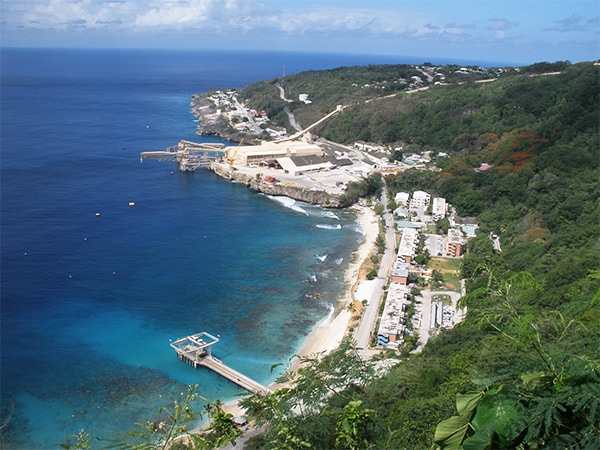
The reason Christmas Island, located 360 kilometres south of Java, was named after the yuletide is pretty simple: it’s because the English master of the East India Company, Captain William Mynors, sailed to the island on Christmas Day, 1643.
But it wasn’t until 139 years later, when phosphate was discovered on the island, that settlers and workers arrived, bringing with them a diverse range of cultural and religious traditions from Europe and Asia.
How this history shapes the culture & food today
Fast forward to now and the island population is a multi-cultural, harmonious mix of Chinese, Malay and Australian culture where 63 per cent of households speak a language other than English at home.
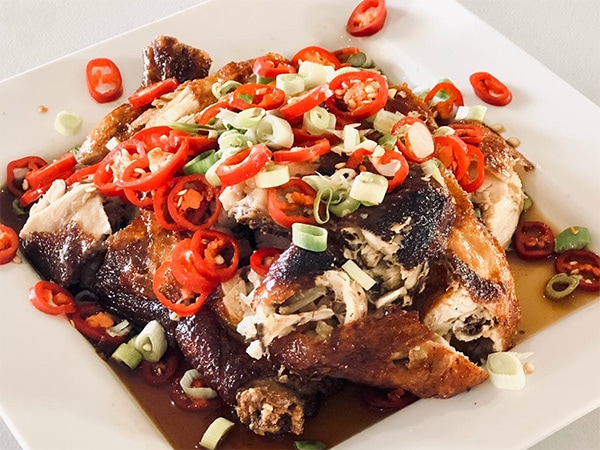
This blended heritage is reflected on the menus at the pubs, cafes and restaurants dotted around CI, as the island is affectionately known. Dishes such as crispy spring rolls, deep-fried flavour-filled wontons, coconut-based seafood curry, stir-fries and nasi goreng lightly kissed with chilli, and, yes, even chicken parmigiana, all pull the threads of Christmas Island’s cultural heritage together like strands of colourful wool.
Visitors can experience the rich cultural heritage of Christmas Island year-round as, in addition to epic wildlife and nature experiences, the CI calendar is also packed with cultural festivals that nod to the Buddhist, Taoist and Muslim traditions linked to the religions practised within the community.
In between checking out some of the best snorkelling and diving sites for which Christmas Island is known, here are some of the must-do culture and foodie experiences on offer on Christmas Island.
Where to eat & drink on Christmas Island
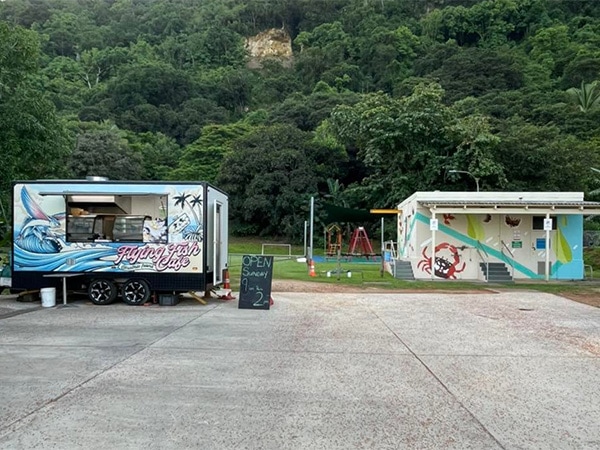
Sample street food at the Flying Fish Cafe, Flying Fish Cove
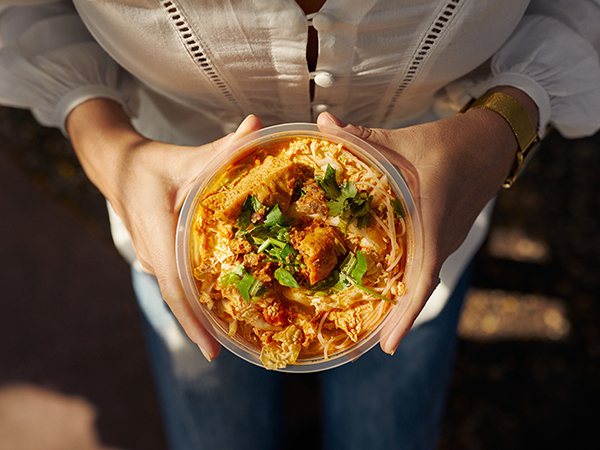
This popular food truck divides its time between Flying Fish Cove and the Kampong. The cafe on wheels is owned and operated by a local Malay family who serves street-style food such as egg roti, samosas as well as Malaysian coffee and cake. Drench your delicious savoury breakfast stir-fry of rice noodles with chives and shrimp with hot, spicy sambal to kickstart and captivate your palate.
Check Flying Fish Cafe’s Facebook page for opening times.
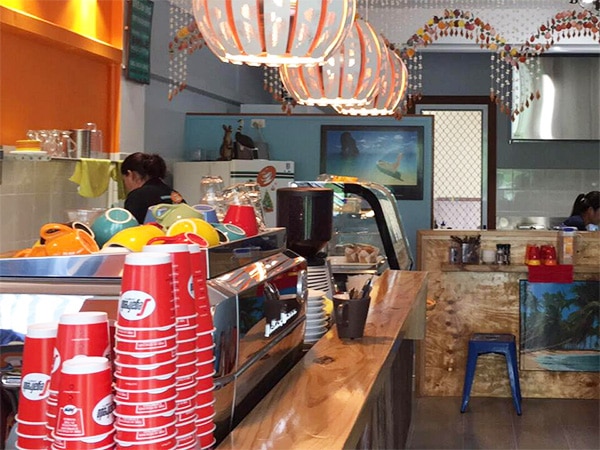
Order avo on toast at the Smash Espresso Bar, Poon Saan
Avocado on toast is now regarded as an Australian staple. And those partial to the mainland favourite, served with a dusting of salt, pepper, and sometimes feta, will enjoy the Smash Espresso Bar rendition, slathered onto a toasted slab of ciabatta. Bacon and egg wraps are another indulgent brekkie item on the menu and this cafe is known for its specialty coffee and juices, too.
Need tips, more detail or itinerary ideas tailored to you? Ask AT.
AI Prompt
Enjoy a Malaysian breakfast at Idah’s Kitchen, at the Malay Club
Enjoy a traditional Malay breakfast of buttery soft roti canai with chicken curry, or nasi lemak at this popular restaurant overlooking Flying Fish Cove, the island’s main settlement. Here, you will find locals getting their fill on traditional Malaysian food and sweets. Meals at Idah’s Kitchen tend to be traditional, which brings together the community. Idah’s Kitchen is also a kopitiam (coffee shop) so you can sip on a strong black coffee to round out your feast.
Linger over lunch or dinner at Lucky Ho
Christmas Island locals wax enthusiastic about Chinese restaurant Lucky Ho, located in Poon Saan. Prawns, chillies, chives, garlic, coriander and shrimp paste are all used to flavour dishes such as wok-fried noodles and Singapore sambal yellow noodles, which are a quick introduction to Christmas Island’s pan-Asian palate. The restaurant has a homey atmosphere and serves a great rendition of Thai fried rice and fried wontons for both lunch and dinner. You can even book a room to do Karaoke here!
Dine on authentic noodle dishes at Le CLA Cafe & Restaurant
The Chinese Literary Association building is where you go to order an iced tea that starts out hot and is cooled down with loads of ice, a Le CLA speciality. Sit outside on the breezy verandah at this Malaysian-Chinese restaurant, which is renowned for its authentic noodle dishes such as char kway teow, bee hoon and kway teow. The slippery rice noodles arrive with a little bit of chilli sambal on the side. Alcohol is available here.
Kick back at The Recreation Centre
The Kookai’z Café at the Recreation Centre up on the hill is a top spot for a burger that has been built from the ground up. The magic here lies in the old-school milk bun base, which is layered with quality ingredients, such as a home-made beef patty topped with rounds of pickled beetroot, sliced cucumber and tomato, squares of cheese and shredded lettuce glued together with a squiggle of mayonnaise.
Brew with a view at the Golden Bosun
The Golden Bosun is the name of a sub-species of bird that is unique to Christmas Island. It’s also the name of one of Christmas Island’s most popular watering holes, where a cold bevvie is best enjoyed on the verandah with ocean views. Eat your way methodically through the menu of pub classics with a CI twist such as sriracha chicken and pineapple pizza, locally caught fish (wahoo) and chicken parmigiana with salad. Beef and reef steaks are a local favourite.
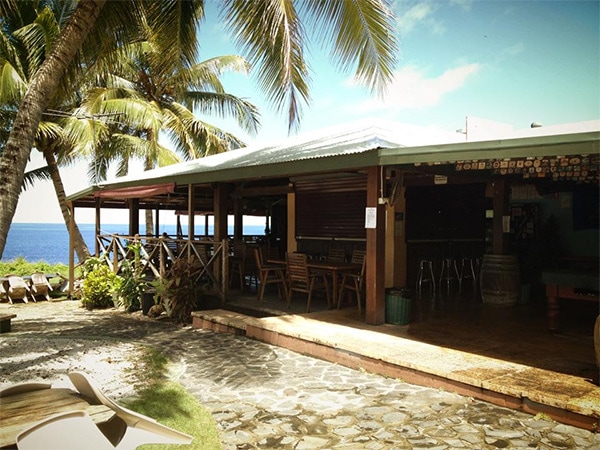
Visit Rumah Tinggi on Saturday night
The Rumah Tinggi tavern is as far west as you can go without leaving Australian territory. Rumah Tinggi means ‘tall house’ in Malay and this spot in the Settlement is a hit with locals who converge here on a Saturday arvo for bar food such as bruschetta, chips and steak sangas. The waterfront bar is a top spot to watch the sun set over the sea.

Tracks Tavern
You will find this true Aussie gem tucked up in the suburb of Drumsite. Ice cold beverages, plenty of yarns and the place to keep you up to date with all things in the world of sports. Head along for Chase the Ace on Saturday evenings, or just call in for a tasty salad roll or beef pie for lunch. But be quick, it’s a local favourite and the rolls sell out fast!
The Pool Hall
If you feel like kicking on, The Pool Hall is popular with the younger crowd for drinks and dancing.
Stock up at local supermarkets
While all of the restaurants on Christmas Island have the option to dine in or takeaway, you can also stock up on everyday staples at one of the three main supermarkets on Christmas Island, all of which stock specialty Asian groceries as well as basic everyday staples.
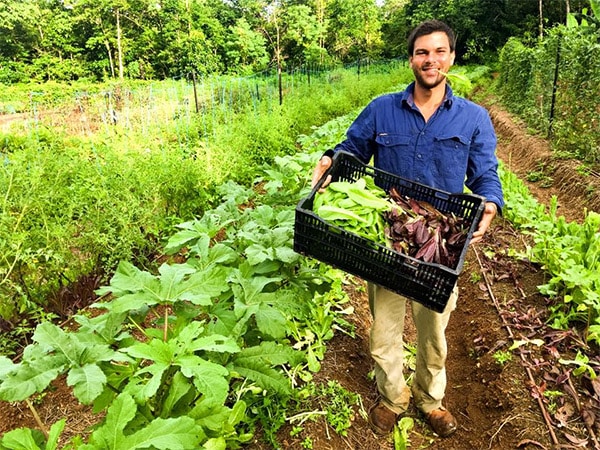
The island’s Hidden Garden Sustainable Farms supplies the supermarkets with fresh bananas, papaya and soursop and a range of seasonal ingredients. CI Bakery supplies fresh baked goods. Keep your eye out on the Community Board for the latest fresh fish of the day from Shorefire, the local fish supplier.
Fast food
For takeaway pizza, fish n’ chips and more check with CITA for the latest up-to-date information when it comes to tracking down current take-away options and menus.
Weekly travel news, experiences
insider tips, offers, and more.
Cultural must-dos on Christmas Island
Visitors to Christmas Island will also be satisfied with the many temples and mosques that offer a glimpse of the Australian territory’s rich cultural heritage. Each is as interesting as the next, so get your passport ready to take a step back in time along a self-guided trail or plan your stay around one of the festivals held at these places of worship.
Time your visit to coincide with a festival
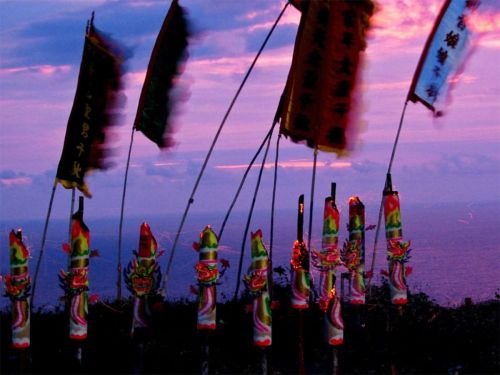
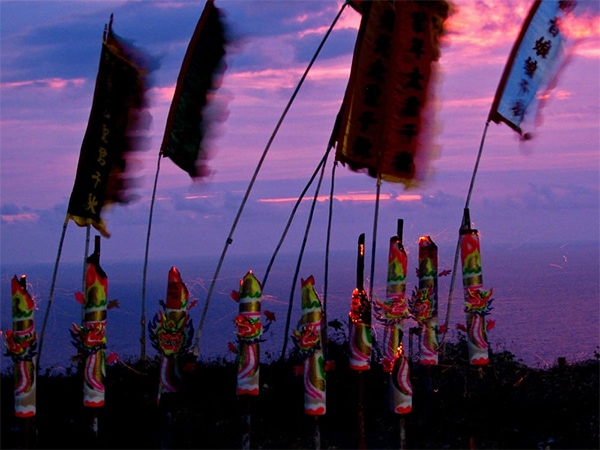
There are many colourful cultural celebrations held year-round on Christmas Island, which everyone is welcome to enjoy. From Chinese New Year and the Hungry Ghost Festival, which honours the memories of the deceased, to the Malay celebrations involving Kompang drumming, traditional dance and Malay food that highlights the culture on Christmas Island.
Learn about the history of the island’s colourful visitor’s centre
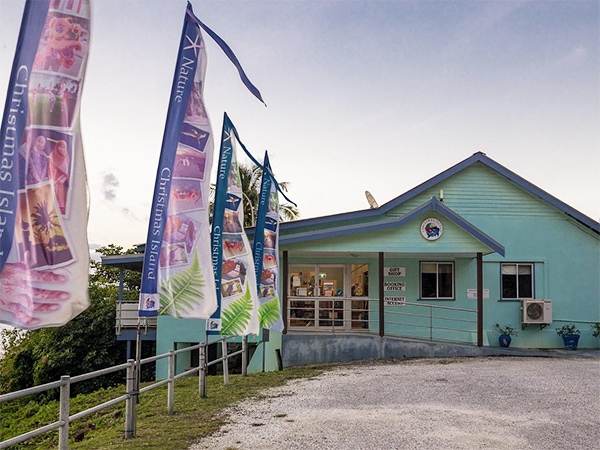
Cast your gaze down Gaze Road, which is a laid-back commercial, tourism and residential hub on the island. You won’t miss the pastel blue visitor centre, which has had many incarnations as a Chinese club, Eurasian staff club, and youth club. Talk to the friendly team about historic places, relics and ruins to visit on the island.
Scribble a note on the community blackboard
The roundabout on Christmas Island is said to be one of the most isolated in the world. All island traffic must, at some point, pass through the roundabout, which makes it the ideal spot for a community blackboard where locals and visitors blast out messages in chalk. Beloved by all Islanders to keep up to date with what’s on, who’s on island, and even significant birthdays.
View the mosque in the Kampong
The original houses in the Kampong were made of thatch and timber to accommodate Malays recruited from Indonesia and Malaysia to work in the port and marine services. There is the 1960s-built mosque and madrassa (Islamic school) located in the kampong, which has retained its village-like feel. The Kampong is the heart of the Malay community. Listen for the Call to Prayer, which can be heard reverberating across the Kampong and Flying Fish Cove.
Enjoy the views from the Tea Garden & Tai Jin House
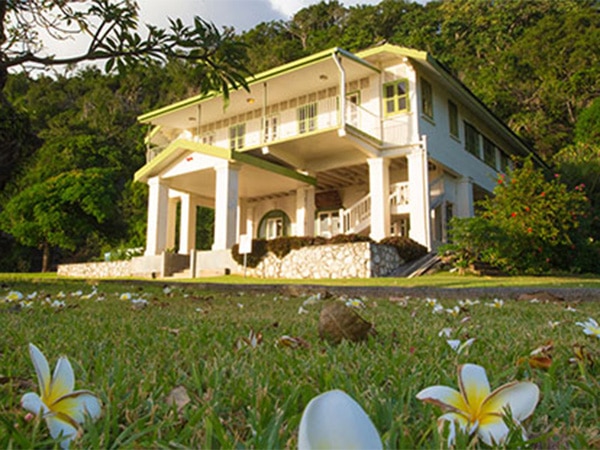
The Tea Garden was once a focal point for the Chinese community. Look at the art in the Tea Garden, and enjoy a sunset picnic in the park, which is located on a former residential area known as ’40 houses’. Have a peep at the 1950s-style buildings at the shops in Temple Court. What was once the home of the British Administrator of Christmas Island, Tai Jin House, offers splendid views over Flying Fish Cove and is home to the Christmas Island Museum.
Catch a film at the outdoor cinema
The Christmas Island Outdoor Cinema plays a pivotal role in island life. Built in the 1970s, the cinema was a key meeting point for the Union of Christmas Island Workers where key information was relayed. The outdoor cinema is a non-profit, community-based organisation that screens new release and cult classic movies under the stars every Saturday.
See local history at the Drumsite
Drumsite is named after the giant drum that held the cable for the gravity-based Incline of the site, which was established during the construction of the Incline and railway systems between 1910 and 1920. Take note of the private residence on Lam Lok Loh, built in 1930, which was officially known as Bungalow 702. Most other buildings in this area date from the 1950s and 1960s.
Visit a temple or two
There are Taoist and Buddhist temples dotted around Christmas Island. There are also many small hidden shrines set up in the island’s industrial, retail and residential areas and a few smaller shrines scattered throughout the forest.
Your visit to the temples will help as donations are invested back into the upkeep of the temples. The Guan Yin Monastery in the Settlement, Tai Pak Kong, Di Zang Pu Sa Dian and Si Mian Fo temples all have spiritual significance for locals.
Want to see more stories from Australian Traveller in your Google search results?
- Click here to set Australian Traveller as a preferred source.
- Tick the box next to "Australian Traveller". That's it.