Proclaimed an Australian Marine Park in 2022, there’s no better time to plan a snorkelling or diving adventure to the pristine waters off Christmas Island.
Christmas Island first appeared about 60 million years ago when the peak of a basalt volcanic seamount (submarine volcano) rose steeply some 5000 metres from the ocean floor. Located in the Indian Ocean, which wraps around the bays and beaches like a piece of glittering tin, Christmas Island is a magnet for ocean lovers, divers and snorkellers who are drawn to the unique marine environment that is oft-described as Australia’s Galapagos. Christmas Island has now been declared a marine park – here is our guide to the best snorkelling and diving sites dotted around Christmas Island, where the average water temperatures range from a balmy 27 to 29°C.
Best beaches and coves for snorkelling on Christmas Island
Flying Fish Cove
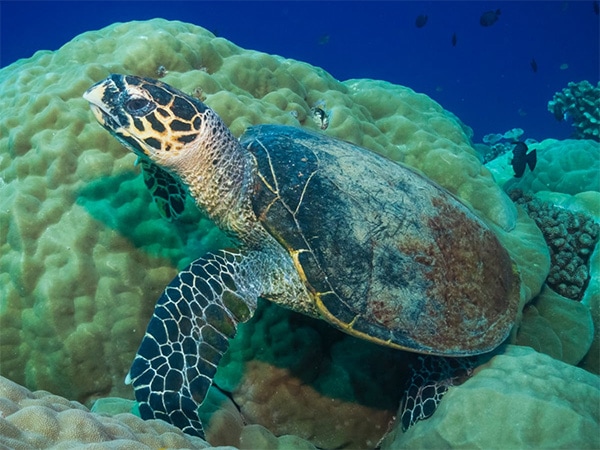
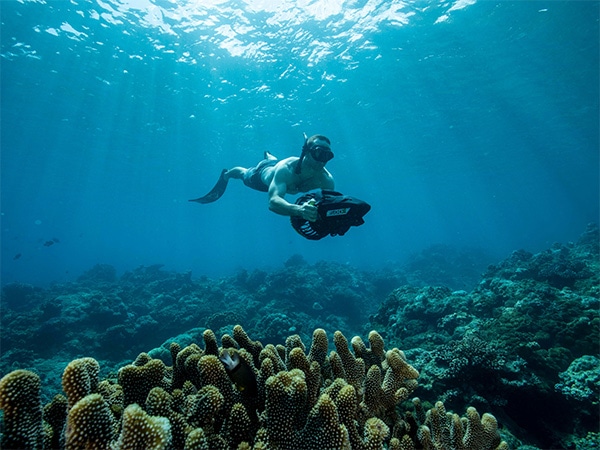
Snorkellers are advised to wear reef shoes to protect their feet from sharp coral and stonefish as they enter the warm clear waters of the Indian Ocean from Flying Fish Cove. The cove is popular with families due to the fact it’s a relatively protected swimming area and has BBQ facilities to boot; it’s also a top spot to surf when there’s a swell running. According to Diveplanit.com, 90 per cent of all the species that are found on Christmas Island can be found in Flying Fish Cove, including the freckled hawkish, octopus, hawksbill turtles, lionfish and blue-lined surgeonfish. The beach faces west, so arrive to see the setting sun colour the horizon, cold drink in hand. Salted offers 1.5-hour snorkelling tours of Flying Fish Cove that are perfect for beginners.
Best for: Families and freediving enthusiasts
Ethel Beach
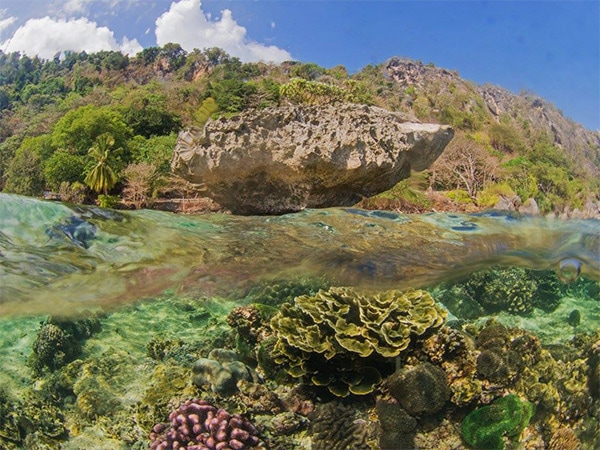
The waters off Ethel Beach are a great option for snorkelling and swimming if the seas off Flying Fish Cove are too rough. As with all of the beaches on CI, you will need to consider the prevailing conditions on the day before you make a decision to enter the water. The colourful reefs that fringe Ethel Beach are teeming with marine life and this northern section of the Christmas Island coastline has some of the most pristine examples of unspoiled coral in the world just offshore. Look out from shore for giant frigate birds and the flick of a whale shark tail during the season and keep your eyes peeled for pelagic fish such as wahoo while in the water. Again, reef shoes should be worn on the beach to protect your feet. Those who suffer from seasickness will be pleased to know it’s just a short boat ride away to encounter whale sharks and manta rays.
Best for: Keen snorkellers
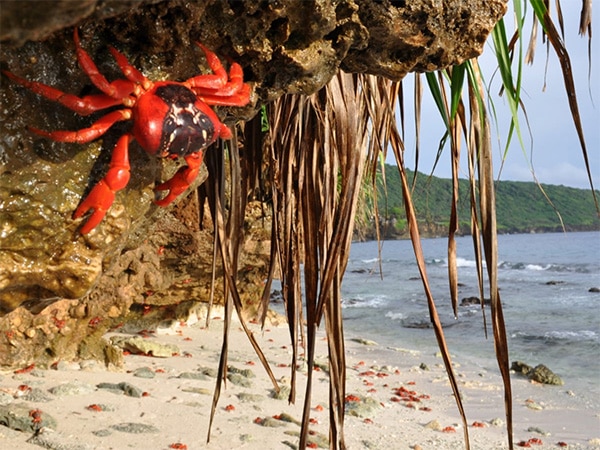
West White Beach
West White Beach is located on the island’s north coast and features a tall forest of trees that seem to dance and sway in unison, like a chorus line. The trek to get to the beach is quite challenging and, after a moderately difficult hike through the beautiful rainforest, access to the beach is gained via a rope designed to facilitate the descent down a small but steep section of the cliff. Make sure you wear sturdy walking shoes and bring a backpack so you can fill it with water bottles and snorkel gear. A pair of polarised sunglasses are also required to cut down on the glare bouncing off the gleaming white-sand beach and better appreciate those spectacular views. Snorkelling is a must-do while on Christmas Island due to the dazzling array of fish and the fact you might find yourself swimming alongside turtles or dolphins.
Best for: Fitness freaks
Dolly Beach
The trees act as a windbreak on Dolly Beach, which is a pretty, quiet pocket just 30 minutes from town and accessible by a boardwalk that meanders through the rainforest. Understand why the tag Australia’s Galapagos has merit when you dance barefoot along this secluded beach which is a nesting place for marine turtles; visitors to the beach will often come across the tracks of adults and hatchlings who have waddled across the sand. Dolly Beach is fringed by palms, which appeals to the resident coconut crabs. The giant crabs, also known as robber crabs, are the world’s biggest land crustaceans and seeing them lurching along the sand is surreal.
Best for: Wildlife lovers
Winifred Beach
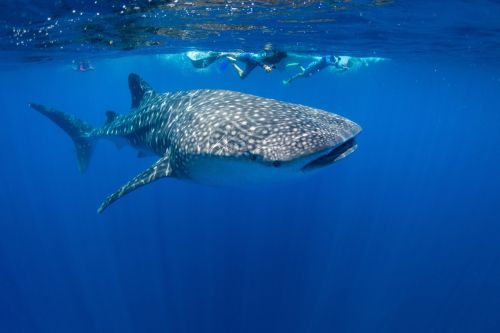
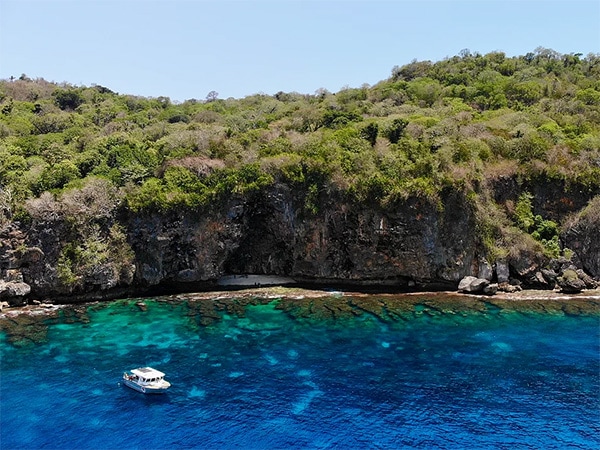
This pretty little beach can only be accessed by 4WD at low tide, which means you will often have it to yourself. After bouncing along a rough section of the pot-holed track, which runs like a frayed ribbon through the rainforest, you will arrive at Winifred Beach car park, and it’s totally worth it. You must then descend via a steep cliff-face staircase to the beach. After a few hours snorkelling, explore the rockpools where the water eddies around your ankles, write your name in a flowery script in the sand and look out for spinner dolphins frolicking offshore. Check with the Visitor Centre for daily tide times and talk to the team at Extra Divers to arrange a guided snorkelling session or take a deeper dive from their boat on a half-day dive trip. Time your visit to the island between November to April to see giant whale sharks cruising around Christmas Island.
Best for: Intrepid types
Need tips, more detail or itinerary ideas tailored to you? Ask AT.
AI Prompt
Best sites for diving on Christmas Island
West White Beach Cave
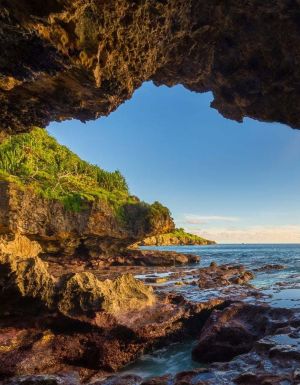
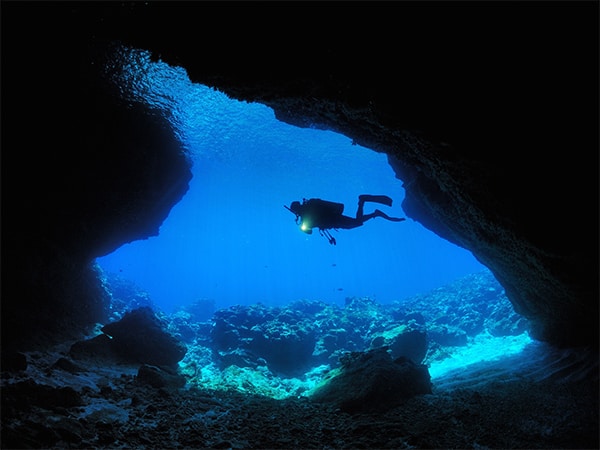
Enter the West White Beach Cave adjacent to White Beach via one of two large entrances separated by a large limestone column, with the walls of the chamber painted a rainbow of colours and shelved with whips, fans and electric clams. Novice snorkellers will be buoyed by the fact the cave is only 12 metres deep, so it is not claustrophobic. Venture outside the mouth of the cave to brave the 12-metre to 18-metre drop-off into the big blue, which is a comfortable descent for those new to diving.
Best for: Diving newbies will appreciate this gentle introduction to cave diving, as they don’t need to venture too deep to see the colourful reef.
Highlight for visitors: Getting a few shots for your Instagram silhouetted against the blue backdrop.
Perpendicular Wall
Christmas Island emerges from the Java Trench, which is about 3000 metres deep, and is lapped by seas that change from aquamarine to cobalt blue and minty green. The dive to Perpendicular Wall starts off in a shallow cave, where the seafloor is decorated with red fan coral, like beautiful branching bouquets. Swim out to a wall that reveals schools of triggerfish and pyramid butterflyfish feeding on algae, which spills over sections of the reef like a fuzzy neon-green fringe.
Best for: Divers who like to go to great depths to tick off rare and unusual fish species.
Highlight for visitors: The high probability of seeing manta rays, whale sharks and other large pelagic fish.
Flying Fish Cove
Head to the western edge of Flying Fish Cove and follow the boat ramp to the drop-off point, which is about 18 metres deep, where a huge wall of water suddenly turns translucent blue. Ranked by Diveplanit.com as ‘one of the best shore dives on the planet’, Flying Fish Cove is home to a whopping 90 per cent of all the species found around Christmas Island. To be guided by an expert, sign up for a tour with Christmas Island Wet & Dry Adventures. Or if it’s just you and your diving buddy, be sure to flipper over the edge of the drop-off; it’s like falling in slow-motion through melting glass.
Best for: Those new to diving who are looking for an easy, accessible experience.
Highlight for visitors: According to locals, you will see more fish and coral species in one dive here than you’ll see across the island.
Weekly travel news, experiences
insider tips, offers, and more.
Thundercliff Cave
The entrance to Thundercliff Cave is submerged, so to access it, you must first descend six metres to a corrugated sandy bottom and then swim into the inky gloom through an almost Gothic archway. You can surface once inside Thundercliff Cave as there is a large air pocket. The large limestone cavern features a spectacular collection of stalactites, like Gaudi-esque chandeliers dripping down from the ceiling. This almost make-believe landscape also includes a smaller tunnel then opens out into a second large chamber where you can also surface for a breather.
Best for: Beginner-level divers with cave certification.
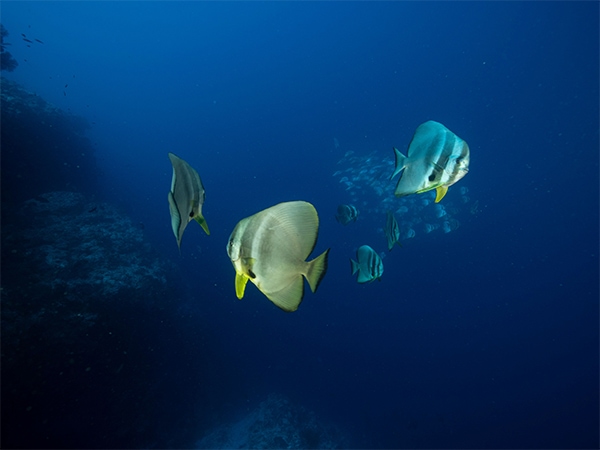
Highlight for visitors: The beautiful beds of coral resemble flower gardens and attract huge flocks of resident batfish.
Million Dollar Bommie
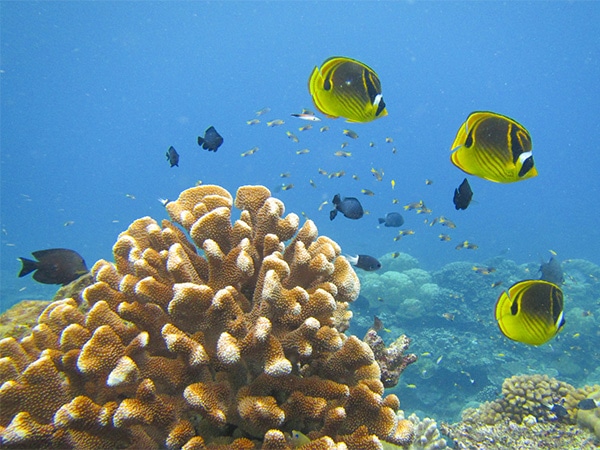
Underwater photographers from around the world have the Million Dollar Bommie on their bucket list. It’s considered one of the best diving spots on Christmas Island and is certainly up there as one of the best diving spots in the world. The bommie is about seven metres high, growing up from a base of about 26 metres, and wearing a pretty pettiskirt made out of delicate sea fans. Find pigfish, mimic surgeonfish and red fire gobi peeking out between the sea fans and coral overhangs, which offer spectacular backdrops for photography. You might also spot Meyer’s butterflyfish, coral trout, damsel fish, fusiliers, triggerfish, and rock cod.
Best for: Advanced, experienced divers
Highlight for visitors: The Million Dollar Bommie is a huge draw for divers because of the variety of fish living in a single, concentrated area. The light on the top of the bommie is cinematic, and the candy-coloured coral makes it a great place to photograph fish. Keep your eye out for a majestic manta ray, which can often be found flying through the water.
Rhoda Wall
Rhoda Wall is a magic place for pelagic lovers and, on a clear day, the visibility is so good it’s like looking through a pane of glass. Peer down into the pale blue from the comfort of your dive boat and you may be able to see grey reef sharks gliding through the water 30 metres below. There is no shortage of great diving sites around Christmas Island, but this coral-lined wall off the northwest coast of the island is full of wonders, sloping down gently in graded shades of blue before falling into a vertical wall at the 20-metre mark. Find great examples of fractal coral and hydrocorals here and colourful tropical reef fish swirling about. Beyond the slope there are some beautiful coral stacks, like packs of colourful cards, and large plate corals, too. Be one of just six divers on an intimate tour with Christmas Island Wet n Dry Adventures, who have been operating on the island since 1996. Japanese-born operator Teruki Hamanaka says while most divers are happy with a full-length 3mm wetsuit, those who feel the cold can also request a 5 mm steamer or a neoprene hood.
Best for: Advanced divers
Highlight for visitors: There are some beautiful royal blue hydrocorals attached to the wall like artworks and yellow and pink fusiliers that dart up and down the wall. Look out for megafauna: during the season (November to March), you are likely to see massive whale sharks swimming by.
Read our guide to Christmas Island for more about this unique Indian Ocean destination.
Want to see more stories from Australian Traveller in your Google search results?
- Click here to set Australian Traveller as a preferred source.
- Tick the box next to "Australian Traveller". That's it.