Christmas Island is seeking a more sustainable future, with its first commercial food forest, dedication to marine rubbish clean ups and novel efforts to safeguard its red crabs; all on island initiatives worth celebrating.
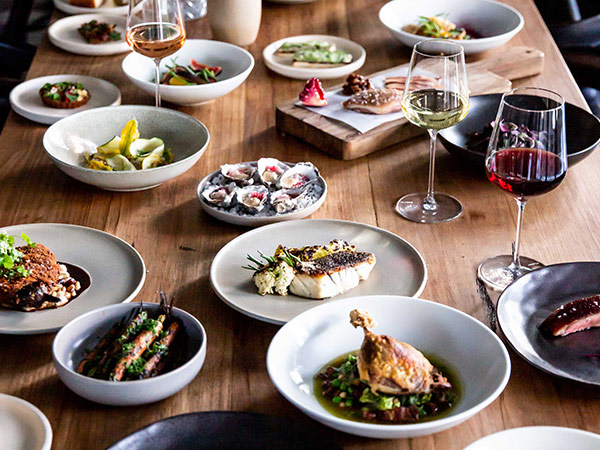
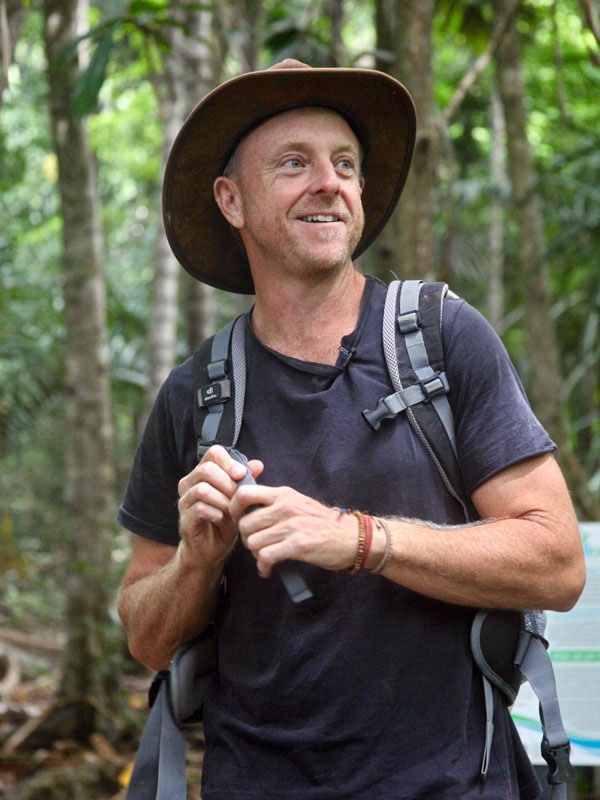
On Christmas Island this year, the price of a single imported lettuce hit $20, but there’s no catastrophic floods or sudden inflationary pressures driving the eye-watering cost. “Lettuce has been $12 to $15 for the past decade or more," says regenerative farmer, Mark Bennett. He’s sitting across from me in the dark, as fairy lights strung in banana palms cast a warm glow over his first long-table dinner. On the inaugural Indian Ocean Fest menu are snake beans, sweet potato leaves and passionfruit, all sourced from his organic Hidden Garden Sustainable Farm. At first glance, it might not seem like a big deal, but for the remote Australian Territory, where up to 98 per cent of the food is imported, supplying home-grown produce is a seismic shift from the norm.
Solving the food security problem on Christmas Island
“Food security has always been an issue here," says Mark, who moved to the volcanic dot with his parents when he was two years old. Supplies arrive fortnightly via freight plane and six-weekly ship drops, the latter at the whim of storms and swell. The unsustainable food miles, fraught accessibility and high produce prices have long troubled him. “I thought, with everything humans are able to achieve, we must be able to solve this," he says.
With a background in mine site rehabilitation, Mark set about slowly nurturing the soil across part of a 22-hectare former mine site. It’s taken 10 years, with more than a few fall-to-the-knees-and-cry moments, but he’s getting ever closer to his dream of creating a sustainable, commercially productive food forest fed by composted island waste. “Why should we have to eat dinner where all the food on our plate travels a minimum of 1500 kilometres?" he says.
Flying to this Jurassic-like, equatorial isle that’s geographically closer to Indonesia than it is Australia, is a case in point. At the airport just days before, I watch homebound islanders push baggage trolleys stacked with polystyrene eskies bearing fruit, vegetables and cheese towards check-in. As friendly as country folk, one strikes up a conversation and advises me to bring my own next time.
Mark, the son of a lauded union leader who fought for marginalised islanders’ work rights, plans disruption. He’s growing cacao, papaya, coffee, avocado, eggplant and pumpkin. There are herbs and spices and 12 different varieties of tropical fruit trees. He’s already sold lettuces for $4 each, free of by-the-kilo freight fees. Organic eggs, chickens, goats and sheep are all on Mark’s future wish list. “In my view, we need to return to a decentralised system of food production where local, smallplot production is favoured for its food security attributes," he says.
“We want to be a showcase to other communities. If you work together, you can create something that will be on the plate of future generations, and they’ll know that it comes from their land."
Protecting the newly-declared marine parks
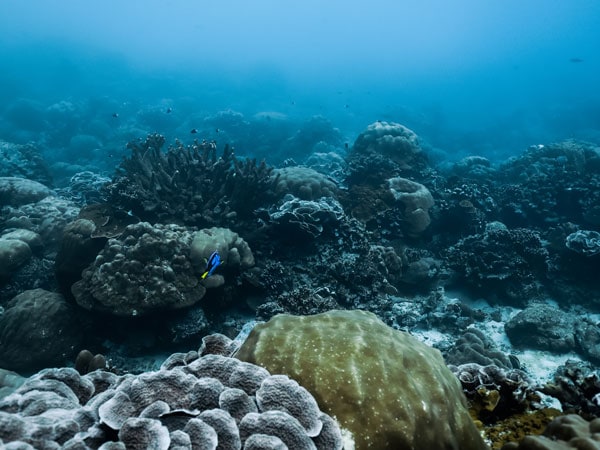
Sustainability might just be Christmas Island’s salvation. Long associated with the incarceration of asylum seekers and the dusty industrial grunt of 134 years of phosphate mining, the outpost is building a new reputation. In March 2022, the federal government created a France-sized pair of marine parks encircling Christmas and the nearby Cocos Keeling Islands. Recognising its rich biodiversity values, it protects this rolling slab of Indian Ocean from illegal fishing and mining.
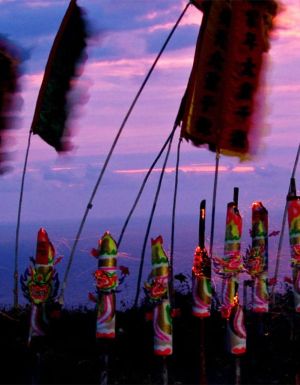
The declaration coincides with efforts to stem the flow of marine rubbish washing up on the island’s idyllic shores and contain terrestrial threats such as the crazy ants crushing the isle’s famous red crab population. Tourism is emerging as a key post-mining employment option. Bringing it all together is the new, week-long Indian Ocean Fest that ran an eco-focused itinerary in June. There’s a sense the tide is turning, and with it comes a new identity.
Exploring the natural wonders of Christmas Island
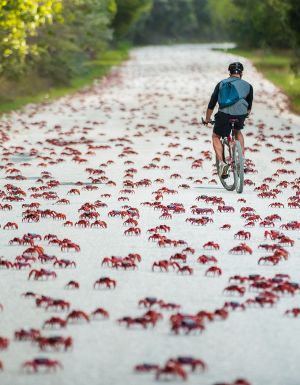
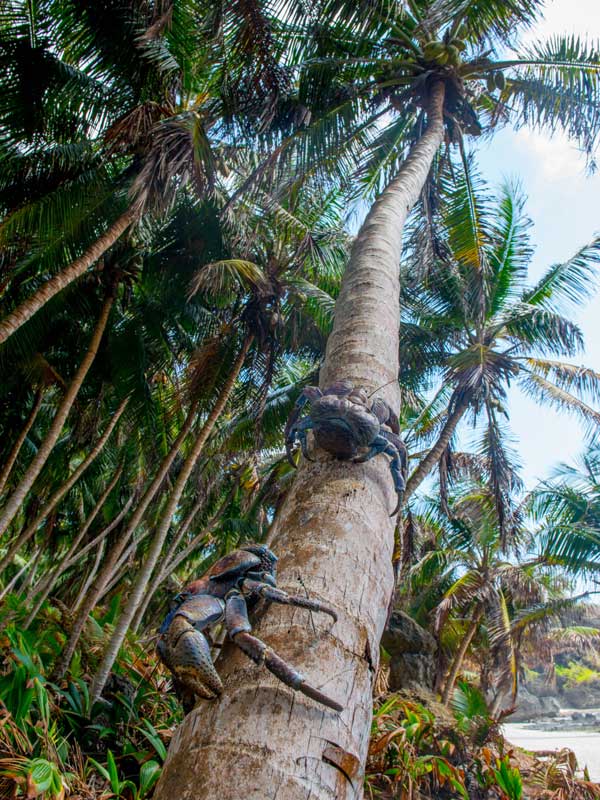
Look beyond the Detention Centre gates and Christmas Island stacks up as a valid nature destination. Sixty-three per cent of it is national park, riddled with rainforest and, at last estimate, some 180 million red crabs. They, the football-sized robber crab (so-called for its penchant for swindling anything it can get its claws on) and 20 other crab species make it the most significant land crab island in the world.
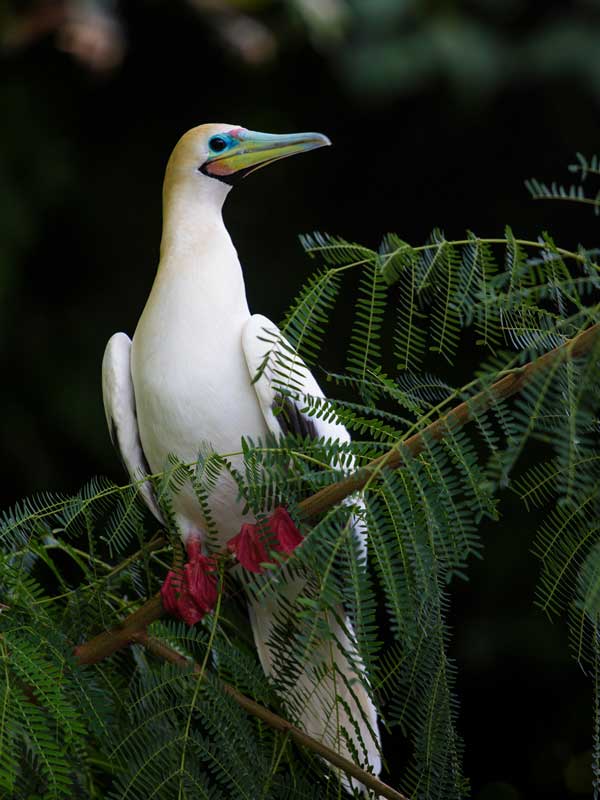
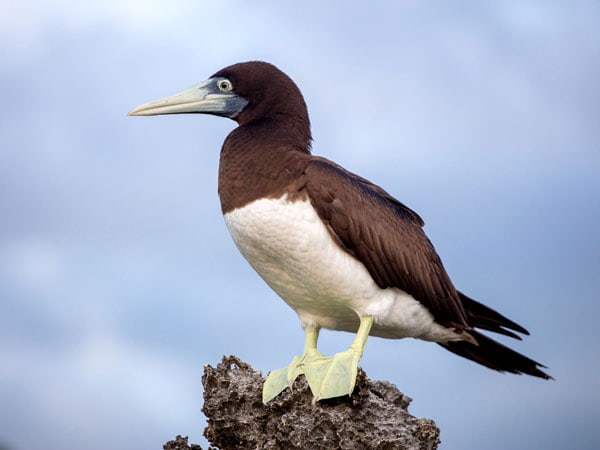
Rare bird species synonymous with the Galapagos – booby and frigatebirds – coast on toasty thermals like circling pterodactyls. Endangered sea turtles nest on the beaches and whale sharks, manta rays and spawning bluefin tuna swim in the converging Indian and Pacific oceans. Everything is in constant motion.
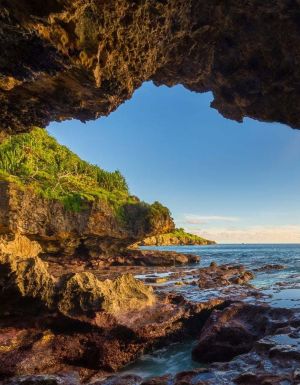
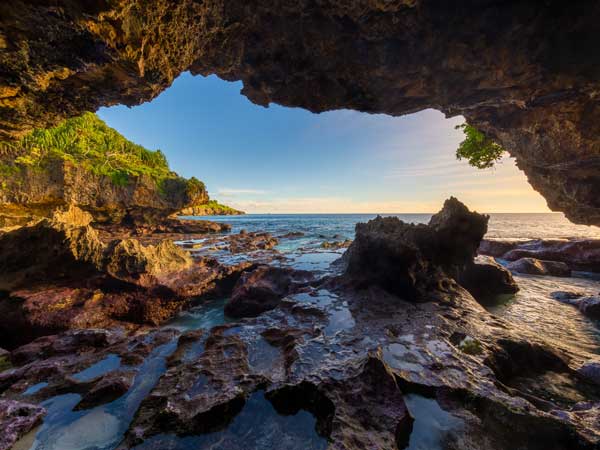
The black rock first emerged from the ocean some 60 million years ago. It’s the tip of a 5000-metre submarine volcano, which sits 361 metres above sea level. On many of the island’s edges, slabs of basalt rock are topped with pinnacles, the spiky formations sharp as a knife.
What to expect on Christmas Island
When I first arrive on Christmas Island, the collision of ancient raw wilderness and weathered civilisation feels somewhat confronting. Dozens of roosters and chooks roam wild along roadsides edged with rampant jungle. Blocky apartment buildings seemingly transplanted from the Soviet Era are showered with satellite dishes that face upwards like a field of sunflowers. A call to prayer rings out over loudspeakers as I pass lion sculptures fronting cream-coloured houses covered in a sponge effect of tropical mould.
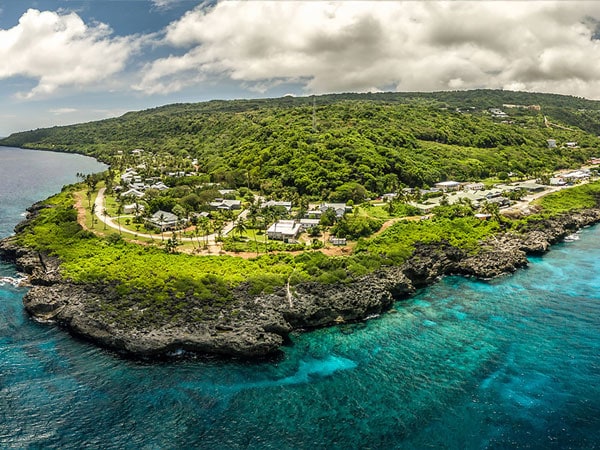
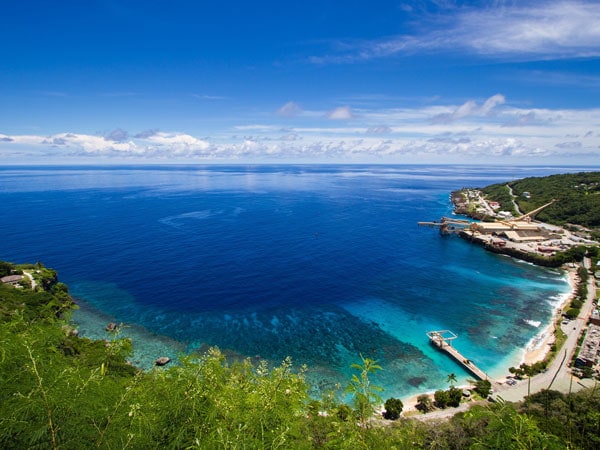
The working phosphate mine dominates Flying Fish Cove, its cranes, conveyor belt corridors and jetty reaching out like a steel octopus, impossible to ignore. There’s a smattering of street art, temples laden with offerings, and a loud red sign declaring which roads are closed during the annual red crab migration. A cafe serves laksa for breakfast with condensed milk coffee, while the bakery sells curry puffs alongside sliced bread. The intermingling of Malay, Chinese and Australian cultures creates a fascinating sensation of things being familiar, yet foreign.
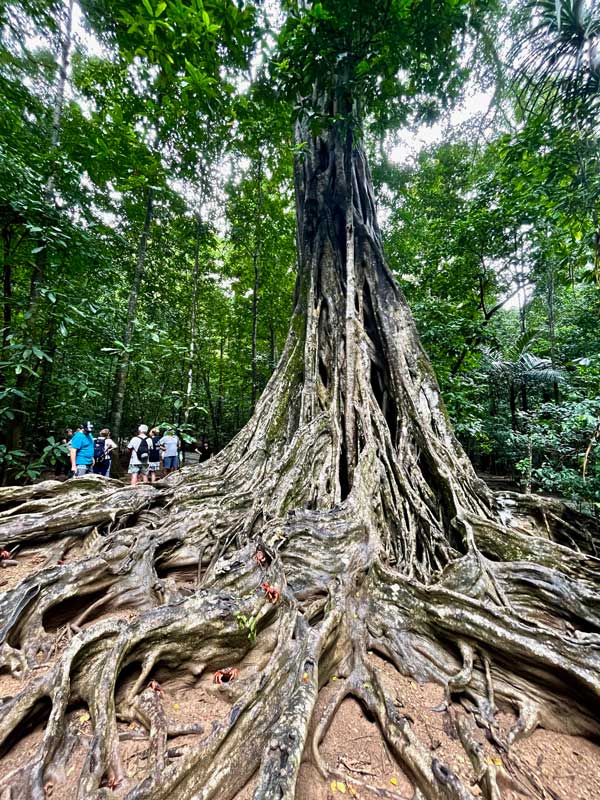
I cross to the island’s southern side, where ocean blowholes sound like a 747 gearing up for take-off. A track slices through one of the island’s healthiest rainforests. Guided by Parks Australia staff, I stop at a towering strangler fig tree. Red crabs peer from its muscular buttress roots, moving slowly into the crevasses as I approach. All around, the forest floor is bare, which I discover, surprisingly, is how it’s meant to be. The crabs act as cleaners, nibbling away leaf litter, fruit and understorey plants. The sweeping openness here is starkly different to the thick growth I’ve seen elsewhere.
The crabs vs the yellow crazy ants
Threatened species manager Alexia Jankowski says the culprits are yellow crazy ants, which were accidentally introduced just over a century ago. “They’re one of the biggest threats on the island," she says, responsible for killing tens of millions of land crabs since they formed super colonies in the 1980s. Those “multi-queened, thriving masses" are now believed to stretch across more than 400 hectares on the island. The ants blind and immobilise the crabs with formic acid, triggering a domino effect on the island’s ecosystem. Parks Australia has been baiting the forest perimeter, but Alexia says it’s an unsustainable solution.
“Staff are walking along lines that are 100 metres apart and treating this forest for the ants," she says. “It’s very successful for a period of time, but it’s got to be ongoing." Two decades of widespread aerial bait dropping and biological control has helped, but longer-term solutions are needed. “In the future we will be trialling flying a drone for dropping adhesive baits into the tree canopy, where they will stick, ready for the ants to take," says Alexia. “We’re hoping this means the bait doesn’t get taken by other species, and that no creatures are hurt from the drop."
Fighting the threat of marine debris
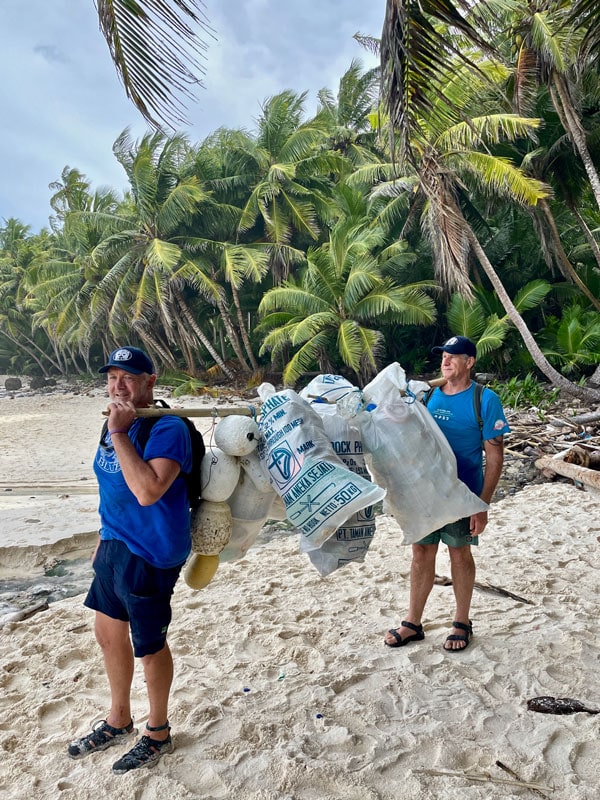
Crazy ants aren’t the only threat being managed. I arrive at the road junction of the island’s most iconic beaches, Greta and Dolly, where piles of collected rubbish stare back at me. Distressing volumes of what’s termed ‘marine debris’ are pushed by trade winds to collect on some of Christmas Island’s coves and beaches – another blight that the place has to bear, through no fault of its own. At Dolly’s boardwalk entrance, a sign states that 39 per cent of the debris comes from foam insulation and fishing buoys.
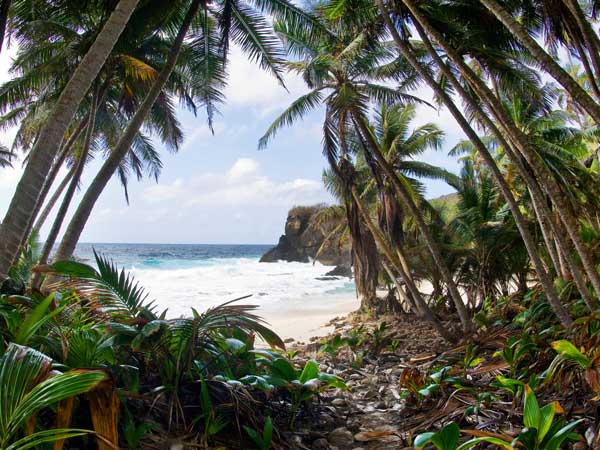
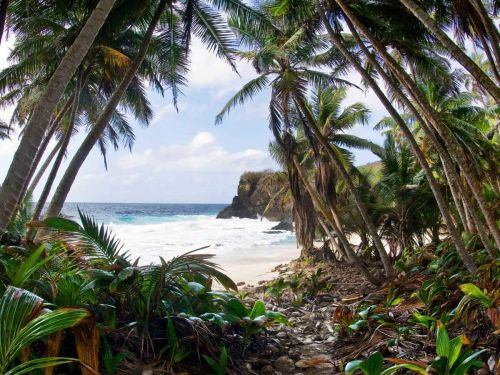
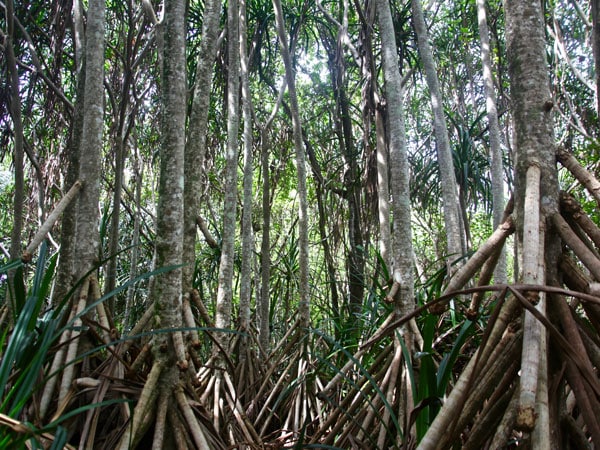
A 25-minute adventure through pandanus, palms and mangroves and I pop out to what the locals call their ‘Robinson Crusoe beach’. Coconuts and volcanic rock meet white sand frequented by turtles, but at my toes are plastic bottle lids, thongs and cigarette lighters.
A team from the not-for-profit organisation Tangaroa Blue Foundation (TBF) is on the ground, bagging as much as they can carry back along the boardwalk – the only way in and out. Their daily hauls can weigh up to 1000 kilograms, which they then sort and painstakingly catalogue so they can track the origin of the waste and lobby industry and government to change current practices.
“We enter the data into the Australian Marine Debris Database, which is the biggest of its kind in the southern hemisphere," says WA project coordinator, Casey Woodward. “The information is used to create source reduction plans, which the community integrates and then we monitor the success of the plan."
Hope is on the horizon
TBF has implemented more than 300 source-reduction plans across Australia, targeting everything from cigarette butts to bait-box packing straps. It has been helping manage Christmas Island’s plastics problem since 2009, with hopes that its efforts will become more solutions than bandaids. “When you consider that 99 per cent of the marine debris that washes up on Christmas Island is of international origin, it adds another layer of complexity to the strategy," says Casey. “It requires collaboration on an international level. With the United Nations Environment Programme agreeing to implement a legally binding global treaty to end plastic pollution by 2024, hope is on the horizon."
Perhaps that’s how it feels for the entire island. With debate continuing to rage about the future of the detention centre and a plan to drop lettuce prices for good, Christmas Island can at last hope to be known for what it truly is: a tropical wilderness deserving of sustainable survival.
A traveller’s checklist
Getting there
Virgin Australia flies twice weekly from Perth; aim to catch the faster, direct flight.
Staying there
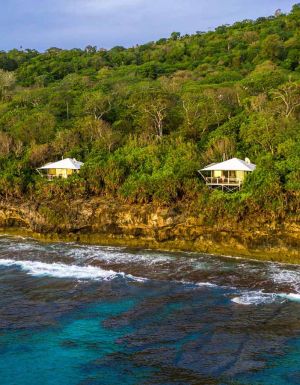
Try the new Christmas Island Apartments or go for all-inclusive luxe at Swell Lodge. Both feature in our guide to Christmas Island accommodation.
Eating there
Grab the daily $15 special – pho, kway teow, wontons – at the basic but authentic Poon Saan Coffee Shop, and spend Saturdays gazing over the ocean at Rumah Tinggi Tavern. And learn more about eating on Christmas Island with our culture and foodie guide.
Playing there
Start planning for next year’s Indian Ocean Fest.