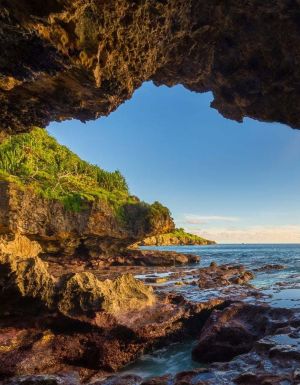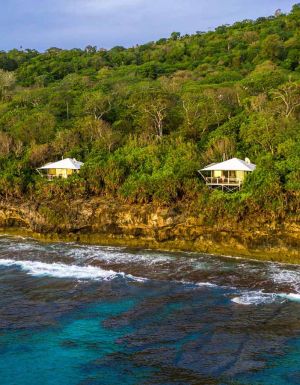
Sixty per cent of Christmas Island is national park, which makes it a destination for nature lovers from around the world.
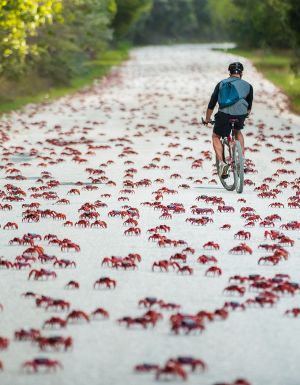
When documentary maker Sir David Attenborough listed the annual mass migration of millions of Christmas Island crabs as ‘one of the top 10 most memorable TV moments from his life’s work’, nature lovers from around the world sat up and took notice. That was in 2008. And it was a big call, coming from one of the world’s foremost naturalists whose life work spans five decades and who has cuddled gorillas, climbed mountains, waded into African swamps and braved Arctic temperatures to capture awe-inspiring footage for his global audience.
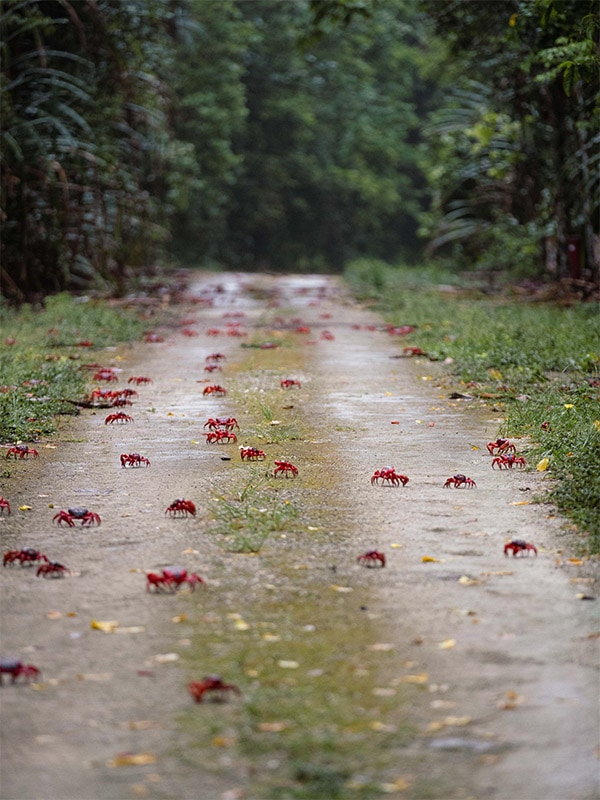
Attenborough caught the spectacle on camera during filming for The Trials of Life in 1990. Since then, an ever-increasing number of visitors have been drawn to the island to witness the phenomenon of the red crabs marching sideways en masse down to the Indian Ocean. The synchronised migration of some 40 to 50 million red land crabs takes place between October and January, depending on the start of the wet season and levels of moisture in the air. The red crab migration is the main attraction on Christmas Island and the easiest places to watch the phenomenon are at Flying Fish Cove, Ethel Beach and Greta Beach. But the red crabs are only one of 20 terrestrial and intertidal crabs that call the island home; in your day-to-day travels you are also likely to come across various species of hermit crab, ghost crabs, nipper crabs, land crabs and cave crabs as well as the endemic blue crabs that inhabit the wetlands. The birdwatching here is also world class.
Christmas Island National Park covers 85 square kilometres (63 per cent) of the island’s land area, and there is a proclamation pending to declare its waters a marine park. Exploring it is easy with our comprehensive guide to Christmas Island’s best walks and wildlife encounters below, but you can also make it even easier to uncover the island’s hidden gems with Travel Exchange Christmas Island, they are experts on how best to experience this tropical jungle paradise. No matter how you choose to see it, you can expect to encounter everything from Christmas Island crabs and rare frigatebirds to nesting turtles and whale sharks in this nature lover’s wonderland.
Best walks on Christmas Island
Hughs Dale
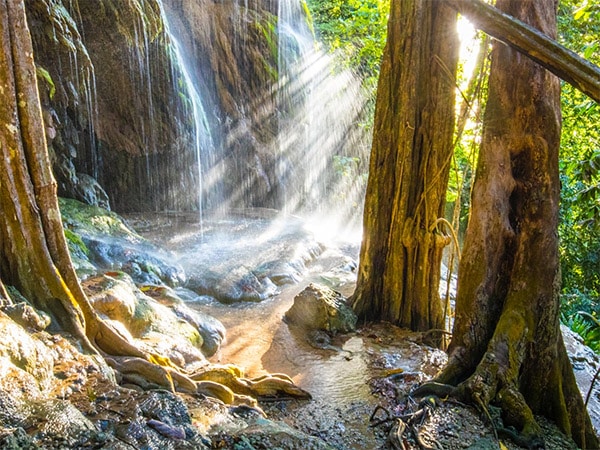
It’s a mostly easy 1.5-kilometre walk across a series of seven water courses down a narrow twisting path through the wetlands to get to Hughs Dale. The streams bubble up from underground caves that flow into the ocean and, over time, the pooling water has hewn a series of gorges and natural terraces into the landscape. This unique wetland ecosystem is listed as a Wetland of International Importance under the Ramsar Convention, and a detour to the Dales is a must when on Christmas Island. In addition to the soundtrack of tinkling streams, this enchanted forest is made more magical with its mossy carpet over the smooth-worn stone staircase, and lichen splotched over the forest floor. Follow the boardwalk through the majestic Tahitian chestnut trees, strangler figs and banyan trees to get to Hughs Dale Waterfall, a destination in its own right.
Best for: All ages, suitable for families
Highlight: Cool off with a shower under the natural waterfall.
Anderson Dale
It’s more of a moderate walk to get to Anderson Dale, which starts at the car park near the elevated walkway. The 3.6- kilometre track passes through a pristine swathe of rainforest to arrive at a freshwater stream that has carved a small gorge through the limestone cliffs that wind their way to the ocean. You will find a series of caves further down the gorge, which is dotted with small boulders, and contains a small cove, and an enormous twisted tangle of tree roots. There is stunning scenery around every bend on this rainforest walk which boasts permanent and perennial streams, springs, and an extraordinary array of animals, birds, and plants.
Best for: The gorge can be rough and slippery at times, making it suitable for those with a moderate level of fitness and mobility.
Highlight: The Dales is one of the few places on the island with permanent flowing water, providing a significant habitat for the island’s endemic blue crabs.
Martin Point Walk
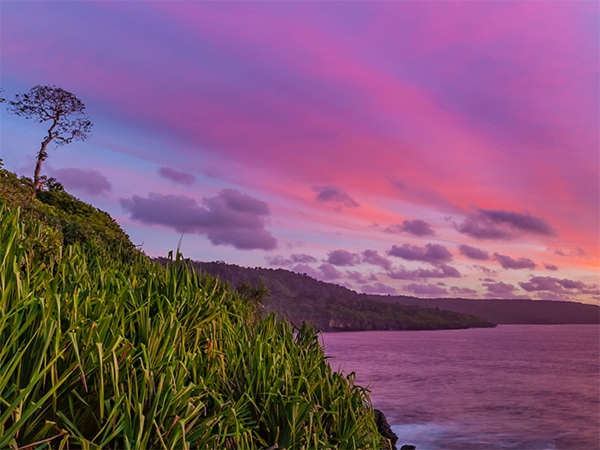
It’s 4WD access only to Martin Point, which is also located in the Dales area. From the car park at Martin Point, it’s a short walk of 150 metres to a viewing platform that juts out over the edge of the soaring cliffs like an open drawer. Martin Point is a great place to sit down and watch the sun sink over the sea and waves crashing over the park’s western shoreline and fringing reefs. Bring a pair of binoculars to scan the skies for great frigatebirds and the brown Abbott’s booby, which nest near the sea cliffs. If you’re driving on the road in the dark, take extra care to avoid the island’s giant robber crabs, which are the world’s largest land crustacean. Robber crabs, also called coconut crabs, can grow up to one metre across and weigh up to 4.5 kilograms and live for more than 50 years.
Best for: All ages and abilities
Highlight: The viewing platform gives you a front-row seat to admire the sunset, all fiery burnt orange hues.
Margaret Knoll Walk
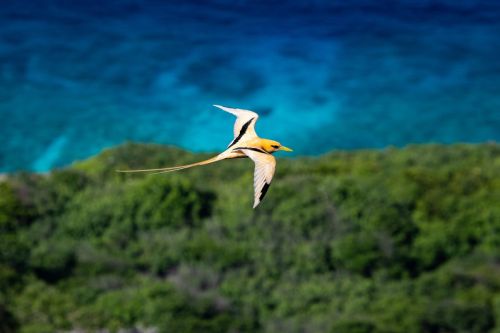
It’s a short and easy walk along a boardwalk and up a series of steps to the spectacular Margaret Knoll lookout, which is one of the most photogenic spots on the island. Situated at the edge of a plunging inland cliff, the lookout offers panoramic views of the island, with its smooth folds covered in a blanket of green that stretches down to the rolling, roiling blue of the ocean some 200 metres below. Margaret Knoll Walk offers one of the best vantage points to spot seabirds, including frigate birds , brown and red-footed boobies and the golden bosun . You may also spot endangered flying foxes in the late afternoon and early evening.
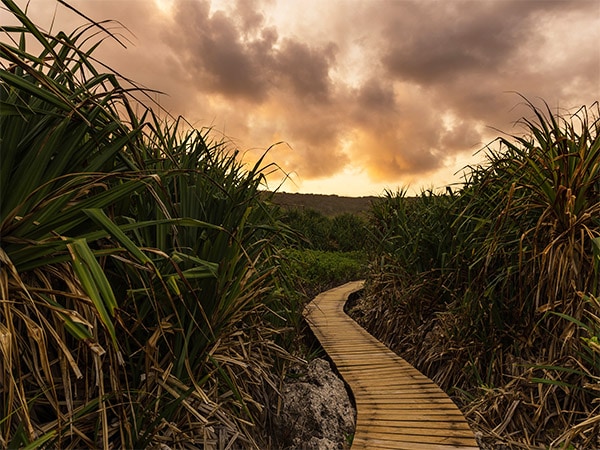
Best for: All ages and abilities, nature-lovers and birdwatchers
Highlight: The potential to spot sea birds such as the beautiful golden bosun which you will often see spearing into the water to feed on fish and squid.
Perpendicular Wall Walk
Named after the dive site that jacks up at an angle of about 90 degrees, this spectacular Perpendicular Wall Walk winds its way through the terraced forests of Christmas Island along a fairly flat trail for about 10 kilometres. Dwarfed by a range of inland cliffs, the walk is rooved by sky and walled by wilderness that erupts with the magnificent frigatebirds and the iconic colourful red crabs. While Perpendicular Wall is a well-known dive site, the scenery above sea level is every bit as striking. Sign up for a red crab spawning tour with Indian Ocean Experiences to watch the red crabs waterfall over the side of cliffs in their efforts to deliver their trillions of eggs to the sea.
Best for: Fitness enthusiasts
Highlight: The panoramic views over the north-west coastline of Christmas Island.
The Blowholes Walk
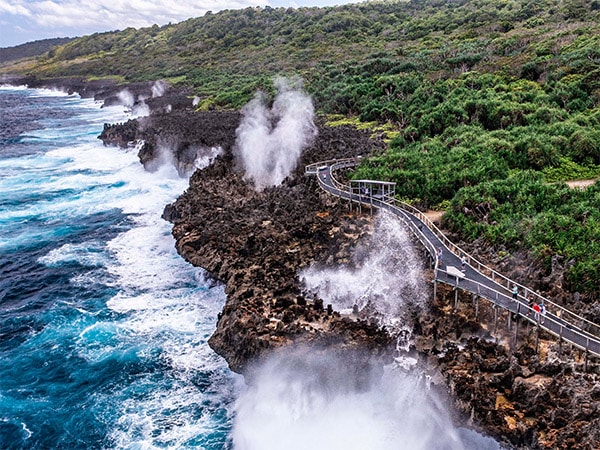
A 4WD is required to get to the Blowholes, where you can bask in the grandeur of watching Mother Nature vent. The best view is from the platform oriented toward the blowholes that spurt water upwards in the sky through hundreds of holes that pockmark the rocky coastline. The airborne jets of water lend the landscape of black rock pinnacles movement and drama, transforming this orchestrated performance into live theatre with the surround sound of roaring ocean. The viewing platform has seating and is close to the car park, making it the perfect place to sit and relax or enjoy an afternoon picnic.
Best for: The track to the Blowholes features some of the island’s most thrilling wilderness including a giant strangler fig carpeted in emerald-green moss in the middle of the virgin forest.
Highlight: The spectacular performance by Mother Nature of the blowholes blasting water sky-high.
Best wildlife encounters on Christmas Island
Flying Fish Cove
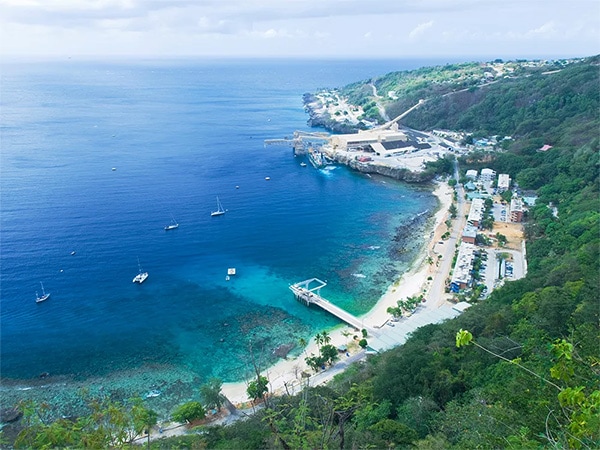
Flying Fish Cove is one of the main hubs on the island and is a gathering spot for snorkelers who like to spot creatures such as octopus and turtles and kids who like to watch the ships being loaded from the cove. People come and go all day here and it’s a soothing place to sit and watch tourists catching dive boats out to sea, children yahooing off the jetty and the rugged assemblage of cranes elbowing the sky at the mooring facility. Watch for spinner dolphins on the horizon, breaking the surface of the translucent seas.
Best for: It’s just a short boat ride away to see whale sharks and manta rays.
Highlight: Kicking back on the foreshore at dusk when the sun paints the sky in brushstrokes of pink and purple.
Lily Beach
To snorkel off Lily Beach is to truly descend into an underwater world. Take a few steps off the shore and dive in and then drift with the current amidst jewel-coloured coral and tropical fish. The curve of sand is one of the island’s most accessible with the beach protected from the wind thanks to being bracketed by sea cliffs. Watch fish playing hide and seek in the coral, wade into the shallow aquamarine rock pools or swim into the deeper water to depths tinted unimaginable shades of blue. To get to this secluded beach you must follow a walking trail past blowholes spitting and blasting white water onto the rocks. The biodiversity on show here is breathtaking, from nesting sea birds to a diverse range of reef-dwelling fish.
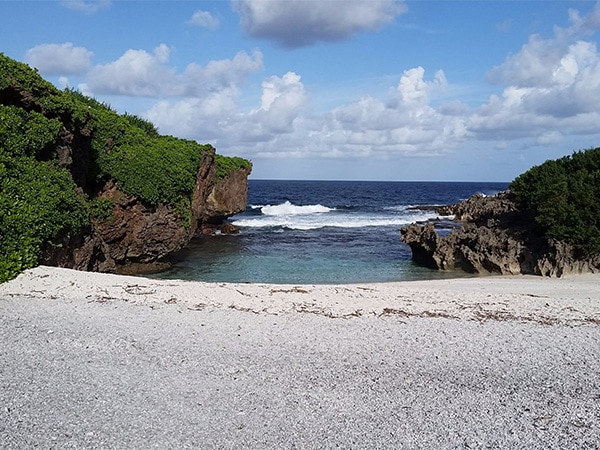
Best for: Keen wildlife observers and fans of megafauna (whale sharks, manta rays and sharks).
Highlight: There is an infinity pool hidden near to this oft-deserted beach.
Ethel Beach
From Lily Beach you can stroll along the 1.5-kilometre boardwalk that snakes through a broad furrow between limestone karst formations that look like they’ve been attacked with a blunt axe. Look for nesting brown boobies with their fluffy white chicks close by. Don a mask and snorkel or do some shore diving in the silky shallows here where you will find cities made out of coral as neon-bright as signage you’d expect to see in Sydney’s Kings Cross: from hot pink to purple, yellow, red and blue. Make sure you stare up at the trees off the ruggedly beautiful beach to spot birds nesting here between March and September.
Best for: Birdwatchers
Highlights: Rare birdlife encounters with the great frigatebird and lesser frigatebird, which nest here during breeding season. The red-footed booby and Eastern reef egret are also known to make cameos here.
Greta Beach
Access to Greta Beach is by 4WD only, followed by a short jaunt down a jungle boardwalk before reaching a set of very steep stairs. Travel to Christmas and Coco Island with long-time local Lisa Preston, of Indian Ocean Experiences , to get a front-row view of Australia’s Galapagos and really immerse yourself in the landscape. From giant coconut crabs, or robber crabs, to dancing boobies, spinner dolphins, screeching frigatebirds and whale sharks, Lisa knows the lay of the land and will connect you to the endemic flora and fauna on the island in a very conscious, and considered way. To see Christmas Island in all its glory, Lisa will guide you up close, on foot and under the water.
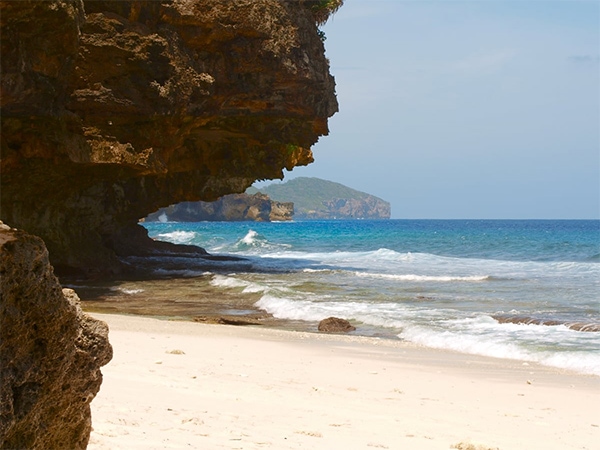
Best for: Spotting nesting turtles, hermit crabs and red crabs during the spawning season. It’s also a popular picnic spot.
Highlight: This stunning picturesque beach is shaped by seasonal swells and has a dramatic backdrop of craggy sea cliffs.
West White Beach
Few places exemplify the raw, rugged nature of Christmas Island as this secluded beach which also makes a great backdrop for selfies. Start your experience in a 2WD to get to the top of the track, which wends down to the sand. It’s about an hour’s walk to get to West White Beach, so you will discover a wealth of flora and fauna, including species that are endemic to the island. It’s worth wandering along the track, which varies in difficulty, until you get to the short cliff descent (via rope) that will get you down to a long, secluded stretch of sand, where you will find more photo opportunities against a backdrop of cliffs that appear to have been hacked with a blunt axe.
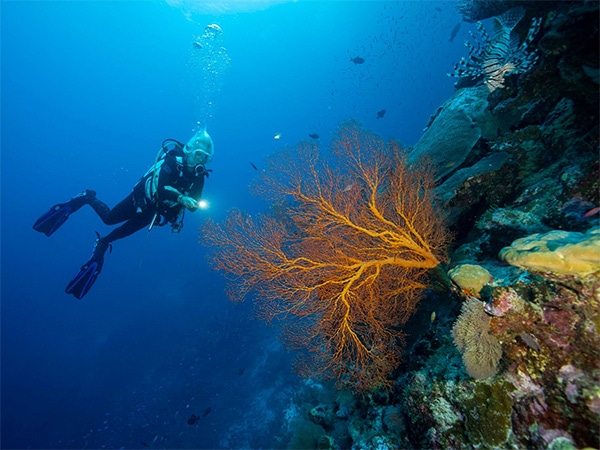
Best for: This stunning beach has coral reefs just offshore and is famed in the diving community for its West White Beach Cave, one of the best places to dive off Christmas Island.
Highlight: The coral reefs, which are teeming with life.
Winifred Beach
It’s 4WD access only to the start of the track to Winifred Beach, which requires a moderate level of fitness due to the rough surface of the track and the steep section that stretches down to the beach. It’s a half-hour walk each way or two hours each way if walking from the gate along the 4WD track. While Christmas Island is, in general, a wildlife lover’s dream, it’s also a treat for those who fancy bouts of forest bathing. The leaves of the trees in this rugged coastal terrace rainforest have a deep lustre to them and the birdsong is beautiful.
Best for: This signposted trail leads through rugged coastal terrace rainforest, before reaching a cliff face with a steep staircase that leads to a rocky shoreline. It’s suitable for fit, active types only.
Highlight: This beach is rugged, the water turquoise and it’s a jaw-droppingly picturesque place to swim. Charge your GoPro: the biggest highlight here might be seeing a whale shark, manta ray or turtle cruise by.
Dolly Beach
You must climb to the start of the Dolly Beach track by 4WD before setting off along the boardwalk, which snakes for 1.8 kilometres through national park where the trees sway, creak and groan in the wind. Set a leisurely pace along the Dolly Beach walking track to arrive at the isolated Dolly Beach, which is an incredibly pretty place to loll. Pack a picnic so you can maximise your time spent dipping in and out of the azure waters complete with a coral reef. But be warned: the cheeky coconut crabs are also known as robber crabs because of their thieving ways, so keep a close eye on your food and drinks.
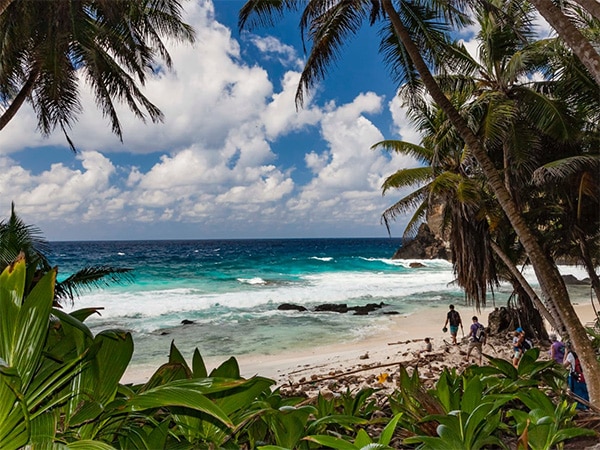
Best for: Families and people of all ages and abilities
Highlight: Spot hermit crabs in the rock pools, and watch out for the area’s robber crabs as well as the turtles that nest here all year round. Take a dip in the ‘Dolly Beach Spa’ a natural rock pool where the waves bubble up