The only Aussie place to make National Geographic’s 2025 best list

hero media
National Geographic has singled out one place in Australia on its Best of the World list for 2025… and it’s not any of the usual suspects.

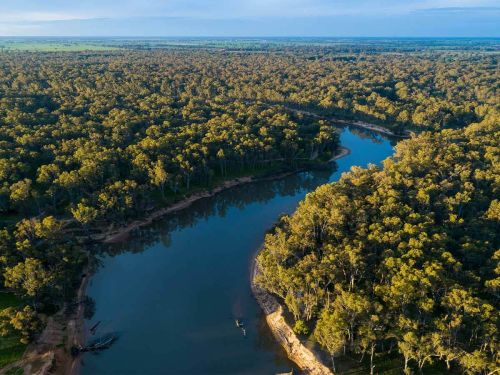
An unsung Aussie region has edged onto National Geographic’s Best of the World list for 2025. The Murray River joins destinations such as Greenland and an active volcano in Guatemala as one of the world’s most exciting places to visit next year.
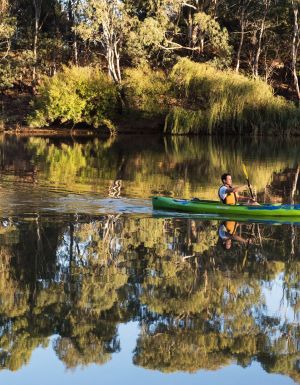
The Murray River has been singled out by National Geographic as one of the best destinations in the world for 2025. (Image: Visit Swan Hill)

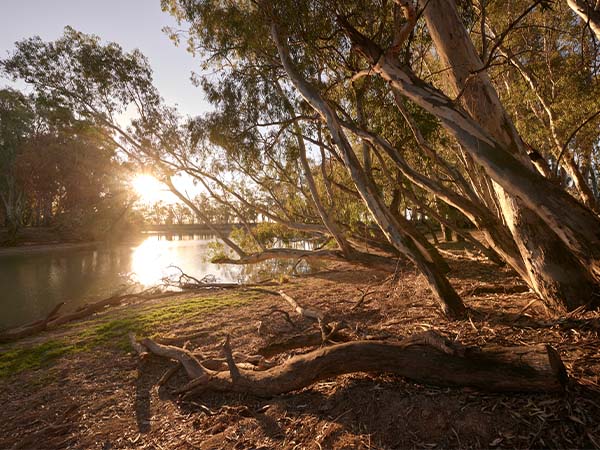
Running along the border of NSW and Victoria, and into SA, The Murray River is the world’s third-longest navigable river behind the Amazon and Nile. National Geographic cites the upcoming debut of the PS Australian Star – a 5-star luxury paddle steamer – as a key reason why the destination is so hot right now. The $6.75 million PS Australian Star will run multi-day cruises from Echuca starting in June 2025. Itineraries will see passengers gliding along the tree-lined banks of the Murray, stopping for day excursions to vineyards and Aboriginal archaeological sites.
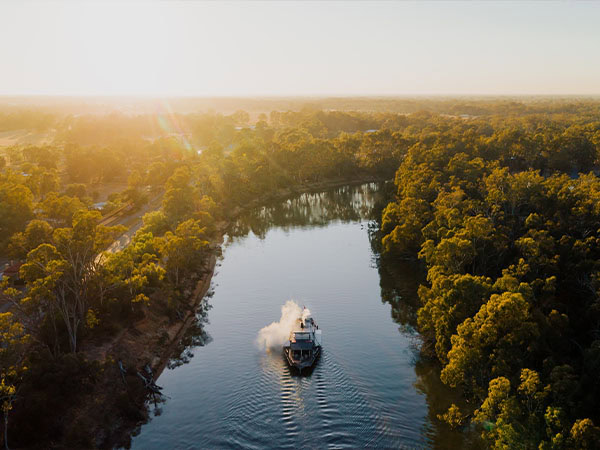
Murray River
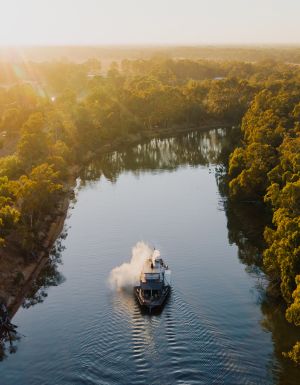
Cruise between Echuca and Adelaide on a multi-day river cruise. (Image: Visit Vic)

The charming vintage paddle steamer PS Emmylou is refurbished from a 1906 steam engine and has grown to become an icon of Echuca. Due to popular demand, PS Emmylou will also expand her offerings, also ferrying passengers on a variety of three-, four- and seven-night journeys between Echuca and Adelaide from next year.
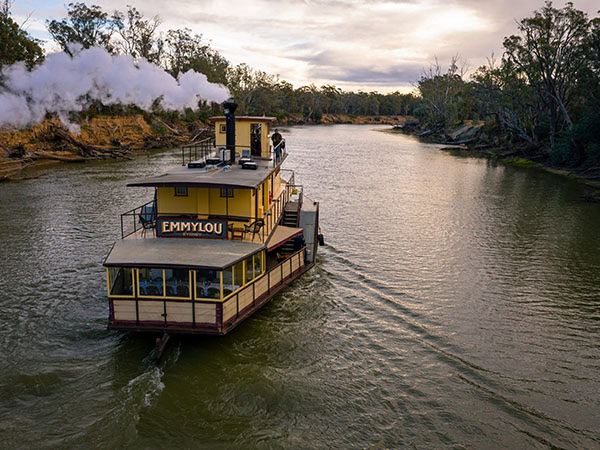
PS Emmylou
Vintage paddle steamer PS Emmylou is an icon of the Murray. (Image: Visit Vic)

Why should you visit?

Aside from the jaw-dropping natural scenery, The Murray region is steeped in history – from the charming heritage streetscapes of Gold Rush towns to the wild history of bush rangers who infamously roamed the area. The Murray is also one of Australia’s unsung foodie hotspots, with an abundance of growers, makers and restaurants where you can sample fresh farm-to-table produce. We’ve put together a more in-depth guide of the best things to do along the Murray, as well as some inspiration for how to unwind on an immersive weekend there.
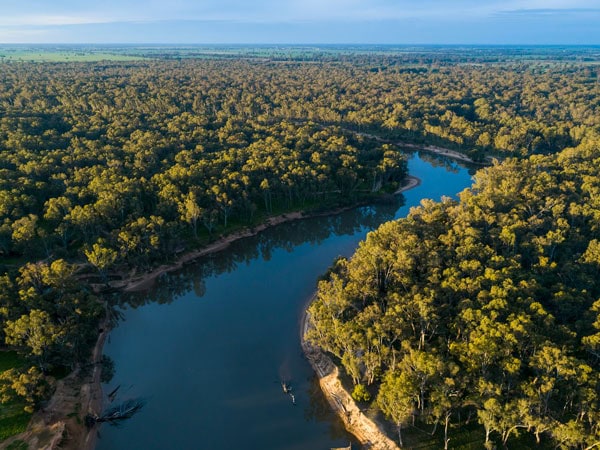
an aerial view of the Murray River
The community connection runs as deep as the Murray River. (Image: Rob Blackburn/Visit Vic)
Elizabeth Whitehead
Elizabeth Whitehead is a writer obsessed with all things culture; doesn't matter if it's pop culture or cultures of the world. She graduated with a degree in History from the University of Sydney (after dropping out from Maths). Her bylines span AFAR, Lonely Planet, ELLE, Harper's BAZAAR and Refinery 29. Her work for Australian Traveller was shortlisted for single article of the year at the Mumbrella Publishing Awards 2024. She is very lucky in thrifting, very unlucky in UNO.
See all articles
hero media

Film lovers need to add these Victorian theatres to their bucket list

Theatres have always been a cornerstone of regional Victoria, reflecting the character and history of their local communities.

From grand, gold rush-era masterpieces to Art Deco wonders to repurposed prisons, we’ve rounded up four of Victoria’s best regional theatres to catch a show at next time you’re travelling through.

Her Majesty’s Theatre, Ballarat

Her Majesty’s Theatre, Ballarat 
Her Majesty’s Theatre in Ballarat has been standing for 150 years. (Image: Michael Pham)

A monument to the immense gold rush wealth flooding through Ballarat in the second half of the 19th century, Her Majesty’s Theatre (‘Her Maj’ to locals) celebrates its 150th anniversary as the city’s premier performing arts venue this year.

Built in a classical style and immaculately preserved (thanks largely to a recent $16-million restoration), this Lydiard Street landmark is the oldest continuously operating theatre in mainland Australia, notable for its double balcony and a stage that slopes towards the front, making it one of the most audience-friendly venues in the country to see a show.

The Capital, Bendigo

The Capital Theatre, Bendigo
The Capital in Bendigo was built in 1873 as a Masonic Hall. (Image: Michael Pham)

Denoted by its distinctive Corinthian columns, more reminiscent of ancient Greece than regional Victoria, The Capital theatre in Bendigo has been through several iterations since the first stone was laid in 1873.

Originally a Masonic hall, the renaissance revival-style building became a theatre in the 1890s, falling into disrepair for a time during the 1970s, before being restored and reopened (as the Bendigo Regional Arts Centre) in 1991. Today, the 480-seat venue hosts everything from comedy to cabaret to traditional theatre, dance, opera and live music.

 Ulumbarra Theatre, Bendigo

a look insideBendigo’s Ulumbarra Theatre
Inside Bendigo’s Ulumbarra Theatre, a former prison. (Image: Michael Pham)

Bendigo has busted out as a regional performing arts hotspot, so it’s fitting that one of its newest venues is housed within a former prison. Meaning ‘meeting place’ or ‘gather together’ in the language of the local Dja Dja Wurrung people, the $26-million, 950-seat auditorium rose from within the red brick walls of the historic Sandhurst Gaol in 2015.

It’s an eerie feeling as you approach the imposing granite facade, pass beneath the old gallows and pick up your ticket from the box office occupying a repurposed cell block. With the building playing a main character in the show, this is performative architecture at its finest.

Rex Theatre, Charlton

the Rex Theatre in Charlton
The 1938-built Rex Theatre in Charlton is an Art Deco gem. (Image: Jenny Pollard)

Regional theatres don’t come more romantic than this Art Deco gem in the river town of Charlton, in north-central Victoria. Built in 1938, the 350-seat community-owned theatre provides an essential entertainment outlet for residents in the Wimmera Mallee region, as well as visitors making the trip up the Calder Highway from Melbourne.

The volunteer-run venue is the last remaining purpose-built cinema in regional Victoria, and hosts the Charlton Film Festival every February, plus three weekly film screenings (Tuesday, Saturday and Sunday).