hero media

This surprising city has dethroned Adelaide as Australia’s happiest

Move over, big smoke – a Victorian goldfields city has just claimed Australia’s top spot on the world’s largest happiness ranking.

Ballarat isn’t just pretty on a postcard. According to the Institute for Quality of Life’s 2026 Happy City Index – the world’s largest community-driven study of urban happiness – it’s the most contented city in Australia, and one of the happiest places on the entire planet.

The Victorian city ranked 16th out of 251 cities worldwide, earning a coveted spot in the index’s gold group: a distinction reserved for the top 50 cities that consistently perform across quality of life, sustainability and long-term development.

What is the happiest city in Australia?
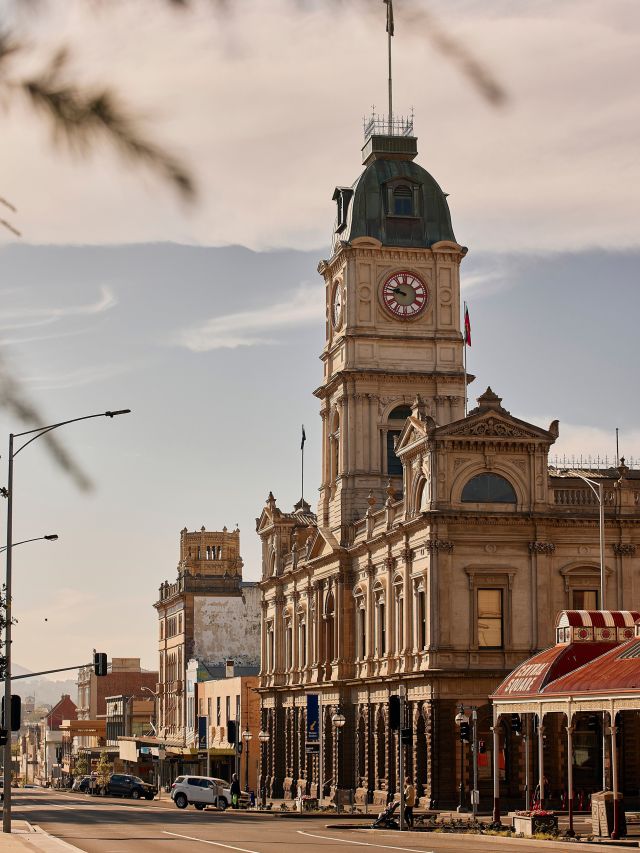
Streetscape of Sturt Street in Ballarat, Victoria
Ballarat is Australia’s happiest city for 2026.

This year, that title belongs to Ballarat – and it might surprise those who’ve never looked past Melbourne when thinking about Victoria.

Ballarat scored 6546 total points across 64 indicators and six dimensions in the 2026 Happy City Index, outperforming the global average in a striking range of areas: its recycling rate sits at 72 per cent against a global average of 44 per cent, its housing affordability ratio is 1.99 compared to the worldwide average of 5.12, and its intentional homicide rate is zero – against a global average of more than 20 per 100,000 residents.

Life expectancy in Ballarat is 82.3 years, and green space per capita comes in at 182.35 square metres – more than double the global average of 72.57. The city also recorded a net internal migration rate of 18.10 per 1000 residents, compared to a global average of 3.58 – meaning people are actively choosing to move there.

How were the rankings determined?

couple laughing at Wayward Winery, Ballarat, Victoria
Visit Wayward Winery near Ballarat.

Happiness, as any philosopher will tell you, is slippery to measure. The Happy City Index approaches it with rigour: covering 251 cities and drawing on 64 indicators across six dimensions – citizens, governance, environment, economy, health and mobility. Over a five-month research period, 466 researchers gathered and validated more than 150,000 data records, looking at everything from voter turnout and air quality to green space, work-life balance and housing costs.

From an initial pool of more than 3400 cities worldwide, nearly 1000 were selected for deeper analysis, so making the final list of 251, let alone landing in the gold group, is no small feat.

Where Ballarat really shines is in the areas that matter most to everyday life. Its average weekly working hours are 38 – below the global average of 40.5 – and its unemployment rate of four per cent sits well below the worldwide average of 5.58 per cent. Annual PM2.5 air pollution sits at just 5.00, less than half the global average of 11.86.

Need tips, more detail or itinerary ideas tailored to you? Ask AT.

AI Prompt

What other Australian cities made the list?
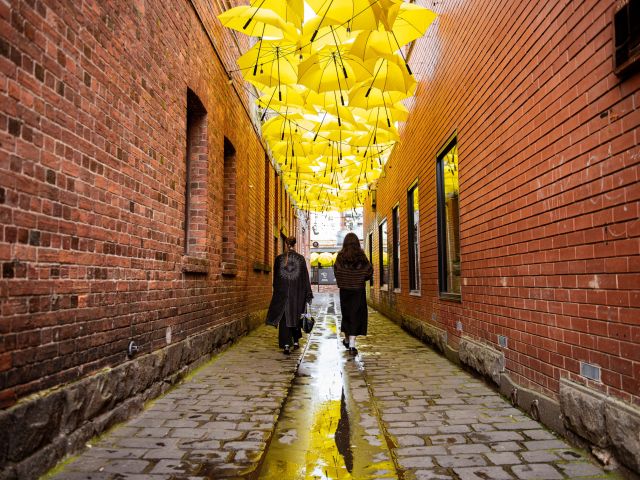
women walking through Hop Lane, Ballarat, Victoria
Ballarat is the 16th-happiest city in the world.

Ballarat wasn’t the only Australian city to perform well. Maitland in NSW’s Hunter region came in at 35th – also earning gold group status – while Adelaide, which topped the Australian rankings in 2025, came in at 71st this year. Melbourne ranked 108th, Geelong came in at 122nd, Hobart was 132nd, and Rockhampton came in at 168th.

Globally, Copenhagen in Denmark took the number one spot, followed by Helsinki in Finland, Geneva in Switzerland, Uppsala in Sweden and Tokyo in Japan, rounding out the top five.

Ready to visit Australia’s happiest city?
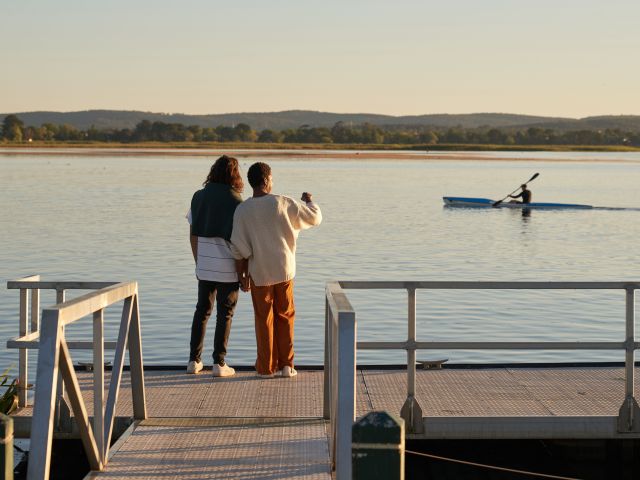
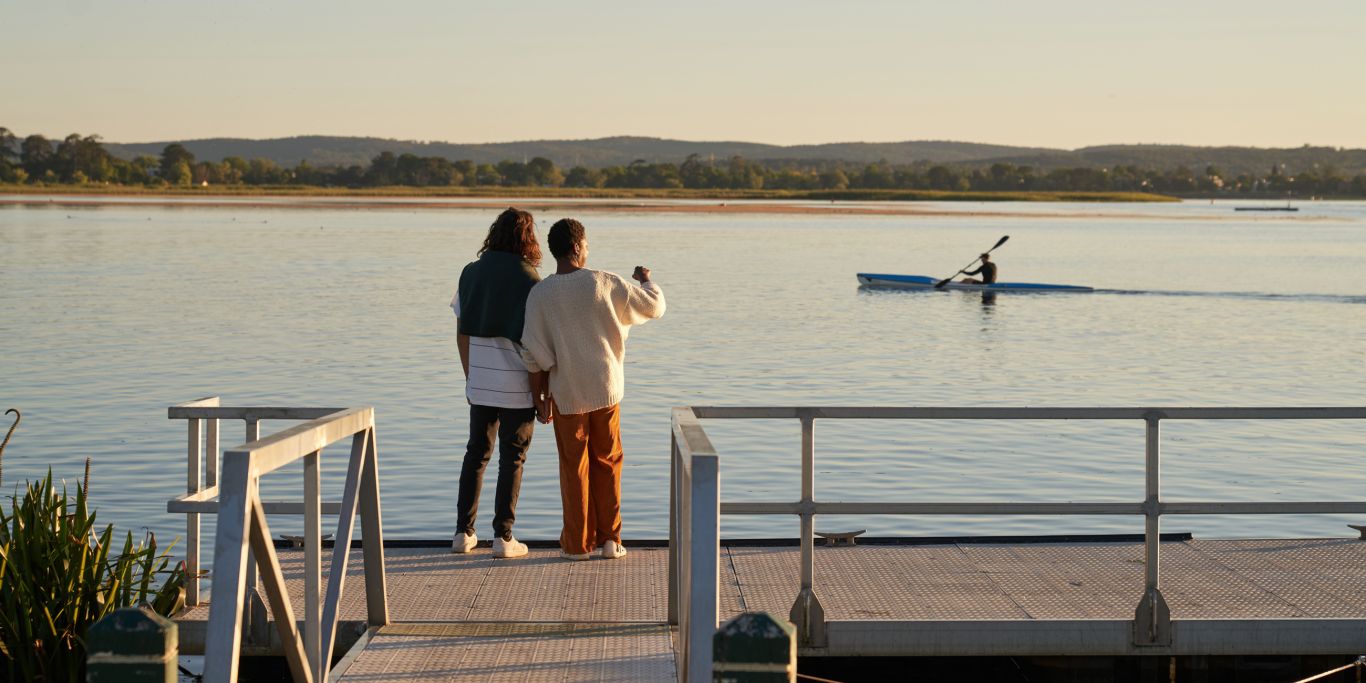
Couple by Lake Wendouree, Ballarat, Victoria
Life expectancy in Ballarat is 82.3 years.

The numbers make a compelling case, but Ballarat has always had a way of winning people over in person. Whether you’re after great food, a cold drink, a Saturday market or a weekend retreat, we’ve got you covered.

Emily Murphy
Emily Murphy is Australian Traveller's Email & Social Editor, and in her time at the company she has been instrumental in shaping its social media and email presence, and crafting compelling narratives that inspire others to explore Australia's vast landscapes. Her previous role was a journalist at Prime Creative Media and before that she was freelancing in publishing, content creation and digital marketing. When she's not creating scroll-stopping travel content, Em is a devoted 'bun mum' and enjoys spending her spare time by the sea, reading, binge-watching a good TV show and exploring Sydney's vibrant dining scene. Next on her Aussie travel wish list? Tasmania and The Kimberley.
View profile and articles

How a $1 deal saved Bendigo’s historic tramways

The passionate community that saved Bendigo Tramways has kept the story of this city alive for generations.

It was an absolute steal: a fleet of 23 trams for just $1. But such a fortunate purchase didn’t happen easily. It was 1972 when the Bendigo Trust handed over a single buck for the city’s historic collection of battery, steam and electric trams, which had transported locals since 1890.

inside the historic Bendigo Tram
Bendigo Tramways is a historic transport line turned tourist service. (Image: Bendigo Heritage)

The city’s tram network had been declared defunct since 1970 due to post-war shortages in materials to upkeep the trams and declining passenger numbers as motor vehicles were increasing. However, determined locals would not hear of their beloved trams being sold off around the world.

The Bendigo Trust was enlisted to preserve this heritage, by converting the trams into a tourist service. The Victorian government approved a trial, however news spread that the Australian Electric Tramways Museum in Adelaide had acquired one of the streetcars for its collection.

a tram heading to Quarry Hill in 1957
A tram on its way to Quarry Hill in 1957. (Image: Bendigo Heritage)

An impassioned group rallied together to make this physically impossible. Breaking into the tram sheds, they welded iron pipes to the rails, removed carbon brushes from the motors, and formed a blockade at the depot. The community response was extraordinary, and a $1 deal was sealed.

A new chapter for the city’s fleet

the old Tramways Depot and Workshop
The old Tramways Depot and Workshop is one of the stops on the hop-on, hop-off service. (Image: Tourism Australia)

Today, Bendigo Tramways welcomes some 40,000 passengers annually, operating as a hop-on, hop-off touring service aboard the restored trams. Fifteen of the now 45-strong fleet are dubbed ‘Talking Trams’ because of the taped commentary that is played along the route. The trams loop between Central Deborah Gold Mine and the Bendigo Joss House Temple, which has been a place of Chinese worship since 1871, via other sites including the old Tramways Depot and Workshop.

a Gold Mine Bendigo Tram
The fleet comprises 45 trams that have been restored. (Image: Visit Victoria/Robert Blackburn)

Keeping things interesting, throughout the year visitors can step aboard different themed trams. Tram No. 302 becomes the Yarn Bomb Tram, decorated both inside and out with colourful crochet by an anonymous group of locals.

During the festive season, Tram No. 15 operates as a tinsel-festooned Santa Tram, and the big man himself hides out somewhere along the route for excited children to find. And on selected dates, the adults-only Groove Tram runs nighttime tours of the city, accompanied by local musicians playing live tunes and a pop-up bar.

the historic post office turned visitor centre in Bendigo
Visitors can hop on and off to see the city’s sites such as the historic post office turned visitor centre. (Image: Tourism Australia)

As well as preserving the city’s history, however, the continuation of the tram service has kept the skills of tram building and craftsmanship alive in a practical sense. Bendigo’s Heritage Rail Workshop is world-renowned for restoring heritage trams and repurposing vehicles in creative ways.

Locally, for example, Tram No. 918 was transformed into the Dja Dja Wurrung Tram with original Aboriginal artworks by emerging artist Natasha Carter, with special commentary and music that shares the stories and traditions of Bendigo’s first people. You can’t put a price on preserving history. Nonetheless, it was a dollar very well spent.