The entire 164km trail is walkable again for the first time since the 2024–25 season.
The Grampians Peaks Trail has fully reopened to hikers, marking the most significant milestone yet in the recovery of Grampians (Gariwerd) National Park following the devastating 2024–25 bushfire season.
Five hike-in campgrounds – Barri Yalug, Duwul, Durd Durd, Yarram and Wannon – reopened this month, joining the previously restored Bugiga campground to complete the Grampians Peaks Trail (GPT)’s full 164-kilometre route from Mount Zero (Mura Mura) in the north to Dunkeld in the south. It’s the first time the entire trail has been accessible since the fires swept through more than 135,000 hectares of the national park.
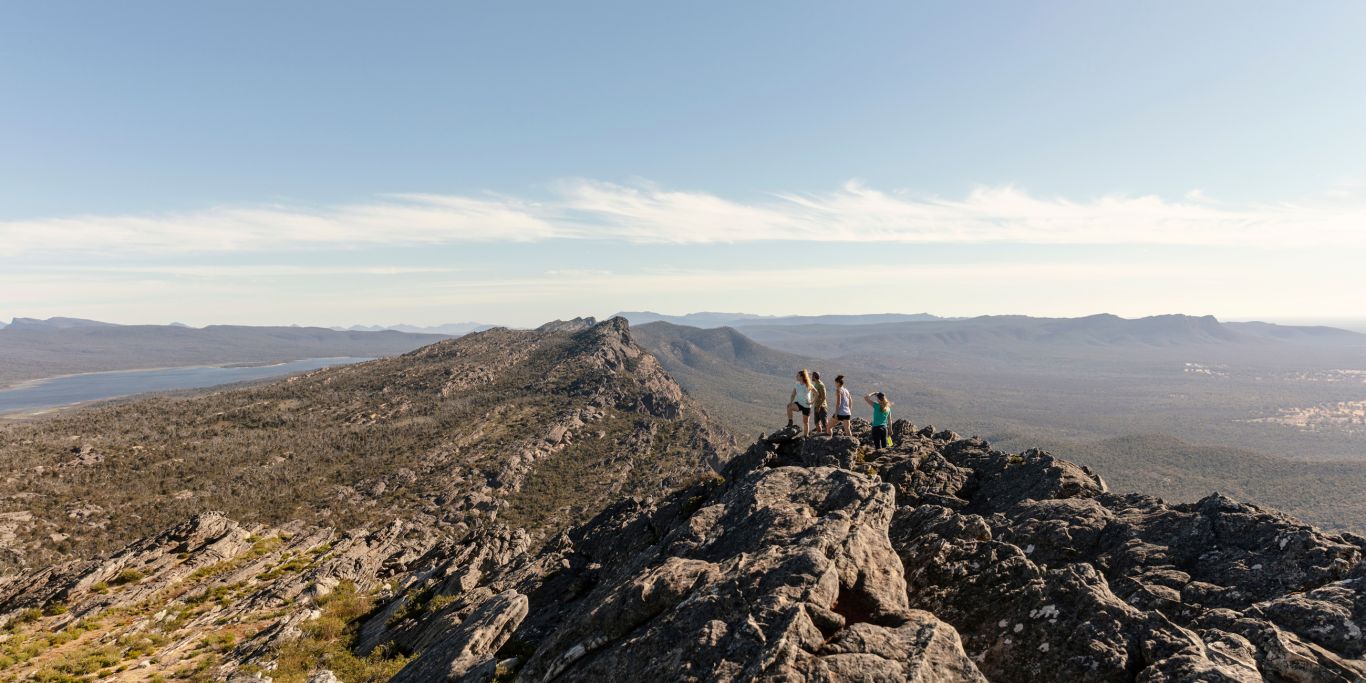
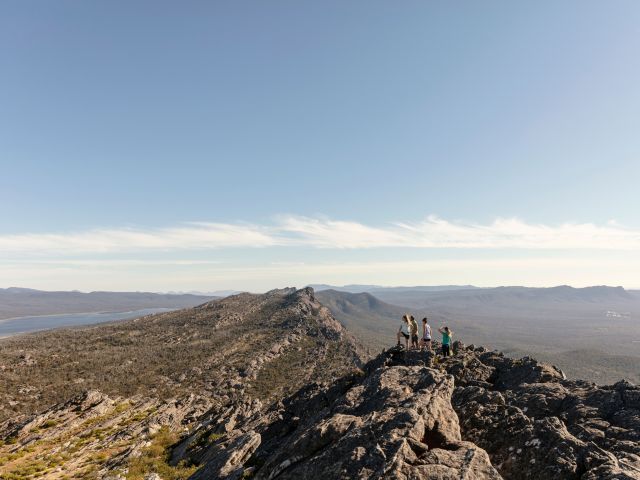
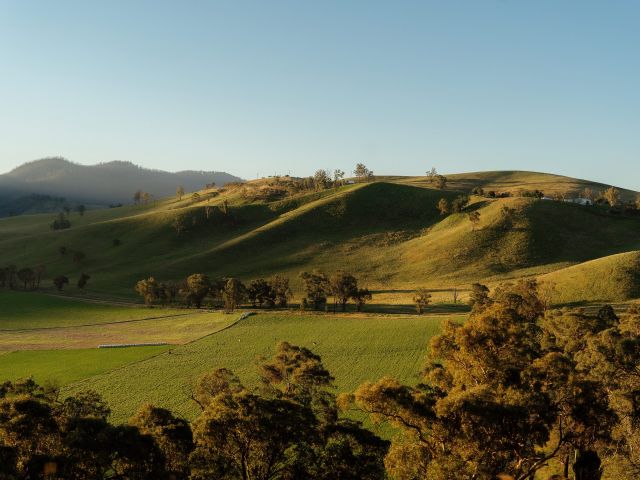
The full trail takes 13 days to complete. (Credit: Tourism Australia/Visit Victoria)
Most of the trail had reopened by July last year, but the remoteness and scale of damage to the central and southern sections meant overnight hiking remained off-limits while extensive repair works were underway. In total, six hike-in campgrounds were damaged, and large sections of track required rebuilding.
Recovery efforts have been supported by $36 million in funding from the Victorian and Commonwealth Governments.
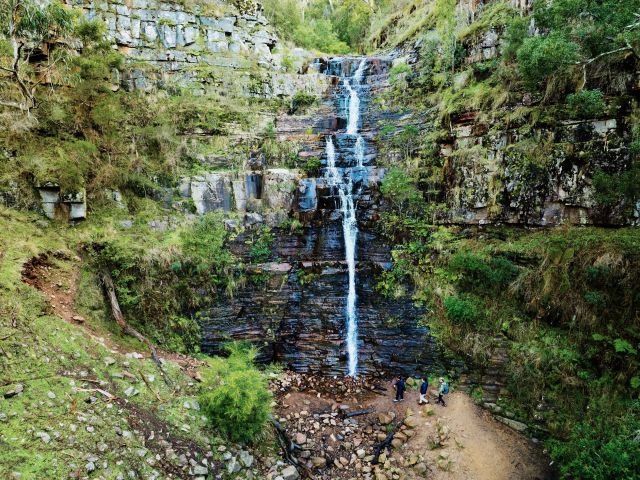
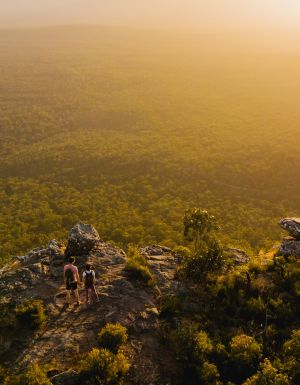
Large sections of track required rebuilding. (Credit: Tourism Australia/Visit Victoria)
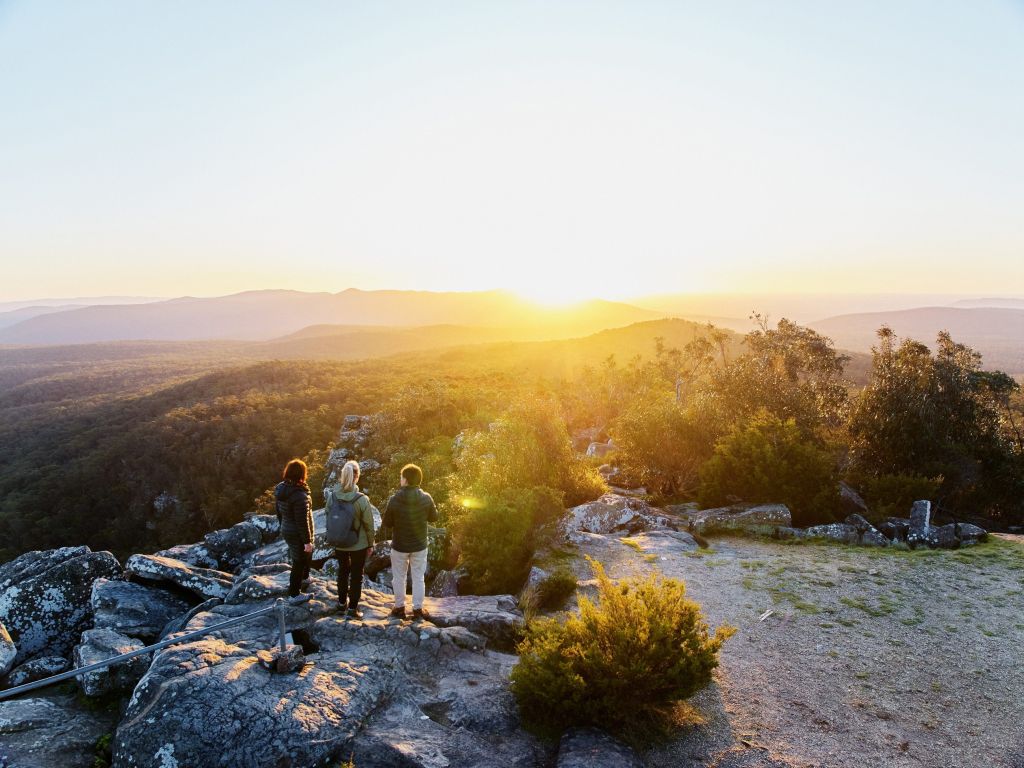
Around 100 stone steps were installed to manage steeper gradients. (Credit: Tourism Australia/Visit Victoria)
Parks Victoria recovery project officer, Kyle Hewitt, described arriving at a trail that had effectively vanished. “The post-fire inspections of the track quickly identified large sections which no longer had the cut-vegetation corridors which once guided people on their journey – it was like the track had disappeared," he said.
Works included stabilising and redefining approximately 20 kilometres of track, and around 100 stone steps were also installed to manage steeper gradients in what Hewitt describes as a now “fragile environment."
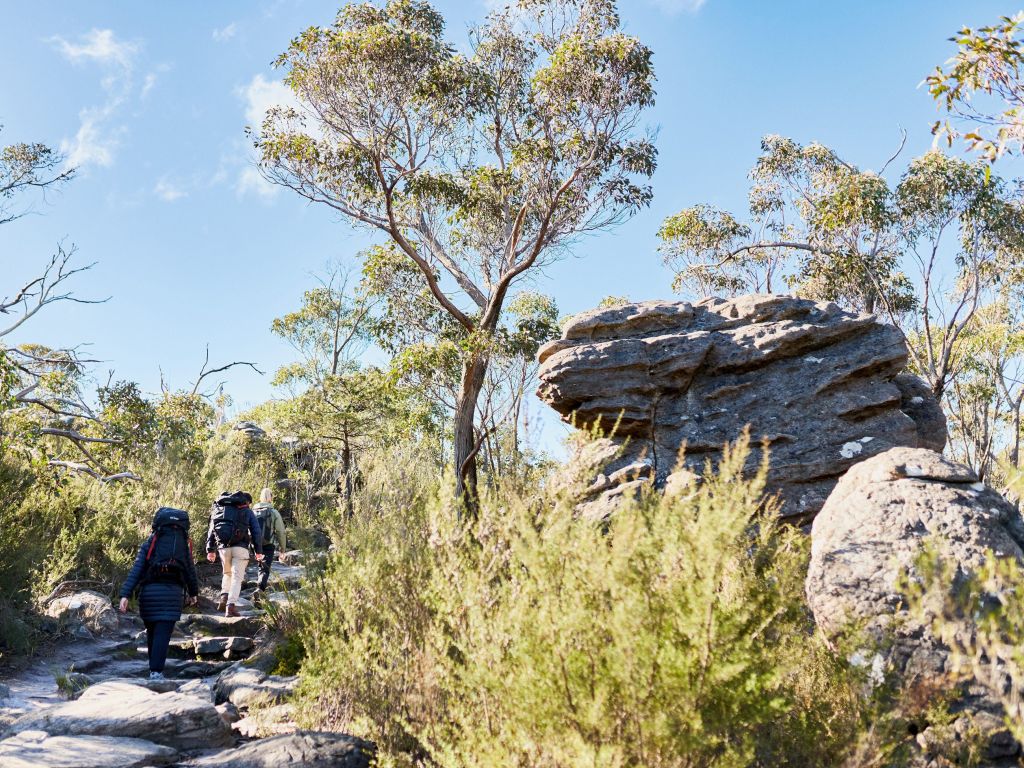
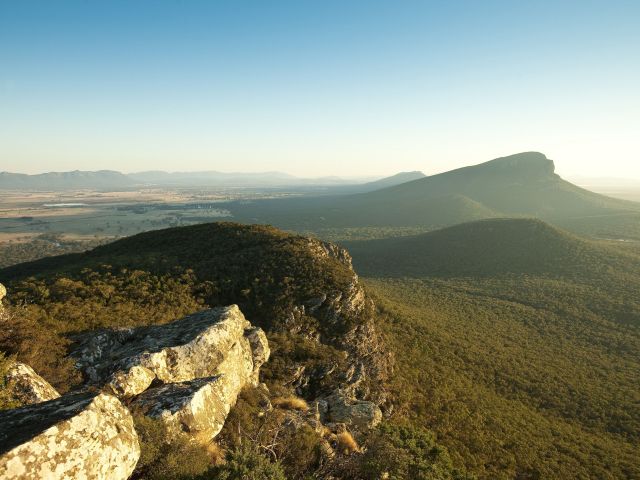
Mt Sturgeon (Wurgarri) is the final mountain of the journey. (Credit: Parks Victoria)
Of the affected campgrounds that reopened, Barri Yalug and Duwul sustained the most damage, though Hewitt noted that none were completely destroyed. Works included new timber tent pads, replacement water tanks and tank-landings, new windows at the Yarram shelter, and repairs to solar power systems. The remoteness of some sites required two helicopter sling-load operations to transport materials in and remove debris, while the Yarram shelter’s window height demanded professionally erected scaffolding reaching seven metres.
Nature, too, has been doing its own repairs. “There are lots of epicormic shoots coming back, and some of the ground cover has returned," Hewitt said – though shade remains scarce in the hardest-hit areas around Barri Yalug and Duwul.
Weekly travel news, experiences insider tips, offers, and more.
Emily Murphy is Australian Traveller's Email & Social Editor, and in her time at the company she has been instrumental in shaping its social media and email presence, and crafting compelling narratives that inspire others to explore Australia's vast landscapes. Her previous role was a journalist at Prime Creative Media and before that she was freelancing in publishing, content creation and digital marketing. When she's not creating scroll-stopping travel content, Em is a devoted 'bun mum' and enjoys spending her spare time by the sea, reading, binge-watching a good TV show and exploring Sydney's vibrant dining scene. Next on her Aussie travel wish list? Tasmania and The Kimberley.
Mythical, historical and most of all, spectacularly beautiful, Buchan Caves demands you take your time – and a tour.
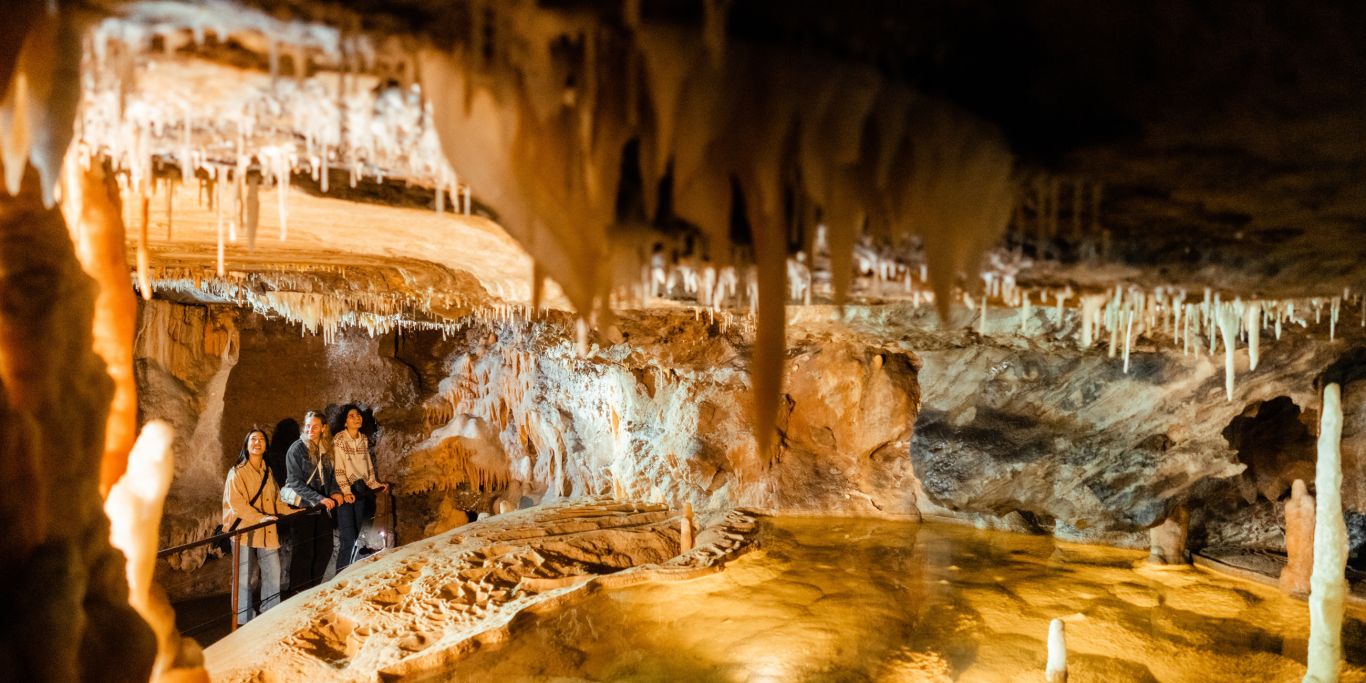
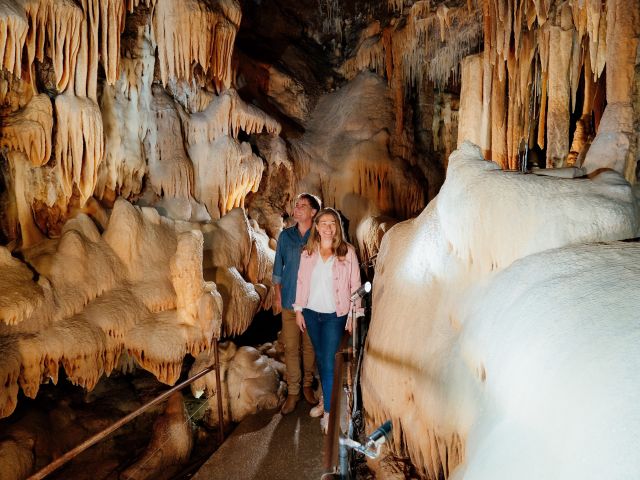
In the pools of water, so still they could be mirrors, the reflections of the stalactites make these limestone towers seem even taller. Almost 400 million years ago, an underground river carved through the rock to create the Buchan Caves . Now, artworks created by dripping water adorn these subterranean galleries: stalactites hanging from the ceiling, pillars connecting some to the ground, even curtain-like wave formations clinging to the stone.
Visit the caves for the day or stay onsite in the campground or at the self-contained Caves House. (Image: Ben Savage)
“This is called the Fairy Cave because it’s full of fairy dust,” a guide tells visitors as they enter a cavern glittering with “calcite that’s solidified into thousands of tiny little diamond shapes”. Buchan Caves is Victoria’s largest cave system, but Fairy Cave is a highlight and, along with nearby Royal Cave, is accessible only by tour. Naturally cold, naturally dark, these caverns deep below the surface light up as the local experts tell their stories.
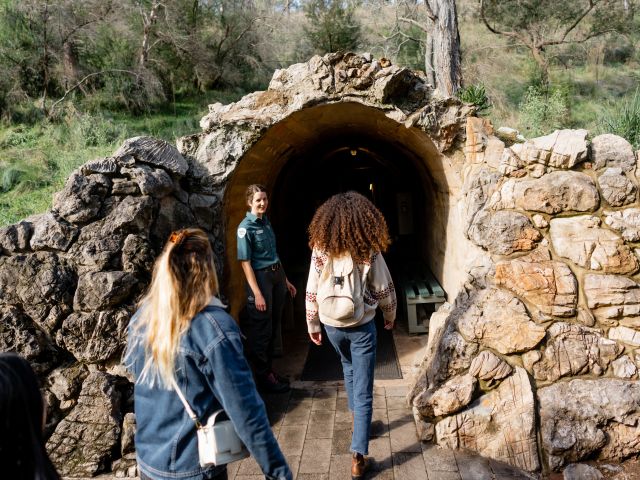
You’ll need to book a guided tour to see the caves. (Image: Tourism Australia)
Among the hundreds of caves, some can be easily accessed from the surface. For instance, a casual stroll along the FJ Wilson Interpreted Walk, as kangaroos watch on from beneath acacia trees, leads into the 400-metre-long Federal Cave and its natural steps of white limestone. A slightly longer track, the Granite Pools Walk heads through soaring forest down into moss-covered gullies where the calls of lyrebirds trill through the leaves.
A quick history lesson on Buchan Caves
Buchan Caves are a must-visit attraction in Gippsland. (Image: Tourism Australia)
Among the geology and the nature are millennia of history. This part of East Gippsland connects the high country to the coast and was long a place of refuge for the local Gunaikurnai people on seasonal migrations to the mountains. Archaeological studies show humans lived here up to 18,000 years ago, with artefacts such as small stone tools found around the site. But not too far into the caverns – oh no! The Gunaikurnai didn’t dare venture deep into the dark at Buchan Caves, telling stories they were inhabited by gnome-like nyols (small grey-skinned creatures that could steal memories).
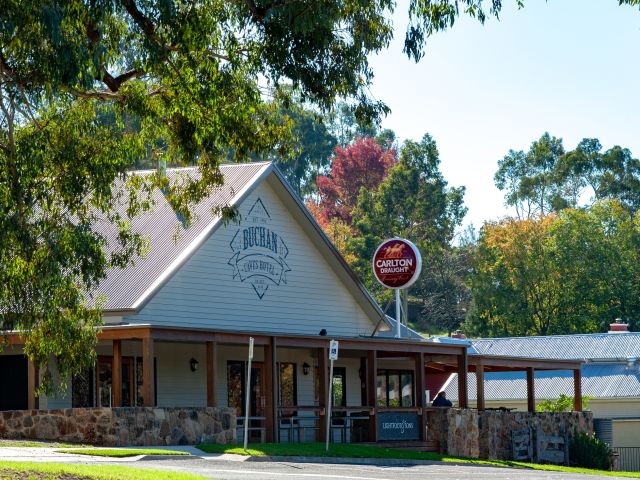
The Buchan Caves Hotel was rebuilt after burning down in 2014. (Image: Jess Shapiro)
By the early 1900s, more people had started to hear about these incredible caves and so the Moon family set up home at the site and started to run tours below ground for intrepid visitors. More than a century later, their historic residence is available as accommodation, with the three-bedroom house sleeping up to eight people and now equipped with modern amenities the Moons could only have dreamt of.
But whether you stay overnight or just spend the day here, it’s worth taking your time to explore more than just the main caves, to get a deeper understanding of one of Victoria’s fascinating geological attractions.