Two hours from Melbourne, three minutes from Lorne and a million miles from anywhere – this little hideaway is lovely and rustic (but not too rustic), says Susan Gough Henly, perfect for a winter retreat
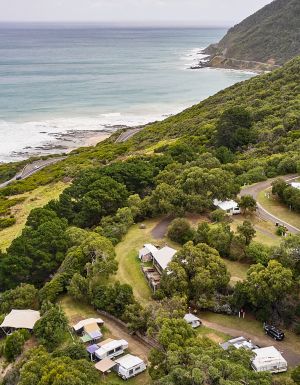
Australians do beach holidays better than just about anywhere. Pity, then, that so many of our beach houses are either of the dreary-and-dumpy bungalow variety, or made of steel and glass, with as much character as insurance offices. As a stylish, low-key alternative, the cottages at Allenvale combine the best of the beach and the bush in a bucolic valley behind Lorne along Victoria’s Great Ocean Road.
Not knowing quite what to expect, I arrive in Lorne with my husband and our two teenage daughters in the middle of the madness that is school holidays. The main street is clogged with cars, the campground is chockers, surfers are jammed into milk bars, and couples wrangle prams along crowded footpaths.
We drive over the hill and let out a collective sigh. Encircled by the Great Otway National Way, Allenvale’s 50 acres greet us by way of a rustic sign and bank of agapanthus and hydrangeas. A flock of ducks waddles across the path from Henderson Creek. Let the beach holiday begin.
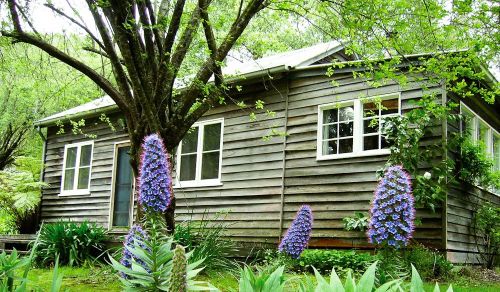
The historic property was established by the Allen family back in 1872 as a dairy and orchard farm and supplied the guesthouses in Lorne long before the Great Ocean Road was built post-World War I. Two out of the four cottages, ‘Kero’ and ‘Rose’, are original buildings dating back to the period when the Allens leased some of their land to a logging mill that provided housing for its workers.
Allenvale’s current owners, Jenny and Quentin Young, who made a sea change to Lorne 30 years ago, built the other two (‘Gables’ and ‘Riverbank’), using recycled timbers in order to maintain a resemblance. They live in a lovely home down another dirt road on the property.
I am instantly transported to summers spent in The Hamptons, where we used to rent a 17th-century cobbler’s cottage surrounded by gardens, only a short ride to the beach. Allenvale embodies the same shabby chic aesthetic – its furniture and collectibles are similar to what we would find in the yard sales at the mansions dotting the former potato fields.
We stay in Gables, which is partially screened by a garden of cosmos, roses and artichoke flowers. Its spacious wood-ceilinged living room has polished floors, a wood stove, comfy couches with piles of pillows, candles affixed to wooden spools atop a rustic dining table, a sideboard filled with art and garden books, and a flat-screen television and DVD player on an antique chest. The style is a dash of Francophile with not a touch of twee anywhere. Bowls of fresh country flowers add a welcoming touch.
The two bedrooms are set on opposite sides of the house, one with a queen-size bed and the other with two single beds that can be joined to form a king. Each has a cupboard evocatively painted with Porter’s Milk Wash that gives a chalky well-worn look. A bright country kitchen, with all the essentials for a self-contained holiday, has a kitchen table and pretty dresser decked out with white crockery and piles of magazines. There is just one bathroom, with a shower inside a full-size bathtub, plus a separate toilet and a washer and dryer. A recycled rustic front door opens onto the front porch that catches the morning sun.
A couple of red and green parrots join us for nibbles as we barbecue on the electric grill on the spacious back deck, which sports a huge picnic table and a wicker basket filled with firewood. Koalas growl in the manna gums and a large Eastern grey kangaroo grazes nearby. The bush is just a shuttlecock toss away; eucalypts and grass trees grow on the hillside; ferns and ivy grow closer to the gully where the St George River meanders into the Great Otway National Park.
The next morning we wake to the crowing of a rooster and take out some deck chairs to enjoy our coffee on the lawn in the sunshine.
After breakfast, we hike to Phantom Falls along a track above the St George River, which takes us through Allenvale’s organic orchard of apple, pear, peach, plum and quince trees. Hikes like this are particularly popular during winter sojourns at Allenvale. The days pass dreamily with walks along the beach, berry picking at nearby Gentle Annie’s farm, and forays into Lorne for supplies.
The nights are cool and we snuggle in front of the woodstove poring through the cottage’s gorgeous books before falling asleep to the exquisite luxury of pure sweet silence.
The Details
The verdict: Allenvale is a gem tucked-away over the hill from Lorne’s busy beachfront strip. It appeals to families seeking a low-key country retreat with plenty of outdoor space as well as pre-codgers with a love of Euro-tinged country charm. Meursault-style on a chardy budget.
The score: 15/20; great
We rated: Allenvale’s understated rustic cottages and bucolic setting brimming with wildlife. It felt like an old friends’ unpretentious country house with interesting furniture and books.
We hated: While the toiletries were delightful, the towels could have been fluffier.
Where: 150 Allenvale Road, Lorne, Victoria – a three-minute drive from the beachfront.
Notes: From $215 per night per cottage with a two-night minimum.
Contact: 03 5289 1450; allenvale.com.au
The AT scoring system: Our review scores are based on a series of points, awarded across a number of categories including service, amenities, design, location, value, food and beverage offerings, and that elusive wow factor. 19-20 exceptional; 17-18 excellent; 15-16 great; 13-14 good; 11-12 satisfactory.