Your quick guide to the Twelve Apostles on the Great Ocean Road

hero media
Discover everything you need to know about the Twelve Apostles before your next trip on the Great Ocean Road.

A rare geological phenomenon that has inspired awe and wonder for generations, the Great Ocean Road’s Twelve Apostles are one of Australia’s most well-known and visited attractions.

A true highlight of a drive along the Great Ocean Road, seeing the monumental rock formations known as the Twelve Apostles is one of those travel ‘must-dos’ that you genuine must do. Standing on the windswept coast of Victoria to take in the extraordinary sight of these ancient landmarks that rise stoically out of the Southern Ocean is worth the 4.5-hour drive along the Great Ocean Road from Melbourne.

Whether you see them at sunrise, dusk or in the middle of the day, you’ll be glad you travelled to see what all the fuss is about. Read on to find out how to make it happen.

What are the Twelve Apostles

The Twelve Apostles are an offshore collection of limestone stacks along the Great Ocean Road. Estimated to be around 20 million years old, this sculpted coastline originated when billions of tiny marine skeletons accumulated on the ocean floor, gradually creating limestone formations. As the ocean retreated, the cliffs were exposed above the sea level.
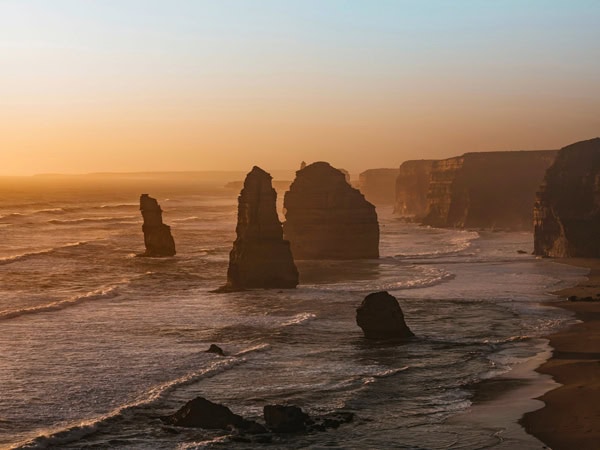
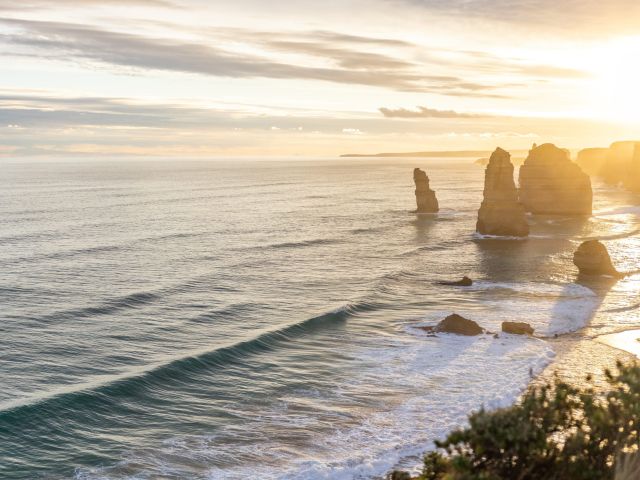
Twelve Apostles in Australia at sunset
The limestone stacks have been shaped over millions of years. (Image: Visit Victoria)

The wild and wilful Southern Ocean gradually eroded the softer limestone, forming caves in the cliffs, which eventually became arches. When they collapsed, rock islands up to 65 metres high were left isolated from the shore. This process also created a host of other natural features including Pudding Basin Rock, Elephant Rock, Mutton Bird Island, Thunder Cave, Bakers Oven, London Bridge and the Grotto.
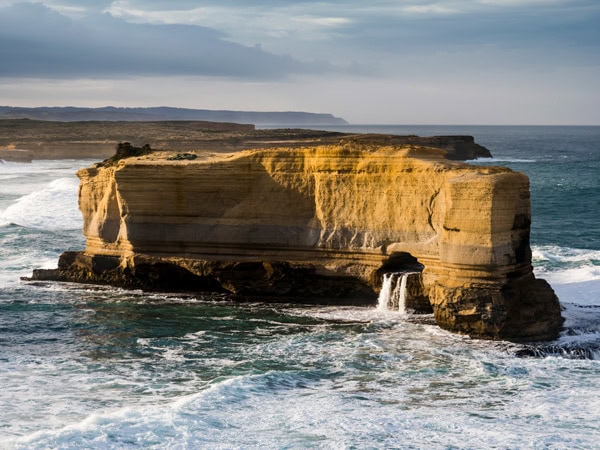
The Baker's Oven in Twelve Apostles, Great Ocean Road
The Baker’s Oven is known for its unique landscape. (Image: Visit Victoria)

Where are the Twelve Apostles

Located on Australia’s southern coastline in the Port Campbell National Park, Victoria, the Twelve Apostles are a popular stop on the iconic Great Ocean Road drive. Just 10 minutes from the town of Port Campbell, if you are driving you will need to park at the dedicated Twelve Apostles carpark and walk to the lookout by following the signs along the path.
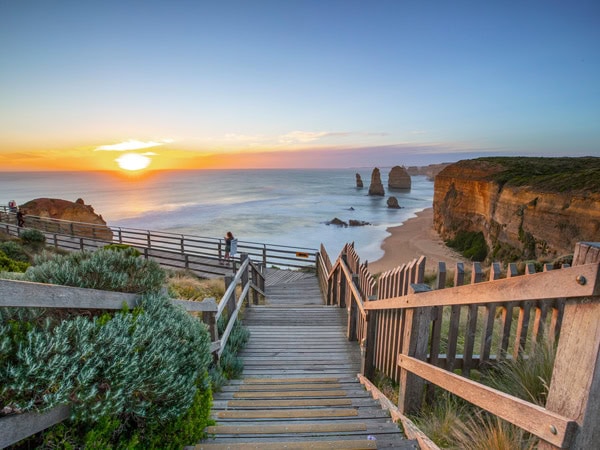
a staircase leading to the lookout of the Twelve Apostles at sunset
Walk to the lookout for a better view of the Twelve Apostles. (Image: Visit Victoria)

This is a somewhat isolated location, so come prepared with everything you need. However, there is toilet access and a kiosk here open 7 days a week during the day, offering hot and cold drinks and souvenirs to take home. Otherwise, bring your own snacks or stop in Port Campbell for lunch.
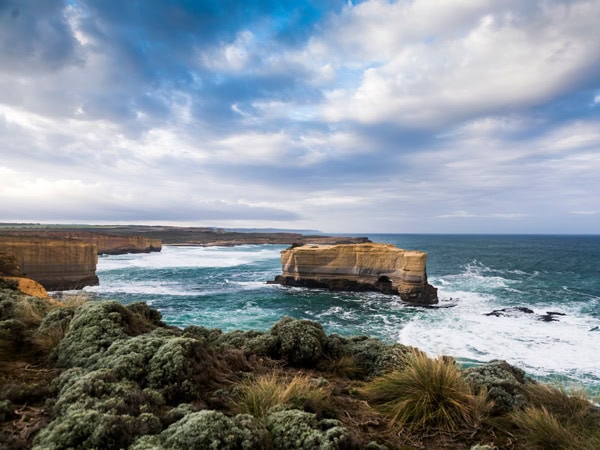
an aerial view of The Baker's Oven in Twelve Apostles, Great Ocean Road
See other notable features of the rock islands, including the Baker’s Oven. (Image: Visit Victoria)

History of the Twelve Apostles

Until the 1960s the formations were called the Sow and Pigs – Mutton Bird Island being the sow and the stacks the piglets. Then, in a flash of marketing brilliance, they were renamed the Apostles. By some divine intervention, the name soon evolved into the Twelve Apostles – even though you could only see nine at the time.
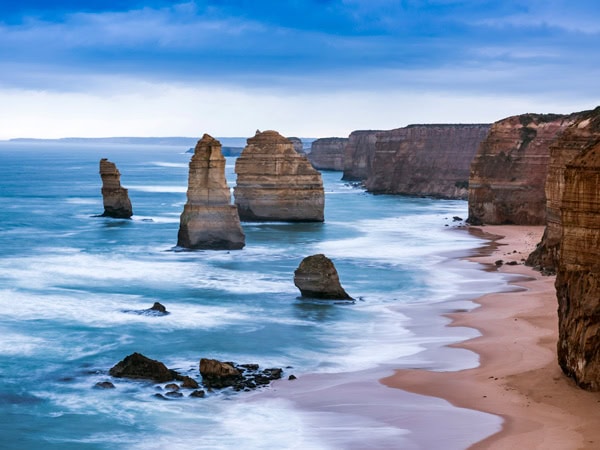
the Twelve Apostles in winter
In winter, the otherworldy landscape is nothing short of spectacular. (Image: Visit Victoria)

But how many you can count depends on where you stand and what you include. There are actually as many as 30 stacks stretched along the coast, but not all are visible from the viewing areas. It’s a work in progress.
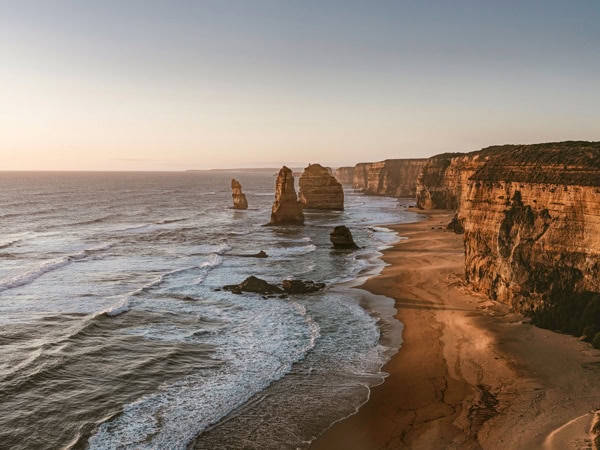
the limestone stacks of Twelve Apostles from above
These magnificent stacks are stretched along the coast. (Image: Visit Victoria)

In 2005, one of the Apostles had its last supper. Onlookers reported that the stack shuddered, fractured and then slid into the ocean. The Twelfth Apostle (known as Judas) went from a magnificent 50-metre stack to a pile of rubble in seconds. Then in 2009, another rock came crumbling down. Although not as dramatic an exit as the Judas, this small formation eroded due to weather conditions. Located out the back near Razorback Lookout, this was the most recent Apostle to have fallen.
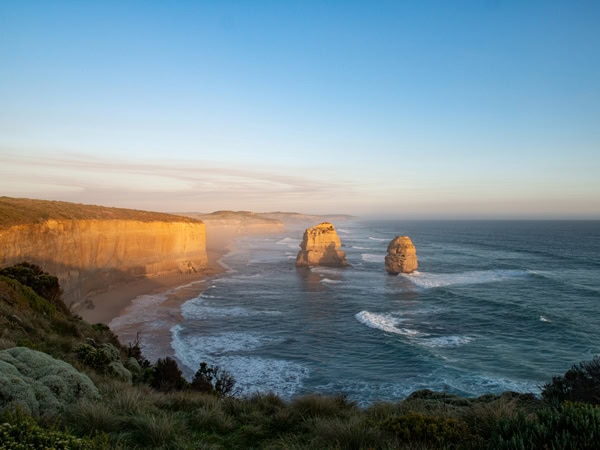
Twelve Apostles at sunset
Witness the breathtaking beauty of the Twelve Apostles. (Image: Visit Victoria)

Getting to the Twelve Apostles

If you’re located in Geelong, lucky you! You’ve only got a 2-hour road trip ahead. Travelling from Melbourne? You’ve got a 3-hour drive inland to reach the rocks. If you’re willing to tack on another hour to the journey, take the Great Ocean Road for some spectacular scenic views.
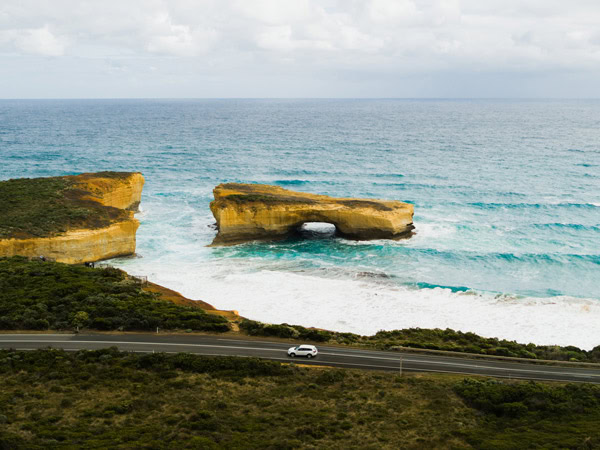
an aerial view of a car passing by the London Bridge, Great Ocean Road
The Twelve Apostles are a popular stop on the iconic Great Ocean Road. (Image: Visit Victoria)

A 10-minute drive from Port Campbell, you will need to park at the dedicated Twelve Apostles carpark and walk to one of the lookouts which can be accessed via a signed pathway. If you’re using a pram or wheelchair follow the signs to access the lower viewing platform.
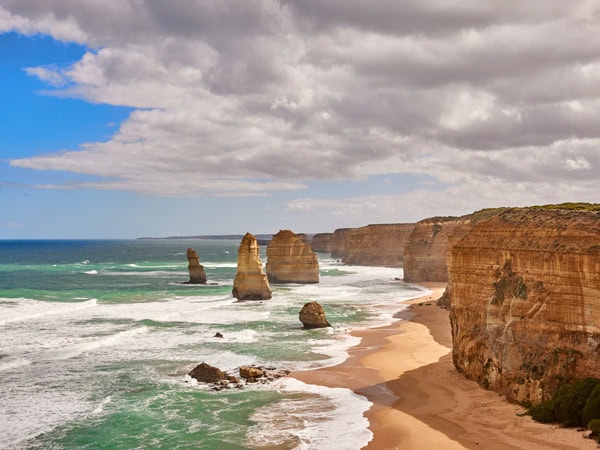
a scenic landscape of the Twelve Apostles, Great Ocean Road
Take the Great Ocean Road for some spectacular scenic views. (Image: Visit Victoria)

Depending on where you’re located, day tour packages to the Twelve Apostles are a great option if you don’t drive or just prefer sitting back and relaxing instead of downloading directions.
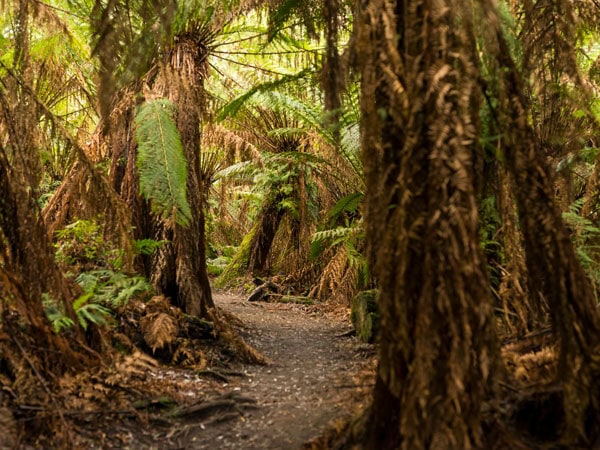
the eucalypt trees at Otway Rainforest, Great Ocean Road
Stop by the ancient Otway Rainforest. (Image: Visit Victoria)

Sightseeing Tours Australia offers a day trip to the Great Ocean Road and the Twelve Apostles. With CBD and St Kilda pick-ups, this bus will take you along the breathtaking coastline, stopping at popular beaches, seaside towns, the Otway Rainforest (with the tallest eucalyptus trees in Australia) and of course, the Twelve Apostles before you are whisked back to Melbourne. It’s a big day filled with blockbuster sights – a great option if you’re short on time or prefer not to drive.
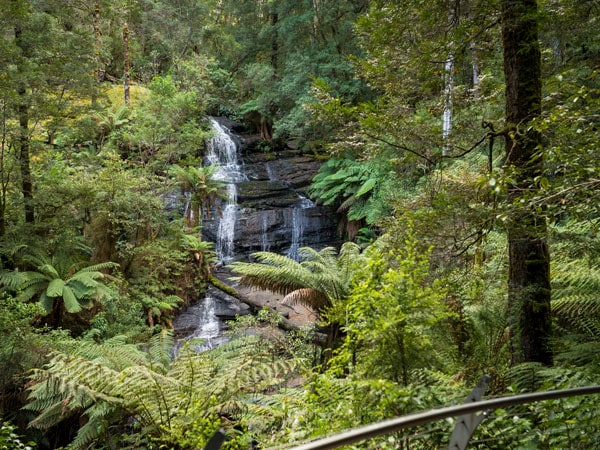
the Triplet Falls in the Great Otway National Park
Spot the stunning cascades of the Triplet Falls in the Great Otway National Park. (Image: Visit Victoria)

Other ways to experience the Twelve Apostles

If you’re up for an adventure, there are also guided walking tours that head out to the landmark. Book in with the Aus Walking Co. and you’ll get to enjoy a 4-day, immersive walks along the coast, bedding down in a private eco-lodge each night. If you feel comfortable walking up to 7 hours in a day, then you won’t want to do this trip any other way.
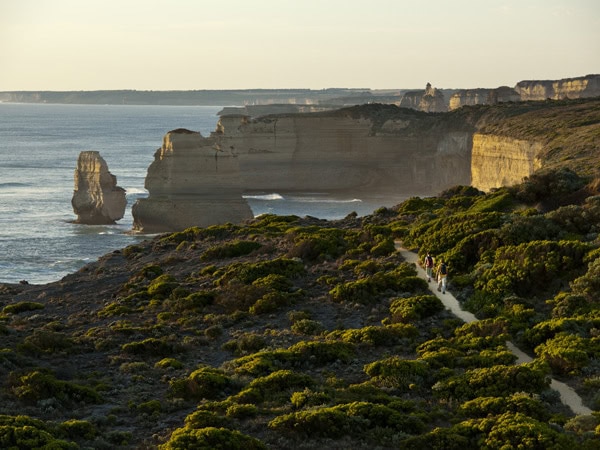
the Great Ocean Walk
Take an mmersive walk along the coast. (Image: Visit Victoria)

Prefer to walk and camp without a guide? Great Ocean Road Shuttles offers camping assistance (food and water drops, luggage transfers), camping gear hire and a shuttle service to support your journey.
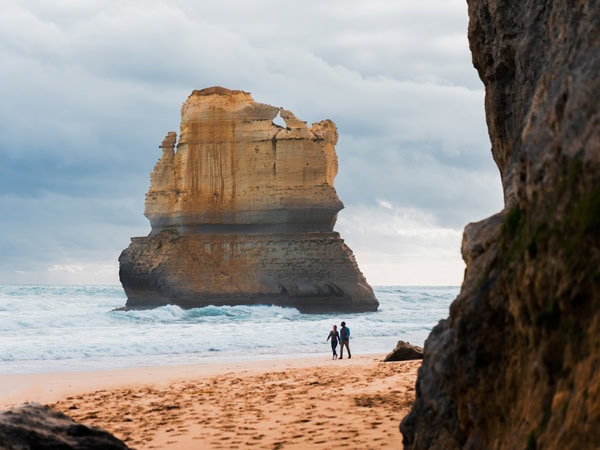
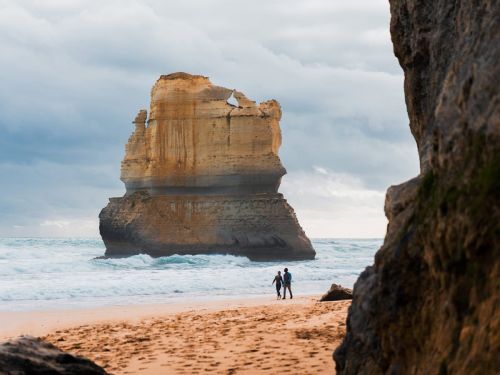
Twelve Apostles from Gibson Beach
Head to Gibson Beach to see the stacks from a different perspective. (Image: Visit Victoria)

If you want to make the most of this experience and don’t mind splashing a bit of cash, then book yourself in for a scenic flight with 12 Apostles Helicopters to take in the famous landmark from above.
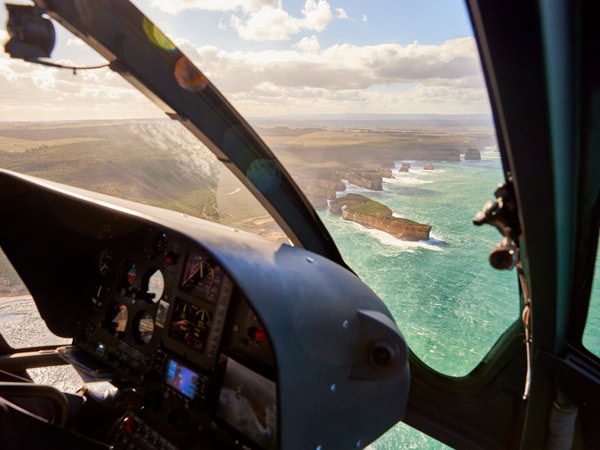
a scenic flight above the Twelve Apostles, Great Ocean Road
Take in the beauty of the rock formations from above. (Image: Visit Victoria)

In just 15 minutes of flight time you’ll be able to see the Twelve Apostles, Loch Ard Gorge, The Sentinel, The Arch and London Bridge from a point of view you’ll never forget.
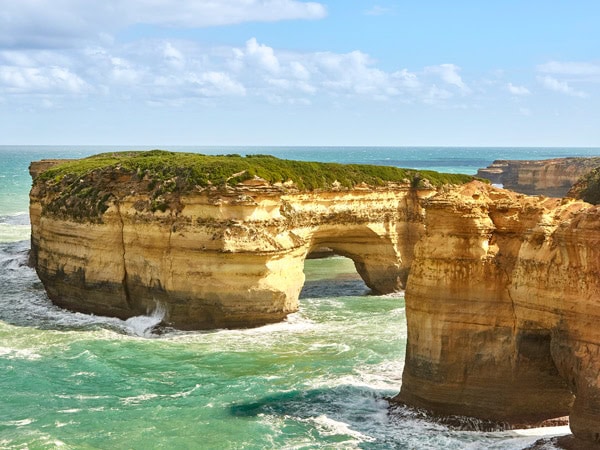
the London Bridge from above on a scenic flight with 12 Apostles Helicopters
Capture the London Bridge on a scenic flight with 12 Apostles Helicopters. (Image: Visit Victoria)
Discover our guide to the Great Ocean Road.
Jo Stewart
Jo Stewart is a freelance features writer who pens stories about nature, pop culture, music, art, design and more from her home in the Macedon Ranges of Victoria. When not writing, you can find her trawling through vinyl records and vintage fashion at op shops, antique stores and garage sales.
See all articles
hero media

Heathcote has evolved into the ultimate eco-escape for foodies

From cabins to canvas, craft distillers to destination dining, Heathcote locals reveal their eco-savvy passions in ways that resonate with those seeking to travel lightly. 

Heathcote , on traditional Taungurung Country in Central Victoria, is synonymous with its garnet-hued shiraz, but wine isn’t the only string to its bow. The town itself is sprinkled with heritage buildings from the gold rush era, and beyond that a growing collection of sustainable gastronomy and eco-friendly escapes. Nearby Bendigo, one of only 65 cities in the world recognised as a UNESCO Creative City and Region of Gastronomy, plates up an astonishing calibre of produce, wine and food for its size. Increasingly the entire region is taking up the challenge, though Heathcote in particular shines with its focus on sustainability. 

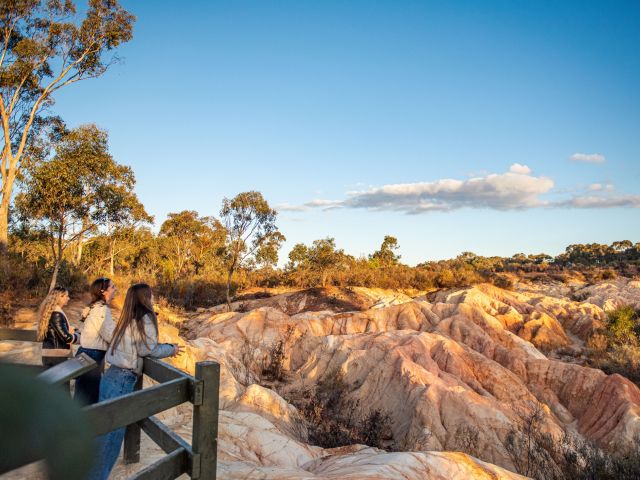
Pink Cliffs GeologicalReserve
The dramatic landscape of Heathcote’s Pink Cliffs Geological Reserve. (Image: Visit Victoria/Emily Goodfrey)

The eco-stays bringing sustainability to Heathcote 

Yellow BoxWood’s safari-style tents
Yellow Box Wood’s safari-style tents are nestled on 40 hectares of bushland. (Image: Emily Goodfrey)

Andee and Lisa Davidson spent years working in southern Africa before settling in Heathcote. “We had a vision of how this could be,” explains Andee. “We wanted a retreat, but one that was off-grid and environmentally sustainable.” Now, at Yellow Box Wood , two luxury safari-style tents are at the heart of 40 hectares of rolling hills and native bush, with kangaroos, wallabies, echidnas, goanna and birdlife aplenty. It’s all solar-powered, wood for the fire is mainly fallen timber, and water is collected on the carport roof.  No lack of creature comforts though – en suite with rain shower, espresso coffee maker, comfy seating, wood-burning fire all set to go. There’s also a solar-heated, mineral salt pool in a bush setting, walking tracks, and even a mini bush golf course.  On my visit, I put the vision to the test. Cocooned in the plush four-poster bed I can glimpse the stars, while the heater casts a golden glow on the canvas. In the morning, I wake to a blush-pink sunrise, kangaroos feeding and a soundtrack of magpies.

Mt Ida Eco Cabin
Mt Ida Eco Cabin is rustic and simple but oozes comfort. (Image: Graham Hosking)

If a tent is not your style, Stephen and Cally Trompp’s carbon-neutral Mt Ida Eco Cabin might entice with its generous deck and farmland views.   Inside the cabin, corrugated iron walls as rusty as a shearing shed, gleaming (recycled) floorboards, timber truss ceiling (crafted by Stephen), wood-fired heater and an old-school turntable with a pile of vinyls to spin. It’s fun, and a little boho. “Everything is recycled. The cabin takes maximum advantage of the sun in winter. It’s all solar-powered. Don’t panic, though,” says Stephen, “you can still charge your phone and get 4G reception!” Settle into an Adirondack chair on the deck or pedal off on a mountain bike to suss out the wineries.  

A taste of Spain in Central Victoria 

Three Dams Estate
Three Dams Estate make Spanish-style wine.

Another person with a vision is Evan Pritchard at his Three Dams Estate where the wines reflect his deep love of Spain and of Spanish-style grapes, such as tempranillo. Afternoons in the ‘wine shed’ or cantina are matched with music (flamenco is a favourite), Spanish bites from tapas to paella (with Evan on the pans!) and views to Mount Alexander. Sustainability is also a passion. “You don’t need to buy anything. We decided to be off-grid from the start, but it is a lifestyle change,” he says. “You need to think about it and be careful.” Everything here is recycled, reassembled, refurbished. Evan has an electric car (with solar-powered charger), solar-power for the winery, and even a jaunty little electric tractor/forklift. “I love the idea of all the things you can do using the sun.” Sipping a crisp rosado (a Spanish rosé) with Evan in the sunshine, I couldn’t agree more. 

The vineyard redefining sustainable winemaking 

Silver Spoon winery
The Silverspoon Estate winery is completely off-grid. (Image: Graham Hosking)

On the other side of Heathcote, Silver Spoon Estate demonstrates sustainability on a more extensive scale. Tracie and Peter Young’s winery, cellar door, award-winning restaurant and their own house are all solar-powered and off the grid. Sustainability is intrinsic to everything they do.  The property sprawls across 100 hectares, with 20 hectares under vine – shiraz, viognier, grenache, tempranillo. As the climate has changed, so too has the approach. These are dry-grown vineyards. “We prune for drought. That means lower yields but more intense flavours,” says Peter.  The fine-dining restaurant offers sweeping views, a wood-burning fire and a deck for languid lunches. Head chef Ben Hong sources regional, sustainable ingredients and weaves estate wines into the menu – think crispy wild mushroom arancini, viognier-infused chicken breast.   

Silver Spoon’s award-winning restaurant
Silver Spoon’s award-winning restaurant.

Heathcote’s other hidden gems 

Heathcote Wine Hub
Heathcote Wine Hub is housed in a 1855-built timber church.

Not all local wineries have a cellar door, but I find local treasures at the Heathcote Wine Hub , a petite 1855 timber church in the main street, lovingly returned to life by Karen Robertson and Carey Moncrieff.  “Carey is a scrounger,” says Karen. “He doesn’t throw a single thing away.” He does, however, craft things into something quite special. Heritage floors, light-filtering lancet windows and shelves of regional wines create the perfect ambience for wine tasting. Or order a glass and linger over a cheese platter.  

Heathcote is not all wine, of course. Nathan Wheat and partner Vanessa Curtis run Envy Distilling with a committed sustainable ethic – and a serious love of gin. Their small-batch distillery produces grape-based gin, and soon brandy. Distilled water is reused in an ingenious cooling system. All waste is treated on site. They buy excess wine from winemakers to distil and buy recycled barrels. “Distilling with the sun,” as Nathan says. Each Envy gin has its own story. Spicy, award-winning The Dry, is designed to capture the region’s dry, rugged nature. Pull up a stool at the bar (reclaimed timbers and tiles, of course), order a Gin Flight, or kick back with a cocktail and let Nathan share his eco journey.   

Envy gins
Sample gins at small-batch distillery Envy.

A traveller’s checklist 

Getting there

It’s less than two hours’ drive from Melbourne. The scenic route we take goes past Sunbury, then along a splendid country road through Romsey and the magic, boulder-strewn landscape of Lancefield. Watch for kangaroos on the road! 

Staying there

Go off-grid in style at Yellow Box Wood for glamping or try Mt Ida Eco Cabin for a couple’s weekend hideaway. 

Eating there

French dishes at Chauncy
Award-winning French restaurant Chauncy.

At award-winning Chauncy , French chef Louis Naepels and sommelier wife Tess Murray have created a tiny, elegant pocket of rural France. Meticulously restored 1850s sandstone building, sun-drenched dining room, impeccable service, a menu suffused with local flavours and thoughtful wine pairings.  

Fodder is both cafe and social hub. Chef Mo Pun and sister Lalita serve classic Aussie breakfast-to-lunch fare, though their Nepalese heritage sneaks through. 

Playing there

Sanguine Estate
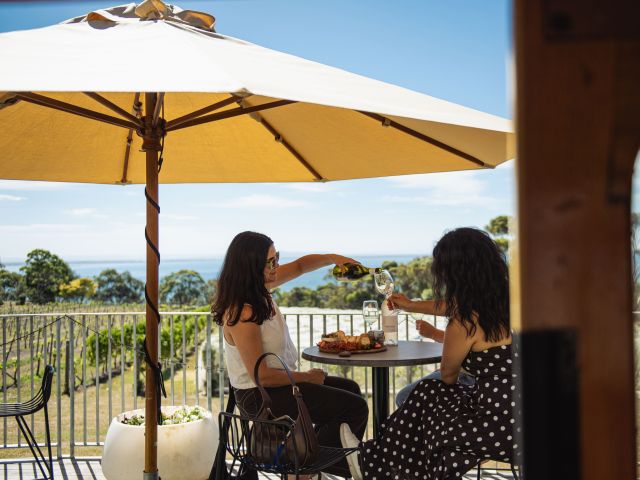
Sip on wines among the vines at Sanguine Estate. (Image: Visit Victoria/Emily Godfrey)

Sanguine Estate ’s cellar door and terrace overlook bucolic vineyards. Its award-winning, dry-grown wines include the distinctive D’Orsa Blanc dessert wine, reflecting the family’s Swiss-Italian heritage. Order a charcuterie board and stay a while. Keep it carbon neutral by cycling some (or all) of the 50-kilometre O’Keefe Rail Trail to Bendigo.  

At Bridgeward Grove , learn about the property’s Old Mission Grove heritage olive trees, do a sommelier olive oil tasting, and stock up on sustainably grown olives and oil. Explore the unique landscape, wildflowers and wildlife of pink cliffs geological reserve.