Victoria’s most iconic cycling route, the Murray to Mountains Rail Trail, has finally reached the mountains, and in the great tradition of these things, they’ve left the best to last.
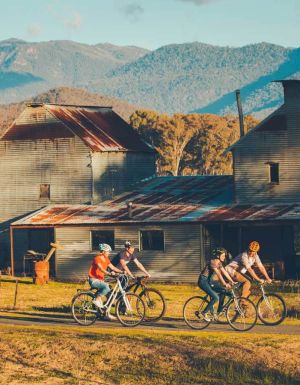
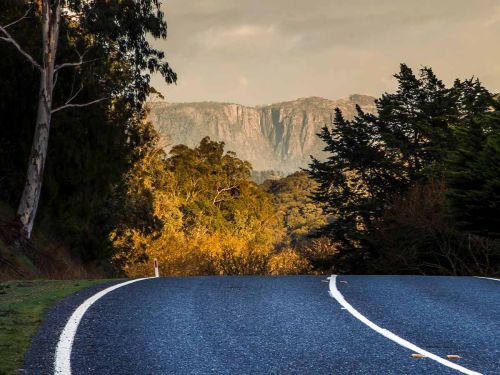
The 27-kilometre section between the beautiful town of Bright and the quirky village of Harrietville at the foot of the Australian Alps has been sealed, signposted and delivered. It shadows the Great Alpine Road, which winds and climbs through spectacular countryside in the leg between Myrtleford and Dinner Plain, but on the trail you’re more often in touch with Ovens River, meandering through and around forests and farms.
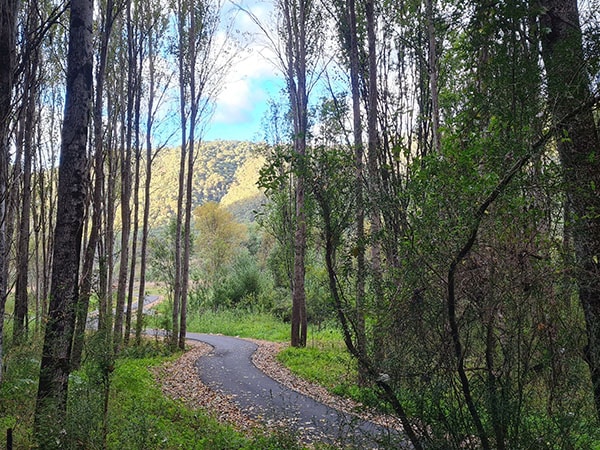
This leg is called the Great Valley Trail , and that’s a clue to its benevolent nature. Mountains may surround you but the rises on this track aren’t even molehills, and you’ll barely raise a sweat on the ‘uphill’ leg towards Harrietville.
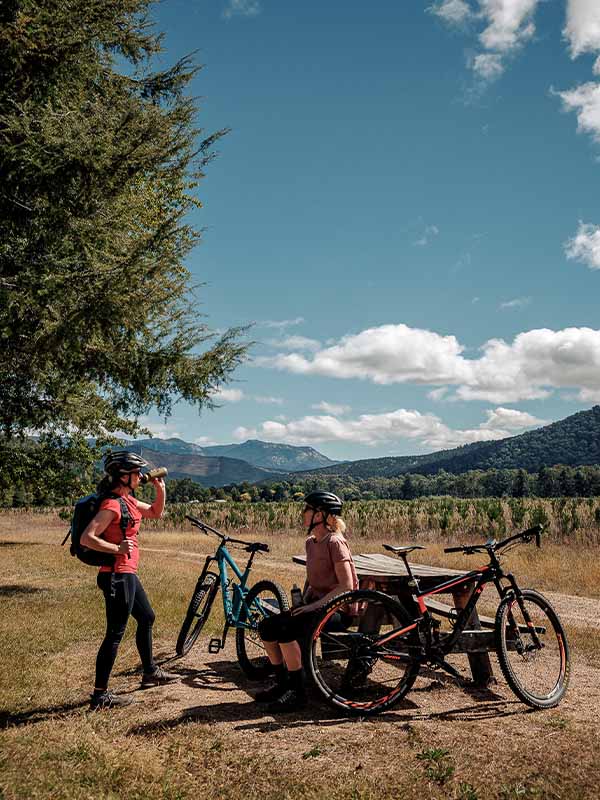
Today we’re taking the cushier option. Having arranged a shuttle to take us to Harrietville, we get fitted out with wonders of modern cycling at Bright Electric Bikes . Simple to master and easy to ride, e-bike hire starts from $55 for a half-day, which means we’ve got oodles of time to stop and admire these great outdoors.
Manager Chris Hall says it takes around 90 minutes to do the trail but we reckon we’ll need double that, because from the starting point at Tavare Park we grab a coffee from Dolly’s caravan across the road, then take Chris’s suggestion of a short detour to the Tronoh Dredge Hole . This was the biggest bucket-dredge gold mine in the southern hemisphere in the 1940s and ’50s, but is now a spectacular swimming hole surrounded by forest and mountains – both are reflected in the cool water – with a shady picnic area and a 20-minute walking loop.
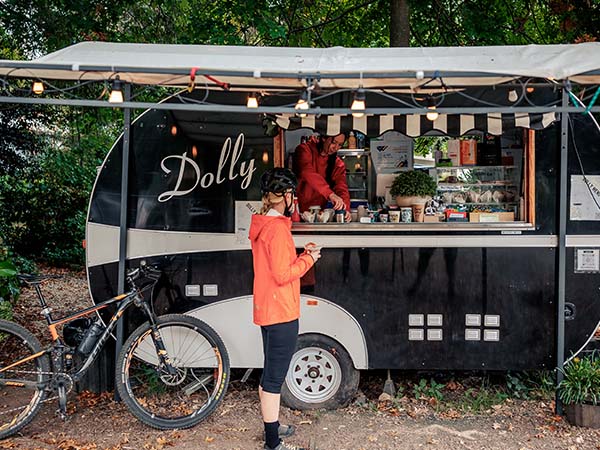
Early stages of the Great Valley Trail
For the first few kilometres, the trail shadows the Great Alpine Road, but with the river never far away we have cause to give way to ducks at one point. Then we navigate away from the road, crossing Ovens River, and we’re in farmland. Several magpies perched on a fence watch us scoot past, and a tiny robin swoops across the track. Later, we’re serenaded by a kookaburra.
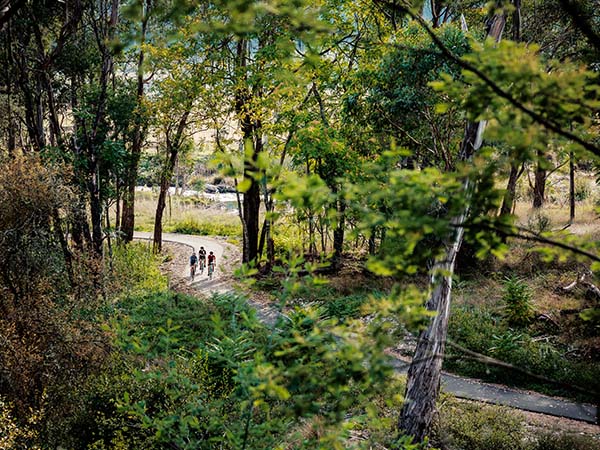
If you’ve packed a cooler bag, you might pick up some fresh or smoked fish from Mountain Fresh Trout and Salmon Farm ; otherwise, you can drop in when you’re back in the car for the Great Alpine Road drive. Soon we spot a pair of anglers in waders in the middle of the river, trying to catch their own. We also vow to check out Gunnadoo Berries on our return drive.
It’s a warm morning, but thankfully our motion produces a cooling breeze and we’re never far from a shady section. Eventually, we realise no one else is going our way, as every other cyclist is heading towards Harrietville. We had no idea this ride is easy in either direction, and the option of a full day’s trip to go both ways is recorded for next time.
Halfway on the Great Valley Trail
At Tom Bibby Bridge – one of the four new crossings built specifically for the trail – six alpacas and a donkey are munching on grass in a field, while an emu strolls around a neighbouring paddock.
Everything seems to grow well in this valley, and it’s one of the best places for chestnuts in Victoria. They hang distinctively in a grove at a point marked B11 – every kilometre has a post showing the distance to the trail’s respective start/finish points, so we know we’re more than halfway to Bright.
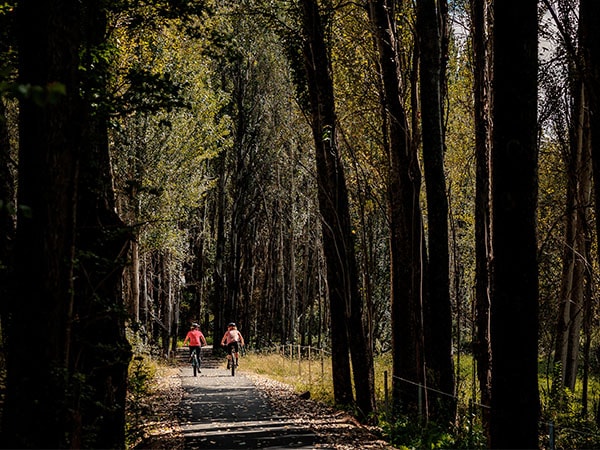
Just past Discovery Parks Bright, a series of tight bends through the forest adds a bit of frisson to the ride, and we need to be alert to the possibility of other cyclists around blind corners. There are no other hazards to speak of, bar a few low-hanging branches to brush tall riders’ helmets, or the occasional blackberry thorn poking out. Even a red-bellied black snake – not an aggressive species – taking the sun beside the track pays us no heed as we glide past.
With the dredge hole detour and stops for water and photos, we’ve taken three hours to make it back to Bright.
All things Bright
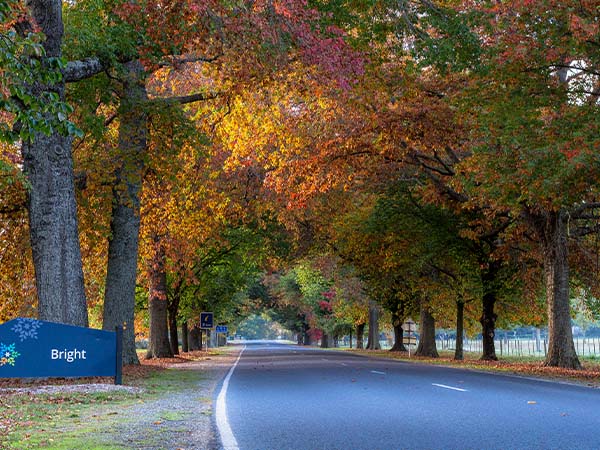
A sophisticated centrepoint for a Great Alpine Road experience, Bright is where the mountains start closing in on Ovens Valley, and you feel you can reach out and touch them from almost anywhere in town. You’d think the town got its name from the spectacular arboreal colour it displays every autumn, but it was in fact named for John Bright, a notable 19th-century British orator – he’s said to have popularised the phrase “to flog a dead horse" – who never visited the place.
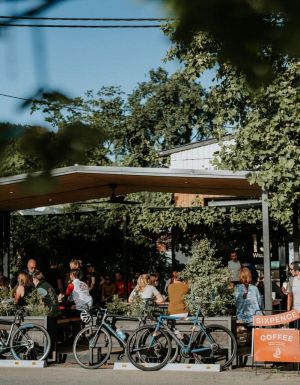
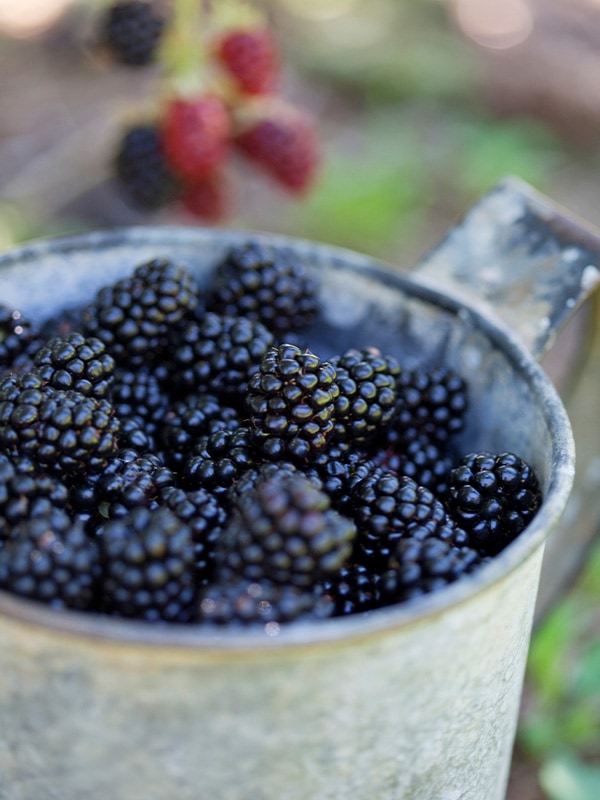
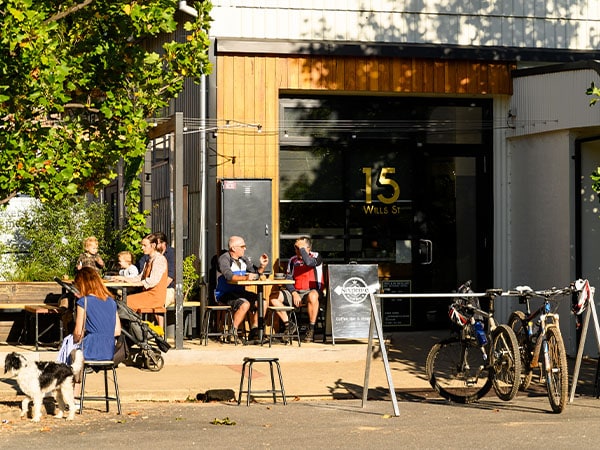
It’s here, on the morning of our ride, that we fuel up with a heroic breakfast at Ginger Baker Cafe . Its Big Brekky is a sturdy assembly that will set you up for the day, although the lighter option of their house-roasted muesli with magnificent local berries is just as good. We decline the suggestion of a prosecco mimosa as a fortifier for the day ahead; our preferred drink is the excellent coffee, produced by another local hero, Sixpence Coffee . It shares a large retail space just off the main street with Reed & Co Distillery, and this is where we come for afternoon post-ride flights of their six unique spirits: two classic gins made with botanicals from the local valleys, a pair of fascinating wine/gin blends, and blackberry and coffee-flavoured gin-based liqueurs.
Celebrate with steak
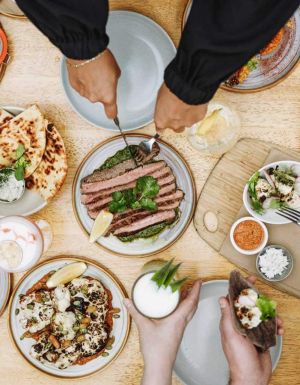
After working up a healthy appetite, there are many restaurants in Bright to choose from. The triumph of completing the Great Valley Trail is to be celebrated with a hearty dinner at Sir Loin’s Bar & Grill , a basement bar and restaurant where, no surprise, steak is the star. Eye fillet, porterhouse, scotch fillet and wagyu sirloin – or even the giant 1kg King Island Tomahawk (for two) – can be ordered with any of seven sauces.
While there are plenty of things to do in Bright, we take a short walk back to our accommodation at The Glass Pinnacle , a large, luxurious two-bedroom apartment with decks on three sides from which we can soak up the mountain air and dwell on a trail well ridden.
Back on the road
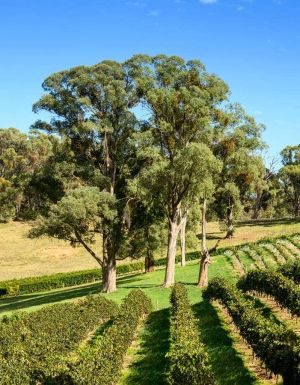
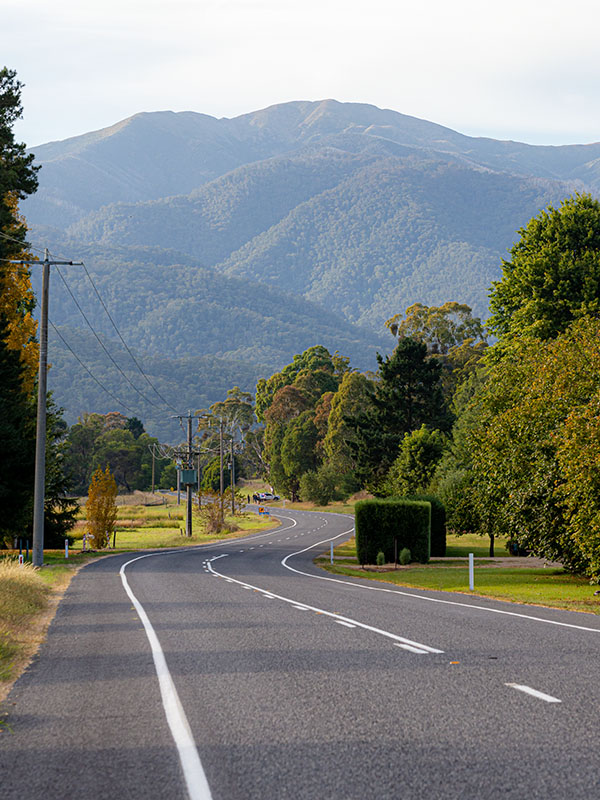
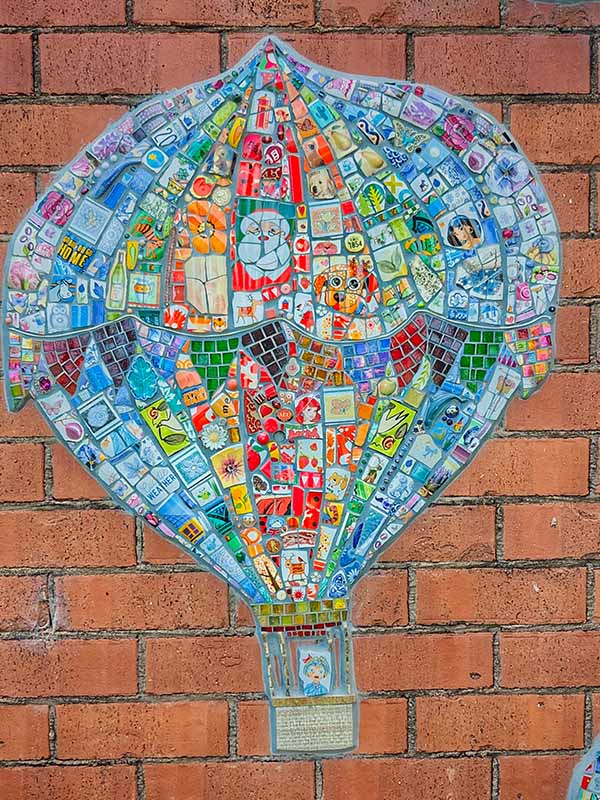
Serious road cyclists would make mincemeat of the Great Alpine Road as they access its other pretty towns and villages, but it’s not known as one of Victoria’s best scenic drives for nothing. When heading up the valley from the Hume Freeway, Myrtleford is a beautiful place to rest a while. You immediately get a sense of Italian heritage, born of the immigrant families who settled here after the Second World War to grow tobacco. Now the locals have pivoted to wine, hops, berries, nuts and pumpkin seeds, making Myrtleford a convivial and family-focused place. Stop and discover the 70 tiny colourful artworks on the town’s Mosaic Trail, which follows Ovens River for a few kilometres.
Besides bicycles, Harrietville is often peppered with packs and poles of hikers ready to tackle a strenuous day’s walk up to the fabled Mt Feathertop. There are also plenty of gentle short walks around the village, or you can simply do your forest bathing with a latte or lager from the verandahs of the pubs and cafes.
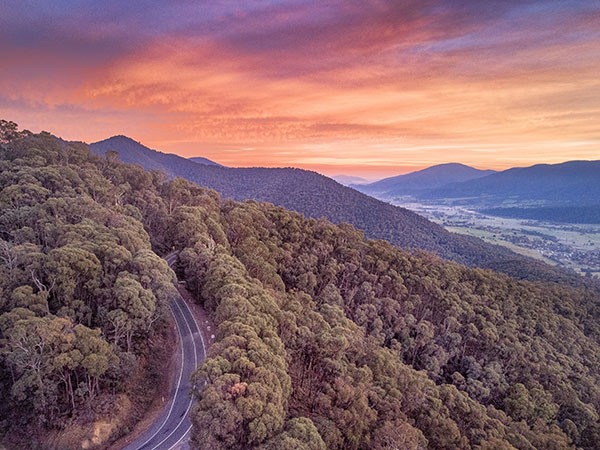
True to its name, the Great Alpine Road will get you to Victoria’s highest spots, and from Harrietville it rises steeply to the Mt Hotham ski resort. But no matter what the season, the experience of being in nearby Dinner Plain , a modern village right in the heart of Alpine National Park, takes some beating. It has a range of hotel, chalet, B&B and apartment accommodation, plus a great assortment of hiking, riding and biking adventures.
Mount Beauty, a side trip off the Great Alpine Road – through the Tawonga Gap, with its spectacular lookout over the Kiewa Valley – sits at the base of Victoria’s highest peak, Mt Bogong. It has some rewarding bush trails, from the short loop track linking a pair of swimming holes known as Mermaid Beach and Rockpool, to the Mount Beauty Gorge Walk, which may involve some wading across the shallow river to reach an impressive canyon. But four legs can be better than two, so a day-long or multi-day horse trek is a great alternative .
Plan your trip to Bright
There are so many more experiences, walks, rides, gourmet food, wine and spirit offerings, as well as incredible accommodation options and things to do in Bright and beyond. Read our travel guide to Bright and start planning your High Country escape.