Your new late-night obsession has arrived on Melbourne’s Bourke Street.
Vinyl listening bars are having a moment. With their retro-cool appeal and low-lit ambience, it’s easy to see why a cache of the Japanese-inspired haunts are sprouting up across the country. Never one to ignore a trend, MAMAS Dining Group has debuted Disuko – restaurant, rooftop and record bar – on Melbourne’s Bourke Street.
Translated from the Japanese word for ‘disco’, Disuko delivers a dose of 1980s Tokyo disco culture with izakaya dining and vinyl tunes. It’s a sensation-swirling space that deals in cosy nooks, amber-lit lounges and hanging glow balls, making it an enviable hangout for specialty sakes and late-night bites.
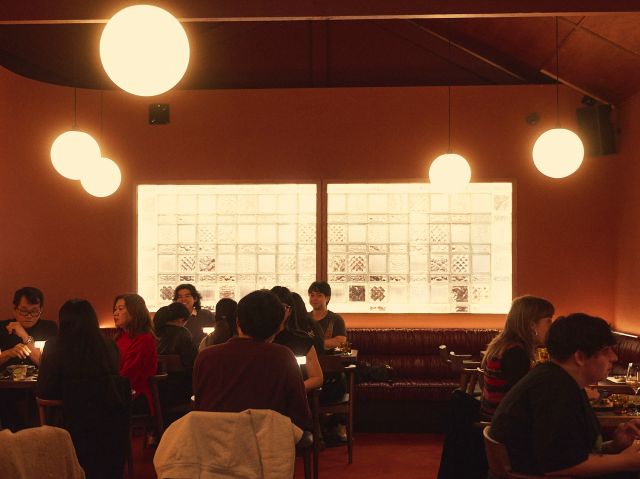
Disuko is a multifaceted dining, drinks and disco venue.
The multifaceted venue opened last week, taking over the former Bourke Street institution Madame Brussels. It marks Melbourne-founded MAMAS Dining Group’s seventh restaurant, with their other venues including Hochi Mama 3000, Kiss & Tell and Suzie Q.
Disuko offers several dining and drink concepts: the Izakaya Lounge (main dining room), a vinyl cocktail bar, an eight-seat omakase counter and rooftop terrace, along with a private dining room.
Inside the 76-seat Izakaya Lounge, guests can savour bites from the hibachi grill and delicate nigiri in forest green booths. Interiors are a sultry mash-up of cherry ruched leather, back-lit glass and eclectic wall decor that give the space a warm retro feel.
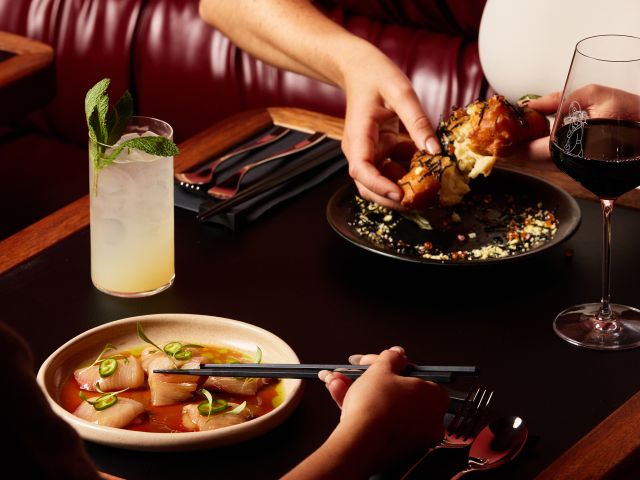
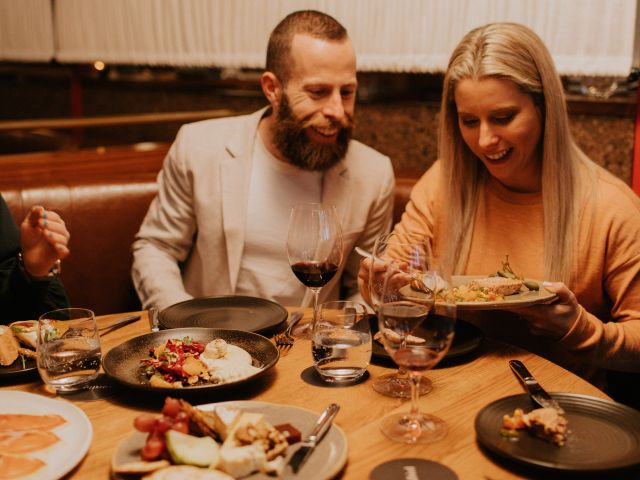
Enjoy izakaya-inspired dishes in the main dining area.
Food is treated as more than the supporting act. Leading the dining concepts are MAMAS Dining Group’s creative culinary director, Michael Stolley, and Hung Hoa, an esteemed ex-Nobu name who’s now whipping up a smattering of Japanese flavours as Disuko’s head chef. The two have spearheaded a menu of izakaya-inspired dishes available a la carte or via the ‘Disuko Setto’, where guests choose five share items for $65 per person. Try the wagyu tataki topped with crispy potato, kingfish dressed in citrus-yuzu soy, jalapeño and coriander oil, or the shoyu-yaki chicken – which is brined in sake for 24 hours, then flamed over the hibachi and brushed with chicken fat.
Those keen on a more intimate setting can slink into the Omakase Bar. With just eight seats, the counter offers a 12-course sushi and sashimi experience where guests watch their meals being prepared right in front of them. Seasonality and Japanese craftsmanship are at the forefront.
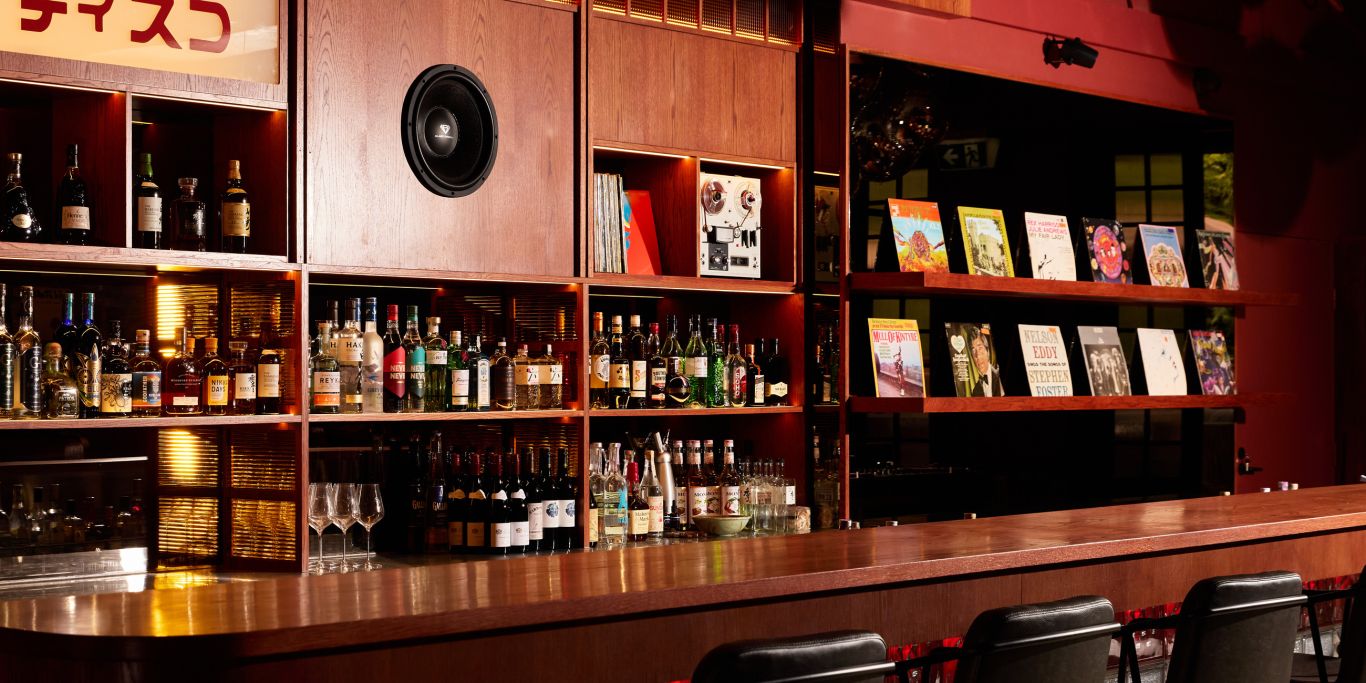
The heartbeat of Disuko is found at the Vinyl Bar. Here, mixologists shake craft cocktails and artists spin funky tunes, recalling the tempo of Tokyo’s nightlife. From smooth disco to hip hop and Japanese soul, bespoke boomboxes panelled with a traditional Japanese woodwork technique set the vibe.
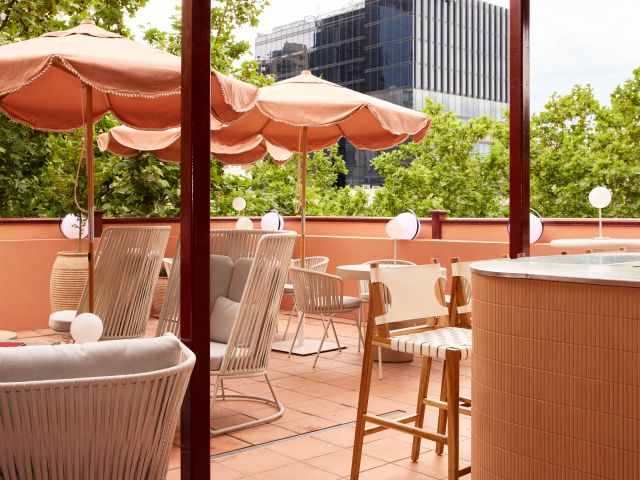
Linger on the Terracotta Rooftop for breezy cocktails and weekend vibes.
There’s more fun to be had on the Terracotta Rooftop. Lean into the rhythm of the weekend on warm nights while sipping spritzes and snacking on spicy edame, all backdropped by a skyline glow. This relaxed space is walk-in only.
Above, Disuko’s 30-seat private dining room, ‘The Tokyo Sky Mezzanine,’ is ideal for functions of all kinds, from milestone birthdays to family gatherings.
Disuko isn’t the quietest bar in Melbourne. But if you want to feel glamourous, uninhibited and fully plugged into the city’s current, this lively venue – lights humming, cocktails flowing – is waiting with open doors.
Need tips, more detail or itinerary ideas tailored to you? Ask AT.
AI Prompt
The details
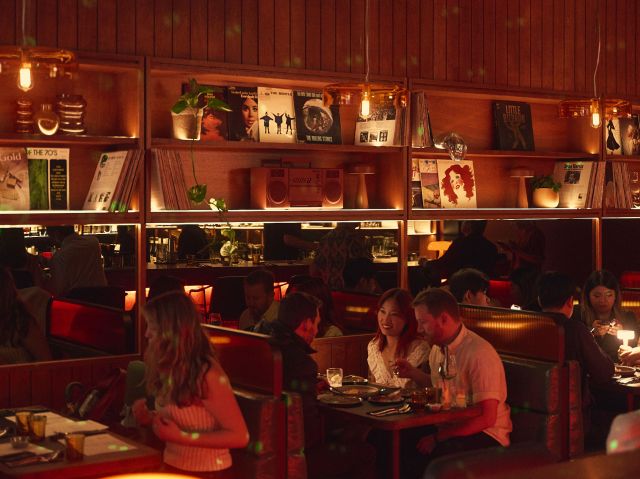
Slink into moody booths reminiscent of Tokyo’s low-lit lounges.
Location: Level 3/59-63 Bourke St, Melbourne 3000
Opening hours: from 12pm to late, seven days a week
Prices: Share plates $14-$42 or ‘Disuko Setto’ $65 per person, cocktails $21-$24
Capacity: 76 in the main dining room, 44 on the rooftop terrace, 30 in the private dining room and eight in the omakase bar
Eleanor Edström is Australian Traveller’s Associate Editor. Previously a staff writer at Signature Luxury Travel & Style and Vacations & Travel magazines, she's a curious wordsmith with a penchant for conservation, adventure, the arts and design. She discovered her knack for storytelling much earlier, however – penning mermaid sagas in glitter ink at age seven. Proof that her spelling has since improved, she holds an honours degree in English and philosophy, and a French diploma from the University of Sydney. Off duty, you’ll find her pirouetting between Pilates and ballet classes, or testing her friends’ patience with increasingly obscure vocabulary.
Wind through fern tunnels, stop for a wine in a tram bar, or chase giant murals across the wheatbelt. These drives and rides prove Victoria’s best stories are found off the straight and narrow.
There’s something unmistakably Australian about a road trip: car packed, playlist on, landscapes shifting. Travelling down the highway toward Healesville, in Victoria’s Yarra Valley , the mountains rise, flanking me on both sides. I feel its embrace, a silent invitation to explore what lies beyond.
Moss-covered embankments rise on either side, and towering mountain ash trees form a green tunnel overhead. Road signs warn of wombats and cyclists but with giant ferns lining the roadside, the landscape feels prehistoric, as if a dinosaur might suddenly emerge. This, the Black Spur , is one of my favourite road trips.
The Black Spur
Through the forested canopy of The Black Spur drive that winds from Healesville to Narbethong. (Image: Neisha Breen)
The Black Spur is short compared to other Victorian road trips, just 30 kilometres, stretching from Healesville to Narbethong. But what it lacks in distance, it makes up for in scenery. Just outside Healesville, Maroondah Dam offers bushwalks and scenic views. However, if pressed for time, Selover’s Lookout is an easy roadside stop offering uninterrupted views of the dam.
In Narbethong, close to the Marysville’s snowfield, is the Black Spur Inn , a charming double-storey brick hotel that’s been welcoming travellers since 1863. Here, diners cosy up by the roaring fire or gaze through the floor-to-ceiling windows, imagining horse-drawn coaches carrying hopeful gold seekers to the eastern goldfields.
Victoria’s Silo Art Trail
The Silo Art Trail in the Wimmera Mallee region. (Image: Visit Victoria/Anne Morely)
Location: Various towns across the Wimmera Mallee region Duration: More than 200 kilometres / 4–5 hours but best over a minimum of three days
What began as a way to draw travellers back into town bypassed by highways – places such as Nullawil, Sea Lake and Patchewollock – has grown into a celebrated outdoor art movement. The Silo Art Trail now includes 23 silos, each transformed with large-scale mural portraits sharing local stories, celebrating community heroes, Indigenous history, farming life, or regional identity.
The Nullawil silo, for example, is a portrait of a local farmer in a chequered flannelette shirt alongside his loyal kelpie, painted by artist Sam Bates (AKA Smug). And the silos at Albacutya in the Grampians, painted by artist Kitt Bennett, depict her joyful memories of growing up in the countryside. Many of the murals sit right in the heart of small towns, such as Rochester and St Arnaud , making them perfect spots to pause for a country pub meal or something sweet from a local bakery.
Location: Gippsland Duration: Approximately 220 kilometres / 4 hours
The Gippsland Lakes are a much-loved holiday spot in Victoria, but road-tripping further east reveals much more. Begin in Metung and time your visit with the monthly farmers’ market, or simply linger over lunch on the lawn of the Metung Hotel. Twenty minutes away is Lakes Entrance , where you can watch the fishing boats return with their catch.
Continue to Marlo, where the Snowy River spills into the sea, and Cape Conran for its many beaches and walks. If needing to stretch your legs, Croajingolong National Park is home to the historic Point Hicks Lighthouse and the Wilderness Coast Walk. Birdwatching and rainforest trails near Bemm River are worth a pit stop before arriving in Mallacoota, where the forest meets the sea.
Great Ocean Road
The 12 Apostles on the Great Ocean Road. (Image: Tourism Australia/Two Palms/Harry Pope)
Location: South-west Victoria, from Torquay to Allansford Duration: Approximately 250 kilometres / 4–5 hours but best over a minimum of three days
Victoria’s most famous road trip delivers it all: world-class surf breaks, rainforest walks, clifftop lookouts and wildlife encounters. The journey begins in Torquay, the state’s surf capital, then hugs the coast past Anglesea and Lorne to Apollo Bay, before curving inland through the lush rainforest of the Otways. Stop at Cape Otway Lightstation or take to the treetops at Otway Fly.
Between Cape Otway and Port Campbell lies the most photographed stretch – seven of the Twelve Apostles still standing, alongside the golden cliffs of Loch Ard Gorge. Further west, Warrnambool is a winter whale-watching hotspot, before the road winds to Port Fairy, a charming fishing village of whalers’ cottages, walking trails and offshore seal colonies further along the coast.
Location: Bellarine Peninsula Duration: Approximately 80 kilometres / 2–3 hours
The Bellarine Taste Trail is a feast for the senses, winding through coastal towns, past boutique wineries and artisan producers. It’s a choose-your-own-adventure style trail – simply grab a map and build your own delicious journey.
You might wander historic, seafront Queenscliff, sip wine in a converted tram bar at Terindah Estate , sample a locally distilled whisky at The Whiskery in Drydale or pick up a jar of honey at Wattle Grove in Wallington. Seafood lovers can head to Portarlington, famous for its mussels. Eat them fresh at local restaurants or head out on the water with Portarlington Mussel Tours.
O’Keefe Rail Trail – Bendigo to Heathcote
Pink Cliffs Reserve in Heathcote can be seen on the O’Keefe Rail Trail. (Image: Visit Victoria/Emily Godfrey)
Location: Central Victoria Duration: Approximately 50 kilometres / 4 hours cycling
Travellers first journeyed between Heathcote and Bendigo in 1888, when the railway line was built to link the towns. Trains stopped running in 1956, but today the route has a new life as the O’Keefe Rail Trail . The path is mostly level for easy riding, and along the way you’ll cycle past bushland, waterways and reserves. There are plenty of places to picnic, birdwatch, and if you’re lucky, spot a platypus.
The trail is well supported with water stations, bike repair points, shelters, and signage. Axedale makes a great halfway stop, with the pretty Campaspe River Reserve for a rest and local cafes for refuelling. Begin in Heathcote, known for its wineries and cafes, or in Bendigo, which is easily reached by train from Melbourne/Naarm. Shorter sections, such as Heathcote to Axedale, are also popular.
Goldfields Track – Ballarat to Bendigo
Location: Central Victoria Duration: Approximately 210 kilometres / 2–3 days cycling
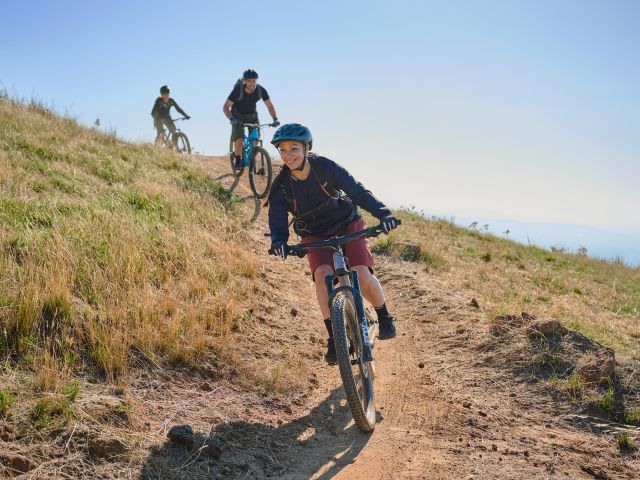
The Goldfields Track traces a route once so rich in gold it made Melbourne one of the wealthiest cities in the world. Starting at Mt Buninyong, south of Ballarat, the trail leads mountain cyclists and walkers north through Creswick, Daylesford and Castlemaine before finishing in Bendigo. Along the way, you’ll encounter granite outcrops, eucalypt forests, rolling farmland and remnants of the region’s mining past.
As it passes through the lands of the Dja Dja Wurrung and Wadawurrung people, the track shares gold rush history and Indigenous stories brought to life by interpretive signs. Walk or ride the full trail or choose from one of its three distinct sections. With cosy stays, cafes and pubs, it’s easy to mix wilderness with comfort.