With a bold personality and richly layered design language by Flack Studio, plus a streetside coffee shop to boot, Hannah St Hotel is Melbourne’s hottest new hotel – and a microcosm of the city itself.
Urban boutique hotels today are working overtime as not only places to crash after a long day sightseeing, but as microcosms of the cities they inhabit, distilling local character across every touchpoint. Hannah St Hotel does exactly that.
The headline: its interiors are designed by Flack Studio, the multidisciplinary practice behind stylish spaces across Australia and beyond (think Bistro Livi in Murwillumbah and Ace Hotel Sydney), whose aesthetic is anchored by an intentional use of colour, material and mismatching that strikes a sweet spot between contemporary, creative and elegant.
Hannah St Hotel is something of a homecoming for the Melbourne-based firm helmed by David Flack, and it’s every bit the love letter to his home town you’d hope for.
The 188-room hotel is part of Collection by TFE Hotels, whose portfolio is made up of independently owned properties that hero design and strong connections to their local communities, including The Eve Hotel in Sydney and The Calile Hotel in Brisbane.
Where is Hannah St Hotel?
Hannah St Hotel is situated in the heart of Southbank.
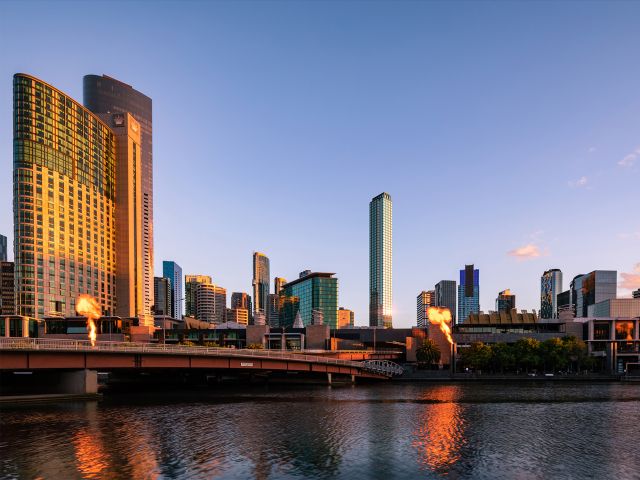
Hannah St Hotel sits in Melbourne’s Southbank and forms part of the area’s ongoing cultural revitalisation. It’s positioned within a 15-minute neighbourhood at the crossroads of the CBD, the Yarra River, South Melbourne and the Arts Precinct.
The 10-level hotel occupies the new mixed-use Queensbridge Building, which cuts a distinctive wedge-shaped – or bullnose – footprint likened to New York City’s 1920s Flatiron Building.
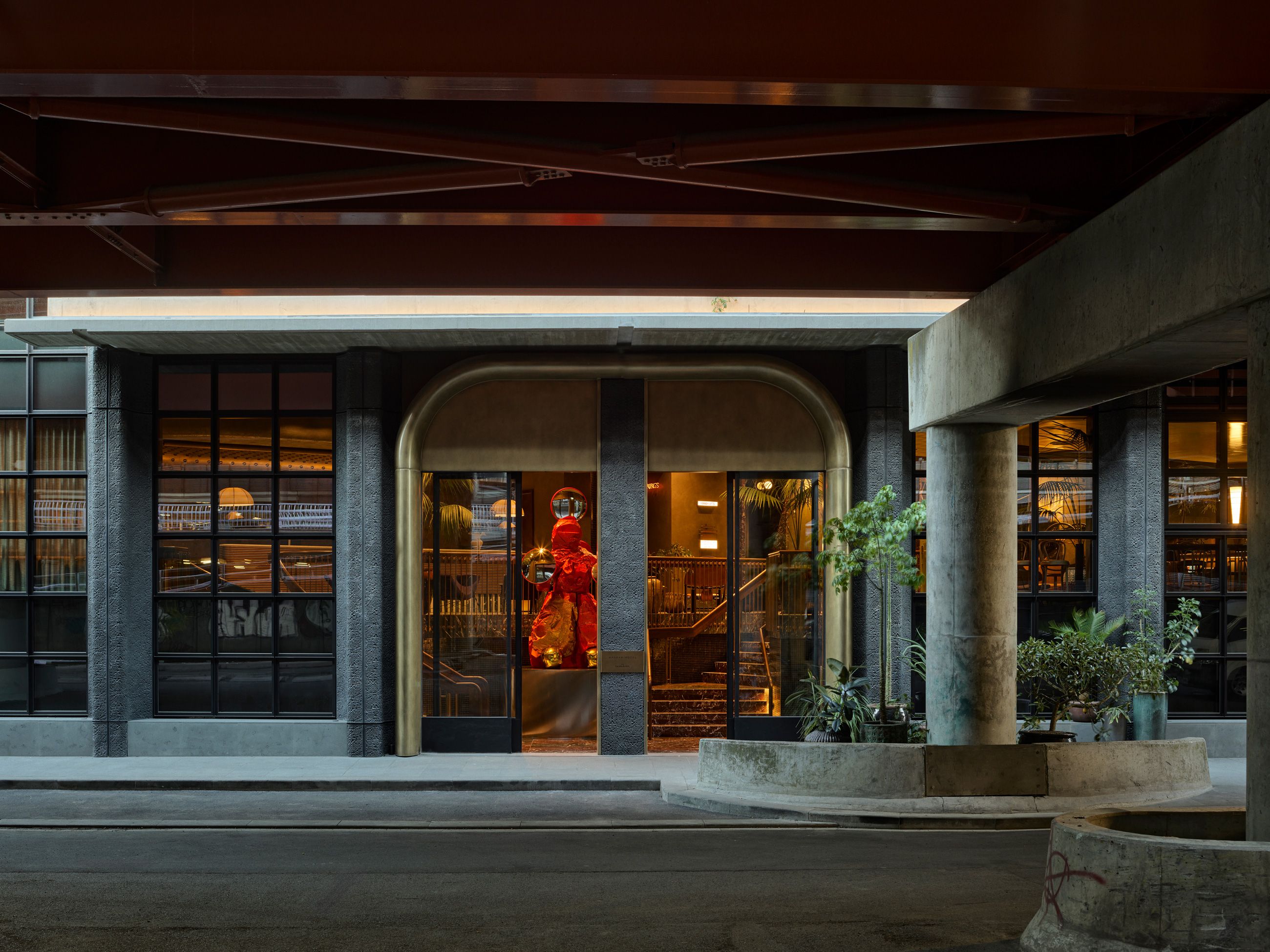
Tucked under the Kingsway overpass, it initially feels a little like an urban jungle – but within minutes the concrete gives way to the Southbank Promenade. Soon I’m strolling along the Yarra, passing a hub of eateries, riverside bars, sketch artists and street performers on the sunny Saturday I’m here.
Within 15 minutes I reach Princes Bridge. A walk over the water takes me into Fed Square and the CBD, while heading south along St Kilda Road brings me to NGV International within a few minutes.
What is the style and character of Hannah St Hotel?
Step into Melbourne’s hottest design-led stay.
The accommodation blends creativity and personality.
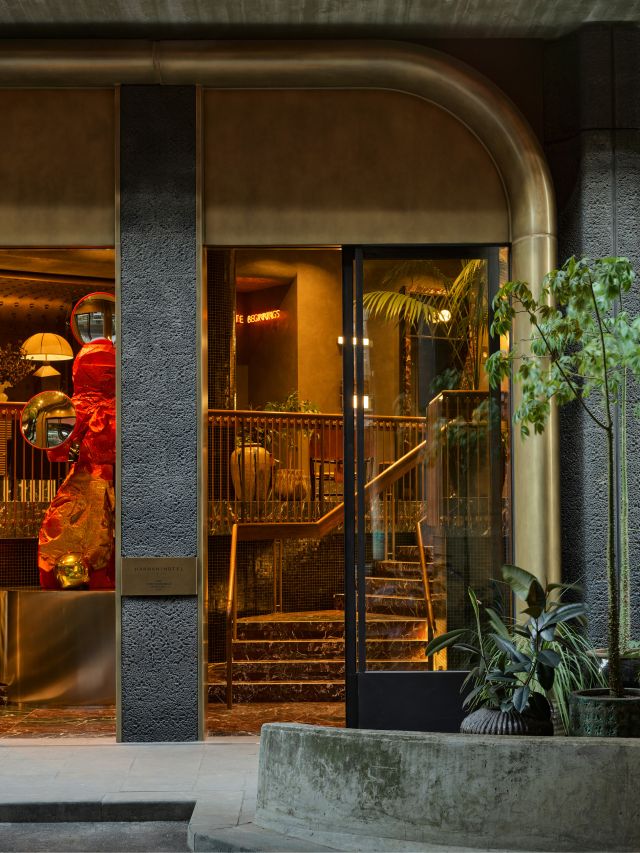
Hannah St Hotel is big on personality, as flagged on arrival. Its main entrance, discreetly tucked beneath the overpass, is given a playful makeover in Barbie pink and polka dots. Guests are greeted by a three-metre sculpture, Mirror Sheila (2024) by Justene Williams – part of the hotel’s art program – as they step into the lobby.
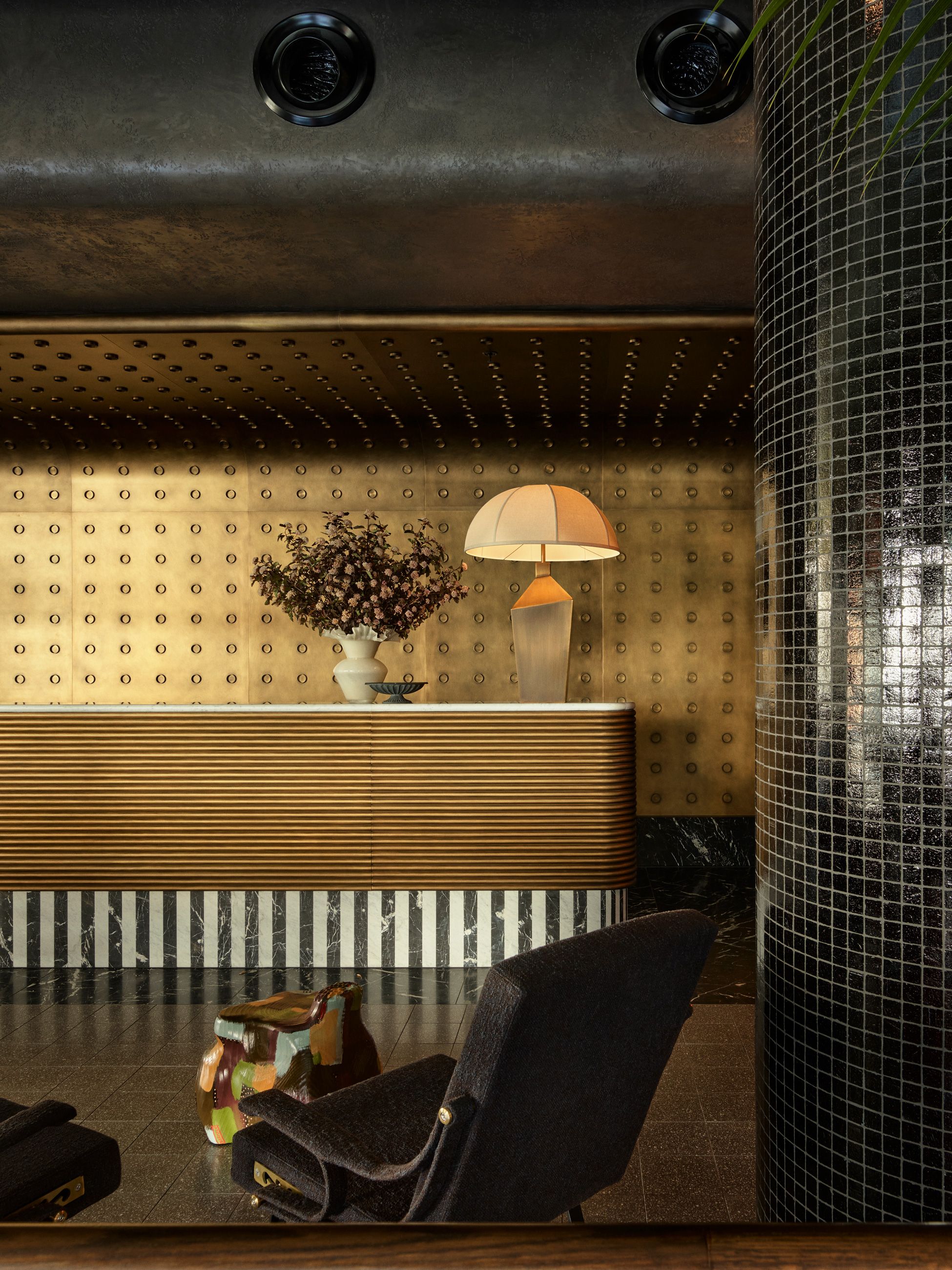
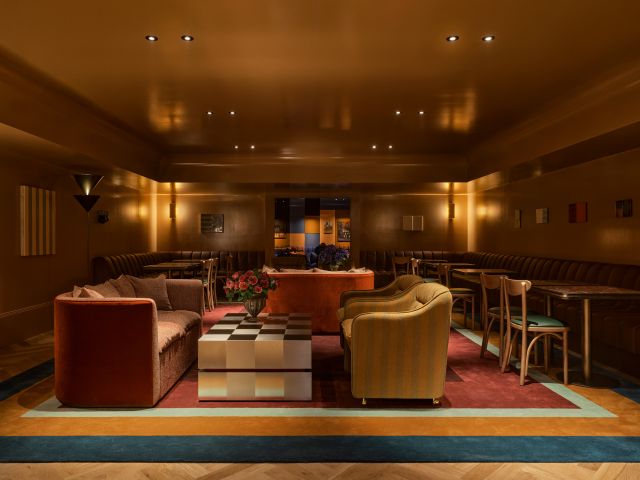
Flack Studio draws on a diverse set of influences – from French Modernism and mid-century Italy to American Deco and the Industrial Revolution – to create a one-off design that embodies Melbourne’s richly layered spirit. It’s grit and glamour and vintage-style signage flickering neon. Tactile textiles, gestural shapes and bold colours offset against industrial finishes. Just as things tip towards nostalgia, a bolt of contemporary snaps you back to the present.
The vibe is welcoming and accessible. Playful and cool without trying too hard.
Need tips, more detail or itinerary ideas tailored to you? Ask AT.
AI Prompt
What are the facilities like at Hannah St Hotel?
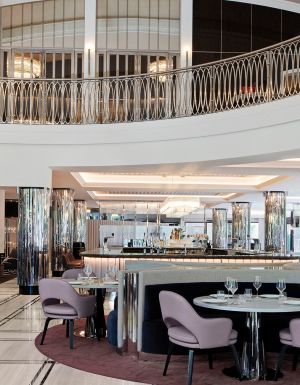
Unwind at the Parisian-style Terrace Lounge.
Designed to be a neighbourhood in its own right, Hannah St Hotel has everything you need without straying far. There’s a streetside hole-in-the-wall, Hannah St Coffee, for your caffeine fix, and Coupette Corner Bistro & Bar, which does triple duty for breakfast, lunch and dinner.
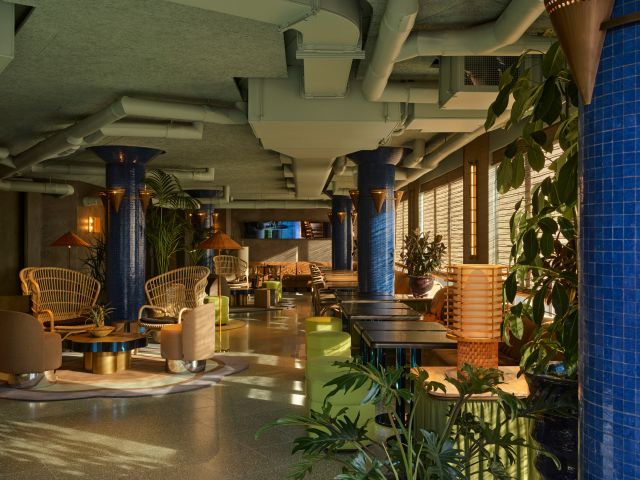
Ample public spaces encourage lounging, imbibing and working (or all three), including the rail-inspired Carriage Lounge, chic lobby hang Bar Hannah, the top-level Terrace Lounge – influenced by the garden cafes of Paris and boasting a rooftop bar – and a dedicated co-working space.
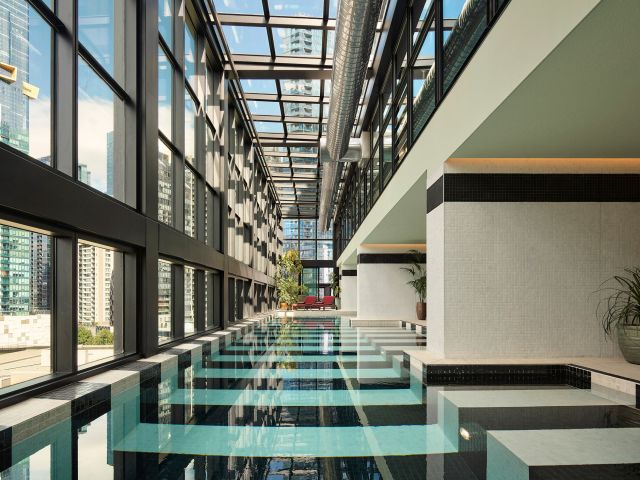
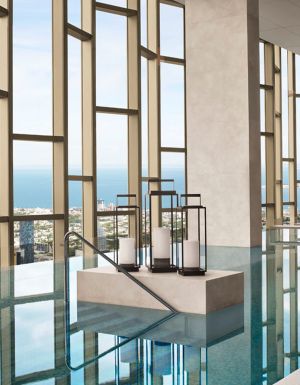
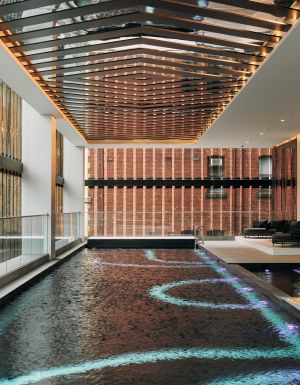
Dive into the 20-metre lap pool.
There’s also a fully equipped gym, a 20-metre lap pool with vertigo-inducing city views through floor-to-ceiling windows, plus a steam room and sauna.
What are the rooms like at Hannah St Hotel?
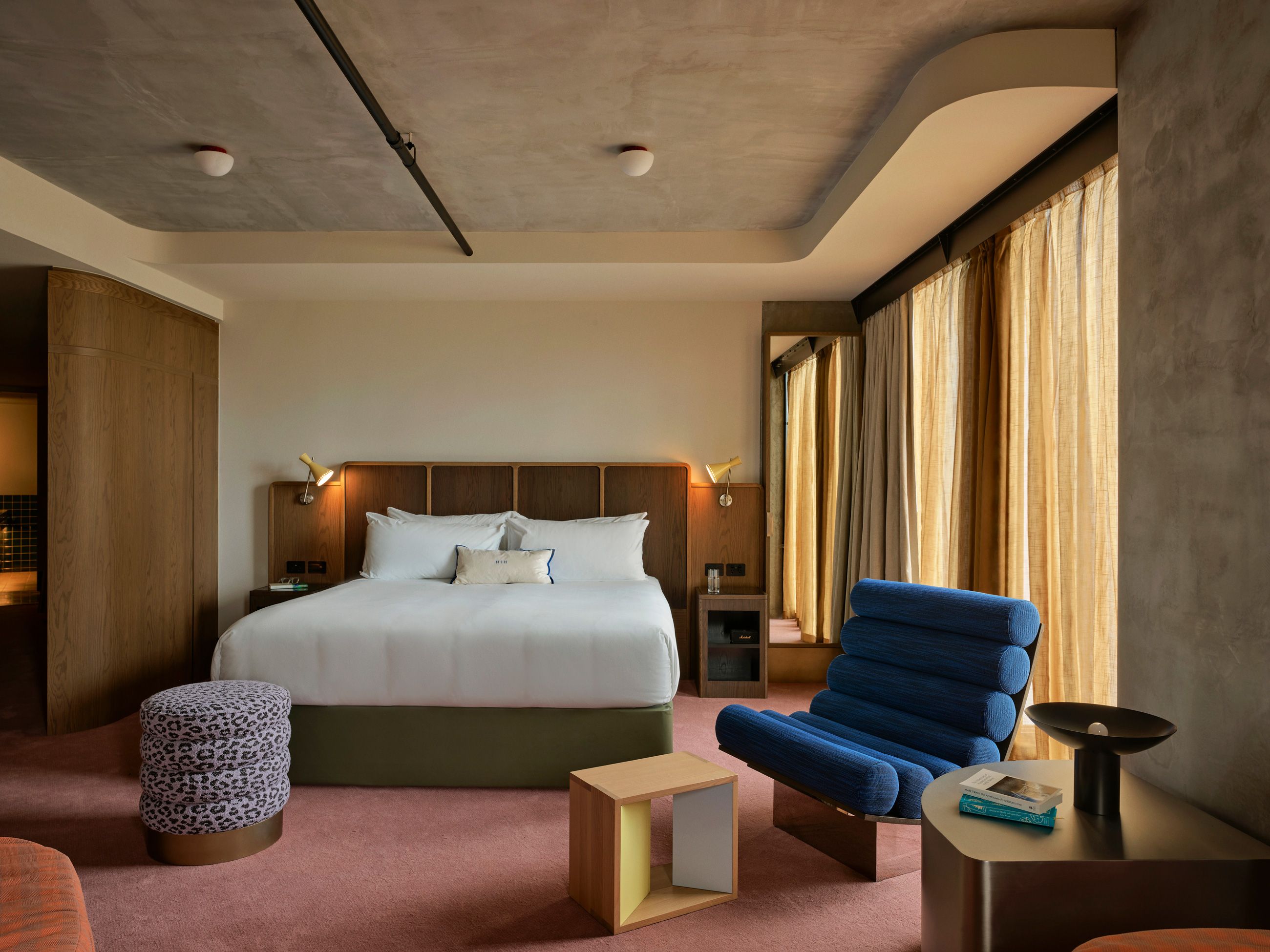
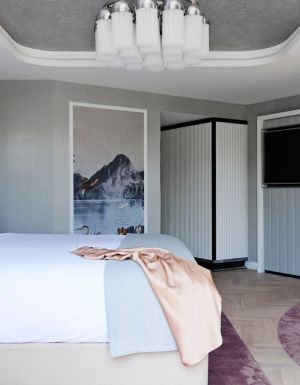
The French and Italian-style interiors were designed by Flack Studio.
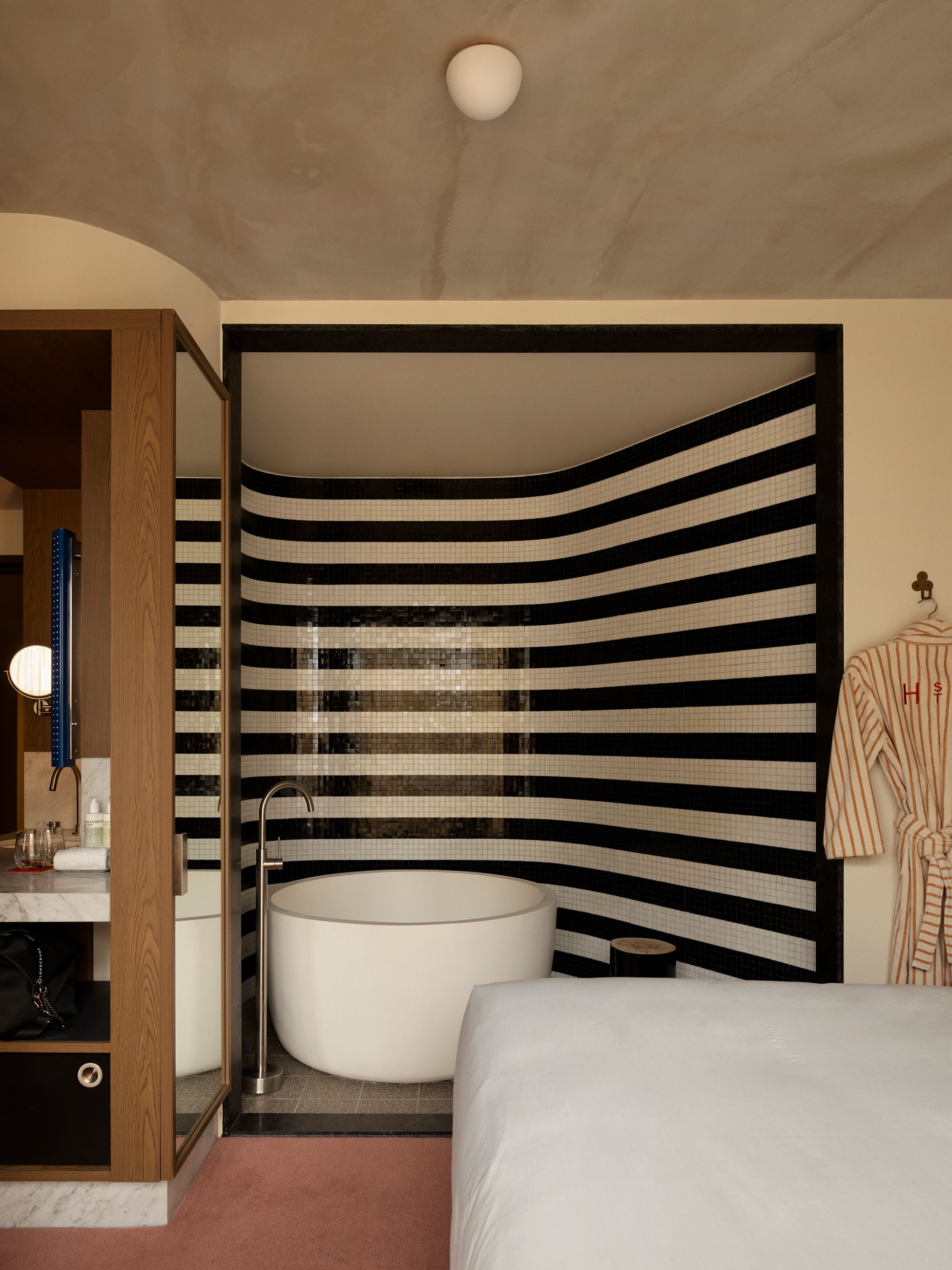
The Terrace Balcony Suite is equipped with a freestanding bath.
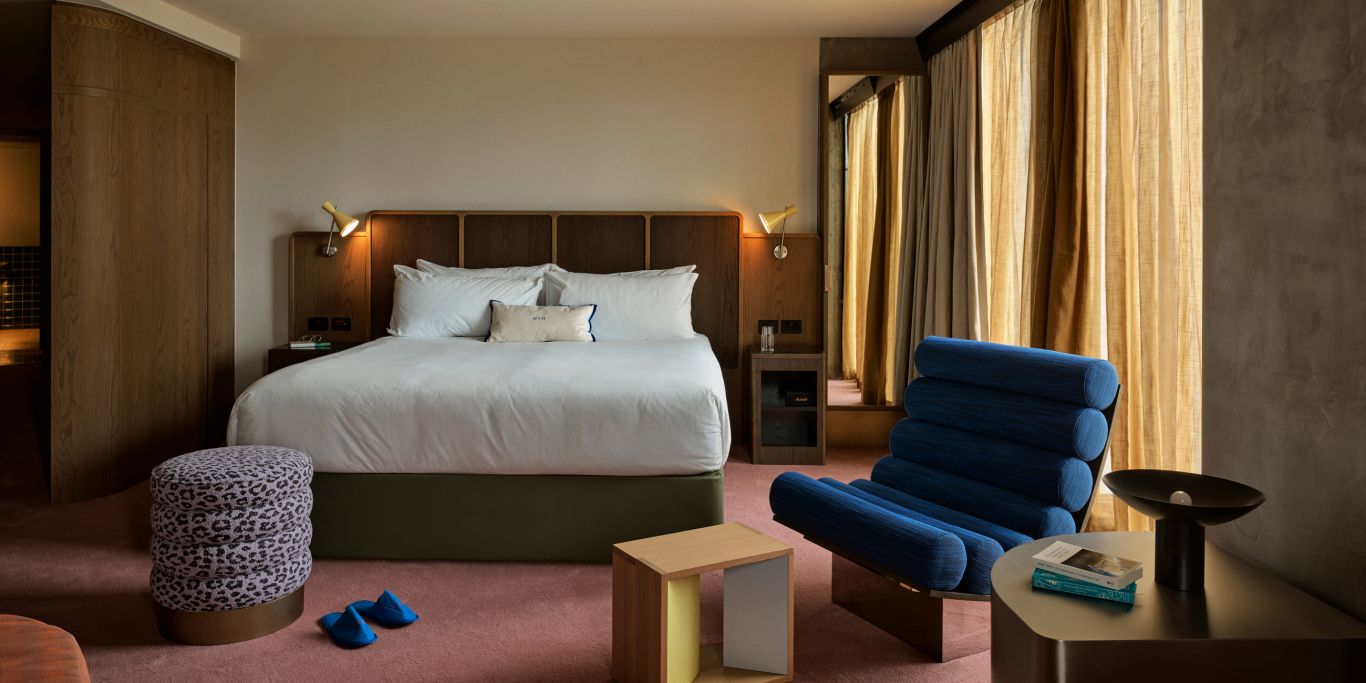
Hannah St Hotel’s 188 boutique rooms and suites are each carefully curated.
Ranging in size from 29 to 58 square metres – from bijou Local rooms and Balcony Terrace rooms through to the ultimate Hannah Suite – they feature custom furniture, Malin + Goetz amenities, minibars, pod coffee machines, smart TVs with Chromecast, Bluetooth Marshall speakers, bespoke robes and slippers, and skyline views.
My Lookout Corner Suite makes the most of those views, its unique angular shape bestowed by the building’s irregularity offering a sweeping panorama.
Generously proportioned, it has a king bed and a separate living area crowned by custom-made banquette seating that wraps around the room’s unusual footprint. Quality finishes are stitched into every surface, from blush-coloured carpets that squish underfoot to the concrete ceiling with exposed piping offset against the statement reading chair in Yves Klein blue.
A minibar is stocked with artisanal snacks and local wines, beer and soft drinks.
Space is used efficiently throughout the distinctive layout, including a wardrobe and stowage area tucked into the gallery-style hallway that leads to a generous bathroom – rendered in grey and blue with terrazzo flooring, complete with separate shower and toilet.
Weekly travel news, experiences insider tips, offers, and more.
What are the dining options at Hannah St Hotel?
The rail-inspired Carriage Lounge is the perfect spot for drinks.
Melbourne hospitality stalwarts The Mulberry Group, led by Nathan Toleman, oversee Hannah St Hotel’s food and beverage offering across five distinct venues designed to take guests and locals alike from morning coffee through to late-night cocktails.
There’s Bar Hannah and the adjoining Carriage Lounge for drinks and snacks, ground-level Hannah St Coffee, and the rooftop Terrace Lounge for lingering over cocktails – soon to be joined by chef residency program Propeller.
Coupette Corner Bistro & Bar is the star of the show: a ground-level eatery that moves from breakfast to lunch and dinner as the day progresses. The menu is overseen by executive chef Andrew Beddoes and offers a playful take on the European bistro, with a distinctly Melbourne skew.
Breakfast is bright and buzzy – order anything from pastries and almond oat cups to avocado toast with goat’s cheese topped with radish and herbs, a blue swimmer crab omelette or French toast laced with blueberries, maple syrup and burnt orange curd.
Lunch brings a tight menu of bistro staples, while dinner dials the mood to elegant and pushes the food offering further: think steak frites, lamb rump and market fish with beurre blanc. The wine list spans local to Euro.
Is Hannah St Hotel accessible for guests with disabilities?
Hannah St Hotel offers several room types designed to meet specific accessibility needs. All public areas, including the pool, are wheelchair accessible.
Is Hannah St Hotel family-friendly?
Hannah St Hotel nods to the city’s energy and urban pulse.
Guests under 18 are welcome when accompanied by an adult. Rooms accommodate up to two guests, with interconnecting rooms, baby cots and rollaway beds available on request.
Want to see more stories from Australian Traveller in your Google search results?
Tick the box next to "Australian Traveller". That's it.
Imogen Eveson is Australian Traveller’s Print Editor. She was named Editor of the Year at the 2024 Mumbrella Publish Awards and in 2023, was awarded the Cruise Line Industry Association (CLIA) Australia’s Media Award. Before joining Australian Traveller Media as sub-editor in 2017, Imogen wrote for publications including Broadsheet, Russh and SilverKris. She launched her career in London, where she graduated with a BA Hons degree in fashion communication from world-renowned arts and design college Central Saint Martins. She is the author/designer of The Wapping Project on Paper, published by Black Dog Publishing in 2014. Growing up in Glastonbury, home to the largest music and performing arts festival in the world, instilled in Imogen a passion for cultural cross-pollination that finds perfect expression today in shaping Australia’s leading travel titles. Imogen regularly appears as a guest on radio travel segments, including ABC National Nightlife, and is invited to attend global travel expos such as IMM, ILTM, Further East and We Are Africa.
Slow down and find your rhythm on a Murray River journey through time and place.
Trust is a funny thing. It seems not that long ago that my mother was insisting on pouring the milk into my cereal bowl, because she didn’t trust me not to slosh it over the table, and yet here I am on the Murray River at Mildura in far north-west Victoria, being handed the keys to a very new and very expensive luxury houseboat.
After a crash course in how not to crash, I’m at the wheel of the good ship Elevate – pride of the All Seasons fleet – guiding her upstream past red-ochre cliffs as pelicans glide above the rippled river and kookaburras call from reedy banks. There’s a brief moment of breath-holding while I negotiate a hairpin turn around a jagged reef of skeletal, submerged gum trees, before a cheer rings out and calm descends as the timeless river unfurls in front of us.
The Murray River winding through Yarrawonga. (Image: Rob Blackburn)
Setting sail from Mildura
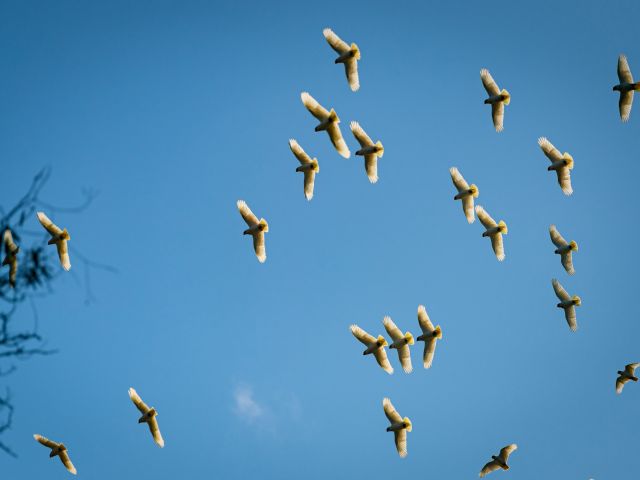
Home to a large number of bird species, including pelicans. (Image: The Precint Studios)
A journey along the Murray River is never less than magical, and launching from Mildura makes perfect sense. Up here the river is wide and largely empty, giving novice skippers like myself the confidence to nudge the 60-tonne houseboat up to the riverbank where we tie up for the night, without fear of shattering the glass elevator (the boat is fully wheelchair accessible) or spilling our Champagne.
My friends and I spend three days on the water, swimming and fishing, sitting around campfires onshore at night, and basking in air so warm you’d swear you were in the tropics. The simplicity of river life reveals an interesting dichotomy: we feel disconnected from the world but at the same time connected to Country, privileged to be part of something so ancient and special.
Stop one: Echuca
A historic 19th-century paddlesteamer cruises along the Murray River. (Image: Visit Victoria)
The six-hour drive from Melbourne to Mildura (or four hours and 20 minutes from Adelaide) is more than worth it, but you don’t have to travel that far to find fun on the river. Once Australia’s largest inland port, Echuca is the closest point on the Murray to Melbourne (two hours 45 minutes), and you’ll still find a plethora of paddlesteamers tethered to the historic timber wharf, a throwback to the thriving river trade days of the 19th century. The PS Adelaide, built in 1866 and the oldest wooden-hulled paddlesteamer operating in the world, departs daily for one-hour cruises, while a brand-new paddlesteamer, the PS Australian Star, is launching luxury seven-night voyages in December through APT Touring.
The town is also a hot food and wine destination. St Anne’s Winery at the historic Port of Echuca precinct has an incredibly photogenic cellar door, set inside an old carriage builders’ workshop on the wharf and filled with huge, 3000-litre port barrels. The Mill, meanwhile, is a cosy winter spot to sample regional produce as an open fire warms the red-brick walls of this former flour mill.
Stop two: Barmah National Park
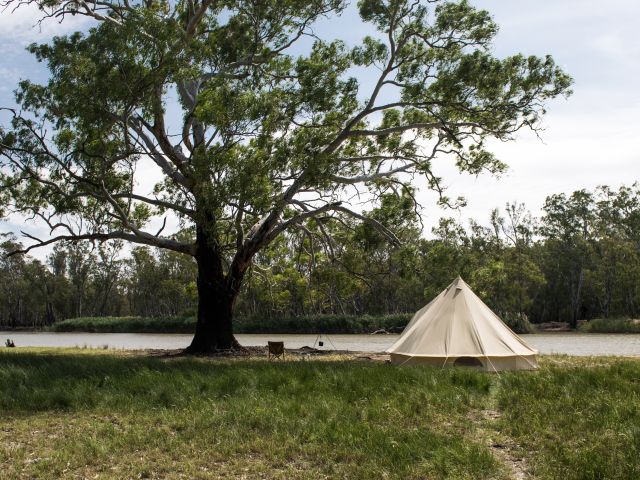
Camping riverside in Barmah National Park, listed as a Ramsar site for its significant wetland values. (Image: Visit Victoria/Emily Godfrey)
Just half-an-hour upstream, Barmah National Park is flourishing, its river red gum landscape (the largest in the world) rebounding magnificently after the recent removal of more than 700 feral horses. The internationally significant Ramsar-listed wetland sits in the heart of Yorta Yorta Country, with Traditional Owners managing the environment in close partnership with Parks Victoria. Walkways weave through the forest, crossing creeks lined with rare or threatened plants, passing remnants of Yorta Yorta oven mounds and numerous scar trees, where the bark was removed to build canoes, containers or shields.
The Dharnya Centre (open weekdays until 3pm) is the cultural hub for the Yorta Yorta. Visitors can learn about the ecological significance of the Barmah Lakes on a 90-minute river cruise, led by a First Nations guide, or take a one-hour, guided cultural walking tour along the Yamyabuc Trail.
Stop three: Cobram
Yarrawonga Mulwala Golf Club Resort. (Image: Visit Victoria)
Continue east to Cobram to find the southern hemisphere’s largest inland beach. Swarming with sun-seekers in summer, the white sand of Thompson’s Beach is shaded by majestic river red gums and dotted with hundreds of beach umbrellas, as beachgoers launch all manner of water craft and set up stumps for beach cricket. But the beach is at its most captivating at sunset, when the crowds thin out, the glassy river mirrors the purple sky, and the canopies of the gum trees glow fiery orange.
The region is also home to some fine resorts and indulgent retreats. Yarrawonga Mulwala Golf Club Resort has two riverside championship golf courses, luxury apartments and self-contained villas. While not strictly on the Murray, the historic wine town of Rutherglen is rife with boutique (and unique) accommodation, including an exquisitely renovated red-brick tower in a French provincial-style castle at Mount Ophir Estate. Fans of fortified wines can unravel the mystery of Rutherglen’s ‘Muscat Mile’, meeting the vignerons and master-blenders whose artistry has put the town on the global map for this rich and complex wine style.
Stop four: Albury-Wodonga
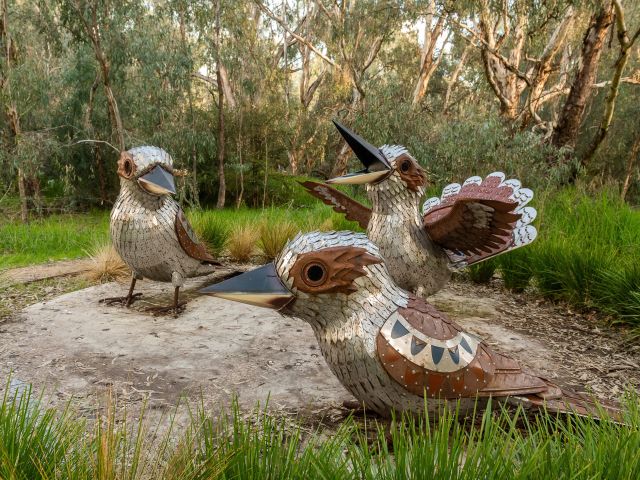
First Nations Yindyamarra Sculpture Walk is part of the Wagirra Trail. (Image: Carmen Zammit)
Follow the river far enough upstream and you’ll arrive at the twin border cities of Albury-Wodonga. The Hume Highway thunders through, but serenity can be found along the five-kilometre Yindyamarra Sculpture Walk – part of the Wagirra Trail that meanders through river wetlands just west of Albury in Wiradjuri country. Fifteen sculptures by local First Nations artists line the trail, conveying stories of reconciliation, enduring connection to culture, local Milawa lore and traditional practices. It feels a long way from Mildura, and it is, but the pelicans and kookaburras remind us that it’s the same river, the great conduit that connects our country.
A traveller’s checklist
Staying there
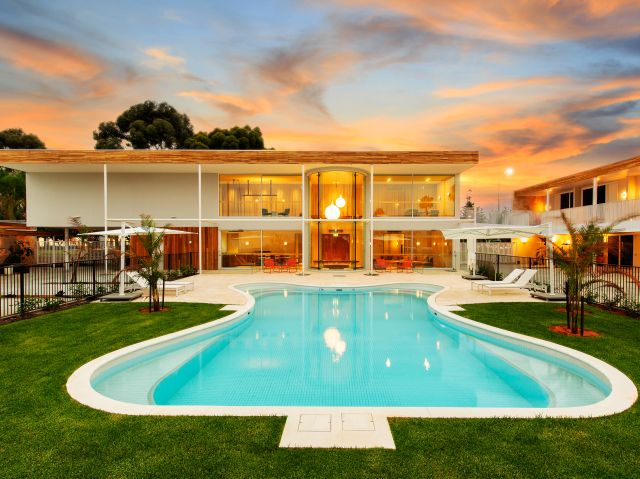
New Mildura motel Kar-rama. (Image: Iain Bond Photo)
Kar-Rama is a brand-new boutique, retro-styled motel in Mildura, with a butterfly-shaped pool and a tropical, Palm Springs vibe. Echuca Holiday Homes has a range of high-end accommodation options, both on the riverfront and in town.
Playing there
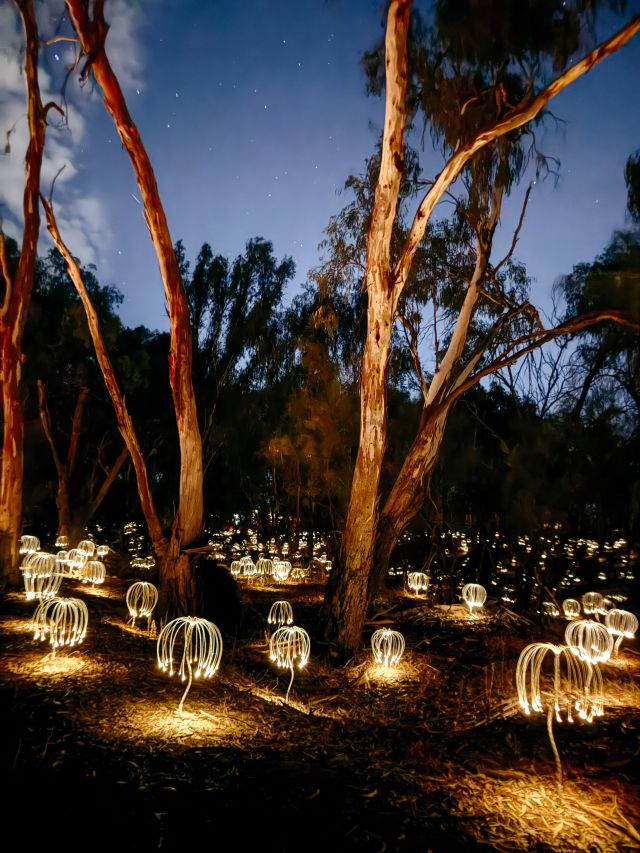
Bruce Munro’s Trail of Lights in Mildura. (Image: Imogen Eveson)
Artist Bruce Munro’s Trail of Lights installation, comprising more than 12,000 illuminated ‘fireflies’, is currently lighting up Mildura’s Lock Island in the middle of the Murray. Murray Art Museum Albury (MAMA) is a hub for contemporary art, with a rotating roster of exhibitions, and is a major outlet for young and First Nations artists.
Eating there
Mildura’s diverse demographic means it’s a fantastic place to eat. Andy’s Kitchen is a local favourite, serving up delicious pan-Asian dishes and creative cocktails in a Balinese-style garden setting. Call in to Spoons Riverside in Swan Hill to enjoy locally sourced, seasonal produce in a tranquil setting overlooking the river.