A tour of the world’s first non-alcoholic cellar door reveals complex flavours hidden behind a nondescript building in suburban Melbourne, as Jo Stewart discovers.
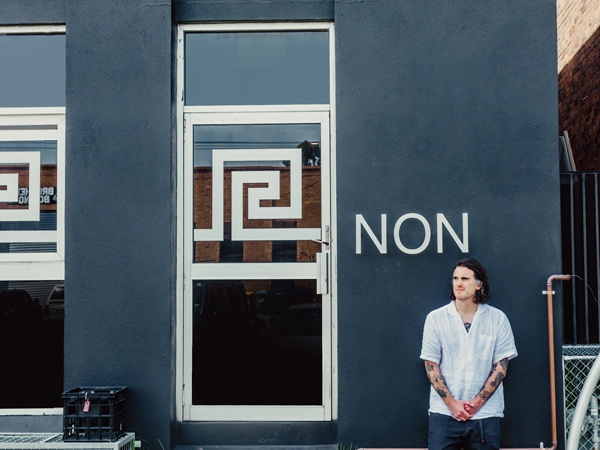
April 6, 2019 is a date that is very close to the heart of Aaron Trotman. As founder of non-alcoholic wine alternative NON, it was the day his vision finally hit pay dirt with his very first sale to Beaconsfield fine dining restaurant O.MY. Since then, the NON juggernaut has rolled on, with the zero-alcohol tipple now stocked in restaurants and bars across Australia, Singapore, Japan, Malaysia, USA and beyond. There have also been other highlights, including hosting a fine dining experience at New York’s three Michelin-starred Eleven Madison Park and more recently, the opening of the NONHQ cellar door for tours and tastings.
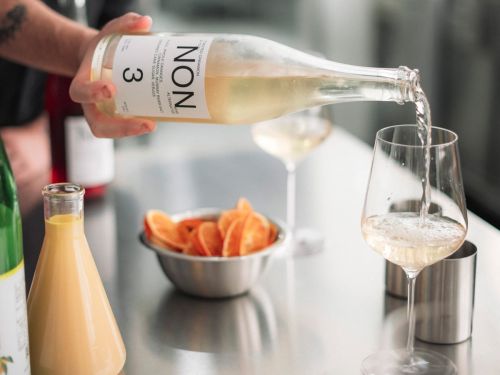
NON is a sophisticated wine alternative. (Image: Glen Wilkie)
The location
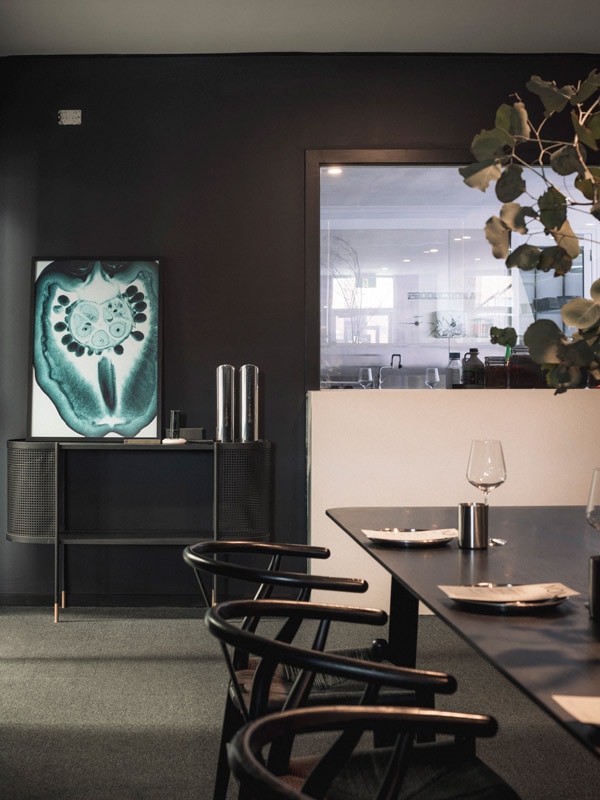
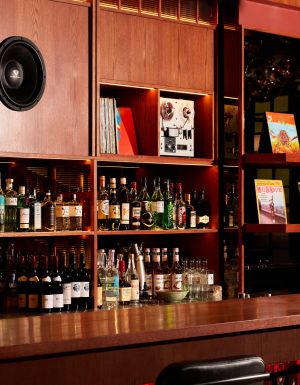
Located in suburban south-east Melbourne on a street mostly populated by industrial manufacturing businesses, the NONHQ cellar door is a surprise package. The ultra-modern, clean and sleek interiors signal to visitors that we’re in for an out-of-the-ordinary cellar door experience.
The tasting room has sleek interiors. (Image: Nic Stephens)
The tour tasting experience
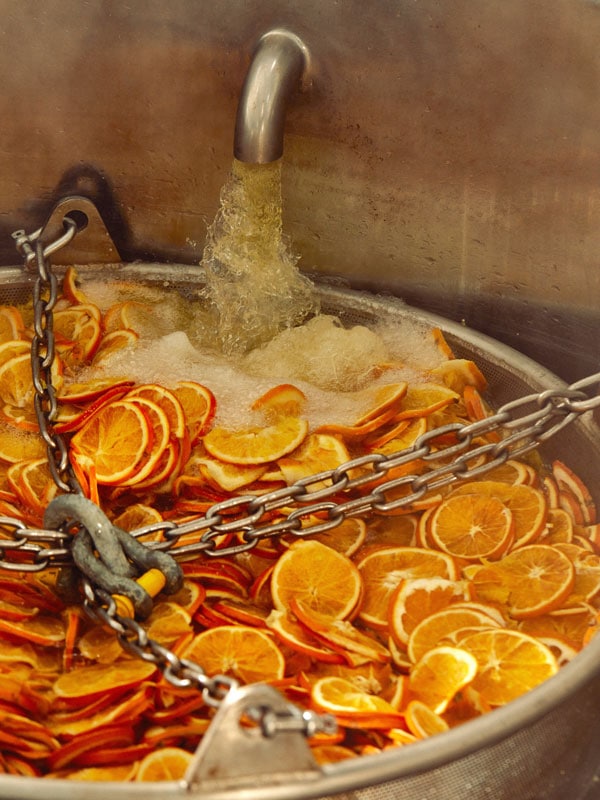
Stepping into the state-of-the-art kitchen, I’m introduced to the methods, techniques and ingredients the team use to perfect the balance of tannin, salinity, acidity and fruit that end up in each bottle of NON.
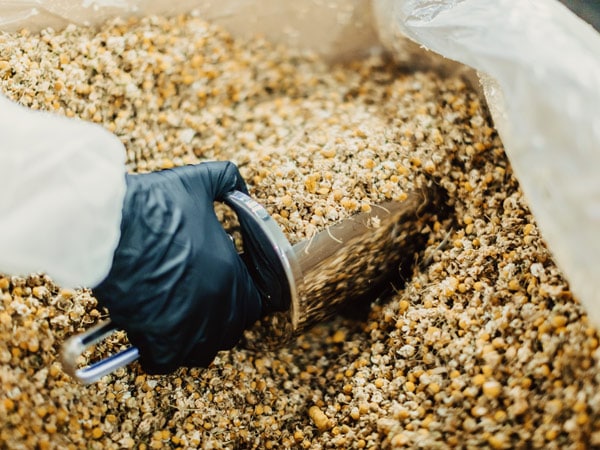
The NON ingredients create a depth of flavour.
From hand-steeping Egyptian chamomile to roasting batches of fresh cherries in the oven, much time and care is dedicated to creating a depth of flavour that lingers on the palate.
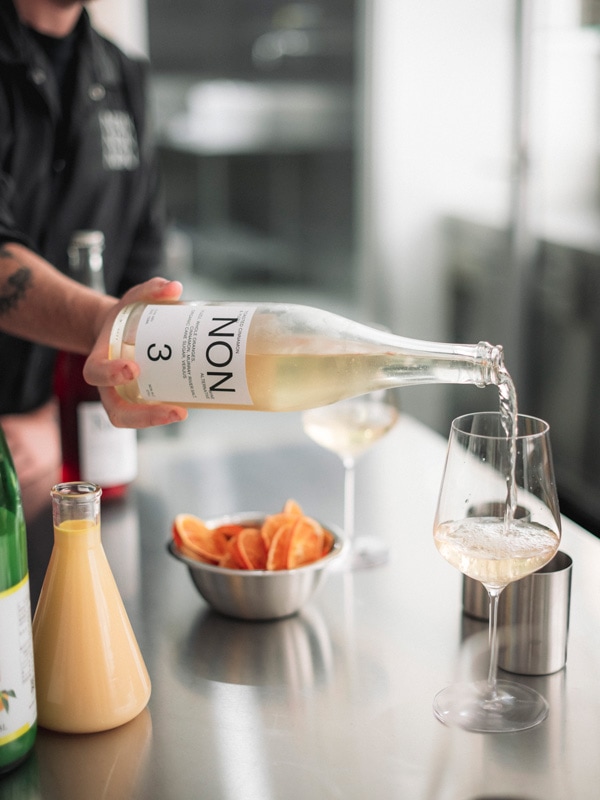
NON 3 Toasted Cinnamon & Yuzu is the perfect accompaniment to a summer picnic.
In the moody, intimate tasting room, I’m treated to a sensory journey as each glass is paired to cheese and charcuterie, with Aaron sharing tasting notes and some stories of what went on behind the scenes to create each variety.
Treat yourself to a sensory journey at NONHQ. (Image: Nic Stephens)
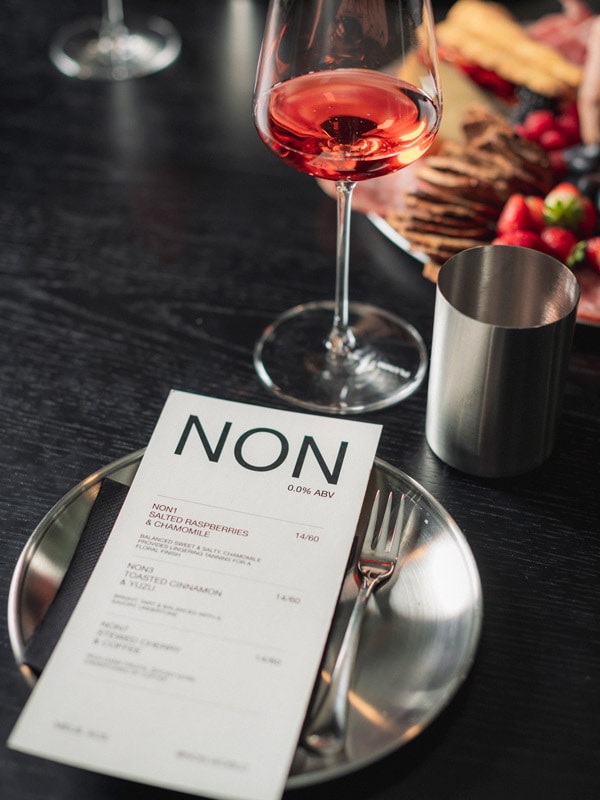
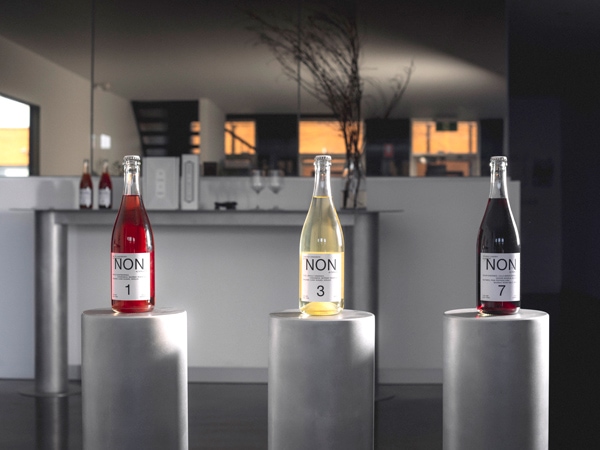
The tart and slightly savoury NON3 Toasted Cinnamon & Yuzu screams summer picnic while a bottle of NON7 Stewed Cherry & Coffee would be a great addition to a cosy winter dinner by an open fireplace.
The team balances the tannin, salinity, and acidity of fruit in each bottle of NON. (Image: Annika Kafcaloudis)
Aaron explains that NON is “a solution to an empty wine glass" by giving both drinkers and non-drinkers a sophisticated wine alternative that pairs well with food. NON drinks are also vegan, gluten-free and halal-certified, meaning people from all walks of life have embraced the brand.
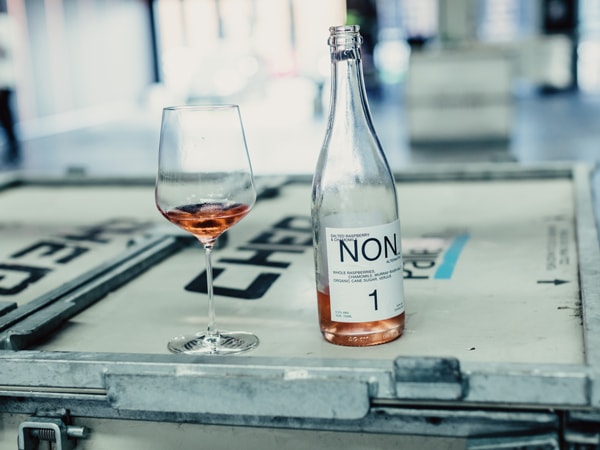
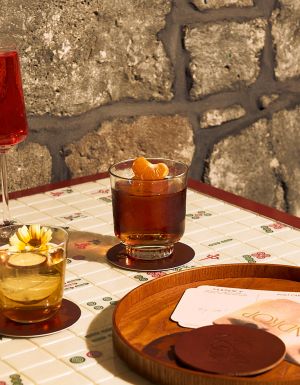
NON beverages draw upon flavours like salted raspberry, toasted cinnamon and coffee. (Image: Nic Stephens)
Elevating the wine-tasting experience
The road to creating an innovative alt-wine product from scratch hasn’t been easy. Tenacity and grit were required to get the brand up and running, but with the cellar door tours experiencing strong bookings, Aaron feels he’s onto a winner, despite running mostly on blind faith.
“I literally jumped off a cliff and built a plane on the way down. And I still am," says Aaron.
Meet NON founder Aaron Trotman. (Image: Glen Wilkie)
The NONHQ Tour details
The NONHQ Tour experience includes a meet the makers and experts behind NON, a flavour workshop in the NON kitchen, an intimate behind-the-scenes tour of the production process, a tasting experience of the range paired with cheese and charcuterie, and a complimentary bottle of NON to take home (RRP $30).
Jo Stewart is a freelance features writer who pens stories about nature, pop culture, music, art, design and more from her home in the Macedon Ranges of Victoria. When not writing, you can find her trawling through vinyl records and vintage fashion at op shops, antique stores and garage sales.
No matter your interests, you’re bound to find a unique and utterly memorable experience along the mighty Murray River.
Along the Murray River lies a network of towns that are at once intertwined and wildly diverse. Linked by the legendary waterway yet strikingly distinct, each has its own personality, pace and collection of experiences you won’t soon forget.
1. On the river
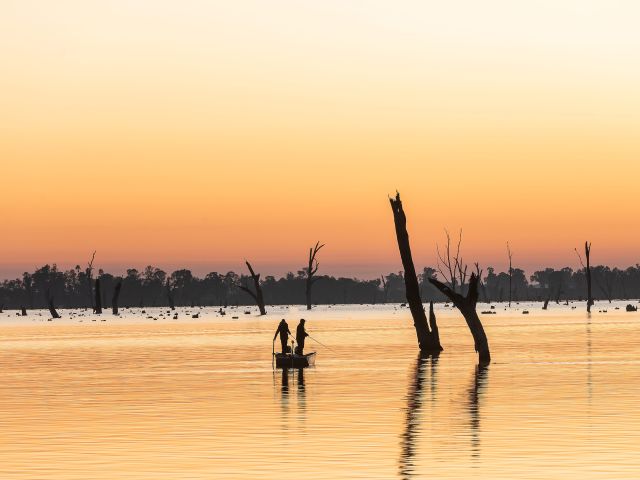
Get out onto the pretty Lake Mulwala. (Credit: Visit Victoria)
A visit to the region wouldn’t be complete without a jaunt on the iconic river. If you’re something of an adventurer, Lake Mulwala – an inlet on the Murray – is perennially popular for all kinds of watersports. Glide among ghost gums on a kayak or stand up paddleboard, or pick up the pace by waterskiing or windsurfing.
For a more relaxed (but no less immersive) river experience, hop on board one of the famed paddle steamers. Departing from Echuca Moama, Swan Hill and Yarrawonga Mulwala, these historic boats provide a nostalgic view of the Murray.
2. First Nations culture
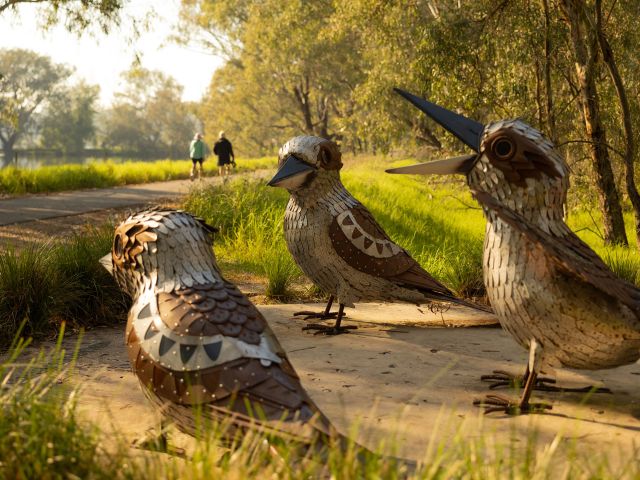
Wander the Yindyamarra Sculpture Walk.
The river is a meeting place of ancient cultures, home to over 50 First Nations clans and an integral part of their communities, storytelling and way of life.
To learn more about the Traditional Owners, take yourself on a guided stroll through the Wagirra Trail. Situated in Albury/Wiradjuri country, the trail passes through red gum forest, riverside wetlands and the Yindyamarra Sculpture Walk.
Alternatively, visit the Dharnya Centre in the heart of Barmah National Park on Yorta Yorta country. The centre tells the history and stories of the Yorta Yorta people, offering guided walking tours and cruises.
3. Delicious eats
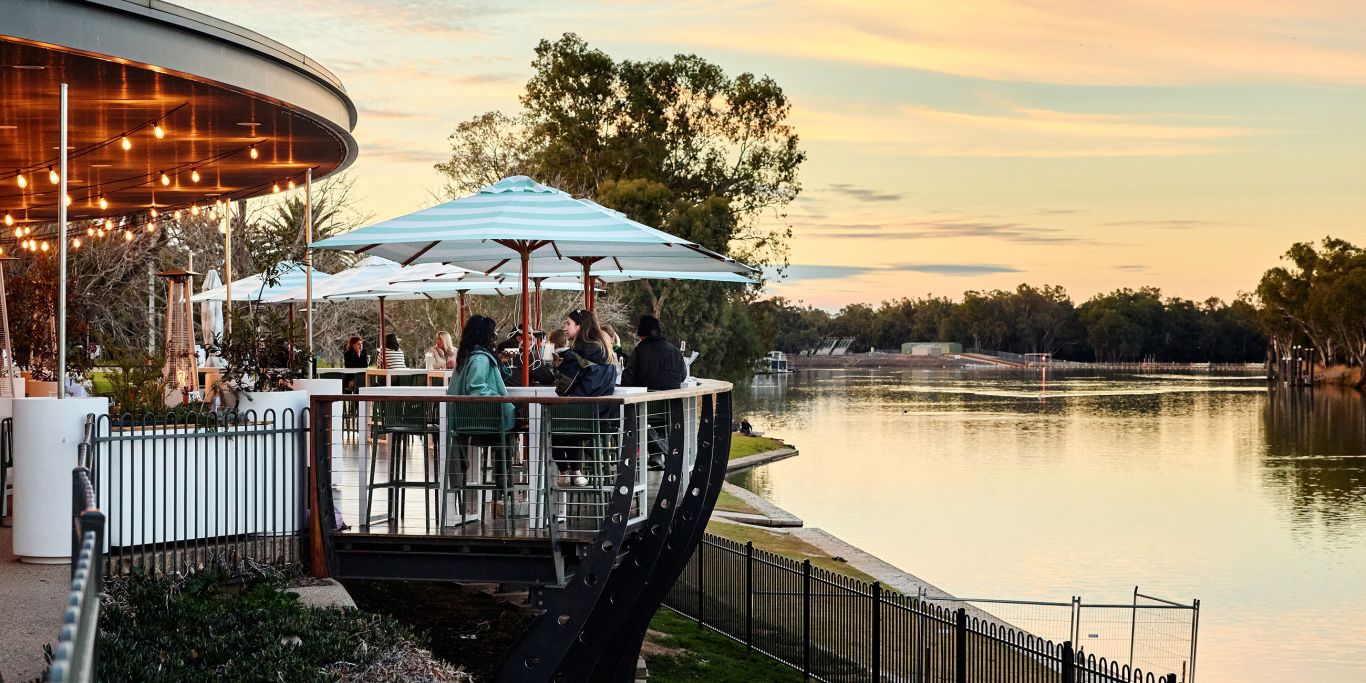
Savour a relaxed riverside meal at Mildura Boat House.
For a representative taste of the Murray’s epicurean highlights, a few destinations are well worth your time (and appetite).
Opa in Echuca is a local staple, serving up authentic and bold Greek dishes in lively surrounds. Greek not your thing? The twin towns of Echuca Moama have numerous top-notch drinking and dining spots to choose from and an ever-evolving food scene.
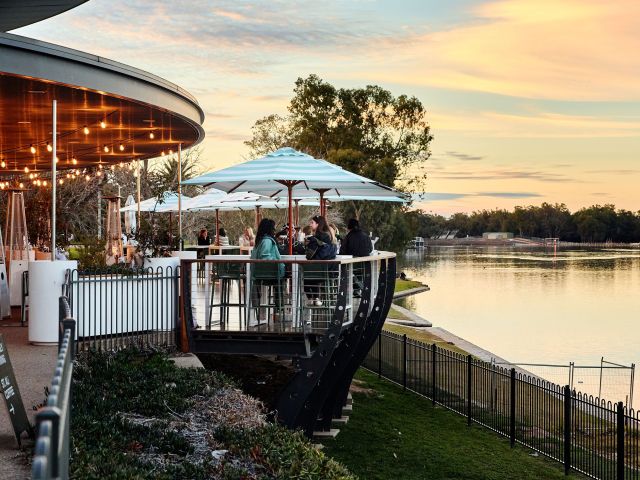
In Albury, the River Deck Cafe is perched right on the river, delivering scenic vistas and a vibrant daytime menu. Expect lemon meringue waffles or Green Goddess smashed avo for breakfast, or a zippy duck salad with Southeast Asian flavours for lunch. For more waterfront dining options, head to Mildura Boathouse . Enjoy iconic views and a modern Australian menu focused on local producers and wines.
4. Hiking and biking trails
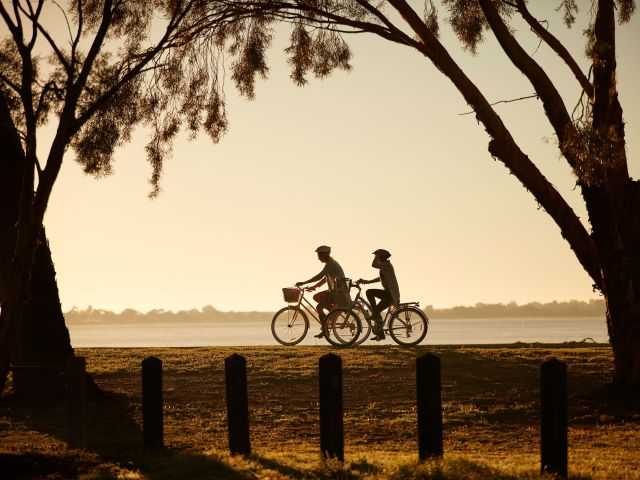
Discover the Murray Region on two wheels. (Credit: Ewen Bell)
The best ways to experience the Murray’s surrounding landscapes are on foot or by bike. Luckily, plenty of well-marked trails take you through the diverse scenery.
The Mildura Riverfront has a shared path for both walkers and cyclists, connecting the town centre with a string of parks and lookouts. The path lets you take in the entire town and its distinctive terrain at a leisurely pace, and is relatively flat throughout.
For a more challenging experience, head to the Huon Hill Parklands or Nail Can Hill Reserve in Albury Wodonga. Both feature a varied network of bushwalking and mountain biking trails through undulating terrain.
5. Best views along The Murray
Spot the birdlife at Wonga Wetlands. (Credit: Visit Albury Wodonga)
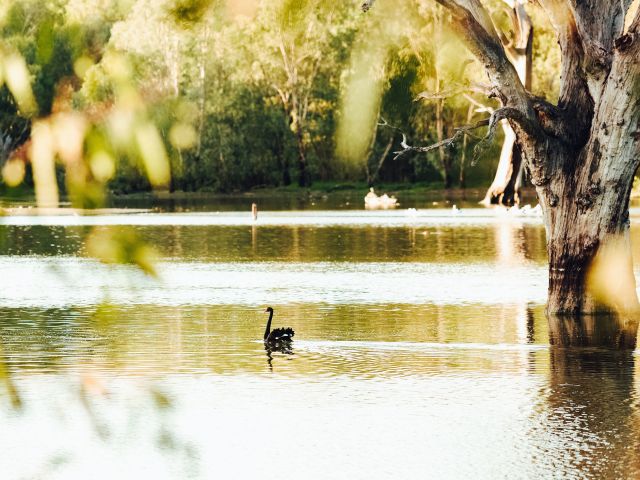
The Murray region is perhaps unsurprisingly a prime destination for epic vistas. The Wonga Wetlands just outside Albury are an aquatic feast for the eyes, a winding web of billabongs and lagoons. Take a stroll through the tranquil landscape and see if you can spot one of the more than 170 bird species living within.
Stop by Moama Beach at sunset to catch the dazzling display. Vivid hues of pink, amber and gold flare against a backdrop of river red gum trees and are reflected in the river’s glassy waters.
Head away from the Murray itself, 15 mins from Albury Wodonga, for stunning mountain views at Lake Hume. Or head to Gunbower National Park, a picturesque place boasting a diverse wonderland of waterbirds, wildlife and aquatic plants.
6. Art and culture
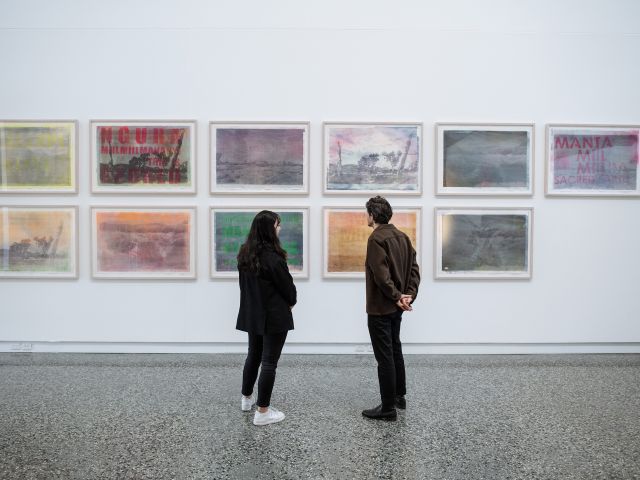
Immerse yourself in art at the MAMA, Albury. (Tourism Australia)
The region’s diverse mix of galleries, museums and cultural hubs provides a window into its past and present.
One of the most prominent is Murray Art Museum Albury (MAMA), which has a rotating roster of contemporary exhibitions. The Burrajara Gallery is another Albury gem, with a powerful collection of works from local First Nations artists.
There are several smaller museums and galleries scattered across Echuca Moama and Mildura reflecting the artistic depth of the Murray. Popular picks include The Foundry Arts Space and Customs House Gallery in Echuca Moama, and the Arts Centre, Riverfront Gallery and NAP Contemporary in Mildura.
7. Murray Region Events
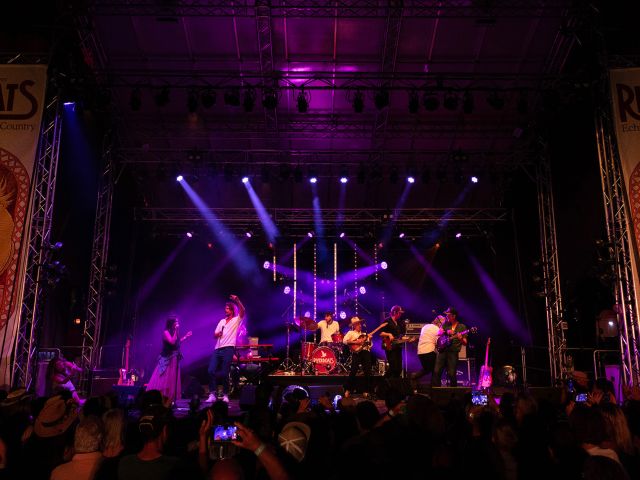
Time your trip around one fo the regions live music events. (Credit: Riverboats Music Festival)
Each year, the Murray hosts events as unique and characterful as the region itself.
The Massive Murray Paddle takes place every November, a 415-kilometre, five-day river paddle raising money for local charities. Whether you take part in a canoe, kayak, stand up paddleboard or boat, or watch from the riverbanks, you’ll be in for a memorable experience.
If you’re a music lover, you’re in luck throughout the year. In summer, plan a trip for Riverboats Music Festival . And in the cooler months, head to the Echuca Moama Winter Blues Festival for four days of performances across different venues.
8. Best stays along The Murray
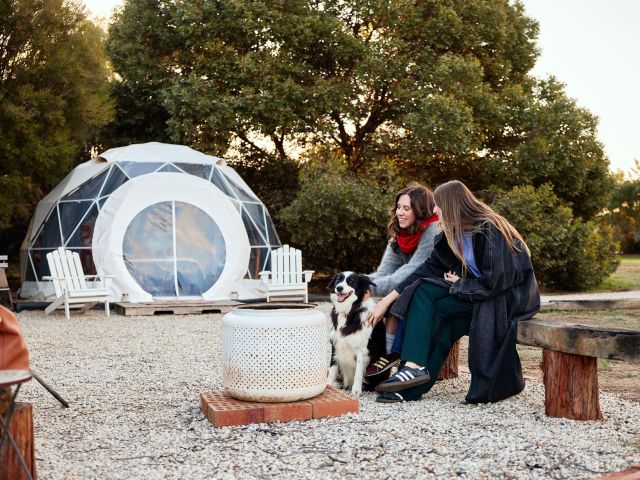
Find unique stays by the river or in the countryside.
Throughout your busy few days of exploring, you’ll need a comfortable spot to rest.
Echuca Moama Riverside Holiday Park is right on the river and has gorgeous views. Pick from riverfront and pet-friendly lagoon cabins, or set up camp at one of the powered sites set among native bush. Or head into the countryside to stay in the quaint glamping or lodge options of Charm Lodge .
Alternatively, treat yourself to a night or two at The Sebel Yarrawonga Silverwoods , which has stylish modern rooms and luxe amenities. There’s a heated infinity pool, day spa and an on-site restaurant doing elevated fare with local produce.
For a quintessential Murray experience, hire a houseboat from one of the many operators in Mildura. Available for weekend and week-long adventures, these well-appointed boats immerse you in the leisurely rhythm and quiet beauty of the Murray River.