Unforgettable underwater encounters on the Coral Coast

hero media
The Coral Coast might be famous for its whale sharks but, as Carolyn Beasley discovers, a host of marine wonders await.

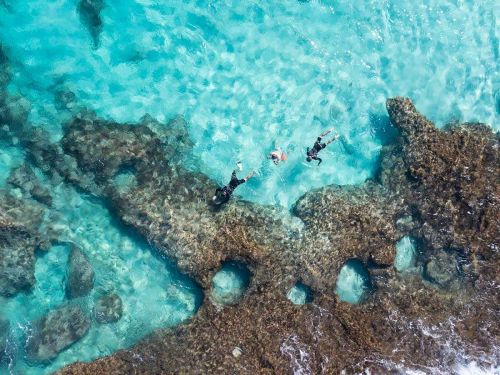
As I slip into the open ocean, my heart pounds. I’m searching the depths for a mighty creature. But I’m searching too deep and now, looking along the glassy surface, I see a fin is advancing towards me. I pop my head back under and startle; a wide, open mouth is just metres from me and I swim-scurry aside. The harmless whale shark is eight metres long, and my brain struggles to compute its sheer size and ethereal presence.

Rejoining the rest of the swimmers in my group, I fin alongside this muscular, mottled being, while a photographer snaps photos for an identification database.
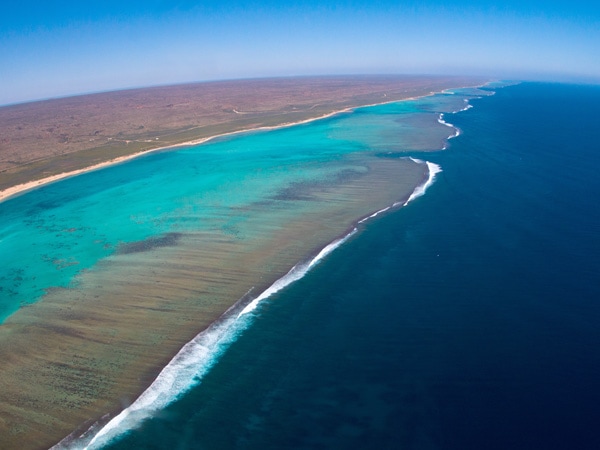
Cape Range National Park, Coral Coast, WA
“As I slip into the open ocean, my heart pounds. I’m searching the depths for a mighty creature."

Climbing back on our boat, we’re all euphoric. Every one of us had come to Exmouth on the Coral Coast (1250 kilometres north of Perth) hoping to see a whale shark, and the experience has exceeded my expectations. But while I’m here, I’m discovering that the whole Coral Coast is an immersive marine bonanza. With its sparse population and pristine waters, the Coral Coast is a place to get wind-messed hair and salty skin, and taste lobster fresh from the sea. It’s a place to play didgeridoos with saltwater people. It’s a place to dive right in.

The coral reefs of the Houtman Abrolhos Islands

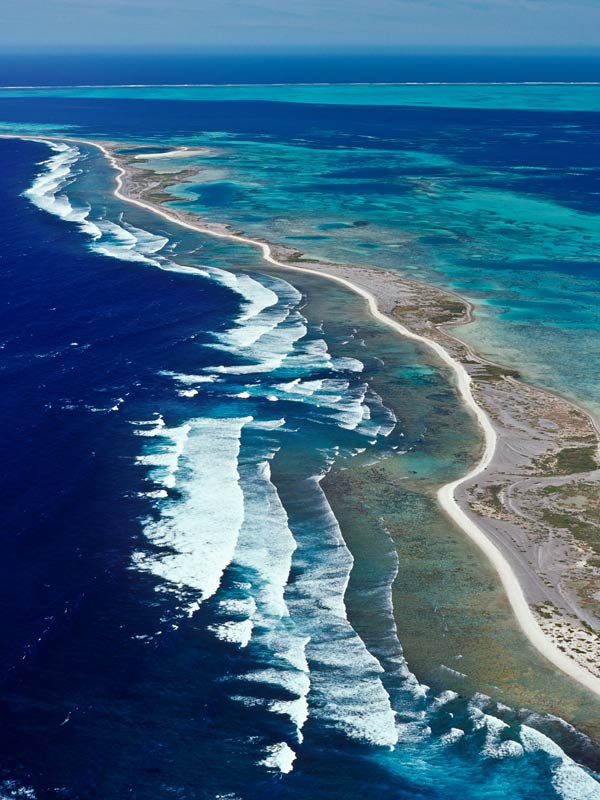
I’d started my journey further south, joining a five-day eco-cruise to the Houtman Abrolhos Islands, 60 kilometres west of Geraldton. It’s a stark and windy place, with 122 islands. It’s also the southern limit for coral reefs in the Indian Ocean, and one of Australia’s most important seabird nesting areas. We meet fishermen who live in colourful shacks while they’re catching Western rock lobsters (Australia’s first certified sustainable fishery). Our skipper has a special lobster licence too, and we chow down on the prized crustaceans.
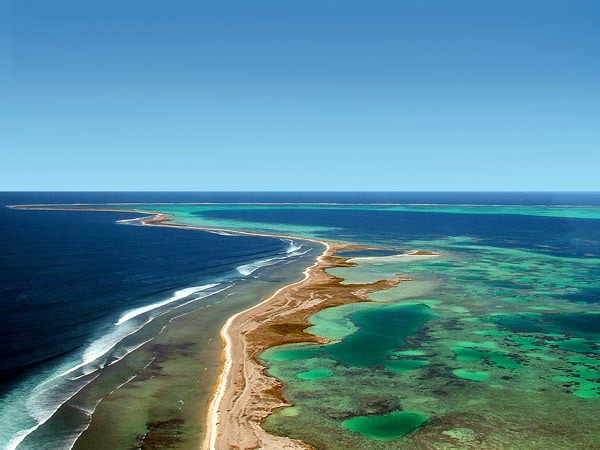
Houtman Abrolhos Islands, Coral Coast, Western Australia
There is an abundance of sea life in the waters off the Houtman Abrolhos Islands. (Image: Tourism Western Australia)

The labyrinth of reefs here has deceived ships for centuries, most infamously the Dutch ship, Batavia in 1629. After the shipwreck, some 200 survivors tried to avoid deranged and murderous mutineers, and stepping ashore on the barren islands where it all happened is chilling.
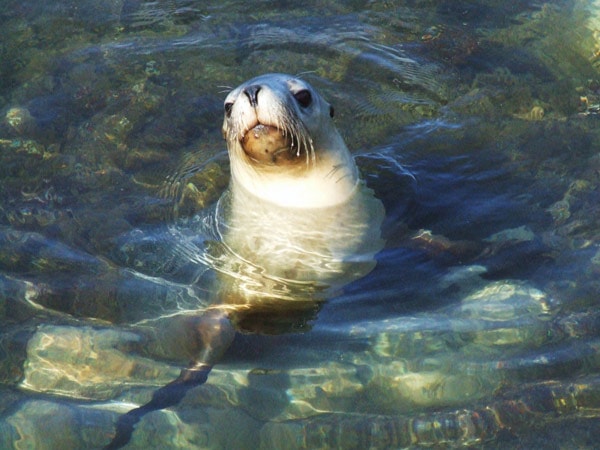
Seals in Houtman Abrolhos Islands, Coral Coast, WA
Spot seals swimming off the Houtman Abrolhos Islands.

Today’s stories are happier though, as I fell in love on a deserted beach. My crush is basically an underwater puppy with flippers, zooming around me in an underwater romp. When I stop somersaulting, the young Australian sea lion is broken-hearted, sulking with puppy-dog eyes, and following me up the beach when it’s time to leave.
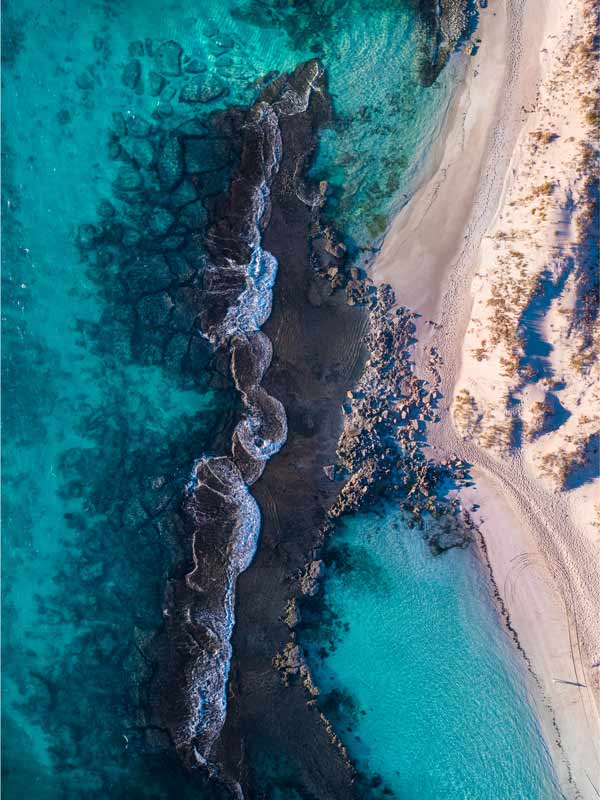
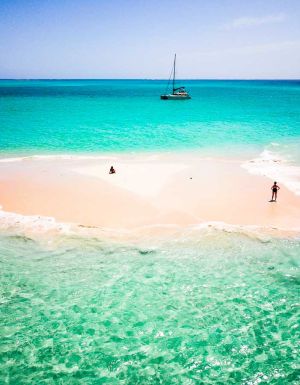
Coral Bay, Western Australia
Coral Bay is named after its beautiful coral gardens. (Image: Tourism Western Australia)

The marine life of Shark Bay

Making my way up the coast, I come to Shark Bay, the UNESCO World Heritage site that is famous for its stromatolites, 3.7 billion-year-old colonies of microbes, and extensive seagrass meadows that feed the world’s most significant population of dugongs, its other standout natural wonder.

Nearby at Monkey Mia, a strip of white beach wedges between red sand dunes and turquoise ocean. It is, of course, a favourite spot for Indo-Pacific bottlenose dolphins, their predecessors receiving fishy treats here since the 1960s. Today, the feeding is carefully regulated to ensure their wellbeing and protection.
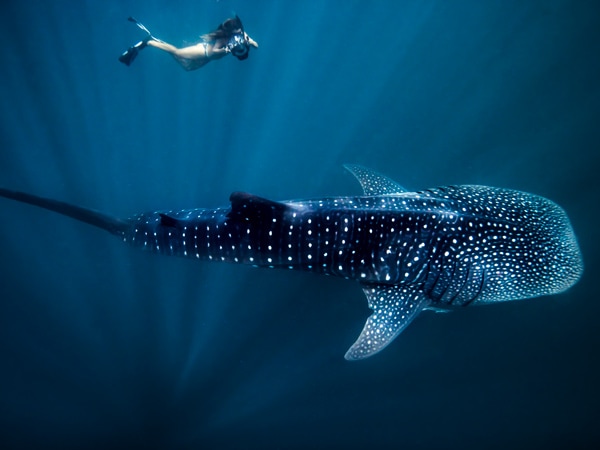
Whale shark at Ningaloo Marine Park, Coral Coast, WA
Swim with a whale shark at Ningaloo Marine Park. (Image: Tourism Western Australia)

At 7:45am the next day I stand ankle-deep in water as the dolphins swim in, inspecting today’s long line of humans. Piccolo and Kiya, both with babies in tow, are circling the rangers, accepting a fish from lucky spectators before moving off.

About half an hour later, the dolphins return and the rangers offer snacks again. This time, without the crowds, I have an almost personal experience with the gorgeous dolphin families.
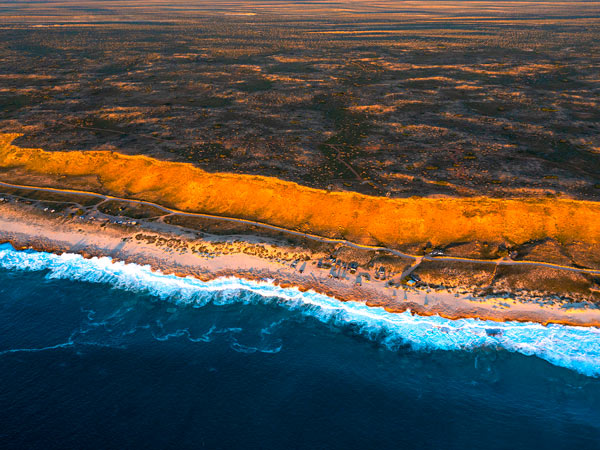
Red Bluff, Quobba Station, Coral Coast, WA
Red Bluff, Quobba Station, north of Carnarvon. (Image: Tourism Western Australia)

First Nations tours of Shark Bay

First Nations people from the Malgana and Nhanda tribes have thrived in Shark Bay for millennia. Local Malgana and Nhanda man Darren ‘Capes’ Capewell of Wula Gura Nyinda Eco Adventures runs tours including stand-up paddleboarding and kayaking, but I’m joining his night tour, Didgeridoo Dreaming.

Capes wants to connect people to this Saltwater Country. Squatting in the sand, he instructs: “Let the white sand run through your hands and rub it a bit. It’s important not just to see Guthurraguda [Shark Bay] with your eyes, but also to feel it."

At a bonfire behind the dunes, the starry sky is intense as Capes pulls out his didgeridoo collection. Traditionally a male-only instrument, the men and boys in the group try the difficult lip-vibrating technique. Amid laughter and encouragement, the ladies get a lesson in playing the giant conch shell. Next, Capes cooks whole fish over campfire coals and we enthusiastically dig in.
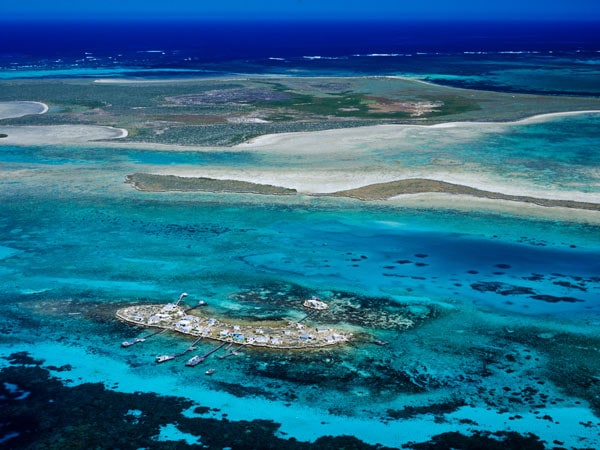
Coral Coast, WA
One of the Houtman Abrolhos Islands with lobster fishing camps.

A day trip to Dirk Hartog Island

In the morning, I set off from Shark Bay’s town of Denham, joining a day trip to raw and rugged Dirk Hartog Island, Australia’s most westerly point and the state’s biggest island. In the year 1616, Dutch Captain and spice trader Dirk Hartog landed here and nailed a pewter plate to a post, providing the first evidence of Europeans landing on this continent.

The island is now mostly a national park, but was previously a pastoral station. At the historic shearing quarters, circa 1880, we meet third-generation owners Kieran and Tory Wardle who run a stylish eco-lodge, and serve us homemade scones.
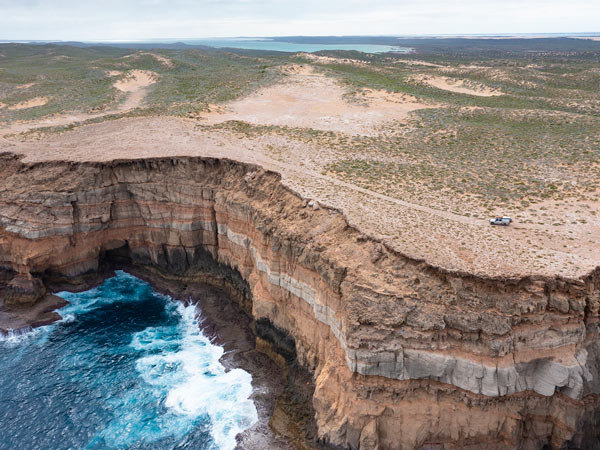
Steep Point, Shark Bay, WA
An aerial view of Steep Point, Shark Bay World Heritage Area. (Image: Tourism Western Australia)

From here, we jump into four-wheel-drive vehicles and visit the blowholes, where ocean swells surge up through holes in a rock platform, sending spray skywards. We careen across sand dunes to Surf Point, gazing out to the mainland’s Steep Point in the distance. Here we see six loggerhead sea turtles bobbing masterfully through huge waves and, on the sheltered side, the shallows are teeming with baby sharks.

On the boat ride back, I try to round out my personal ‘Shark Bay Big Five’: turtles, sharks, dugongs, dolphins, and manta rays. I’ve ticked the first four, but the mantas prove illusive.
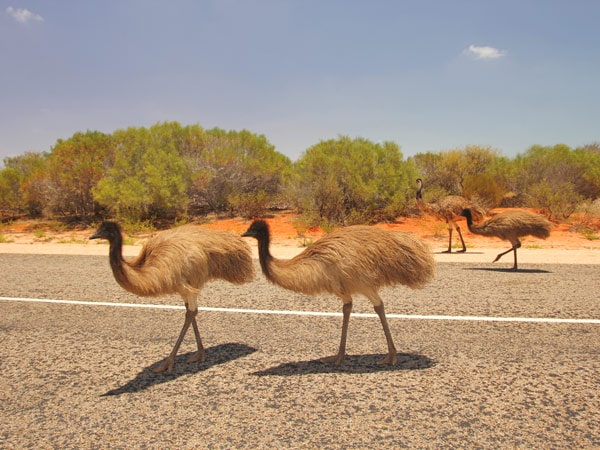
Emus in Coral Bay, WA
See native fauna such as emus.

Surfing Red Bluff

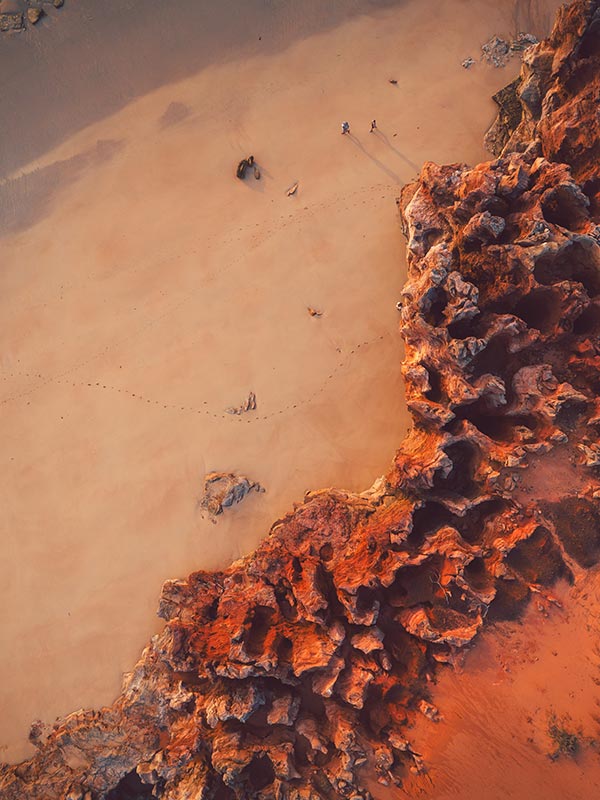
Back on the road north, I’m heading for Quobba Station, a working sheep station with 80 kilometres of rugged, coastal scenery, offering an authentic, Ecotourism Australia-certified stay. Quobba’s original claim to fame was land-based game fishing. The coast here flanks very deep water, and from the cliffs, fishers cast out using balloon floats to carry their bait out to the big pelagic fish. But for surfers, the drawcard here is Red Bluff, 55 kilometres north of the homestead. It’s an epic big wave, not for the faint-hearted spot.
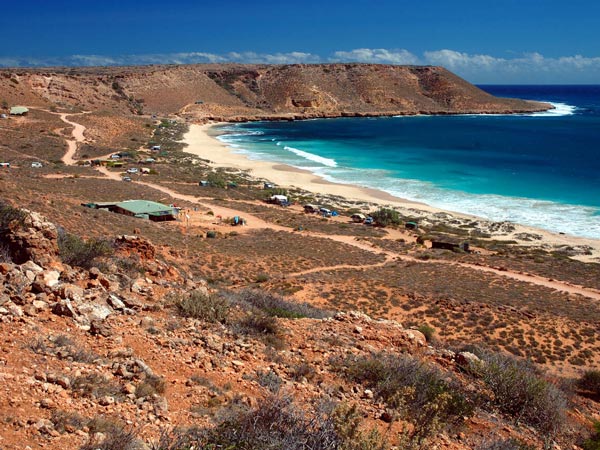
Red Bluff Campsite, Quobba Station, Coral Coast, WA
The Red Bluff campsite at Quobba Station is on the southern boundary to Ningaloo Reef Marine Park.

Monster swell lines approach the imposing rusty headland, and from where I stand on the limestone point they’re terrifying. Surfers enter and exit via sharp rocks; it can be perilous, but the experienced surfers here are hooting and yelling at the thrills. Most visitors to the area choose to camp out, but there’s a cafe and even a day spa offering surf-recovery massages. Non-campers can book a retreat or bungalow; hard-floor safari tents with composting en suites and the ability to check the surf from your bed.
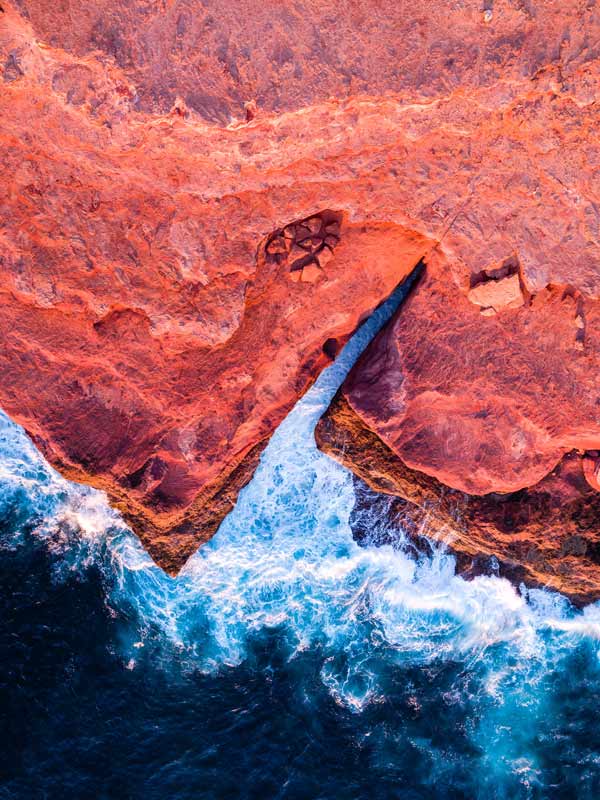
Red Bluff, Kalbarri National Park, Coral Coast, Western Australia
See the cliffs at Red Bluff, Kalbarri National Park. (Image: Tourism Western Australia)

Snorkelling at Coral Bay

The road to Exmouth, the final stop of my Coral Coast exploration, takes me past the tiny hamlet of Coral Bay. It’s snorkelling that beckons tourists here for reliable sightings of its 300 resident manta rays, but sadly for me, I’m out of time and as I drive past the turn-off I’m filled with regret about missing out on these gentle giants once again.
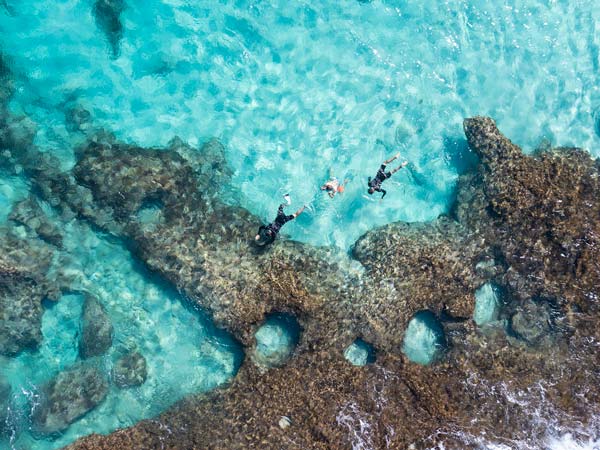
Coral Bay snorkelling
Searching for manta rays in Coral Bay. (Image: Tourism Western Australia)

The bountiful experiences of Ningaloo

As I sit on the deck of the boat after my whale shark interaction, I replay the day in my head. My sole aim this morning had been to see a whale shark, but after achieving that goal I’d also managed to meet skittish black-tip reef sharks, eyeball a green turtle, and even spy a snoozing leopard shark. Migrating humpback whales had splashed on the horizon, and I’d heard their soulful singing underwater.

I’m still exhilarated from our final swim when I hear the skipper from the flybridge. “Manta rays beside the boat!" he yells. I never expected this and, in a flurry of masks and fins, I’m back in the ocean in seconds.

Down below me, a majestic black-and-white figure glides like an underwater eagle, banking and wheeling, its cavernous mouth filtering megalitres of plankton-rich seawater. A second manta follows, and with delight I realise this one is entirely black, a rare form.

I can’t believe my luck, and this manta encounter is the icing on the cake. Unexpected and an utter delight, it’s much like the sublime Coral Coast itself.
Coral Coast, WA
“Unexpected and an utter delight, it’s much like the sublime Coral Coast itself."

A traveller’s checklist

Getting there

Self-drive from Perth to Geraldton in about five hours to start your tour, or fly to Geraldton, Monkey Mia or Exmouth.

Staying there:

Houtman Abrolhos Islands

Join the five-day Abrolhos Islands tour onboard the 32-passenger Eco Abrolhos .

Monkey Mia

The recently redeveloped beachfront RAC Monkey Dolphin Resort is located in the heart of Shark Bay and has excellent family facilities.
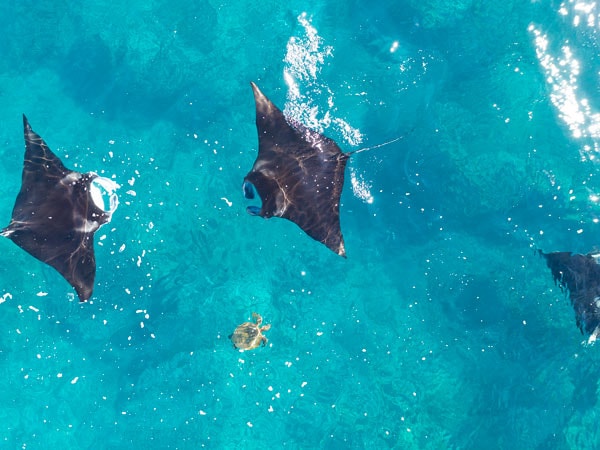
Manta rays in Coral Coast, WA
Watch the manta rays swim in Coral Coast’s clear waters. (Image: Tourism Western Australia)

Exmouth

Mantarays Ningaloo Beach Resort has resort facilities including a restaurant, bar and two pools, right on the beach.

Ningaloo Reef

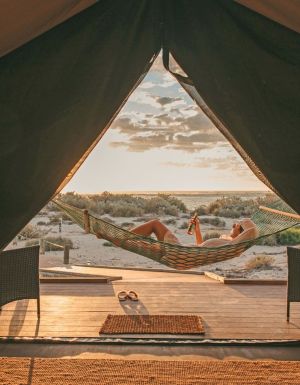
Sal Salis offers ultra-luxe safari-style tents set within Cape Range National Park with kilometres of the Indian Ocean at your doorstep.
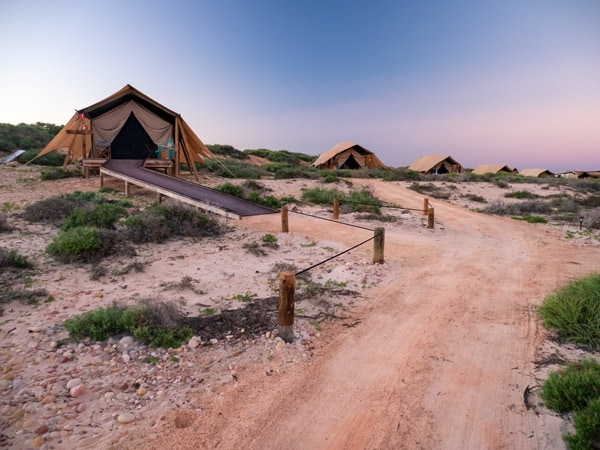
Camp Safari in Sal Salis, Coral Coast, WA
Have a relaxing stay at the camp safari in Sal Salis. (Image: Sal Salis)

Eating there:

Try Boughshed Restaurant in Monkey Mia, while Whalebone Brewery and Mantarays Bar and Brasserie are good choices in Exmouth.

Carolyn Beasley
Carolyn Beasley is a freelance travel and environment writer with a background in marine and environmental science. She has a passion for nature, especially the underwater world, and often writes about sustainable travel. Carolyn has spent nine years in Southeast Asia and currently lives in Perth, Western Australia.
See all articles

8 secret places in Western Australia you need to know about

    Kate BettesBy Kate Bettes
    hero media
    WA might be enormous, but the right insider knowledge brings its mysteries a whole lot closer.

    “Western Australia is a land of record-breakers,” says Carolyn Tipper, a Travel Director working on AAT Kings Western Australia tours. “It has the second-longest fault line, the second-largest meteorite crater, the second-fastest flowing river—it just keeps surprising you. And every area has its charm.”

    From tropics to deserts, Australia’s largest state is a land of extremes. You can’t see all of Western Australia in a lifetime, but with the right guide, you can discover its hidden pockets of magic.

    Carolyn wishes to reach her guests’ hearts. “I want them to enjoy and be in awe,” she says. “I want them to have the holiday of a lifetime.”

    1. Mimbi Caves

    You wouldn’t expect a Great Barrier Reef in the outback – but that’s what you’ll find at Mimbi Caves. Once part of a 350-million-year-old reef, these caves hold marine fossils, ancient Indigenous rock art, and Dreamtime stories shared by a Gooniyandi guide.

    “That’s when the real connection happens,” says Carolyn, who has taken guests through on the AAT Kings Wonders of the West Coast and Kimberley tour . “When guests connect, not just with the land, but with the people who have called it home for tens of thousands of years.”

    Eye-level view of traveller exploring Mimbi Caves.
    Walk through ancient limestone passages. (Image: Tourism Western Australia)

    2. Kalbarri National Park

    Nothing prepares you for the Kalbarri Skywalk: a 25-metre platform jutting over Murchison Gorge, 100 metres above the red cliffs and river below. From July to October, join the AAT Kings Untamed Pilbara and West Coast tour to see over 1000 wildflower species paint the park, and listen as an Indigenous guide shares their uses, bush foods and medicine plants.

    “I want our guests to have an emotional experience,” says Carolyn. “It’s not just about seeing the land, it’s about stepping into the stories.”

    An aerial view of the Kalbarri Skywalk, one of the secret places in Western Australia, with visitors on the edge.
    Stand on the Kalbarri Skywalk in Western Australia. (Image: Tourism Western Australia)

    3. Hamelin Bay Wines

    Margaret River isn’t just a top wine region – it’s a winner in every category. Where the Indian and Southern Oceans collide, granite cliffs rise, limestone caves sprawl and Karri forests tower. It almost distracts from the world-class Cabernet Sauvignon and Chardonnay.

    Almost.

    Out of over 100 cellar doors, AAT Kings pick Hamelin Bay Wines as a favourite. Hosted tastings of small-batch wines on the Western Wonderland tour end with a group meal. The menu shifting with the seasons.

    “Get off the beaten track to one of WA’s most relaxed venues for some amazing red and white signature wines,” explains Carolyn, “accompanied with upmarket pub food.”

    Spectacular views.

    A person raising a glass of Chardonnay against a glowing Western Australia sunset.
    Sip world-class wines at Hamelin Bay in Western Australia. (Image: Getty)

    4. Wildflower Guided Walk, Kings Park

    Western Australia is home to 12,000 native plant species – 3000 bloom in Kings Park’s Botanic Garden. Stroll past Kangaroo Paw, Banksia and blooms from the Goldfields, Stirling Ranges and Kimberley. “The diversity of Western Australia is immense,” says Carolyn, who leads guests through on the South Western Escape tour .

    Couple enjoying the view from the Lotterywest Federation walkway at Kings Park and Botanical Garden.
    Wander among thousands of native plant species. (Image: Tourism Western Australia)

    5. Hoochery Distillery

    Did you know that between Kununurra and Emma Gorge lies the state’s oldest continuously operating distillery? Well, the oldest legal one. Set on a family farm, Hoochery Distillery was hand-built using materials found on the property, conjuring up award-winning rum from local sugarcane, wet season rainwater and yeast.

    Today, visitors can sample a hearty nip of rum, along with whiskies and gins – all crafted using traditional, labour-intensive methods. It’s the ideal way to soak up the ‘spirit’ of the Kimberley on the AAT Kings’ Untamed Kimberley tour .

    People enjoying a rum tasting at one of the secret places in Western Australia.
    Sample award-winning rum. (Image: Tourism Western Australia)

    6. Geraldton

    The wildflowers of the Midwest will make your heart blossom. In Geraldton, the Helen Ansell Art Gallery brings the region’s botanicals to life in vivid colour and intricate detail. In nearby Mullewa, wander bushland trails lined with everlastings and native blooms. Further afield, Coalseam Conservation Park bursts into carpets of pink, white, and yellow each spring. Do it all on the Wildflower Wanderer tour with AAT Kings.

    woman walking through Wildflowers, Coalseam Conservation Park
    Chase vibrant wildflower trails. (Image: Tourism Western Australia)

    7. El Questro

    Wake up after a night under the stars at Emma Gorge Resort, ready to explore the mighty beauty of the El Questro Wilderness Park. With deep gorges, thermal springs, and cascading waterfalls, time slows here.

    Join the AAT Kings’ Wonders of the West Coast and Kimberley tour to drift through Chamberlain Gorge, where sheer sandstone walls glow burnt orange in the sun, archer fish flick at the surface, and rock wallabies peer down from ledges above. Then, step into Zebedee Springs, a secret oasis of warm, crystal-clear pools among prehistoric Livistona palms – a moment of pure, wild stillness.

    Emma Gorge Resort at El Questro.
    Wake to adventure at Emma Gorge Resort. (Image: Tourism Western Australia)

    8. Lake Argyle

    Once vast cattle country, Lake Argyle now sprawls like an inland sea – Western Australia’s largest freshwater lake, created by the damming of the Ord River. Scattered with over 70 islands, its glassy waters teem with life, like freshwater crocodiles, barramundi, bony bream, sleepy cod and over 240 bird species. That’s nearly a third of Australia’s avian population.

    Glide across the lake’s surface on a cruise as part of AAT Kings’ Untamed Kimberley tour , where the silence is only broken by the splash of fish and the call of birds. For Carolyn, this place is a perfect example of how WA’s landscapes surprise visitors. “Lake Argyle is a big puddle of water that became a game-changer,” she says. “Seeing it from a boat, coach, and plane is mind-blowing. It puts time, isolation and the sheer scale into perspective.”

    Aerial View of Triple J Tours on the Ord River, near Kununurra.
    Glide past islands on Western Australia’s largest freshwater lake. (Image: Western Australia)

    Discover more of Western Australia’s hidden gems and book your tour at aatkings.com.