The top 11 things to do on Rottnest Island

hero media
From two-day hikes that skirt Rottnest Island, to climbing the Wadjemup Lighthouse and surfing Strickland Bay, here are the top 12 things to do on Rottnest Island.

Rottnest Island (Wadjemup) is only 11 kilometres long and 4.5 kilometres at its widest, making it easy to explore with a number of great walking and cycling trails, museums and attractions as well as opportunities to encounter a variety of wildlife, including quokkas.

1. Follow the Wadjemup Bidi trail

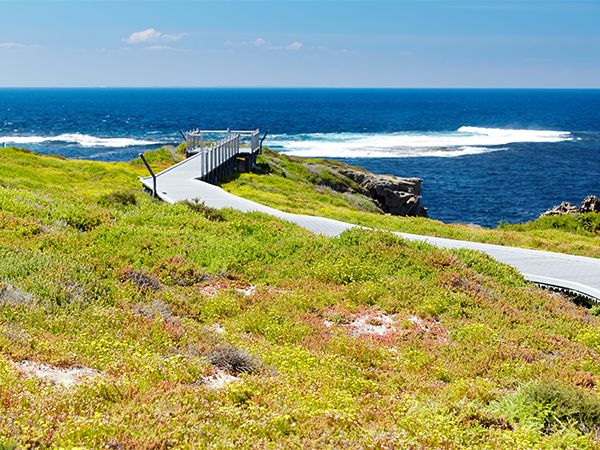
Loop around the island with the Hike Collective on one of the Wadjemup Bidi walk trails that veer across coastal headlands, past stunning inland lakes and man-made attractions. Bidi means ‘trail’ in the Noongar language spoken by the Whadjuk Noongar First Nations people, who are the traditional owners of Rottnest Island (Wadjemup). The 45-kilometre trail can be carved up into five bite-sized sections, and Hike Collective’s 12-kilometre guided hike includes a loop around the salt lakes, which make up 10 per cent of the island.
The Wadjemup Bidi walk Rottnest Island
The Wadjemup Bidi walk veers across the coastal headland. (Image: Rottnest Island Authority)

2. Snorkel or dive at Little Salmon Bay and Parker Point

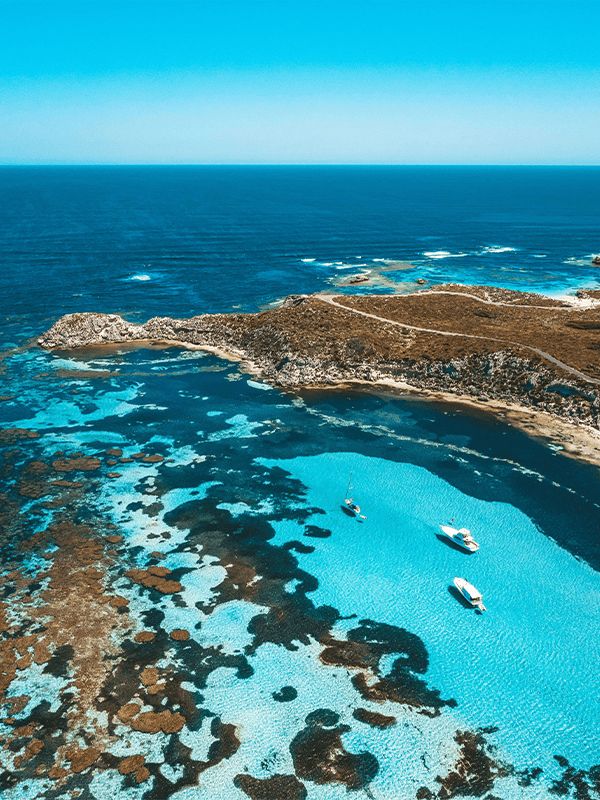
Head to Pedal & Flipper to hire electric bikes or those that require pedal power as well as snorkels and masks so you can loop around the island at your own pace. The reef surrounding Rottnest is said to have formed some 100,000 years ago when sea levels were thought to be three metres higher than they are today. Little Salmon Bay is one of the most popular spots on the island for first-time snorkellers as it’s calm and sheltered and has a trail that skirts along the limestone reef.
Parker Point Rottnest Island
Parker Point is a slice of paradise. (Image: Tourism Western Australia)

3. Relax on some of Rotto’s world-famous beaches

There are more than 63 secluded beaches and 20 bays to choose from on Rottnest Island, which means you can choose your own adventure. The island, referred to as Rotto by WA locals, is a haven for swimming, fishing, surfing, hiking and diving. Hop on and off the Island Explorer bus and do a hot lap of the island to find your patch of paradise.
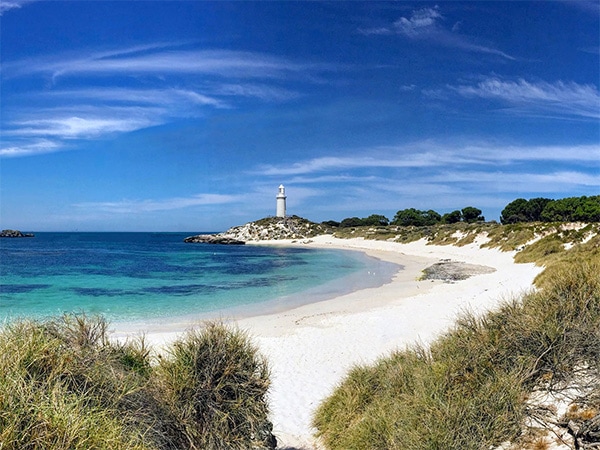
Pinky Beach Rottnest Isalnd
Life is beautiful on Pinky Beach.

4. Brush up on the island’s history

Visitors can come away with insights into Rotto’s rich history after wandering around the Wadjemup Museum, Lomas Cottage and Pilot Boat House for starters. The newly renovated museum houses everything from 40,000-year-old artefacts to outdoor sculptures and is located inside the ‘Old Mill and Hay Store’. Learn about ex-convict John Lomas at Lomas Cottage, and visit the 1859 Pilot Boat House, which nods to Rotto’s maritime history.
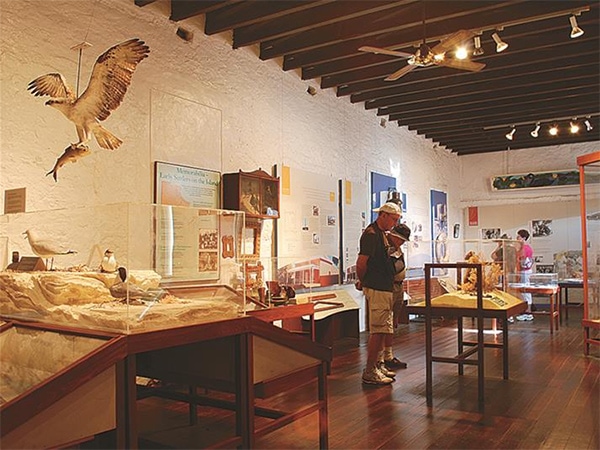
Wadjemup Museum
Built with Nyoongar labour in 1857, today Wadjemup Museum displays a comprehensive exhibition of island life.

5. Visit Oliver Hill Guns & Tunnels

There is a maze of underground tunnels beneath the Second World War gun emplacement on Oliver Hill. History boffins should join a guided walking tour with one of Rottnest Island’s enthusiastic voluntary guides to learn about the nationally significant defence heritage site located in the centre of the island. Get onboard the Captain Hussey trolley train , which will transport you from Settlement Railway Station to Oliver Hill.

6. Snap an (ethical) selfie with a quokka

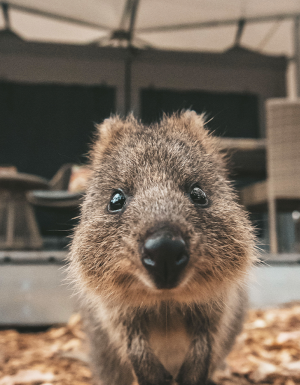
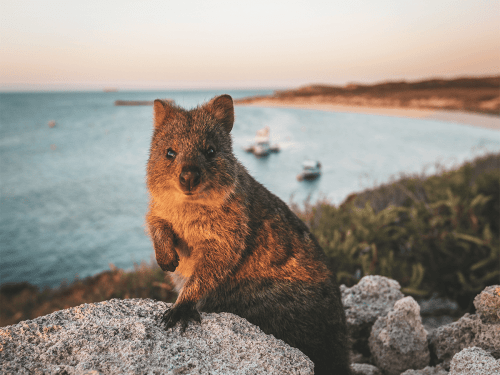
Snapping a selfie with a quokka, often described as the ‘happiest animal in the world’ is regarded as a brag-worthy big deal with everyone from actors Hugh Jackman and Margo Robbie to tennis star Roger Federer uploading selfies alongside the cute marsupial. But when it comes to capturing the money shot of the island’s star attraction, there are some dos and don’ts with the No. 1 rule being: let the quokka come to you.
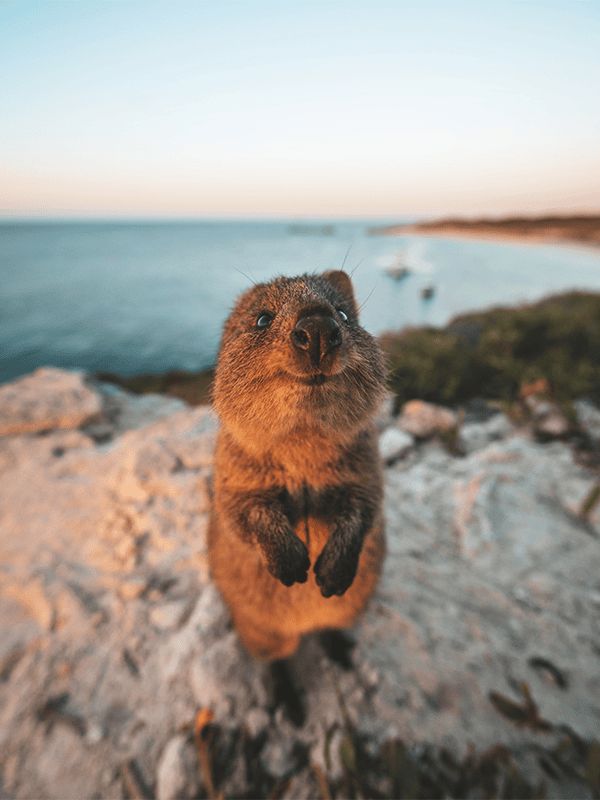
Quokka on Rottnest Island
Meet the world’s happiest animal! (Image: Tourism Western Australia)

7. Visit the Wadjemup Lighthouse precinct

To gain the ultimate views across the whole island, head to Wadjemup Lighthouse, located at the highest rise on Rottnest Island. In addition to admiring the 38-metre-high lighthouse, which was constructed in 1896 and is the fourth tallest in Australia, visitors can use the interpretative signage to learn about the other buildings in the heritage precinct: the Signal Station, Battery Observation Post and Women’s Royal Australian Navy Service.
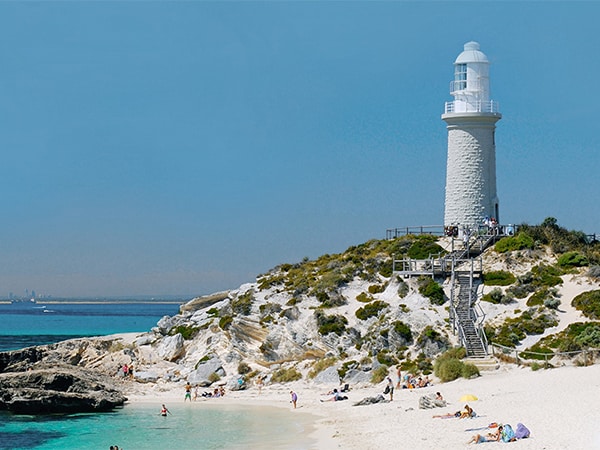
Rottnest Island lighthouse
Admire the 38-metre-high lighthouse.

8. Join a 90-minute adventure cruise

The high-powered Eco Express Adventure Boat Tour gives passengers an unforgettable encounter with the island’s birdlife, dolphins and whales. The eco-certified tour skirts the island between November and April and carves through the Indian Ocean looking for seals, ospreys and whales (when in season). It also presents a unique perspective of the mosaic of rolling Rottnest Island countryside.
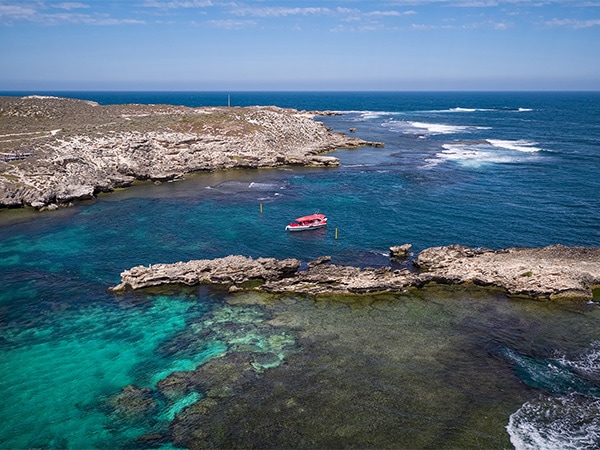
Eco Express Adventure Boat Tour
Create some unforgettable memories.

9. Catch a wave at Strickland Bay

Strickland Bay is a world-class surf break located at Rotto. Scan the QR code pinned to the signage at the surf hut to view a short documentary film that celebrates the island’s early surfing pioneers such as Al Bean and Mike “Stomper" McAuliffe who used to paddle two hours from City Beach to Rotto to surf. Strickos is a high-performance wave for experienced surfers only.
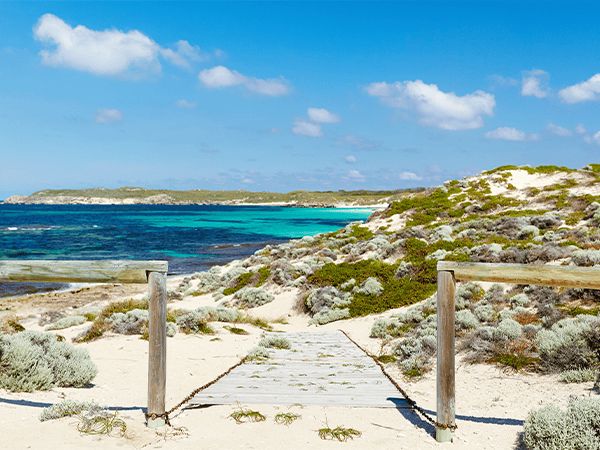
Strickland Bay, Rottnest Island
Strickland Bay is the island’s best surf spot. (Image: Rottnest Island Authority)

10. Skydive and see things from above

Thrill seekers will be hard-pressed to find a skydiving experience as picturesque as the 10,000ft jump above Rottnest Island. Skydive Geronimo offers Western Australia’s only island skydive experience where you will witness aerial views of Rottnest Islands’ white sand beaches and secluded coves, and beyond to the Perth city skyline. Finish your adventure by landing safely on the pristine beaches of Salmon, Thompson, or Bickley Bays.
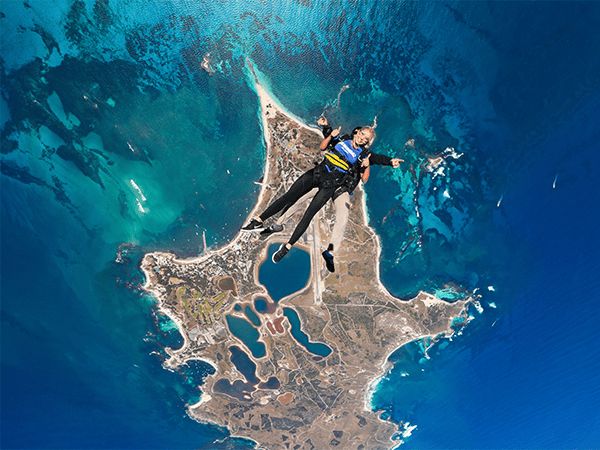
Skydive Geronimo Rottnest Island
Appreciate the island’s beauty from a different perspective. (Image: Skydive Geronimo)

11. Jump on a catamaran

Not satisfied with just staying on the shore? Get out further into the turquoise waters by jumping on a catamaran. Charter 1 offers private sailing snorkelling charter experiences around Rottnest’s West End. Choose from either the 3-hour snorkel and sail tour on a luxury catamaran or the half-day Carnac Island Eco-Tour where you can spot Australian Sea Lions.
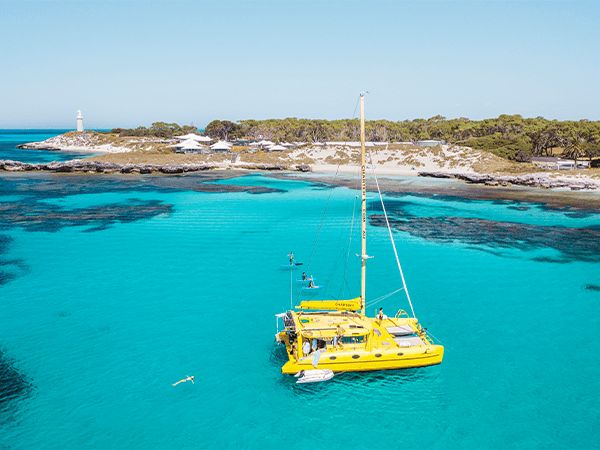
Charter 1 catamaran Rottnest Island
Set sail on the turquoise waters of Rottnest Island. (Image: Tourism Western Australia)

This article was originally written by Carla Grossetti and updated by Rachael Thompson.

Carla Grossetti
Carla Grossetti avoided accruing a HECS debt by accepting a cadetship with News Corp. at the age of 18. After completing her cadetship at The Cairns Post Carla moved south to accept a position at The Canberra Times before heading off on a jaunt around Canada, the US, Mexico and Central America. During her career as a journalist, Carla has successfully combined her two loves – of writing and travel – and has more than two decades experience switch-footing between digital and print media. Carla’s CV also includes stints at delicious., The Sydney Morning Herald, and The Australian, where she specialises in food and travel. Carla also based herself in the UK where she worked at Conde Nast Traveller, and The Sunday Times’ Travel section before accepting a fulltime role as part of the pioneering digital team at The Guardian UK. Carla and has been freelancing for Australian Traveller for more than a decade, where she works as both a writer and a sub editor.
See all articles
hero media

7 Kimberley experiences that need to be on your bucket list

From thundering waterfalls to ancient Indigenous art, Kimberley’s raw beauty will take your breath away.

Wild, pristine, and shaped by nature, the Kimberley Coast is one of Australia’s most spectacular landscapes. A remote and rugged frontier that remains a bucket list destination for many travellers. Its most breathtaking attractions – including Montgomery Reef, King George Falls and Horizontal Falls – are accessible only by sea or air, making a guided expedition cruise aboard Silversea’s luxury expedition ship, Silver Cloud, the ideal way to explore it.

From its intricate intertidal zones to ancient rock art, extreme tides and rare wildlife found nowhere else in Australia – or the world – this journey offers an unparalleled exploration of one of Earth’s last true wildernesses.

Why Silversea?

Silversea offers a 10-day expedition departing Broome, or an extended 16-day expedition voyage from Indonesia, including landings on the hidden gems of Palopo Sulawesi and Komodo. Accompanied by expert guides and specialists in marine biology, history and geology, guests gain a deeper understanding of the Kimberley’s dramatic landscapes, rich cultural heritage and extraordinary biodiversity.

Silversea offers one of the experiential travel industry’s leading crew-to-guest ratios. Along with all-suite accommodation (80 per cent with private verandah), 24-hour butler service, a swimming pool and four dining options. Silver Cloud also has an experienced crew of multilingual expedition guides and specialists in marine biology, history and geology to enhance your Kimberley Experience.

silversea cruise ship pool deck
Take a dip in the pool deck.

1. Koolama Bay

​​Before visitors see King George Falls, they hear them – a growing rumble in the distance, steady and foreboding as the Zodiac glides through the gorge, the sound echoing off sheer rock formations. At 80 meters tall, the twin cascades carve through the red cliffs, churning the waters below in a spectacular finale – but Koolama Bay holds secrets beyond its striking scenery.

Named after a ship that beached here following an aerial attack by Japanese bombers in World War II, the bay may seem desolate, yet it teems with life. With Silversea’s expert guides on their 10-day Kimberley itinerary, guests gain a sharper eye for its hidden wonders – rock wallabies darting across the cliffs, crocodiles lurking among dense green mangroves, and high above, the silhouette of a bird of prey circling the sky.

King George Falls at koolama bay excursion on Silversea Kimberley Cruise
Take a shore excursion to see King George Falls.

2. Freshwater Cove / Wijingarra Butt Butt

Connect with Country on a wet landing at Freshwater Cove, also known as Wijingarra Butt Butt. Considered one of the most special experiences on both the 16-day and 10-day Kimberley cruises, Silversea guests are welcomed by the traditional Indigenous custodians of the land, painted with traditional ochre, and invited to take part in a smoking ceremony.

Located on the mainland near Montgomery Reef, Wijingarra Butt Butt holds deep cultural significance to the local Indigenous community. Here, rock formations along the shore represent spiritual ancestors, and guests are guided to a nearby rock overhang filled with ancient art, where traditional owners share the stories and meaning behind these sacred paintings.

welcome to country on freshwater cove during silversea kimberley cruise
Take part in a smoking ceremony. (Image: Tim Faircloth)

3. Vansittart Bay (Jar Island)

Modern history, ancient culture and mystery converge in Vansittart Bay, which is also known as Jar Island. Here, the first thing to catch the eye is the dented, silver fuselage of a World War II-era C-53 plane – a striking relic of the past. Yet, the true cultural treasures lie just a short hike away where two distinct styles of Indigenous rock art – Gwion Gwion and Wandjina – can be found.

The Wandjina figures, deeply connected to Indigenous traditions, stand in stark contrast to the enigmatic Gwion Gwion (Bradshaw) paintings, which date back more than 12,000 years. Significantly different in form and style, the two different styles create a striking juxtaposition, offering a rare glimpse into the region’s rich and complex past.

aerial view of Vansittart Bay, See it in you Silversea Kimberley Cruise.
Explore ancient Gwion Gwion rock art at Vansittart Bay. (Image: Janelle Lugge)

4. Horizontal Falls

Part illusion, part natural phenomenon, the Kimberley’s much-lauded Horizontal Falls aren’t a waterfall, but a tidal and geographic spectacle that visitors have to see to comprehend. Known as Garaanngaddim, the phenomenon occurs when seawater rushes through two narrow gaps- one just twenty metres wide, and the other seven metres in width, between the escarpments of Talbot Bay.

With each tidal shift,  the force of the water creates whirlpools, furious currents and the illusion of a horizontal cascade as thousands of gallons of water are pushed and pulled in through the gap every six hours with relentless movement, making this one of the Kimberley ’s most mesmerising natural wonders.

Horizontal Falls are described as "One of the greatest wonders of the natural world". They are formed from a break in-between the McLarty Ranges reaching up to 25m in width. The natural phenomenon is created as seawater builds up faster on one side of the gaps than the other, creating a waterfall up to 5m high on a King tide.
Watch whirlpools and furious currents collide. (Image: Janelle Lugge)

5. Montgomery Reef

As the tide turns in Montgomery Reef, magic happens. With the Kimberley’s legendary tides varying up to ten metres, at low tide the submerged reef almost appears to rise from the depths: exposing up to four metres of the sandstone reef.

The impact is otherworldly: as the water drains, waterfalls cascade on either side of the channel,  turtles left exposed scramble and dive, and fish leap in search of sanctuary in shallow pools. Meanwhile, the dinner bell rings for the migratory seabirds dugongs, reef sharks and dolphins that scavenge and feast in the area.

Using zodiacs, guests cruise through one of the world’s most significant inshore reef systems navigated by experienced guides, exploring the most intricate and fascinating parts of a 300-square-kilometre-wide biodiversity hotspot.

aerial view of boat going along Montgomery Reef
Witness seabirds, dolphins and reef sharks on the hunt.

6. Mitchell Falls by Helicopter

Experiencing the Kimberley by sea allows you to feel the power of the tides, but travelling by helicopter reveals the sandstone tapestry of the Kimberley, a landscape geologists believe is over 1.8 billion years old.

One of Silversea’s most popular optional excursions , guests who opt to fly into the interior from the onboard helipad soar up above the rust-coloured landscape of the Mitchell plateau, taking in one of Australia’s most scenic waterfalls: Mitchell Falls, a series of four emerald-coloured pools gently cascades into each other, before plunging down to the river below.

Seeing the landscape from above reveals a landscape weaved and shaped by the power of the freshwater wet season, juxtaposed to the constant lapping of the relentless and powerful tide on the coast.

aerial view of mitchell falls on silversea helicopter excursion
See emerald pools cascade into the river below. (Image: Tim Faircloth)

7. Indigenous Art Caves, Wandjina Art

The Kimberley Region of Western Australia is home to some of the most striking and significant

Indigenous rock art in Australia. Dotted throughout the landscape are caves, cliffs and rock overhangs depicting the striking, ethereal image of Wandjina, the rainmaker spirit and creation being central to many of the Dreamtime stories in this region.

Some of the paintings are regularly repainted by traditional custodians, while others are believed to be over 4,000 years old. Each artwork serves as both a cultural record and a living connection to the past, offering a rare opportunity to engage with the enduring traditions of the Kimberley’s Indigenous communities.

Freshwater Cover Rock Art the kimberleys
Walk among cultural records preserved in stone. (Image: Tim Faircloth)

See the best of this incredible part of the world on a Silversea Kimberley cruise. Book your 10- or extended 16-day expedition voyage at silversea.com