At certain times throughout the year nature puts on a range of awe-inspiring performances you don’t want to miss.
Nature gives us the best calendar of events of all: a colourful light show that dances across the night sky, the appearance of a purple-drenched lavender field in full bloom, 40 million red crabs scurrying home for the night or the magnificence of the Great Barrier Reef’s annual coral spawning event. It’s all about being in the right place, at the right time. And for that, we give you this calendar of Australia’s natural wonders to factor into your travel plans throughout the year.
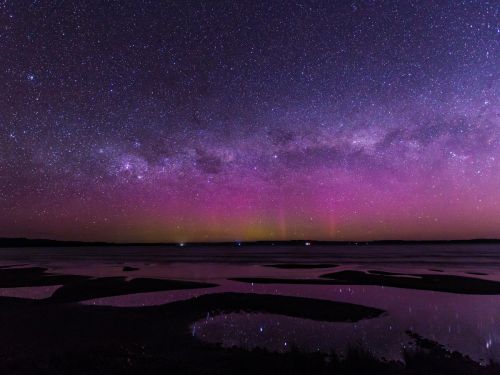
Aurora Australis
Seeing the Northern Lights has probably been scribbled on your bucket list for decades, but did you know that Australia has its own equally impressive light show?
Aurora Australis (aka The Southern Lights) are a phenomenon that occurs when fully charged particles burst from the sun, creating a solar wind that slams into the Earth’s magnetic field and rushes towards the North and South Poles. As the solar particles collide with atoms of nitrogen and oxygen in our atmosphere, their electrons charge, leaving ions that radiate energy in wavelengths that produce a spectacular natural dancing rainbow (main picture featured above: Aurora Australis in Strahan by Dietmar Kahles).
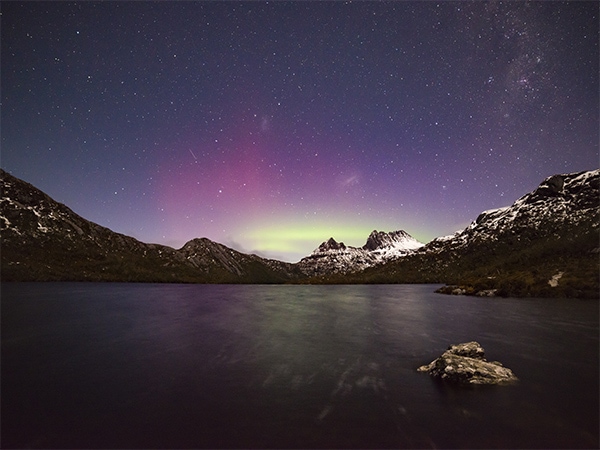
When can you see the Aurora Australis?
Although an Aurora can technically be seen at any time of year, the clear, dark skies of winter are often best. And thanks to modern technology (slash social media) there are a number of online resources to check in with that might increase your chances of getting a glimpse – including Aurora-Service.net and the Aurora Australis Tasmania Alert NOW Facebook page.
Where can you see the Aurora Australis?
Like any good skyward phenomenon, your best chance of catching a glimpse occurs far from the light pollution of cities and towns, and other obstructions like trees and mountain ranges. The further south you go, the likelier it is to be seen. Tasmania, Victoria – this is where the magic happens.
For a comprehensive guide to the Southern Lights, head here.
Blooming season at lavender fields
Rows upon rows of purple drenched lavender fields are grown on farms all around Australia – and if you visit at the right time, you’re invited to frolic through its fields while in bloom.
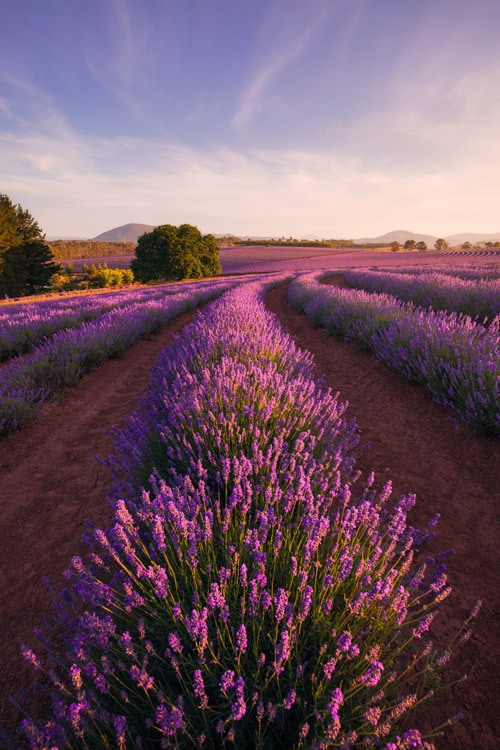
Where and when can you see lavender farms in bloom?
There are a number of places to view the purple perfection, but one of the most prized locations is Bridestowe Lavender. Located an hour outside of Launceston, the seemingly endless fields of lavender bloom each year between December and January.
Likewise, the lavender fields in Victoria, Queensland and New South Wales are in full bloom usually between December and February.
Head here to locate the most beautiful lavender farms around Australia.
Coral spawning on the Great Barrier Reef
The Great Barrier Reef’s annual mass coral spawning has been called the biggest sexual event on the planet – and even the world’s biggest orgasm on the world’s biggest organism.
Translation: over a few nights, the waters of individual reefs burst with new life. Countless sperm and egg bundles are released simultaneously, creating a spectacular snow globe-esque explosion of synchronous breeding.
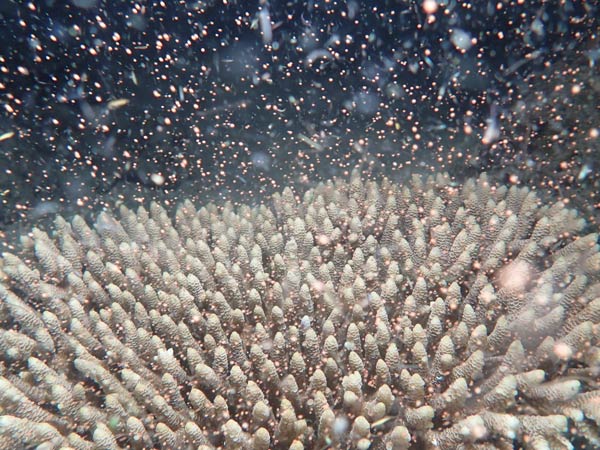
When does coral spawning happen?
Over two or three nights at various times between October and December. If you’re visiting from Cairns, the spawning usually occurs within a week of the November full moon.
Where can I see coral spawning?
Divers Den operate special night trips departing from Cairns that get divers and snorkellers up close and personal to the coral spawning event.
Learn more about Coral Spawning here.
Need tips, more detail or itinerary ideas tailored to you? Ask AT.
AI Prompt
Penguin Parade
Phillip Island is one of the premier places on the planet to secure a personal penguin experience – and not from far, far away either. Each night, visitors can witness the compact creatures interact, groom each other and waddle up the beach back to their burrow after a hard day in the ocean.
There’s a range of options for seeing the penguins as they hit the sand each evening, ranging from the general viewing pass, to the ‘penguins plus’ pass (it’ll get you up front and closer to the ‘penguin parade’, plus a talk from a ranger prior to the stars of the show making their appearance) as well as a special private guided tour, which will take you to an isolated spot to spy on the little critters away from the main parade thoroughfare.
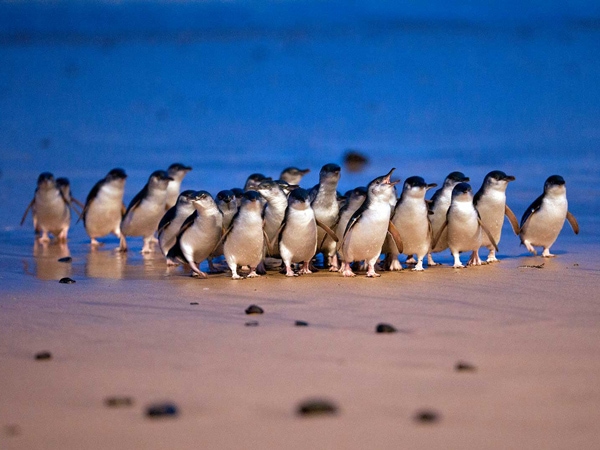
When is the Penguin Parade?
Every night at sunset.
Where is the Penguin Parade?
Phillip Island (a 90-minute drive from Melbourne).
WA’s wildflower season
Western Australia’s wildflower season appears like a magical carpet in the southern half of the vast state at the dawn of spring.
There are big, bold blooms, but most are small and delicate, with fine fringing, intricate patterns and minute details best observed up close. WA is home to 12,000 species of flowering natives, 70 per cent of which are found nowhere else in the world. Incredibly, more are being discovered every year.
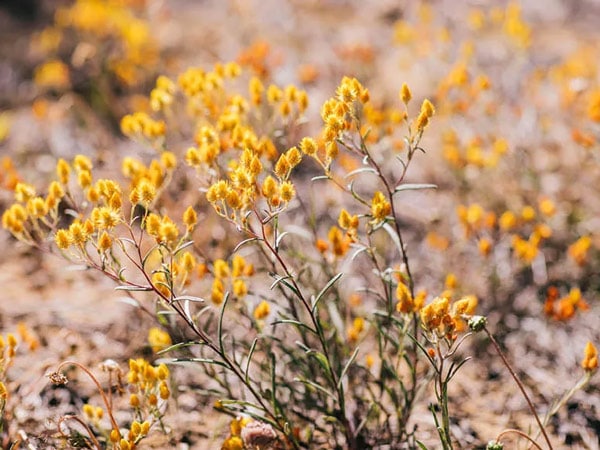
When is the best time to see WA’s wildflowers?
The mass bloom starts around the hotter, drier mid-point of WA late in June. It then flows southward as the weather warms, hitting its peak in September and continuing towards November.
Where can you see WA’s wildflowers?
Once wildflower season hits, grab your camera and make a beeline for Perth. There are many great places to spot them right in the city centre.
Alternatively, floral seekers can also tour the surrounding Perth Hills and journey north, east and south of the metropolis.
Staircase to the Moon
Come sunset, the best free show in Broome is the Staircase to the Moon, which happens several times throughout the year. It occurs when a full moon rises over the mudflats of Roebuck Bay at low tide and looks like a huge staircase rising up to meet an enormous blood-orange moon.
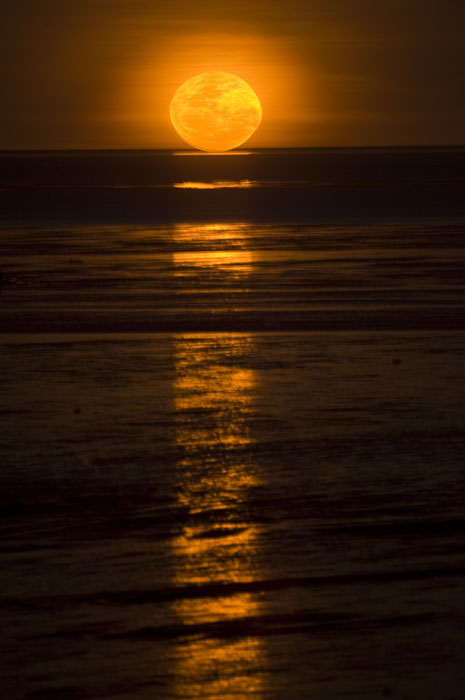
When does the Staircase to the Moon occur?
The Staircase to the Moon phenomenon happens two to three days a month between March and October. Check the exact dates here.
Where can I see the Staircase to the Moon?
Broome’s Roebuck Bay. Grab a bite from one of the stalls at the Staircase to the Moon markets – they run in sync with the appearance of the staircase – and settle in for the show.
Morning Glory Cloud
The aptly named Morning Glory Cloud is a stunning solitary rolling cloud wave that forms over the Gulf of Carpentaria early on spring mornings. With a length of up to 1000 kilometres, it even made the Guinness Book of World Records, and only in Australia can you regularly witness its series of long, cigar-shaped clouds.
The cloud is created when sea breezes from either side of Cape York collide, creating a singular wave (or Soliton) in the atmosphere. The powerful and fast-moving crest of the wave is what you can suddenly see in the otherwise blue sky.
Weekly travel news, experiences
insider tips, offers, and more.
Where can I see the Morning Glory Cloud?
Far northwest Queensland’s Gulf of Carpentaria. Burketown in the southeast corner of the Gulf is a good spot to regularly witness the cloud.
When can I see the Morning Glory Cloud?
From September to November, the cloud can be viewed in the early morning; charter flights are available for viewing.
Christmas Island crabs
Christmas Island is one of Australia’s most remote and beautiful territories, yet many Australians are completely unaware of the island’s outstanding natural beauty, fascinating history and a melting pot of cuisines to enjoy.
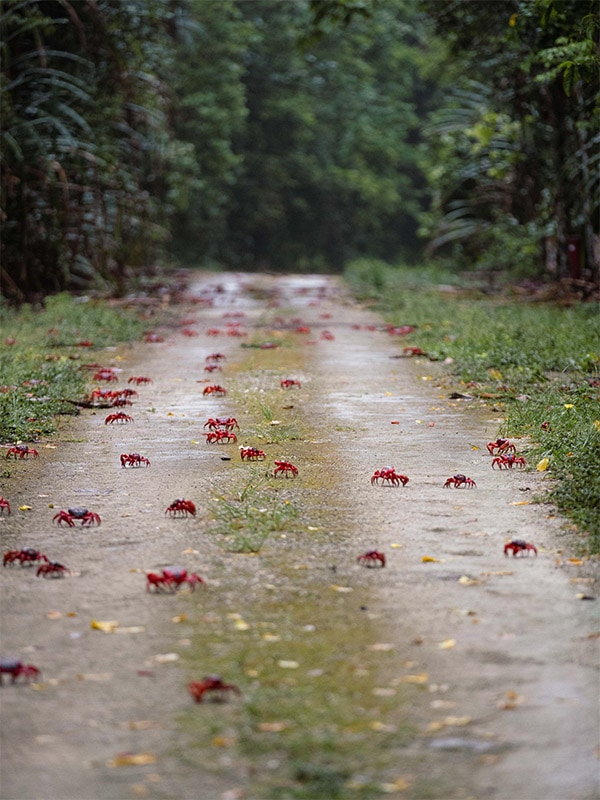
What are the Christmas Island crabs?
Once described by Sir David Attenborough as “the world’s greatest migration," the Christmas Island crab phenomenon happens once a year. The island’s native red crabs, which normally spend their lives wandering around the forest floor eating leaf litter, leave their homes in the rainforest and descend to the island’s beaches to breed.
It’s thought there are more than 40 million red crabs on the island, and when they decide to migrate to mate, a trip that takes them a week or so, roads and beaches transform into a moving red carpet.
When can you see Christmas Island crabs?
Christmas Island red crabs move en masse each year in the wet season of October/November from the island’s forests to the ocean.
Where can you see Christmas Island crabs?
Christmas Island is located in the Indian Ocean, 2600 kilometres northwest of Perth.
Read more about Christmas Island here.
Blue Lake in Mt Gambier
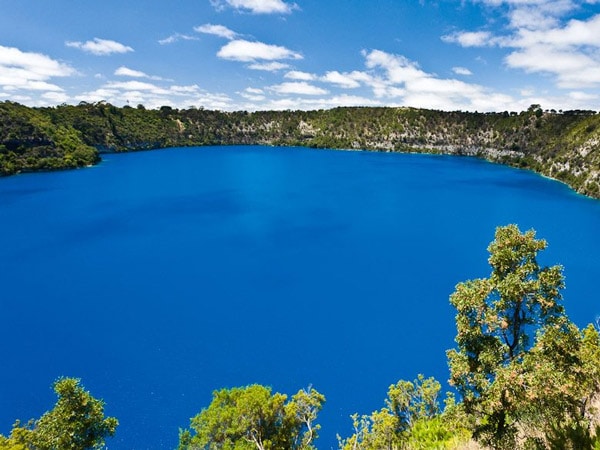
If ever you needed evidence that spring’s arrival is a reason to celebrate, then look to Mt Gambier. Every year as the seasons change the town’s moody body of water – the Blue Lake – commemorates with a brilliant change of colour. The Boadnik people’s oral history of the area alludes to ancestors witnessing the volcanic activity that created the many lakes in the area more than 4000 years ago.
When can you see the Blue Lake?
To see the lake in its two stages is something else, as though you’re at two very different places on Earth. The summer version sparkles like Lake Como, only more Australian. The winter version is a dreary, grey hue. During hibernation, it is more of a grey/blue lake. Then, in November, it changes to a brilliant sparkling blue.
It’s also the main source of water for the town of Mt Gambier, so don’t pack your bathers expecting to have a dip.
Want to see more stories from Australian Traveller in your Google search results?
- Click here to set Australian Traveller as a preferred source.
- Tick the box next to "Australian Traveller". That's it.

Australian Traveller
View profile and articles