Five of the best places to get into WA’s wildflower season

hero media
It’s easy to walk on the wild side in WA – and you don’t even need to pop heels and mascara on (actually, you really shouldn’t). The state’s jewel-like wildflowers carpet the southern half of the vast state in colour pops bearing quirky names such as donkey orchids, kangaroo paws and pompom head everlastings. Here are the top five places near(ish) Perth to find yourself some bush beauties.

What is wildflower season?

Wildflower season in Western Australia signals springtime and the arrival of nature’s haute couture. There are big, bold blooms, but most are small and delicate, with fine fringing, intricate patterns and minute details best observed up close. WA is home to 12,000 species of flowering natives, 70 per cent of which are found nowhere else in the world. Incredibly, more are being discovered every year – these treasures hide themselves well.
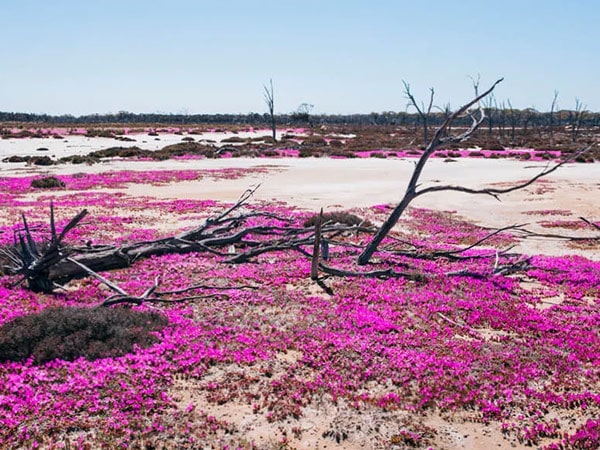
Purple-pink flowers carpet the WA outback during wildflower season
Wildflower season in Western Australia signals springtime and the arrival of nature’s haute couture.

Where can you see wildflowers in season?

Once wildflower fever hits, all ages pull on their trainers, grab their cameras and hit the centre of the city – no joke (more on that soon). Petal pushers also tour the surrounding Perth Hills and journey north, east and south of the metropolis.
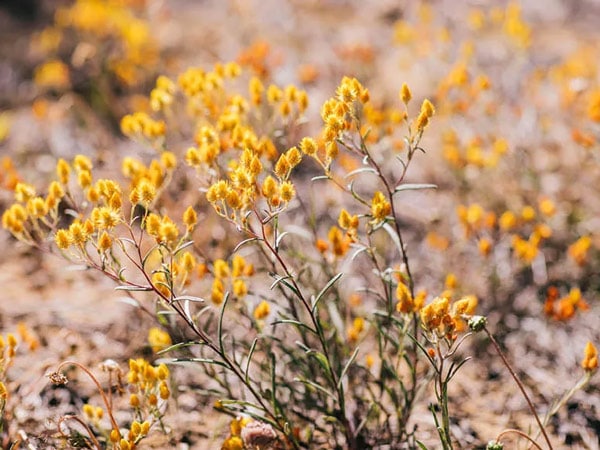
Yellow wildflowers in WA
WA is home to 12,000 species of flowering natives, 70 per cent of which are found nowhere else in the world.

When is the best time to see them?

The mass bloom starts around the hotter, drier mid-point of WA late in June. It then flows southward as the weather warms, hitting its peak in September and petering out towards November. In northern parts of the state, vast tracts of land are carpeted in pinks, whites and yellows, whereas southern areas have speckles of colour peering shyly from the scrub. Finding the rare and elusive – plenty of the graceful orchid species fall into this category – becomes an infectious game. Here’s how to play.
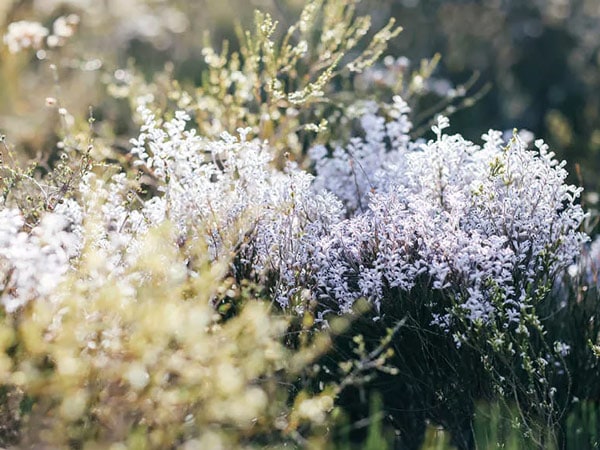
Soft purple and white wildflowers in bloom in WA
Flowering season runs usually between mid June to the end of October.

Perth: the world’s biggest inner-city park lives here

It doesn’t get much easier than taking a free CBD bus (departing St Georges Terrace) a few minutes up a hill to arrive in wildflower cornucopia. Kings Park, on the fringe of Perth’s geographical core, trumps New York City’s Central Park when it comes to the competition for biggest inner-city park on the planet.


Each September the Kings Park Festival throws a wildflower party within its Botanic Garden, which distils thousands of species into one compact zone. Think grevillea, boronia, Geraldton wax and kangaroo paw, all in different colour combinations (the black and green paw is particularly stunning). Wildflowers are planted months ahead, blooming in time for visitors to stroll between beds that are split into WA’s different regions, showing what grows where.


Festival time means extra free guided walks where you’ll learn about floral survivalist methods, traditional Aboriginal uses and how scentless flowers trick insects into pollenating them. Volunteers also run walks year-round (departing daily at 10am, 12pm and 2pm). The blooms usually last well into October, making a post-festival visit just as worthy. Rare species such as spider orchids and donkey orchids are most likely seen on the park’s bushland trails.
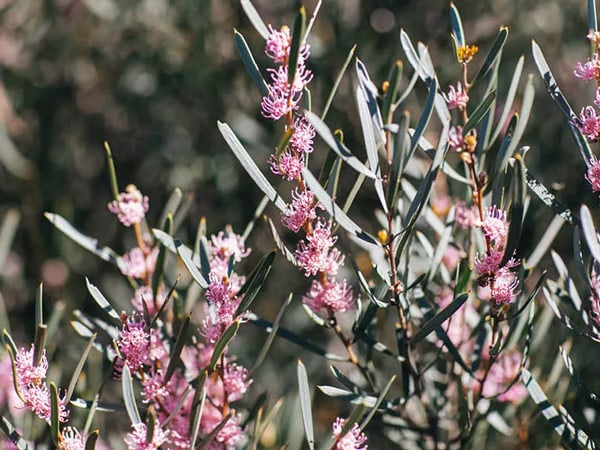
Pink wildflowers in bloom in WA
Once wildflower fever hits, all ages pull on their trainers, grab their cameras and hit the centre of the city.

Need tips, more detail or itinerary ideas tailored to you? Ask AT.

AI Prompt

Perth Hills: blooms and roos

John Forrest National Park is home to sweet things like the heart-leaf flame pea, the triggerplant and the feather flower (you’ll know when you see them). Drive 45 minutes from Perth’s CBD into the park hub and leave your car by the tavern (the pub is frozen in the ’80s, making it strangely endearing).


Give the unflappable western grey kangaroos a nod then set out on any of the walking paths and you’ll spot wildflowers within about 50 metres. The further you go, the more you’ll see, particularly close to the ground – a careful search will reap rewards.


A more energetic option is to follow the 15-kilometre Eagle View loop trail and discover a bevvy of bush beauties.

Margaret River: roadsides and bush tracks

Leeuwin-Naturaliste National Park runs along most of the Margaret River coastline and the Cape to Cape Track, which snakes through it, is lined with wildflowers. Hike along a section of the 135-kilometre route and breathe in deeply – you’ll smell them first. There are bolshy, bushy clusters and tiny blossoms, while floral succulents spread over the earth closer to the beaches.


We recommend the stretch between Smiths Beach and Injidup Beach (Injidup is taken from a Nyoongar word for the red pea flower). Walking alone is fine, but you’ll get more from the experience if you join a small, guided tour. The excellent Cape to Cape Explorer Tours’ 2.5-hour ‘Wild about Margaret River’ trek includes easily-digestible insight into the region’s diverse ecology. Or blend the exploration with lovely things like wine, cheese, high thread counts and massages through Walk into Luxury. Another option is the region’s only 4WD wildflower tour, which combines some of the track with a winery tasting – a rather brilliant combo by The Margaret River Discovery Co.


Alternatively, head to just about any winery off the main drag of Caves Road and you’ll notice wildflowers lurking on the roadsides. See a handy hotspot map, here.
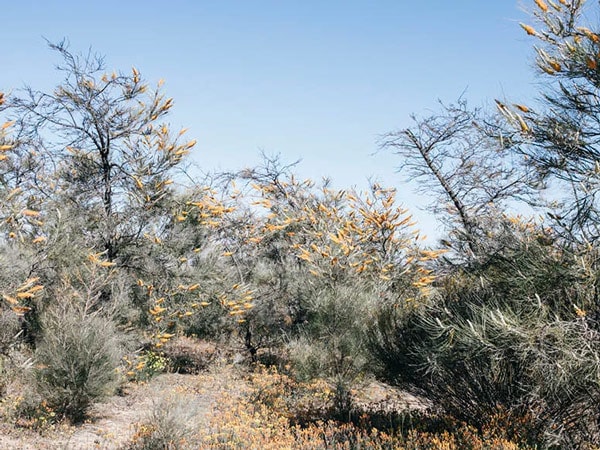
Flora flowers season bloom wa native plants
Leeuwin-Naturaliste National Park runs along most of the Margaret River coastline and the Cape to Cape Track, which snakes through it, is lined with wildflowers.

Weekly travel news, experiences
insider tips, offers, and more.

Lesueur National Park: scrub spangled with wildflowers

Head three hours’ drive north of Perth and 20 minutes north east of the fishing town of Jurien Bay to find yourself in sandy, scrubby outback country dotted with more than 900 wildflower species – many endangered. Lesueur National Park stretches across 27,000 hectares, but a sealed, 18-kilometre loop road drive makes exploring a cinch. Stop regularly and get out to inspect things like magenta starflowers, propeller banksia, prickly Moses wattle (so named for its spiky leaves) and blue tinsel lily.


There’s also a Lesueur Walk Trail, which leads to the summit of Mount Lesueur for wide-ranging views. On the way, make sure you peer through the grass trees to find the intricate species below. Your best bet may be to join a four-hour Mt Leuseur Tour departing Jurien Bay or Perth (bookings essential). It includes the scenic drive and a number of bush walks where flowers will be pointed out (sometimes easier than hunting them yourself). Everything here is best seen from July to October.

The Great Southern: just everywhere

If you’re visiting WA towards the end of spring, drive four hours south of Perth to the cool climate Great Southern and base yourself at either Albany, winery-rimmed Denmark or wilderness hotspot, Walpole (don’t miss the Valley of the Giants while you’re there). The Bibbulmun Track runs along all three centres (it’s a massive 1000-kilometre long-distance trail starting in Perth) and wildflowers can be found along it from September to November. As with much of the state, the blooms are tiny and need to be sought out – the more you look, the more you find. It’s a great way to slow down and achieve mindfulness amid the quiet of nature. If you want to go on a serious hike, you can get dropped off or picked up by local transport operators Naturally Walpole Track and Trail Transfers.
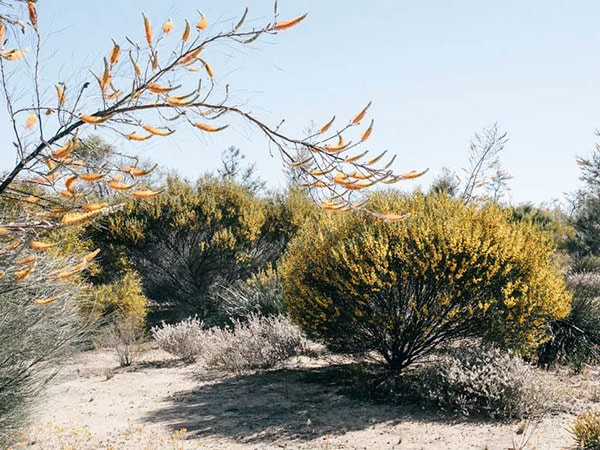
Wildflowers in bloom in Albany WA
Base yourself at either Albany, Denmark or wilderness hotspot, Walpole to see the wildflowers south of Perth.

Alternately, Stirling Range National Park near Albany is home to some 1500 species of plants – including those rare orchids – with numerous walk trails, or, if you’re staying at the Mt Trio Bush Camp and Caravan Park, you can join a good-value, 1.5-hour guided walk. Energetic types can take the gorgeous 12.5-kilometre Bald Head Walking Trail in Torndirrup National Park, keeping an eye out for colour pops – and migrating whales – along the route (tip: stop in at The Gap’s clifftop overhang viewing platform on the drive back to Albany).

Want to see more stories from Australian Traveller in your Google search results?

  1. Click here to set Australian Traveller as a preferred source.
  2. Tick the box next to "Australian Traveller". That's it.
Fleur Bainger
Fleur Bainger is a freelance travel writer and journalism mentor who has been contributing to Australian Traveller since 2009! The thrill of discovering new, hidden and surprising things is what ignites her. She gets a buzz from sharing these adventures with readers, so their travels can be equally transformative.
View profile and articles
hero media

Exploring an icon: inside the massive upgrade to Broome’s famous Cable Beach

(Credit: Tourism WA)

    Lucy Cousins Lucy Cousins
    With unhurried mornings, long, sun-filled afternoons, evenings shaped around sunset, this iconic beach offers an all-day experience (and it’s about to get even better).

    As the sun slowly rises over the languid waves and fine sand of Broome’s Cable Beach, the morning colours shift from rich apricot to pale gold and frosty pearl. Remnants of life reveal themselves in the subtle shadows – crab claw marks, towel impressions, footprints. Life here is unhurried, but don’t be fooled. This town is continually shifting like the desert dunes that surround it.

    And with a $75 million upgrade – offering easier and more inclusive access for people of all abilities – it’s getting even better.

    Cable Beach upgrade foreshore redevelopment stage 1
    Discover the Cable Beach redevelopment.

    The addition of comfortable and welcoming spaces has begun (and will continue). This means visitors will be able to spend longer enjoying this beautiful environment, while knowing that the upgrade will create a more environmentally protected setting that preserves the natural character visitors come for. Come sunset, soak it in all the better thanks to the already improved foreshore areas, made for lingering while the light changes. And for the kids, a new splash park and accessible dry playground will make it easy to while away the hours.

    Think you know what a day at this beach is like? Think again.

    Morning colours

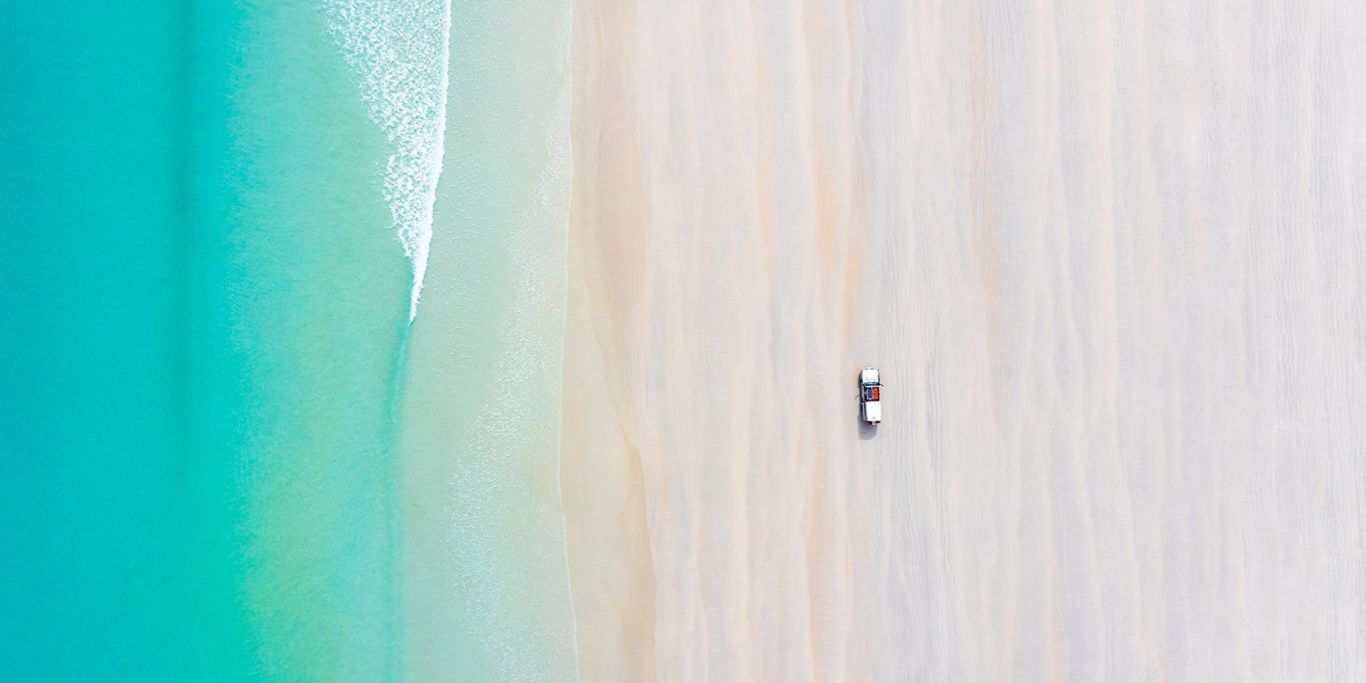
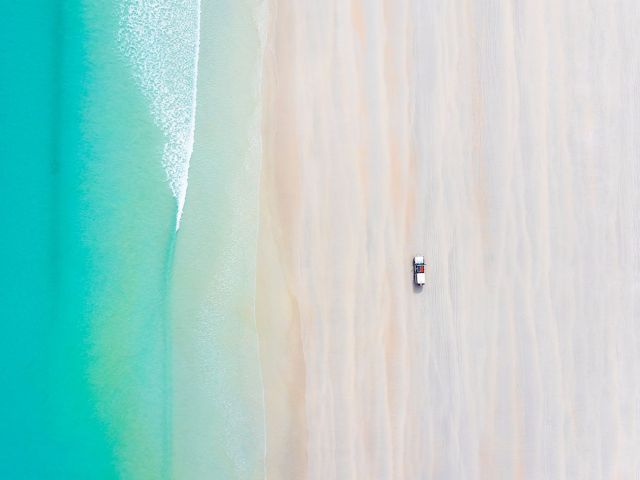
    car on cable beach at sunrise
    Cable Beach comes alive after sunrise. (Credit: Tourism WA)

    As the sun colours the sky, Cable Beach shows signs of life (and not just the aquatic kind). Locals and visitors alike float in the cool water as it laps the shore, landlubbers explore the coast on foot, runners pace and beachside yoga classes bring quiet movement to the day.

    When the sky is blue and the sun is firmly in position, head down to the well-known Cable Beach House for a long, slow breakfast overlooking the ocean. Think fresh tropical fruit, eggs cooked your way and strong coffee in the warm morning breeze.

    Afternoon adventures

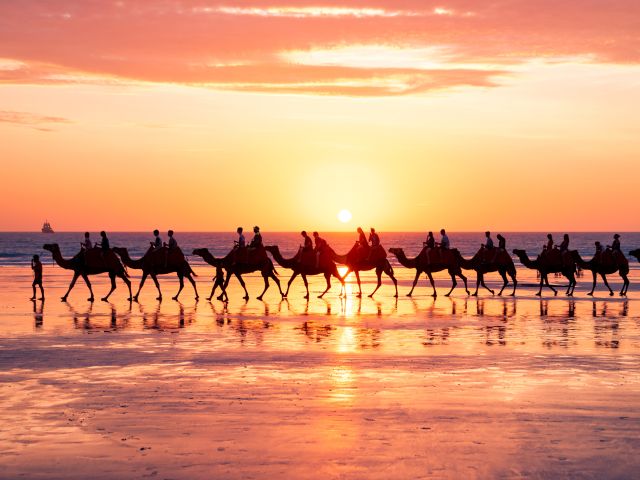
    camel train on cable beach in broome at sunset
    Join a camel train at sunset. (Credit: C J Maddock)

    When you’re ready to explore, carve a path along the Minyirr Park Trail – a gentle 1.5-2km track through coastal bushland with spectacular views of the dunes. Refuel at the nearby Spinifex Brewery for lunch with its low-key, outdoor beer garden. There’s even an outdoor playground if you’re travelling with young humans.

    Walk off your lazy lunch by watching (or joining) one of the beach soccer or volleyball games, or even try Silent Beats Broome – a silent walking disco through the dunes. Or book a spot on the famous camel trains, watching the sun drop below the horizon along the way. They’re a constant reminder of the fascinating history, landscape and cultural mix in this part of the country.

    Evening degustation

    server at Cable Beach Club
    Stop into the Cable Beach Club. (Credit: Tourism WA)

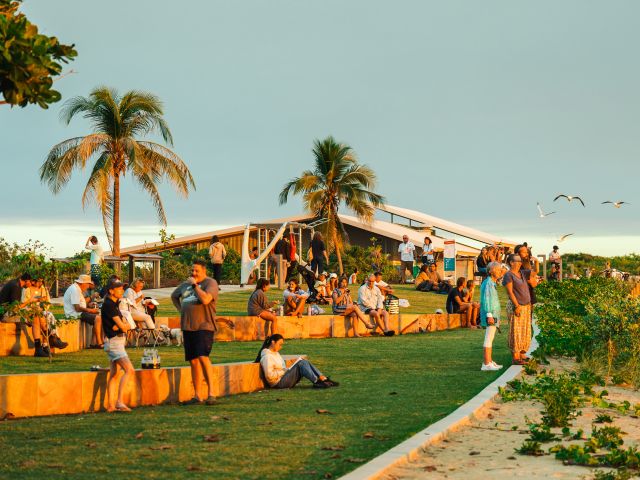
    As the day closes, watch the world-famous Cable Beach sunset from the appropriately named Sunset Grill at Cable Beach Club. This open-air terraced dining spot overlooking the beach is the kind of place where the view takes centre stage.

    While you sip on a lychee, lime & lemonade mocktail or a local beer, enjoy the bustle of life and nature outside as the day comes to an end.

    For dinner, nab a table at the Bali Hai Cafe, where they offer pan-fried crispy barramundi, Abrolhos Island scallops and deep-sea snow crab. When you’re ready for bed, check in to Pinctada Hotel Broome – a lush, tropical resort with palm-dotted gardens and a large, lagoon-style pool to cool off in.

    Beyond the beach

    Beyond the wide, open beach and never-ending sky of Cable Beach, there are many more reasons to visit North West Australia. These are just a few.

    Unmatched experiences

    Shinju Matsuri Festival's popular Long Table Dinner on cable beach
    Join Shinju Matsuri Festival’s popular Long Table Dinner. (Credit: Tourism WA)

    Engage with the history of the land and its people on an Indigenous cultural tour exploring everything from the local wildlife to the tastes of bush tucker. To understand the importance of pearling to this town, take a tour of Chinatown, or head outside of town to the live pearl harvests at Willie Creek or Cygnet Bay Pearl Farm, one of Australia’s oldest pearl farms.

    Learn why Japanese pearlers were central to Broome’s pearling success and visit the largest Japanese cemetery in Australia, where 900 Japanese pearlers were buried – a testament to the risks and rewards of this dangerous profession.

    And book ahead every spring for when communal tables, freshly cooked local fare and festoon lighting fill the beach for the extremely popular Long Table Dinner on Cable Beach. It’s a highlight of the Shinju Matsuri Festival, along with the Floating Lanterns Matsuri, where you can personalise a lantern and gently release it into the sea to honour those you love.

    Dining discoveries

    Matso’s Broome Brewery
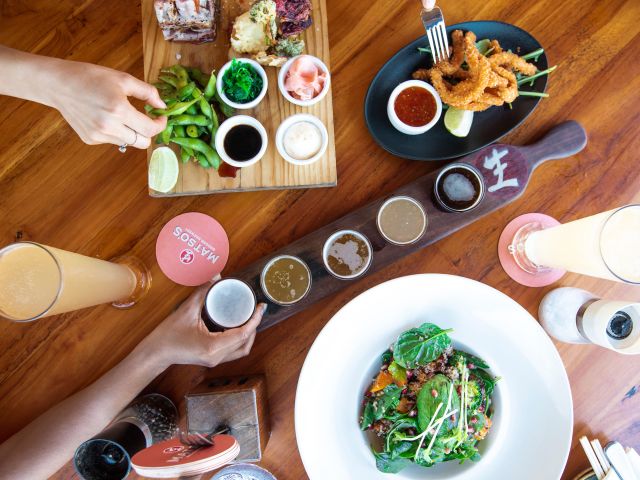
    Settle in for Matso’s famous ginger or mango beer. (Credit: Tourism WA)

    Further your culinary adventure at the laid-back Sunday Sesh at Matso’s Broome Brewery. Chow down on smoked crocodile or Aussie barramundi while kicking back to a local DJ as the heat of the day fades.

    For more tunes, the beautiful outdoor Bay Club at the Mangrove Hotel is a great choice for dinner with live music, DJs or an event that stretches on into the early hours. Still hungry? Pop by Johnny Sausage for Italian-influenced meals paired with impeccable wines.

    Natural beauties

    Gantheaume Point cabnle beach broome
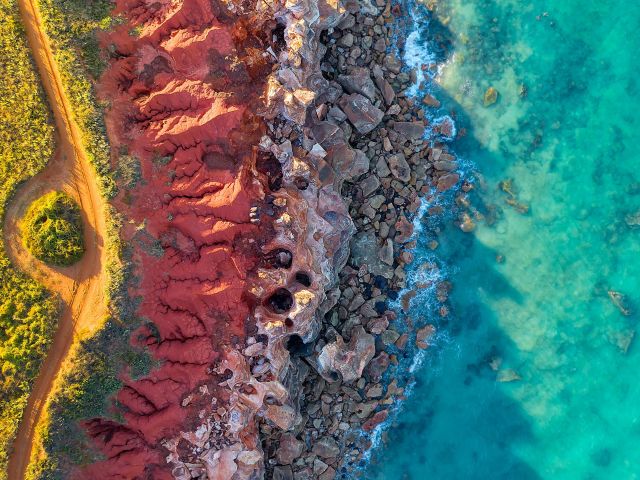
    Experience the striking colours of Gantheaume Point. (Credit: Tourism WA)

    Avoid the crowds and head to Town Beach for a quieter vantage point to see the phenomenal Staircase to the Moon – a natural illusion where the rising full moon is reflected on the tidal flats, creating a shimmering ‘staircase’ stretching up to the sky.

    Just south of Cable Beach are the deep red cliffs and dramatic ocean views of Gantheaume Point, where 130-million-year-old dinosaur footprints can be seen, revealed at low tide. Or head to Roebuck Bay to visit the internationally significant wetlands, where vast tidal flats are home to shorebirds and coastal fauna.

    Between October and March, watch turtles nesting and hatchlings emerge from the sand. You’ll be holding your breath as they make their way down to the shoreline, ready to start their life in one of Australia’s most beautiful landscapes.

    For more on Cable Beach and Australia’s North West, visit australiasnorthwest.com.