9 of Australia’s weirdest festivals and races

hero media
Australia’s dry sense of humour blossoms when anyone mentions festival and charity in the same sentence.

Here are some of the craziest ways that Aussies have found to raise money and/or community spirit.

1. The Parkes Elvis Festival

It’s not the subject of this festival so much as where it takes place that makes Parkes Elvis Festival unique.
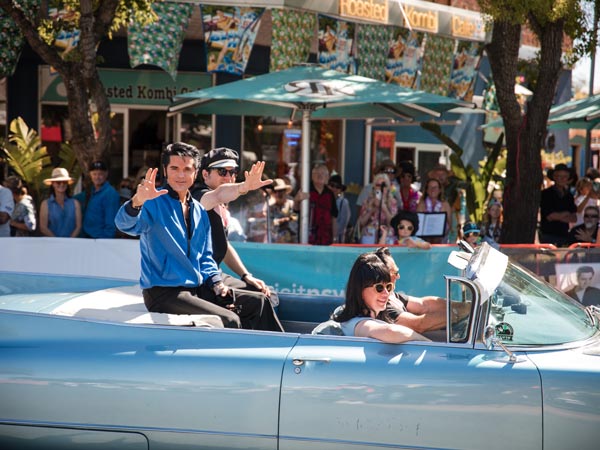
Elvis impersonator in a car
The festival attracts 15,000-plus Elvis fans and voyeurs annually.

Imagine a sleepy country town almost five hours’ drive west of Sydney (population 10,000) inundated by 15,000-plus Elvis fans and voyeurs for a few days in one of the hottest months of the year – that’s why it’s one of Australia’s quirkiest events.
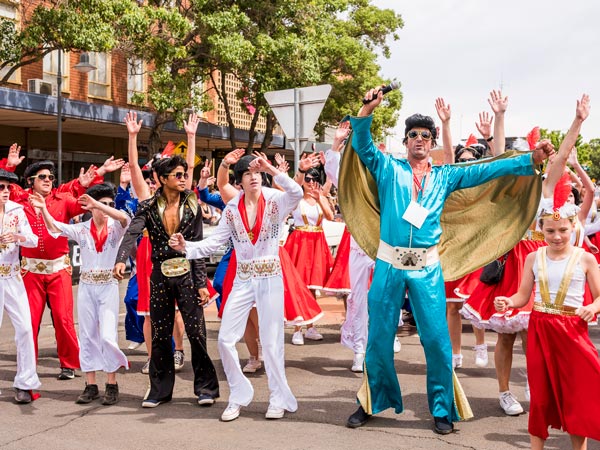
Elvis impersonators and crowds gather at the annua Street Parade in Parkes.
Elvis impersonators and crowds gather at the annual Street Parade in Parkes.

2. Henly-on-Todd Regatta, Alice Springs

This Alice Springs perennial has been going on so long that many Australians probably think it’s quite normal, but put this annual mockery of the UK’s terribly posh Henly Royal Regatta back into context and you see that it is unadulterated lunacy.
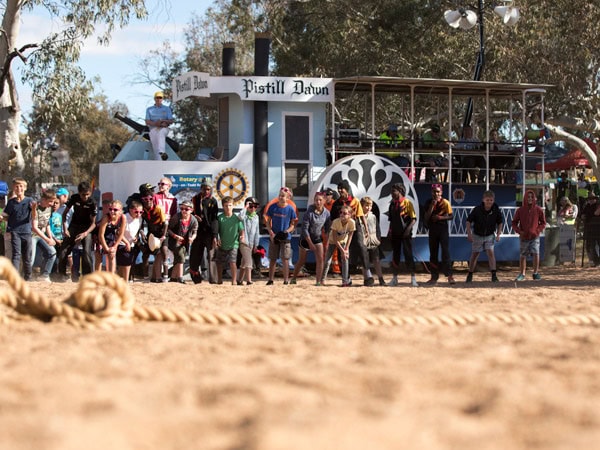
participants and spectators at the Henley on Todd Regatta in Alice Springs
It’s the most fun you can have without water. (Image: Tourism NT/Imparja Creative)

A boat race, where teams of participants (rowers) run down a dry, sandy riverbed, Fred Flintstone-style, carrying a mock-up yacht – and it’s held around 1500km from any body of water of any consequence. Ironically it was once cancelled due to bad weather – too much rain!
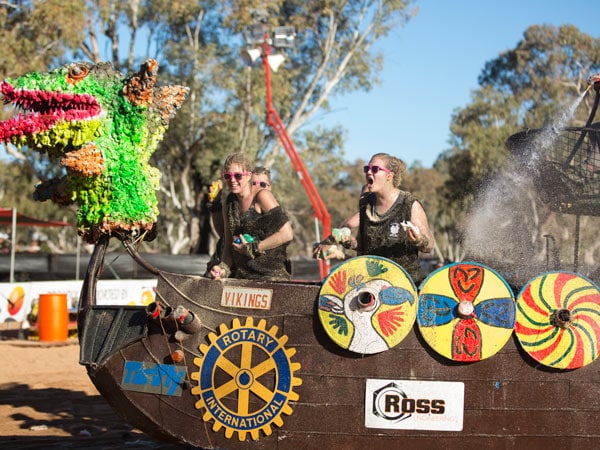
Henley on Todd Regatta
Henley-on-Todd Regatta is the world’s only dry river boating event in Alice Springs. (Image: Tourism NT/Imparja Creative)

3. Shitbox Rally

Quirky because it celebrates the underdog – in this case the clapped-out Australian car – and then proceeds to put it through a distinctly Australian torture test.

In the Redex-trail spirit, entrants in the Shitbox Rally must drive their under-$1500 ‘shitbox’ in one of three annual routes to raise money for the Cancer Council: Adelaide to Perth via the Northern Territory in autumn, Melbourne to Alice Springs passing through NSW and Queensland in winter, and Bendigo to Townsville with a dip over the border into South Australia en route in spring.

Every route features roads the cars would have struggled with even in their younger years, but of course, it only adds to the sense of adventure.
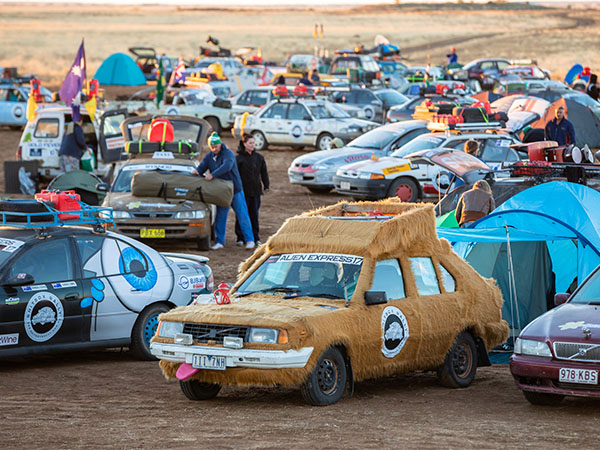
The quirky rally celebrates the underdog!

4. Tunarama

Our weirdness tends to swim upstream on Australia Day, so it’s no coincidence that the South Australian fishing city Port Lincoln holds its “world famous" Tunarama to coincide with it.

The festival celebrates all things relating to the city’s most lucrative fish resource, highlighted by, naturally, the World Championship Tuna Toss. The festival was cancelled in 2024 but will be resurrected under new ownership with some changes, likely to incorporate more of a focus on food and wine and local music. The iconic tuna toss is set to remain.
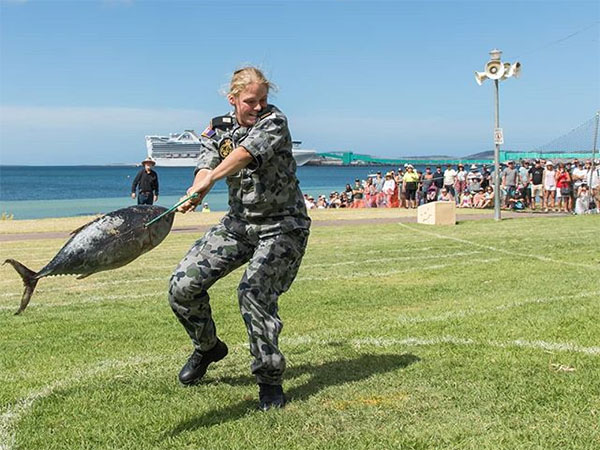
What’s weirder than the world-famous Tuna toss?

5. Boorowa’s Running of the Sheep

Not quite the gore and frenetic activity of the similarly named Running of the Bulls in Spain.
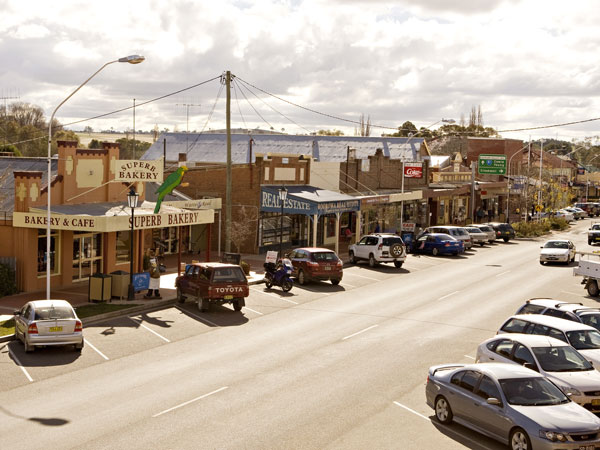
Boorowa streetscape
Farmers guide a flock of sheep down the town’s main street at the annual festival. (Image: Holly Bradford; Capital Country Tourism)

In fact, the pinnacle of the action is a farmer on a quadbike and some dogs guiding a flock of sheep down the town’s main street, which lies about an hour north of Canberra. It’s the grand finale of the Boorowa Hotel’s Irish Woolfest .
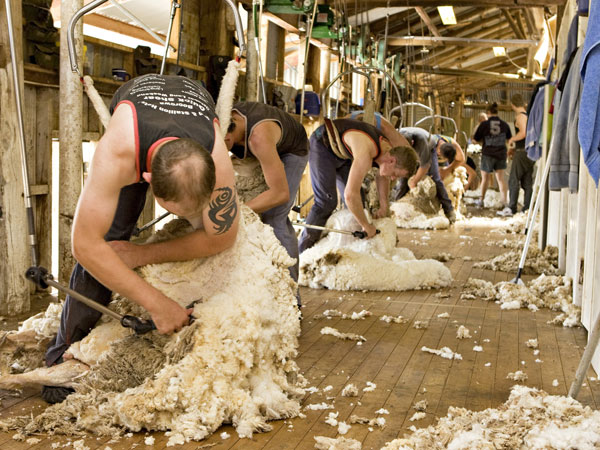
Sheep shearing in Boorowa, Capital Country
(Image: Holly Bradford; Capital Country Tourism)

6. Dunny Races

The dunny race surely embodies the pinnacle of Australian festival toilet humour.

The Sunshine Coast is home to the Great Australian Dunny Race. It started as an Australia Day race outside the Ettamogah Pub; the road transformed into a thunderbox drag strip with the athletes acting as human horses as they endeavour to pull their loo the quickest and be declared Dunny Race Champion of the World.

Now in its 34th year, the race is part of the Sunshine Coast Chilli & Chocolate Festival held annually in March with an entry fee that goes towards Mates in the Bush via Rural Aid. Other towns, such as Werribee, Victoria, and Quilton in Outback Queensland, have also dabbled in dunny races.
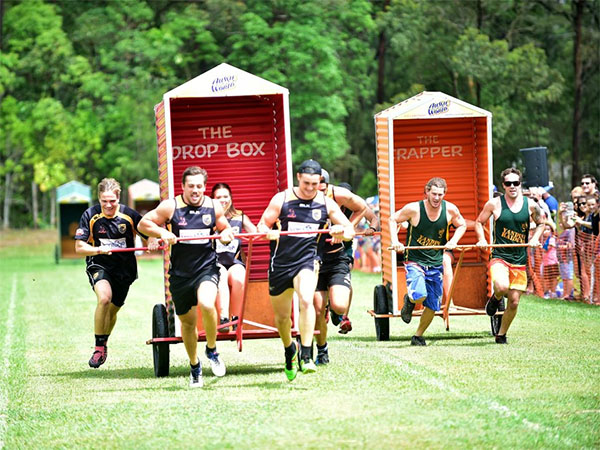
May the best dunny win

7. Maslin Beach Nude Games

Somewhat less patronised, but equally energetic is the primo sporting event on the South Australian nudists/naturalist’s sporting calendar.

The marquee events at the Pilwarren Maslin Beach Nude Games , held on the banks of the Murray River, are the three-legged race, the sack race and the tug of war. Unlike the competitors, clothes are optional for spectators at this summertime festival.

The event, which is currently on hold, has over 30 years of history and attracts over 300 participants annually. Hopefully, a resurrection is in the works.
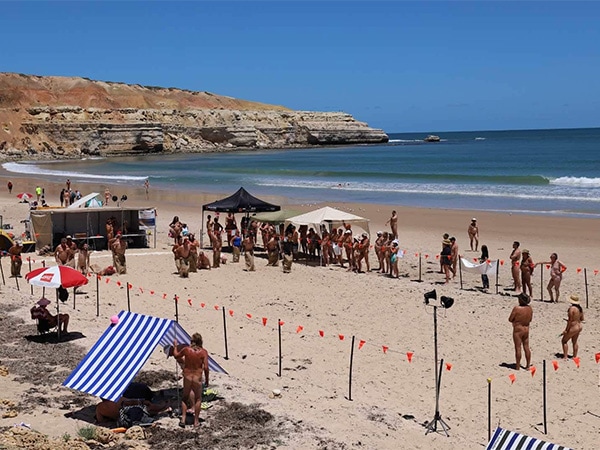
Maslin Beach Nude Games
Baring All at South Australia’s Maslin Beach Nude Games.

8. Tully Golden Gumboot

Tully in Queensland scores the award for conjuring up the most obscure reason for a festival: celebrating its reputation for rain and being “a pretty wet place".

The symbol of this annual event, the Golden Gumboot, stands proud over a festival full of small-town energy with the mandatory float parade and, of course, gumboot throwing on the schedule.

The competition sees the Far North Queensland towns of Tully, Innisfail, and Babinda in Australia battle it out for the title of the wettest town in Australia with the winner of the competition awarded, rather fittingly, a rubber boot.
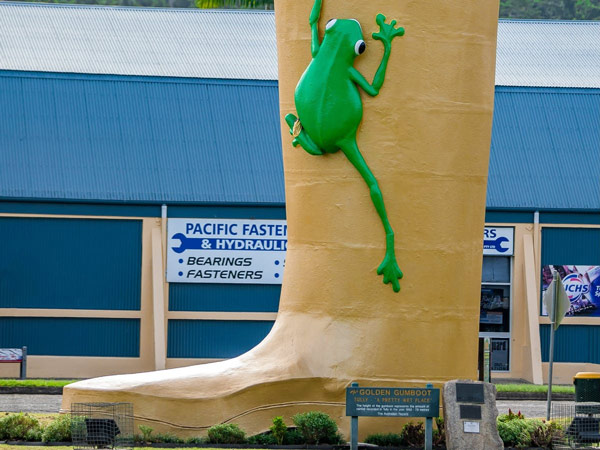
The Golden Gumboot in Tully Queensland
The township of Tully is home to the Golden Gumboot. (Image: Tourism Events Queensland)

9. Deni Ute Muster

A devastating drought in the late nineties inspired a small group of Deniliquin locals to start a rural-themed festival to bring visitors (and much-needed income) to the small country town. What followed was a mass gathering of ute devotees openly celebrating their sub-culture: bumper stickers, ‘circle work’, big, big aerials, and blue singlets.
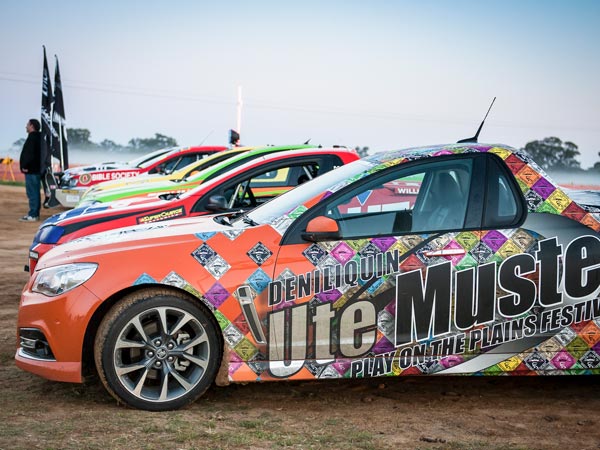
Deni Ute Muster
Ute devotees flock to Deniliquin each year to celebrate their sub-culture. (Image: Zowie Crump)

The Deni Ute Muster now attracts over 20,000 people of all ages to the festival annually, with a mosaicked vintage ute and an erected ute on a pole two of the headline attractions.
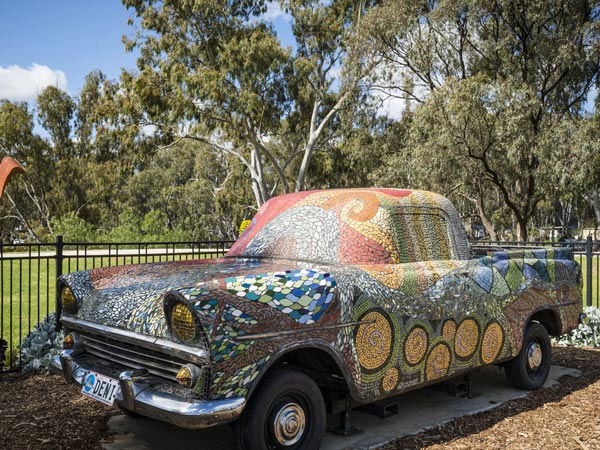
TransmUTE is a celebration of arts and the ute culture in Deniliquin.
The mosaic vintage ute paints Deniliquin as the ute capital of the free world. (Image: Destination NSW)

The nightly concerts feature performances by Australian and International rock and country musicians (think Amy Shark, Kip Moore and Tyler Hubbard), and the day is full of entertainment for all ages.
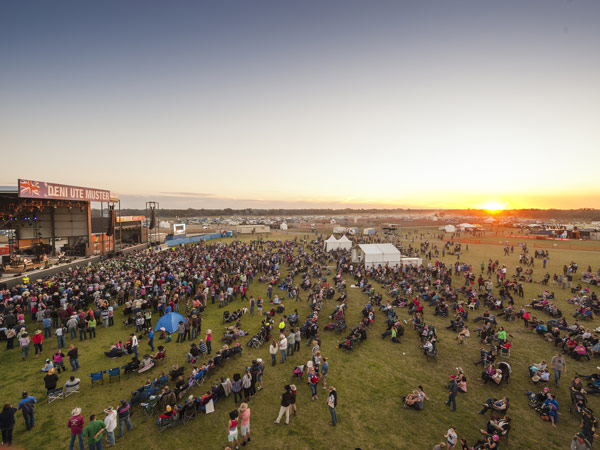
Crowds enjoying the Deni Ute Muster
The evening entertainment features some of the country’s best musicians. (Image: Destination NSW)

There were 9,736 examples of the classic Aussie transport at the 2013 Deni Ute Muster , leading to claims that Deniliquin is indeed the ute capital of the free world.
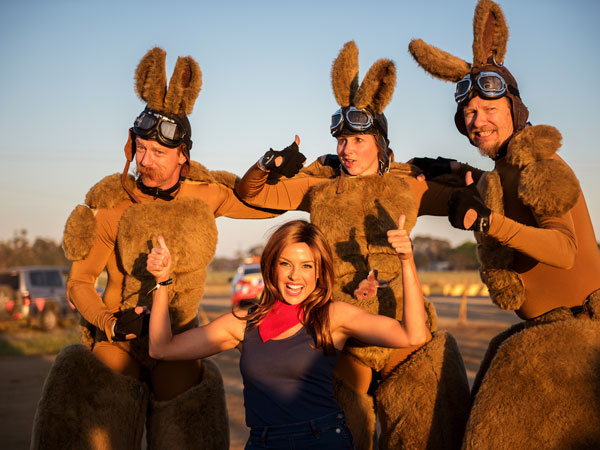
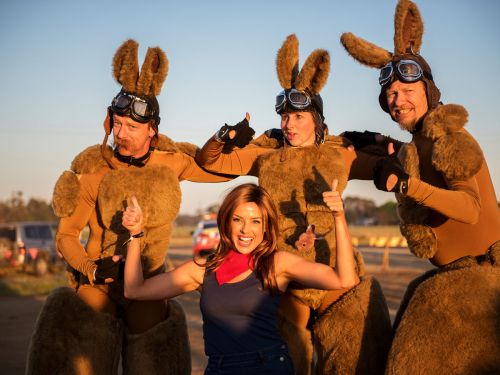
Woman posing with three costumed kangaroos at the Deni Ute Muster 2015, Deniliquin.
The annual event attracts over 20,000 ute devotees. (Image: The Art of Zowie Photography)
hero media

3 wild corners of Australia that let you reconnect with nature (in comfort)

The country’s rawest places offer some of its most transformative, restorative experiences.

Australia offers sublime opportunities to disappear into the ancient, untouched wilderness, worlds away from modern stress. Wild Bush Luxury offers a collection of experiences that are a portal into the continent’s wildest, most undiscovered landscapes, from wide floodplains to vast savannas, where the only distractions are birdsong, frog calls, curious wallabies and the daily drama of sunset. With a focus on conservation and Indigenous knowledge, these all-inclusive experiences allow guests to slow down and quiet their minds for intimate encounters with the natural world.

1. Bamurru Plains

safari tent at Bamurru Plains wild bush luxury
Let nature take front row.

In the remote Top End, just outside Kakadu National Park on the fringes of the spectacular Mary River floodplains, you’ll find Bamurru Plains , a peerless Australian safari camp. After a quick air transfer from Darwin to the camp’s private airstrip, you’ll be whisked away via 4WD to a vivid natural wonderland of shimmering floodplains, red earth, herds of peacefully grazing water buffalo and 236 bird species (Bamurru means magpie goose to the Gagadju people).

Accommodations consist of 10 mesh-walled bungalows and two luxe stilted retreats where guests enjoy panoramic, up-close views that invite them into their rightful place in the landscape (and binoculars to see it even better). Being an off-grid experience designed to help guests disconnect, the only distractions are birdsongs, frog calls, curious wallabies, the occasional crocodile sighting and the daily drama of the spectacular golden sunset.

It’s a place where nature’s vastness rises to the level of the spiritual, and Bamurru’s understated, stylish,  largely solar-powered lodgings are designed to minimise human impact and let nature take front row.  Guests relax in comfort with plush linens, an open bar, communal tables that allow for spontaneous connections and curated dining experiences from the in-house chef using local ingredients and bush-inspired cooking methods.

Bamurru Plains airboat tour
Zoom across the floodplains. (Image: Adam Gibson)

It’s a restorative backdrop for days spent zooming across the mist-covered floodplains in an airboat, birding with expert guides, taking an open-sided safari drive or river cruise through croc country. Spend time at the Hide, a treehouse-like platform that’s perfect for wildlife spotting.

In fact, nature is so powerful here that Bamurru Plains closes entirely during the peak monsoon season (October to April), when the floodplains reclaim the land and life teems unseen beneath the water. Yet Wild Bush Luxury’s ethos continues year-round through its other experiences around Australia – each designed to immerse travellers in a distinct Australian wilderness at its most alive and untouched.

2. Maria Island Walk

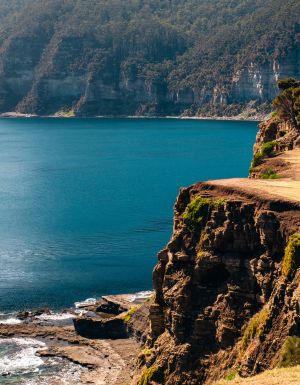
woman on a headland of Maria Island Walk
Maria Island Walk offers sweeping coastal scenes.

Off Tasmania’s rugged east coast, the iconic Maria Island Walk is an intimate four-day journey through one of the country’s most hauntingly beautiful and unpopulated national parks, encompassing pristine beaches, convict-era ruins, and wildlife sightings galore. Accessible only by a small ferry, Maria Island feels like a place reclaimed by nature, which is exactly what it is: a penal settlement later used for farms and industry that finally became a national park in 1972.

These days, the island is known as ‘Tasmania’s Noah’s Ark’ and its only human inhabitants are park rangers. It’s a place where wombats amble through grassy meadows, wallabies graze beside empty beaches, dolphins splash in clear water just offshore and Tasmanian devils – successfully reintroduced in 2012 after near-extinction on the mainland – roam free and healthy.

Each day unfolds in an unhurried rhythm: trails through coastal eucalyptus forests or along white-sand bays, plateaus with sweeping ocean views, quiet coves perfect for swimming. Midway through the journey, you’ll explore Darlington, a remarkably preserved 19th-century convict settlement whose ruins tell stories of human ambition at the edge of the known world.

At night, sleep beneath a canopy of stars in eco-wilderness camps – after relaxing with Tasmanian wine and locally-sourced meals, and swapping stories with your fellow trekkers by candlelight.

3. Arkaba

two people standing next to a 4wd in Arkaba
Explore Arkaba on foot or on four wheels.

For a bush immersion with more of an outback flavour, Arkaba offers a completely different type of experience. A former sheep station and historic homestead in South Australia’s striking Flinders Ranges that has been reimagined as a 63,000-acre private wildlife conservancy. It’s now patrolled mainly by kangaroos and emus.

Small-scale tourism (the homestead has just five ensuite guestrooms) helps support rewilding projects, and guests become an essential part of the conservation journey. Days begin with sunrise hikes through ancient sandstone ridges or guided drives into the ranges to spot yellow-footed rock-wallabies. And end with sundowners on a private ridgetop watching the Elder Range glow vibrant shades of gold, crimson and violet as the air cools and time stands still.

Here, you can join conservation activities like tracking native species or learning about Arkaba’s pioneering feral-animal eradication projects, then unwind with chef-prepared dinners served alfresco on the veranda of the homestead, which is both rustic and refined. The highlight? Following Arkaba Walk, a thriving outback wilderness where emus wander and fields of wildflowers grow.

It’s an unforgettable immersion in Australia’s vast inland beauty, a place where the land’s deep and complicated history – and astounding resilience – leave their quiet imprint long after you return home. In a world where genuine awe is rare, Wild Bush Luxury offers a return to what matters most in the untamed beauty of Australia’s wilderness.

Disconnect from the grind and reconnect with nature when you book with at wildbushluxury.com