hero media

Australia’s biggest and brightest moon of 2025 rises this week

Get ready to look up, the Beaver Moon will light up Australian skies this week.

Australia’s night skies have been putting on quite the show lately – from the Harvest Moon to the Blood Moon and Strawberry Moon, it’s been a year of spectacular lunar moments. But this week’s event might just outshine them all.

On Wednesday, 5 November, Aussies will witness the Beaver Moon – the closest, biggest and brightest full moon of 2025. This supermoon will appear larger, whiter and more luminous than usual as it reaches its closest point to Earth (known as perigee). The moon will rise just after sunset, glowing low on the horizon in all its golden glory.

When to see it

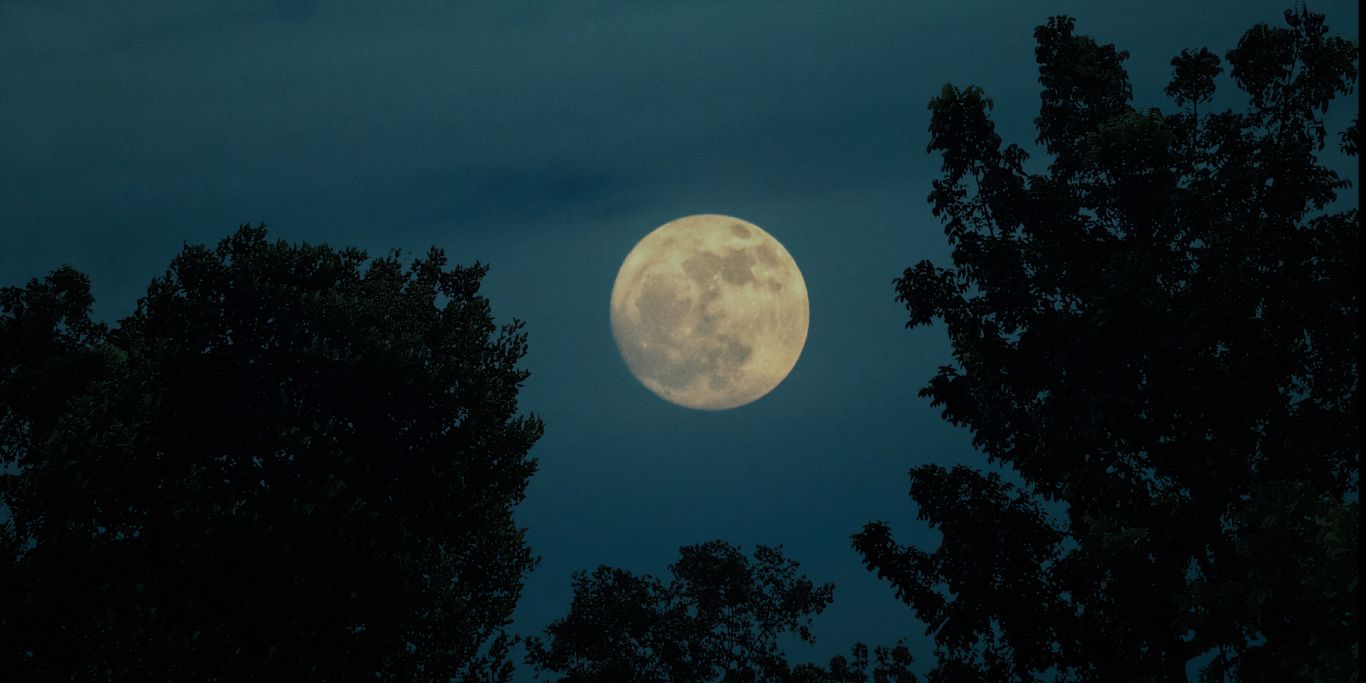
Full beaver moon through the tree leaves
The Beaver Moon is not just another supermoon; it’s the biggest of the year. (Image: James Peacock / Unsplash)

Australians can catch the Beaver Moon just after sunset on Wednesday. The moonrise times for the capital cities:

Sydney – 7.14 pm AEDT
Melbourne – 7.50 pm AEDT
Brisbane – 5.54 pm AEST
Perth – 6.39 pm AWST
Adelaide – 7.40 pm ACDT
Hobart – 7.53 pm AEDT
Darwin – 6.32 pm ACST
Canberra – 7.26 pm AEDT

The moon officially reaches fullness at 12.19 am AEDT on Thursday 6 November, but it will look full to the naked eye both the night before and after.

What makes this one special

It’s not just another supermoon; it’s the biggest of the year, appearing up to 14 per cent larger and 30 per cent brighter than a regular full moon. For photographers and sky-watchers, that means a perfect excuse to head somewhere dark, open and scenic – think beaches, headlands, lookouts or even your own backyard if the clouds stay away.

As it rises near the horizon, you’ll also experience the “moon illusion", which makes it look even bigger thanks to visual contrast with the landscape.

Why it’s called the Beaver Moon

Beaver swimming and making dam
The moon coincides with when beavers built their dams and prepared for winter. (Image: Sanket Gupta / Unsplash)

The November full moon was nicknamed the Beaver Moon by early North American settlers, because it marked the time beavers built their dams and prepared for winter. While the name comes from the northern hemisphere, the timing still brings a sense of transition down under – the moment spring tips into summer and nature hums to life.

A night for reflection (literally)

Full beaver moon through the tree leaves
Connect with nature and stability during the Beaver Moon. (Image: Getty Images / AHM Alomgir Kabir)

Astrologically speaking, this super full moon in Taurus is said to heighten connection with nature and stability – a moment to slow down, breathe and ground yourself. The perfect opportunity to unwind at a bathhouse and fully embrace the lunar event.

But even if astrology isn’t your thing, there’s something soothing about stepping outside, gazing up and letting the year’s brightest moon light your path.

Quick tips for the best view

  • Head somewhere with a clear eastern horizon.
  • Catch it as it rises, when it looks its biggest.
  • Check the weather forecast before you plan your viewing spot.
  • Expect slightly higher tides – supermoons can cause subtle coastal surges.

Don’t miss it: The Beaver Moon is the largest supermoon of 2025, and the best excuse all year to pause, look up and feel a little bit cosmic.

Emily Murphy
Emily Murphy is Australian Traveller's Email & Social Editor, and in her time at the company she has been instrumental in shaping its social media and email presence, and crafting compelling narratives that inspire others to explore Australia's vast landscapes. Her previous role was a journalist at Prime Creative Media and before that she was freelancing in publishing, content creation and digital marketing. When she's not creating scroll-stopping travel content, Em is a devoted 'bun mum' and enjoys spending her spare time by the sea, reading, binge-watching a good TV show and exploring Sydney's vibrant dining scene. Next on her Aussie travel wish list? Tasmania and The Kimberley.
See all articles

How a $1 deal saved Bendigo’s historic tramways

The passionate community that saved Bendigo Tramways has kept the story of this city alive for generations.

It was an absolute steal: a fleet of 23 trams for just $1. But such a fortunate purchase didn’t happen easily. It was 1972 when the Bendigo Trust handed over a single buck for the city’s historic collection of battery, steam and electric trams, which had transported locals since 1890.

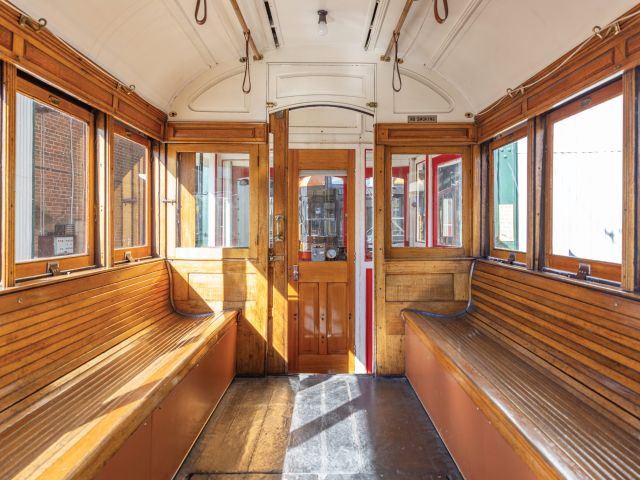
inside the historic Bendigo Tram
Bendigo Tramways is a historic transport line turned tourist service. (Image: Bendigo Heritage)

The city’s tram network had been declared defunct since 1970 due to post-war shortages in materials to upkeep the trams and declining passenger numbers as motor vehicles were increasing. However, determined locals would not hear of their beloved trams being sold off around the world.

The Bendigo Trust was enlisted to preserve this heritage, by converting the trams into a tourist service. The Victorian government approved a trial, however news spread that the Australian Electric Tramways Museum in Adelaide had acquired one of the streetcars for its collection.

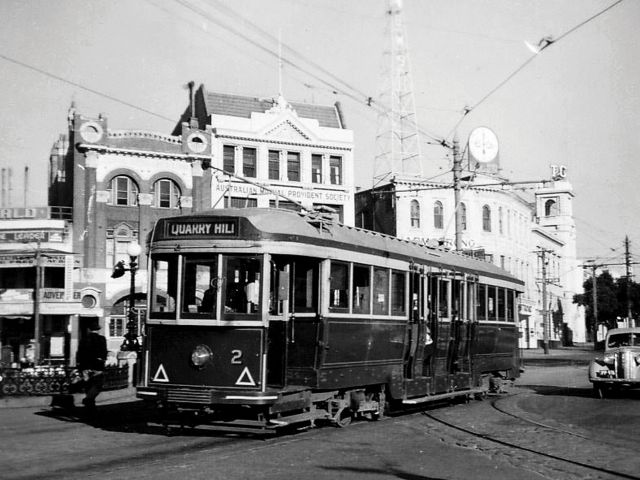
a tram heading to Quarry Hill in 1957
A tram on its way to Quarry Hill in 1957. (Image: Bendigo Heritage)

An impassioned group rallied together to make this physically impossible. Breaking into the tram sheds, they welded iron pipes to the rails, removed carbon brushes from the motors, and formed a blockade at the depot. The community response was extraordinary, and a $1 deal was sealed.

A new chapter for the city’s fleet

the old Tramways Depot and Workshop
The old Tramways Depot and Workshop is one of the stops on the hop-on, hop-off service. (Image: Tourism Australia)

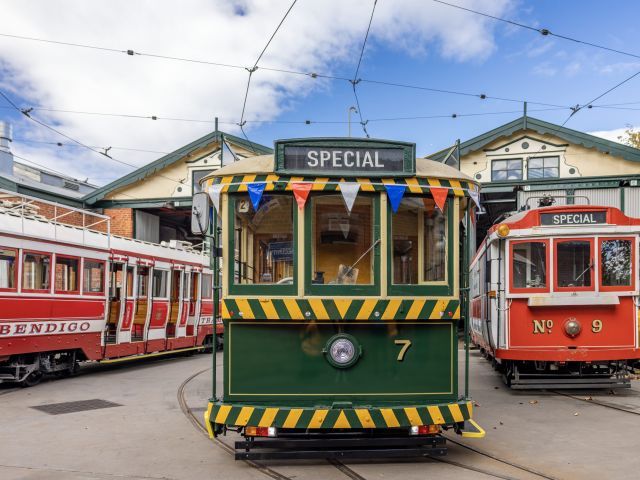
Today, Bendigo Tramways welcomes some 40,000 passengers annually, operating as a hop-on, hop-off touring service aboard the restored trams. Fifteen of the now 45-strong fleet are dubbed ‘Talking Trams’ because of the taped commentary that is played along the route. The trams loop between Central Deborah Gold Mine and the Bendigo Joss House Temple, which has been a place of Chinese worship since 1871, via other sites including the old Tramways Depot and Workshop.

a Gold Mine Bendigo Tram
The fleet comprises 45 trams that have been restored. (Image: Visit Victoria/Robert Blackburn)

Keeping things interesting, throughout the year visitors can step aboard different themed trams. Tram No. 302 becomes the Yarn Bomb Tram, decorated both inside and out with colourful crochet by an anonymous group of locals.

During the festive season, Tram No. 15 operates as a tinsel-festooned Santa Tram, and the big man himself hides out somewhere along the route for excited children to find. And on selected dates, the adults-only Groove Tram runs nighttime tours of the city, accompanied by local musicians playing live tunes and a pop-up bar.

the historic post office turned visitor centre in Bendigo
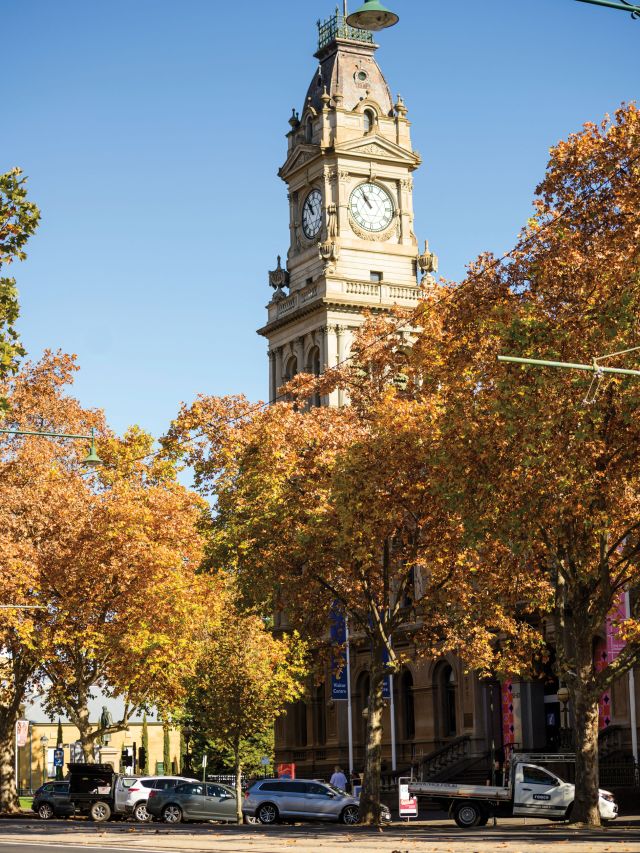
Visitors can hop on and off to see the city’s sites such as the historic post office turned visitor centre. (Image: Tourism Australia)

As well as preserving the city’s history, however, the continuation of the tram service has kept the skills of tram building and craftsmanship alive in a practical sense. Bendigo’s Heritage Rail Workshop is world-renowned for restoring heritage trams and repurposing vehicles in creative ways.

Locally, for example, Tram No. 918 was transformed into the Dja Dja Wurrung Tram with original Aboriginal artworks by emerging artist Natasha Carter, with special commentary and music that shares the stories and traditions of Bendigo’s first people. You can’t put a price on preserving history. Nonetheless, it was a dollar very well spent.