hero media

Tonight’s supermoon is just the beginning of an epic celestial line-up

Australia is in for an astronomical end to the year.

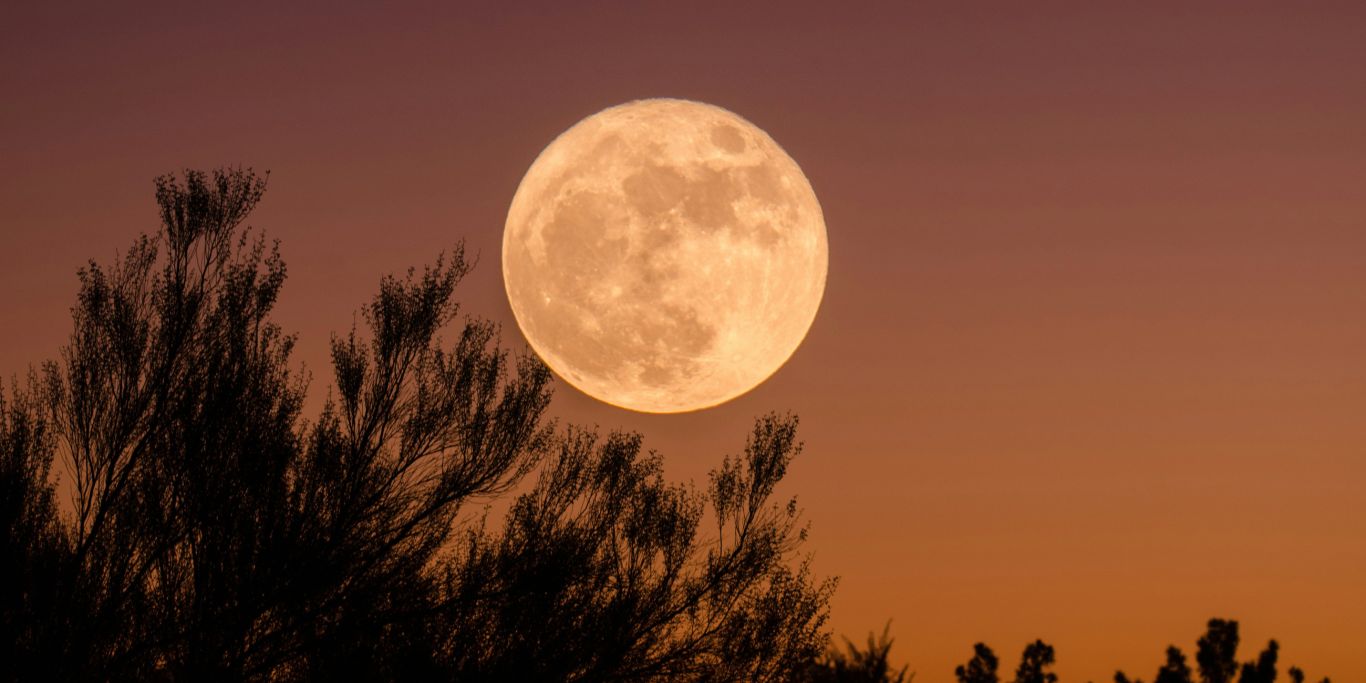
Get ready Australia, the first supermoon of 2025 is lighting up our skies tonight. Known as the harvest moon, it’s also the beginning of a months-long lunar spectacle, with several more celestial events on the near-horizon.

What is a harvest moon?
Supermoon/Harvest Moon Australia
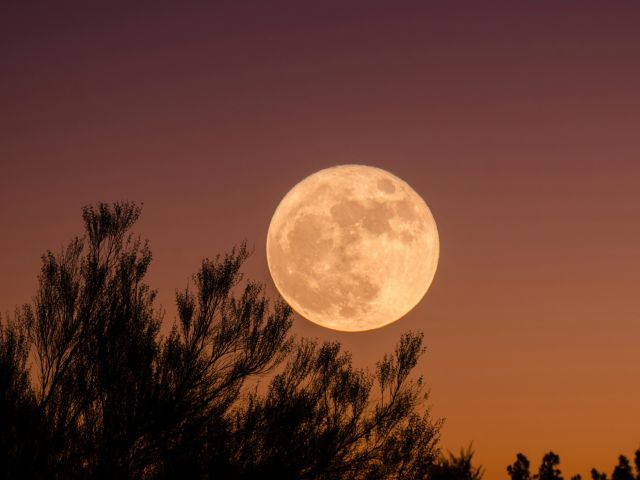
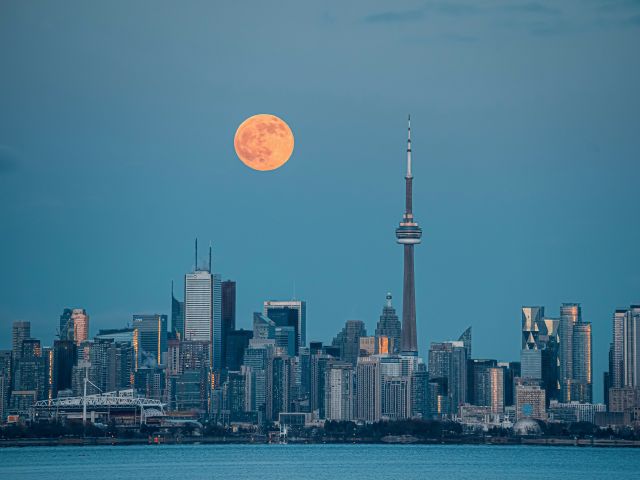
The harvest moon gets its name from the northern hemisphere’s autumnal equinox. (Image: Dave Xu/Unsplash)

The harvest moon gets its name from the northern hemisphere, representing the closest full moon to the autumnal equinox. Its bright light once helped farmers work late into the night, gathering their crops in time for a new season.

Characterised by its fully formed face and luminous orange glow, the harvest moon is also classified as a supermoon. And yes, this is different from a regular full moon. Just like Earth orbits the sun once a year, the moon orbits Earth roughly once a month. During this 27-day journey, sunlight hits different parts of the moon as it moves, taking it from a thin crescent to a perfect sphere or a full moon.

A supermoon only happens when that monthly full moon is also at its perigee – the point in its orbit closest to Earth. Sounds a bit complicated, right? In simple terms, a full moon is when the moon appears fully lit, but a supermoon is when it’s fully lit and at its closest point to Earth making it look bigger and brighter – like tonight!

How to see it
Supermoon/Harvest Moon Australia
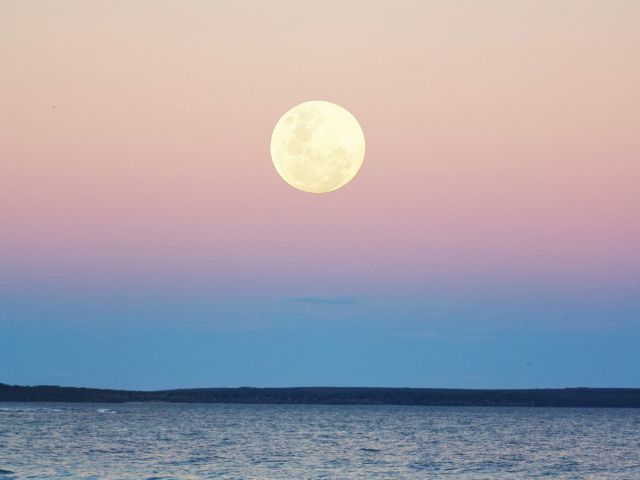
The moon appears at its largest near the horizon. (Image: Film Plus Digital/Unsplash)

When it comes to most astronomical events, the southern hemisphere (and Australia in particular) doesn’t have too much luck. But tonight, the scales are firmly tipped in our favour. The harvest moon will be very easy for us to see – as long as it’s not overcast. It will rise around sunset in the eastern sky and will be visible all night before setting in the west come sunrise.

While the moon will technically reach peak fullness around 3:45am on Wednesday, it will appear at its largest during dusk on Tuesday due to a phenomenon called ‘moon illusion’. This trick of the eye makes the moon appear bigger when it is low on the horizon compared to when it is high in the sky, a visual effect photographers should take full advantage of.

Other upcoming celestial events

Supermoon/Harvest Moon Australia
Australia is in for a months-long lunar spectacle. (Image: Ganapathy Kumar/Unsplash)

Our night sky has truly taken centre stage this year, from meteor showers like Eta Aquariids and the Perseids to a breathtaking strawberry moon in June and our first blood moon since 2022. And while the harvest moon might be stealing the spotlight tonight, it’s just the beginning of an epic celestial line-up.

Over the next three months, multiple astronomical events will light up our skies. After tonight’s harvest moon, there will be not one, but two more supermoons this year – both named after seasonal events in the northern hemisphere.

On 5 November, we’ll be treated to the Beaver Moon. Its name is drawn from Native American folklore, a symbol of the busy beavers readying their homes for winter’s arrival. Come 4 December, the third and final supermoon of 2025 will rise. Known as the Cold Moon, it marks the arrival of the north’s coldest and darkest months. For us, it’s more of a farewell!
Comet C/2025 R2 (SWAN)
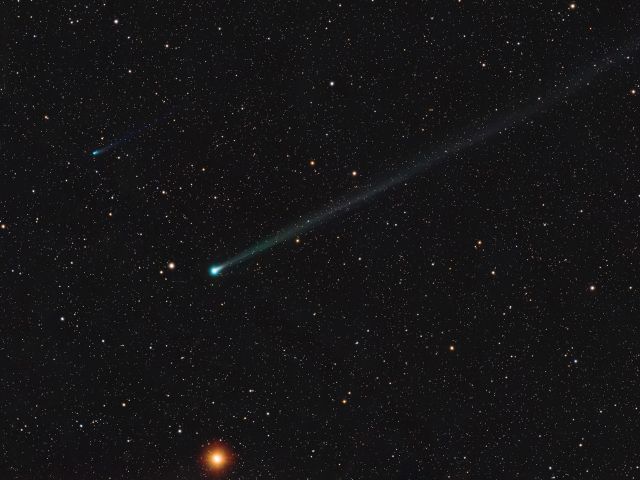
C/2025 R2 (SWAN) was only discovered a few weeks ago. (Image: Adam Block)

But that’s not all. A recently discovered comet known as C/2025 R2 (SWAN) will be passing Earth this October. While you’ll need binoculars to catch a glimpse of its bright green glow and exceptionally long tail, it’ll definitely be worth it, as SWAN won’t be back for another 600 years.

The excitement continues into 2026, with another supermoon scheduled for January and a total lunar eclipse in March. Best of all, you should be able to catch every single one from your balcony or backyard. It truly is a great time to be an Aussie astronomy lover.

Taylah Darnell
Taylah Darnell is Australian Traveller's Writer & Producer. She has been passionate about writing since she learnt to read, spending many hours either lost in the pages of books or attempting to write her own. This life-long love of words inspired her to study a Bachelor of Communication majoring in Creative Writing at the University of Technology Sydney, where she completed two editorial internships. She began her full-time career in publishing at Ocean Media before scoring her dream job with Australian Traveller. Now as Writer & Producer, Taylah passionately works across both digital platforms and print titles. When she's not wielding a red pen over magazine proofs, you can find Taylah among the aisles of a second-hand bookshop, following a good nature trail or cheering on her EPL team at 3am. While she's keen to visit places like Norway and New Zealand, her favourite place to explore will forever be her homeland.
See all articles
hero media

Look up: The Aurora Australis might be visible tonight

The most severe solar storm of the year is underway.

A powerful solar storm is happening right now, and if you’re in southern Australia, tonight might be your chance to see the colourful display.

According to the Australian Space Weather Forecasting Centre (ASWFC) at the Bureau of Meteorology , a severe geomagnetic storm is underway. They have issued an Aurora Alert, meaning space weather activity is favourable for viewing the spectacle: “Severe geomagnetic storm in progress. Aurora may be observed during local nighttime hours in good observing conditions at regions as far equatorward as middle latitudes.”

According to the ASWFC’s website, Aurora Alerts are issued “when space weather activity favourable for viewing aurora is in progress. When an alert is current, the alert information indicates the latitudinal range in terms of high, middle, low and equatorial regions where aurora may be visible under good observing conditions.”

What is the Aurora Australis?

A man with a head torch looking at the Aurora Australis
Tasmania is the best place in Australia to see the spectacle. (Image: Tourism Tasmania)

The Aurora Australis – also known as the Southern Lights – is one of the most dazzling natural displays visible to the human eye. Put simply, the phenomenon occurs when the sun releases a massive burst of charged particles and magnetic fields into space.  These particles are captured and funnelled toward the southern poles by Earth’s magnetic field, colliding with gases in the Earth’s atmosphere. The collisions result in light being emitted and a spectacular natural dancing rainbow ensuing. 

The past two years have been particularly good years for viewing the phenomenon. 

How to see the Aurora Australis

An Aurora Australis display at night along the coastline
A Southern Lights display can last minutes to hours. (Image: Unsplash/Graham Holtshausen)

Tasmania has historically been the best spot to see the Aurora Australis due to low light pollution and its position closer to the South Pole than mainland Australia. South Arm Peninsula, Bruny Island and Cockle Creek are popular viewing locations on the island.

But the good news is the ASWFC has shared that it’s possible the Aurora Australis could be seen further north, in mid to southern parts of Australia.  

In Victoria, Wilsons Promontory National Park, Point Lonsdale and Phillip Island are favourable locations; in New South Wales, Jervis Bay, Kiama or the Blue Mountains might offer you the glowing display; and in South Australia, the Fleurieu Peninsula, Kangaroo Island and Eyre Peninsula offer excellent southern exposure. 

A Southern Lights display can last minutes to hours, with the best active window typically being between 10pm and 2am.

You can read more about the natural light display in our Southern Lights guide and stay up to date via the Bureau of Meteorology website