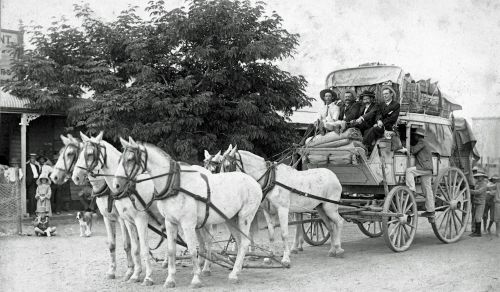
Premier transport company Cobb & Co became a true pioneer of Australian travel in a time when passage through the country was notoriously uncomfortable.
Australia’s most iconic coach service was started in the gold rush years in Victoria by young American Freeman Cobb.
Along with John Peck, James Swanton and John Lamber, he had recognised the need for passenger transportation between colonies and mining towns, and further inland to the outback.
The first Cobb & Co route was the short trip between Melbourne and Port Melbourne in 1853. At the time, coach travel was essential but passengers were often struck down with motion sickness and injuries from the bumpy ride.
But Cobb & Co’s coaches were superior, imported from America where they were designed for travel in the Midwest, which had similar conditions to Australia’s rugged terrain.
With regular and reliable services, specially bred horses suited to pulling a fully laden coach at gallop (the coaches carried up to 17 people and luggage), and fixed stops at changing stations to rest and swap horses, Cobb & Co became the preferred and luxurious method of travel.
Changing stations were usually privately run by a family or couple who would provide refreshments for passengers and overnight accommodation; some were more established pubs and inns that prospered from Cobb & Co services.
By 1861 the company had expanded into New South Wales and Queensland after new director James Rutherford secured a valuable contract for the delivery of mail.
But with these profitable mail runs and regular routes came another danger: bushrangers who would wait for the coaches on isolated roads.
Australian artist Tom Roberts’s 1895 painting Bailed up was inspired by one of these incidents, when coach driver ‘Silent Bob Bates’ was held up by local bushranger Captain Thunderbolt in the 1860s.
At its peak, Cobb & Co’s coaches were travelling an astounding 45,000 kilometres each week and harnessing up to 6000 horses. But after 70 years of operation, the last horse-drawn Cobb & Co service ran in 1924, when train travel superseded the need for coaches.
Despite its demise, this iconic transport company was forever immortalised in Australian folklore, charmingly penned in folk singer Lionel Long’s The Ballad of Cobb & Co.: “The driver’s whips are cracking and the horses’ hooves are dragging. As across the red and dusty trail they race. There’s a distant light a burning and the passengers are yearning, for the comfort of a warm and kindly place."
Megan Arkinstall is a freelance travel writer who you’ll often find at the beach, bushwalking or boating with her young family. She loves reliving travel memories through writing, whether that be sipping limoncello in a sun-drenched courtyard of Monterosso or swimming with green turtles in the aquamarine waters of Tropical North Queensland.
There’s no better place to unwind than the Yarra Valley and Dandenong Ranges – a leafy and idyllic region shrouded in mist, fern-filled gullies and a peaceful atmosphere.
Wrapped in the crisp mountain air, ancient ferns and ethereally verdant landscapes of the Yarra Valley and Dandenong Ranges , you’d be forgiven for thinking you’re in another world (or at least another part of the planet).
But this gorgeous pocket is under an hour from Melbourne, a mix of top-notch food and wine, boutique stays and forested scenery that make for an easy weekend away or even a midweek escape. In fact, visiting during the week can offer a deeply relaxing experience, with fewer crowds and more space to linger.
If you’re keen to unwind, here’s how to spend your time in this idyllic neck of the woods.
Where to eat
Treat your taste buds to Yarra Valley Dairy. (Image: Visit Victoria)
From farm gates to cosy eateries, the Yarra Valley and Dandenong Ranges house a plethora of places to feast. Start your day with a leisurely brunch and coffee at Ripe . This local hangout combines warm hospitality and hearty cafe fare against a backdrop of the hills’ iconic tree-fern canopies. It’s also nestled in the heart of Sassafras, the quaint village that best captures the Dandenong Ranges’ old-world charm.
Next, take yourself on a gastronomic adventure. Visit Yarra Valley Dairy , a regional favourite doing handmade cheeses, or Cherry Hill Orchards , where in summer you can pick your own cherries and enjoy them in the farm’s picturesque grounds. Treat yourself to a tasting at one of the Yarra Valley’s renowned wineries to finish – Rochford , Re’em and De Bortoli are standout picks for a sample of the region’s signature drops.
By night, book a table at either Citrine in the mountain town of Olinda or restaurant 1309 at Balgownie Estate in the Yarra Valley. Both do elevated seasonal fare paired with excellent drinks.
And if you’re simply in the mood for a tipple, you’re spoiled for choice. The Alpine Hotel in riverside Warburton is a historic and character-filled spot pouring pints and locally made drinks, while Four Pillars is a must for gin lovers. The distillery’s award-winning spirits are famed nationwide, but here you can try them right from the source.
Things to do outdoors
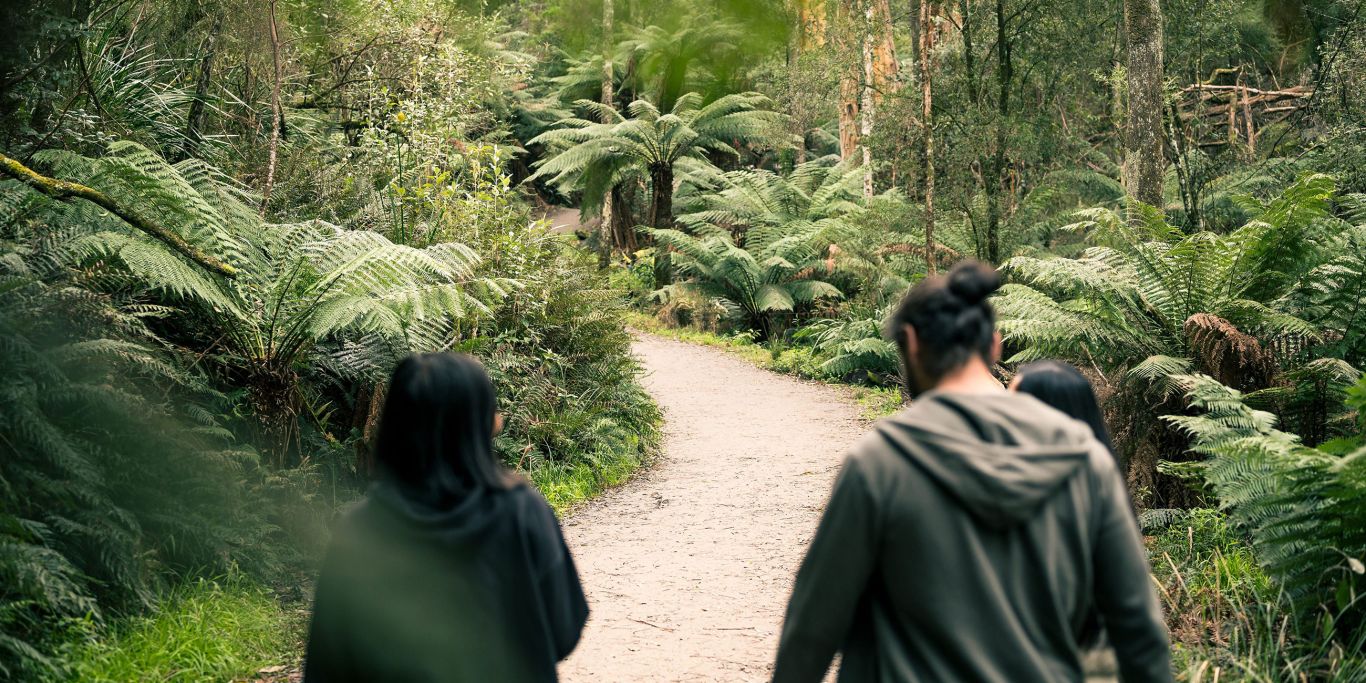
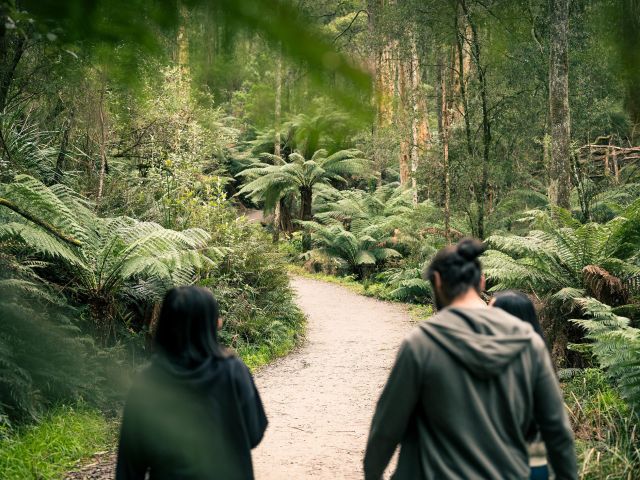
Wander the Dandenong Ranges National Park.
A motley patchwork of misty rainforest, rugged bushscapes and beautifully tended gardens, the Yarra Valley and Dandenong Ranges are some of Melbourne’s most scenic pockets. No visit to the region would be complete without a wander through its lush surrounds, either by bike or on foot.
The Ngurrak Barring trail stretches 39 kilometres through the Dandenong Ranges, connecting the towns and fern-filled forests that make the hills so unique. Along the way, be immersed in thought-provoking art installations and cultural stories, sharing a different perspective of this ancient landscape.
While in the area, wander through Cloudehill Garden & Nursery and the Dandenong Ranges Botanic Gardens , situated in Olinda. The cooler climate, rich volcanic soil and consistent rainfall offer both gardens ideal conditions for vivid and vibrant flora.
Over in the Yarra Valley, the 40-kilometre Lilydale to Warburton Rail Trail is a flat and family-friendly path perfect for leisurely bike rides and longer walks. It takes you through vine-lined scenery and towns like Seville and Wandin. Biking enthusiasts should head to the Warburton Mountain Bike Destination, a network of 160 kilometres of trails that traverse through untamed terrain.
For a more laidback outing, Alowyn Gardens encompasses seven acres of themed gardens perfect for a meandering stroll. The nearly 100-metre-long wisteria archway that connects different garden zones is a highlight – especially in October, when the lilac blossoms are in spectacular bloom.
The arts and culture scene
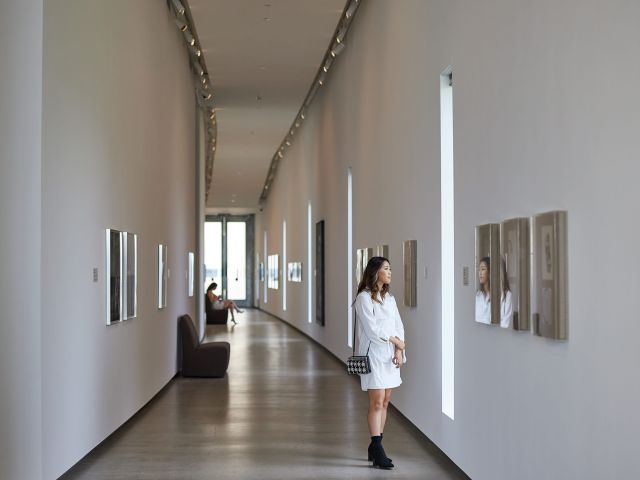
Take in the displays at TarraWarra Museum of Art. (Image: Visit Victoria)
Yarra Valley and the Dandenong Ranges are havens for arts and culture thanks to their inspiring landscapes and thriving creative community. Naturally, a slower escape should include a visit to some of the region’s best studios and galleries.
The TarraWarra Museum of Art in Healesville showcases modern and contemporary Australian art, with both a permanent collection and a rotating display of thoughtful exhibitions. The building and grounds are well worth exploring: a striking architectural landmark amid landscaped lawns and open-air sculptures overlooking the Yarra Valley.
Delve into the area’s rich history at the Yarra Ranges Regional Museum , a treasure trove of more than 13,000 unique pieces. See everything from Indigenous artefacts to archival photographs and historical objects that tell the region’s story.
On your way back to the city, stop by the leafy enclave of Eltham to discover Montsalvat . This five-acre artistic playground is Australia’s oldest continuous art community, combining galleries, Gothic-style buildings and expansive heritage gardens.
Stay at a local retreat
Re’em is an ideal pick for an indulgent stay.
No matter your style, and no matter your budget, you’ll find a suitable spot in the region to rest your head. If the weather is warm and the sky is clear, set up a tent at BIG4 Yarra Valley Park Lane Holiday Park or Pine Hill Cabin & Caravan Park. The former has secluded camping spots surrounded by tranquil bushland and local wildlife, along with glamping pods and cabins. The latter has powered and unpowered sites suitable for all kinds of campers, and is pet-friendly if you’re travelling with your four-legged friend.
Or, book yourself into the RACV Healesville Country Club & Resort – a sprawling retreat complete with stylish rooms and luxe amenities that invite you to unwind. Relax at the day spa, tee off at the 18-hole golf course, or recharge with a round of tennis or a few laps in the pool.
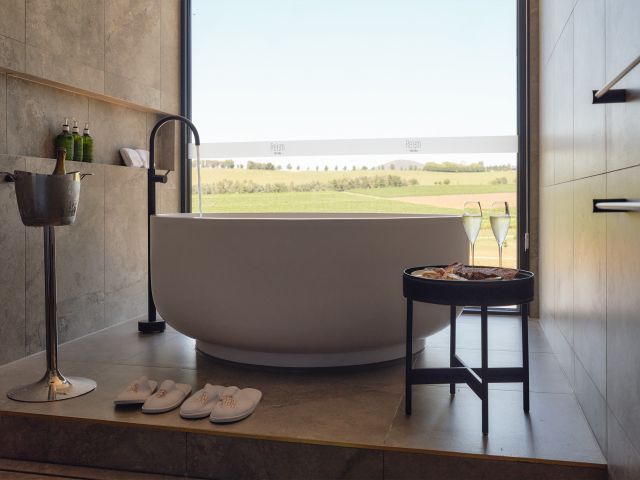
And if you’re after something truly indulgent, Re’em is an ideal pick. A boutique collection of just 16, the luxuriously appointed rooms feature plush linens, high-end amenities and oversized baths with panoramic views across the estate. A gourmet breakfast showcasing gorgeous local produce is also included.