hero media

This app can predict flight delays up to 25 hours in advance

Credit: Getty/Chalabala

Using live data and smart technology, this flight-tracking tool is keeping travellers one step ahead.

There are few feelings worse than settling in at your departure gate, bags checked, coffee in hand, only to see that dreaded ‘flight delayed’ alert flash up on the screen. All that holiday excitement suddenly drains away and, more often than not, you’re left to figure out the rest on your own.

But what if there was a way to avoid that stress altogether? That’s where Flighty comes in, which claims to warn travellers of disruptions and delays up to 25 hours in advance, even before airlines have made them official.

What is it?
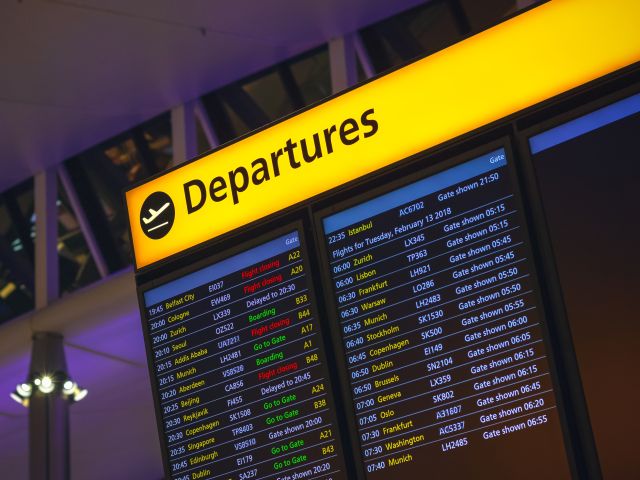
Airport departure board
Nothing derails travel plans faster than your flight being delayed. (Credit: Getty/Victor Huang)

At its core, Flighty is built to keep travellers informed at every stage of their journey. It provides real-time updates on everything from departure changes and gate information to weather alerts and potential delays – because even Australia’s best airline isn’t immune to disruption.

Alongside tracking thousands of live flights, the platform covers more than 14,000 airports worldwide. It also includes features like Flighty Friends, where travellers can share their journey with anyone meeting them upon arrival, and Flighty Passport, which tracks travel history and total mileage.
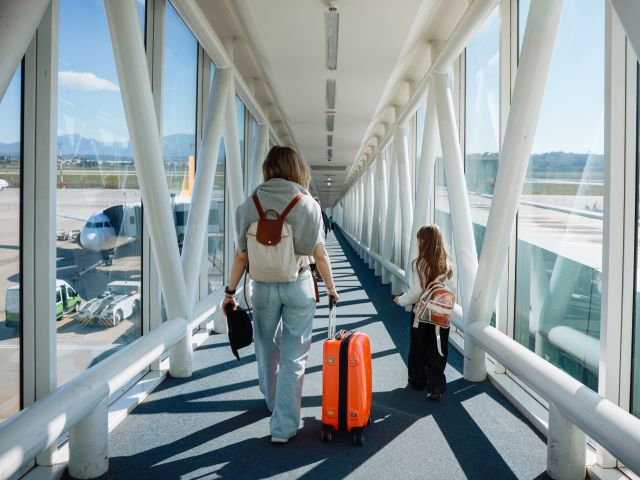
Mother and child at the aiport
Travellers can share their flight status with loved ones via Flighty. (Credit: Getty/Ozgurcankaya)

Downloaded as an app or accessed via the web, most of its features are free to use. Aviation enthusiasts and frequent flyers can subscribe to Flighty PRO, which unlocks premium extras like calendar syncing and email imports.

How does it work?

While these features are certainly appealing, the real question is: how does it actually work? According to Flighty, the interface analyses a combination of live flight data, airline stats and previous trends to predict disruptions before they happen; particularly useful on the country’s more delay-prone routes.
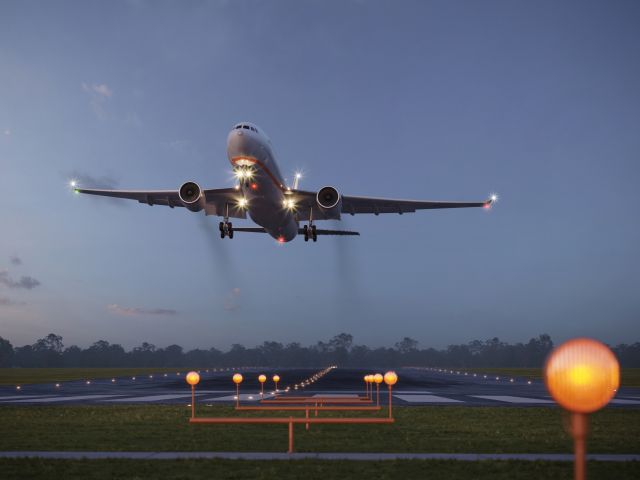
Plane taking off at the airport
Over 14,000 airports around the world are covered. (Credit: Getty/Alvarez)

This is all made possible by a subset of AI called machine learning, which enables systems to learn from data over time rather than relying on hard-coded programming. It works by feeding information through algorithms that recognise patterns, identify issues and make predictions.

Flighty specifically draws on pilot-grade data from air traffic control, including ground stops, technical checks, weather conditions and runway congestion – while also tracking inbound aircraft up to 25 hours in advance to flag issues in real time.

Airport air traffic control
The platform draws on data from air traffic control centres. (Credit: Getty/Gorodenkoff)

For example, if an incoming flight is running late, Flighty can anticipate the knock-on effects well before they are announced. Its new Airport Intelligence feature can even explain what’s causing the delay and how long you can expect to wait if already onboard.

All this information allows the system to identify problems before airlines are even aware, putting the power firmly back in passengers’ hands. What’s more, these alerts are issued almost immediately, giving you plenty of notice and saving you valuable time.

Need tips, more detail or itinerary ideas tailored to you? Ask AT.

AI Prompt

Is it actually reliable?

While Flighty’s predictions are impressive, it’s important to remember they are just that – predictions. Not all disruptions can be anticipated, and last-minute issues like mechanical faults or crew changes can impact flights without warning.

Plane app on phone
Users of the app should remember its predictions are not foolproof. (Credit: Getty/Denk Creative)

But this shouldn’t necessarily deter users. Flighty is certainly handy, especially when it comes to identifying knock-on delays from late arrivals and giving travellers a good head start.

Tools like Flighty are best used alongside more traditional methods when it comes to managing potential delays and avoiding flight cancellations. Download airline apps, chat directly with staff, check weather reports, factor in peak travel times and always have a plan B.
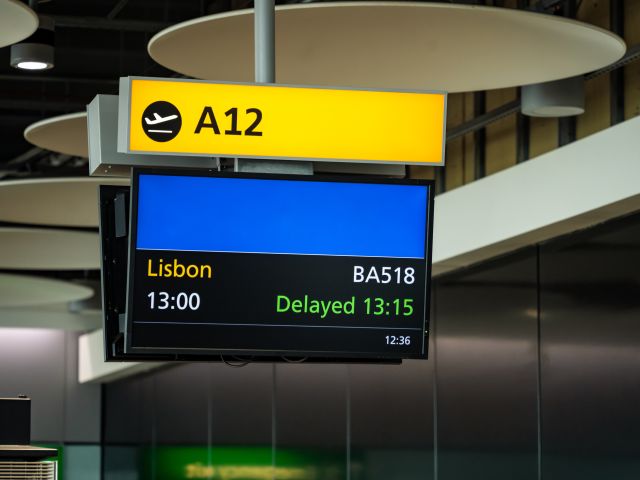
Delayed flight at airport
Flighty is particularly useful for predicting the knock-on effects of late arrivals. (Credit: Getty/Adam Webb)

A number of travel companies, like Expedia, also release annual reports with the latest trends and industry news. Available online for free, they often include a range of tried-and-tested air travel hacks, too.

Weekly travel news, experiences
insider tips, offers, and more.

How do I use it?

Flighty can be downloaded for free from the iPhone App Store (currently not available on Android devices). Once installed, simply enter your flight number into the search bar, marked by a magnifying glass in the bottom right corner, add its date/time and select your flight.

Man on his phone at the airport
The app’s interface is easy to navigate, with a clean design and intuitive layout. (Credit: Getty/Chalabala)

Your flight will then appear under ‘My Flights’ in the bottom left corner. Here you’ll find key details such as your departure gate, total air time, estimated distance, arrival terminal and baggage carousel, alongside regularly updated taxi, take-off and landing times.

Scroll a little further for other helpful insights, from weather conditions and airport operations to recorded inbound diversions and a full arrival forecast. This dashboard includes average delay times that continually refresh, as well as the flight’s performance over the last 60 days.

For plane spotters, the app also offers fun facts about each aircraft, including make, model, age and callsign. Features like this set Flighty apart from similar aviation apps; more than just a tracking tool, it’s a comprehensive flight companion.

Want to see more stories from Australian Traveller in your Google search results?

  1. Click here to set Australian Traveller as a preferred source.
  2. Tick the box next to "Australian Traveller". That's it.
Taylah Darnell
Taylah Darnell is Australian Traveller's Writer & Producer. She has been passionate about writing since she learnt to read, spending many hours either lost in the pages of books or attempting to write her own. This life-long love of words inspired her to study a Bachelor of Communication majoring in Creative Writing at the University of Technology Sydney, where she completed two editorial internships. She began her full-time career in publishing at Ocean Media before scoring her dream job with Australian Traveller. Now as Writer & Producer, Taylah passionately works across both digital platforms and print titles. When she's not wielding a red pen over magazine proofs, you can find Taylah among the aisles of a second-hand bookshop, following a good nature trail or cheering on her EPL team at 3am. While she's keen to check out places like Scotland and North America, her favourite place to explore will always be her homeland.
View profile and articles

This hidden region in Victoria is home to a peaceful lake trail

    Craig Tansley Craig Tansley

    Video credit: Tourism Australia

    From pink salt landscapes to oases fringed by forests of red gums, the lakes of this rural region are astounding. 

    You’re going to find peace and quiet when you take a road trip through the lakes of the Wimmera Mallee region. Whether it’s mirror-like pink salt lakes that look like an inland sea, or lakes fringed by forests of red gums that showcase Victoria’s arid beauty, there’s a lake for you out here somewhere.  

    1. Lake Tyrrell  

    Lake Tyrrell
    The colours of Lake Tyrrell blend into the sky. (Image: Visit Victoria/Anne Morely)

    Located in the dead heart of the Mallee, Victoria’s largest salt lake, Lake Tyrrell, is a landscape photographer’s dream – especially at sunrise and sunset when the pink salt flats look like a gigantic mirror. It’s easy to camp or park a caravan nearby, too, though the tiny town of Sea Lake is just south (with accommodation). In winter, shallow water covers the salt, creating surreal reflections of the sky.  

    2. Nhill Lake  

    There’s a permanent water source here, so there’s always plenty of water for water skiing, swimming and fishing (the trout and redfin fishing here is legendary). Located beside the pretty heritage town of Nhill with its main street of historic buildings, there’s options for eating and drinking right next door. There’s also a barbecue area with plenty of shady picnic spots and a boardwalk for walking around the lake.  

    3. Lake Bringalbert  

    Lake Bringalert
    Lake Bringalert is a great spot for aquatic adventures.

    Located south-west of the pretty Mallee town of Kaniva, Lake Bringalbert epitomises the best of ‘outback’ Victoria. It’s ringed by red gums and red mallee and feels completely hidden from the world – you’ll barely ever see another person. There’s basic camping on its foreshore and Kaniva offers more accommodation options. It’s the perfect lake for swimming, kayaking and skiing, and the stars at night come without even a hint of city glow.  

    4. Lake Hindmarsh 

    If you’re a bird fan, you’ll love Lake Hindmarsh. Located north of Dimboola, Victoria’s largest natural freshwater lake is like an inland sea full of pelicans, swans and numerous species of ducks – but it also teems with everything from spoonbills to parrots. Sunsets here will blow your mind – the lake is a mirror for the pinks and golds you’ll see on the horizon. There’s free camping spots along the foreshore if you’d like to really contemplate the magic of the lake.  

    5. Pink Lake 

    pink lake
    The Pink Lake is most vivid after rain. (Image: Visit Victoria/Anne Morely)

    Also known as Loch Lel, the summer months offer up some seriously vivid pink water colour at this lake north of Dimboola. The pink varies throughout the year, but is best after rain (hence why summer is the time to visit).

    pink lake
    Pink Lake, also known as Loch Lel, is located near Dimboola in the Grampians. (Image: Tourism Australia)

    There’s plenty of birds, including wedge-tailed eagles, but you’re as likely to spot big lace monitors, kangaroos and echidnas. Nearby, check out the uber-cute heritage town of Dimboola and its eclectic shops, and Little Desert National Park, full of walking trails through mallee heathland. 

    6. Lake Lascelles 

    Lake Lascelles
    You can camp at Lake Lascelles.

    On a hot summer’s day, there’s nowhere better for a cooling dip, kayak or boat ride. You can camp by the lake, or at powered caravan sites – or the pretty town of Hopetoun offers numerous accommodation options a short walk away. At night you’ll see the lights of Hopetoun reflect off the lake. Fish for yellow belly, redfin or catfish, or try water-skiing. There’s also a great walking trail around the lake, where there’s more birds than you can count.