The data is in. Here’s when to travel to avoid flight cancellations

hero media
Expedia has revealed the best time to travel to avoid flight cancellations in its 2025 Air Hacks report.

Nothing takes the shine off your holiday faster than a cancelled flight. Feelings of excitement and anticipation quickly evaporate when faced with the task of rearranging your plans last minute to cater to a new departure date or time.

But global travel company Expedia, in collaboration with Airlines Reporting Corporation and the OAG, has stepped in to help. In its recently released 2025 Air Hacks report, which covers a multitude of air travel hacks, it revealed the best times and days to travel to avoid cancellations altogether.
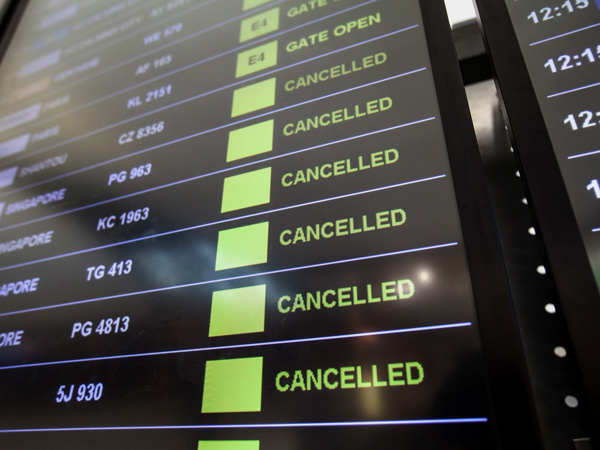
Airport display board showing cancelled flights
Expedia reveals your best bet at avoiding flight cancellations. (Image: Anya Berkut)

So, when should you travel to avoid flight cancellations?

The numbers are in and flight cancellations are at their lowest in February and March, with an average of just 2.5 per cent of flights cancelled. In comparison to January, which sees cancellation rates of 9.4 per cent, these two months are extremely reliable for air travel.

What’s more, the data indicates that flights departing in the late evening, specifically between 9 pm and 3 am, are the least likely to be cancelled. Flights booked between 3 pm and 9 pm have a 43 per cent higher chance of being called off compared to those leaving later in the night.
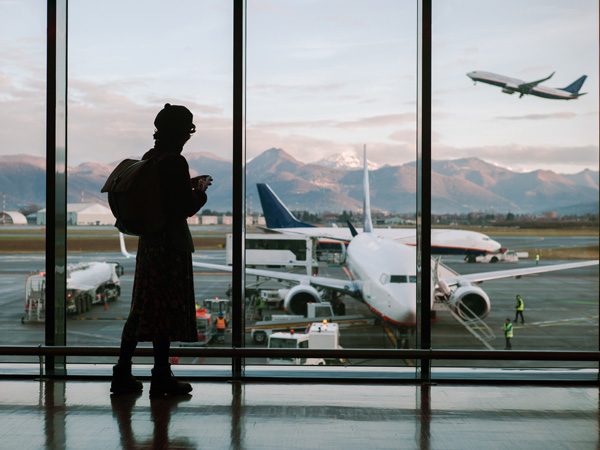
Stock image of traveller at an airport
February and March are the best months to book.

If you’re also concerned about costs, it’s good to factor in the time of year you’re looking at travelling. January is the cheapest month for economy class; if you’re looking for premium tickets, opt for October. Surprisingly, Saturday has been revealed as the cheapest day of the week to fly, with travellers saving up to 27 per cent compared to Monday departures.

Need tips, more detail or itinerary ideas tailored to you? Ask AT.

AI Prompt

What other hacks did the report reveal?

When it comes to pain points for airline travellers, cancelled flights aren’t the only problem to solve. Thankfully the data reveals several hacks to save you time and money and help you avoid other airport stresses while also hinting at hot travel destinations to consider visiting in 2025 before they peak in popularity.

Stock image of a plane window
Expedia’s report also hints at 2025’s hottest travel trends.

How to save money

Can the day you book make a difference to the cost? The findings say yes! Booking airfares on a Sunday can save you up to 20 per cent. Depart on a Thursday and you could be looking at up to 8 per cent in savings. That money could be better spent in destination.

Booking domestic flights at least six months in advance will save you up to 36 per cent. Securing your ticket two months in advance for an international flight can save you up to 12 per cent. In fact, the further in advance you book, the more expensive it can be. A three-month pre-departure window is ideal for securing the best price for overseas travel.

Stock image of a plane on the runway
Use the three-month pre-departure window when booking international flights.

Expedia also recommends price tracking on its app, which analyses data to show users the best time to book and notifies you when flight prices change. Bundling is another way to save – booking holiday packages (which often include flights, accommodation, car rentals and/or activities) can save you hundreds.

Weekly travel news, experiences
insider tips, offers, and more.

How to save time

Whether you’re going it solo, jetting off with friends or travelling with family, airports can be stress-inducing places. And while there’s not much you can do about customs lines and security checks, Expedia recommends travelling on a Sunday when airports are generally at their least busy. It will save you time as you won’t have crowds to contend with.

Stock images of a man and his child waiting at the airport
Sundays are when most airports are at their quietest.

Trends to look out for

The report names Sydney, Adelaide and Canberra as the hottest places to travel domestically this year. Combine Sydney’s incredible beaches with Adelaide’s foodie scene and Canberra’s never-ending list of things to do and you’ve got the ultimate Aussie itinerary.

When it comes to international destinations, Bali in Indonesia, Thailand’s capital of Bangkok and Los Angeles, USA, are the most popular places among Aussie jet setters. And thanks to new direct flight routes, Expedia predicts Istanbul (non-stop from Sydney with Turkish Airlines) and Fiji (non-stop from Cairns with Fiji Airways) will increase in popularity in the year ahead.
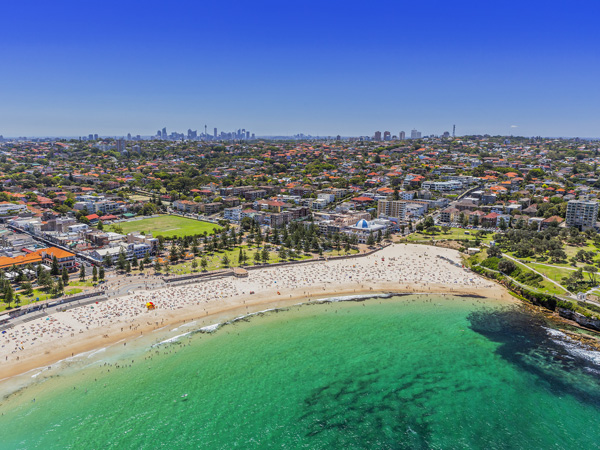
Coogee Beach in Sydney, NSW
Sydney is known for its beautiful beaches. (Image: Destination NSW)

Want to see more stories from Australian Traveller in your Google search results?

  1. Click here to set Australian Traveller as a preferred source.
  2. Tick the box next to "Australian Traveller". That's it.
Taylah Darnell
Taylah Darnell is Australian Traveller's Writer & Producer. She has been passionate about writing since she learnt to read, spending many hours either lost in the pages of books or attempting to write her own. This life-long love of words inspired her to study a Bachelor of Communication majoring in Creative Writing at the University of Technology Sydney, where she completed two editorial internships. She began her full-time career in publishing at Ocean Media before scoring her dream job with Australian Traveller. Now as Writer & Producer, Taylah passionately works across both digital platforms and print titles. When she's not wielding a red pen over magazine proofs, you can find Taylah among the aisles of a second-hand bookshop, following a good nature trail or cheering on her EPL team at 3am. While she's keen to check out places like Scotland and North America, her favourite place to explore will always be her homeland.
View profile and articles
hero media

Discovering East Arnhem: Australia’s most unique and rewarding corner

    Joanne Millares Joanne Millares

    Hard to reach and harder to forget, East Arnhem offers something rare in modern travel: the chance to slow down and experience Country on its own terms.

    The sky feels bigger in East Arnhem. It stretches wide and uninterrupted above rouged earth, stringybark woodland and beaches so empty they seem to belong to another era. The coastline curves for kilometres without a footprint and the horizon runs on forever.

    For comedian Lou Wall, the scale of the place was the first thing that hit them.

    “The sheer openness,” they say. “The sky feels infinite and the land stretches out endlessly. It’s pretty breathtaking visually.”

    But the physical landscape is only part of the story. The real reward isn’t only the scenery but the shift in perspective the journey brings. Visitors stop trying to tick off the destination and a real engagement takes over.

    “It made me never want to travel again,” Wall jokes. “In that I never wanted to leave East Arnhem.”

    Getting there

    Aerial shot of East Arnhem’s coastline as cars trace the curve of the shore.
    Sail along the remote coastline on an expedition cruise.

    Reaching East Arnhem is part of the adventure. Travellers typically fly into Gove Airport near Nhulunbuy via Darwin or Cairns, or arrive by expedition cruise along the remote coastline. Others make the journey overland along rutted dirt roads that cut through East Arnhem’s small pockets of monsoon forest.

    However you arrive, there’s a distinct feeling of crossing into somewhere different. Permits are required to visit the region, reflecting the fact that this is Yolŋu land where communities and traditional owners maintain deep cultural connections to Country.

    The extra planning becomes part of the experience. By the time visitors arrive, they understand they’re entering a place not just of respect, but also patience and curiosity.

    At one with nature

    East Arnhem’s  landscapes leave a strong imprint. For Wall, one place in particular still lingers in their memory: Ngalarrkpuy, also known as Lonely Beach, near Bawaka Homeland.

    “I genuinely felt like I was living inside an Instagram filter,” they say. “One of the most stunning feats of nature I’ve ever seen. The water was so clear I swear I could see even the fish smiling.”

    Across the region, natural experiences unfold at a slower pace. Fishing, beachcombing and island hopping reveal the rhythm of the coastline. The tides shape daily life and the vastness of the landscape makes even simple moments feel downright cinematic.

    For visitors with limited time, Wall says the Bawaka Homeland experience is unmissable.

    “I just left and I’m already planning when I can get back there.”

    The sense of remoteness is part of the appeal. In a country where many beaches are crowded and well-trodden, East Arnhem’s coastline still feels wonderfully wild.

    Immersing in local culture

    A visitor spends a meaningful moment alongside Yolŋu guides, gaining insight into their deep cultural knowledge and connection to the land.
    Experience authentic moments with the locals.

    Culture is woven through every experience in East Arnhem. Visitors have the opportunity to spend time on Country with Yolŋu guides and knowledge holders who share stories and traditions that have been passed down for generations.

    For Wall, one of the most powerful moments came during a conversation with a Yolŋu elder.

    “I got to meet a traditional elder, Mayalil, in Nhulunbuy,” they say. “Listening to her talk about her home made the land feel alive in ways I couldn’t have imagined.”

    The region is also home to internationally recognised Aboriginal art centres where artists shape works deeply connected to land and family knowledge.

    Music carries the same cultural energy. East Arnhem has produced globally recognised artists such as King Stingray and Baker Boy, blending Yolŋu language, storytelling and contemporary sound.

    Wall experienced this musical spirit first-hand.

    “A jam session around the fire was it for me,” they say. “Letting the deep joy and history of their music wash over me…  and meeting a few of the King Stingray musicians was unreal.”

    These moments of human connection often become the most memorable part of a visit.

    Spotting local wildlife

    An aerial view of the beach shows tiny figures lined up across the white sand, moving as if in a rhythmic dance.
    Step into a world where nature reigns.

    The wildlife of East Arnhem adds another layer to the experience. The region is home to an extraordinary range of animals, from waterbirds and turtles to dugongs, dolphins and the formidable saltwater crocodile.

    Wall admits they didn’t actually spot a croc during their visit.

    “Devastatingly, I didn’t see one,” they laugh. “But with all the stories from the locals I definitely gained a healthy respect for caution.”

    Some of the most memorable wildlife encounters can be surprisingly small., At Banubanu Beach Retreat on Bremer Island, Wall remembers walking along the beach one morning and watching it come alive.

    “As you walk through the sand you see hundreds of crabs scurrying into their holes as you pass by,” they say. “Such a small thing, but it was completely magical.”

    Moments like this reveal the quieter rhythms of East Arnhem, where even the smallest creatures seem to play a part in the landscape.

    Visitors who make the journey soon learn the most important travel tip of all.

    “Go in open-minded with a sense of curiosity,” Wall says. “Be prepared to ditch your plans. The land and the locals will guide you on an adventure no spreadsheets could ever compete with.”

    And most importantly, they add, don’t rush.

    “The land and people deserve your time and attention. You’ll be all the better for slowing down.”

    For more information on visiting East Arnhem, head to eastarnhem.com.au.