Wild landscapes and natural beauty turn these towns into outdoor playgrounds.
For those who like their holidays a little more action-packed, these towns deliver. Whether its coastal bushwalks, epic ski slopes or outback horizons you’re after, each one offers a direct line to the great outdoors. As part of Australian Traveller’s 100 best towns to visit, these destinations turn nature into the main event.
1. Port Douglas, Qld
Overall rank: 2/100
Kuku Yalanji Country

This once sleepy fishing village burst onto the scene in the 1980s when the luxurious Sheraton Grand Mirage Resort opened and has been a favourite with holidaymakers ever since. Neighboured by the ultimate duo – the hyper-green and ancient Daintree Rainforest to the north and the inimitable Great Barrier Reef fringing its coast – Port Douglas effortlessly lures nature lovers and satisfies travellers who appreciate the finer things in life. Days tick by at an unhurried pace in this tropical town: brunch in the sunshine, days swimming among coral, afternoons strolling golden sands and evening cocktails under palm trees.
Don’t miss: Experience the Daintree’s Mossman Gorge with a local Kuku Yalanji guide on a Walkabout Cultural Adventures tour, which Catriona Rowntree claims is “one of the best cultural adventures I’ve taken my family on."
2. St Helens, Tas
Overall rank: 13/100
Palawa/Tasmanian Aboriginal Country
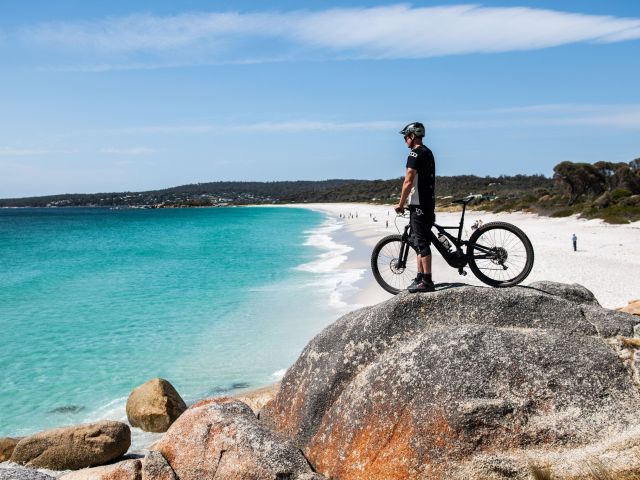
St Helens is the largest town on the north-east coast of Tassie but has a delightful small-town feel. Life here is simple, lived mostly outdoors and on the sea, which is teeming with bream, crayfish, marlin and tuna. St Helens is regularly pinned on the map as a gateway to its dramatic neighbour, Larapuna/Bay of Fires – but it has emerged in recent years as a premier destination itself, for mountain biking. With a 66-kilometre network of world-class trails, panellist Adrian Williams agrees that the cycling within St Helens’ “unspoilt landscape" is worth checking out.
Don’t miss: The 42-kilometre Bay of Fires Trail starts in sub-alpine terrain, among myrtle trees and ash trees, climbing through monolith granite boulders and across ridgelines before descending to the pure white sands of Larapuna/Bay of Fires.
3. Thredbo, NSW
Overall rank: 28/100
Ngarigo Country

The brainchild of Czech skier Tony Sponar, Thredbo was built in the 1950s for winter alpine adventures and is home to the country’s longest runs. Panellist Paul Hamra considers the Snowy Mountains village a “sophisticated Australian ski experience with some of the best lodges". While Irene Jones needed only three words: “snow and mountain magic". Indeed, the opportunity to ski-in/ski-out from a cosy mountain inn and wake to the sight of falling snow is the stuff of winter dreams. And when the blanket of white melts, a green landscape dotted with Aussie natives and wildflowers is revealed – and can be explored on some 40 kilometres of hiking and biking trails.
Don’t miss: “Thredbo is brilliant all year round, but I love its warmer months. Yoga at sunrise on a mountain, horse riding in wide open spaces and dodging wildlife on a tight bush trail. I’ve never had a bad time here," says panellist Catriona Rowntree.
4. Maleny, Qld
Need tips, more detail or itinerary ideas tailored to you? Ask AT.
AI Prompt
Overall rank: 41/100
Jinibara Country

Swap ocean blues for rainforest greens with a nature-filled escape to this Sunshine Coast hinterland village. A patchwork of dairy farms interspersed with mountains, lakes and subtropical rainforest, Maleny offers a change of scenery from this region’s famous coastal towns. Lace up your hiking boots and chase waterfalls, soak up views overlooking the Glass House Mountains or spend time wandering Maleny itself, which Katie Carlin describes as “the cutest hinterland town."
Don’t miss: Katie Carlin suggests sniffing out Maleny’s culinary delights, including Maleny Cheese Factory and Maleny Chocolate Co. A stay at Spicers Tamarind Retreat, which is home to Tamarind Cooking School, rounds out the epicurean experience.
5. Pemberton, WA
Overall rank: 69/100
Bibbulmun Noongar Country

Pemberton is steeped in history, established in 1912 as a timber town that supplied sleepers for the Trans-Australian Railway between Western Australia and South Australia. Those native karri forests, which Irene Jones describes as “magical", are an emblem of this south-west region, with some trees towering up to 90 metres in height. Walk among these ancient giants, alongside misty rivers, seasonal wildflowers and disused railway lines reclaimed by nature. They even butt right up against the remarkable Yeagarup Dunes.

Don’t miss: Book a luxe stay at Ampersand Estates, a boutique cool-climate winery and artisanal distillery on the Donnelly River, inclusive of a gourmet breakfast hamper and wine tasting.
6. Hervey Bay, Qld
Overall rank: 70/100
Butchulla Country

Sitting on 13 kilometres of calm beachfront on the Fraser Coast, Hervey Bay has some impressive neighbours: World Heritage-listed K’gari and the Great Barrier Reef, both accessible within a day’s trip from town (the latter a 40-minute scenic flight).
Its main claim to fame, however, is the title of the world’s first Whale Heritage Area. These gentle giants can linger for up to 10 days here on their journey back to Antarctica, making it a prime place to observe them as they play, rest and nurse their young.
Don’t miss: Panellist Anna Polyviou also recommends keeping your eye out for turtles. The calm waters and coral reefs of the surrounding Great Sandy Strait Marine Park are home to loggerhead, green, hawksbill and flatback turtles. Try to spot them – and dolphins, dugongs and reef sharks – on a glass-bottomed boat with Hervey Bay Eco Marine Tours.
7. Halls Gap, Vic
Overall rank: 71/100
Djab Wurrung & Jardwadjali Country

The jagged peaks of the Grampians/Gariwerd have been shaped over millennia. It’s a landscape that is home to some of Victoria’s largest waterfalls, deep rock pools and the highest number of Aboriginal rock art sites and shelters in southern Australia. In spring, swathes of wildflowers cover the rugged landscape. It’s a wildly beautiful place – “visually majestic," according to panellist Paul Hamra – and, at its heart, the quaint town of Halls Gap/Budja Budja is where you’ll find small stores, a brewery and winery cellar doors nearby.
Don’t miss: From town, you can embark on many walking tracks, including to the naturally formed Venus Baths, the 720-metre-high Pinnacle, Clematis Falls and more.
Weekly travel news, experiences
insider tips, offers, and more.
8. Nelson Bay, NSW
Overall rank: 84/100
Worimi Country

At the heart of Port Stephens, Nelson Bay is a buzzy seaside town with a yacht-packed harbour, cruisers ferrying people in and out for the epic whale and dolphin-watching, and local restaurants serving trawler-fresh seafood. Gentle beaches including Little Beach and Shoal Bay lure in families, while nearby Stockton Beach is a playground for sand dune adventures. With a bounty of nature-based fun, as panellist Brad Farmer says, Nelson Bay is “fantastic for holidays."
Don’t miss: Late last year, Marina Resort upped the ante in the local boutique accommodation offering, with 48 luxe rooms and a chic pool bar and private cabanas.
9. Strahan, Tas
Overall rank: 85/100
Palawa/Tasmanian Aboriginal Country
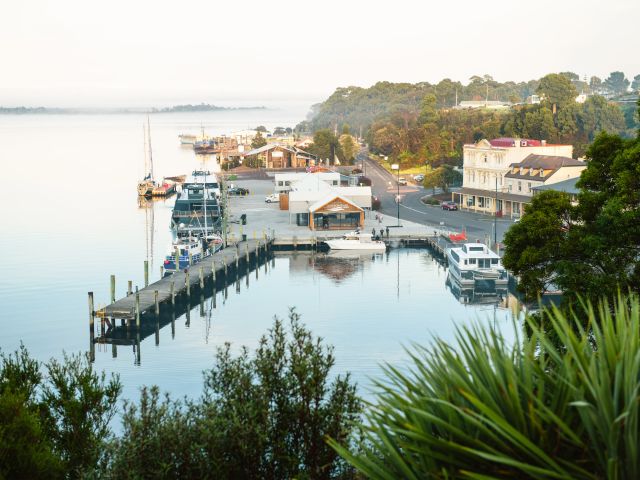
Western Tasmania is a place of craggy coastlines, ancient rainforests and rugged mountains – so majestic that vast swathes of it have been given World Heritage status. Strahan is your base for exploring this “remote west-coast wilderness," as Irene Jones describes it. The harbourside village has a dark history, which is revealed at Sarah Island, Tasmania’s first and arguably most severe penal settlement. In contrast, its natural beauty shines, with Tassie devils, platypus and little penguins calling the Tasmanian Wilderness World Heritage Area home. “If you don’t think Strahan is Australia’s prettiest town, you have never been," says panellist Quentin Long. “In any other country it would be an icon."
Don’t miss: A heritage train journey departing Strahan on the West Coast Wilderness Railway.
10. Batchelor, NT
Overall rank: 91/100
Kungarakan & Warrai Country
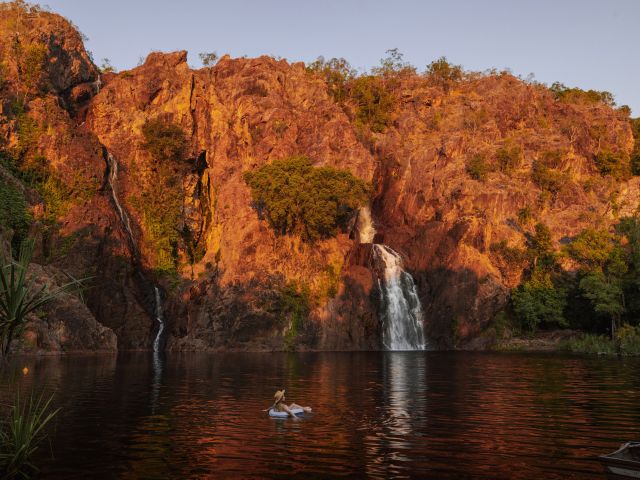
While first established in the early 20th century, the town of Batchelor grew slowly until the 1950s, when uranium was found at nearby Rum Jungle. Today, the small outback town of around 500 is best known as the gateway to Litchfield National Park – home to waterfalls, rock pools, a sandstone ‘lost city’ and more. In the characterful town, you’ll find Litchfield Outback Resort, a local museum, tavern and an eccentric butterfly farm complete with farm animals and a restaurant.
Don’t miss: The reason you come to Batchelor is for Litchfield National Park, particularly the “swimming at Florence and Wangi Falls," says Ben Hall.
This article is part of Australian Traveller’s 100 best Aussie towns to visit, as chosen by a panel of industry experts, well-known Aussies and travel insiders. See our full list of 100 best Aussie towns here and visit the special 100 best Aussie towns hub here.
Want to see more stories from Australian Traveller in your Google search results?
- Click here to set Australian Traveller as a preferred source.
- Tick the box next to "Australian Traveller". That's it.