9 best places to see the Milky Way around Australia

hero media
Few things in this universe are more breathtaking than the Milky Way, and there are few better countries to gaze at it from than Australia.

There is nothing quite like leaving the city lights behind and swapping them for the twinkling lights of the Milky Way. The most wonderous expression I’ve ever seen on a face was on that of my boyfriend – a born and bred Rio local – who had never seen the stars outside of human light pollution before our road trip to Mungo National Park. I had warned him he would be blown away by the night sky, and he simply didn’t believe me. Until I made him get out of the tent at 1 am and take a look up.

The Milky Way in particular forms a fascinating and beautiful blanket splashed across the dark sky around Australia. For Astronomers, this spiral galaxy has provided a gives us a closer view of galaxy structure and content than any others, simply because we’re a part of it. For many Indigenous people, the Milky Way is associated with a river in the sky where the ancestor spirits live.

Spend a night soaking in its wonder at these places around Australia.

1. East MacDonnell Ranges, NT

The best views of the night sky come when you leave all man-made lights behind. That’s why heading into Central Australia is always a good idea for gazing at the Milky Way. Get a close-up look by heading to Earth Sanctuary , just outside Alice Springs. This award-winning, carbon-neutral outback venue overlooks the dramatic landscape of the East MacDonnell Ranges and offers Astro tours. With an experienced guide,  look through telescopes to spot planets, constellations and unearthly phenomena like dark nebulae.
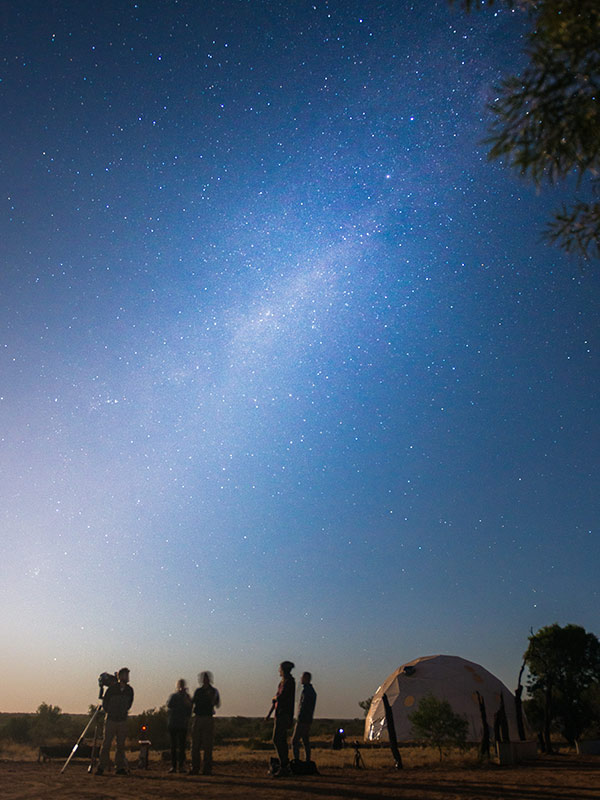
Earth Sanctuary, East MacDonnell Ranges, Northern territory
See the sky close-up at Earth Sanctuary. (Image: Tourism NT/Matt Glastonbury)

2. Lincoln National Park, SA

Who says you have to be in the outback to see a clear night sky? Although remote and free of light pollution, Lincoln National Park is a place of stunning beaches and bays on the south-eastern tip of the Eyre Peninsula. Plenty of secluded campsites allow you to spend a night (or more) immersed in nature. Spend your days swimming and surfing, then lay out under the Milky Way, star clusters and nebula. All clear and crisp once the sun drops.
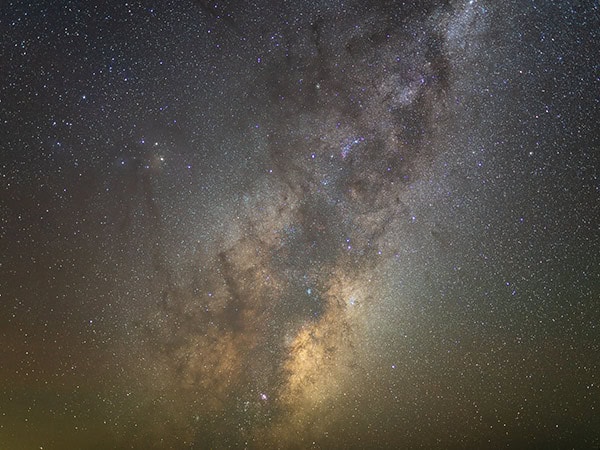
milky way above the Eyre Peninsula south australia
See the clearest of night skies around the Eyre Peninsula. (Tour South)

3. Warrumbungle National Park, NSW

Warrumbungle National Park owns the title of Australia’s first Dark Sky Park, thanks to its remote location and perfect climate of high altitude and low humidity. It’s impossible to miss the Milky Way even with bare eyes, but get a really good look by booking a ticket with Coonabarabran Star Gazing to see Siding Spring Observatory at the edge of the park. It’s here you’ll find the largest optical telescopes in Australia. Make the most of it by booking a camping spot, most of which include picnic tables, barbecue facilities, showers and toilets.
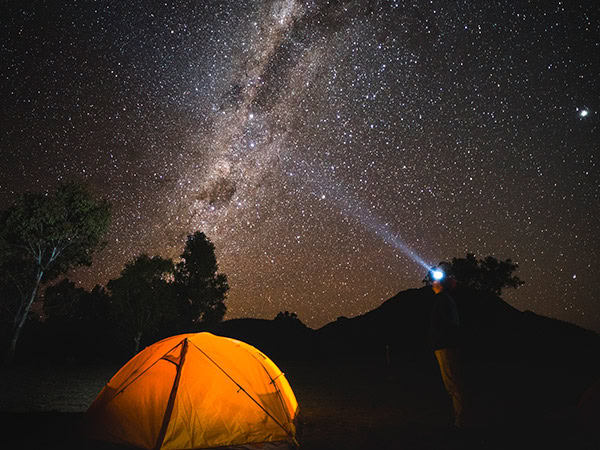
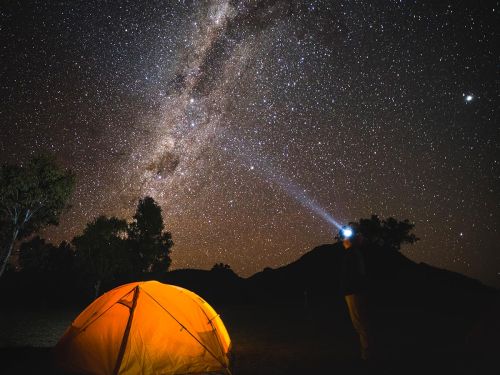
camping under the milky way in Warrumbungle National Park, NSW
Sleep in Australia’s first Dark Sky Park. (Image: Destination NSW)

4. Charleville, Qld

Head into Queensland’s outback to leave the big city lights behind, but also to gain a different insight into the Milky Way and surrounding stars. Charleville’s Cosmos Centre has a range of star-gazing tours, with the Universal Dreaming tour providing a particularly standout experience. Discover some of the ways many different ancient cultures connected with the night sky as you sit around a fire pit (you’ll even get to toast marshmallows while you listen). You’ll need to book ahead for this as it’s only upon request.
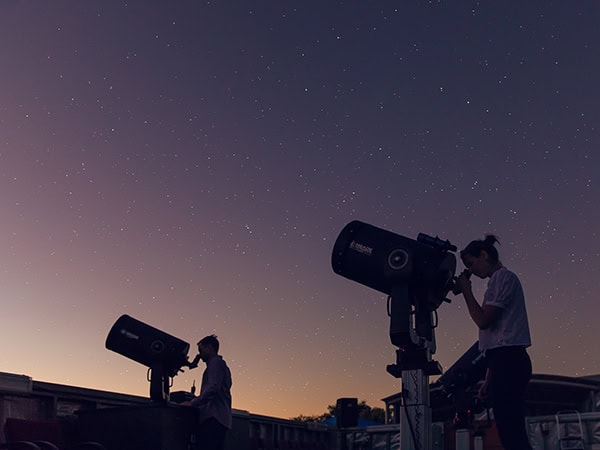
Charleville's Cosmos Centre
Book a star-gazing tour at Charleville’s Cosmos Centre. (Image: TEQ)

5. Kati Thanda-Lake Eyre National Park, SA

Typically, you might expect to head up as high as possible to catch a clear glimpse of the night sky. But, in fact, being Australia’s lowest point – up to 15 metres below sea level – makes Kati Thanda-Lake Eyre National Park one of the darkest areas in Australia. This means that star-gazing is at an optimum, but also that the Milky Way can be found reflecting on the water’s surface whenever the elusive lake is full. Stay the night in one of several classic outback hotels, or bring the tent and set up in Halligan Bay Point Campground for bush camping, or Muloorina Station to enjoy toilets and some facilities.
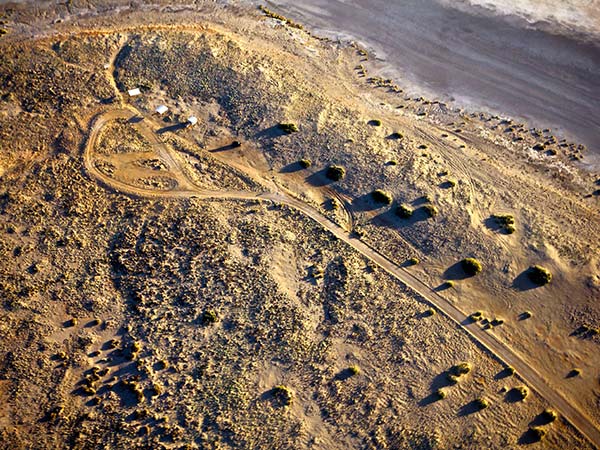
Aerial view over Kati Thanda-Lake Eyre National Park
The only thing better than gazing down at Kati Thanda-Lake Eyre National Park, is looking up from it at night. (Image: Greg Snell)

6. The Dish, NSW

If you somehow missed the classic Aussie movie The Dish back in 2000, I strongly recommend you watch it before you arrive. It’s a fun way to learn the true story of how this CSIRO Parkes Radio Telescope played an important part in communicating with the Apollo 11 mission. Located in Goobang National Park, part of its charm is due to seemingly being in the middle of nowhere – a great sign for stargazing and spotting the Milky Way. You’ll find free campgrounds here, and it’s recommended to visit in autumn when the night sky is typically clearest.
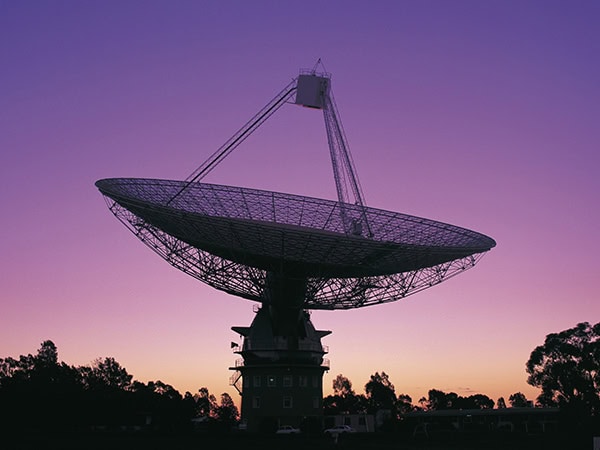
CSIRO Parkes Radio Telescope at dusk
See the famous Dish up close, then stay for the stars. (Image: Destination NSW)

7. Uluṟu-Kata Tjuṯa National Park, NT

Few things could be more iconically Australian than seeing Uluru at night, framed by the Milky Way. In fact, settling into one of several vantage points along walking trails in the park from sunset means you’ll watch the rock and sky transform their colours through purple and orange hues as the sun drops to reveal all the starry twinkles of the universe. With little to no light pollution, the stars come out in full force. Every night is different – you may even see the rings of Saturn or a shooting star. There are a few tour options to help you see even better, including Uluru Astro Tour .
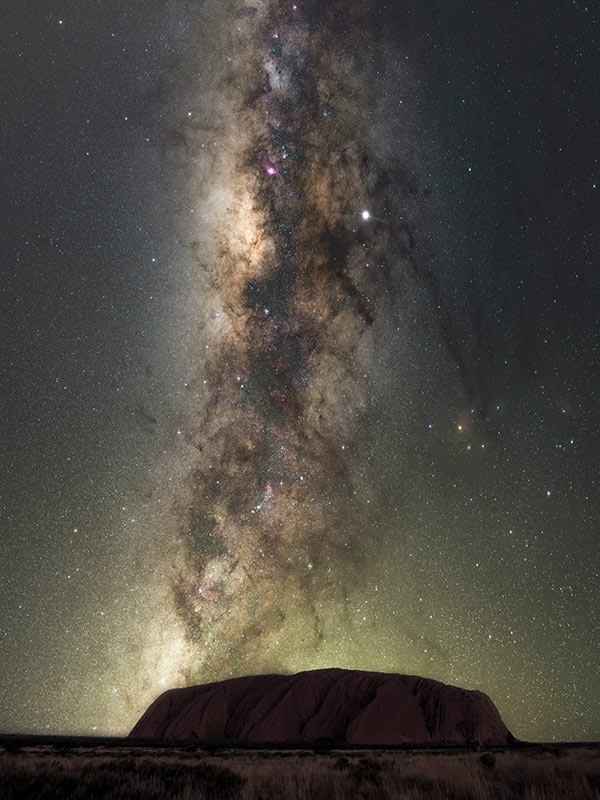
uluru under the milky way
See the stars in full force. (Image: Tourism NT/New Asia Pacific Travel)

8. Gravity Discovery Centre Observatory, WA

It’s pretty safe to say that all observatories in Australia are good places to start if you want to catch the Milky Way up close. Gravity Discovery Centre Observatory in Gingin allows members of the public to use its state-of-the-art technology every Friday and Saturday night. There are a few guided tour options, including lecture-style tours about fascinating parts of the universe and Aboriginal Astronomy. The latter partners with Indigenous Tours to showcase the connection between cultural storytelling and Astronomy.
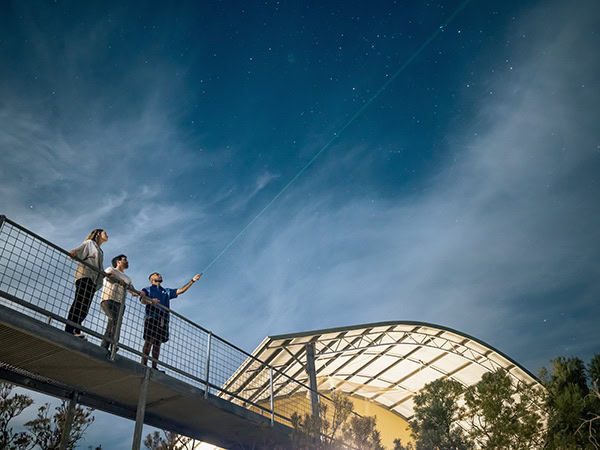
Gravity Discovery Centre Observatory, WA
Use state-of-the-art technology at Gravity Discovery Centre Observatory. (Image: Tourism WA)

9. Karlu Karlu Reserve, NT

One of the outback’s more unique sights is the stacked, round boulders known as Karlu Karlu / The Devil’s Marbles. They cut a pretty impressive figure at any time of day, but silhouetted against a blazing Milky Way is particularly spectacular. This remote red desert has plenty of campsites so you can spend all night staring skywards. If you haven’t quite had your fill of the universe, you can also drive an extra hour to Wycliffe, known as the UFO capital of Australia. Cue X-Files music.
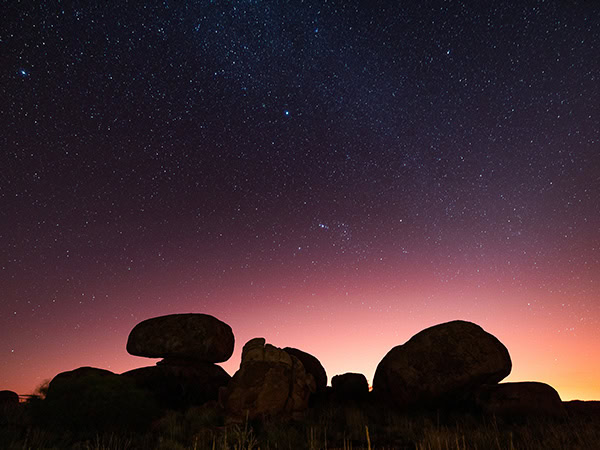
Devils Marbles / karlu karlu at night
See Karlu Karlu against the stars. (Image: Tourism NT/Sean Scott)
Can’t get enough of the night skies? Discover the best spots around Australia for stargazing.
Kassia Byrnes
Kassia Byrnes is the Native Content Editor for Australian Traveller and International Traveller. She's come a long way since writing in her diary about family trips to Grandma's. After graduating a BA of Communication from University of Technology Sydney, she has been writing about her travels (and more) professionally for over 10 years for titles like AWOL, News.com.au, Pedestrian.TV, Body + Soul and Punkee. She's addicted to travel but has a terrible sense of direction, so you can usually find her getting lost somewhere new around the world. Luckily, she loves to explore and have new adventures – whether that’s exploring the backstreets, bungee jumping off a bridge or hiking for days. You can follow her adventures on Instagram @probably_kassia.
See all articles

This luxe trawler tour is redefining Victoria’s seafood experience

    Chloe CannBy Chloe Cann
    Victoria’s ‘mussel capital’ is the source of exceptional shellfish used by top chefs far and wide. Step aboard a beautifully refurbished trawler to see how these plump and juicy bivalves are sustainably cultivated.

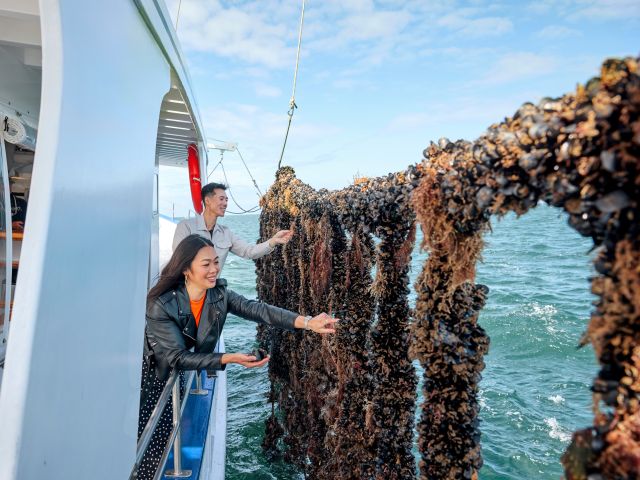
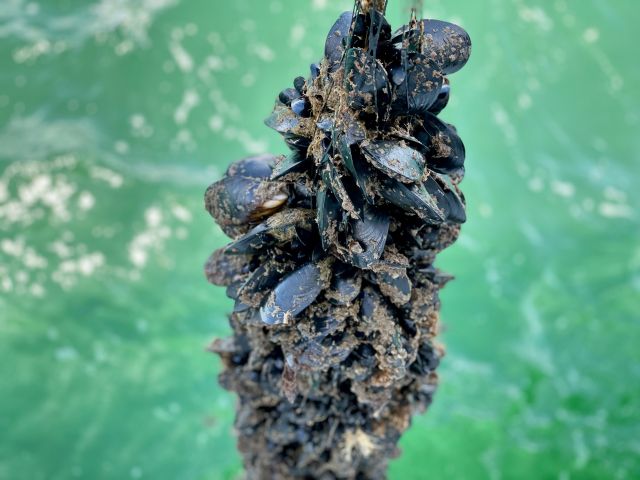
    A curtain is slowly winched from the placid, teal waters just off Portarlington , like a floating garland beside our boat. The ropes heave with blue mussels, the star attraction of our tour. But as we reach to pluck our own, it’s quickly clear they’re not alone; a mass of weird and wonderful creatures has colonised the ropes, turning them into a living tapestry. ‘Fairy’ oysters, jelly-like sea squirts, and tiny, wriggling skeleton shrimp all inhabit this underwater ecosystem.

    We prize our bivalve bounty from the ropes, and minutes later the mussels arrive split on a platter. The plump orange morsels are served raw, ready to be spritzed with wedges of lemon and a lick of chilli as we gaze out over the bay. They’re briny, tender and faintly sweet. “This wasn’t originally part of the tour,” explains Connie Trathen, who doubles as the boat’s cook, deckhand and guide. “But a chef [who came onboard] wanted to taste the mussels raw first, and it’s now become one of the key features.”

    A humble trawler turned Hamptons-style dreamboat

    inspecting bivalve bounty from the ropes
    Inspecting the bounty. (Image: Visit Victoria/Hannyn Shiggins)

    It’s a crisp, calm winter’s day, and the sun is pouring down upon Valerie, a restored Huon pine workhorse that was first launched in January 1980. In a previous life she trawled the turbulent Bass Strait. These days she takes jaunts into Port Phillip Bay under the helm of Lance Wiffen, a fourth-generation Bellarine farmer, and the owner of Portarlington Mussel Tours . While Lance has been involved in the fishing industry for 30-plus years, the company’s tour boat only debuted in 2023.

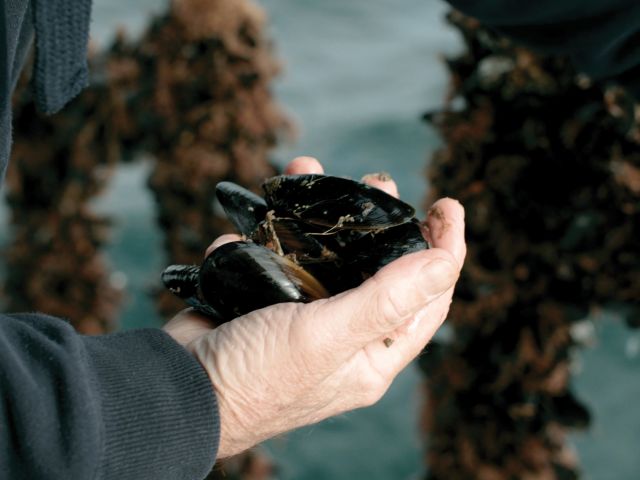
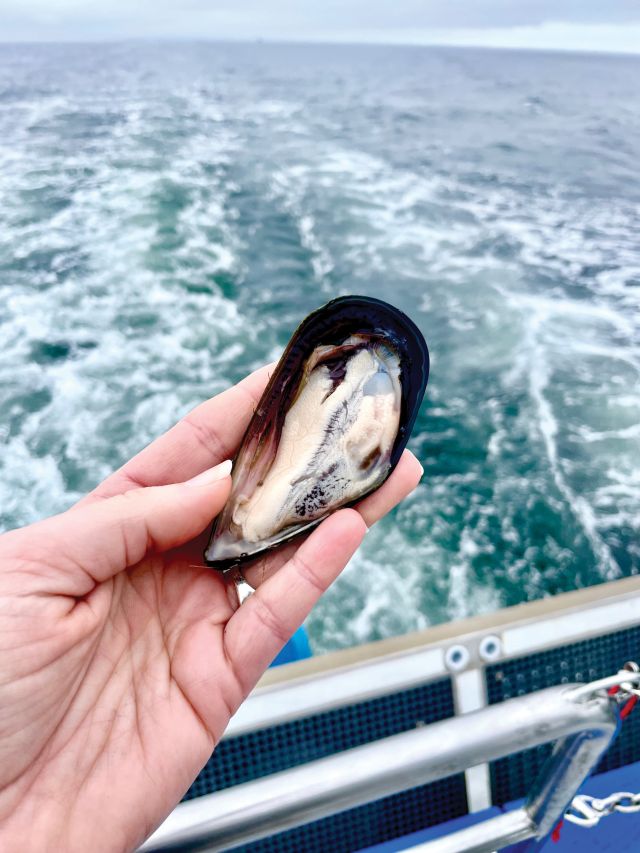
    holding Portarlington mussels
    See how these plump and juicy bivalves are sustainably cultivated.

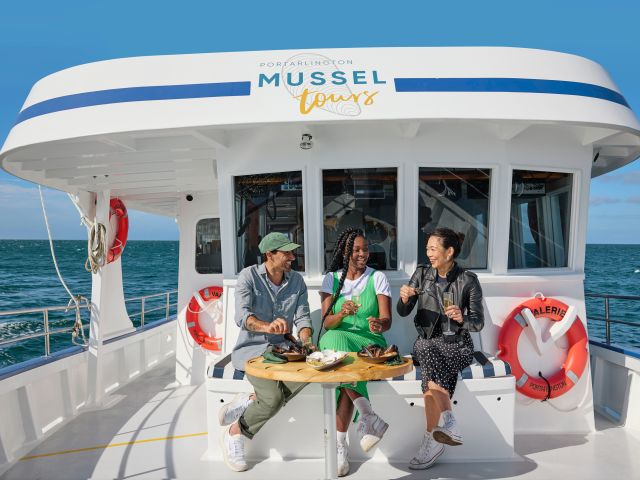
    It took more than three years to transform the former shark trawler into a dreamy, Hamptons-esque vessel, with little expense spared. Think muted green suede banquettes, white-washed walls, Breton-striped bench cushions, hardwood tables, bouquets of homegrown dahlias, and woollen blankets sourced from Waverley Mills, Australia’s oldest working textile mill. It’s intimate, too, welcoming 12 guests at most. And yet there’s nothing pretentious about the experience – just warm, down-to-earth Aussie hospitality.

    As we cruise out, we crack open a bottle of local bubbles and nibble on the most beautifully curated cheese platter, adorned with seashells and grey saltbush picked from the water’s edge that very morning. Australasian gannets soar overhead, and I’m told it’s not uncommon for guests to spot the odd seal, pod of dolphins, or even the occasional little penguin.

    The sustainable secret behind Victoria’s best mussels

    blue mussels off Portarlington
    Blue mussels sourced just off Portarlington.

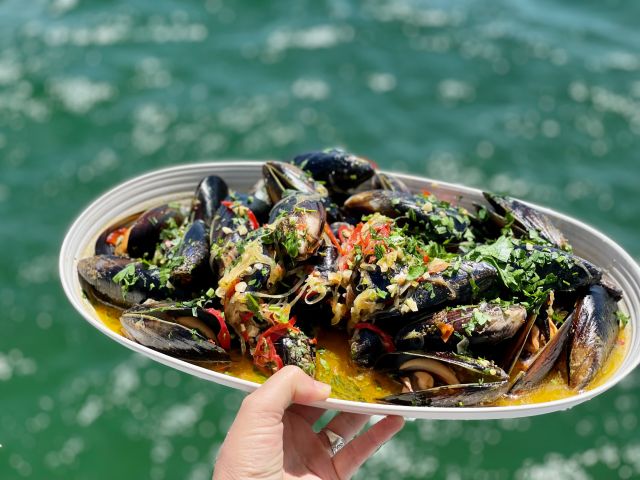
    Connie and Lance both extol the virtues of mussels. They’re delicious. A lean source of protein and packed with omega-3 fatty acids, vitamin B12, iron, selenium, and zinc. They’re cooked in a flash (Connie steams our fresh harvest with cider and onion jam). And they’re also widely regarded as one of the most sustainable foods in the world.

    Portarlington mussels with lemon and chilli
    Mussels served with lemon and chilli.

    “Aquaculture is [often] seen as destructive, so a lot of our guests are really surprised about how environmentally friendly and sustainable our industry is,” Lance says. “[Our mussels] would filter 1.4 billion litres of water a day,” he adds, explaining how mussels remove excess nitrogen and phosphorus from the water. “And through biomineralisation, we lock carbon into mussel shells.”

    a hand holding a Portarlington mussel
    Mussels are a sustainable food.

    Despite their glowing list of accolades, these molluscs have long been seen as the oysters’ poorer cousins. “It was a really slow start,” explains Lance, who says that in the early days of his career, “you could not sell mussels in Victoria”.

    But word has slowly caught on. Chefs as globally acclaimed as Attica’s Ben Shewry and even René Redzepi of Noma, Denmark, have travelled to these very waters just to try the shellfish at the source, sharing only the highest praise, and using Lance’s mussels in their restaurants.

    guests sampling Portarlington mussels onboard
    Sampling the goods onboard. (Image: Visit Victoria/Hannyn Shiggins)

    According to Lance there’s one obvious reason why the cool depths of Portarlington outshine other locations for mussel farming. “The water quality is second to none,” he says, noting how other regions are frequently rocked by harvest closures due to poor water quality. “We grow, without a doubt, some of the best shellfish in the world.” And with Lance’s bold claims backed up by some of the industry’s greatest names, perhaps it won’t be much longer until more Aussies uncover the appeal of Portarlington’s mussels.