hero media

2 Aussie places make New York Times’ 52 Places to Go in 2026 list

Australia has landed two spots on the New York Times’ influential travel list for 2026.

At the start of every new year, prestigious American newspaper the New York Times shares its list of 52 Places to Go that are worth travelling to that year.

When you think about the Earth’s vastness and all the magnificent places that call it home, making it into the top 52 is no small feat. And in 2026, Australia has managed to secure not one, but two spots.

Ranked at number 14, the Top End, Australia, appears well ahead of perennial favourite Melbourne, which came in at number 49. This reflects a growing global appetite for destinations where culture, landscape and local ownership intersect, rather than familiar urban icons alone.

14. The Top End
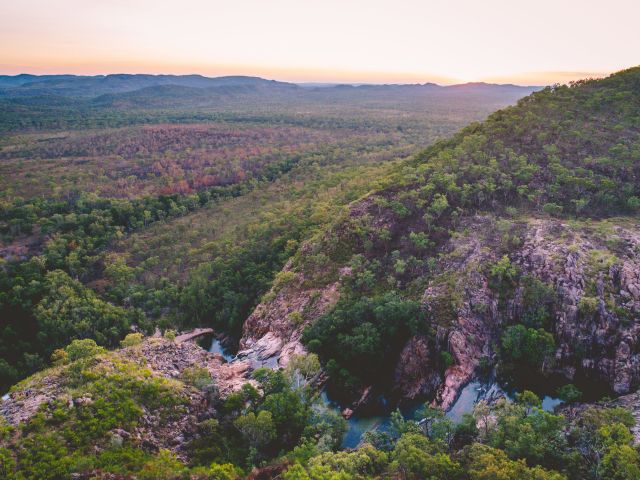
Gunlom Falls in the Northern Territory
The reopening of Gunlom Falls was the catalyst for the Top End’s inclusion. (Image: Lords Safaris)

The New York Times highlights the reopening of Gunlom Falls in Kakadu National Park as the catalyst for the Top End’s inclusion, describing it as a stunning waterfall set within an area of profound Aboriginal cultural significance.

Gunlom Falls, known for its dramatic cascade and elevated infinity pool, had been closed for six years following a legal dispute. In a landmark win last year, the Jawoyn people, the Traditional Owners of the land, successfully challenged an Australian parks agency, restoring public access to the site.

Crucially, the new agreement goes beyond reopening gates. Under the revised lease, the Jawoyn people now receive 50 per cent of the falls’ commercial revenue, a significant increase from the 14 per cent previously allocated. The New York Times frames this outcome as part of a broader shift toward more equitable tourism models in Australia’s Top End.
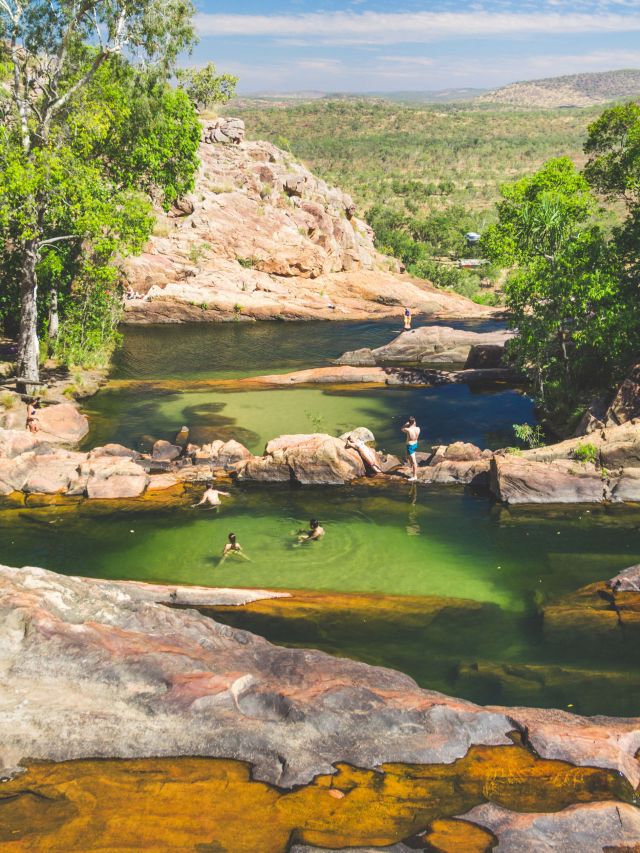
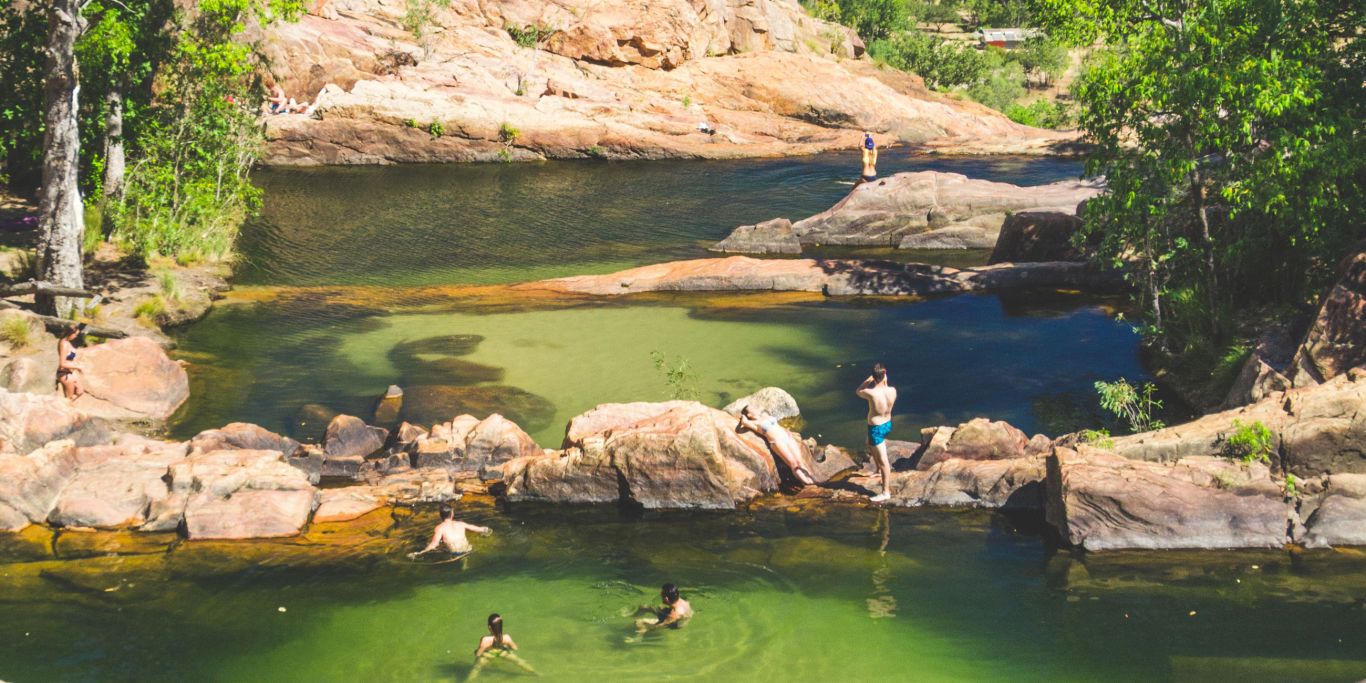
People swimming at Gunlom Falls in the Northern Territory
Gunlom Falls has profound Aboriginal cultural significance. (Image: Lords Safaris)

Kakadu National Park, which anchors the region, is also recognised for its extraordinary ecological and cultural richness. The park spans multiple ecosystems, from wetlands to escarpments, and protects around 5000 Aboriginal rock art sites, making it one of the most significant cultural landscapes in the world.

Darwin, traditionally the gateway to the Top End, also features prominently in the listing. The New York Times notes the upcoming opening of the Larrakia Cultural Centre overlooking Darwin Harbour, which is expected to welcome visitors from September. The centre will showcase the history and culture of the Larrakia people through art and archaeological exhibitions, music performances and hands-on craft workshops.

The inclusion positions the Top End as a destination defined not just by natural beauty, but by living culture, Indigenous leadership and meaningful visitor experiences.

Need tips, more detail or itinerary ideas tailored to you? Ask AT.

AI Prompt

49. Melbourne
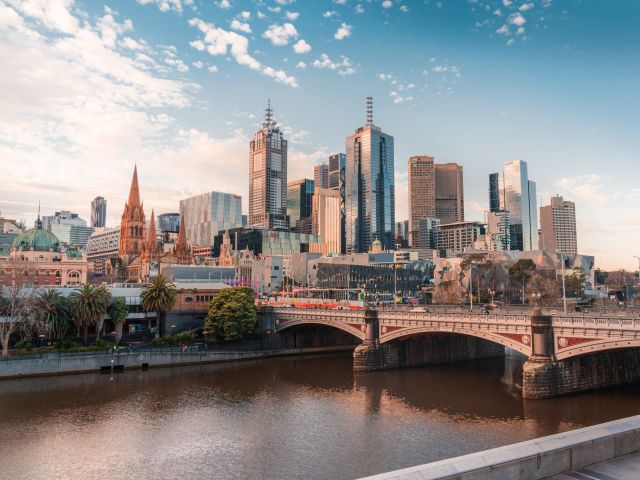
Melbourne skyline
Melbourne is a perennial favourite. (Image: Visit Victoria)

Melbourne’s appearance on the list comes as little surprise, with the city a regular fixture in global travel rankings. It also took out Best City to Visit in Australian Traveller’s Readers’ Choice Awards, last year. This year, however, The New York Times anchors its pick to a specific moment: a major Formula 1 milestone.

In 2026, Melbourne will host the debut of a Cadillac Formula 1 team at the Australian Grand Prix, marking the first new F1 squad in a decade. The event, scheduled for 5-8 March, is tipped to draw motorsport fans from around the world and elevate the race’s global profile.

Beyond the circuit, The New York Times leans into Melbourne’s established appeal as a culinary and cultural capital (it won our Readers’ Choice Award for Best Foodie Destination and Best Cultural or Arts Experience, too). It calls out the city’s cafe-lined laneways, the ever-busy Queen Victoria Market and the riverside Royal Botanic Gardens as essential experiences for visitors.

For car enthusiasts keen to stay off the track, auto-focused attractions such as the Fox Classic Car Collection at the historic Queen’s Warehouse and the Porsche & Coffee street gathering in South Melbourne on 1 March get a mention.

The Blowhole Lookout – Poombeeyt Koontapool on the Great Ocean Road
Poombeeyt Koontapool on the Great Ocean Road is worth a stop. (Image: Parks Victoria)

The listing also encourages travellers to venture beyond the city, suggesting a drive along the Great Ocean Road to The Blowhole Lookout – Poombeeyt Koontapool, a newly opened coastal lookout above a dramatic blowhole a few hours southwest of Melbourne.

While Melbourne may be a familiar name on international lists, its inclusion alongside the Top End underscores the breadth of Australian travel experiences capturing global attention in 2026, from ancient landscapes and Indigenous-led tourism to high-speed racing and world-class food culture.

Emily Murphy
Emily Murphy is Australian Traveller's Email & Social Editor, and in her time at the company she has been instrumental in shaping its social media and email presence, and crafting compelling narratives that inspire others to explore Australia's vast landscapes. Her previous role was a journalist at Prime Creative Media and before that she was freelancing in publishing, content creation and digital marketing. When she's not creating scroll-stopping travel content, Em is a devoted 'bun mum' and enjoys spending her spare time by the sea, reading, binge-watching a good TV show and exploring Sydney's vibrant dining scene. Next on her Aussie travel wish list? Tasmania and The Kimberley.
View profile and articles
hero media

3 wild corners of Australia that let you reconnect with nature (in comfort)

    Kassia Byrnes Kassia Byrnes
    The country’s rawest places offer some of its most transformative, restorative experiences.

    Australia offers sublime opportunities to disappear into the ancient, untouched wilderness, worlds away from modern stress. Wild Bush Luxury offers a collection of experiences that are a portal into the continent’s wildest, most undiscovered landscapes, from wide floodplains to vast savannas, where the only distractions are birdsong, frog calls, curious wallabies and the daily drama of sunset. With a focus on conservation and Indigenous knowledge, these all-inclusive experiences allow guests to slow down and quiet their minds for intimate encounters with the natural world.

    1. Bamurru Plains

    safari tent at Bamurru Plains wild bush luxury
    Let nature take front row.

    In the remote Top End, just outside Kakadu National Park on the fringes of the spectacular Mary River floodplains, you’ll find Bamurru Plains, a peerless Australian safari camp. After a quick air transfer from Darwin to the camp’s private airstrip, you’ll be whisked away via 4WD to a vivid natural wonderland of shimmering floodplains, red earth, herds of peacefully grazing water buffalo and 236 bird species (Bamurru means magpie goose to the Gagadju people).

    Accommodations consist of 10 mesh-walled bungalows and two luxe stilted retreats where guests enjoy panoramic, up-close views that invite them into their rightful place in the landscape (and binoculars to see it even better). Being an off-grid experience designed to help guests disconnect, the only distractions are birdsongs, frog calls, curious wallabies, the occasional crocodile sighting and the daily drama of the spectacular golden sunset.

    It’s a place where nature’s vastness rises to the level of the spiritual, and Bamurru’s understated, stylish,  largely solar-powered lodgings are designed to minimise human impact and let nature take front row.  Guests relax in comfort with plush linens, an open bar, communal tables that allow for spontaneous connections and curated dining experiences from the in-house chef using local ingredients and bush-inspired cooking methods.

    Bamurru Plains airboat tour
    Zoom across the floodplains. (Image: Adam Gibson)

    It’s a restorative backdrop for days spent zooming across the mist-covered floodplains in an airboat, birding with expert guides, taking an open-sided safari drive or river cruise through croc country. Spend time at the Hide, a treehouse-like platform that’s perfect for wildlife spotting.

    In fact, nature is so powerful here that Bamurru Plains closes entirely during the peak monsoon season (October to April), when the floodplains reclaim the land and life teems unseen beneath the water. Yet Wild Bush Luxury’s ethos continues year-round through its other experiences around Australia – each designed to immerse travellers in a distinct Australian wilderness at its most alive and untouched.

    2. Maria Island Walk

    woman on a headland of Maria Island Walk
    Maria Island Walk offers sweeping coastal scenes.

    Off Tasmania’s rugged east coast, the iconic Maria Island Walk is an intimate four-day journey through one of the country’s most hauntingly beautiful and unpopulated national parks, encompassing pristine beaches, convict-era ruins, and wildlife sightings galore. Accessible only by a small ferry, Maria Island feels like a place reclaimed by nature, which is exactly what it is: a penal settlement later used for farms and industry that finally became a national park in 1972.

    These days, the island is known as ‘Tasmania’s Noah’s Ark’ and its only human inhabitants are park rangers. It’s a place where wombats amble through grassy meadows, wallabies graze beside empty beaches, dolphins splash in clear water just offshore and Tasmanian devils – successfully reintroduced in 2012 after near-extinction on the mainland – roam free and healthy.

    Each day unfolds in an unhurried rhythm: trails through coastal eucalyptus forests or along white-sand bays, plateaus with sweeping ocean views, quiet coves perfect for swimming. Midway through the journey, you’ll explore Darlington, a remarkably preserved 19th-century convict settlement whose ruins tell stories of human ambition at the edge of the known world.

    At night, sleep beneath a canopy of stars in eco-wilderness camps – after relaxing with Tasmanian wine and locally-sourced meals, and swapping stories with your fellow trekkers by candlelight.

    3. Arkaba

    two people standing next to a 4wd in Arkaba
    Explore Arkaba on foot or on four wheels.

    For a bush immersion with more of an outback flavour, Arkaba offers a completely different type of experience. A former sheep station and historic homestead in South Australia’s striking Flinders Ranges that has been reimagined as a 63,000-acre private wildlife conservancy. It’s now patrolled mainly by kangaroos and emus.

    Small-scale tourism (the homestead has just five ensuite guestrooms) helps support rewilding projects, and guests become an essential part of the conservation journey. Days begin with sunrise hikes through ancient sandstone ridges or guided drives into the ranges to spot yellow-footed rock-wallabies. And end with sundowners on a private ridgetop watching the Elder Range glow vibrant shades of gold, crimson and violet as the air cools and time stands still.

    Here, you can join conservation activities like tracking native species or learning about Arkaba’s pioneering feral-animal eradication projects, then unwind with chef-prepared dinners served alfresco on the veranda of the homestead, which is both rustic and refined. The highlight? Following Arkaba Walk, a thriving outback wilderness where emus wander and fields of wildflowers grow.

    It’s an unforgettable immersion in Australia’s vast inland beauty, a place where the land’s deep and complicated history – and astounding resilience – leave their quiet imprint long after you return home. In a world where genuine awe is rare, Wild Bush Luxury offers a return to what matters most in the untamed beauty of Australia’s wilderness.

    Disconnect from the grind and reconnect with nature when you book with at wildbushluxury.com