The art of fine fast food explained

hero media

Top chefs are abandoning their fine dining posts to give fast food a much-needed makeover. Eloise Basuki takes a bite out of this delicious new trend.

Fast food is growing up. While a late-night cheeseburger and fries still won’t tick any nutritional boxes, the ingredients have taken a turn for the much-better, thanks to some highly acclaimed chefs now flipping them.

With five hats combined from his growing group of award-winning Australian restaurants, Rockpool and Spice Temple, Neil Perry took a leap of faith from the fine-dining scene to open last year’s new venture Burger Project in World Square, Sydney.

Sticking to his ‘fast food, slow food values’ ethos, the idea was to create a burger for the people, making a version of the high-quality Rockpool wagyu burger ($24) that leaves less of a dent in your pocket (the classic Burger Project burger sells for $8.90).

“We’re delivering fast food using the best ingredients, made and served by qualified staff, in an environment that’s well-designed and inspiring," says Perry. “We’re only as good as our suppliers and they play a very important role in our success."

It’s this commitment to using such high-quality ingredients (Cape Grim grass-fed beef burgers, free-range chicken, locally grown vegetables and house-made ingredients) that gives Burger Project such far-reaching appeal.

“It’s a real mix, we have Rockpool Group regulars who pop into Burger Project for lunch on the run, and we also see a cross-section of corporate customers from the nearby business towers, families and the youth market. Everyone who appreciates a good burger, really," he says.

MORE: Australia’s Top 5 ‘fine’ fast food restaurants right now

And it’s not just burgers that fine-dining chefs are grilling, Ben Greeno, Noma alumni and former executive chef at Sydney’s Momofuku Seiōbo, has added a grab-and-go rotisserie chicken shop to his new venue, The Paddington, while Maha head chef and owner, Shane Delia, opened his Melbourne kebab shop, Biggie Smalls Kbabs, last year.

“It’s a different experience at Biggie than at Maha, but it still has to tick the same boxes that Maha does," says Delia.

While New York chef David Chang has said there’s a growing need for all chefs to rethink ‘fast food’ to offset the inefficiency of high-end restaurants, Delia doesn’t agree.

“Money isn’t my motivator. In my opinion, when the motivation and end goal is driven purely by the bottom line, you’ve already lost," he says.

For Delia, Biggie Smalls is a chance for him to show his personality and have a little fun.

“At Biggie I’m in a tee and flat-brim cap, and at Maha I’m in my chef whites. I’m the same person, same chef and offer the same level of service to my customers wherever I am. With Biggie I’m being a little more selfish. It’s a place I wanted to create for me."

How a $1 deal saved Bendigo’s historic tramways

The passionate community that saved Bendigo Tramways has kept the story of this city alive for generations.

It was an absolute steal: a fleet of 23 trams for just $1. But such a fortunate purchase didn’t happen easily. It was 1972 when the Bendigo Trust handed over a single buck for the city’s historic collection of battery, steam and electric trams, which had transported locals since 1890.

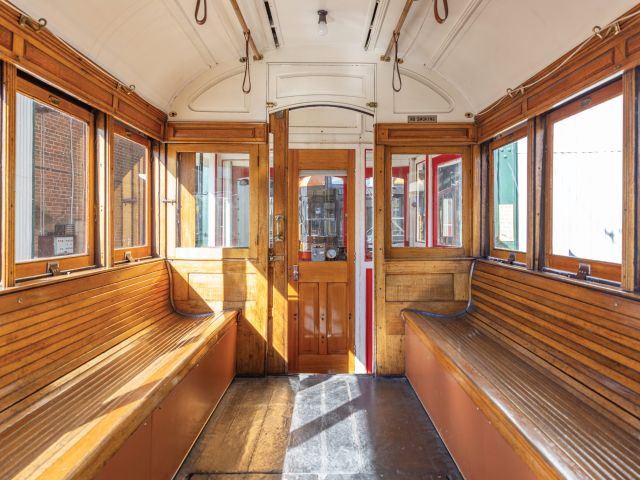
inside the historic Bendigo Tram
Bendigo Tramways is a historic transport line turned tourist service. (Image: Bendigo Heritage)

The city’s tram network had been declared defunct since 1970 due to post-war shortages in materials to upkeep the trams and declining passenger numbers as motor vehicles were increasing. However, determined locals would not hear of their beloved trams being sold off around the world.

The Bendigo Trust was enlisted to preserve this heritage, by converting the trams into a tourist service. The Victorian government approved a trial, however news spread that the Australian Electric Tramways Museum in Adelaide had acquired one of the streetcars for its collection.

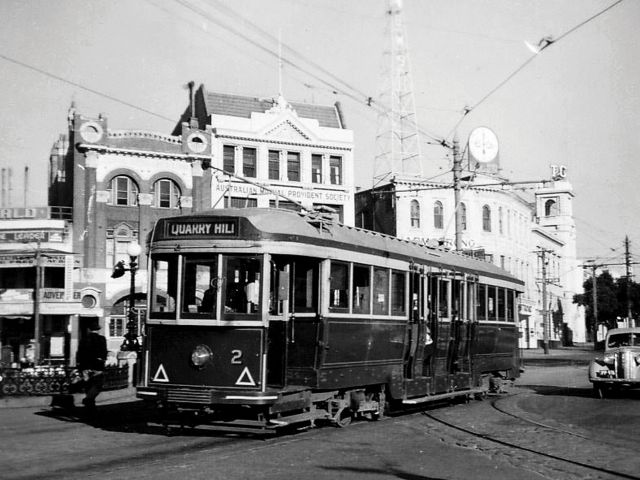
a tram heading to Quarry Hill in 1957
A tram on its way to Quarry Hill in 1957. (Image: Bendigo Heritage)

An impassioned group rallied together to make this physically impossible. Breaking into the tram sheds, they welded iron pipes to the rails, removed carbon brushes from the motors, and formed a blockade at the depot. The community response was extraordinary, and a $1 deal was sealed.

A new chapter for the city’s fleet

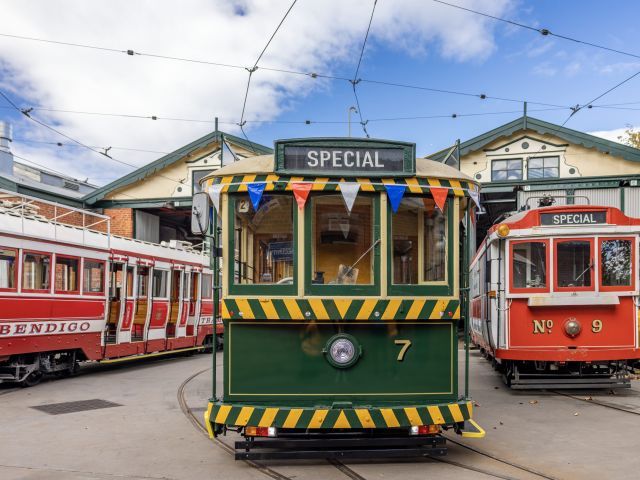
the old Tramways Depot and Workshop
The old Tramways Depot and Workshop is one of the stops on the hop-on, hop-off service. (Image: Tourism Australia)

Today, Bendigo Tramways welcomes some 40,000 passengers annually, operating as a hop-on, hop-off touring service aboard the restored trams. Fifteen of the now 45-strong fleet are dubbed ‘Talking Trams’ because of the taped commentary that is played along the route. The trams loop between Central Deborah Gold Mine and the Bendigo Joss House Temple, which has been a place of Chinese worship since 1871, via other sites including the old Tramways Depot and Workshop.

a Gold Mine Bendigo Tram
The fleet comprises 45 trams that have been restored. (Image: Visit Victoria/Robert Blackburn)

Keeping things interesting, throughout the year visitors can step aboard different themed trams. Tram No. 302 becomes the Yarn Bomb Tram, decorated both inside and out with colourful crochet by an anonymous group of locals.

During the festive season, Tram No. 15 operates as a tinsel-festooned Santa Tram, and the big man himself hides out somewhere along the route for excited children to find. And on selected dates, the adults-only Groove Tram runs nighttime tours of the city, accompanied by local musicians playing live tunes and a pop-up bar.

the historic post office turned visitor centre in Bendigo
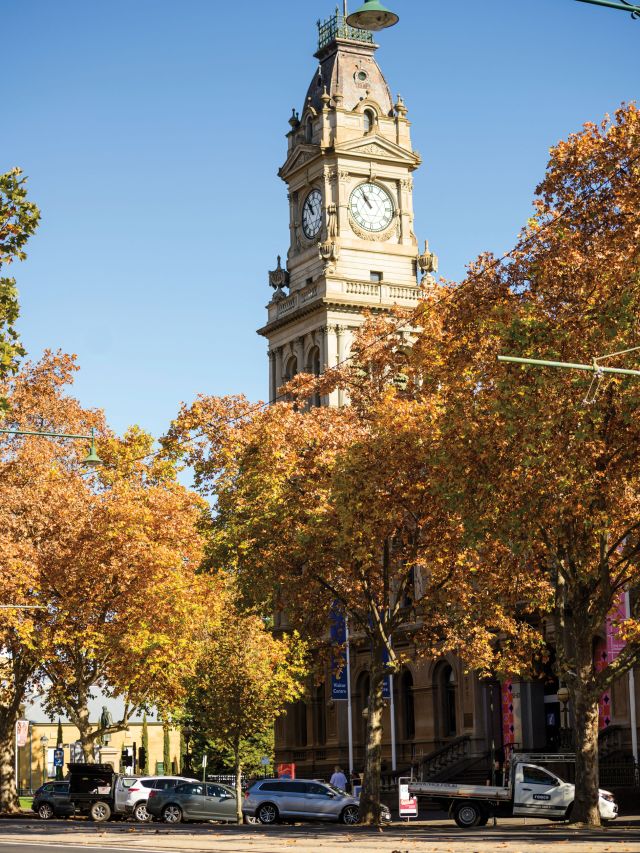
Visitors can hop on and off to see the city’s sites such as the historic post office turned visitor centre. (Image: Tourism Australia)

As well as preserving the city’s history, however, the continuation of the tram service has kept the skills of tram building and craftsmanship alive in a practical sense. Bendigo’s Heritage Rail Workshop is world-renowned for restoring heritage trams and repurposing vehicles in creative ways.

Locally, for example, Tram No. 918 was transformed into the Dja Dja Wurrung Tram with original Aboriginal artworks by emerging artist Natasha Carter, with special commentary and music that shares the stories and traditions of Bendigo’s first people. You can’t put a price on preserving history. Nonetheless, it was a dollar very well spent.