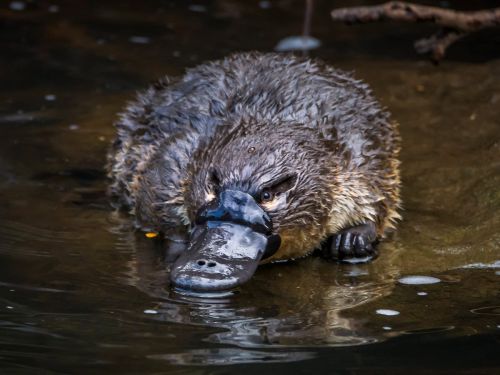
Where to see a platypus in the wild

hero media
The platypus may be hard to spot, but they’re well worth the effort. Here are the places where you have the best shot.

Perhaps Australia’s most elusive national animal, the platypus is notoriously shy, making it much harder than, say, a kangaroo, to spot in the wild. Still, for those willing to take the time, there are plenty of places along Australia’s east coast where your efforts could be rewarded (and tours that can help make sure you’re looking in the right places).

Generally speaking, you’ll want to seek out creeks and rivers with banks that provide bush, rock and log cover for the platypus to hide in. It will have a good flow of water as well, to keep the water healthy and liveable. They’re most commonly found in eastern Queensland and New South Wales, eastern, central and southwestern Victoria and around Tasmania.
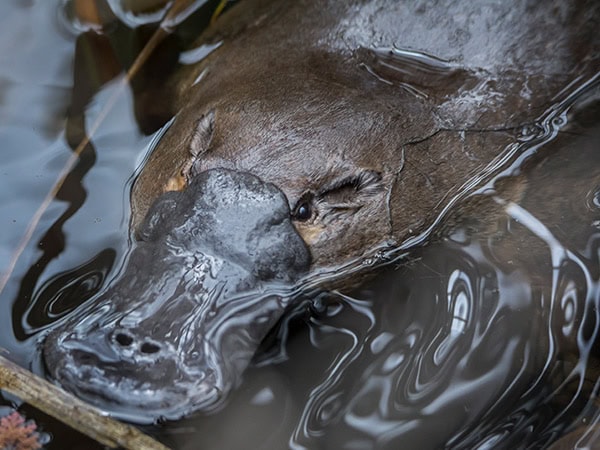
a platypus in tasmania
Spot a platypus along Australia’s east coast with this guide. (Image: Ash Thomson Photography)

How to spot a platypus in the wild

First things first, we need to discuss platypus spotting tactics. You could be approaching a whole paddle of platypuses and still not see a single one if you don’t play your cards right. For starters, make sure you’re arriving at the right time of day – dawn and dusk are usually the sweet spots – and be as quiet as possible as they’re very sensitive to perceived dangers.

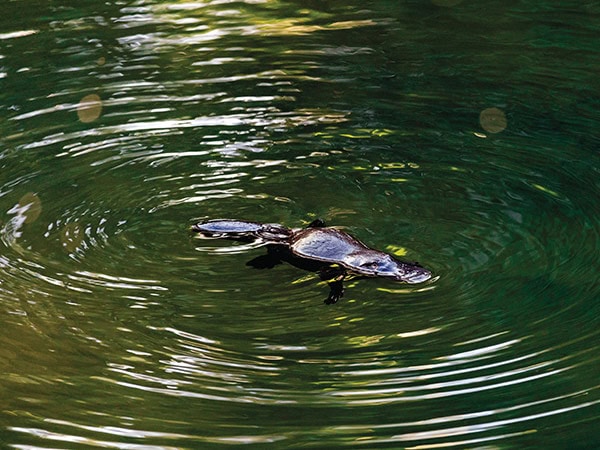
After that, it’s about keeping a sharp eye out. Look for bulls-eye or v-shaped ripples that likely signal the presence of a platypus. And don’t get them mixed up with water rats – platypuses have shorter, rounder tails and travel for longer on the water’s surface.

The season can also affect your chances of success, especially as you head further south. Platypuses need more food to keep themselves warm, so winter and early spring mean colder temperatures and more time outside during daylight hours to hunt.

Now without further ado, here’s our round-up of where to see a platypus in the wild, if you’re feeling lucky.
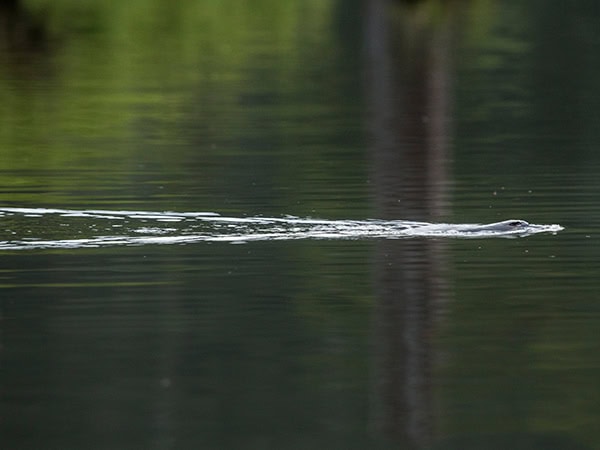
platypus creating ripples as it swims in a victorian river
Look for bulls-eye or v-shaped ripples made by a platypus.

1. Victoria

In central Victoria, Loddon and Campaspe rivers are both known as lucky places to spot a platypus – just look for the quiet bends of the rivers. It’s also worth looking at the creeks and rivers around Snowy River National Park and the Alpine National Park. They’re harder to spot here but do call it home.
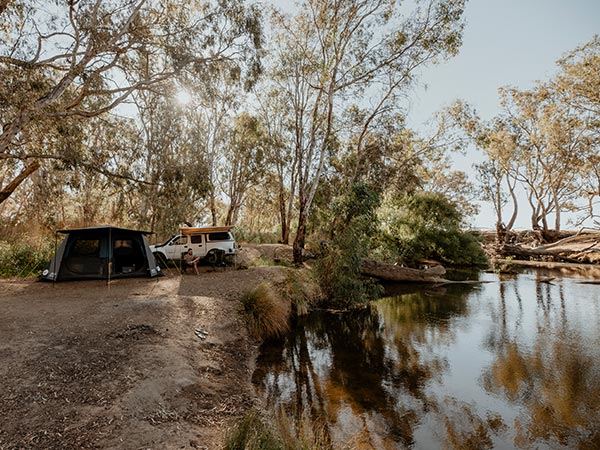
campers by Campaspe River in Victoria
Camp by Campaspe River for the best chance of spotting a platypus at dawn or dusk.

One of the best places to spot them in Victoria is in Great Otway National Park’s Lake Elizabeth. Located a 10-minute drive from Forrest, it was made when a valley was flooded over 50 years ago. Today, the tree remnants provide plenty of places for a platypus to take cover. Optimise your chances by joining Otway Eco Tours Paddle With The Platypus itinerary. Be guided in a canoe, checking all the best spots for platypus (they claim a 95 per cent sighting success rate), while also listening to local birdlife chirping and staying for the glow worms at dusk.
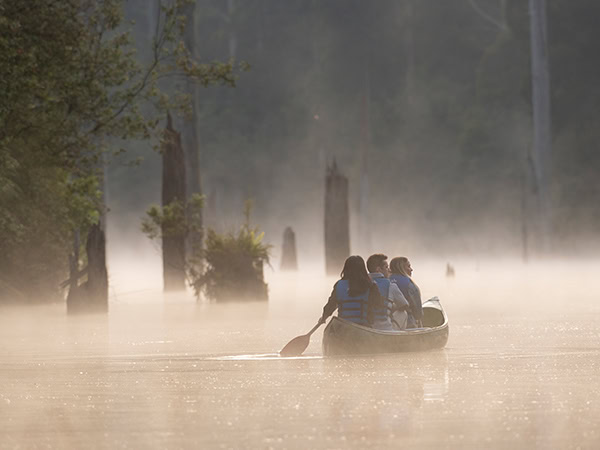
Canoe around the misty Lake Elizabeth with Otway Eco Tours
Canoe around the misty Lake Elizabeth with Otway Eco Tours.

Need tips, more detail or itinerary ideas tailored to you? Ask AT.

AI Prompt

2. New South Wales

The national parks of New South Wals are a smorgasbord for platypuses – but you’ll still need a skilled eye to catch one of these elusive creatures. They’ve been spotted in Brisbane Water, Budderoo and Jenolan Karst Conservation Reserve national parks on the outskirts of Sydney. Head further inland to spot them in Guula Ngurra National Park.
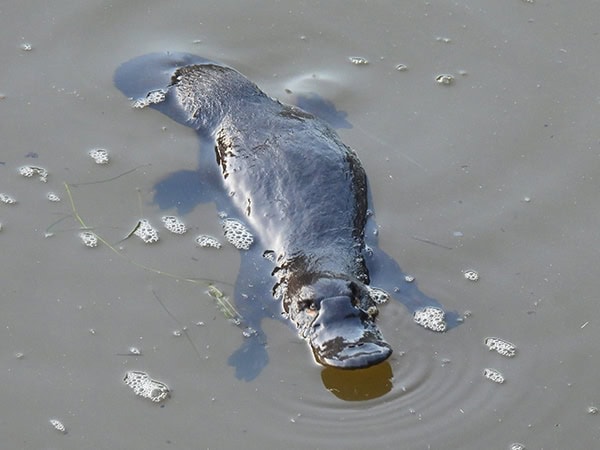
platypus spotted in byron bay hinterland with Vision Walks Eco Tours
Spot a platypus with Vision Walks Eco Tours. (Image: DNSW)

North of Sydney, Monga National Park is home to these cuties, but for those wanting some support to spot a platypus, head to Byron Bay hinterland. Here, you can join a tour with Vision Walks Eco Tours for a Platypus Walk. They’ll pick you up in Byron Bay, then lead you on an easy two-kilometre walk in the hinterlands. The best part? If you don’t spot one, you can come back for free another day.

Close to the Victorian border, Kosciuszko National Park has several spots known for platypus sightings: try the High Plains, Khancoban, Lower Snowy River, Selwyn, ThredboPerisher, Tumut and Yarrangobilly areas. Murray Valley Regional Park is also known for platypus sightings.
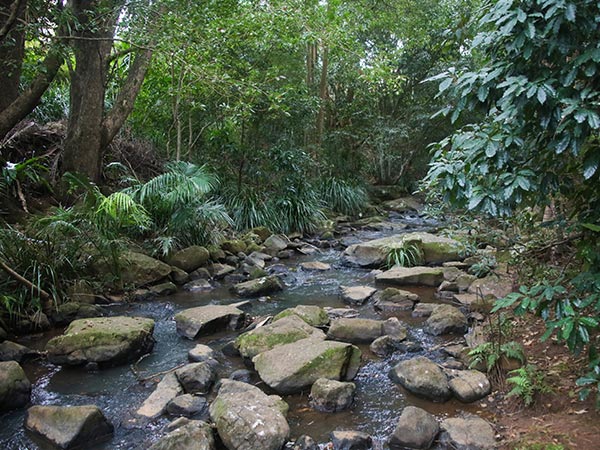
Byron Bay Hinterland
Take a walk through the Byron Bay Hinterland. (Image: DNSW)

3. Queensland

I had my own platypus-spotting luck in the Atherton Tablelands. Yungaburra has even built a whole viewing platform to catch sight of their platypus locals at the edge of Mungalli Falls, but my group had only just started on the path to the platform at dusk when we saw two of them swimming around each other in the creek. These tablelands also have a Platypus Park with another built viewing platform. For help spotting these north Queensland dwellers, Wait-A-While Rainforest Tours (based in Cairns) claims a 90 per cent success rate in spotting platypuses on their tours.
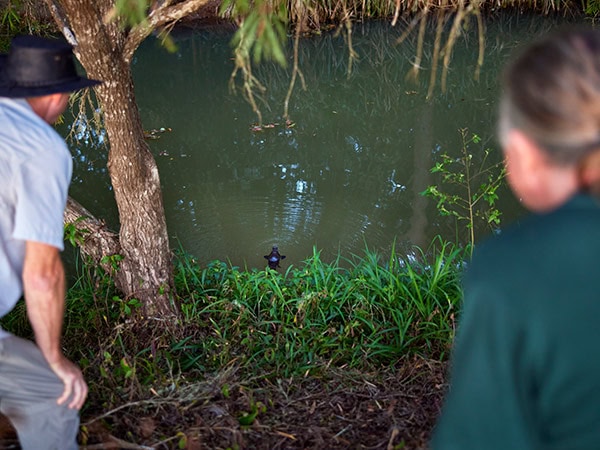
guest and guide on Wait-A-While Rainforest Tours looking at a platypus in atherton tablelands
Join Wait-A-While Rainforest Tours for help spotting a platypus. (Image: TEQ)

Towards Airlie Beach, Eungella National Park is known to have a comparatively large platypus population in Broken River. You’ll find vantage points and bridges scattered throughout the region, with signs suggesting platypuses can be seen there. Stay for a night or two at Platypus Bush Camp near Finch Hatton Gorge on the edge of the national park for more chances of seeing them at dawn and dusk. There’s a viewing platform here, too, as well as flush toilets, rainforest showers, picnic and dining areas and two fire pits.
platypus in broken river, queensland
Spend time by Broken River to see a local. (Image: TEQ)

Weekly travel news, experiences
insider tips, offers, and more.

4. Tasmania

With higher numbers of platypuses and lower numbers of people, Tasmania is actually your best bet if you’re desperate to see one (and who wouldn’t be). Latrobe is often called the Platypus Capital of the World, as spotting one in the wild here is quite common. Stop by the bridge near Axeman’s Hall of Fame for an in-town experience. But a five-minute drive to Warrawee Reserve is your best bet. Here, follow the banks of the Mersey River to the Platypus Pool – one guess why.

Towards Cradle Mountain, Mole Creek is a popular stop for its caves and platypuses. Not far away, Loongana has plenty living along River Leven, with Taylor’s Flats picnic area being a particularly good place to stop for a gander. Extend your stay (and your chances) with an overnight at the secluded Mountain Valley Wilderness Retreat. Stay in the north to try your luck in the Meander River at Deloraine (and then have a wander through the popular arts and crafts offerings when you’re done). Waratah (between Cradle Mountain and Stanley) is another good option.
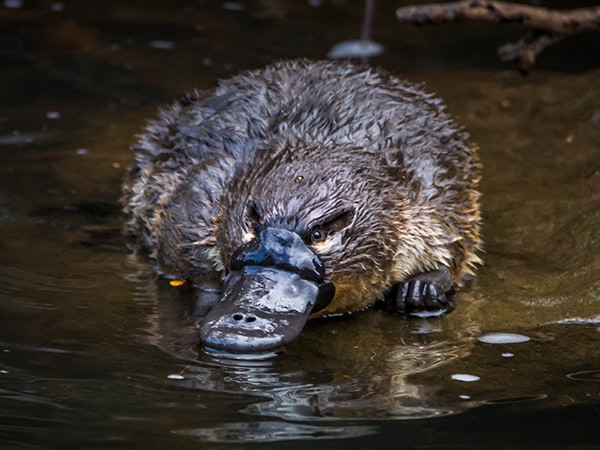
a platypus above the water in tasmania
Tasmania is one of the best places to find a platypus. (Image: Ash Thomson Photography)

Just outside of Burnie, Fernglade Reserve had a Platypus Trail along the riverbank where locals will tell you it’s almost guaranteed to spot one at dusk or dawn (which is also when the car park closes, so park outside then take the short walk in).

Tyenna River is a very popular home for the platypuses, especially around Mt Field National Park. Here, you’ll find a two to three-hour Paddle with the Platypus tour run by Tassie Bound, who will take you in kayaks down the river to the best places to see these water mammals. A little further south, Geeveston has a well-known Platypus Walk with viewing platforms.

Hobart itself is also an option, although not as fruitful as these others. Here, you can walk along Hobart Rivulet from the CBD to Cascade Brewery for a shot at spotting a platypus.
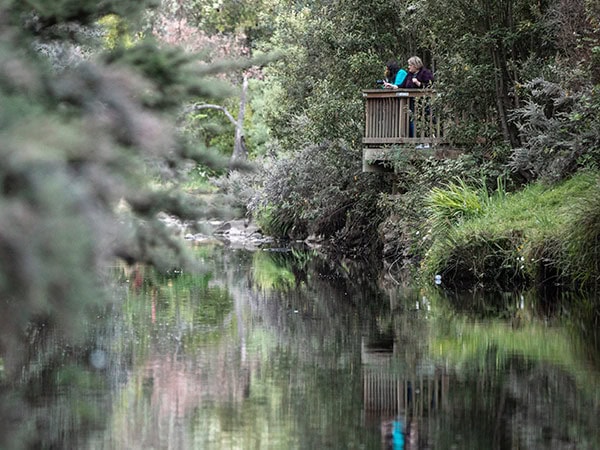
hikers stopping at a viewing platform along the platypus walk in geeveston
Follow the Platypus Walk in Geeveston. (Image: Liam Neal)

Want to see more stories from Australian Traveller in your Google search results?

  1. Click here to set Australian Traveller as a preferred source.
  2. Tick the box next to "Australian Traveller". That's it.
Kassia Byrnes
Kassia Byrnes is the Native Content Editor for Australian Traveller and International Traveller. She's come a long way since writing in her diary about family trips to Grandma's. After graduating a BA of Communication from University of Technology Sydney, she has been writing about her travels (and more) professionally for over 10 years for titles like AWOL, News.com.au, Pedestrian.TV, Body + Soul and Punkee. She's addicted to travel but has a terrible sense of direction, so you can usually find her getting lost somewhere new around the world. Luckily, she loves to explore and have new adventures – whether that’s exploring the backstreets, bungee jumping off a bridge or hiking for days. You can follow her adventures on Instagram @probably_kassia.
View profile and articles
hero media

6 nature-based experiences to prove the Bendigo region comes alive in autumn

    Dilvin Yasa Dilvin Yasa
    A change is as good as a holiday, but never more so than in the Bendigo region when it’s the seasons putting in the transformative work.

    With its gold rush history, opulent architecture and booming food and wine industry, there’s no denying that the Bendigo region is beautiful to visit at any time of year. Visit between March and May, however, and you’ll find the Bendigo in autumn really comes alive. Foliage erupts in a canvas of golden colours and the cooling air makes immersing yourself in nature all the more enticing.

    Need a few ideas to get you started? We’re so glad you asked.

    1. Tackle the bike trails

    Pink Cliffs Reserve
    Pink Cliffs Reserve in Heathcote can be seen on the O’Keefe Rail Trail. (Image: Visit Victoria/Emily Godfrey)

    Welcome to a region that punches well above its weight when it comes to cycling. This is where hammies are tested on multi-day rides, and first-timers fall in love with the sport on short (and ridiculously pretty) trails.

    The 49-kilometre O’Keefe Rail Trail is the headline act, following the old railway line between Bendigo and Heathcote. Cross the Campaspe River at Axedale Recreation Reserve and pause at the Platypus Compass Sculpture and the First Nations mural marking the connection between Djaara and Taungurung Country, with Axedale acting as the perfect halfway stop to refuel at a pub or cafe.

    Pedal a little further Heathcote’s Pink Cliffs Geological Reserve to be rewarded with views of sculpted pink clay cliffs and narrow gorges that are perfect for a photo stop. Searching for a different type of reward? The Heatchote Wine Region is full of inviting cellar doors.

    There are plenty of other options in the Bendigo region, from the 210-kilometre Goldfields Track, to the Bendigo Creek Trail and Back Creek Trail – both ideal for riders of all abilities. The 3.7 kilometre Little Lake Boort loop is a great family-friendly option.

    Prefer something more adventurous? Spring Gully Mountain Bike Park has been keeping BMX Bandits’ dreams alive for years.

    2. Enjoy the crunch of autumn leaves

    two people having a picnic at Valley of Liquidambers heathcote
    Pack a picnic and head to the Valley of Liquidambers.

    Blinding clusters of crimson, burnt orange and brilliant yellow; here, autumn leaves are crisp confetti of fire and gold. See the magic up close with a slew of parks seemingly dedicated to showcasing Mother Nature’s colour wheel, especially from mid April to early June.

    Pack a picnic for an afternoon at Valley of Liquidambers in Heathcote, where Liquidamber trees transform into a wonderworld of magical foliage. Don’t miss taking a leisurely stroll across the swinging bridge back towards the main street.

    Rosalind Park might be celebrated for its annual tulip display come springtime, but it’s hard to compete with the theatre of autumn. Here, many trees date back to the 1800s, and there’s no better place for a romantic stroll than along the elms, oak and Queensland Kauri that dominate this park.

    Head straight to Lake Weeroona, where an ornamental lake begs for a leisurely lap around its edges, either on foot, or with pedal power.

    3. Immerse yourself in First Nations culture

    woman exploring Kooyoora State Park with guides
    Explore Kooyoora State Park on a cultural tour.

    Its ‘Mountain of Light’ (Guyura in the Dja Dja Wurrung language) title is impressive, but so too is Kooyoora State Park’s rugged landscape of granite outcrops, rocky ridgelines and wide-open skies.

    While there’s nothing to suggest you couldn’t explore Kooyoora’s walking tracks on your own, the best way to understand the 40,000 years of history behind its natural wonders is to book a 2.5-hour Kooyoora Cultural Tour with Dumawul Tours.

    Led by Djaara cultural guides, expect a traditional Welcome to Country smoking ceremony, before engaging storytelling rewinds the clock to reveal the deep cultural significance of the land, its flora, fauna and its continuing connection to Country.

    Keen to stay a little longer? Consider staying overnight at the campground and committing to the park’s wealth of walking trails, such as the 5.3-kilometre hike from the camping ground to the lookout on the Long Rock Walking Track.

    4. Splash in the region’s waterways

    Serpentine Creek Canoe Trail
    Paddle through Serpentine Creek Canoe Trail. (Image: Visit Vic)

    Water babies rejoice: the Bendigo region offers a wealth of waterways to explore.

    Flowing 392-kilometres from the Great Dividing Range to the Murray River, the best way to enjoy Loddon River is with a stop at Bridgewater. Here you can swim in the natural infinity pool or tackle the all-abilities, five-kilometre Serpentine Creek Canoe Trail before browsing the cute stores in town. Hungry? Grab a bite at Bridgewater Hotel.

    Lake Eppalock is popular for water activities, but don’t miss a visit to Little Lake Boort and Big Lake Boort. Birders, in particular, will love the former, thanks to the large variety of bird species that nest in the boardwalk area surrounding the lake.

    Meanwhile, Big Lake Boort is celebrated for its significant Indigenous history and over 400 scarred trees, and offers an opportunity to spot birds and go canoing.

    Meanwhile, watersports and recreational activities at Crusoe Reservoir, located on the outskirts of Bendigo, are the order of the day. Take a walk to the picnic spots of No. 7 Park nearby, and maybe even camp there for the night.

    5. View epic lookouts

    customers at Peregrine Ridge
    Spend time at Peregrine Ridge.

    Sometimes a holiday requires a phenomenal spot on which to perch as you survey your temporary kingdom below. The Bendigo region, happily, doesn’t do anything by halves.

    Located in Heathcote-Graytown National Park, Viewing Rock Lookout – a rocky outcrop offering spectacular views over Heathcote and surrounds – remains a popular choice. Take the hour-long Viewing Rock Circuit Walk and try your hand at gold prospecting nearby.

    Prefer the romance of sunrise or sunset? Pyramid Hill, a stunning granite hill rising 187-metres above sea level, is the place to be (preferably with a coffee and a bagel)

    Over in Terrick Terrick National Park, a walk to the summit delivers a full 360-degree panorama of woodlands, farms and open-sky plains. Pack lunch and perhaps a tent as picnic tables and camping are available.

    Carve out time for Peregrine Ridge, a vineyard situated at the eastern side of Mt Camel Range with an elevation ranging from 250-290 metres. Be rewarded with delicious wine and a cellar door which offers floor-to-ceiling views.

    6. Enjoy the Bendigo region’s parks and gardens

    Rosalind Park in bendigo
    Stroll through Bendigo’s best gardens. (Image: Visit Vic)

    Rosalind Park, located right in the centre of town, is considered Bendigo’s backyard and rightly so. Home to the Bendigo Easter Festival, it’s just as popular year-round for its sixty acres of rolling lawns, towering elms, fernery and winding paths not to mention the playground which has plenty of little fans of its own. A short drive away, Bendigo Botanic Gardens established in 1857 offers a more tranquil space for deep-level nature immersion.

    Those who favour something a little more formal, cottage-style Canterbury Park Gardens famous for its dahlias in autumn delivers.  Stroll through its meticulously maintained ornamental gardens before checking out Lake Tom Thumb and Lake Neangar nearby.

    Time to start planning your adventure to the Bendigo Region, visit bendigoregion.com.au.